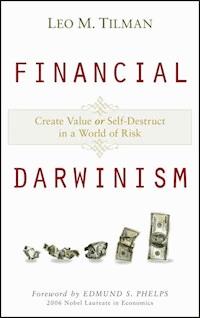
Table of Contents
Praise
Title Page
Copyright Page
Dedication
Foreword
Preface
Acknowledgements
CHAPTER 1 - Understanding and Navigating the Financial Revolution
Introduction: The Need for Transformational Thinking
From George Bailey to the Golden Age
Accounting for Profits the Old-Fashioned Way
The “Great Moderation” As an Evolutionary Catalyst
Economic Performance in the Dynamic New World
Pressures on Static Business Models
Dynamic Finance Perspective on Financial Crises
Pillars of Strategic Decision Making
Value Creation Through Dynamism and Business Model Transformations
Beyond the Façade: The Importance of Risk-Based Transparency
CHAPTER 2 - The Old Regime and Its Demise
Economic Performance and Viability of Financial Institutions
Static Business Models
Dominant Forces: The Future that Has Already Happened
Pressures on Static Business Models
Pressures on Securities Firms, Money Center Banks, and Monoline Insurers
CHAPTER 3 - The Dynamic New World
Risk-Based Economic Performance
Balance Sheet Arbitrage (α)
Principal Investments (α)
Systematic Risk Exposures (Σβ · RP)
Fees and Expenses (+F - E)
Capital Structure Optimization (C)
Economic Performance Attribution
CHAPTER 4 - Business Model Transformations
Pillars of Strategic Decisions in a Dynamic World
Responsive Recalibrations of Business Models
Full-Scale Business Model Transformations
Making the Strategic Vision a Reality
CHAPTER 5 - The Road to Financial Darwinism
Real-World Business Model Transformations
Stakeholder Communication & Equity Valuation in a Dynamic World
Economic Value Creation (and Destruction) by Non-Financial Corporations
The Infamous “Carry Trade” and the Old Ways of Thinking
A Dynamic Finance Perspective on Modern Financial Crises
Beyond the Façade: The Need for Risk-Based Transparency
Conclusion
EPILOGUE
APPENDIX A - The Risk-Based Economic Performance Equation
APPENDIX B - A Case Study in Dynamic Finance
Notes
References
About the Author
Index
Praise for Financial Darwinism
“The world’s political and economic uncertainties, exacerbated by a serious lack of financial transparency, can lead business leaders to feel like they may be virtually flying blind in a rapidly changing global economy. Leo Tilman offers some important tools to address the clear imperative of better strategic and systemic risk management.”
William E. Brock Former United States Senator United States Trade Representative and United States Secretary of Labor
“History is littered with the wrecks of financial institutions. Some failed to change their strategies. Others pursued tantalizing returns while paying insufficient attention to the risks. Judging from recent financial crises, many financial institutions still have not learned how to avoid crippling, perhaps even life-threatening, wrecks. Leo Tilman’s timely book is a navigator’s manual for managers of 21st-century financial institutions. To prosper, even to survive, Tilman clearly and forcefully shows that they must abandon outmoded strategies, adopt new ones, and pay much more attention to the trade-off between risk and return. He blends theory with experience to show how this can be done, and even how it has been done.”
Dr. Richard Sylla Henry Kaufman Professor of The History of Financial Institutions and Markets Professor of Economics Leonard N. Stern School of Business, New York University
Copyright © 2009 by Leo M. Tilman. All rights reserved.
Published by John Wiley & Sons, Inc., Hoboken, New Jersey. Published simultaneously in Canada.
No part of this publication may be reproduced, stored in a retrieval system, or transmitted in any form or by any means, electronic, mechanical, photocopying, recording, scanning, or otherwise, except as permitted under Section 107 or 108 of the 1976 United States Copyright Act, without either the prior written permission of the Publisher, or authorization through payment of the appropriate per-copy fee to the Copyright Clearance Center, Inc., 222 Rosewood Drive, Danvers, MA 01923, (978) 750-8400, fax (978) 750-4470, or on the web at www.copyright.com. Requests to the Publisher for permission should be addressed to the Permissions Department, John Wiley & Sons, Inc., 111 River Street, Hoboken, NJ 07030, (201) 748-6011, fax (201) 748-6008, or online at http://www.wiley.com/go/permissions.
Limit of Liability/Disclaimer of Warranty: While the publisher and author have used their best efforts in preparing this book, they make no representations or warranties with respect to the accuracy or completeness of the contents of this book and specifically disclaim any implied warranties of merchantability or fitness for a particular purpose. No warranty may be created or extended by sales representatives or written sales materials. The advice and strategies contained herein may not be suitable for your situation. You should consult with a professional where appropriate. Neither the publisher nor author shall be liable for any loss of profit or any other commercial damages, including but not limited to special, incidental, consequential, or other damages.
For general information on our other products and services or for technical support, please contact our Customer Care Department within the United States at (800) 762-2974, outside the United States at (317) 572-3993 or fax (317) 572-4002.
Wiley also publishes its books in a variety of electronic formats. Some content that appears in print may not be available in electronic books. For more information about Wiley products, visit our web site at www.wiley.com.
Library of Congress Cataloging-in-Publication Data:Tilman, Leo M., 1971- Financial Darwinism : create value or self-destruct in a world of risk / Leo M. Tilman. p. cm. Includes bibliographical references and index.
eISBN : 978-0-470-46625-4
1. Financial services industry. 2. Risk. 3. Value. I. Title. HG101.T55 2009 332.1068’1-dc22 2008028065.
For Alisa and Owen
Foreword
The great economic theorist at Chicago, Frank Knight, observing American business experience, took the unprecedented position in his 1921 classic Risk, Uncertainty and Profit that most business decisions, especially strategic ones, are to varying degree steps into the unknown. Each of the possible outcomes of a business venture can be considered to have some probability of occurring, but those probabilities are not known to the players. Thus was born the concept of Knightian uncertainty. The great theorist at Cambridge and Knight’s contemporary, John Maynard Keynes, produced major ideas on the consequences of such uncertainty in his 1921 book Essay on Probability and in his 1936 book The General Theory.
Knightian uncertainty does not stem from some failure to study on the part of decision makers. Rather, it results from the unknowability of some of the conditions, present and future, on which the consequences of the decisions depend. If gamblers keep betting heads or tails, the evolving holdings may be knowable in a probabilistic sort of way. In the world of Knight and Keynes, though, the economic future is, in large part, not even probabilistic—it is to an important degree indeterminate. And if the probabilities governing the future cannot be known to a participant, they cannot be known to an outside observer or theorist, either. The driver in Keynes’s “general theory” is entrepreneurs’ intuition about the profitability of investments they contemplate; with their limited understanding, his entrepreneurs can have little idea what the correct expectation of profitability would be.
The heightened uncertainty and indeterminacy in economic life that Knight and Keynes captured came with the rise of the modern economy in the last decades of the nineteenth century. The arrival of finance capitalism, with its restless experimentalism, created economies of dynamism—economies with a propensity to innovate in ways that prove viable. It is this new dynamism that radically increased the unknowability that the actors in these economies had to confront. Dynamism—and the accompanying uncertainty and indeterminacy—were virtually unheard of in the so-called traditional economies of the eighteenth century. In those economies, uncertainties seldom intruded except in the case of exogenous forces—the occasional scientific discovery, a natural disaster, and so forth. In contrast, in the modern economies that followed, new commercial ideas—thus elements of unknowability and uncertainty—were generated by the operation of economies themselves. From time to time some businessperson, observing current practice first hand, would hit upon an original idea for a better way to do things. First in Britain, then on a wider scale and with greater force in Germany, and later the United States, finance capitalism generated a torrent of endogenous innovations from the 1860s onward for decades—a torrent that in the United States stretched through the 1930s and has had significant recurrences since.
This economic dynamism, though not measured directly, is manifest in several ways. It injects new kinds of activity into business life: employment in the financing, development, and marketing of new commercial products for launch into the marketplace and a cadre of managers deciding what to produce and how to produce it. It appears to lift job satisfaction and employee engagement. It increases turnover in the ranks of the economy’s largest firms, as some new firms grow large and displace old firms. Last but not least, it lifts productivity onto a higher (whether or not a faster growing) path. It must be emphasized that rapid growth for a time is not evidence of much or any dynamism; and slow growth for a time is not evidence of a lack of it: Dynamism and growth are not synonymous.
The importance of dynamism in understanding and appreciating the standout economies—going back more than a century—are no secret among economists and business historians. It has been present for years in the pages of Friedrich Hayek, Alfred Chandler, Richard Nelson and Sidney Winter, Roman Frydman and Andrzej Rapaczynsky, Amar Bhide, Virginia Postrel, and some work of mine. Yet the general public has been led to believe the myth that high productivity, wages, and wealth are driven by the great technological advances of unworldly scientists operating outside the nation’s economy: Columbus, Magellan, Watt, Volta, Faraday, Marconi, von Neumann, Berners-Lee, and the rest. It has to be mentioned that large numbers of economists find it inconvenient to recognize originality and novelty in their formal economic models. Empirically, however, we do not find that productivity growth arrives in great waves, each linked to a scientific breakthrough. Furthermore, looking across countries, we do not see the patterns that the popular myth would predict: There are wide gaps in productivity levels and in some of the other manifestations of dynamism. It is clear that, in many countries though not all, something big is going on besides science—namely, ideas for new commercial products and new ways to produce.
Historically, capitalism—despite its many imperfections and episodic malfunctions—has proved the premiere economic system for dynamism. Capitalism is all about commercial innovation—the birth of the idea, the development and marketing, and the adoption. Once key freedoms, supporting institutions and favorable attitudes have evolved, some participants step forward with entrepreneurial proposals, others step into roles as lenders or investors to finance some of these projects, still others, as managers or consumers, evaluate and sometimes make pioneering adoptions of the new products.
Of course, the uncertainty and the learning costs entailed by economic dynamism make business life treacherous, though exciting and challenging. There are hazards in acting without allowance for one’s limited understanding. Unfortunately, it has become the style in business decision making to pretend that the economy and the financial markets are well understood and that the pertinent numerical parameters of financial and economic models, including the relevant probabilities, are fully known (or close enough to it). The misadventures of recent times—the monetary policy blunders, regulatory mistakes, astonishing financial losses, and worldwide systemic financial crises—are dramatic evidence to the contrary.
The recent problems in the banking sector in the United States are indicative of some of the failures. While many believed for some time that subprime lending and securitization would enable more people to own homes, decision makers had no foundation on which to estimate either the valuations or the risks of the novel assets acquired. Mistakenly, many thought that portfolio diversification could eliminate Knightian uncertainty as well as other risks. Furthermore, models did not allow for macroeconomic swings and for the unknown numbers of new financial companies that might enter the business. The irony here was that the financial sector, in the practices it introduced to capture what it thought were opportunities for a pure profit, ended up creating new and colossal uncertainties for itself and the global economy.
Capitalism has thus been disgraced precisely in the area of its greatest competence. The relatively capitalist economies, notwithstanding the considerable dynamism that classic capitalism showed in its glorious past—the knack for efficient and profitable innovation—have betrayed a lack of awareness and sophistication about what is required for making successful decisions of an innovative nature. Yet we can hope to find in the faults of standard practice and governance some ways to reorient the financial sector toward business development and commercial innovation—with resulting dividends in increased dynamism in the economy. As I have argued for some time, an economically advanced country is not doing justice to the potentialities of the population for self-actualization and self-discovery if it does not examine institutions, attitudes, and beliefs for ways to shore up its dynamism.
This original and provocative book by Leo Tilman therefore comes in our hour of need. It starts off by making sense of the tectonic shift that occurred in finance over the past quarter century. It then proceeds to offer a decision-making framework for operating in the new financial world. Tilman argues that the mechanism of how economic value is created and destroyed in finance is central to understanding modern financial institutions and capital markets. Equally intriguing, he proposes that it is the dynamism of financial institutions’ risk-taking and business decisions that both distinguishes the modern financial world from prior financial regimes and serves as the main determinant of their success going forward. He calls this evolutionary thesis Dynamic Finance.
This thesis contrasts the brave new world of finance with the old regime of the post-WWII economy. In the past, Tilman argues, financial institutions used to fulfill their chartered roles in ways that, from the risk-management perspective, were very traditional and static. Measures of economic success based on accounting earnings and standard financial disclosures may have been the adequate lens through which to view reality in the good-old days of the banker George Bailey in Frank Capra’s It’s a Wonderful Life, to borrow the author’s apt image. However, they are not applicable to the new dynamic state of affairs and thus often lead to confusion and inoptimal decisions. This depiction reminded me of the “traditional economy”—the economy of routine captured by the neoclassical models of economic equilibrium: they excluded change for which there was no prior information and departures for which there was no known knowledge to go by.
The modern economy opens the door for individuals to exercise their creativity by venturing to do something innovative—financing, developing, and marketing of new products and methods. Models of such an economy must recognize the nonroutine ways in which market participants make decisions or deploy resources. These models must also be general enough to be compatible with the myriad of ways in which market participants might revise their views of the future and act on them. In applying a similar line of thinking to financial institutions, Tilman develops a concept of risk-based economic performance that underlies the book’s evolutionary thesis and leads to a decision-making framework that he calls Financial Darwinism. This book introduces a new intellectual paradigm that can be used to guide strategic and investment decisions. Importantly, however, by recognizing the essence of dynamism, it does not impose the author’s views or advocate any particular paths to success, leaving it to financial executives to use their creativity, proprietary knowledge, and ingenuity when ultimately deciding what is best for their firms.
This brings me back to the interaction of uncertainty and dynamism. Given that nonroutine business decisions are steps into the unknown, I have always found it odd that financial executives seemed to think so little about Knightian uncertainty. Tilman does not view this fact as surprising at all, attributing it to old mental paradigms and static business models that obscured the roles of risk taking and uncertainty during the old financial regime. He argues that, as a result of the tectonic financial shift, active risk taking has become a much greater contributor to economic value creation, and, therefore, the role of risk in the lives of financial institutions must be made explicit. Tilman points out that the greater complexity of today’s financial world stems from more dynamic economies, more dynamic financial institutions, greater connectivity of the capital markets, and a set of other powerful secular forces. Therefore, the nature of executives’ strategic vision and their understanding of uncertainty must change accordingly.
Leo Tilman and I first met at the World Economic Forum in Davos and have since continued our discussion of economic dynamism and the attendant uncertainties at Columbia’s Center on Capitalism and Society. From the start, Tilman and I were intrigued by the many parallels between economic dynamism and the dynamism in finance. He sees the latter as essential for modern financial institutions’ survival and success. I see the former as the key determinant of a nation’s success and, in the age of globalization, maybe its survival. Economic dynamism is invaluable both for high productivity and employment—which serve in turn to increase the inclusion of people into the commercial economy—and for meeting some of our most basic needs: to exercise our imaginations, to enjoy the mental stimulus of change, to have an endless series of new problems to solve, to expand our capabilities, to feel the thrill of discovery, and to experience personal growth.
I believe this thought-provoking book—in interpreting major financial trends, in pointing to the need for financial dynamism, and in providing the relevant arsenal of ideas and decision-making tools to that end—will be of great interest to a broad range of executives, investors, regulators, academics, and students of economics and finance. If Tilman’s new paradigm is embraced, financial institutions will be more dynamic. The present banking crisis is both a danger and an opportunity. Let us hope that the banking industry will be given the opportunity to reform itself: to acquire the strategic vision and management practice that will create real and lasting economic value, thus benefiting shareowners, employees—indeed, the whole society.
Edmund S. Phelps
McVickar Professor of Political Economy, Columbia UniversityDirector of the Center on Capitalism and Society, Columbia UniversityWinner of the 2006 Nobel Prize in Economics.
Preface
“It is not necessary to change. Survival is not mandatory.” When it comes to the world of modern finance, this timeless quote from W. Edward Deming is more relevant than ever—and broader in scope than it seems. In fact, financial institutions’ willingness and ability to change—and, more generally, the dynamism of their business and risk-taking decisions—have become the critical determinants not merely of their survival, but also of their success in creating economic value and benefiting all stakeholders.
Lesen Sie weiter in der vollständigen Ausgabe!
Lesen Sie weiter in der vollständigen Ausgabe!
Lesen Sie weiter in der vollständigen Ausgabe!
Lesen Sie weiter in der vollständigen Ausgabe!
Lesen Sie weiter in der vollständigen Ausgabe!
Lesen Sie weiter in der vollständigen Ausgabe!
Lesen Sie weiter in der vollständigen Ausgabe!
Lesen Sie weiter in der vollständigen Ausgabe!
Lesen Sie weiter in der vollständigen Ausgabe!
Lesen Sie weiter in der vollständigen Ausgabe!
Lesen Sie weiter in der vollständigen Ausgabe!
Lesen Sie weiter in der vollständigen Ausgabe!
Lesen Sie weiter in der vollständigen Ausgabe!