


39,99 €
Mehr erfahren.
- Herausgeber: John Wiley & Sons
- Kategorie: Fachliteratur
- Serie: Wiley Finance Series
- Sprache: Englisch
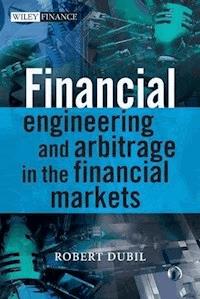
A whole is worth the sum of its parts. Even the most complex structured bond, credit arbitrage strategy or hedge trade can be broken down into its component parts, and if we understand the elemental components, we can then value the whole as the sum of its parts. We can quantify the risk that is hedged and the risk that is left as the residual exposure. If we learn to view all financial trades and securities as engineered packages of building blocks, then we can analyze in which structures some parts may be cheap and some may be rich. It is this relative value arbitrage principle that drives all modern trading and investment. This book is an easy-to-understand guide to the complex world of today's financial markets teaching you what money and capital markets are about through a sequence of arbitrage-based numerical illustrations and exercises enriched with institutional detail. Filled with insights and real life examples from the trading floor, it is essential reading for anyone starting out in trading. Using a unique structural approach to teaching the mechanics of financial markets, the book dissects markets into their common building blocks: spot (cash), forward/futures, and contingent (options) transactions. After explaining how each of these is valued and settled, it exploits the structural uniformity across all markets to introduce the difficult subjects of financially engineered products and complex derivatives. The book avoids stochastic calculus in favour of numeric cash flow calculations, present value tables, and diagrams, explaining options, swaps and credit derivatives without any use of differential equations.
Sie lesen das E-Book in den Legimi-Apps auf:
Seitenzahl: 727
Veröffentlichungsjahr: 2011
Ähnliche



















Contents
Cover
Dedication
Title Page
Copyright
Introduction
1: Purpose and Structure of Financial Markets
1.1 OVERVIEW OF FINANCIAL MARKETS
1.2 RISK SHARING
1.3 TRANSACTIONAL STRUCTURE OF FINANCIAL MARKETS
1.4 ARBITRAGE: PURE VERSUS RELATIVE VALUE
1.5 FINANCIAL INSTITUTIONS: TRANSFORMING INTERMEDIARIES VS BROKER-DEALERS
1.6 PRIMARY (ISSUANCE) AND SECONDARY (RESALE) MARKETS
1.7 MARKET PLAYERS: HEDGERS vs SPECULATORS
1.8 PREVIEW OF THE BOOK
Part I: Relative Value Building Blocks
2: Spot Markets
2.1 BONDS AND ANNUAL BOND MATH
2.2 INTRA-YEAR COMPOUNDING AND DAY-COUNT
2.3 TERM STRUCTURE OF INTEREST RATES AND THE DISCOUNT FACTOR BOOTSTRAP
2.4 INTEREST RATE RISK: DURATION AND CONVEXITY
2.5 EQUITY, COMMODITY, AND CURRENCY MATH
2.6 SHORT SELLING
3: Futures Markets
3.1 FUNDAMENTALS OF FUTURES AND FORWARDS
3.2 FUTURES MECHANICS
3.3 CASH-AND-CARRY ARBITRAGE
3.4 FUTURES NOT SUBJECT TO CASH-AND-CARRY
3.5 YIELD CURVE CONSTRUCTION WITH INTEREST RATE FUTURES
4: Swap Markets
4.1 FUNDAMENTALS OF SWAPS
4.2 INTEREST RATE SWAPS
4.3 CROSS-CURRENCY SWAPS
4.4 EQUITY, COMMODITY, AND EXOTIC SWAPS
5: Options on Prices and Hedge-Based Valuation
5.1 CALL AND PUT PAYOFFS AT EXPIRY
5.2 COMPOSITE PAYOFFS AT EXPIRY
5.3 OPTION VALUES PRIOR TO EXPIRY
5.4 OPTIONS AND FORWARDS, RISK SHARING AND PUT–CALL PARITY
5.5 CURRENCY OPTIONS
5.6 BINOMIAL OPTION PRICING
5.7 BLACK–SCHOLES MODEL AND EXTENSIONS
5.8 RESIDUAL RISK OF OPTIONS: GAMMA, VEGA, AND VOLATILITY
5.9 A REAL-LIFE OPTION PRICING EXERCISE
6: Options on Non-Price Variables
6.1 BLACK MODELS FOR BOND PRICE OPTIONS, CAPS/FLOORS, AND EUROPEAN SWAPTIONS
6.2 CONVEXITY-ADJUSTED MODELS FOR LIBOR FORWARDS, QUANTOS, AND CONSTANT MATURITY SWAPS
6.3 ARBITRAGE-FREE INTEREST RATE MODELS
6.4 EXOTIC INTEREST RATE OPTIONS
7: Default Risk and Credit Derivatives
7.1 CREDIT DEFAULT SWAPS
7.2 A CONSTANT DEFAULT PROBABILITY MODEL
7.3 A DETERMINISTIC CREDIT MIGRATION MODEL
7.4 A POISSON MODEL OF SINGLE ISSUER DEFAULT
7.5 THE DEFAULT CORRELATION OF THE REFERENCE ISSUER AND THE PROTECTION SELLER
Part II: Cash Flow Engineering
8: Structured Finance
8.1 A SIMPLE CLASSIFICATION OF STRUCTURED NOTES
8.2 INTEREST RATE AND YIELD CURVE-BASED STRUCTURED PRODUCTS
8.3 ASSET CLASS-LINKED NOTES
8.4 INSURANCE RISK STRUCTURED PRODUCTS
9: Mortgage-Backed Securities
9.1 MORTGAGE FINANCING BASICS
9.2 PREPAYMENT RISK
9.3 MORTGAGE PASS-THROUGH SECURITIES
9.4 COLLATERALIZED MORTGAGE OBLIGATIONS
9.5 MULTICLASS AND NON-VANILLA CMOs
10: Collateralized Debt Obligations and Basket Credit Derivatives
10.1 COLLATERALIZED DEBT OBLIGATIONS
10.2 BASKET CREDIT DERIVATIVES
10.3 COPULAS AND THE MODELING OF DEFAULT CORRELATION
10.4 SYNTHETIC CDO TRANCHE PRICING AND LOSS ANALYSIS
10.5 CREDIT DERIVATIVE INDEXES
Part III: Cash Flow Engineering
11: Individual Investors: A Survey of Modern Investment Theory
11.1 A BRIEF HISTORY OF INVESTMENT THOUGHT
11.2 FREE CASH FLOW VALUATION OF COMPANIES
11.3 THE MODERN PORTFOLIO THEORY AND THE CAPM
11.4 MULTIFACTOR INDEX MODELS
11.5 FUNDAMENTAL INDEXING
12: Hedge Funds: Alpha, Beta, and Strategy Indexes
12.1 HEDGE FUND STRATEGIES
12.2 PORTABLE ALPHA AND MARKET-NEUTRAL PLAYS
12.3 HEDGE FUND REPLICATION AND STRATEGY INDEXES
13: Banks: Asset–Liability Management
13.1 BANK BALANCE SHEETS AND INCOME STATEMENTS
13.2 INTEREST-SENSITIVE GAP MANAGEMENT
13.3 DURATION GAP MANAGEMENT
13.4 VALUE AT RISK
14: Private Equity, Pension, and Sovereign Funds
14.1 PRIVATE EQUITY
14.2 RISK ALLOCATION FOR PENSION FUNDS AND SOVEREIGN FUNDS
ACKNOWLEDGMENT
References
Index
To Britt, Elsa, Ethan, and illy
This edition first published 2011 © 2011 John Wiley & Sons, Ltd
Registered Office John Wiley & Sons Ltd, The Atrium, Southern Gate, Chichester, West Sussex, PO19 8SQ, United Kingdom
For details of our global editorial offices, for customer services and for information about how to apply for permission to reuse the copyright material in this book please see our website at www.wiley.com.
The right of the author to be identified as the author of this work has been asserted in accordance with the Copyright, Designs and Patents Act 1988.
All rights reserved. No part of this publication may be reproduced, stored in a retrieval system, or transmitted, in any form or by any means, electronic, mechanical, photocopying, recording or otherwise, except as permitted by the UK Copyright, Designs and Patents Act 1988, without the prior permission of the publisher.
Wiley also publishes its books in a variety of electronic formats and by print-on-demand. Some content that appears in standard print versions of this book may not be available in other formats. For more information about Wiley products, visit us at www.wiley.com.
Designations used by companies to distinguish their products are often claimed as trademarks. All brand names and product names used in this book are trade names, service marks, trademarks or registered trademarks of their respective owners. The publisher is not associated with any product or vendor mentioned in this book. This publication is designed to provide accurate and authoritative information in regard to the subject matter covered. It is sold on the understanding that the publisher is not engaged in rendering professional services. If professional advice or other expert assistance is required, the services of a competent professional should be sought.
Library of Congress Cataloging-in-Publication Data
Dubil, Robert. Financial engineering and arbitrage in the financial markets / Robert Dubil. p. cm. – (The Wiley finance series) Includes bibliographical references and index. ISBN 978-0-470-74601-1 (cloth : alk. paper) 1. Financial engineering. 2. Arbitrage. 3. Capital market. 4. Investments–Mathematics. I. Title. HG4523.D83 2011 332′.041–dc23
2011017543
ISBN 978-0-470-74601-1 (hardback) ISBN 978-1-119-95062-2 (ebk) ISBN 978-1-119-95063-9 (ebk) ISBN 978-1-119-95064-6 (ebk)
Introduction
This book is an update and an improvement on my original 2004 book.
The update is the discussion of the many new things that happened in the last 10 years. Hedge funds took over the relative value strategies instead of relying on sell-side dealers pitching structured products. Credit derivatives (default swaps and collateralized debt obligations) became part of the standard tool-kit. Statistical arbitrage and tactical asset allocation edged out a lot of buy-and-hold funds. Indexing has undergone a near revolution to include new asset classes and strategies.
The improvement is in the presentation. The method of the original book was to present the difficult subjects of arbitrage, derivative pricing, and financial engineering in terms of numbers – cash flow discounting, binomial trees, tables, and diagrams – rather than differential equations. This book follows that appealing formula. All examples are worked out numerically, but they are now enhanced with flow diagrams, and are connected across the markets and chapters. Another big improvement, hopefully, is the division of the book into three parts, each offering a different perspective. If you watched three boys play with Lego, you would want to know the types of blocks (colors, the number of pegs, etc.) they are playing with, what they are building with them (a robot or a fire station), and why each boy is playing. The three parts of this book are just like that: Part I is the basic spot, futures, swap, and option transactions as building blocks; Part II illustrates examples of engineering those building blocks into CDOs or mortgage-backed securities (MBSs); and Part III relates to the players: individuals, banks, hedge funds, and private equity.
The main premise is that all financial markets are organized in the same way. All have spot (cash) transactions, forward/futures transactions and options, as well as complex swap arrangements combining all three. If you master the spot-futures cash-and-carry trade in one market (stock index arbitrage), then you can easily grasp it in another (currency-covered interest parity). If you master how delta or vega risk is hedged in equity markets, then you are likely to understand the same process in commodities or interest rates. Building a fire station with red Lego blocks is similar to building a space ship with green and blue blocks. Instead of focusing on the purpose of individual financial markets, the book focuses on the common structure. What we are building is an arbitrage or a relative value trade to profit from the real or perceived mispricing of risk. The blocks we use have the same shape, only a different color.
The building clusters in all structured products and strategies are: spot and futures trading mechanics, spot-futures linkages, option pricing, option linkages to futures, and spot, swaps, and their decomposition into bonds and forwards. The improvements in Part I consist of new chapters and easier-to-follow number and flow diagram presentations. The options discussion is split into two: options on price variables (equities, currencies, etc.) and options on non-price variables (interest rates). In the latter, we don't model prices directly – instead we model rates, derive the prices from the rates, then we price derivatives. The part includes a new chapter on credit derivatives. Part II introduces financial cash flow engineering. In addition to a survey of the perennially popular structured products, the mortgage section is substantially clearer and more complete; and the CDO section is entirely new. The analogy between prepayment and credit risk tranching should be very hard to miss. Part III is completely new and is mostly concerned with “why”. Chapter , taking an individual investor perspective, is a repository of all-you-need-to-know about modern portfolio theory and its morph into statistical arbitrage methods, as well as fundamental equity valuation methods. Chapter scratches the surface of hedge fund strategies and the new area of strategy indexes as a beta way of getting the alpha. Chapter looks at the traditional asset-liability management for banks, which in many cases is still more useful than the newer voluminously analyzed VaR methods. Chapter focuses mainly on private equity, but it also looks at liability/politics, constrained pension funds, endowments, and sovereign funds. While Part III does not answer all the whys, it hopefully illustrates the main motivations and quantitative techniques pursued by the key players in the financial markets.
I apologize for any mathematical errors, long sentences, or awkward grammar. I also apologize for using the royal “we” throughout the book.
Now, please find a comfortable chair, grab a pencil and a calculator, and enjoy!
1
Purpose and Structure of Financial Markets
1.1 OVERVIEW OF FINANCIAL MARKETS
Financial markets play a major role in allocating excess savings to businesses in the economy. This desirable process takes various forms. Commercial banks take depositors’ money and lend it to manufacturers, service firms, or home buyers who finance new construction or improvements. Investment banks bring to market equity and debt offerings of newly formed or expanding corporations. Governments issue short- and long-term bonds to finance the construction of new roads, schools, and transportation networks. Investors (bank depositors and securities buyers) supply their funds in order to shift their consumption into the future by earning interest, dividends, and capital gains.
The process of transferring savings into investment involves various participants: individuals, pension and mutual funds, banks, governments, insurance companies, industrial corporations, stock exchanges, over-the-counter (OTC) dealer networks, and others. All these agents can, at different times, serve as demanders and suppliers of funds, or as intermediaries. Economic theorists ponder the optimal design of securities and institutions, where “optimal” implies the best outcomes – lowest cost, least disputes, fastest – for security issuers and investors, as well as for the society as a whole. Are stocks, bonds, or mortgage-backed securities, the outcomes of optimal design or happenstance? Do we need “greedy” investment bankers, securities dealers, or brokers? What role do financial exchanges play in today's economy? Why do developing nations strive to establish stock exchanges even though they often have no stocks to trade on them? Once we answer these basic questions, it will not be difficult to see why all the financial markets are organically the same. In product markets, the four-cycle radiator-cooled engine-powered car and the RAM memory-bus-hard disk personal computer have withstood the test of time. And so has the spot–futures–options, primary–secondary, risk transfer-driven design of the financial market. In the wake of the 2008 crisis we have seen very limited tweaks to the design, because it is so robust.
All markets have two separate segments: original issue and resale. These are characterized by different buyers, sellers, and different intermediaries, and they perform different timing functions. The first transfers capital from the suppliers of funds (investors) to the demanders of capital (businesses); the second transfers capital from the suppliers of capital (investors) to other suppliers of capital (investors). The two segments are:
Primary markets (issuer-to-investor transactions with investment banks as intermediaries in the securities markets, and banks, insurance companies and others in the loan markets);Secondary markets (investor-to-investor transactions with broker-dealers and exchanges as intermediaries in the securities markets, and mostly banks in the loan markets).All markets have the originators, or issuers, of the claims traded in them (the original demanders of funds) and two distinctive groups of agents operating as investors, or suppliers of funds. The two groups of funds suppliers have completely divergent motives. The first group aims to eliminate the undesirable risks of the traded assets and earn money on repackaging, the other actively seeks to take on those risks in exchange for uncertain compensation. The two groups are:
Hedgers (dealers who aim to offset primary risks, be left with short-term or secondary risks, and earn spread from dealing);Speculators (investors who hold positions for longer periods without simultaneously holding positions which offset primary risks).The claims traded in all financial markets can be delivered in three ways. The first is an immediate exchange of an asset for cash. The second is an agreement on the price to be paid with the exchange taking place at a predetermined time in the future. The last is a delivery in the future, contingent upon an outcome of a financial event, e.g. level of stock price or interest rate, with a fee paid up front for the right of delivery. The three market segments based on the delivery type are:
Spot or cash markets (immediate delivery)Forward markets (mandatory future delivery or settlement)Options markets (contingent future delivery or settlement)We focus on these structural distinctions to bring out the fact that all markets not only transfer funds from suppliers to users, but they also transfer risk from users to suppliers. They allow risk transfer or risk sharing between investors. The majority of the trading activity in today's market is motivated by risk transfer with the acquirer of risk receiving some form of certain or contingent compensation. The relative price of risk in the market is governed by a web of relatively simple arbitrage relationships that link all the markets. These allow market participants to assess instantaneously the relative attractiveness of various investments within each market segment or across all of them. Understanding these relationships is mandatory for anyone trying to make sense of the vast and complex web of today's markets.
1.2 RISK SHARING
All financial contracts, whether in the form of securities or not, can be viewed as bundles, or packages of unit payoff claims (mini-contracts), each for a specific date in the future and a specific set of outcomes. In financial economics, these are called state-contingent claims.
Let us start with the simplest illustration: an insurance contract. A 1-year life insurance policy promising to pay $1,000,000 in the event of the insured's death can be viewed as a package of 12 monthly claims (lottery tickets), each paying $1,000,000 if the holder dies during that month. The value of the policy up front (the premium) is equal to the sum of the values of all the individual tickets. As the holder of the policy goes through the year, he can discard tickets that did not pay off, and the value of the policy to him diminishes until it reaches zero at the end of the coverage period.
Lesen Sie weiter in der vollständigen Ausgabe!
Lesen Sie weiter in der vollständigen Ausgabe!
Lesen Sie weiter in der vollständigen Ausgabe!
Lesen Sie weiter in der vollständigen Ausgabe!
Lesen Sie weiter in der vollständigen Ausgabe!
Lesen Sie weiter in der vollständigen Ausgabe!
Lesen Sie weiter in der vollständigen Ausgabe!
Lesen Sie weiter in der vollständigen Ausgabe!
Lesen Sie weiter in der vollständigen Ausgabe!
Lesen Sie weiter in der vollständigen Ausgabe!
Lesen Sie weiter in der vollständigen Ausgabe!
Lesen Sie weiter in der vollständigen Ausgabe!
Lesen Sie weiter in der vollständigen Ausgabe!
Lesen Sie weiter in der vollständigen Ausgabe!
Lesen Sie weiter in der vollständigen Ausgabe!
Lesen Sie weiter in der vollständigen Ausgabe!
Lesen Sie weiter in der vollständigen Ausgabe!
Lesen Sie weiter in der vollständigen Ausgabe!




