


23,99 €
Mehr erfahren.
- Herausgeber: John Wiley & Sons
- Kategorie: Fachliteratur
- Sprache: Englisch
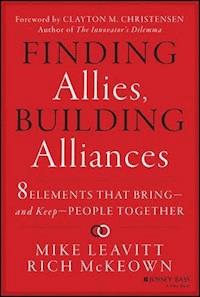
From Governor and White House cabinet member Mike Leavitt: how to find collaborative solutions to the greatest challenges Your business challenges extend far beyond you and your firm, to the competitors within your industry and the regulators outside it. Finding solutions to larger issues requires cooperation between diverse stakeholders, and in this rapidly changing world, only those able to adapt and network successfully will produce fast, competitive solutions. How can leaders successfully bridge divides and turn competitors into collaborators? Leavitt and McKeown explain how a well-chosen network can become a powerful alliance. Whether you're launching a new partnership, or rehabilitating one already in progress, Finding Allies, Building Alliances will help you find workable solutions to the most complex problems. * Written by Mike Leavitt, former Governor of Utah who brought the 2002 Winter Olympics to Salt Lake City, former US Secretary of Health and human services, and former head of the EPA; with his former Chief of Staff and business partner Rich McKeown, co-founder of Leavitt Partners * Includes a framework of 8 elements that will help any leader foster and maintain an effective, productive collaborative venture * Shows how better collaboration can not only solve problems, but boost the competitiveness and resilience in all sectors Finding Allies, Building Alliances is essential reading for any business leader looking for transformative solutions and a sustainable future.
Sie lesen das E-Book in den Legimi-Apps auf:
Seitenzahl: 333
Veröffentlichungsjahr: 2013
Ähnliche



















CONTENTS
COVER
TITLE PAGE
COPYRIGHT
DEDICATION
FOREWORD
INTRODUCTION
ONE: The Collaborative Foundation
BITTER COMPETITORS, RESPECTFUL COLLABORATORS
THE VALUE OF A VALUE ALLIANCE TODAY
A TRADITION AS OLD AS THE UNITED STATES
VALUE ALLIANCES TAKE MANY FORMS
FINDING THE RIGHT ELEMENTS
TWO: A Common Pain
COLLABORATIVE RESPONSES TO SIGNIFICANT PAIN
THREE TYPES OF MOTIVATION
CAN YOU DESCRIBE YOUR PAIN ON A SCALE OF 1 TO 5?
THREE: A Convener of Stature
WHAT MAKES A CONVENER OF STATURE?
DRAW ON INFORMAL CONVENER EXPERIENCES
FOUR: Representatives of Substance
SUBSTANCE OF THREE TYPES
A FIVE-STEP PROCESS
SECONDARY INVOLVEMENT
OBSERVING THE REPRESENTATIVES IN ACTION
FIVE: Committed Leadership
CONVENING VERSUS LEADING
THE RANGE OF RESPONSIBILITIES
COMMITTED LEADERS WE HAVE KNOWN
THE CONSENSUS QUESTION
SIX: A Clearly Defined Purpose
SUCCESSFUL PURPOSE STATEMENTS
A LIFE-SAVING PURPOSE
THREE TIME PERIODS
HOW TO COLLABORATE PURPOSEFULLY: A STEP-BY-STEP GUIDE
THE ART OF PURPOSE
SEVEN: A Formal Charter
PSYCHOLOGICAL AND MORAL BUY-IN
THE ESSENTIAL INGREDIENTS
A CHARTER EXAMPLE
SIGNING THE CHARTER
EIGHT: The Northbound Train
A POLITICAL TRAIN HEADING NORTH
WHEN A NORTHBOUND TRAIN BEGINS TO SLOW
IT’S OK TO FAIL—JUST DO IT EARLY
CREATING THE PERCEPTION OF A NORTHBOUND TRAIN
SIGNS OF A NORTHBOUND TRAIN
NINE: Defining Common Ground
COMMON ASSUMPTIONS
COMMON STANDARDS
COMMON SOURCES AND A COMMON BASE OF INFORMATION
MITIGATING DISAGREEMENT
TWO TECHNIQUES TO FOSTER COMMON UNDERSTANDING
WHY GREAT COLLABORATIONS RUN ON THE SAME RAIL GAUGE
HOW TO FIND AND ESTABLISH COMMON GROUND
CAN YOU AGREE?
TEN: Collaborative Intelligence
FIVE CRUCIAL TRAITS OF CI
DIVERSE COUNTRIES, CULTURES, CONCERNS
TOGETHERNESS WHEN THINGS GET TOUGH
WHAT DOES COLLECTIVE COLLABORATIVE INTELLIGENCE LOOK LIKE?
RESPONDING TO THE LOW-CI INDIVIDUAL
IDENTIFYING CI LEVELS
ELEVEN: Alliance Enterprises
THREE KEY TRAITS
VARIOUS FORMS OF ALLIANCE ENTERPRISE
EVOLVING BEYOND ORIGINAL CONCEPT
ALLIANCE ENTERPRISES ARE THE FUTURE . . . AND INCREASINGLY, THE PRESENT
TWELVE: Collaborative Competitive Edge
VIRTUOUS CYCLE OF COLLABORATIVE COMPETITION
CHOOSING ALLIANCES WISELY
CONCLUSION
A TIME FOR GREAT COLLABORATIONS
KEY TRENDS
COLLABORATION AND FREEDOM
APPENDIX: WRAP CHARTER
NOTES
ACKNOWLEDGMENTS
ABOUT THE AUTHORS
INDEX
End User License Agreement
Pages
i
ii
iii
iv
v
ix
x
xi
1
2
3
4
5
7
8
9
10
11
12
13
14
15
16
17
18
19
20
21
22
23
24
25
27
28
29
30
31
32
33
34
35
36
37
38
39
41
42
43
44
45
46
47
48
49
50
51
52
53
55
56
57
58
59
60
61
62
63
64
65
66
67
68
69
70
71
72
73
74
75
76
77
78
79
80
81
83
84
85
86
87
88
89
90
91
92
93
94
95
96
97
98
99
100
101
102
103
104
105
106
107
108
109
110
111
112
113
114
115
116
117
118
119
120
121
122
123
125
126
127
128
129
130
131
132
133
134
135
136
137
138
139
140
141
142
143
145
146
147
148
149
150
151
152
153
154
155
156
157
158
159
160
161
162
163
164
165
166
167
168
169
170
171
173
174
175
176
177
178
179
180
181
183
184
185
186
187
188
189
190
191
192
193
194
195
197
198
199
200
201
202
203
204
205
206
207
208
209
210
211
212
213
214
215
216
217
218
219
220
221
222
223
224
225
226
227
228
Guide
Cover
CONTENTS
Start Reading
List of Tables
Table 7.1 Formal Charter Cross Examination
Praise for Finding Allies, Building Alliances
“Given their remarkable success as leaders in both business and government, Mike Leavitt and Rich McKeown have written the ultimate how-to on collaborative leading in business, government, and virtually any organization. In these transformational times, when organizational challenges have never been greater, bringing and keeping people together has never been more critical. The eight elements described in Finding Allies, Building Alliances create a playbook for success for every reader. I couldn’t recommend it more highly.”
—Senator Tom Daschle, former U.S. Senate majority leader
“I observed firsthand Mike Leavitt’s skill at bringing people together and building coalitions in government, politics, and international affairs. Finding Allies, Building Alliances explains how successful managers cooperate to achieve goals and get things done in an environment brimming with complexity, uncertainty, and a multiplicity of actors.”
—Robert B. Zoellick, former president of the World Bank Group,U.S. Deputy Secretary of State, U.S. Trade Representative
“I’ve had the opportunity to work with Mike Leavitt and Rich McKeown and see firsthand their skills as problem solvers that made them so effective at finding solutions on the ground in China. Through vivid examples here, he lays out how to get individuals with seemingly competing interests to work together towards solving a shared problem.”
—Henry M. Paulson Jr., chairman, the Paulson Institute, and former secretary, U.S. Department of Treasury
“In our increasingly interconnected world, organizations face a growing number of challenges—disruptive technologies, regulatory reform, environmental issues—they cannot tackle in isolation. In Finding Allies, Building Alliances, Leavitt and McKeown advocate for formal, process-driven collaborations between organizations facing collective problems, explicitly designed to achieve an outcome with value for each of them. Great collaborations cannot be undertaken casually—they require effort, leadership, structure, process, and commitment. Finding Allies, Building Alliances offers a unique and practical approach to co-opetition in the 21st century.”
—Craig Mundie, senior advisor to the CEO, Microsoft Corporation
“In Finding Allies, Building Alliances, Leavitt and McKeown lay out practical steps any leader can follow to convene collaborators, gain consensus, and craft lasting solutions. Here is the recipe for any organization to solve problems more efficiently.”
—Harvey V. Fineberg, MD, PhD, president, Institute of Medicine
“Having worked closely with Governor Leavitt and Rich McKeown to create Western Governors University, I can testify that they are masters at bringing together diverse interests into powerful alliances. Finding Allies, Building Alliances will benefit anyone in business or nonprofit leadership, since the right alliances with the right partners are a key to success.”
—Robert W. Mendenhall, PhD, president, Western Governors University
Finding Allies, Building Alliances
8 ELEMENTS THAT BRING—AND KEEP—PEOPLE TOGETHER
Mike Leavitt
Rich McKeown
Jacket design by Adrian Morgan
Copyright © 2013 by Third Chapter, LLC. All rights reserved.
Published by Jossey-BassA Wiley BrandOne Montgomery Street, Suite 1200, San Francisco, CA 94104-4594—www.josseybass.com
No part of this publication may be reproduced, stored in a retrieval system, or transmitted in any form or by any means, electronic, mechanical, photocopying, recording, scanning, or otherwise, except as permitted under Section 107 or 108 of the 1976 United States Copyright Act, without either the prior written permission of the publisher, or authorization through payment of the appropriate per-copy fee to the Copyright Clearance Center, Inc., 222 Rosewood Drive, Danvers, MA 01923, 978-750-8400, fax 978-646-8600, or on the Web at www.copyright.com. Requests to the publisher for permission should be addressed to the Permissions Department, John Wiley & Sons, Inc., 111 River Street, Hoboken, NJ 07030, 201-748-6011, fax 201-748-6008, or online at www.wiley.com/go/permissions.
Limit of Liability/Disclaimer of Warranty: While the publisher and author have used their best efforts in preparing this book, they make no representations or warranties with respect to the accuracy or completeness of the contents of this book and specifically disclaim any implied warranties of merchantability or fitness for a particular purpose. No warranty may be created or extended by sales representatives or written sales materials. The advice and strategies contained herein may not be suitable for your situation. You should consult with a professional where appropriate. Neither the publisher nor author shall be liable for any loss of profit or any other commercial damages, including but not limited to special, incidental, consequential, or other damages. Readers should be aware that Internet Web sites offered as citations and/or sources for further information may have changed or disappeared between the time this was written and when it is read.
Jossey-Bass books and products are available through most bookstores. To contact Jossey-Bass directly call our Customer Care Department within the U.S. at 800-956-7739, outside the U.S. at 317-572-3986, or fax 317-572-4002.
Wiley publishes in a variety of print and electronic formats and by print-on-demand. Some material included with standard print versions of this book may not be included in e-books or in print-on-demand. If this book refers to media such as a CD or DVD that is not included in the version you purchased, you may download this material at http://booksupport.wiley.com. For more information about Wiley products, visit www.wiley.com.
Library of Congress Cataloging-in-Publication Data
Leavitt, Mike (Mike Okerlund), 1951-
Finding allies, building alliances : 8 elements that bring—and keep—people together / Mike Leavitt, Rich McKeown.—First edition.pages cmIncludes bibliographical references and index.ISBN 978-1-118-24792-1 (hardback); ISBN 978-1-118-28587-9 (ebk); ISBN 978-1-118-28247-2 (ebk)1. Strategic alliances (Business) 2. Business networks. I. McKeown, Rich, 1946-II. Title.HD69.S8L42 2013658’.046—dc23
2013020325
FIRST EDITION
HB Printing 10 9 8 7 6 5 4 3 2 1
To our collaboratively inspired spouses,Jackie Leavitt and Barb McKeown,who have endured and even enjoyedour adventures in public and private service.
FOREWORDA THEORY ABOUT ALLIANCES AND PARTNERSHIPS
by Clayton M. Christensen
Each faculty member in my group at the Harvard Business School is invited annually to summarize his or her current research to the other members of the group. I titled my talk last year “We ain’t discovering new ideas.” To explain this to my colleagues, I created a spreadsheet that covered the huge whiteboard that covered the front of the room. In the top row on the left-most column I wrote . Then below it in that column I labeled the rows, in sequence, , and then . I explained that the lowest level—individuals—was nested within teams, which was nested within business units, which was nested in corporations, and so on. Then in the top cell of each column, I labeled the column by a prominent problem that bedevils managers. In the top of the second column, for example, I wrote, I labeled the next column the next was and so on across the board. With this spreadsheet as an organizational mechanism, my colleagues and I began to fill in, as best we could, the dominant theory or research that academia had developed for each cell.
Lesen Sie weiter in der vollständigen Ausgabe!
Lesen Sie weiter in der vollständigen Ausgabe!
Lesen Sie weiter in der vollständigen Ausgabe!
Lesen Sie weiter in der vollständigen Ausgabe!
Lesen Sie weiter in der vollständigen Ausgabe!
Lesen Sie weiter in der vollständigen Ausgabe!
Lesen Sie weiter in der vollständigen Ausgabe!
Lesen Sie weiter in der vollständigen Ausgabe!
Lesen Sie weiter in der vollständigen Ausgabe!
Lesen Sie weiter in der vollständigen Ausgabe!
Lesen Sie weiter in der vollständigen Ausgabe!
Lesen Sie weiter in der vollständigen Ausgabe!
Lesen Sie weiter in der vollständigen Ausgabe!
Lesen Sie weiter in der vollständigen Ausgabe!
Lesen Sie weiter in der vollständigen Ausgabe!
Lesen Sie weiter in der vollständigen Ausgabe!
Lesen Sie weiter in der vollständigen Ausgabe!
Lesen Sie weiter in der vollständigen Ausgabe!
Lesen Sie weiter in der vollständigen Ausgabe!
Lesen Sie weiter in der vollständigen Ausgabe!




