


Erhalten Sie Zugang zu diesem und mehr als 300000 Büchern ab EUR 5,99 monatlich.
- Herausgeber: Book Duo Creative
- Sprache: Englisch
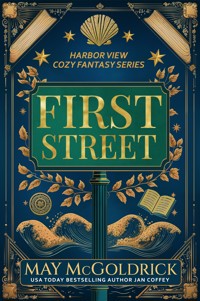
Harbor View Cozy Fantasy Series Welcome to Harbor View, where the gossip travels fast, the ghosts linger longer, and no secret stays hidden forever... When Skye Randall returns to her quirky New England hometown after her mother's sudden death, she brings along her fifteen-year-old daughter, two weeks' worth of plans, and absolutely no intention of staying. She's here to settle the estate, sell off the antiques, and get back to California to rescue her crumbling marriage. Easy, right? Not a chance. Harbor View has other ideas. The cozy seaside village comes with nosy neighbors, salty sea air that smells faintly of magic, and two opinionated ghosts haunting the bookstore and antique shop facing First Street. Skye's kept their existence a secret from her daughter, but when strange happenings suggest Clare's death wasn't just a tragic accident, she realizes she's going to need all the help she can get—even if some of it comes from the other side. As Skye and Ocean navigate loss, family secrets, and a whole lot of supernatural shenanigans, they'll discover that some legacies are worth fighting for. And in Harbor View, the past doesn't just knock politely—it barges right in. In a town where secrets linger and its spirits refuse to stay quiet, two weeks might change everything! Heartfelt, funny, and filled with seaside magic, First Street is the first book in the Harbor View Cozy Fantasy series...where family ties, ghostly help, and a touch of mischief make all the difference.
Sie lesen das E-Book in den Legimi-Apps auf:
Seitenzahl: 292
Veröffentlichungsjahr: 2025
Das E-Book (TTS) können Sie hören im Abo „Legimi Premium” in Legimi-Apps auf:
Ähnliche




















FIRST STREET
HARBOR VIEW COZY FANTASY SERIES
BOOK I
MAY MCGOLDRICK
withJAN COFFEY
Thank you for reading. In the event that you appreciate this book, please consider sharing the good word(s) by leaving a review, or connect with the authors.
First Street: Harbor View Cozy Fantasy Series © 2025 by Nikoo K. and James A. McGoldrick
All rights reserved. Except for use in any review, the reproduction or utilization of this work in whole or in part in any form by any electronic, mechanical or other means, now known or hereafter invented, including xerography, photocopying and recording, or in any information storage or retrieval system, is forbidden without the written permission of the publisher: Book Duo Creative.
NO AI TRAINING: Without in any way limiting the author’s [and publisher’s] exclusive rights under copyright, any use of this publication to “train” generative artificial intelligence (AI) technologies to generate text is expressly prohibited. The author reserves all rights to license uses of this work for generative AI training and development of machine learning language models.
Contents
Prologue
Chapter 1
Chapter 2
Chapter 3
Chapter 4
Chapter 5
Chapter 6
Chapter 7
Chapter 8
Chapter 9
Chapter 10
Chapter 11
Chapter 12
Chapter 13
Chapter 14
Chapter 15
Chapter 16
Chapter 17
Chapter 18
Chapter 19
Chapter 20
Chapter 21
Chapter 22
Chapter 23
Chapter 24
Chapter 25
Chapter 26
Chapter 27
Chapter 28
Chapter 29
Chapter 30
Chapter 31
Chapter 32
Epilogue
Author’s Note
Edition Note
About the Author
Also by May McGoldrick, Jan Coffey & Nik James
To all our sisters and brothers whose bodies succumbed to cancer,
but whose spirits live on—
guiding us, inspiring us, and reminding us every day
that love and memory are stronger than loss.
LOVE NEVER DIES!
Prologue
Welcome to Harbor View.
Tucked into a sliver of land that stretches into the sea like a narwhal’s tusk, Harbor View is no ordinary New England village. It’s a place where time slows down and the wind always has something to say.
Stand at the edge of its gravel lot—the southernmost tip of town—and the world seems to split in two. To your left, the Atlantic rolls wild and restless, slate-blue and endless. To your right, the harbor cradles quiet waters in shades of silver and green, a shimmering mirror of Long Island Sound.
Harbor View is a town of contrast, where secrets linger like sea mist and stories wait just below the surface.
Turn around, and you’ll see white and gray clapboard houses, weathered shops, and pointy-spired churches tucked into a patchwork of narrow streets and shady, tree-lined lanes. To the north, a tangle of salt marsh and an old rail line form a natural border, as if the village itself decided long ago to face the ocean and forget the rest.
And truly, the people of Harbor View have always looked seaward. That’s where the tide brings in news. And where the past never really lets go.
From its earliest days, the briny waters have formed the town’s history. After its first colonial inhabitants purchased—which means, of course, stole—the area from a tribe of Pequots, rude shelters went up to house the fishing families and the farmers who foolishly thought they could pry some crops out of the salty, rocky soil. Fortunately for the new townspeople, it all worked out, with coastal traders making it a regular stopping point between Newport and New Haven.
Harbor View even had its blink-and-you’ll-miss-it moment in the American Revolution. A single cannonball was fired—just one—at a passing British warship. The cannon still sits in Battle Square, rusted and proud, a monument to the town’s brief brush with glory. Locals like to say it’s now guarding the little stone-pillared bank behind it. Though it’s unclear from what.
But never mind the ancient history.
Our story, which absolutely takes place in the present (promise!), actually began in the early 1900s. That’s when New York socialites, those without quite enough money to summer in Newport, started flocking to Harbor View instead.
We’ll get to all that. The socialites. The Prohibition-era whisky runners. The fishing boats that slowly gave way to white-hulled pleasure craft and yacht-club fundraisers.
But first, let’s talk about what’s happening now—because something in Harbor View is stirring.
These days, Harbor View might pass for quaint, if it weren’t for the hulking, abandoned brick fish-canning factory looming across Washington Street from Battle Square. ‘Quaint’ is a word that shows up on travel blogs and tourist brochures, but don’t let that fool you. The locals mostly hate it. They prefer the grit, the character. In fact, many would say the factory’s crumbling shell gives the town just the right amount of edge.
You’ll find that Harbor View is full of hardy souls and salt-scrubbed personalities. In the warmer months, poets, painters, and sailing enthusiasts drift in with the sea breeze. Year-round, it’s home to book lovers, contrarians, eccentrics, and more than a few no-nonsense Daughters of the American Revolution.
The winding lanes are dotted with gift shops, antique stores, a cozy library, cafés, a couple of restaurants, a creaky old hardware store, a tucked-away grocery, a beloved bookstore, and at least two, possibly three, art galleries, depending on who’s renting what this season.
Let’s get you oriented. Washington Street and Franklin Street both stretch north from the point like the arms of a tuning fork. A short walk up either brings you to the cross-lanes that stitch the village together—First Street, Second Street, and so on.
But it’s First Street that matters right now.
Tucked among a row of timeworn homes sits a lively little bookstore. There, you’ll always find a few customers browsing, and always the scent of old paper and fresh coffee in the air. Directly across the narrow street, half-shielded by a picket fence and a house begging for a paint job (or mercy), you’ll find a weary antique shop with more stories than sales.
Here’s the part most folks don’t know: both the bookstore and the antique shop come with… well, a ghost. Two of them, in fact. Long-time residents—about a century, give or take.
Don’t let that keep you out.
The ghosts aren’t the ones you need to worry about. It’s the living in Harbor View who are finally starting to stir.
Here comes one now...
ChapterOne
Skye
It always hit me like a wrecking ball to the soul, that big green exit sign on I-95. Even now, seeing it in the distance brought back flashes of memories I’d somehow locked so deep in my brain that several years of therapy, and more than a few bottles of wine, had barely scratched.
It had been winter. Sleet and ice and snow all mixed. And cold. A car crumpled around the base of that very sign. A ten-year-old girl, wide-eyed and shivering, crawling from the wreckage and planting herself on a bank of wet, grainy brown snow. Breathless and dazed, but somehow less afraid than she’d been an hour before impact.
Funny how life works. Sometimes, a crash isn’t the scariest thing in a young girl’s life.
That’s how Clare and I met. She’d scooped me up from the side of the road like a lost kitten, depositing me in the warmth of her car while the world around us swarmed with flashing lights and loud voices. Firetrucks, ambulances, hard-faced road crews. All working to pry my mother’s body from the wreckage.
She was dead. I knew it before I even crawled out through the shattered window. Her unseeing eyes, the blood splattered across the dashboard, the unsettling calm on her face that almost seemed to whisper, Safe. Finally safe. It was a look that I have yet to make peace with, considering she was leaving me behind.
Then, the barrage of questions from people in uniform. And my answers, when they came, were blunt, hollow, stripped of emotion. Stunned, I guess.
No one to call.
I don’t have a father.
No family.
No, I don’t know where we were going.
We live in my mother’s car. That’s our home.
Yes, for a long time. That’s all we have. Had.
And now, even that was gone.
Through it all, my fingers clung to Clare’s hand. And she never let go. Not once. She was the first person who held onto me and promised she would never let go. And she kept that promise.
Sort of a miracle she’d been driving by that day. Definitely a miracle that she stopped. When no one else would take me in, she did. First as an unofficial foster kid, then as her own when she adopted me. A single woman in her forties, she had no patience for nonsense and even less for the complications that came with a homeless, malnourished child who lacked education, manners, and everything in between.
But she never gave up. She fought for me, stood by me. And as I got older, she weathered every moody storm of my teen rebellion with patience and grace. She was there through every turning point—graduations, heartbreaks, career changes, late-night phone calls when life felt too heavy. Even when I thought I didn’t need her, she showed up for me. With wisdom. With laughter. With unconditional love.
Clare Randall. Thinking of her now, tears blurred my vision. My mother. Headstrong, stubborn, ornery. She tried to hide it, but she had a heart of gold.
Regret churned in my stomach as I thought of all the times in the past decade I hadn’t seen her enough, hadn’t called her enough. The bond we had once forged had faded into nothing more than once-a-month calls, birthdays, and occasional holiday visits. But it was always Clare who made the effort. She booked flights to California, came when I needed her, and reminded me, over and over, that I was still hers. Even as my life spun faster and faster, and sometimes out of control, she remained my anchor.
My marriage to Rhys turned an already turbulent life into a full-blown hurricane. Deadlines. Unpaid bills. The constant hustle to keep us afloat. Rhys was an actor—always chasing the next audition, the next small role, the next ‘maybe.’ That’s how the industry worked. Every callback held the promise of a breakthrough. Every ‘no’ felt like starting over. Feast or famine, but mostly famine.
Then we had a baby.
I tried to do it all. Wear every hat. Be everything for everyone. As a freelance writer, I was barely scraping together a living. It was just a different kind of famine.
I never wanted to burden Clare with our mess, so I kept putting off calling her. Told myself I’d do it tomorrow. Next week. That the next visit would make up for the last short one. I kept promising myself, and her, that we’d spend the summer in Harbor View. But time slipped away.
And now Clare, the woman who had fought so hard to hold on to me, was gone.
“Mom, don’t miss the exit.”
Ocean’s voice yanked me back to reality, away from the ghosts of the past. The rental car hugged the curve as we flew onto the exit.
“You’ve got those red patches on your face again.”
I glanced in the mirror. Stress always brought on hives. “You’re right. I look diseased.”
“You don’t look diseased. You just look...sad. Grieving. Or whatever.” She paused. “I miss her too.”
She was right. As usual. There hadn’t been enough time to process any of it.
First came the phone call from Arthur, the bookstore owner across the street. Clare’s only friend. The news had blindsided me. Guilt would follow later.
I’m so sorry, Skye. There’s been a freak accident...
A rainy night. Late. Clare had been poking around in her antique store, the Salt Box, her pride and joy. A slip, a fall, the unforgiving edge of a marble tabletop. The EMTs said she’d died instantly.
That was it. My mother was gone.
Arthur’s voice had been gentle but firm. “How soon can you get back here?”
I’d told him I’d be there in a couple of days. It had turned into ten days.
Even that had been a scramble. Juggling deadlines, asking for extensions, getting through Ocean’s last week of school, crossing off the endless list of things that had to happen before we could hit the road. It was overwhelming, but somehow we pulled it off.
“It’s okay to cry, Mom. Grief’s not like some to-do list where you can just check things off and move on.”
I glanced at her, one eyebrow raised. “What TikTok therapist did you steal that from?”
She rolled her eyes. “Wow. Some credit, for once. That was all me.”
I shook my head.
Ocean shrugged. “Like you always say. Fifteen going on thirty.”
I couldn’t help but smile.
Motherhood was a lot of things—exhausting, frustrating, a never-ending cycle of negotiating screen time, debating skirt lengths, and putting my foot down about piercings and tattoos. It meant sleepless nights, eye rolls, slammed doors, and so many moments of second-guessing myself. But right now, hearing the quiet concern in her voice, feeling the way her words reached out to steady me, I felt something else. Love. The warm, swelling kind that spread through my chest like sunlight breaking through a storm cloud. The kind that reminded me we were still tethered, mother and daughter, even in all the chaos.
And this past spring, chaos didn’t just come from thin finances.
My marriage was crumbling.
Rhys had finally landed his big break. A supporting role in a feature film shooting in New Mexico. He’d already been gone a month, with production expected to stretch into fall.
He came home for one weekend, just before I got the call about Clare. Filming had been shut down temporarily due to a safety issue.
That weekend was a disaster.
We fought. Sharp words. Deep cuts. The kind you don’t come back from easily.
He said it was his time now. That he’d sacrificed too much to let this opportunity pass him by. He needed space. Freedom to give everything to his career.
As if I hadn’t given him everything already.
While he’d chased auditions, I worked. While he’d partied late into the night, I paid the bills. I held our lives together while he waited for his shot. And now, with his dream finally within reach, he expected more from me.
What did wanting space mean? Was he asking for a divorce? I asked him that directly. But he said no.
I was exhausted. Drained by the excuses. Done begging for time, for presence, for partnership. Long-distance wasn’t working.
When he suggested Ocean and I join him for the summer, it made sense. School would be out. My work was remote. That was the plan.
Then the call came. Clare had died.
I was shattered. Rhys, on the other hand, insisted we stick to the plan.
“Fly to the East Coast for the funeral, hire a lawyer, get a real estate agent to handle everything,” he said. “You can wrap it up in a couple of days.”
I couldn’t do it. I’d already stolen time from my mother when she was alive. I wasn’t about to do the same in her death.
Wrap it up. Clare deserved better.
Ocean stuck her head out the window, letting the wind tangle her curls. She looked back at me and grinned.
“You know, I’m totally lit about checking out your old turf.” She pushed the sunglasses up on top of her head. “It’ll be fun. Just the two ofus.”
I stole a glance at my daughter. The way she emphasized the words ‘two of us’ scratched at a scab on my conscience. I appreciated what she was saying, but I didn’t want her to give up on her father. My roots, my family—if I had any—were important. Not knowing where I came from before that car crash was maddening.
From the nights I’d spent curled up in the backseat of my mother’s car, listening to the rain pound down on the roof, to the years when I found refuge with Clare in her house, the idea of having a father had always been just that...an idea. A dream. Something distant. A fairy tale.
No, I wasn’t going to take that away from Ocean. Not when she was moving through the toughest years of life. As mature as she was, teenage years were no picnic.
I’d always worked to give her something stable, something solid. I’d worked hard to provide the kind of life I had only dreamed of, a two-parent family I’d once only been able to imagine. I wouldn’t be the one to tear that life apart.
Our life wasn’t picture-perfect, that’s for sure. And Ocean was old enough to see the cracks, alert enough to hear the stones Rhys and I pelted at each other.
Ocean needed her father. I needed to know if my marriage was worth saving.
Rhys and I had settled on two weeks.
Two weeks to plan a memorial and a burial.
Two weeks to sort through a lifetime in the barn, sell off the antiques, and get the house ready for market.
Two weeks to say goodbye.
My fingers tightened around the wheel as the ‘Welcome to Harbor View Borough’ sign loomed into view.
Two weeks. That’s all we had.
ChapterThree
Skye
As we drove across the bridge into Harbor View, an ache formed in my chest. The thought that this might be the last time I made this trip, the last time I saw these familiar streets, began to pull at my insides like the rip current.
I tried to relax my grip on the steering wheel. Rolling down my window, I breathed in the briny scent of the sea and pulled to the side, letting an impatient driver pass before easing back onto the road.
“Low tide,” Ocean said, her head hanging out her open window.
“You used to complain about it whenever we came back here,” I reminded her.
“That was because we never stayed long enough for me to get used to it.”
A fair point. We never did stay long enough. Three days in New York, a weekend here to visit Clare, and back to LA again. That was the way Rhys liked it, just enough time to soak up the New England charm before retreating to the possibilities of Manhattan. And then back to the West Coast.
Clare never once complained, though. She took whatever time we were able to give her.
Ocean waved a hand out her window. “Do things look different?”
“What do you mean?”
“I mean, different from when you were growing up?”
Some of the shops along Washington Street were new, but a lot of them were the same.
“That breakfast place. The grocery store. The bakery. They all had different names back then.” Faces flickered across my memory. People I hadn’t seen in years but had once seen almost like family. “Maybe I already told you this, but when I was growing up, nobody paid cash at the grocery store. Not unless you were a tourist. The butcher’s son or daughter, whoever was working, would just jot down what you owed in a spiral notebook at the register. You’d come back at the end of the month and settle up. No interest. Just your total.”
Ocean gave a disbelieving snort. “Yeah, I’m pretty sure that system would last about five minutes in North Hollywood.”
“I’m not even sure it would work here anymore.”
She pointed out the window. “That lunch place on the corner. Didn’t you take me there once? We had grilled bread and hot chocolate.”
A smile tugged at the corner of my mouth. “Grilled Portuguese Sweet Bread. Clare and I used to go there all the time. I always got hot chocolate. She drank tea.”
The wash of emotion in my chest grew stronger.
“You said Harbor View was pretty dead off-season. Those sidewalks look packed.”
She wasn’t wrong. For a town that supposedly slept through the spring, Harbor View was wide awake today. Summer was still three weeks off, but the streets buzzed like it was mid-July.
I eased off the gas and glanced up the cross street we were passing. Second Street. The narrow sidewalks were still flanked by Colonial and Greek Revival houses, just like I remembered. Some wore fresh paint like new clothes; others had faded under salt air and too many New England winters. But the bones of the place hadn’t changed.
I used to know every shortcut, every broken fence and hidden path in this village.
A few more blocks down, as I turned left onto First Street, my eyes caught sight of the top of the lighthouse, standing solidly in place down at the Point, just like always. From the time I was Ocean’s age, I always saw it as something more than beacon for passing ships. I thought of it as a guiding light, pointing me toward something bigger and better than Harbor View.
Now, it suddenly felt like it stood for everything and everyone I left behind.
“I know there’s a ton of stuff we have to do before we head back to L.A.,” Ocean said, her voice soft, almost unsure. Not her normal tone. “But maybe we could take a day? Just one. So you can show me around? Like, really show me the village?”
I looked at her, surprised and a little moved.
“Yeah. Of course.”
First Street looked exactly the same. In front of the old red brick building that once served as the Borough Hall and volunteer firehouse, two men sat in folding chairs like sentries of the past. One waved a fat cigar as he talked, the other shook his head and took a long pull from a beer bottle. On a sign above them, the names of the three original firefighting teams—Neptunes, Steamers, Pioneers—stood out in crisp relief against the freshly painted white doors and trim.
Halfway down the block, colorful flags fluttered outside Rainbow Reef Bookstore, Arthur’s shop. Its front door was propped open to catch the breeze. But that wasn’t what drew my eye.
Across the street stood Clare’s house.
The two-story Greek Revival looked tired. The once-bright red door was peeling. The white picket fence that framed the yard was chipped and leaning, a few slats missing entirely. On either side of the stone steps, overgrown lilacs fought to keep their purple blooms above the tangle of weeds trying to swallow them whole.
The place was a little neglected, but it was the house I grew up in. Whatever I’d been feeling before, my emotions now spun out of control.
My mother was really gone. I’d never see her again.
Her old station wagon was parked in the cobblestone driveway, close to the street. At the far end of the drive, nestled against the back of the property, stood the antique shop in the converted carriage house. The Salt Box, Clare had called it. Her pride and joy. A ‘CLOSED’ sign hung on the barn door.
I blinked hard, willing the tears not to fall.
I pulled in to the curb in front of the house. Before I could even cut the engine, Ocean popped open her door and darted toward the front gate, curious as ever.
At the far end of the block, a middle-aged couple rounded the corner from Franklin Street. They smiled politely as they crossed in front of my car before disappearing into Arthur’s bookstore. As I climbed out of the rental car, their voices drifted out through the open door.
Arthur. Another goodbye waiting for me, once I sold Clare’s house.
I swallowed hard, forcing down the lump rising in my throat. No emotional outbursts. Not in the bookstore, not now, not in front of strangers. Arthur would understand. He knew we were coming. I’d check in with him later, once we were settled. Once I had a second to breathe.
“It’s locked. Do you have a key?” Ocean called, already at the front door, her hand on the knob.
“I’ve got it...somewhere.” I went up the slate-topped steps I’d walked a thousand times, digging through my bag. Crumpled receipts, phone, brush, loose change, an old cough drop.
“It’s in here,” I said, more to myself than to her. “Clare gave it to me before I moved out West.”
I knew I hadn’t lost it. Not that key.
Harbor View is your home, Skye. This house is your home. You can always come back.
Clare’s words echoed in my mind as my fingers finally closed around the familiar key ring. I pulled it out with a little flourish—one that didn’t come close to matching the tangle of emotion I felt—and slid the key into the lock. It turned with a quiet click, and the door creaked open.
A wave of stale air drifted out. That closed-up-house smell: dust, silence, and time. It wrapped around me like memory.
I hesitated on the threshold, the weight of the past pressing in from every corner, then stepped inside.
“Whoa,” Ocean said from behind me. “It seriously smells in here. Want me to open windows?”
“Yeah,” I said softly. “That’d be great.”
I didn’t need any light to know every inch of this house. The floor plan was engrained in my mind. It was the first place I’d ever called home. To my right, the stairs leading up to the second floor. To my left, the large living room Clare had always used as her business office, with a huge wooden desk; bookcases packed with ancient volumes and magazines on furniture, paintings, and other antiques; and a row of battered old file cabinets where she kept the bookkeeping records for the store.
Straight ahead, an arched doorway led to two connected rooms—dining and sitting—linked by a coal stove where a wall had once separated the space. At the back of the house, a kitchen and a small half-bath had been added to the original structure. Upstairs, three bedrooms and a pink tile bathroom completed the home.
Ocean pulled back a heavy curtain covering a window facing the street. I blinked, forcing myself to focus on the space before me.
It was a lot to take in. Clare’s office was filled to the brim. There was furniture in every available space, stacked and wedged in like a puzzle. The overflow continued into the old sitting room, where more pieces crowded the space, each one familiar and yet oddly out of place.
A fine layer of dust dulled once-polished surfaces. At the far end of the office, large paintings draped in canvas leaned against the wall, blocking the French doors that led to the dining room. Cardboard boxes were stacked up in teetering towers, the lower boxes buckling beneath the weight. Papers, books, and curled maps spilled from open containers, cluttering the floor in silent disarray.
It was as if the antiques in the barn had reached a high tide mark and begun flooding into the house itself.
It had never been like this when I was growing up. Even the last time we visited, the house had still felt…ordered. Loved.
“What happened?” Ocean whispered, her eyes wide. “I don’t remember Grandma ever being a hoarder.”
“She was an antiques dealer. Went to estate sales. This is not hoarding,” I said in her defense, dropping my bag onto a nearby table.
“But that’s what the barn is for, isn’t it?”
“I don’t know, Ocean. Maybe there was a leak in the roof, and she had to move stuff in here.”




