


81,99 €
Mehr erfahren.
- Herausgeber: John Wiley & Sons
- Kategorie: Fachliteratur
- Sprache: Englisch
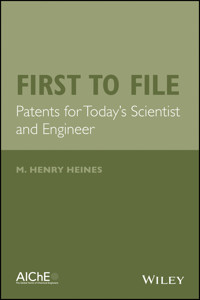
Bridges the gap between the realistic needs and questions of scientists and engineers and the legal skills of professionals in the patent field at a level accessible to those with no legal training * Written for inventors in lay terms that they can relate to or easily follow * Lays out the new features of patent law introduced by the America Invents Act of 2012 * Explains the differences between the first-to-invent and first-to-file rules and why the two rules will coexist * Focuses on the growth of new technologies in industry versus the laws protecting them
Sie lesen das E-Book in den Legimi-Apps auf:
Seitenzahl: 479
Veröffentlichungsjahr: 2014
Ähnliche



















CONTENTS
Cover
Title page
Copyright page
List of Figures
List of Tables
Preface
Introduction
About the Author
Chapter 1: The First-to-File Rule
1.1 History of the First-to-File Rule in the United States
1.2 “Who's on First?”: The Rule and Its Application
1.3 Adapting Business Routines to the First-to-File Rule
Chapter 2: Prior Art before and after the AIA
2.1 Prior Art and the First-to-File Rule
2.2 “But Is It Art?”: The
Art
of Prior Art
2.3 And Is It “Prior”?: Pre-AIA Law vs. the AIA
2.4 A Servant of Two Masters?: The “Effective Filing Date” and Its Role in Determining the Governing Rule
2.5 Conclusion
Chapter 3: Creating One's Own Prior Art
3.1 The On-Sale Bar
3.2 The Publication Bar: Publish
and
Perish?
3.3 Observations
Chapter 4: Canceling Prior Art and Other Benefits of Record Keeping
4.1 Derivation Proceedings
4.2 Disqualifying Reference Materials as Prior Art
4.3 Records Showing Collaboration
4.4 Records of Public Disclosures and Commercial Uses
4.5 Laboratory Notebooks
Chapter 5: Inventing in an Employment Environment
5.1 Project Management and the New Definition of Prior Art
5.2 Allowing the Employer to Stand in for the Inventor
5.3 What Constitutes an Obligation to Assign?
5.4 Implying an Obligation to Assign When There Is No Express Agreement
5.5 Having a “Sufficient Proprietary Interest” Other than by Assignment or Obligation to Assign
5.6 When No Assignment, Obligation to Assign, or Proprietary Interest: The “Shop Right”
Chapter 6: The Novelty Threshold
6.1 Anticipation and the “All Elements in a Single Reference” Rule
6.2 Novelty in the Arrangement of Parts
6.3 Another Argument Against Anticipation: The “Nonenabling Reference”
6.4 Caution: A Reference Can Anticipate an Invention Even if It “Teaches Away” from the Invention
6.5 Novelty versus Anticipation among Genus, Subgenus, and Species
6.6 Are We Done?
Chapter 7: Confronting the Prior Art
7.1 “But Every Invention Is a Combination of Old Elements!”
7.2 Pursuing the Unpredictable
7.3 In Hindsight (and Other Obvious or Nonobvious Thoughts)
Chapter 8: The View from the Infringer's Side
8.1 Do You Really Want to Go to Court?
8.2 Selecting Claims
8.3 Options for Challenge before the Patent Is Granted
8.4 Options for Challenge after the Patent Is Granted
Chapter 9: Patent Eligibility
9.1 Medical Diagnostic Methods
9.2 Computer-Implemented Processes
9.3 Business Methods
9.4 The AIA's New Procedure for Challenging Business Method Patents
9.5 Conclusion: A Rule for Patent Eligibility? or a Case of “I'll Know It When I See It”?
Chapter 10: Selected Topics in Patent Strategy
10.1 Provisional Patent Applications
10.2 Strategies in Claim Construction
Chapter 11: Patents and Beyond
11.1 Trade Secrets
11.2 Trademarks
11.3 Copyrights
11.4 Design Patents
11.5 IP Coverage for Plants
11.6 Conclusion
Appendix A: Selected Fees Charged by U.S. Patent and Trademark Office and Other U.S. Agencies for Intellectual Property as of January 1, 2014
Appendix B: Patent Searchers
Acronym Glossary
Glossary
Bibliography, Websites, and Blogs
Books
Government Publications
Websites
Blogs
Patents and Published Patent Applications Cited
Cases Cited
Index
End User License Agreement
List of Tables
Chapter 08
Table 8.1 Preissuance options available to a third party (challenger of the application)
Table 8.2 Postissuance options available to a third party (challenger of the patent)
Chapter 09
Table 9.1 Reviews of business method patents under the Transitional Program for Covered Business Method Patents
Chapter 11
Table 11.1 Intellectual property comparison chart, Part 1: trade secrets and trademarks
Table 11.2 Intellectual property comparison chart, Part 2: copyrights and utility patents
Table 11.3 Intellectual property comparison chart, Part 3: design patents, plant patents, and plant variety protection certificates
Appendix A
Table A1.1 Fees charged by U.S. Patent and Trademark Office in connection with patents
Table A1.2 Fees charged by U.S. Patent and Trademark Office in connection with trademarks
Table A1.3 Fees charged by U.S. Copyright Office for copyright registrations
Table A1.4 Fees charged by Plant Variety Protection Office in connection with plant variety protection certificates
List of Illustrations
Chapter 02
Figure 2.1 U.S. patents and published patent applications as prior art. “D of I,” date of invention; “EFD,” effective filing date; “D of P,” either date of publication or date of patent, whichever is first. Choice between “Pre-AIA” and “AIA” is determined by the effective filing date of the claims under examination. The exceptions for references whose subject matter is obtained from the inventor, references whose subject matter was previously publicly disclosed by the inventor, and references that are commonly owned with the claims under examination are not shown, but would apply to Refs. 1, 2, and 4.
Figure 2.2 Non-U.S. (e.g., PCT, European, etc.) patents and published patent applications as prior art. “D of I,” date of invention; “EFD,” effective filing date; “D of P,” either date of publication or date of patent, whichever is first. Choice between “Pre-AIA” and “AIA” is determined by the effective filing date of the claims under examination. The exceptions for references whose subject matter is obtained from the inventor, references whose subject matter was previously publicly disclosed by the inventor, and references that are commonly owned with the claims under examination are not shown, but would apply to Refs. 1 and 4.
Figure 2.3 Published literature other than patents and published patent applications as prior art. “D of I,” date of invention; “EFD,” effective filing date; “D of P,” date of publication. Choice between “Pre-AIA” and “AIA” is determined by the effective filing date of the claims under examination.
Figure 2.4 Nonexperimental commercial use as prior art. “D of I,” date of invention; “EFD,” effective filing date; “U,” date of use. Choice between “Pre-AIA” and “AIA” is determined by the effective filing date of the claims under examination.
Figure 2.5 Nonexperimental sale or offer for sale as prior art. “D of I,” date of invention; “EFD,” effective filing date; “S/O,” date of sale or offer. Choice between “Pre-AIA” and “AIA” is determined by the effective filing date of the claims under examination.
Chapter 03
Figure 3.1 Selected figures from Patent No. 4,491,377. (A) Top plan view. (B) Sectional view through lines 2–2 of (A). (C) Partial sectional view through lines 2–2 of (A).
Figure 3.2 Selected figures from Patent No. 6,834,603. (A) Cross section of mattress. (B) Top plan view of gusset manufacturing machine.
Chapter 05
Figure 5.1 Selected figures from Patent No. 5,694,683. (A) Mandrel and mold cavity prior to molding operation. (B) Mandrel inside mold cavity after molding operation.
Figure 5.2 Figure from Patent No. 4,527,714.
Chapter 06
Figure 6.1 Selected figures from Patent Application Publication No. 2007/0104027. (A) Profile view of perforating gun. (B) Profile view of cavity depth measuring system.
Figure 6.2 Selected figures from Patent No. 3,945,315 and prior art Patent No. 3,763,770. (A) Plan view from Patent No. 3,945,315. (B) Vertical section from Patent No. 3,763,770.
Figure 6.3 Selected figure from Patent Application Publication No. 2003/0022748.
Figure 6.4 Selected figures from Patent No. 5,178,585. (A) Plan view of outer chain plate. (B) Cross section of links prior to joining.
Figure 6.5 Selected figure from Patent Application Publication No. 2005/0191044.
Chapter 07
Figure 7.1 Selected figure from Patent No. 5,026,109.
Figure 7.2 Selected figure from Patent Application Publication No. 2007/0290070.
Figure 7.3 Selected figure from Patent No. 8,599,898.
Figure 7.4 Selected figure from Patent No. 7,467,680.
Chapter 10
Figure 10.1 Selected figure from Patent No. 5,899,283.
Figure 10.2 Selected figures from Patent No. 4,063,333. (A) Perspective view of clothespin of invention. (B) Fragmentary side view of (A). (C) Perspective view of spring. (D) Front view of clip. (E) Prior art as presented in the patent.
Guide
Cover
Table of Contents
Begin Reading
Pages
iii
iv
ix
x
xi
xiii
xiv
xv
xvii
xviii
xix
1
2
3
4
5
6
7
8
9
10
11
12
13
14
15
16
17
18
19
20
21
22
23
24
25
26
27
28
29
30
31
32
33
34
35
36
37
38
39
40
41
42
43
44
45
46
47
48
49
50
51
52
53
54
55
56
57
58
59
60
61
62
63
64
65
66
67
68
69
70
71
72
73
74
75
76
77
78
79
80
81
82
83
84
85
86
87
88
89
90
91
92
93
94
95
96
97
98
99
100
101
102
103
104
105
106
107
108
109
110
111
112
113
114
115
116
117
118
119
120
121
122
123
124
125
126
127
128
129
130
131
132
133
134
135
136
137
138
139
140
141
142
143
144
145
146
147
148
149
150
151
152
153
154
155
156
157
158
159
160
161
162
163
164
165
166
167
168
169
170
171
175
176
177
178
179
180
181
182
183
184
185
186
187
188
189
190
191
192
193
194
195
196
First to File
Patents for Today’s Scientist and Engineer
M. Henry Heines
Cover Design: Wiley
Copyright © 2014 by the American Institute of Chemical Engineers, Inc. All rights reserved.
A Joint Publication of the American Institute of Chemical Engineers and John Wiley & Sons, Inc.
Published by John Wiley & Sons, Inc., Hoboken, New Jersey.Published simultaneously in Canada.
No part of this publication may be reproduced, stored in a retrieval system, or transmitted in any form or by any means, electronic, mechanical, photocopying, recording, scanning, or otherwise, except as permitted under Section 107 or 108 of the 1976 United States Copyright Act, without either the prior written permission of the Publisher, or authorization through payment of the appropriate per-copy fee to the Copyright Clearance Center, Inc., 222 Rosewood Drive, Danvers, MA 01923, (978) 750-8400, fax (978) 750-4470, or on the web at www.copyright.com. Requests to the Publisher for permission should be addressed to the Permissions Department, John Wiley & Sons, Inc., 111 River Street, Hoboken, NJ 07030, (201) 748-6011, fax (201) 748-6008, or online at http://www.wiley.com/go/permission.
Limit of Liability/Disclaimer of Warranty: While the publisher and author have used their best efforts in preparing this book, they make no representations or warranties with respect to the accuracy or completeness of the contents of this book and specifically disclaim any implied warranties of merchantability or fitness for a particular purpose. No warranty may be created or extended by sales representatives or written sales materials. The advice and strategies contained herein may not be suitable for your situation. You should consult with a professional where appropriate. Neither the publisher nor author shall be liable for any loss of profit or any other commercial damages, including but not limited to special, incidental, consequential, or other damages.
For general information on our other products and services or for technical support, please contact our Customer Care Department within the United States at (800) 762-2974, outside the United States at (317) 572-3993 or fax (317) 572-4002.
Wiley also publishes its books in a variety of electronic formats. Some content that appears in print may not be available in electronic formats. For more information about Wiley products, visit our web site at www.wiley.com.
Library of Congress Cataloging-in-Publication Data:
Heines, M. Henry, 1945– author. First to file : patents for today’s scientist and engineer / M. Henry Heines. pages cm “A Joint Publication of the American Institute of Chemical Engineers and John Wiley & Sons, Inc.” Includes index.
ISBN 978-1-118-83965-2 (cloth)1. Patent laws and legislation–United States. 2. Patent practice–United States. I. Title. KF3114 .H447 346.7304′86–dc23
2014012664
List of Figures
Figure 2.1
U.S. patents and published patent applications as prior art. “D of I,” date of invention; “EFD,” effective filing date; “D of P,” either date of publication or date of patent, whichever is first. Choice between “Pre-AIA” and “AIA” is determined by the effective filing date of the claims under examination. The exceptions for references whose subject matter is obtained from the inventor, references whose subject matter was previously publicly disclosed by the inventor, and references that are commonly owned with the claims under examination are not shown, but would apply to Refs. 1, 2, and 4.
Figure 2.2
Non-U.S. (e.g., PCT, European, etc.) patents and published patent applications as prior art. “D of I,” date of invention; “EFD,” effective filing date; “D of P,” either date of publication or date of patent, whichever is first. Choice between “Pre-AIA” and “AIA” is determined by the effective filing date of the claims under examination. The exceptions for references whose subject matter is obtained from the inventor, references whose subject matter was previously publicly disclosed by the inventor, and references that are commonly owned with the claims under examination are not shown, but would apply to Refs. 1 and 4.
Figure 2.3
Published literature other than patents and published patent applications as prior art. “D of I,” date of invention; “EFD,” effective filing date; “D of P,” date of publication. Choice between “Pre-AIA” and “AIA” is determined by the effective filing date of the claims under examination.
Figure 2.4
Nonexperimental commercial use as prior art. “D of I,” date of invention; “EFD,” effective filing date; “U,” date of use. Choice between “Pre-AIA” and “AIA” is determined by the effective filing date of the claims under examination.
Figure 2.5
Nonexperimental sale or offer for sale as prior art. “D of I,” date of invention; “EFD,” effective filing date; “S/O,” date of sale or offer. Choice between “Pre-AIA” and “AIA” is determined by the effective filing date of the claims under examination.
Figure 3.1
Selected figures from Patent No. 4,491,377. (A) Top plan view. (B) Sectional view through lines 2–2 of (A). (C) Partial sectional view through lines 2–2 of (A).
Figure 3.2
Selected figures from Patent No. 6,834,603. (A) Cross section of mattress. (B) Top plan view of gusset manufacturing machine.
Figure 5.1
Selected figures from Patent No. 5,694,683. (A) Mandrel and mold cavity prior to molding operation. (B) Mandrel inside mold cavity after molding operation.
Figure 5.2
Figure from Patent No. 4,527,714.
Figure 6.1
Selected figures from Patent Application Publication No. 2007/0104027. (A) Profile view of perforating gun. (B) Profile view of cavity depth measuring system.
Figure 6.2
Selected figures from Patent No. 3,945,315 and prior art Patent No. 3,763,770. (A) Plan view from Patent No. 3,945,315. (B) Vertical section from Patent No. 3,763,770.
Figure 6.3
Selected figure from Patent Application Publication No. 2003/0022748.
Figure 6.4
Selected figures from Patent No. 5,178,585. (A) Plan view of outer chain plate. (B) Cross section of links prior to joining.
Figure 6.5
Selected figure from Patent Application Publication No. 2005/0191044.
Figure 7.1
Selected figure from Patent No. 5,026,109.
Figure 7.2
Selected figure from Patent Application Publication No. 2007/0290070.
Figure 7.3
Selected figure from Patent No. 8,599,898.
Figure 7.4
Selected figure from Patent No. 7,467,680.
Figure 10.1
Selected figure from Patent No. 5,899,283.
Figure 10.2
Selected figures from Patent No. 4,063,333. (A) Perspective view of clothespin of invention. (B) Fragmentary side view of (A). (C) Perspective view of spring. (D) Front view of clip. (E) Prior art as presented in the patent.
List of Tables
Table 8.1
Preissuance options available to a third party (challenger of the application)
Table 8.2
Postissuance options available to a third party (challenger of the patent)
Table 9.1
Reviews of business method patents under the transitional program for covered business method patents
Table 11.1
Intellectual property comparison chart
Table 11.2
Intellectual property comparison chart continued
Table 11.3
Intellectual property comparison chart continued
Table A1.1
Fees charged by U.S. Patent and Trademark Office in connection with patents
Table A1.2
Fees charged by U.S. Patent and Trademark Office in connection with trademarks
Table A1.3
Fees charged by U.S. Copyright Office
Table A1.4
Fees charged by Plant Variety Protection Office in connection with plant variety protection certificates
Preface
What is the scientist's or engineer's role in the patenting process? Why not leave it all to a patent attorney? On the other hand, why use a patent attorney at all?
As this book will demonstrate, patent law has its underpinnings in technology. What the patent statute lists as the qualifications for a patentable invention, augmented by the definitions and interpretations imposed by the courts that hear patent cases, all reflect an interest in recognizing and rewarding technological advances and in discriminating those advances that are meritorious from those that are mere trivialities. Indeed, both the patent statute and the court decisions make repeated reference to the “person having ordinary skill in the art” as the ultimate arbiter of patentability. The technologist's view as to what this hypothetical person might find “obvious” or “nonobvious” adds a measure of realism to this highly debated principle of patent law. Clearly, the technologist's participation in the patenting process is both essential and advantageous.
Lesen Sie weiter in der vollständigen Ausgabe!
Lesen Sie weiter in der vollständigen Ausgabe!
Lesen Sie weiter in der vollständigen Ausgabe!
Lesen Sie weiter in der vollständigen Ausgabe!
Lesen Sie weiter in der vollständigen Ausgabe!
Lesen Sie weiter in der vollständigen Ausgabe!
Lesen Sie weiter in der vollständigen Ausgabe!
Lesen Sie weiter in der vollständigen Ausgabe!
Lesen Sie weiter in der vollständigen Ausgabe!
Lesen Sie weiter in der vollständigen Ausgabe!
Lesen Sie weiter in der vollständigen Ausgabe!
Lesen Sie weiter in der vollständigen Ausgabe!
Lesen Sie weiter in der vollständigen Ausgabe!
Lesen Sie weiter in der vollständigen Ausgabe!
Lesen Sie weiter in der vollständigen Ausgabe!
Lesen Sie weiter in der vollständigen Ausgabe!
Lesen Sie weiter in der vollständigen Ausgabe!
Lesen Sie weiter in der vollständigen Ausgabe!
Lesen Sie weiter in der vollständigen Ausgabe!
Lesen Sie weiter in der vollständigen Ausgabe!
Lesen Sie weiter in der vollständigen Ausgabe!
Lesen Sie weiter in der vollständigen Ausgabe!




