


20,99 €
Mehr erfahren.
- Herausgeber: John Wiley & Sons
- Kategorie: Fachliteratur
- Serie: PRS - Polity Resources series
- Sprache: Englisch
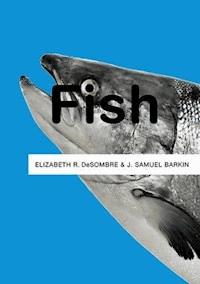
Fishing has played a vital role in human history and culture. But today this key resource faces a serious crisis as most species are being overfished or fished to their very limit. Governments have tried to tackle the problem with limited success. Many of their actions have been counterproductive or ineffective. What will happen to global fisheries, and the populations that depend on them, as we continue to catch more fish than the oceans can reproduce?
This book explores the causes of the current crisis in the world's fisheries, and what needs to be done to address the situation. It explains the structure of the fishing industry, the incentives that persuade individuals or companies to catch fish at unsustainable levels, and illuminates the problems created by governmental efforts to use fishing policy as a tool for economic development or to win votes in domestic elections. It also looks at the role of aquaculture in either decreasing or increasing the pressure on wild fish stocks.
The dire condition of fish stocks has led governments and consumer organizations to consider new approaches to protect the global supply of fish. DeSombre and Barkin conclude by showing how such methods, along with new forms of international regulation and informed decision-making by consumers, all have an important part to play in rewarding and thus encouraging sustainable fishing behaviour in the future.
Sie lesen das E-Book in den Legimi-Apps auf:
Seitenzahl: 293
Veröffentlichungsjahr: 2013
Ähnliche



















Fish
Fish
ELIZABETH R. DESOMBRE J. SAMUEL BARKIN
polity
Copyright © Elizabeth DeSombre & Jeffrey Samuel Barkin 2011
The right of Elizabeth DeSombre & Jeffrey Samuel Barkin to be identified as Author of this Work has been asserted in accordance with the UK Copyright, Designs and Patents Act 1988.
First published in 2011 by Polity Press
Polity Press
65 Bridge Street
Cambridge CB2 1UR, UK
Polity Press
350 Main Street
Malden, MA 02148, USA
All rights reserved. Except for the quotation of short passages for the purpose of criticism and review, no part of this publication may be reproduced, stored in a retrieval system, or transmitted, in any form or by any means, electronic, mechanical, photocopying, recording or otherwise, without the prior permission of the publisher.
ISBN-13: 978-0-7456-3777-8
A catalogue record for this book is available from the British Library.
Typeset in 10.25 on 13 pt Scala
by Servis Filmsetting Ltd, Stockport, Cheshire
Printed and bound in Great Britain by MPG Books Group Limited, Bodmin, Cornwall
The publisher has used its best endeavours to ensure that the URLs for external websites referred to in this book are correct and active at the time of going to press. However, the publisher has no responsibility for the websites and can make no guarantee that a site will remain live or that the content is or will remain appropriate.
Every effort has been made to trace all copyright holders, but if any have been inadvertently overlooked the publisher will be pleased to include any necessary credits in any subsequent reprint or edition.
For further information on Polity, visit our website: www.politybooks.com
Contents
List of Abbreviations
1
Introduction
2
Growth of the Global Fishing Industry
3
Structure of the Fishing Industry
4
Regulatory Efforts and Impacts
5
Aquaculture
6
Consumers and Catches
Notes
Selected Readings
Index
Abbreviations
ASEAN
Association of Southeast Asian Nations
CAFO
Confined Animal Feeding Operation
CCAMLR
Commission for the Conservation of Antarctic Marine Living Resources
CITES
Convention on International Trade in Endangered Species of Wild Fauna and Flora
CPR
Common Pool Resource
CPUE
Catch Per Unit Effort
EEZ
Exclusive Economic Zone
ENSO
El Niño Southern Oscillation
EU
European Union
FAO
United Nations Food and Agriculture Organization
GDP
Gross Domestic Product
GPS
Global Positioning System
ICCAT
International Convention for the Conservation of Atlantic Tunas
IFQ
Individual Fishing Quota
ISA
Infectious Salmon Anemia
ITQ
Individual Transferable Quota
IUCN
World Conservation Union
IUU
Illegal, Unreported, and Unregulated Fishing
IWC
International Whaling Commission
MICRA
Mississippi Interstate Cooperative Resource Association
MPA
Marine Protected Area
MSC
Marine Stewardship Council
NAFO
Northwest Atlantic Fisheries Organization
NGO
Non-Governmental Organization
NOAA
National Oceanic and Atmospheric Administration
OECD
Organization for Economic Cooperation and Development
OSPAR
Convention for the Protection of the Marine Environment of the North East Atlantic
PCB
Polychlorinated Biphenyls
RFMO
Regional Fisheries Management Organization
TAC
Total allowable catch
TED
Turtle Excluder Device
UK
United Kingdom
UNCLOS
United Nations Convention on the Law of the Sea
UNDP
United Nations Development Programme
UNEP
United Nations Environment Programme
USA
United States of America
VMS
Vessel Monitoring System
CHAPTER ONE
Introduction
You sit down at a restaurant, considering what fish to order, and choose a nice panko-crusted Chilean sea bass.
Long before the fish reached the restaurant menu, a set of marketing executives had decided that “Chilean sea bass” sounded more appealing than Patagonian toothfish, the fish’s true name, despite the fact that the species is in no way related to an actual sea bass (which is a type of grouper) and is only occasionally caught in Chilean waters.
It was, nevertheless, first commercially marketed internationally after Chilean President Augusto Pinochet opened up Chilean waters to foreign fishing trawlers in the 1980s. The newly exported fish quickly caught on in United States (and then Japanese and European) markets and by the 1990s was the new hot menu item in restaurants, increasing the price paid to fishers for capturing the fish, and dramatically increasing catches worldwide. Bon Apétit magazine named it the “dish of the year” in 2001. One of the other reasons for the fish’s newfound prominence on restaurant menus was the depletion of stocks of other fish, such as cod, or even white sea bass (which is an actual sea bass).
Before the fish on your restaurant plate was caught, it lived in cold waters near Antarctica. If it hadn’t been caught it might have lived to an age of 50 years and could have reached a length of 2.3 meters (7.5 feet). It grew slowly, reaching reproductive maturity at about 90 to 100 centimeters in length, at between about nine and twelve years of age, so if it was caught before then it would not yet have had a chance to reproduce. The combination of long life and slow maturation makes it difficult to tell if a species is being overfished. Because it is difficult to regulate catches before there is clear evidence of overfishing, Patagonian toothfish was a strong candidate for fast overexploitation once the species became a commercial success.
If your fish was caught by trawling, a fishing vessel dragged a net over the sea floor to take it in, damaging the sea floor ecosystem and capturing other fish and non-fish species that were probably discarded and subsequently died. This bycatch accounts for as much as one-quarter of what is caught in the world’s fisheries. More likely, the fish was caught by a long-line, a set of up to hundreds or thousands of baited hooks (fewer if it was caught by a vessel following international regulations) on one line, reeled out behind fishing vessels and weighted to sink to between 500 and 2,500 meters deep. These longlines often catch seabirds (especially the endangered albatross) or non-target fish, most of which die before they can be released.
Lesen Sie weiter in der vollständigen Ausgabe!
Lesen Sie weiter in der vollständigen Ausgabe!
Lesen Sie weiter in der vollständigen Ausgabe!
Lesen Sie weiter in der vollständigen Ausgabe!
Lesen Sie weiter in der vollständigen Ausgabe!
Lesen Sie weiter in der vollständigen Ausgabe!
Lesen Sie weiter in der vollständigen Ausgabe!
Lesen Sie weiter in der vollständigen Ausgabe!




