


50,99 €
Mehr erfahren.
- Herausgeber: John Wiley & Sons
- Kategorie: Fachliteratur
- Sprache: Englisch
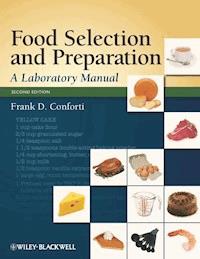
Knowledge, skill, and art are the three words to remember when working with foods. They are also the focus of the second edition of Food Selection and Preparation: A Laboratory Manual, which guides students through the fundamentals and basic principles of food preparation, from the recipe to the table, from the raw ingredients to the final product.
This manual equips students with a working knowledge of the nature of ingredients and how they function in particular foods. A wide range of exercises--addressing topics from food preservation to frozen desserts, measuring techniques to fats and emulsions, fruit selection to egg cookery, breads and pastry to meat and poultry--guide students through standard recipes, with clear and complete directions for handling ingredients and cooking foods. Throughout, vocabularies introduce technical words essential to understanding food products and preparation. Questions to test students' knowledge follow each exercise. The text also includes discussion of laboratory procedures, sanitation in the kitchen, emergency substitutions, identification of meat cuts, the safe storage of food, and the care and cleaning of small appliances.
New to this edition are over 50 additional recipes, which reflect the many tastes that influence today's palate. All recipes have been reviewed and updated to ensure healthful and nutritious food preparation, as well as product quality and performance. Students and instructors alike will find the new and improved recipes and updated nutritional and food facts of Food Selection and Preparation, Second Edition a truly satisfying full course.
Sie lesen das E-Book in den Legimi-Apps auf:
Seitenzahl: 352
Veröffentlichungsjahr: 2012
Ähnliche



















Contents
Cover
Half Title page
Title page
Copyright page
Preface
Acknowledgments
Laboratory 1: Measuring Techniques
I. Nonmetric Measure of Volume
II. To Learn Correct Techniques for Measuring Ingredients
III. Water and Thermometry
IV. Application of Measuring Techniques: Cookies
Laboratory 2: Food Preservation: Canning and Freezing
I. Observe and Learn How to Use Utensils and Equipment Commonly Used in Canning
II. Foods To Be Packed and Processed
III. Freezing of Fruits and Vegetables
Laboratory 3: Starch and Cereal Cookery: Role of Gelatinization and Gelation
I. Starch Principles
II. Cereal Cookery
Laboratory 4: Quick and Yeast Breads: Role of Manipulation and Gluten Formation in Doughs
I. To Evaluate Factors Which Affect the Quality of Muffins
II. To Evaluate Factors Which Affect the Quality of Biscuits
III. To Identify the Gluten-Forming Properties of Various Wheat Flours
IV. To Study Factors Which Affect the Quality of Yeast Bread
Laboratory 5: Shortened- and Foam-Style Cakes
I. Shortened-Style Cake
II. To Demonstrate the Effect of Changing the pH in Chocolate Cake Batters
III. Foam-Style Cake
Laboratory 6: Pastry, Cream Puffs, and Popovers
I. To Learn and Observe How Manipulation and Steam Will Affect Cream Puffs and Popovers
II. To Determine Which Fat Contributes Both Tenderness and Flakiness in a Pie Crust Through Proper Manipulation
Laboratory 7: Fruit Selection and Cookery
I. To Study the Prevention of Browning in Fresh Fruit Through the Use of Antioxidants
II. To Identify the Factors That Influence the Quality of Cooked Apples
III. To Observe Fruits That Have Enough Pectin to Form a Gel when Sugar and Water are Added
IV. To Observe the Variety of Ways Fruits Can Be Prepared
Laboratory 8: Vegetables
I. To Study the Effect of Heat and pH on Pigments and Texture in Vegetables
II. To Prepare Vegetables in a Variety of Ways and to Recognize Quality Parameters in Selection and Preparation
III. Vegetable Preparation
Laboratory 9: Salads
I. Appetizer Salad
II. Dinner Accompaniment Salads
III. Main Dish Salads
IV. Dessert Salads
Laboratory 10: Fats and Emulsions
I. To Show the Effect of Frying Temperature on Fat Absorption During Deep Fat Frying
II. To Evaluate Fats According to Color, Flavor, Aroma and to Be Able to Detect Rancidity in a Fat
III. To Become Familiar with Various Emulsions and the Effect That the Emulsifier Has on Stabilizing the Emulsion
Laboratory 11: Gelatin
I. To Compare Products Made with Unflavored Gelatin and the Available Commercial Mix
II. To Identify and to Become Familiar with the Different Uses of Gelatin
Laboratory 12: Egg Cookery
I. To Observe the Effect of Aging on the Raw Egg
II. To Become Familiar with Various Methods to Cook Eggs
III. To Understand How Heat Affects Gelation of Egg Proteins
IV. To Observe the Use of Egg White Foams in Food Preparation
V. Miscellaneous Egg Cookery
Laboratory 13: Milk and Cheese
I. To Become Familiar with Various Milk Products
II. To Show the Effects of Temperature upon the Clotting of Milk by Rennin
III. To Study the Effects of Heat and Acid on Milk Proteins
IV. To Observe How Milk Behaves During Preparation
V. To Differentiate Among the Many Available Varieties of Cheese
VI. To Compare How Various Processed Cheese Products Melt as Compared to a Natural Cheese Product
VII. To Understand How to Cook with Cheese
Laboratory 14: Meat and Poultry
I. To Show the Effects of the Degree of Doneness as Measured by the Internal Temperature and the Effects of Roasting Temperature on Roasting Time, Cooking Losses, and Color and Juiciness of Ground Meat Patties
II. To Show the Effect of Heat and Treatment on the Cooking of Less Tender Cuts of Beef
III. To Learn to Apply Different Cooking Techniques for Different Meat Cuts or Varieties
IV. To Observe and Learn How to Cut Up or Disjoint a Whole Chicken
V. To Learn Various Methods for Chicken Preparation
Laboratory 15: Fish and Seafood Cookery
I. How to Prepare Fish in a Variety of Ways
II. To Learn How to Prepare Shellfish
Laboratory 16: Legumes and Tofu
I. To Learn How to Identify and Prepare Legumes
II. To Learn About and Become Acquainted with Tofu in Food Preparation
Laboratory 17: Sugar Crystallization
I. To Successfully Prepare Crystalline Candy by Learning the Principles of Proper Manipulation
II. To Observe and Successfully Prepare Amorphous Candy
III. Miscellaneous Candy
Laboratory 18: Ice Crystallization (Frozen Desserts)
I. Preparation of Freezer and Freezer (Mixtures)
II. To Use Still-Freezing in the Making of Frozen Desserts
Laboratory 19: Beverages: Coffee, Tea, and Cocoa
I. To Show Some Factors Which Affect the Quality of Coffee Beverages
II. To Show Some Factors Which Affect the Quality of Tea
III. To Evaluate Cocoa and Chocolate
Laboratory 20: Sensory Evaluation of Food
I. To Study the Effect of Temperature on Flavor Intensity
II. To Learn How Color Affects Flavor
III. To Determine How Texture Affects Food Identification
Glossary of Common Terms Used in Food Preparation
Appendix A: Food Safety
Appendix B: Sanitation in the Kitchen
Appendix C: Care and Cleaning of Small Applicances
Appendix D: Measuring Equivalents
Appendix E: Emergency Substitutions
Appendix F: Safe Food Storage
Appendix G: Retail Meat Cuts and Recommended Cooking Methods
Appendix H: How to Identify Cuts of Meat by Bones
Food Selection and Preparation
A Laboratory Manual
SECOND EDITION
Second edition first published 2008© 2008 Frank D. ConfortiFirst edition first published 1997© 1997 Iowa State University Press
Blackwell Publishing was acquired by John Wiley & Sons in February 2007. Blackwell’s publishing programme has been merged with Wiley’s global Scientific, Technical, and Medical business to form Wiley-Blackwell.
Editorial offices:2121 State Avenue, Ames, Iowa 50014-8300, USA
For details of our global editorial offices, for customer services and for information about how to apply for permission to reuse the copyright material in this book please see our website atwww.wiley.com/wiley-blackwell
Authorization to photocopy items for internal or personal use, or the internal or personal use of specific clients, is granted by Blackwell Publishing, provided that the base fee is paid directly to the Copyright Clearance Center, 222 Rosewood Drive, Danvers, MA 01923. For those organizations that have been granted a photocopy license by CCC, a separate system of payments has been arranged. The fee codes for users of the Transactional Reporting Service are ISBN-13: 978-0-8138-1488-9/2008.
Designations used by companies to distinguish their products are often claimed as trademarks. All brand names and product names used in this book are trade names, service marks, trademarks or registered trademarks of their respective owners. The publisher is not associated with any product or vendor mentioned in this book. This publication is designed to provide accurate and authoritative information in regard to the subject matter covered. It is sold on the understanding that the publisher is not engaged in rendering professional services. If professional advice or other expert assistance is required, the services of a competent professional should be sought.
Library of Congress Cataloging-in-Publication Data
Conforti, Frank D.Food selection and preparation : a laboratory manual / Frank D.Conforti. – 2nd ed.p. cm.ISBN-13: 978-0-8138-1488-9 (alk. paper)ISBN-10: 0-8138-1488-X (alk. paper)1. Food–Laboratory manuals. 2. Cookery–Laboratory manuals. I. Title.TX354.C64 2008664–dc222008029048
A catalogue record for this book is available from the British Library.
Figure 4.3 was adapted from General Mills, Inc., Betty Crocker’s Cookbook, copyright 1978, pg 213; Figures 8.1, 8.2, and 8.3 were adapted from General Mills, Inc., Betty Crocker’s Microwave Cookbook, Random House, Inc., 1981; all figures appearing in Appendix H were adapted from General Mills, Inc., Betty Crocker’s Best Recipes for Meat and Vegetable; the Chicken Foodservice cuts chart in Appendix G is reprinted from North American Meat Processors, Chicken Foodservice Poster, Revised May 2006, reprinted with permission of John Wiley & Sons, Inc.; and the Pork Foodservice Cuts chart in Appendix G is reprinted from North American Meat Processors, Pork Notebook Guides, Revised May 2006, reprinted with permission of John Wiley & Sons, Inc.
Preface
My objective in writing this manual was to create a learning tool for the student in food service, hospitality management, dietetics, or family and consumer education. Ten years have elapsed since the first edition of this manual. During those 10 years many changes have taken place in food selection and preparation. In order to keep up with the changing tide in food, this manual has been updated to reflect these current trends. There are new recipes and reformulation of existing recipes with regard to ingredients or manipulation. There are also updates of technical information in each unit to be in touch with the current trends and discoveries in food.
The student should learn how to prepare nutritious food and how to make substitutions when necessary, yet still maintain the integrity and quality of food. Therefore, the student must understand the function of the ingredient(s) in a particular food system. The student must understand why the ingredient is being added and what effect the ingredient will have on the quality of the food product during preparation. This manual hopes to carry out this purpose not only with the recipes that are found in each particular unit, but also the questions, exercises, and vocabulary words that are part of each unit.
Each laboratory is an independent unit and can be assigned according to any sequence chosen by the instructor. There are a number of recipes in each unit, but they all do not have to be included in the lesson especially if some laboratory periods run for 2 hours instead of 3 hours. A careful selection of activities by the instructor should give the student a firm basis in foods and a clear understanding of the proper selection and manipulation of ingredients that will lead to a quality product.
I hope that you will enjoy this manual as much as I have over the years in the development of its content. I have to give credit to the students (and there have been over 2,000 since the first edition had come out!) who have contributed to its success. It is because of these students’ incisive recommendations, constructive criticisms, and devotion to the subject of food that this manual has evolved into what it is today. It is hoped that many more students will become acquainted with its contents, and that they will come away with an interest and deep respect for food and the contribution that food makes in one’s health and daily life. Finally, I hope that this manual will make a contribution by being a continuing source of information long after the course is completed.
Acknowledgments
A revision of a book takes time, patience, and the support of many people. I would like to express my appreciation to the following people who have contributed to the revision of this manual: Sherry Seville, Virginia Tech, whose expertise at the computer assisted in formatting the revised manuscript for publication; Sharon Kast, also of Virginia Tech, whose time and patience were responsible for the photographs that appear in some of the laboratory units; and especially to the students whose suggestions and participation over the years have made this manual an integral part of the Food course at the Department of Human Nutrition, Foods, and Exercise.
LABORATORY 1
Measuring Techniques
LABORATORY 1
Measuring Techniques
Proper measuring techniques must be emphasized to ensure success in food preparation. There are differences when measuring liquid and dry ingredients, and the student must learn these techniques as soon as possible in order to be successful in food preparation. The objective of this laboratory exercise is to introduce the student to proper measuring techniques.
VOCABULARY
MEASURING TECHNIQUES
The American Standards Association has defined the capacities of various measures, but not all measuring equipment has been standardized to meet these specifications. Variations of 5%, more or less than standard, are allowable.
I. NONMETRIC MEASURE OF VOLUME
A. DRY MEASURES
A set of dry measuring cups includes measures for 1/4 cup, 1/3 cup, 1/2 cup, and 1 cup (there are some manufacturers that make 2/3 cup and 3/4 cup measures). These measures are used for dry ingredients and solid fats. Ingredients vary in the way they pack down, lump, or cling to the measuring cup. Use the following guidelines when measuring:
FIG. 1.1: Spoon dry ingredients lightly into cup and level off with a straight-edged spatula.
B. SMALL AMOUNTS OF INGREDIENTS
C. LIQUIDS
Lesen Sie weiter in der vollständigen Ausgabe!
Lesen Sie weiter in der vollständigen Ausgabe!
Lesen Sie weiter in der vollständigen Ausgabe!
Lesen Sie weiter in der vollständigen Ausgabe!
Lesen Sie weiter in der vollständigen Ausgabe!
Lesen Sie weiter in der vollständigen Ausgabe!
Lesen Sie weiter in der vollständigen Ausgabe!
Lesen Sie weiter in der vollständigen Ausgabe!
Lesen Sie weiter in der vollständigen Ausgabe!
Lesen Sie weiter in der vollständigen Ausgabe!
Lesen Sie weiter in der vollständigen Ausgabe!
Lesen Sie weiter in der vollständigen Ausgabe!
Lesen Sie weiter in der vollständigen Ausgabe!
Lesen Sie weiter in der vollständigen Ausgabe!
Lesen Sie weiter in der vollständigen Ausgabe!
Lesen Sie weiter in der vollständigen Ausgabe!
Lesen Sie weiter in der vollständigen Ausgabe!
Lesen Sie weiter in der vollständigen Ausgabe!
Lesen Sie weiter in der vollständigen Ausgabe!
Lesen Sie weiter in der vollständigen Ausgabe!
Lesen Sie weiter in der vollständigen Ausgabe!
Lesen Sie weiter in der vollständigen Ausgabe!
Lesen Sie weiter in der vollständigen Ausgabe!
Lesen Sie weiter in der vollständigen Ausgabe!
Lesen Sie weiter in der vollständigen Ausgabe!
Lesen Sie weiter in der vollständigen Ausgabe!
Lesen Sie weiter in der vollständigen Ausgabe!
Lesen Sie weiter in der vollständigen Ausgabe!
Lesen Sie weiter in der vollständigen Ausgabe!
Lesen Sie weiter in der vollständigen Ausgabe!
Lesen Sie weiter in der vollständigen Ausgabe!
Lesen Sie weiter in der vollständigen Ausgabe!
Lesen Sie weiter in der vollständigen Ausgabe!
Lesen Sie weiter in der vollständigen Ausgabe!
Lesen Sie weiter in der vollständigen Ausgabe!
Lesen Sie weiter in der vollständigen Ausgabe!
Lesen Sie weiter in der vollständigen Ausgabe!
Lesen Sie weiter in der vollständigen Ausgabe!
Lesen Sie weiter in der vollständigen Ausgabe!
Lesen Sie weiter in der vollständigen Ausgabe!
Lesen Sie weiter in der vollständigen Ausgabe!
Lesen Sie weiter in der vollständigen Ausgabe!
Lesen Sie weiter in der vollständigen Ausgabe!
Lesen Sie weiter in der vollständigen Ausgabe!
Lesen Sie weiter in der vollständigen Ausgabe!
Lesen Sie weiter in der vollständigen Ausgabe!
Lesen Sie weiter in der vollständigen Ausgabe!
Lesen Sie weiter in der vollständigen Ausgabe!
Lesen Sie weiter in der vollständigen Ausgabe!
Lesen Sie weiter in der vollständigen Ausgabe!
Lesen Sie weiter in der vollständigen Ausgabe!
Lesen Sie weiter in der vollständigen Ausgabe!
Lesen Sie weiter in der vollständigen Ausgabe!
Lesen Sie weiter in der vollständigen Ausgabe!




