


Erhalten Sie Zugang zu diesem und mehr als 300000 Büchern ab EUR 5,99 monatlich.
- Herausgeber: Cepe editora
- Kategorie: Geisteswissenschaft
- Sprache: Englisch
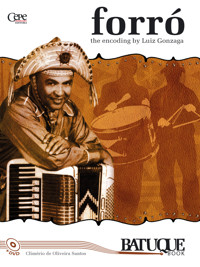
Created to serve as a bridge between readers and cultural traditions, the book Forró: Luiz Gonzaga's coding was divided into two parts. The first one deals with the life of Gonzaga in Exu, in the Sertao of Pernambuco, and the social and sonorous environment to which it was connected; His departure for the big city, the conquest of fame, the decline and the cultural legacy he left. The second part studies its music, also approaching the construction of the main subgenres linked to the baião, making a study of the term forró and its various meanings. Following the line of the series Batuque Book, the work comes accompanied by a DVD that has scores that can be downloaded, a workshop with instrumental technical demonstrations, comments and execution of six songs.
Sie lesen das E-Book in den Legimi-Apps auf:
Seitenzahl: 202
Veröffentlichungsjahr: 2017
Das E-Book (TTS) können Sie hören im Abo „Legimi Premium” in Legimi-Apps auf:
Ähnliche




















1
Forró: the encoding by Luiz Gonzaga
Paulo Henrique Saraiva Câmara
Raul Jean Louis Henry Júnior
Antônio Carlos dos Santos Figueira
Ricardo Leitão
Ricardo Melo
Bráulio Mendonça Meneses
Everardo Norões
Lourival Holanda
Nelly Medeiros de Carvalho
Pedro Américo de Farias
Luiz Arrais
Marco Polo Guimarães
Rodolfo Galvão
China Filho
Governador do Estado
Vice-Governador
Secretário da Casa Civil
Presidente
Diretor de Produção e Edição
Diretor Administrativo e Financeiro
Presidente
Superintendente de Criação
Produção Editorial
Supervisão de Mídias Digitas
Designer Digital
Governo do Estado de Pernambuco
Companhia Editora de Pernambuco
Conselho Editorial
CLIMÉRIO DE OLIVEIRA SANTOS
Forró: the encoding by Luiz Gonzaga
This e-book provides access to the film that integrates the printed book’s DVD. To do so, click DVD (in Summary) and, when directed, look for the link on the next page. Access requires anInternet connection.
Created by
Climério de Oliveira Santos
Tarcísio Soares Resende
Climério de Oliveira Santos
Teacher at the Conservatory of Music in Pernambuco
Masters Degree in Ethnomusicology (Federal University
of Paraíba)
Doctorate Degree in Music (in progress) (Unirio)
Publisher of Maracatu: baque virado e baque solto
(Vol. 1); Cabocolinho(Vol. 2); Maracatu Nação(DVD)
Director of the vídeo Que baque é esse(54 min. documentary)
Tarcísio Soares Resende
Director of the Percussion Group Quebra-baque
Teacher at the Pró-criança Cultural Center Movement
Publisher of Maracatu: baque virado and baque solto
(Vol. 1); Cabocolinho(Vol. 2); Maracatu Nação(DVD)
Member of the group SaGramae Orquestra
de Percussão do Nordeste
COLEÇÃO BATUQUE BOOK
SUMMARY
PrOlogUE
OrganizaTION OF BOOK
PART I
Luiz Gonzaga: centenary founder
The soil of the baião
Inside the Brazilian world of sound
Rio de Janeiro: another beginning
The “music of the Northeast”
Working on the contract
Consolidating the contract
PART II
Parameters
Subgenres of Gonzaguian forró
Signs
CONCLUSION
REFERENCES
DVD
DOWNLOADS
8
I thank all those who contributed to this work
(see the credits). In particular, I want to thank:
Dominguinhos, Herbert Lucena, Maciel Melo, Gennaro, Helder Vieira, Arisio Coutinho, Tarcísio Resende, Verônica Vaz, Isabela Muniz, Ewerton Brandão (Bozó), Quartinha, Edno Silva (Oião), Toninho Tavares, José M. da Silva (Zeca Preto), Raminho; Rosinha Gonzaga, Daniel Gonzaga and Rosa Miranda (Moleque Editora); Gigi Borges, David Probo, Dominique Dreyfus, Paulo Vanderley, Camarão, Arlindo dos 8 Baixos, Raimundo Campos, Dani Borel; Peter Malcolm Keays (Pedro); Jeff, R. Reinnes, Cris Lemgruber, Marcílio Moura, Pablo and Gerardo Lopes (Fábrica Estúdios); Jurin Senna, Marcelo Soares; Claudio Guimarães and Naldinho (Funarte); Fernando Duarte (Secult-PE), Lula da Costa Pinto, Carolina and Dani Barreto, Poliana Seabra, Adriana Fernandes, Carlos Sandroni, Sandro Guimarães de Salles, Jacira Franca, Associação Respeita Januário; Cristina Zappa, Vera Lúcia F. da Silva and Odette J. C. Vieira (Instituto Moreira Salles); José Ulisses da Silva (Cetap), Julio César Mendes (Julinho), Dirney Pacífico, Sergio Barza, Nirez (Miguel Ângelo de Azevedo), Petrúcio Amorim, Silvério Pessoa, Xico Bizerra, Santanna (o cantador), Alcymar Monteiro, Jorge de Altinho, Josildo Sá, Rinaldo Ferraz, Bené Fonteles, Ivan Márcio, Ivan Bulhões, Antônio Silva (o Coroné Ludru), Onildo Almeida, Rita Filippe, Ricardo Melo and Marco Polo Guimarães (Cepe).
Acknowledgements
I dedicate this book to Miguel José Santos and Maria Glória de Oliveira Santos (my dear parents) and to the memory of Dominguinhos.
9
Photo 1. Luiz Gonzaga withsanfona,smiling – emblematic pose.
Todos os esforços foram feitos para encontrar outros detentores dos direitos de imagens e autorais de fotos publicadas neste livro. Teremos o maior prazer em creditá-los caso sejam determinados.
10
Prologue
The focus of this Batuque book is what is called forróGonzaguiano1, meaning the trajectory of forró whose encoding is attributed to Luiz Gonzaga. The work covers the diverse acts of this musician, interpreter and businessman. The majority of written contributions about Luiz Gonzaga have given credit to the “Divine ingeniousness” (gift) of the artist and his myth-making. Recently, in opposition to the creation of “ingeniousness”, some writers hail the demonization2of Gonzaga, concentrating on the negative attitudes which appear on the path he broke, with special reference to royalties and his way of relating to others. This work moves away from these two perspectives: it does not discuss the “ingeniousness of the artist” – that edifying category referring to the artistic field - nor does it mean to judge the less admirable attitudes of Luiz Gonzaga, even though these elements could shed light on the meaning his music. However what is of interest here is to verify some aspects of the musical sound and of the enterprise of a social agent who moved himself in an ambience to make his musical career viable. The work approaches the music and its meanings. It focuses on the construction of musical patterns and their meaning into codes of practice.
This work is not tied to a theoretical anchor. My life as a musician, that is, as an agent and actor in the field, provides one of the main tentacles for this investigation. Further still, in the attempt to turn this Batuque Bookinto a new listening on the work of Luiz Gonzaga, I came across the necessity of focusing on the musical work recorded by this artist, instead of believing what was written about him - alongside all the hearsay. My investigation culminated in an elaboration of a methodology which I baptized during the project with the name of shared listening, whose elaboration resulted in some simple but fundamental methodological initiatives. The first initiative was a systematic and chronological listening of the music
1In this book, forrógonzaguiano, in the place of forrótradicional, is used. In reality, they are very close to one another. Even though forrógonzaguiano– or Gonzaguian forró - is considered to be “traditional”, the reason for using the term is that, in relation to tradicional, there gravitate a series of discussions which would lead the reader beyond the scope of this book.
2What I call demonization does not fall back on important questions raised – in the work of José Teles (2012) and Ricardo Anísio (2012), for example, once they question cases related to the authorial integrity of Luiz Gonzaga.
recorded by Gonzaga (records) and the analysis of other registers on him (videos, diverse publications, recorded interviews, private collections, written pieces, etc.). This analysis was possible thanks to some virtual sites, such as the one elaborated by Paulo Vanderley3, a serious collector and cultivator of the work of Luiz Gonzaga, the Moreira Salles Institute (Rio), Forró on Vynil, and others. During this first listening, dozens of songs were chosen in order to be investigated more accurately.
After this stage I came to identify diverse aspects (while taking notes on selected songs) such as rhythm patterns, voice schemes, instrumentation, arrangement, harmony, lyrics, etc. In possession of this material and other registers that came up during my field work, I let the questions which emerged flow, such as: what were the founding pieces of the Gonzaguianmusical canon? What are the elements which comprised such musical pieces and how are they played currently? What are the principal signs of this canon and what are their meaningful aspects? What is the relationship of these signs with the Brazilian society? When and how did the pé-de-serratrio came into being? What did the triomean to Gonzaga and his time and what does it mean today? Why, amongst so many fellow countrymen, does Gonzaga stand out? In the search for the answers to these and other questions in a vast sea of queries, another methodological initiative came about: to establish a corpusof the recorded music and data on these recordings. I proceeded with a new selection, categorizing the “founding songs” – those where Gonzaga announced a “new” rhythm-dance and/or presented other elements which became conventional in Gonzaguian forró. I also selected various songs in which these elements became, gradually, reiterated or adjusted. In this way, I established a corpusof recorded musical pieces which permitted me to respond to some of the questions posed. But, believing that my ear could be untrustworthy, I went a step further: I shared the listening with forróspecialists. During each session of shared listening I showed, sequentially, diverse recorded songs to the forrozeirospecialist (musicians and fans) and, simply, let them talk. Following this, I asked them to compare some musical pieces. After they spoke,
3The site www.luizluagonzaga.com.br presents the original recordings and the dates the records were launched.
11
when necessary, I called their attention to some of the elements of the recorded work, made a few questions and repeated the listening. In some of the sessions of shared listening, I joined more than one specialist (from two to four). Various responses which I had found were confirmed by the specialists. But various conclusions (and new questions) arose from the sharing of the listening. Many times, the specialists became surprised by what they were listening to. That’s how I managed to clarify for myself diverse musical initiatives by Luiz Gonzaga alongside aspects of today’s Gonzaguian forró, some of which I present in this work.
It is not only music that brings the Batuque bookto life. In the sense of understanding the music and what it meant, I lay hold of some principles of ethnomusicology and social science, especially anthropology and sociology. Even though this book does not propose a semiotic analysis of the music, some tools from this field of thought were useful to me. Here I present a handful of them. This was stimulated, in a general way, by Charles S. Pierce (2010) and by Thomas Turino (2010); and more specifically by Luiz Tatit (2002) through his work on the composition of songs in Brazil. The comprehension of the dynamics of forró as a musical convention was stimulated by Howard Becker (2008) and Roy Wagner (2010). The biographies and other works on Gonzaga permitted me to trace a trajectory of the artist in Brazil’s historical context. In this sense, I highlight the importance of the works of Dominique Dreyfus (1997), Sulamita Vieira (2000), Brian McCann (2004), Adriana Fernandes (2005) and José M. Austregésilo (2009) and Sinval Sá (2012). With these basic provisions and in dialogue with other authors, I seek to understand some of the meanings of the music of Luiz Gonzaga, taking into account his historical period, and also wishing to understand how the music is interpreted nowadays.
In audio and visual formats, a diversity of unprecedented interviews with contemporaries (musicians, composers, interpreters, producers, journalists, writers, etc.) were registered and during them music was perfomed. Many of the agents interviewed had had direct contact with Luiz Gonzaga, and this made possible to cross the information gained through the interviews with what was present in the discography, in the bibliography and in material published on the artist from newspapers and magazines. Besides this, I have utilized audio and audio-visual registers gathered through the research in my doctorate (in progress), where the line of study engages with forróand its flow.
12
Organization of the book
The work is divided into two parts. Amongst other themes, the first part treats the rise of Luiz Gonzaga, the social and sound ambience where he started to move about, and the world enveloping such an ambience. Then there is the musicality around him and the relationships which made him “different” from adolescence; his departure, his time in the military service; his “entry” into the world of commercial songs; the first moments in Rio de Janeiro and the discovery of the value of the music of his origins; the implantation of the popular music of the Northeast; the increase in his popularity and the beginning of his decline. In this period which founded Gonzaga’s work (the 40s and 50s), there are the six songs focused upon here along with their respective subgenres: xote, baiãoTN 1, toada, forró4, arrasta-péand xaxado.
The second part discusses the following: the music and its meanings; the construction of the principal subgenres linked to the baiãoand the convention of patterns (sounds, instruments, themes, words); the songs which point to such constructions; the clusterof signs established in the work; the term forróand its various meanings; the discourse employed in the meaning of the music and in the construction of the personaof the artist.
In the conclusion I comment on the reinstatement of Luiz Gonzaga, the final part of his career, Gonzaguianismand the legacy of the King of the Baião.
In spite of the fact that the reader sees some musical examples in the classical music notation characteristic of the western world, there is no need to be an expert in the reading of this music notation in order to understand the message of this work. The clearness of the text, the images which represent the form of the songs, and the instrumental formations provide accessibility for the general public. Moreover, the book is accompanied by a DVD (annexed) containing six songs
TN 1Baião, one of the styles propagated by Luiz Gonzaga. He became known as Rei do Baião[“King of the Baião”].
4Whenever the text refers to the wider genreand to festivity, forróis written in bold; when the subgenreis referred to, identifiable by the rhythmic base and other patterns, forróis written (in italics).
and a video class, presented by specialist musicians and interpreters of forró. The video features special participation by Dominguinhos, Maciel Melo, Herbert Lucena and Gennaro, presenting themselves with Climério de Oliveira. Even though Tarcísio Resende – co-founder of the Batuque Bookcollection – did not participate in the elaboration of this project nor in the text, he was able to contribute significantly, presenting part of the video and playing in the band. Others who took part in the band were the specialists Quartinha (Reginaldo Pereira de Melo), Zeca Preto (José M. da Silva), Toninho Tavares, Oião (Edno Silva), Bozó (Ewerton Brandão), Isabela Muniz and Verônica Vaz.
part I
14
Photo 2.Helena Cavalcanti and Luiz Gonzaga.
15
Luiz Gonzaga: centenary founder
Persona
The extensive discography of Luiz Gonzaga and the velocity of events in his artistic life can give us the impression that he often acted before thinking or, on the contrary, that it would have been impossible for him to have had enough time to do everything he achieved. This occurs to us partly because everything which is established in the personaof this artist – what is attributed to him – was emitted-received as being “the work of Luiz Gonzaga”, which is a common phenomenon in the environment of popular commercial music. In this way, the agents also add to the personaeven the things that were not of his authorship.
Everything which a given interpreter sings and records comes to be considered as authorial. The interventions of musical producers5and artistic directors, the arrangements, the contributions of the performing musicians who always add musical parts, the work of other composers (whether or not they are partners), the designs on record covers – all of this is attributed to the singer-interpreter. It is as if this interpreter had created everything himself, when in reality it was a collective process, though he may had had a leading role. The greatest proof of this is the common phrase: “This music is by so-and-so”, sentence normally used by people on a daily basis, referring to a song recorded by “such and such” an interpreter, and broadly played around, even if the music had not been composed by the singer mentioned. It means that the process of construction of a personawith an artistic name happens with the participation of a public, including the intervention of mass media. In the end, artist, industry and commerce depend on a public (not just the consumer) and vice versa.
The fact of the matter is that artistic work is collaborative, but our social model constructs the reputation of the artist
through the construction of a consensus:
5 A demonstration of the types of interventions that a musical producer can generate in the creative process of artists is found in Marco Mazzola’s book Ouvindo estrela[Hearing a star], São Paulo: Planeta do Brasil, 2007.
he who creates is “the” artist6. In Luiz Gonzaga’s work, for example, more than fifty composers collaborate as partners, alongside hundreds of others who took part in his work. Furthermore, there is an ongoing discussion about how many of these “partnerships” have any part by Luiz Gonzaga in the composition (Teles, 2012b). So when I mention the artist Luiz Gonzaga I refer to his persona, the entity whom diverse sounds, forms and images coming from the interpreter are attributed to. As well as those which come from others to be emitted by him, and extending to all that is published about him on vinyl, CDs, books, newspapers, magazines, radio and TV programs, digital media (of late), mouth to mouth advertising, informal conversation, and on it goes. What I call Gonzaguian forróis the encoding attributed to this persona.
Agency
In general, when one comments on the King of the Baião - as a finished work and the way he appears in the media; and in the day-to-day conversations of many people - the historical and social context (Brazilian and world-wide) where Gonzaga moved about is not taken into account.
A production of meaning was in progress here: the artist progressively perceived this and continued to respond to it. In a number of moments, not wanting to act in agreement with what the circumstances required of him, Gozaga hesitated and, in a “dead end”, used to give in, and next, he realized he had hit an invisible target. In the wise’s language: Gonzaga often shot up what he saw and hit the target on what he could not see. But nothing happened by chance. They were not fortunate happenings but arranged chances7which came up through historically situated agents – those which occur during creative processes and assume a fundamental importance in the creativity and trajectory of the artist. That which sociologically we
6See BECKER, H. Art worlds. Berkeley: University of California, 2008. The author presents a discussion on collaborative artistic work (pp. 1 – 40) and on the construction of the reputation of artists (pp. 351 – 379).
7A phenomenon similar to what is called “significant chances” in a discussion proposed by Fayga Ostrower. Acasos e criação artística [Chances and artistic creation], Rio de Janeiro: Campus, 1995, p. 312.
16
tend to call agencycharacterizes Gonzaga’s trajectory in an accentuated manner. This can be noted in his decisions (unusual ones at times), in his meetings, the things he “got right”, disillusions and in the individual project8traced by him.
Discursiveness
Gonzaga is not only an interpreter or author of that set of sounds emitted in a certain way to identify him and evoke his name. The legacy of Gonzaga has always extrapolated that which is commonly considered a work. It assumes a transdiscursive position, edifying the tentacles of a set of works which have the quality of being, at the same time, contemporary of the King of the Baião and flourishing after his “goodbye”. In theory this legacy is unifying in terms of what is sometimes identified as musical tradition. In this perspective we can point to Luiz Gonzaga as the founding father of a discursiveness9which, today, we can translate as forró. In the media it was nicknamed baião. However, such discursiveness is not restricted just to forróand becomes evident, for example, in the influence that Gonzaga has been exercising over a host of Brazilian artists since the 1940s. Forró, besides having turned itself into a web of relations crossed by discourses, tensions and coalisions, is also a popular music genrewhich dialogues with samba, frevoTN2, rock, pop, jazz, blues and so many other music styles.
8A discussion on the “individual project” as a historically situated occurrence can be found in Gilberto Velho’s work, 2008.
9FOUCAULT, Michel. Estética: literatura e pintura, música e cinema. Forense Universitária, Rio de Janeiro, 2001. [Dits et écrtits III, “The Aesthetic: Literature and painting, music and cinema”].
TN 2Frevo: a style of music and dance originating in Recife which is popular in Pernambuco’s carnival.
The soil of the baião
Delineating the Northeast
Even though Gonzaga and his contemporaries have founded the discursiveness which was named forró, it must be taken into account that such a foundation is historically and socially situated, linked to larger processes. In the first decades of the twentieth century, with the developments of the Industrial Revolution, the world was solidifying a modern community




