


6,99 €
Mehr erfahren.
- Herausgeber: Open Book Publishers
- Kategorie: Geisteswissenschaft
- Sprache: Englisch
Much of world’s documentary heritage rests in vulnerable, little-known and often inaccessible archives. Many of these archives preserve information that may cast new light on historical phenomena and lead to their reinterpretation. But such rich collections are often at risk of being lost before the history they capture is recorded. This volume celebrates the tenth anniversary of the Endangered Archives Programme at the British Library, established to document and publish online formerly inaccessible and neglected archives from across the globe.From Dust to Digital showcases the historical significance of the collections identified, catalogued and digitised through the Programme, bringing together articles on 19 of the 244 projects supported since its inception. These contributions demonstrate the range of materials documented — including rock inscriptions, manuscripts, archival records, newspapers, photographs and sound archives — and the wide geographical scope of the Programme. Many of the documents are published here for the first time, illustrating the potential these collections have to further our understanding of history.
Das E-Book können Sie in Legimi-Apps oder einer beliebigen App lesen, die das folgende Format unterstützen:
Veröffentlichungsjahr: 2015
Ähnliche




















From Dust to Digital
From Dust to Digital
Ten Years of the Endangered Archives Programme
Edited by Maja Kominko
http://www.openbookpublishers.com
© 2015 Maja Kominko. Copyright of individual chapters is maintained by the chapters’ authors.
This work as a whole is licensed under a Creative Commons Attribution Non-commercial Non-derivative 4.0 International license (CC BY-NC-ND 4.0). This license allows you to share, copy, distribute and transmit the work for personal and non-commercial use providing author attribution is clearly stated. However it should be noted than the individual chapters are each licenced under more permissive Creative Commons licences, most usually a Creative Commons Attribution 4.0 International license (CC BY 4.0) which allows you to adapt the work and to make commercial use of those contributions providing attribution is made to the author(s) (but not in any way that suggests that they endorse you or your use of the work). Information on copyright and Creative Commons licence applied to individual chapters is provided on the first page of each chapter. Further details about CC BY licenses are available at http://creativecommons.org/licenses/by/4.0
In all cases attribution should include the following information:
Maja Kominko (ed.), From Dust to Digital: Ten Years of the Endangered Archives Programme. Cambridge, UK: Open Book Publishers, 2015. http://dx.doi.org/10.11647/OBP.0052
Unless otherwise stated in the List of illustrations or in the List of recordings the copyright and Creative Commons licence associated to images, maps, tables and recordings within a chapter is the same as for the associated chapter. Every effort has been made to identify and contact copyright holders and any omissions or errors will be corrected if notification is made to the publisher.In order to access detailed and updated information on the licenses, please visit http://www.openbookpublishers.com/isbn/9781783740628#copyright
All the external links were active on 28/01/2015 unless otherwise stated.
Digital material and resources associated with this volume are available at http://www.openbookpublishers.com/isbn/9781783740628#resources
ISBN Paperback: 978-1-78374-062-8
ISBN Hardback: 978-1-78374-063-5
ISBN Digital (PDF): 978-1-78374-064-2
ISBN Digital ebook (epub): 978-1-78374-065-9
ISBN Digital ebook (mobi): 978-1-78374-066-6
DOI: 10.11647/OBP.0052
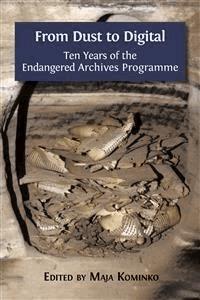
Cover image: Qʷәraro Maryam (Gärᶜalta, Tigray). Repository for discarded manuscript fragments in a niche of the central bay of the north aisle. Photograph by Michael Gervers, CC BY-NC
All paper used by Open Book Publishers is SFI (Sustainable Forestry Initiative) and PEFC (Programme for the Endorsement of Forest Certification Schemes) Certified.
Printed in the United Kingdom and United States by Lightning Source for Open Book Publishers
Contents
Acknowledgements
ix
List of illustrations
xi
List of recordings
xxix
Notes on contributors
xxxi
IntroductionLisbet Rausing and Peter Baldwin
xxxvii
Preserving the past: creating the Endangered Archives Programme Barry Supple
xxxix
The Endangered Archives Programme after ten yearsAnthea Case
xliii
What the Endangered Archives Programme does
xlvii
Crumb trails, threads and traces: endangered archives and historyMaja Kominko
xlix
PART I. INSCRIPTIONS
1
The “written landscape” of the central Sahara: recording and digitising the Tifinagh inscriptions in the Tadrart Acacus MountainsStefano Biagetti, Ali Ait Kaci and Savino di Lernia
1
PART II. MANUSCRIPTS
2
Metadata and endangered archives: lessons from the Ahom manuscripts projectStephen Morey
31
3
Unravelling Lepcha manuscriptsHeleen Plaisier
67
4
Technological aspects of the monastic manuscript collection at May Wäyni, EthiopiaJacek Tomaszewski and Michael Gervers
89
5
Localising Islamic knowledge: acquisition and copying of the Riyadha Mosque manuscript collection in Lamu, KenyaAnne Bang
135
6
In the shadow of Timbuktu: the manuscripts of DjennéSophie Sarin
173
PART III. DOCUMENTARY ARCHIVES
7
The first Gypsy/Roma organisations, churches and newspapersElena Mariushakova and Veselin Popov
189
8
Sacred boundaries: parishes and the making of space in the colonial AndesGabriela Ramos
225
9
Researching the history of slavery in Colombia and Brazil through ecclesiastical and notarial archivesJane Landers, Pablo Gómez, José Polo Acuña and Courtney J. Campbell
259
10
Convict labour in early colonial Northern Nigeria: a preliminary studyMohammed Bashir Salau
293
11
Murid Ajami sources of knowledge: the myth and the realityFallou Ngom
331
12
Digitisation of Islamic manuscripts and periodicals in Jerusalem and AcreQasem Abu Harb
377
PART IV. PHOTOGRAPHIC ARCHIVES
13
A charlatan’s album: cartes-de-visite from Bolivia, Argentina and Paraguay (1860-1880)Irina Podgorny
417
14
Hearing images, tasting pictures: making sense of Christian mission photography in the Lushai Hills District, Northeast India (1870-1920)Kyle Jackson
445
15
The photographs of Baluev: capturing the “socialist transformation” of the Krasnoyarsk northern frontier, 1938-1939David Anderson, Mikhail S. Batashev and Craig Campbell
487
16
Archiving a Cameroonian photographic studioDavid Zeitlyn
531
PART V. SOUND ARCHIVES
17
Music for a revolution: the sound archives of Radio Télévision GuinéeGraeme Counsel
547
18
Conservation of the Iranian Golha radio programmes and the heritage of Persian classical poetry and musicJane Lewisohn
587
19
The use of sound archives for the investigation, teaching and safeguarding of endangered languages in RussiaTjeerd De Graaf and Victor Denisov
617
Index
635
Acknowledgments
The editor would like to thank the authors who have contributed to this book for their professionalism, good humour and patience in responding to seemingly endless queries and requests. We are all indebted to the anonymous peer reviewers for their invaluable comments and to Open Book Publishers for their help and guidance.
Finally, I would like to express my gratitude to Ewa Balicka-Witakowska, Dmitry Bondarev, Jody Butterworth, Cathy Collins, Tomasz Gromelski, Michael Kellogg, Arietta Papaconstantinou, Mandana Seyfeddinipur, Columba Stewart, Mark Turin and Andrew Wright, who have been most generous with their help.
List of illustrations
1.1
Map of the Tadrart Acacus and the central Saharan massifs. First published in Stefano Biagetti, Ali Ait Kaci, Lucia Mori and Savino di Lernia, “Writing the Desert: The ‘Tifinagh’ Rock Inscriptions of the Tadrart Acacus (South-West Libya)”, Azania, 47.2 (2012), 153-74 (p. 170).
2
1.2
Map of the Tadrart Acacus with the sites recorded for the Endangered Archives Programme sorted by significance (adapted from Biagetti et al., 2012).
14
1.3
An example of Tifinagh inscription, site 09/87B (EAP265/1/87B). Photo by R. Ceccacci, CC BY.
15
1.4
The Basmala inscription from site 09/67.
16
1.5
Site 09/73 features the toponym of Teshuinat (TŠWNT).
17
1.6
Graph illustrating the significance and context of Tifinagh sites.
20
1.7
3D view of the aqba of wadi Tasba on the western escarpment of the Tadrart Acacus (map from Google Earth).
21
1.8
Site 09/74, close to the guelta of wadi Bubu (EAP265/1/74). Photo by R. Ceccacci, CC BY.
22
1.9
Etaghas Ti-n-Lalan (map from Google Earth, adapted from di Lernia et al., 2012).
23
1.10
Site 09/73, Ti-n-Anneuin, vandalised in 2009 (EAP265/1/73). Photo by R. Ceccacci, CC BY.
26
2.1
Iftiqar Rahman photographing the Phe Lung Phe Ban paper manuscript belonging to Hara Phukan. Photo by Poppy Gogoi, CC BY.
34
2.2
The Phe Lung Phe Ban cloth manuscript belonging to Tileshwar Mohan (EAP373), CC BY.
37
2.3
The Phe Lung Phe Ban manuscript belonging to Hara Phukan (EAP373), CC BY.
38
2.4
Folio 33r of the Khun Lung Khun Lai manuscript belonging to Tulsi Phukan (EAP373), CC BY.
39
2.5
Folio 9r of the Du Kai Seng manuscript belonging to Tileshwar Mohan (EAP373), CC BY.
44
2.6
A page from one of the Ban Seng manuscripts belonging to Bhim Kanta Phukan (EAP373), CC BY.
45
2.7
Folio 6v of the Ming Mvng Lung Phai manuscript belonging to Tileshwar Mohan (EAP373), CC BY.
51
2.8
Folio 1r of a Sai Kai manuscript belonging to Padma Sangbun Phukan (EAP373), CC BY.
55
2.9
Folio 20v of the Nang Khai manuscript belonging to Baparam Hati Baruah (EAP373), CC BY.
58
2.10
Folio 3v of the Nang Khai manuscript belonging to Baparam Hati Baruah (EAP373), CC BY.
59
2.11
Folio 1v of the Bar Amra manuscript belonging to Junaram Sangbun Phukan (EAP373), CC BY.
61
3.1
Prayers to the Choten. Foning Collection (EAP281/1/9), CC BY.
67
3.2
Worship of Ekádoshi. Tamyong Collection (EAP281/3/1), CC BY.
68
3.3
The Legend of the Goddess Queen.Foning Collection (EAP281/1/20), CC BY.
72
3.4
The Legend of Cenrejú. Foning Collection(EAP281/1/6), CC BY.
77
3.5
The Legend of the Goddess Nángse.Foning Collection(EAP281/1/13), CC BY.
79
3.6
Astrological text. Namchu Collection (EAP281/2/1), CC BY.
80
3.7
Astrological text. Foning Collection (EAP281/1/10), CC BY.
80
3.8
Astrological text. Foning Collection (EAP281/1/14), CC BY.
81
3.9
Parkhó Calculations.Foning Collection (EAP281/1/7), CC BY.
82
3.10
Astrological text. Dendrúp Adyemnu Collection (EAP281/4/3), CC BY.
84
4.1
May Wäyni. Treasury building interior with cased manuscripts on pegs. Photo CC BY-NC.
91
4.2
May Wäyni. Church ambulatory, assembly line set-up. Photo CC BY-NC.
93
4.3
May Wäyni. Preparing manuscripts in the iqabet for preliminary observation. Photo CC BY-NC.
94
4.4
May Wäyni. A monk re-stitches a manuscript binding in the church courtyard. Photo CC BY-NC.
96
4.5
May Wäyni. Particularly vulnerable manuscripts are stored in acid-free cartons. Photo CC BY-NC.
97
4.6
May Wäyni manuscripts. Examples of minimally-prepared parchment showing (a) hairy surface and (b) gelatinisation (EAP526/1/15 and EAP526/1/44), CC BY-NC.
98
4.7
May Wäyni manuscript Sәrᶜatä qәddase [Order of the Mass]showing the structure of the semi-translucent parchment with traces of ruling (EAP526/1/90), CC BY-NC.
99
4.8
May Wäyni manuscript Mälә’әktä Ṗawlos [Letters of Paul] showing extensive water damage (EAP526/1/56), CC BY-NC.
100
4.9
May Wäyni manuscript Ṣälotä ᶜәṭan [The Prayer of Incense] gnawed by rodents (EAP526/1/62), CC BY-NC.
100
4.10
May Wäyni manuscript book boards showing various stages of cover deterioration (a (EAP526/1/4) and b (EAP526/1/1), with sewn repairs to c (EAP526/1/19) and d (EAP526/1/4)), CC BY-NC.
102
4.11
May Wäyni manuscript Arganonä wәddase [The Harp of Praise] by Giyorgis of Sagla showing a variety of threads and cords used to connect the book block to the covers (EAP526/1/23), CC BY-NC.
103
4.12
May Wäyni manuscript Qeddus Gädlä Gäbrä Manfäs Qeddus [The Life of Gäbrä Manfäs Qeddus] showing sewn repairs to the front book board (EAP526/1/30), CC BY-NC.
103
4.13
May Wäyni manuscript Mäzmurä Dawit [Psalms of David] showing loose folios held together by stab-stitching (EAP526/1/61), CC BY-NC.
104
4.14
May Wäyni manuscript Mäshafä Tälmid [The Book of the Disciple] showing the ruptures to the original leather covering around the spine of the volume that provide free access to the lacing holes in the boards, holes made for resewing the book (EAP526/1/45), CC BY-NC.
106
4.15
May Wäyni manuscript Dәrsanä Mikaᵓel [Homily in Honour of the Archangel Michael]. Full-page miniatures (EAP526/1/7), CC BY-NC.
108
4.16
A rare fifteenth-century illumination of the Virgin and Child bound between folios 171 and 172 of a seventeenth-century copy of Täᵓammәrä Maryam [The Miracles of Mary] (EAP526/1/41), CC BY-NC.
108
4.17
Drawing of a combined quire structure.
114
4.18
May Wäyni manuscript Orit [Octateuch] and Mäṣḥafä kufale [The Book of Jubilees] showing low-quality folios used as protective flyleaves (EAP526/1/3), CC BY-NC.
115
4.19
Drawing showing the distribution of flyleaf arrangements in the May Wäyni collection.
116
4.20
May Wäyni manuscript showing straight long stitches on the spine (EAP526/1/89), CC BY-NC.
116
4.21
May Wäyni manuscript Dәrsanä Mikaᵓel [Homily in Honour of the Archangel Michael] showing spine lining with a wide strip of leather (EAP526/1/7), CC BY-NC.
118
4.22
May Wäyni manuscript Dәrsanä arba‘әtu әnsәsa [Homily on the Four Celestial Creatures] showing the endband made of a folded strip of leather (EAP526/1/29), CC BY-NC.
119
4.23
Different types of textiles used as lining for the inner side of the manuscript bindings: (a) Indian plain-weave, shuttle-woven fabric (?) – with “buta” (Persian) or “boteh” (Indian) motif (EAP526/1/18); (b) six narrow strips of plain-weave fabric each with both selvedges (EAP526/1/48); (c) tapestry, plain-weave fabric (EAP526/1/37); (d) Indian Masulipatam plain-weave fabric, block-printed (EAP526/1/43), CC BY-NC.
121
4.24
Set of iron tools for decorating bindings, CC BY-NC.
122
4.25
Tools found on bindings in May Wäyni collection. Straight lines: triple (1- EAP526/1/26), double (2- EAP526/1/37), single (3- EAP526/1/39). Circles: single (4- EAP526/1/4 [Ø≈5 mm]), double (5- EAP526/1/18 [Ø≈5 mm]). Corni-form (6- EAP526/1/4 [18 × 8mm], 7- EAP526/1/44 [17 × 8 mm). V-form: dotted (8- EAP526/1/11 [5 × 10mm], triple lines (9- EAP526/1/24 [9 × 12 mm]). Almond form: ‘mother of water’ (10- EAP526/1/4 [7 × 10 mm]), ’palm shape’ (11- EAP526/1/5 [13 × 6 mm], 12- EAP526/1/49 [12 × 6mm]). Diagonal cross: 13- EAP526/1/17 [7 × 7 mm], 14- EAP526/1/11 [8 ×8mm], 15- EAP526/1/5 [10 × 10 mm], 16- EAP526/1/4 [9 × 9 mm], 17- EAP526/1/18 [7 × 7 mm], 18- EAP526/1/87 [9 × 9 mm], 19- EAP526/1/48 [8 × 8 mm], 20- EAP526/1/42 [12 × 12 mm], 21- EAP526/1/11 [8 × 10 mm]. Criss-cross: 22- EAP526/1/7 [4 × 6 mm], 23- EAP526/1/26 [9 × 10 mm], 24- EAP526/1/15 [8 × 8 mm], 25- EAP526/1/18 [9 × 9 mm], 26- EAP526/1/49 [7 × 9 mm], 27- EAP526/1/5 [9 × 10 mm]; 28- EAP526/1/66 [8 × 8 mm]. Grid pattern: 29- EAP526/1/24 [7 × 13 mm], 30- EAP526/1/4 [10 × 15 mm], 31- EAP526/1/41 [12 × 12 mm]. Straight strapwork elements: 32- EAP526/1/3 [5 × 11 mm], 33- EAP526/1/18 [6 × 9 mm].Wavy lines: 34- EAP526/1/3 [5 × 14 mm], 35- EAP526/1/26 [6 × 15 mm], 36- EAP526/1/1 [4 × 10 mm]. Curve strapwork elements or ‘wave form’: 37- EAP526/1/13 [8 × 10 mm], 38- EAP526/1/15 [6 × 10 mm], 39- EAP526/1/18 [9 × 10 mm], 40- EAP526/1/49 [7 × 10 mm], 41- EAP526/1/22 [9 × 10 mm], 42- EAP526/1/31 [9 × 10 mm], 43- EAP526/1/22 [6 × 10 mm], 44- EAP526/1/41 [7 × 10 mm], 45- EAP526/1/41 [7 × 10 mm]. Rosette motives: 46- EAP526/1/25 [8 × 8 mm], 47- EAP526/1/31 [7 × 7 mm], 48- EAP526/1/46 [7 × 7 mm]. All images CC BY-NC.
124-25
4.26
Decorative tooling on the central panels of the leather covering of four manuscripts from May Wäyni (a (EAP526/1/4), b (EAP526/1/16), c (EAP526/1/7), d (EAP526/1/31)), CC BY-NC.
127
4.27
May Wäyni manuscript Zena Sәlase [Narrative Teaching on the Holy Trinity]. Tooled leather binding (EAP526/1/73), CC BY-NC.
128
4.28
Tooled leather decoration on the spines of manuscripts (from left to right: EAP526/1/31, EAP526/1/22, EAP526/1/44), CC BY-NC.
129
4.29
May Wäyni manuscript Gädlä Ṗeṭros zä-Däbrä Abbay [Acts of Petros of Däbrä Abbay] showing decoration of the inner side of the cover (EAP526/1/65), CC BY-NC.
130
4.30
May Wäyni manuscript showing tooled decoration on the edges of the covers (EAP526/1/52), CC BY-NC.
131
5.1
First page of Sharḥ Tarbiyyat al-aṭfāl by Muḥyī al-Dīn al-Qaḥṭānī (d. Zanzibar, 1869). Possibly in the author’s own hand (EAP466/1/38, image 3), CC BY-ND.
139
5.2
Wiṣayāt Aḥmad b. Abī Bakr b. Sumayṭ ilā ʿAbd Allāh BāKathīr. Spiritual testament from the Zanzibari Sufi shaykh Aḥmad b. Sumayṭ (d. 1925) to his friend and disciple ʿAbd Allāh Bā Kathīr (d. 1925), dated 1337H/1918-1919. Possibly in the author’s own hand (EAP466/1/99, image 2), CC BY-ND.
140
5.3
Example of late waqf donation “for the benefit of Muslims”. Notebook with compilation of prayers and adhkār (Sufi texts for recitation) (EAP/1/106, image 2), CC BY-ND.
147
5.4
Al-Fawāʾid al-Saniyya fī dhikr faḍāʾil man yantasibu ilā al-silsila al-nabawiyya [The Benefits of Remembering the Virtues of those Belonging to the Prophetic Lineage], by Aḥmad b. Ḥasan b. ʿAbd Allāh b. ʿAlawī, d. 1203/1788-1789 in Ḥaḍramawt. The inscriptions show the travelling of this particular manuscript, first given as a gift in 1891-1892 and then again in Batavia (Jakarta) in 1946-1947 (EAP466/1/29, image 4), CC BY-ND.
150
5.5
Al-Fawāʾid al-Saniyya fī dhikr faḍāʾil man yantasibu ilā al-silsila al-nabawiyya, by Aḥmad b. Ḥasan b. ʿAbd Allāh b. ʿAlawī (d. 1203/1788-1789 in Ḥaḍramawt) (EAP466/1/29, image 6), CC BY-ND.
151
5.6
Example of local copying in the nineteenth century. Alfyya [The One Thousand, verse of 1000 lines] with marginal commentary by Ibn ʿAqīl copied by Shārū b. ʿUthmān b. Abī Bakr b.ʿAlī al-Sūmālī in 1858 (EAP466/1/15, image 574), CC BY-ND.
155
5.7
Diwān al-ʿAdanī [The Collected Poetry of Abū Bakr al-ʿAdanī], copied by Sālim b. Yusallim b. ʿAwaḍ Bā Ṣafar for Habib Saleh in 1927 [1] (EAP466/1/19, image 2), CC BY-ND.
157
5.8
Diwān al-ʿAdanī [The Collected Poetry of Abū Bakr al-ʿAdanī], copied by Sālim b. Yusallim b. ʿAwaḍ Bā Ṣafar for Habib Saleh in 1927 [2] (EAP466/1/19, image 3), CC BY-ND.
158
5.9
Colophon showing the signature of copyist Muḥammad b. Abī Bakr al-Bakrī Kijūma and the date 18 Jumāda II 1352H/8 October 1928. (EAP466/1/58, image 310), CC BY-ND.
160
6.1
Façade of Djenné library. Photo by author, CC BY.
175
6.2
Tārīkh al-Sudan [History of the Sudan] manuscript in the library’s collection. Photo by author, CC BY.
176
6.3
Manuscripts storage chest in one of the houses in Djenné. Photo by author, CC BY.
177
6.4
Prayers to the Prophet from the Maiga family collection. Photo by author, CC BY.
180
6.5
Two manuscript storage boxes made for the library. Photo by author, CC BY.
183
7.1
Stamp of the Egyptian Nation organisation, Public Domain.
193
7.2
Shakir Pashov as a soldier (EAP067/1/2/4, image 4), Public Domain.
196
7.3
Roma youth preparing a sample of the future alphabet (EAP067/8/1/16), Public Domain.
204
7.4
Shakir Pashov (centre) as a Member of Parliament with voters (EAP067/1/1/14), Public Domain.
207
7.5
Shakir Pashov (centre) with participants at the national conference of the Ekhipe (EAP067/1/1/1), Public Domain.
210
7.6
Shakir Pashov with his wife in Rogozina (EAP067/1/1/13), Orphan Work.
214
7.7
Shakir Pashov as an honoured pensioner (EAP067/1/2/5), Orphan Work.
215
7.8
Shakir Pashov’s card identifying him as an “active fighter against fascism and capitalism” (EAP067/1/8), Public Domain.
215
7.9
Obituary commemorating the six-month anniversary of Shakir Pashov’s death (EAP067/1/9, image 2), Public Domain.
216
7.10
Obituary commemorating the first full anniversary of Shakir Pashov’s death (EAP067/1/9, image 3), Public Domain.
216
8.1
Map of the Valley of Canta, Peru, by Évelyne Mesclier, CC BY.
226
8.2
Cover page of the records of the petition to close down the parish of Pariamarca in the corregimiento of Canta, 1650 (EAP333/1/3/11 image 1), Public Domain.
236
8.3
In this letter, Don Gerónimo de Salazar y Salcedo, parish priest of San Antonio de Pariamarca, explains that because of the fire that destroyed the textile mill of Pariamarca, he requested the closing down of the doctrina. Lima, 11 October 1651 (EAP333/1/3/11 image 46), Public Domain.
238
8.4
Register of the inhabitants (men, women and youth) of the doctrina of San Antonio de Pariamarca, 1650 (EAP333/1/3/11 image 23), Public Domain.
239
8.5
In this letter, the protector of the Indians, don Francisco Valençuela, states that the priest of Pariamarca’s salary cannot be paid with the proceeds of the Indians’ assets. Lima, c. 1651 (EAP333/1/3/11 image 54), Public Domain.
241
8.6
Sample page of the census conducted in 1653 by Juan de Escalante y Mendoza showing part of the headcount of the ayllu (kin group) Julcan Yumay (EAP333/1/3/11 image 107), Public Domain.
244
8.7
Sample page of the census conducted in 1653 by Juan de Escalante y Mendoza, showing part of the headcount of the ayllu Allauca Pacha (EAP333/1/3/11 image 113), Public Domain.
245
8.8
Sample page of the census conducted in 1653 by Juan de Escalante y Mendoza showing part of the headcount of reservados, adult men and women who because of their occupation, age or health were exempted from paying tribute (EAP333/1/3/11 image 106), Public Domain.
248
8.9
Cultivated fields in Pariamarca, August 2014. Photo by Évelyne Mesclier, CC BY.
250
8.10
A street in Pariamarca, August 2014. Photo by Évelyne Mesclier, CC BY.
253
8.11
A view of the town and valley of Canta, August 2014. Photo by Évelyne Mesclier, CC BY.
254
9.1
Map of Pacific and Caribbean Colombia, by James R. Landers, CC BY-NC-ND.
262
9.2
The Quibdó team examines a notarial register at the EAP workshop. Photo by David LaFevor, CC BY.
265
9.3
Notarial Document from Quibdó (EAP255/2). Photo by Quibdó team member, CC BY-NC-ND.
267
9.4
Project directors and University of Cartagena student team at EAP workshop. Photo by Mabel Vergel, CC BY-NC-ND.
271
9.5
Endangered ecclesiastical records from the Iglesia de Santa Cruz de Lorica, Córdoba. Photo by Cartagena team member, CC BY-NC-ND.
273
9.6
Students learn to film endangered records at Vanderbilt’s digital workshop at the University of Cartagena. Photo by David LaFevor, CC BY.
273
9.7
Cathedral of San Jerónimo de Buenavista, Montería, Córdoba. Photo by Mabel Vergel, CC BY-NC-ND.
274
9.8
Baptism document of Maria Olalla, San Jerónimo de Buenavista Cathedral, Montería, Córdoba (EAP640). Photo by Cartagena team member, CC BY-NC-ND.
275
9.9
Nova et Accurata Brasiliae Totius Tabula made in 1640 by Joan Blaeu. Note the Capitania de Paraiba, highlighted on the northeastern coast. Ministério das Relações Exteriores do Brasil, Public Domain (http://commons.wikimedia.org/wiki/File:Blaeu1640.jpg).
277
9.10
Map of Paraíba, highlighting São João do Cariri in the interior and João Pessoa on the coast, created by Courtney J. Campbell, CC BY-NC-ND.
278
9.11
Students from the Universidade Federal da Paraíba filming ecclesiastical records from Nossa Senhora dos Milagres do São João do Cariri (EAP627). Photo by Tara LaFevor, CC BY.
280
9.12
Sesmaria (land grant) document from Paraíba (EAP627). Photo by Courtney J. Campbell, CC BY-NC-ND.
281
9.13
Sesmaria document from Paraíba (EAP627). Photo by Paraíba team member, CC BY-NC-ND.
282
9.14
Nossa Senhora dos Milagres do São João do Cariri Church (EAP627). Photo by David LaFevor, CC BY.
283
9.15
Book of Baptisms, Marriages and Deaths, 1752-1808, from Paróquia de Nossa Senhora dos Milagres do São João do Cariri Paraíba (EAP627). Photo by Paraíba team member, CC BY-NC-ND.
284
9.16
Book of Baptisms, Marriages and Deaths, 1752-1808, from Paróquia de Nossa Senhora dos Milagres do São João do Cariri Paraíba (EAP627). Photo by Paraíba team member, CC BY-NC-ND.
285
10.1
Kitāb tārīkh Zazzau [A History of Zazzu or Zaria Emirate] by B. Ulama-i, 1924. Digitised handwritten Arabic document (EAP535/1/2/3/2, image 2), Public Domain.
296
10.2
Digitised original file description written in English on an Arabic document by Sultan Muhammad Bello, n.d. (probably 1954-1966). The National Archives, Kaduna (EAP535/1/2/3/3, image 2), Public Domain.
296
10.3
A Guide to Understanding Certain Aspects of Islam, by Sultan Muhammad Bello, 1809. The National Archives, Kaduna (EAP535/1/2/3/3, image 3), Public Domain.
297
10.4
Waqar jami-yah by Sheikh Ahmadu ti-la ibn Abdullahi, n.d. (EAP535/1/2/19/20, image 2), Public Domain.
297
10.5
Report on the annual inspection of Zungeru prison by Lieutenant Colonel Hasler, 1906 [1] (EAP535/2/2/5/4, image 7), Public Domain.
301
10.6
Report on the annual inspection of Zungeru prison by Lieutenant Colonel Hasler, 1906 [2] (EAP535/2/2/5/4, image 5), Public Domain.
302
10.7
Report on Bornu Province prisons by W. P. Hewby, 1906 [1] (EAP535/2/2/5/16, image 53), Public Domain.
303
10.8
Report on Bornu Province prisons by W. P. Hewby, 1906 [2] (EAP535/2/2/5/16, image 54), Public Domain.
304
10.9
Document from the Niger Province annual report on cotton production for 1911 by Major W. Hamilton Browne, 1912 (EAP535/2/2/11/18, image 58), Public Domain.
311
10.10
Report on the unsatisfactory conduct of the Maaji of Zaria by the District Officer in charge of the Zaria Emirate, Y. Kirkpatrick, to the Resident of Zaria Province, 1921 [1] (EAP535/2/3/6/18, image 20), Public Domain.
316
10.11
Report on the unsatisfactory conduct of the Maaji of Zaria by the District Officer in charge of the Zaria Emirate, Y. Kirkpatrick, to the Resident of Zaria Province, 1921 [2] (EAP535/2/3/6/18, image 21), Public Domain.
317
10.12
Report on the unsatisfactory conduct of the Maaji of Zaria by the District Officer in charge of the Zaria Emirate, Y. Kirkpatrick, to the Resident of Zaria Province, 1921 [3] (EAP535/2/3/6/18, image 22), Public Domain.
318
10.13
Document from “Report September quarter 1911-Kabba Province” concerning constraints on crop cultivation by J. A. Ley Greeves, 1912 (EAP535/2/2/10/32, image 21), Public Domain.
321
11.1
Picture of Ahmadou Bamba taken during the 2012 Màggal, the yearly celebration of his arrest in 1895. The Arabic verses read as follows: “My intention on this day is to thank You, God; O You, the only one I implore, The Lord of the Throne”.
341
11.2
Mbaye Nguirane reading an Ajami excerpt of one of Moussa Ka’s poems during an interview with Fallou Ngom on 11 June 2011. Born in 1940 in Diourbel, Senegal, Nguirane is a leading specialist in Sufism, a historian and a public speaker.
347
11.3
This image is the last page of Moukhtar Ndong’s Ajami healing and protection manual, Manāficul Muslim (EAP334/12/2, image 19), CC BY.
359
11.4
“In the Name of Your Quills and Ink” by the master poet and social critic, Mbaye Diakhaté, written between 1902 and 1954 (EAP334/4/2, image 46), CC BY.
360
11.5
A page from Habibou Rassoulou Sy’s Lawtanuk Barka [Flourishing of Baraka], a genealogy book of the family of Boroom Tuubaa (Ahmadou Bamba). Bamba is located in the circle in bold (EAP334/12/1, image 6), CC BY.
363
11.6
A work of Ajami art displaying a key Murid maxim: “Loo yootu jàpp ko (Seize whatever you reach)” inMbaye Diakhaté’s “Yow miy Murid, Seetal Ayib yi La Wër [You, the Murid, Beware of the Challenges Surrounding You]” (EAP334/8/1, image 29).
364
11.7
Photo of a shopkeeper’s Ajami advertisement in Diourbel, the heartland of Muridiyya, taken in June 2009. The Ajami text reads as follows: “Fii dañu fiy wecciku ay Qasā’id aki band(u) ak kayiti kaamil aki daa” [Poems, audiocassettes, Quran-copying quality paper and ink are sold here]”. The word TIGO refers to a local mobile phone company.
365
11.8
A mill owner’s advertisement for grinding grains, including peanuts. The Ajami text reads as follows: “Ku bëgg wàllu wàlla soqlu wàlla tigadege wàlla nooflaay; kaay fii la. Waa Kër Xaadimu Rasuul [If you want (your grains) pounded or grinded or peanut butter effortlessly; come here. The People of The Servant of the Prophet (Ahmadou Bamba)]”. Photo taken in Diourbel in June 2009.
366
11.9
Shopping for Ajami materials in Touba, Senegal during the 2012 Màggal.
367
11.10
Shopping for Ajami materials and Murid paraphernalia in Touba,Senegal, 12 July 2014.
367
11.11
An advertisement in Ajami for the mobile phone company Orange in a suburb of the Murid holy city of Touba, 12 July 2014.
368
11.12
A public announcement in Ajami and six foreign languages asking pilgrims who attended the 2011 Màggal to turn off their mobile phones when entering the Great Mosque of Touba where Ahmadou Bamba is buried, 11 January 2011.
369
12.1
Front page of al-Jāmiʿah al-Islāmīyah [Islamic Union] newspaper, 27 July 1937 (EAP119/1/12/480, image 1), CC BY.
385
12.2
Front page of al-Liwāʾ [The Flag] newspaper, 16 December 1935 (EAP119/1/17/2, image 1), CC BY.
386
12.3
Front page of Miraʾat al-Sharq [The Mirror of the East] newspaper, on the Balfour Declaration, 2 November 1917 (EAP119/1/24/1, image 1), CC BY.
388
12.4
Front page of al-Jāmiʿah al-ʿArabīyah [TheArab League] newspaper, on the Buraq uprising, 16 October 1929 (EAP119/1/13/260, image 1), CC BY.
389
12.5
Page three of al-Jāmiʿah al-ʿArabīyah [The Arab League] newspaper, on al-Qassam unrest, 22 November 1935 (EAP119/1/13/1504, image 3), CC BY.
390
12.6
Front page of al-Iqdām [The Courage] newspaper, on political parties, 30 March 1935 (EAP119/1/23/34, image 1), CC BY.
391
12.7
Front page of al-Difāʿ [The Defence] newspaper, on the great strike of 1936, 17 June 1936 (EAP119/1/21/169, image 1), CC BY.
392
12.8
Page three of al-Jāmiʿah al-ʿArabīyah [The Arab League] newspaper, on the Palestinian press under the Mandate, 3 April 1930 (EAP119/1/13/338, image 3), CC BY.
393
12.9
Damaged page of Filasṭīn [Palestine] newspaper, 30 December 1947 (EAP119/1/22/1802, image 1), CC BY.
395
12.10
Damaged paper of Bāb sharḥ al-shamsīyah, work on logic, 1389 CE (EAP399/1/23, image 4), CC BY.
397
12.11
Ashraf al-Wasāʾil, biography of the Prophet, 1566 CE (EAP399/1/12, image 4), CC BY.
397
12.12
Khāliṣ al-talkhīṣ, on the Arabic language, seventeenth century CE (EAP399/1/42, image 5), CC BY.
398
12.13
al-Wasīlah fī al-Ḥisāb, on mathematics, 1412 CE (EAP399/1/14, image 18), CC BY.
398
12.14
Taṣrīf al-Šāfiyah, on the Arabic language, 1345 CE (EAP399/1/34, image 85), CC BY.
399
12.15
al-Rawḍah, on jurisprudence and matters of doctrine, 1329 CE (EAP521/1/90, image 4), CC BY.
404
12.16
Maʿālim al-Tanzīl, exegesis, 1437 CE (EAP521/1/6, image 3), CC BY.
404
12.17
Ṭabaqāt al-Shāfiʿīyah, on history, 1542 CE (EAP521/1/26, image 33), CC BY.
405
12.18
al-Nawādir al-Sulṭānīyah, on the history and biography of Salaḥ al-Dīn al-Ayyūbī, 1228 CE (EAP521/1/24, image 29), CC BY.
405
13.1
Carte-de-visite from Bernabé Mendizábal to Mr. Comendador Dr. Guido Bennati (EAP207/6/1, images 27 and 28), Public Domain.
419
13.2
Itineraries of Guido Bennati in South America. Map by Samanta Faiad, Dept. Ilustración Científica del Museo de La Plata, CC BY.
421
13.3
Museo de La Plata, c. 1890 (Anales del Museo de La Plata, 1890), Public Domain.
423
13.4
Carte-de-visite from Michel-Aimé Pouget (EAP207/6/1, images 29 and 30), Public Domain.
428
13.5
“Souvenirs of Bolivia” (from La Ilustración Española y Americana, 43 (November 22, 1877), p. 316). © CSIC, Centro de Ciencias Humanas y Sociales, Biblioteca Tomás Navarro Tomás, all rights reserved.
435
13.6
“The Ruins of Pumapungu”, view to the southwest. © Stübel’s Collections, Leibniz-Institut für Länderkunde, Leipzig, all rights reserved.
436
13.7
“The church of Tiahuanaco”. © Stübel’s Collections, Leibniz-Institut für Länderkunde, Leipzig, all rights reserved.
437
14.1
Mission Veng Church, c. 1913-1919, Mizoram Presbyterian Church Synod Archive, Aijal, Mizoram, India.
450
14.2
Challiana, seated second from right, with F. W. Savidge, seated second from left, and others, n.d., British Library (EAP454/16/1), CC BY.
463
14.3
Wedding at Mission Veng Church, n.d., British Library (EAP454/12/1 Pt 2), CC BY.
465
14.4
Church leaders at Mission Veng Church, 1919, British Library (EAP454/13/22), CC BY.
465
14.5
Liangkhaia at Mission Veng Church, 1919, British Library (EAP454/13/22), CC BY.
467
14.6
Suaka Lal, Veli and Chhingtei at Durtlang, 1938, British Library (EAP454/3/3 Pt 2), CC BY.
470
14.7
“Wives of the Soldiers in Lungleh”, c. 1938, loose photo in J. H. Lorrain’s file, BMS Acc. 250, Angus Library and Archive, Regent’s Park College, Oxford.
470
14.8
“Some of the mothers who live in Lungleh”, c. 1938, loose photo in J. H. Lorrain’s file, BMS Acc. 250, Angus Library and Archive, Regent’s Park College, Oxford.
478
14.9
Two Mizo nurses in Serkawn, c. 1924, British Library (EAP454/6/1), CC BY.
478
15.1
Baluev writing in his journal in Dudinka, 1938. © Krasnoyarsk Museum, Siberia (KKKM 3604), all rights reserved.
492
15.2
Map of the Evenki National District. Photo by I. I. Baluev (EAP016/4/1/223). © Krasnoyarsk Museum, Siberia, all rights reserved.
495
15.3
The first camp after crossing the border between Taimyr and Evenkia with all three expedition members: Baluev, Dolgikh and Strulev. © Krasnoyarsk Museum, Siberia (KKKM 3683), all rights reserved.
497
15.4
Stakhanovite hunter, Stepan N. Pankagir, on the hunt for squirrels. Uchug, Evenki National District, 17 January 1939 (EAP016/4/1/1264). © Krasnoyarsk Museum, Siberia, all rights reserved.
504
15.5
Prize-winning hunter Ivan K. Solov’ev (a Yakut) shows his award to his wife. Next to her is V. V. Antsiferov. Kamen’ Factory, 7 November 1938 (EAP016/4/1/1913). © Krasnoyarsk Museum, Siberia, all rights reserved.
511
15.6
Female hunters. From the left, Mariia L. Mukto and Mariia F. Chapogir hunting for squirrels in the forest. Evenki National District, 1939 (EAP016/4/1/1323). © Krasnoyarsk Museum, Siberia, all rights reserved.
512
15.7
Icefishing with reindeer fat. Evenki National District, 1939. © Krasnoyarsk Museum, Siberia (KKKM 3684), all rights reserved.
513
15.8
Geography lesson in grade seven at the Russian School. Evenkii National District, Tura Settlement, January 1939 (EAP016/4/1/1546). © Krasnoyarsk Museum, Siberia, all rights reserved.
515
15.9
The Yakut Nikolai N. Botulu (Katykhinskii) with a polar fox caught in the jaws of a trap. He was from Ezhova, Taimyr National District, but his traps were located in the Evenki National District, 1938 (EAP016/4/1/315). © Krasnoyarsk Museum, Siberia, all rights reserved.
516
15.10
Krasnoyarsk krai forest on the border of the Evenki National District, Boguchansk Region, February 1939 (EAP016/4/1/1646). © Krasnoyarsk Museum, Siberia, all rights reserved.
517
15.11
Three modes of transport: reindeer, sleigh and truck. Evenki National District, Tura, 1939. © Krasnoyarsk Museum, Siberia (KKKM 3767), all rights reserved.
519
15.12
Evenki hunter Danil V. Miroshko trading furs. The head of the exchange is Luka Pavlovich Shcherbakov. Tura, January 1939. © Krasnoyarsk Museum, Siberia (KKKM 3822), all rights reserved.
519
15.13
A reindeer herd with herder from the Reindeer Sovkhoz (state farm), NKZ. Evenki National District, February 1939 (EAP016/4/1/1341). © Krasnoyarsk Museum, Siberia, all rights reserved.
520
15.14
Headquarters for the Reindeer Sovkhoz (state farm), NKZ. A chum (conical tent) is in the foreground, a new home for Evenki labourers in the background. © Krasnoyarsk Museum, Siberia (KKKM 3706), all rights reserved.
521
15.15
Yakut tent in Tura in the winter. Evenki National District, Tura settlement, January 1939 (EAP016/4/1/1556). © Krasnoyarsk Museum, Siberia, all rights reserved.
522
15.16
New Year’s tree celebration at the secondary school. © Krasnoyarsk Museum, Siberia, (KKKM 3759), all rights reserved.
523
15.17
Children performing exercises under a portrait of Stalin (a small portrait of the assassinated Bolshevik leader, Sergei Kirov, is behind the teacher’s head) (EAP016/4/1/1246). © Krasnoyarsk Museum, Siberia, all rights reserved.
525
16.1
Jacques Toussele with a plate camera in 1965. © Jacques Toussele, CC BY-NC-ND.
532
16.2
Jacques Toussele in 2001. Photo by author, CC BY-NC-ND.
533
16.3
The studio in 1973 (EAP054/1/123/56). © Jacques Toussele, CC BY-NC-ND.
535
16.4
The studio building in 2006. Photo by author, CC BY-NC-ND.
535
16.5
A street seller (EAP054/1/54/58). © Jacques Toussele, CC BY-NC-ND.
536
16.6
Portrait for an ID card (EAP054/1/94/167). © Jacques Toussele, CC BY-NC-ND.
536
16.7
Portrait of an elderly man with spear and pipe (EAP054/1/68/125). © Jacques Toussele, CC BY-NC-ND.
537
16.8
Portrait for an ID card (EAP054/1/177/24). © Jacques Toussele, CC BY-NC-ND.
537
16.9
Portraits for school ID cards. Double exposure on a single negative (EAP054/1/52/144). © Jacques Toussele, CC BY-NC-ND.
538
16.10
A photocopy of a print of a man standing, showing how the original negative was cropped (EAP054/1/4/145). © Jacques Toussele, CC BY-NC-ND.
540
16.11
Original negative for the print shown in Fig. 16.10 (EAP054/1/50/562). © Jacques Toussele, CC BY-NC-ND.
541
16.12
Baptism. Damaged negative (EAP054/1/44/45). © Jacques Toussele, CC BY-NC-ND.
543
16.13
Negatives before scanning. Photo by author, CC BY-NC-ND.
543
16.14
The documentary team at work in Mbouda. Photo by author, CC BY-NC-ND.
544
17.1
The logo of the Syliphone recording company. © Editions Syliphone, Conakry, under license from Syllart Records/Sterns Music, CC BY.
555
17.2
Bembeya Jazz National, Regard sur le passé (Syliphone, SLP 10, c. 1969). The photo depicts Samory Touré, grandfather of President Sékou Touré, who led the insurgency against French rule in the late nineteenth century. The orchestra’s version of the epic narrative in honour of his life earned them great acclaim; when it was performed at the First Pan-African Cultural Festival, held in Algiers in 1969, it won Guinea a silver medal. © Editions Syliphone, Conakry, under license from Syllart Records/Sterns Music, CC BY.
557
17.3
Ensemble Instrumental de la Radiodiffusion Nationale, Guinée an XI (Syliphone, SLP 16, 1970). Guinea’s premier traditional ensemble displays the prominence of the griot musical tradition, with two koras (first and second rows, centre) and a balafon (second row, far left). © Editions Syliphone, Conakry, under license from Syllart Records/Sterns Music, CC BY.
558
17.4
The verso cover of a box set of four Syliphone LPs (Syliphone, SLP 10-SLP 13, 1970), released in recognition of the performances of Guinea’s artists at the First Pan-African Cultural Festival, held in Algiers in 1969. © Editions Syliphone, Conakry, under license from Syllart Records/Sterns Music, CC BY.
558
17.5
Bembeya Jazz National/Horoya Band National, Concerts desOrchestres Nationaux (Syliphone, SLP 27, 1971). Political doctrine was reinforced through Syliphone. Here the cover depicts an enemy combatant, his boat blasted, surrendering to the JRDA (Jeunesse de la Révolution Démocratique Africaine, the youth wing of the PDG) and the APRG (Armée Populaire Révolutionnaire de Guinée). © Editions Syliphone, Conakry, under license from Syllart Records/Sterns Music, CC BY.
559
17.6
Édition spécial de la régie Syliphone. Commémorant le 1eranniversaire de la victoire du peuple de Guinée sur l’Impérialisme International (Syliphone SLPs 26-29, 1971). A box set of four LP discs (“Coffret special agression”)released to celebrate Guinea’s victory over the Portuguese-led forces which invaded the country in 1970. © Editions Syliphone, Conakry, under license from Syllart Records/Sterns Music, CC BY.
559
17.7
Horoya Band National (Syliphone, SLP 41, c. 1973). Many of Guinea’s orchestras featured the band members wearing traditional cloth. Here, an orchestra from Kankan in the north of Guinea wears outfits in the bògòlanfini style associated with Mandé culture. © Editions Syliphone, Conakry, under license from Syllart Records/Sterns Music, CC BY.
560
17.8
Various Artists,Discothèque 70 (Syliphone, SLP 23, 1971). Tradition and modernity: a compilation of music by Guinean orchestras is promoted by images from local cultural traditions. Here, a Fulbé woman is depicted. © Editions Syliphone, Conakry, under license from Syllart Records/Sterns Music, CC BY.
560
17.9
The Radio Télévision Guinée (RTG) offices in Boulbinet, Conakry. Photo by author, CC BY-NC-ND.
568
17.10
Audio reels stored in the RTG’s “annexe”. Photo by author, CC BY-NC-ND.
569
17.11
Some of the audio reels were in urgent need of preservation. Photo by author, CC BY-NC-ND.
569
17.12
Archiving the audio reels and creating digital copies. Photo by author, CC BY-NC-ND.
570
18.1
Davud Pirnia (on the right) and Rahi Mu’ayyiri (on the left) at the radio in Tehran, c. 1950. Courtesy of Forugh Bahmanpour, Public Domain.
588
18.2
Parviz Yahaqqi (on the right) and Bijan Taraqqi (on the left) composing a song for the Golha programmes. Tehran, late 1950s. Courtesy of Forugh Bahmanpour, Public Domain.
589
18.3
Rahim Moini-Kermanshahi (on the right) and ‘Ali Tajvidi (on the left) composing a song for the Golha programmes. Tehran, mid-1950s. Courtesy of Forugh Bahmanpour, Public Domain.
589
18.4
Vigin Derderian, one of the most popular pop singers from the 1950s. He sang several Armenian tunes for the Golha programmes. Courtesy of Forugh Bahmanpour, Public Domain.
592
18.5
Ali Akbar Shanazi teaching his pupil Pirayeh Pourafar at the Centre for the Preservation and Promotion of Music in Tehran, in 1977. Courtesy of Pirayeh Pourafar, Public Domain.
597
18.6
Ghulam Hosain Banan (on the left) and Navab-Safa (on the right) working on a song for the Golha programmes. Tehran, late 1950s. Courtesy of Forugh Bahmanpour, Public Domain.
599
18.7
Akbar Golpaygani (on the left) and Farhang Sharif (on the right) in the late 1960s. Courtesy of Alireza Mirnaghabi, Public Domain.
602
18.8
Left to right: Shaf’i Kadkani, Hushang Ebtehaj and Bastani Parizi. They were all poets whose work was featured in the Golha programmes, c. 1970. Courtesy of Alireza Mirnaghibi, Public Domain.
605
18.9
Mohammad Reza Lutfi (on the left) and Hushang Ebtehaj (on the right) in the mid-1970s. Courtesy of Forugh Bahmanpour, Public Domain.
606
18.10
Text of the Golha-yi javidan and Golha-yi rangarang programmes printed in the Radio-yi Iran journal. Majala-yi Radio, 16-17 (1335 A.Hsh./1956), Public Domain.
607
18.11
Faramarz Payvar (on the left) and Hosain Tehrani (on the right), at the Tomb of Hafiz, Shiraz Arts Festival, c. 1970. Courtesy of Forugh Bahmanpour, Public Domain.
610
18.12
Left to right: Turaj Nigahban, Gulshan Ibrahimi and Humayun Khuram. Courtesy of Forugh Bahmanpour, Public Domain.
611
19.1
The Pushkinskii Dom in St Petersburg. Photo by V. Denisov, CC BY.
620
19.2
The phonogram collection in St Petersburg. Photo by V. Denisov, CC BY.
621
19.3
The catalogue of sound recordings in the Pushkinskii Dom.
624
19.4
The sound laboratory in Izhevsk. Photo by V. Denisov, CC BY.
625
List of recordings
17.1
Orchestre Honoré Coppet, “no title” (1963), 4’40”. Syliphone2-068-02. With permission from Sterns Music, all rights reserved.
573
17.2
Syli Orchestre National, “Syli” (c. 1962), 4’33”. Syliphone3-248-3. With permission from Sterns Music, all rights reserved.
573
17.3
Balla et ses Balladins, “PDG” (c. 1970), 5’22”. Syliphone2-089-08. With permission from Sterns Music, all rights reserved.
573
17.4
Orchestre de la Paillote, “Dia” (1967), 3’48”. Syliphone4-358-10. With permission from Sterns Music, all rights reserved.
574
17.5
Orchestre de la Garde Républicaine 1ère formation, “Sabougnouma” (1964), 4’25”. Syliphone2-067-02. With permission from Sterns Music, all rights reserved.
574
17.6
Kébendo Jazz, “Kankan diaraby” (1964), 3’20”. Syliphone2-052-03. With permission from Sterns Music, all rights reserved.
574
17.7
Orchestre Féminin Gendarmerie Nationale, “La bibeta” (1963), 3’41”. Syliphone4-382-08. With permission from Sterns Music, all rights reserved.
574
17.8
Syli Authentic, “Aguibou” (c. 1976), 7’04”. Syliphone2-077-01. With permission from Sterns Music, all rights reserved.
575
17.9
Koubia Jazz, “Commissaire minuit” (1987), 5’40”. Syliphone4-022-03. With permission from Sterns Music, all rights reserved.
575
17.10
Bembeya Jazz National, “Ballaké” (c. 1972), 8’02”. Syliphone2-091-01. With permission from Sterns Music, all rights reserved.
575
17.11
Kouyaté Sory Kandia, “Miniyamba” (c. 1968), 2’24”. Syliphone4-380-05. With permission from Sterns Music, all rights reserved.
576
17.12
Kouyaté Sory Kandia, “Sakhodougou” (c. 1973), 8’26”. Syliphone3-168-4. With permission from Sterns Music, all rights reserved.
576
17.13
Mama Kanté avec l’Ensemble Instrumental de Kissidougou, “JRDA” (1970), 4’37”. Syliphone4-251-12. With permission from Sterns Music, all rights reserved.
576
17.14
Fodé Conté, “Bamba toumani” (c. 1978), 3’33”. With permission from Sterns Music, all rights reserved.
576
17.15
Les Virtuoses Diabaté, “Toubaka” (c. 1971), 4’22”. Syliphone4-047-04. With permission from Sterns Music, all rights reserved.
577
17.16
Kadé Diawara, “Banankoro”(c. 1976), 4’25”. With permission from Sterns Music, all rights reserved.
577
17.17
M’Bady Kouyaté, “Djandjon” (c. 1974), 7’35”. Syliphone4-322-03. With permission from Sterns Music, all rights reserved.
577
17.18
Femmes du Comité Landreah, “Révolution” (1964), 2’54”. Syliphone3-068-3. Sung in the Susu language. With permission from Sterns Music, all rights reserved.
578
17.19
Musique Folklorique du Comité de Guèlémata, “Noau bo kui kpe la Guinée ma” (1968), 2’33”. Syliphone3-088-3. Sung in the Guerzé language. With permission from Sterns Music, all rights reserved.
578
17.20
Sergent Ourékaba, “Alla wata kohana” (c. 1986), 2’10”. Syliphone4-755-06. Sung in the Fulfuldé language. With permission from Sterns Music, all rights reserved.
578
17.21
Binta Laaly Sow, “56” (c. 1986), 5’01”. Syliphone4-581-09. With permission from Sterns Music, all rights reserved.
579
17.22
Farba Téla, “Niina” (1979), 7’52”. Syliphone3-097-2. With permission from Sterns Music, all rights reserved.
579
18.1
Golha-yi javidan 85, broadcast between 1956 and 1959. Public Domain.
591
18.2
Golha-yi rangarang 158, broadcast between 1956 and 1972. Public Domain.
591
18.3
Barg-i sabz 23, broadcast between 1956 and 1972. Public Domain.
591
18.4
Yik shakh-i gol 196, broadcast between 1956 and 1972. Public Domain.
591
18.5
Golha-yi sahra’i 14, broadcast between 1960 and 1972. Public Domain.
591
18.6
Golha-yi taza 200, broadcast between 1972 and 1979. Public Domain.
604
Notes on contributors
Qasem Abu Harb is Director of the Archive Centre of the Arab Studies Society in Jerusalem (al-Quds).
Ali Ait Kaci has been working as an archaeologist at the National Archaeological Agency of Algeria since 1990. He has directed many excavations in Italy, Tunisia and Morocco. His current research focuses on Libyco-Berber epigraphy.
David G. Anderson is professor of anthropology at the University of Aberdeen. He has authored and edited numerous books on Siberia.
Peter Baldwin is Co-founder of the Arcadia Fund and the Global Distinguished Professor at New York University’s Center for European and Mediterranean Studies. His research focuses on the development of the modern state, but also addresses the comparative history of the welfare state, social policy, and public health.
Anne K. Bang is Senior Researcher at the Chr. Michelsen Institute and an Associate Professor of African Islamic history at the University of Bergen, Norway. She has published widely on Islam in the Indian Ocean during the nineteenth and twentieth centuries.
Mohammed Bashir Salau is Associate Professor of history at the University of Mississippi and author of The West African Slave Plantation: A Case Study.
Mikhail Semenovich Batashev is Senior Research Fellow in the Division of Archaeology and Ethnography of the Krasnoyarsk Territory Regional Museum.
Stefano Biagetti holds a Marie Curie Intra-European Fellowship in the Department of Humanities, Pompeu Fabra University, where he is conducting research into the resilience of central Saharan pastoralists from historical to current times.
Courtney J. Campbell is a Past & Present Postdoctoral Fellow at the Institute of Historical Research at the School of Advanced Study, University of London. Her work focuses on international cultural exchange and regional identity in the Brazilian Northeast.
Craig Campbell is Assistant Professor in the Department of Anthropology at the University of Texas at Austin. His book Agitating Images: Photography Against History in Indigenous Siberia was published by the University of Minnesota Press in 2014.
Anthea Case is Principal Adviser of the Arcadia Fund and Chair of the National Trust East of England Regional Advisory Board. She was previously Chief Executive of the National Heritage Memorial Fund and Heritage Lottery Fund (1995-2003). She was awarded a CBE in 2003 for services to heritage.
Graeme Counsel is a Lecturer in ethnomusicology and an Honorary Fellow of the Melbourne Conservatorium of Music, University of Melbourne. His research specialises in the investigation of cultural policies in Africa, examining the nexus between politics and the arts and exploring the ways in which cultural policies shape cultural expression.
Victor Denisov is a linguist specialising in Finno-Ugric Languages. He is a researcher at the Udmurt Institute for History and a member of the Kastren Finno-Ugric Society, Finland.
Tjeerd de Graaf has specialised in the phonetic aspects of ethnolinguistics. After retiring from the University of Groningen, he was a visiting professor at the University of St. Petersburg and guest researcher at the Slavic Research Center of Hokkaido University, Japan. He is a research fellow at the Frisian Academy and a board member of the Foundation for Endangered Languages and the Foundation for Siberian Cultures.
Savino di Lernia teaches ethnoarchaeology and African archaeology at the Faculty of Letters, Sapienza University of Rome. He is the director of the Archaeological Mission in the Sahara (Tunisia, Algeria, Libya) project. His main interests cover the transitions from hunting and foraging to food production, the development of pastoralism in Northern Africa and the management of cultural heritage in arid regions.
Michael Gervers is Professor of History at the University of Torontoand co-founder of Mäzgäbä Səəlat, an on-line corpus of over 65,000 images of Ethiopian art and culture. He publishes in the fields of medieval history, medieval art history and archaeology, and ancient textiles and ethnography.
Pablo Gómez is Assistant Professor in the Department of Medical History and the Department of the History of Science at the University of Wisconsin, Madison. His work examines the history of medicine and corporeality in the early modern African and Iberian Atlantic worlds.
Kyle Jackson is a Ph.D. candidate and Chancellor’s International Scholar at the University of Warwick’s Centre for the History of Medicine where he is exploring the history of health and religion in colonial Northeast India.
Maja Kominko is a historian of late antiquity and Byzantium. Her research focuses on intellectual history. She held postdoctoral and academic positions at the University of York, Princeton University and the University of Oxford. She currently manages the cultural grants portfolio at the Arcadia Fund.
Jane Landers is the Gertrude Conaway Vanderbilt Professor of History at Vanderbilt University. Her research focuses on Africans in the Atlantic World.
Jane Lewisohn is a graduate of Pahalavi University, Shiraz, Iran. She has been involved in research into and promotion of various aspects of Persian Studies for the last three decades. Since 2005, she has been directing the Golha Project under the auspices of the British Library and the Music Department of SOAS, University of London.
Elena Marushiakova (President of the Gypsy Lore Society) and Vesselin Popov have published widely on Roma (Gypsies) in Bulgaria, the Balkans and Eastern Europe. Their publications include Gypsies in the Ottoman Empire (2000) and the first monograph on Roma in Bulgaria (1997).
Stephen Morey is Australian Research Council Future Fellow at the Centre for Research on Linguistic Diversity, La Trobe University. He is the author of two books on tribal languages in Assam, including both Tai-Kadai and Tibeto-Burman families. He is the co-Chair of the North East Indian Linguistics Society and has also written on the Aboriginal Languages of Victoria, Australia.
Fallou Ngom is Associate Professor of Anthropology and Director of the African Language Program at Boston University. His current research interests include Ajami literatures — records of West African languages written in a modified Arabic script — and the interactions between African languages and non-African languages.
Heleen Plaisier has written a comprehensive reference grammar of Lepcha, the language spoken by the indigenous tribal people of Darjeeling, Sikkim and Kalimpong. She is now working on a Lepcha-English dictionary.
Irina Podgorny has been a Permanent Research Scholar at the CONICET (Consejo Nacional de Investigaciones Científicas y Técnicas) since 1995. She is also Director of the Archivo Histórico y Fotográfico at the Facultad de Ciencias Naturales y Museo of the Universidad Nacional de la Plata, Buenos Aires.
José Trinidad Polo Acuña is Professor of History at the University of Cartagena and Director of the research group “Frontiers, Society and Culture in the Caribbean and Latin America”.
Lisbet Rausing is co-founder of Arcadia, holds a doctorate in history from Harvard, and has taught at Harvard University and Imperial College. She currently serves on the advisory boards of the National Library of Israel and the Cambridge Conservation Initiative.
Gabriela Ramos is Senior Lecturer in Latin American History at the University of Cambridge and a Fellow of Newnham College, Cambridge. She has published extensively on the history of religion in the Andes, including Death and Conversion in the Andes. Lima and Cuzco, 1532-1670 (2010), winner of the 2011 Howard F. Cline Prize for its contribution to the history of indigenous peoples in Latin America, Conference on Latin American History.
Sophie Sarin is a designer who runs a textile and clothing studio in Djenné (www.malimali.org), as well as a hotel built out of mud (www.hoteldjennedjenno.com).
Barry Supple is an economic historian. He held academic posts at Harvard Business School and at the Universities of Sussex, Oxford and Cambridge, where he was Professor of Economic History and Master of St. Catharine’s College. Subsequently, he was Director of the Leverhulme Trust (1993-2001). From 2001 to 2007 he acted as principal adviser of the Arcadia Fund.
Jacek Tomaszewski is an art historian, conservator, and Lecturer at the Polish Institute of World Art Studies and the Asia and Pacific Museum in Warsaw. His main fields of research are the history of bookbinding, manuscript technology and book conservation.
David Zeitlyn is Professor of Social Anthropology at the Institute of Social and Cultural Anthropology, University of Oxford and a Fellow of Wolfson College, Oxford. He has been working in Cameroon since 1985 and has published extensively on various topics including traditional religion, sociolinguistics, kinship and history.
Introduction
Lisbet Rausing and Peter Baldwin
© Lisbet Rausing and Peter Baldwin, CC BY http://dx.doi.org/10.11647/OBP.0052.20
We would like to thank Lisbet’s father, Hans Rausing, whose exceptional capability and great generosity enabled us to fund the Endangered Archives Programme and contribute to the preservation of vulnerable archival collections worldwide.
The keepers of fragile, at-risk archives often do not have the means of preserving them. Faced with conflicts and their aftermath, natural disasters and epidemics, not even governments can afford to secure the survival of their archival heritage. And what of archives in private possession or those in small, struggling institutions? What of the heritage of minorities, whose position may be precarious in any case? What of the heritage of the displaced and the exiled whose archives are no longer understood or seen as relevant by the communities who keep them? It is easy to condemn neglect, but these communities often struggle to preserve their own heritage, let alone the heritage of others that came to them through accidents of history. We cannot expect them to shoulder the burden alone.
Endangered archives are scattered throughout the globe, often unknown or inaccessible. Ensuring that help reaches where it is most urgently needed may be a complex matter. This is why we decided to establish a grant programme allowing those who know of archives in danger to apply for support to digitise them. We chose digitisation because it preserves the content of the archives, even if the physical materials may disappear in the future. Importantly, it enables access to the documents without the need for physical handling that might cause further deterioration.
Access to the materials must be a crucial part of any effort to safeguard the knowledge and memory they contain. Minorities, exiles, the displaced and various first nations who have often been denied access to their own heritage as a result struggle to maintain their cultural identity. Who could lay claim to rescuing their heritage if we digitise it without making it accessible to them? And we do mean accessible — not only to those who can afford the travel to London but to every member of any dispersed community and to anyone who wants to explore and understand their culture. Digitisation may help to preserve the archives, but without open access the impact of these efforts will be limited.
The digitised collections contain a wealth of historical knowledge. They may not be part of school curricula or learned canons, but it is not for us to decide whether they do or do not become part of them in the future. Simply put: if this is the memory of the world, the world needs to be able to access it. We are proud that ten years from its inception, the Endangered Archives Programme has made nearly four million files available through its website. These are nearly four million individual windows into the human past that might otherwise have remained inaccessible or could even have closed forever.
Much of the credit for the wonderful success of the programme should go to the British Library and the programme’s team. Their tireless enthusiasm and dedication made it possible to transform the concept into an efficient reality. The global reach and significance of the programme would have been impossible to achieve without the international panel of experts who, over the years, have generously shared their knowledge and assiduously scrutinised applications, making sure that the support is directed where it is most needed. The expertise of the British Library curators helps to ensure that, what could have so easily have become a Borghesian labyrinth, is an accessible and clear archive of archives. We are also grateful to the Advisory Board and to the staff of the Arcadia Fund for their unflinching support, advice and hard work. Most importantly, however, our recognition is due to grantees who took risks and often worked in harsh conditions to ensure that historical materials were preserved. They are the real heroes of the Endangered Archives Programme.
We are grateful to the British Library for agreeing to keep the collections in perpetuity and ensuring that they remain freely accessible. We hope that not all scholarly publications based on these materials will be closed behind paywalls.
Preserving the past: creating the Endangered Archives Programme
Barry Supple
© Barry Supple, CC BY http://dx.doi.org/10.11647/OBP.0052.21




