


28,99 €
Mehr erfahren.
- Herausgeber: John Wiley & Sons
- Kategorie: Geisteswissenschaft
- Sprache: Englisch
A groundbreaking guide to achieving sustainable change in today's turbulent and interconnected global landscape
In a world increasingly divided by opposing perspectives, systemic inertia, and rapid societal shifts, From Ought to Is: Catalysing Change and Movement in a Polarised World offers a transformative approach to navigating change. Deborah Rowland challenges conventional change leadership paradigms by urging readers to confront the reality of "what is" rather than fixating on "what ought to be." Through this lens, she demonstrates how true, sustainable change is achieved not by forcing rigid ideals but by fostering courageous honesty and embracing the messy, dynamic truths of the present.
Rooted in decades of research, experience, and interdisciplinary insights from neuroscience, moral philosophy, and spiritual tradition, From Ought to Is provides a compelling guide to navigating complex systems. Rowland illuminates how acknowledging the full truth of a situation can catalyse collaborative action and new possibilities. Through real-life case studies and practical exercises, readers are invited to engage deeply with their own change scenarios, unlocking new possibilities through inclusion, truth, and adaptive leadership.
An experiential roadmap for initiating movement in systems, organisations, and personal lives, From Ought to Is:
- Presents an innovative framework for leading sustainable change which utilises a holistic and interdisciplinary approach
- Offers an adaptive, reality-based alternative for complex environments which challenges traditional command-and-control change models
- Explores the dynamics of polarisation and its impact on leadership, collaboration, and systemic transformation
- Addresses pressing global issues such as political and societal polarisation, technological disruption, and biodiversity collapse
- Expands on the principles introduced in Deborah Rowland's bestselling Still Moving to address today's unique challenges
Ideal for leaders, change practitioners, and anyone seeking to shift entrenched patterns, From Ought to Is supports learning in leadership development programmes and organisational transformation courses. It is an essential text for graduate-level studies in business, organisational behaviour, and leadership, and serves as a vital resource for executives, consultants, and change agents.
Sie lesen das E-Book in den Legimi-Apps auf:
Seitenzahl: 571
Veröffentlichungsjahr: 2025
Ähnliche

















Table of Contents
Cover
Table of Contents
Title Page
Copyright Page
Dedication Page
Praise for
From Ought to Is: Catalysing Change and Movement in a Polarised World
List of Figures
Foreword
Acknowledgements
My Brain is a Palimpsest – A Note About the Front Cover
1 Introduction
Change Starts by Acknowledging What Is
1
Moving From
Ought
to
Is
Is Not Easy, But It’s Worth It
The Price of Ought
The Founding Energy This Book Stands On
Working with
What Is
Requires a Shift in Attention
This Book
Chapter 2: The Deep Power of Ought
Chapter 3: The Transformative Punch of Is
Chapter 4: Systems and the Pursuit of Truth
Chapter 5: Leading Change From
Is
, the Personal Skills Required
Chapter 6: The Journey of the Soul
Chapter 7: Emotions and Movement
Chapter 8: The Journey Between Ought and Is – A Hothouse
Chapter 9: Conclusion
Notes
2 The Deep Power of Ought
Oughts Come from a Good Place, and Yet…
Welcome to the World of Ought
Ought
Versus
Should
Ought and the Workings of Conscience
The Cost of Ought When Initiating Change
Ought's Consequences
Ought – A Final Note
Notes
3 The Transformative Punch of Is
She Let It All Be
What Is,
Is
?
The Nature of Truth
The Value of Truth: The Discovery of Reality
How Truth and Reality Combine to Activate Change
Notes
From Ought to Is
: Initiating Change and Movement in a Polarised World Intermezzo
4 Systems and the Pursuit of Truth
Taking Our Place Within Systems Requires Courage and Humility
A System Story of How
Everything Is and We Just In It
Can Human Systems Ever Be Truth‐Tellers?
The Ordering Forces
Ordering Forces – Mini‐Audit
Belonging:
Tricky System Truth 1 – Change Requires Disloyalty
Time:
Tricky System Truth 2 – No New Futures Are Possible Unless the Past Has Been Fully and Respectfully Dealt with
Place:
Tricky System Truth 3 – When We Are Not in the Right Place, Change Cannot Flow
Exchange:
Tricky System Truth 4 – All Change Comes with a Price Tag
Change Approaches That Reveal and Shift System Realities
Systems and the Pursuit of Truth, in Conclusion
Notes
5 Leading Change From
Is
, the Personal Skills Required
The Heart and Soul of the Still Moving Leading Change Framework
The Still Moving Change Leadership Framework
The Inner Capacities – Overview
Staying Present – A
Noticing
Capacity
Curious and Intentional Responding – A
Choosing
Capacity
Tuning into the System – A
Perceiving
Capacity
Acknowledging the Whole – An
Integrating
Capacity
The External Practices – Overview
Edge and Tension – Make Disturbance Your Friend
Container – Channels Energy
Transforming Space – Changes the ‘Now’
Notes
6 The Journey of the Soul
Our Souls Guide Us Towards What Is
A Little Soul‐Summoning
The Nature of Soul
Leading from Soul
Notes
7 Emotions and Movement
Emotions Allow Us to Be with Difficult Things
What Are Emotions?
Emotions Are Fundamentally About Survival
Our Emotions as Pathway to Movement Beyond Survival
Emotions Serving the Movement From
Ought
to
Is
A Story of Guilt, Grief and Joy – That Enabled Movement
Notes
8 The Journey Between Ought and Is – A Hothouse
So Now It’s Your Turn to Do Something ….
Step One: Preparation – Getting Yourself Grounded
Step One: Preparation – Notes and Musings
Step Two: Meeting My Oughts – Identifying and Loosening My Loyalties
Step Two: Meeting My Oughts – Notes and Musings
Step Three: A Day in BED – An Activity to Practice Acknowledging All of What Is
Step Three: A Day in BED – Notes and Musings
Step Four: Restoring Ease to My System: Take Your Case and Apply the Lenses of the Systemic Ordering Forces
Step Four: Restoring Ease to My System – Notes and Musings
Step Five: Working on My Leadership – An Embodied Exercise to Imagine Yourself Fully Stepping into the Skills Required to Effect Movement and Change
Step Five: Working on My Leadership – Notes and Musings
Step Six: Firing Up My Soul – An Activity for You to Summon Your Essential Character, Calling and Highest Potential Self in Service of Bringing Movement to Your Case
Step Six: Firing Up My Soul – Notes and Musings
Step Seven: Recruiting My Emotions as a Resource – An Exercise for You to Travel from Now to Your Desired Future Self, with Your Emotions Fuelling the Movement
Step Seven: Recruiting My Emotions as a Resource – Notes and Musings
Step Eight: Consolidation
Notes
9 Conclusion
The Price of Staying in Ought
Why We Struggle to Take the Journey From
Ought
to
Is
, And Yet …
Reaching What Is, What’s on Offer
Index
End User License Agreement
List of Tables
Chapter 4
Table 4.1 Ordering Forces Mini‐Audit
List of Illustrations
Chapter 5
Figure 5.1 Still Moving Leading Change Skills Framework
Chapter 6
Figure 6.1 Leading with Soul as the Gymnasium of Our Inner State
Figure 6.2 Soul Work Powers Up Our Inner Capacities and Animates Our Externa...
Chapter 8
Figure 8.1 The Ought to Is journey
Figure 8.2 Still Moving Leading Change Skills Framework
Guide
Cover Page
Table of Contents
Title Page
Copyright Page
Dedication Page
Praise for
From Ought to Is: Catalysing Change and Movement in a Polarised World
List of Figures
Foreword
Acknowledgements
My Brain is a Palimpsest – A Note About the Front Cover
Begin Reading
Index
WILEY END USER LICENSE AGREEMENT
Pages
iii
iv
v
vii
viii
xi
xiii
xiv
xv
xvii
xviii
xix
1
2
3
4
5
6
7
8
9
10
11
12
13
15
16
17
18
19
20
21
22
23
24
25
26
27
28
29
30
31
32
33
34
35
36
37
38
39
40
41
42
43
45
46
47
48
49
50
51
52
53
54
55
56
57
58
59
60
61
62
63
64
65
66
67
68
69
70
71
72
73
74
75
76
77
78
79
80
81
82
83
84
85
86
87
88
89
90
91
92
93
94
95
96
97
98
99
100
101
102
103
104
105
106
107
109
110
111
112
113
114
115
116
117
118
119
120
121
122
123
124
125
126
127
128
129
130
131
132
133
134
135
136
137
138
139
140
141
142
143
144
145
146
147
148
149
150
151
152
153
154
155
156
157
158
159
160
161
162
163
164
165
166
167
168
169
170
171
172
173
175
176
177
178
179
180
181
182
183
184
185
186
187
188
189
190
191
192
193
194
195
196
197
198
199
200
201
202
203
204
205
206
207
208
209
210
211
212
213
214
215
216
217
218
219
220
221
222
223
224
225
226
227
228
229
230
231
233
234
235
236
237
238
239
240
241
251
252
253
254
255
256
257
258
259
260
261
262
263
264
265
266
From Ought to Is
Catalysing Change and Movement in a Polarised World
Deborah Rowland
This edition first published 2025© 2025 John Wiley & Sons Ltd
All rights reserved, including rights for text and data mining and training of artificial intelligence technologies or similar technologies. No part of this publication may be reproduced, stored in a retrieval system, or transmitted, in any form or by any means, electronic, mechanical, photocopying, recording or otherwise, except as permitted by law. Advice on how to obtain permission to reuse material from this title is available at http://www.wiley.com/go/permissions.
The right of Deborah Rowland to be identified as the author of this work has been asserted in accordance with law.
Registered OfficesJohn Wiley & Sons, Inc., 111 River Street, Hoboken, NJ 07030, USAJohn Wiley & Sons Ltd, New Era House, 8 Oldlands Way, Bognor Regis, West Sussex, PO22 9NQ, UK
For details of our global editorial offices, customer services, and more information about Wiley products visit us at www.wiley.com.
The manufacturer’s authorized representative according to the EU General Product Safety Regulation is Wiley‐VCH GmbH, Boschstr. 12, 69469 Weinheim, Germany, e‐mail: [email protected].
Wiley also publishes its books in a variety of electronic formats and by print‐on‐demand. Some content that appears in standard print versions of this book may not be available in other formats.
Trademarks: Wiley and the Wiley logo are trademarks or registered trademarks of John Wiley & Sons, Inc. and/or its affiliates in the United States and other countries and may not be used without written permission. All other trademarks are the property of their respective owners. John Wiley & Sons, Inc. is not associated with any product or vendor mentioned in this book.
Limit of Liability/Disclaimer of WarrantyWhile the publisher and the authors have used their best efforts in preparing this work, including a review of the content of the work, neither the publisher nor the authors make any representations or warranties with respect to the accuracy or completeness of the contents of this work and specifically disclaim all warranties, including without limitation any implied warranties of merchantability or fitness for a particular purpose. No warranty may be created or extended by sales representatives, written sales materials or promotional statements for this work. The fact that an organization, website, or product is referred to in this work as a citation and/or potential source of further information does not mean that the publisher and authors endorse the information or services the organization, website, or product may provide or recommendations it may make. This work is sold with the understanding that the publisher is not engaged in rendering professional services. The advice and strategies contained herein may not be suitable for your situation. You should consult with a specialist where appropriate. Further, readers should be aware that websites listed in this work may have changed or disappeared between when this work was written and when it is read. Neither the publisher nor authors shall be liable for any loss of profit or any other commercial damages, including but not limited to special, incidental, consequential, or other damages.
Library of Congress Cataloging‐in‐Publication Data Applied for:Hardback ISBN: 9781394265114ePDF: 9781394265138epub: 9781394265121Obook: 9781394265145
Cover Design: WileyCover Image: © Fred JohnssonAuthor Photo by Walter van Dyk
To both my sets of parents and my Creator
Praise for From Ought to Is: Catalysing Change and Movement in a Polarised World
Working with Deborah has been transformative and a highlight of my career! This book is not just about catalysing change, it is so much more than that: From Ought to Is engages the reader on a journey on how to navigate human complexity providing you with a thorough map of how to create movement in your life and the world around you. It contains a superb mix of theory and emotional real‐life stories, which you will never forget …
Laure Roberts, ex‐Chief Human Resources Officer, Syngenta Group
I await each of Deborah Rowland’s books wondering if she can possibly deliver another literary change masterpiece. The answer? Of course she can. In From Ought to Is, Deborah uniquely combines philosophy, politics, literature, religion, biology and neuroscience with her real‐world experience at some of the most influential organisations in the world. Her astute, enquiring mind and her courage to uncover and give voice to what is usually concealed have produced a book for our times with an unrivalled take on what keeps individuals, societies and organisations in deadlock. Deborah offers a personal perspective, new insights anchored in her previous work and practical guidance to bring ease and flow to accelerate change. If you dare to follow her advice, that is. Chapter after chapter set off fireworks in my brain, speaking directly to the stickiest of change challenges. I can’t wait to start my own transit from ought to is. I’m recommending it to every change practitioner I know.
Emma Coatsworth, Global Business Implementation Manager, Royal Dutch Shell
Deborah Rowland is an exceptionally gifted individual whose brilliant work on leadership has had a profound impact on countless individuals and organisations. In this groundbreaking new work, she brings together her huge experience in this field with profound insights from the world of spirituality and psychology. The result is a must‐read: the journey of which Deborah writes, from a world of oughts to one in which we more fully experience all of reality could bring much needed ease, truth‐telling, freedom and movement to all of us as individuals and, through us, to the ‘stuck’ places in today’s world. It’s a journey into life in all its fullness, which I cannot recommend highly enough.
Dr John Inge, former Bishop of Worcester
Wow! Reading this book felt like a gift from the muses, whispered straight to the heart of what matters now. Deborah masterfully blends timeless wisdom, groundbreaking research, heartfelt human compassion, compelling personal stories and a career filled with practical experience at the highest levels to deliver a message with the power to transform leadership in these challenging times. It has profoundly changed me, leaving me more hopeful and inspired in my work facilitating change with some of the world’s top family enterprise leaders and within my own team. I am deeply grateful for everything that went into the creation of this treasure. It will be a blessing to us all if leaders everywhere read this book.
Don Opatrny, Managing Partner, The Lovins Group
In From Ought to Is, Deborah offers a deeply philosophical and profoundly practical guide to navigating our increasingly turbulent and divided world. True to her characteristic approach, she emphasises truth, compassion and curiosity as essential tools for leaders and individuals seeking meaningful change. This is not just another book about leadership – it is an urgent call to action for all of us to reconnect with what is, rather than remaining tethered to what we think ought to be. By taking a visceral, phenomenological approach, From Ought to Is invites us to delve deeper into the truths of our existence, encouraging us to understand the world in a more holistic, interconnected way. Far from despairing at today’s social and political climes, Deborah provides a ‘compass of compassion’. Her vision is both discomforting and reassuring: a reminder that growth requires humility, patience and an unwavering commitment to authenticity and truth.
Prof Dr Andrew Sharman
Chief Executive, International Institute of Leadership & Safety Culture, and Professor of Risk & Resilience, IMD, Switzerland
This thought‐provoking book is very timely for anyone who is trying to figure out how to navigate a world that is becoming more and more polarised. Whether you are a business leader, a community member or a parent ‐ you would want to follow Deborah’s advice on how to move From Ought to Is and resist the temptation to give in to quick judgement to things, events or ideas, and open your mind and heart to new ways of being and thinking. I cannot wait to put it into practice.
Natalia Wallenberg, Chief Human Resources Officer, Ahold Delhaize
In her new book From Ought to Is, Deborah builds on the concepts for successful systemic change lined out in her earlier works and widens and deepens them into a new dimension. For me, the idea of this mindset shift from Ought to Is is a foundational new step for making positive change happen in this ever more VUCA world. Like so often with great concepts, it seems so obvious and logical once you have come across it and you wonder why you haven’t seen it earlier. I immediately started applying this idea to professional and private contexts – with a very positive effect.
Bernhard Günther, former CFO RWE, Innogy and Fortum
List of Figures
Figure 5.1
Still Moving Leading Change Skills Framework
Figure 6.1
Leading with Soul as the Gymnasium of Our Inner State
Figure 6.2
Soul Work Powers Up Our Inner Capacities and Animates Our External Practices
Figure 8.1
The Ought to Is Journey
Figure 8.2
Still Moving Leading Change Skills Framework
Foreword
I am honoured that Deborah has asked me to introduce this book, and what a huge accomplishment. From Ought to Is is an inspiring interweaving of ideas and practices that marks Deborah out as a true thought leader in the field of organisational development and the leadership of innovation. In this book, she gives us a fresh and comprehensive road map for those seeking genuine or lasting change.
Every thought world has its areas of wisdom, which are too useful to be kept within those boundaries. Psychotherapy, for example (my area of knowledge), is familiar with the focus on attitudes and beliefs that we carry from earlier times (our oughts) and on the crucial importance of learning to live in the present (the only place where we actually live) as the starting point from which change can begin (our ease with is). Such deep insights and practices are also crucial for those who work in larger systems and want to support effective change, feeding into a practical approach to the worlds of ought and is in larger systems. Deborah has now managed the subtle task of highlighting their importance to a different audience, widening their spread and relevance.
Initially, what brought Deborah and me into contact more than 20 years ago was her wish to live the very best way her story of having been adopted. That led her to discover more of the systemic approach I used with her as a constellation therapist, the principles she then creatively offered with high value in her corporate work. I was later fortunate to join her team supporting transformational leadership development in a large international energy corporation. My approach – developed from the field of systemic psychotherapy – fitted well with hers, which focused on the power of mindfulness, leadership development, and societal and systemic transformation.
Deborah’s ability to cross boundaries and bring things together in a helpful way is on full display within this book. You will encounter diverse areas of learning, whether from literature and psychotherapy or anthropology and various spiritual traditions, that enhance the work of those of us involved in systemic change. As with her other books, she disarmingly offers stories from her own life and career to illustrate what she wants to convey about the power and value of the inner journey from ought to is. Her synthesis goes beyond those borrowed ideas to create a new gestalt, grounding it through her own careful, evidence‐based research.
I appreciate such dedication and skill. Organisational consulting practices do not always display such rigour. Through her own integration and application, she has made many profound insights accessible and reliable in this book that you are now starting to read, enlivened throughout by stories, case studies and opportunities for active enquiry.
However, this book is no toolkit. You will benefit from taking time to absorb its depths. Deborah takes you on a journey of new ideas and approaches, to which she gives reliability by inviting enquiry into personal experience. The reader can experience ideas as well as name them. Her insights are the fruit of a long and thoughtful career to be savoured and not rushed. For instance, she shows us how the personal and the societal (the micro and the macro) are not discontinuous. Oughts that govern our intimate life and those that shape societies are developed and held in similar ways. You’ll know this at a visceral level when you follow her suggestions for personal enquiry. You’ll feel the tension between is and ought as it exists in individuals, groups and organisations.
All this adds up to a highly relevant book in a world that today greatly suffers from polarisation and splitting. In all diverse societies, discussion of ‘oughts’ bristles with conflict, and most of us operate as though there are some values or beliefs that really are true or better – as if they matter in an absolute way rather than contextually. Humans have always welcomed people with similar outlooks and rejected those who differ, even when the specific context that makes sense of those beliefs does not exist or is long gone. We seek and find acceptance within groups who share our values, even if their source is personal and eccentric and has harmful impacts, and thus are born religions, political parties and cultural imperatives – particular ways of speaking, eating, behaving, exchanging and understanding.
As Deborah writes, if we are born into a thieving family, it will feel right (safe or innocent) to steal and wrong (endangering or guilt‐provoking) to be too honest. Like thieves, we all have the tendency to lose connection with inconvenient evidence when faced with our absolute imperative to belong, since believing tends to be inhospitable to any kind of data that contradicts it. Deborah shows us how this need to belong explains why there is so much ideological disagreement and inefficiency among those who want to support change, as we see in our institutions. Deborah poses the question of how to ‘see’ more reliably in a way that isn’t dominated by such out‐of‐context ‘oughtyness’.
Her answer takes us into the world of ‘is’, that phenomenological capacity to take in reality just as it is without judgement or preference: an existential leap, with all its powerful consequences for movement and change. It is an ability dependent on our capacity for mindfulness, a place of greater reflection and lesser reactivity. In exploring the impact of is and ought as fundamental dimensions of human behaviour, Deborah has aligned herself with the philosophical approach of Bert Hellinger, founder of systemic constellations, as well as showing a deep appreciation of other older wisdom and sacred traditions and practices – from Julian of Norwich and Heidegger to Einstein and Foucault.
What she demonstrates is that by acceptance of what is, genuine change is possible. If we can befriend all that comes our way and give it a place, less tied to our familiar loyalties by a conscience held out of awareness, then we can unlock the door to a life of greater ease and flow. This is a deceptively simple task because letting go of the comfort of belonging to a conscience group always costs us something – it is the lonelier path to tread. Oughts are, of course, essential for evolutionary survival; they encourage continuity of social structures and give us direction and cohesion. Those of us who shift more into the world of is may sometimes feel like whistle‐blowers, lonely and endangered.
Deborah helps the reader to understand why this is so, and she shows the components of the journey into the wiser path of including reality more fully. I hope this book takes you, the reader, into this more hopeful territory.
Judith Hemming
London, November 2024
For more than 30 years, Judith has trained generations of psychotherapists in the Gestalt model. In 1991, she trained in constellations work from its founder, Bert Hellinger, among others, and is now a leading innovative figure in this worldwide community of practitioners and teachers.
A founding member and teacher at the Centre for the Study of Intimate & Social Systems, she has played a lead role in research into the application of systemic solutions in the corporate world, as well as management and learning processes in schools. She has led the development of the constellating process for ‘in‐tact teams’, as an executive coaching process and to support the development of learning cultures. A pioneer of innovation, Judith is dedicated to bringing systemic approaches to family, educational, organisational and wider social systems.
Acknowledgements
From Ought to Is has had many intellectual, spiritual, companion and practical guides for me, without whom you would not have the book you are about to read. I am deeply grateful for them all.
First, I wish to thank all the indispensable reviewers who painstakingly and lovingly read every word of the chapters as they were written and gave me comments and suggestions along the way. They built my confidence and belief that this book would be worth the sweat and toil.
First, Nicole Brauckmann, who arrived in my life as a client, is now a cherished colleague and leader within the Still Moving community and who provided me with the wisest of counsel, warmth of encouragement and insightful reflection throughout the writing process. Michael Thorley, my much‐valued collaborator in this field of change and its leadership and who for 20 years has been a rigorous co‐champion in the world for our successive rounds of research – his content challenge has enriched the book. Laure Roberts, who, from her decades of experience at the most senior levels of leadership in large organisations, would give my writing valuable strategic guidance and a reality check, and much more than that, bring out the warmth, passion and boldness of me as the author. Bishop John Inge, who, for the first time in my writing career, became my ‘spiritual director’ for the journey; great content advice (and split infinitive spotting) aside, our joint contemplative moments and summoning of the divine brought soul and spirit into this book's creation process.
You will encounter many teachers I brought in alongside me as ‘faculty’ within From Ought to Is, including thinkers and artists from the past long gone and those still with us in this world. I enjoy finding wisdom in many places. But I wish to single out one of those teachers who remains my professional supervisor and personal mentor, the psychotherapist and systemic teacher Judith Hemming. Judith, more than any other in my career, has taught me so much about the inner structure of our mind and how that plays out in our individual and collective action – either taking us towards destinations we wish for or those we would rather not. She has been an invaluable intellectual inspiration for this book.
Since I wrote Still Moving: How to Lead Mindful Change, I have been nourished by the Still Moving change practitioner community. They are both well versed in and keenly contribute to the ongoing research and development of my change leadership frameworks and their practical offerings. Whether internal leaders of change or external coaches, all have been through the Still Moving change accreditation programme and are passionate flag‐wavers (I think ‘influencers’ is today's word …) for this mindful and systemic approach to change. In particular, I thank the eight of you who were at our 2023 annual Masterclass gathering that is mentioned as a key spur to this book (Hilde Arns, Nicole Brauckmann, Emma Coatsworth, Phil King, Spiros Milonas, Joey‐David Ovey, Edith Rian and Oscar Wiegel).
Book writing is not for the faint‐hearted, and I need a ton of encouragement and cheerleading from the pavements as I run its marathon. Thank you first to my publisher, Wiley, and to Jake Opie, Commissioning Editor, who, from the first moment I described this new book to him, insightfully called it ‘the spiritual successor to Still Moving’. That gave me all the initial impetus I needed. I would also like to thank my friends Katie Jones and Mara Buchanan‐Jones (not related), who both, from the first chapter onwards, continually checked in with me and gave me the space to go bonkers when needed and held mini‐celebrations along the way as milestones were passed. Thank you to Laurence Whiteley for the figures within the book and for accurately interpreting what was in my head into illustrations. And finally, a thank you to all my family members who put up with not seeing me much this year and to those of you who kept issuing me a precious holding energy – to Susan, Martin, Pauline and my incredible dad, Ron.
My Brain is a Palimpsest – A Note About the Front Cover
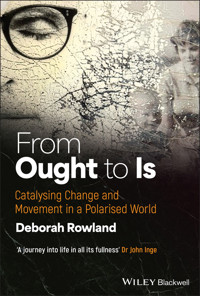
An old photo of my mum and me in her estate. My mother was the starting point for my being in the world today. I made the palimpsest after her death a few years ago because I still have to deal with my ‘inner mother’ and the desire to please her. This work explores, what made me who I am today? What were the milestones in my life that shaped and changed me? Which events and relationships had a lasting impact on me, which did not and were removed from my consciousness, pushed aside or simply overwritten? Which of these experiences still have an impact today and influence the way I think and feel and my perception of the world? But did these experiences really happen as I remember them? An old photo and so many questions, doubts and ambivalences!
It's a self‐portrait on Polaroid integral film (an instant film that integrates all the layers to expose and develop the photo and fix it into the frame). After exposing the Polaroid, I carefully separated its layers with a knife. I placed the top transparent layer with the image on an old photo of me and my mum so that the scene shines through. The dried developer paste of the Polaroid, which was not completely removed, gives the whole picture a disturbance, a picture noise.
Fred Johnsson
Hamburg, December 2024
1Introduction
Everything in Life that we really accept undergoes a change.
Katherine Mansfield
I am so glad you have chosen to read From Ought to Is. I wonder, what has been your motivation? Perhaps your primary reason relates to the sub‐title, Catalysing Change and Movement in a PolarisedWorld – you wish for guidance on how to bring change to stuck places. But what about the title? Have the words, Ought, and Is, also caught your attention? Right now, what resonance do these two words have for you, and do they have a different quality? What associations come to mind? Do the two words elicit different feelings? Or even somatic sensations (ease, or tension)? Are you curious about what this movement means, to go from ought, to is? What is this journey?
Well, I know for sure that getting alongside the meanings of both ought and is, and discerning their distinction in how we bring the world into being, is an essential task if we wish for change: change that is true movement to a different place, change in which you can release yourself from stuck patterns and be more at ease in your life.
And this key skill, of how we navigate between ought and is, ideology and reality, is an attentional one: do we default to our imprinted codes through which to see the world, or can we intentionally summon a perceptual shift in what we experience, to see what is truly there? This fundamental distinction, and the path you choose to walk between ought and is, will shape your entire capacity to bring change to the places where you dearly long for movement.
Our world and the entire cosmos are always in motion. However, for good reasons of stability and continuity, we have become rather skilled as a human species at creating institutions and communities that go against this grain and stay in repeating patterns. Given the waves of disruptive (and increasingly, destructive) change now coming our way, be that in technology, geo‐political power relation shifts, or the wider planetary biosphere, can we up our game in adaptation to match this context?
Whether you are a local community leader seeking greater societal cohesion, a Chief Executive Officer leading business and digital innovation, a team leader implementing workplace change, a family member considering how to bring greater flow and contact among people you love, or a politician wishing to effect change in your constituency, service or nation, this book will speak to you.
Change Starts by Acknowledging What Is1
And here’s the heads up: change that we wish for across any walk of life starts by acknowledging what is, not by striving for what ought to be. When we can bravely and respectfully stand in the full truth of a situation, movement to a new place becomes possible, whatever the challenging costs and consequences of facing what is the case and relinquishing our loyalties to the partial lenses through which we previously viewed reality. Conversely, when we fixate on an obligated, wished‐for state – the ‘oughtyness’ of how we, others, or the situation needs to be – we stay stuck in our story and repeating patterns.
(Ever been in a ‘tiff’ with a neighbour and gone round to them with all kinds of ought to sentences in your head about the upset? Only to find these scripts melted away when, on meeting your neighbour, you allowed the pure relational contact between the two of you about what is here now in the conversation to take over, and then found that the issues got resolved?)
It’s a paradox: we are better able to initiate change when we give up our proclamations of and attachments to how the world needs to be (ought) and fully immerse ourselves in the lived matter of things (is).2
This immersion, being fully with what is, means making an equal, non‐hierarchical, unprejudiced space for everything to exist (yes, including those elements that irritate, even repel us). Contrast this with the experience of ought, which is the pressure that drives us to retain conformity to values (be they from family, our profession, or faith) that interfere with our capacity to allow what is to exist; we bend reality to our loyalties.
What a distinction: do we dare seek out reality, or stick with our wiring? Move towards is, or stay within ought?
From Ought to Is will take you on an educational and experiential journey, and I recommend you have a real‐life change case in mind to work through as you go; a situation from your life or your workplace that seems stuck, over which you have agency, and where you long to spark some movement. Along the way, I will be sharing experiences from my life and my work in the field of change to help illustrate the concepts and encourage your exploration.
Here’s why I believe us all getting on this journey between ought and is is invaluable: I can easily say that it was my realisation of this paradox – that we are best able to initiate change by really accepting what is currently the case (thank you, Katherine Mansfield, for the opening quote) – that has had the most transformative punch for me in my life, both personally and professionally.
Transformative for sure, yet an extremely challenging insight to translate into practice; as I found that giving up my loyalties to how I wished, expected or imagined the world to be – my oughts – very, very hard (I still find that, if I am honest). How so?
While an is predisposition to the world might be better than an ought fixation when initiating change, as meeting reality as it is releases movement far more effortlessly than prodding it towards where we wish it to be, I will show in Chapter 2 how the oughts that underlie this prodding come from an unrelenting source in our neurobiology, and unless we can see and honour their source, we will be forever in their grip.*
Moving From Ought to Is Is Not Easy, But It’s Worth It
So here is the upfront warning: the ought to is journey I will guide you through is no stroll in the park. I didn’t realise quite how hard it was to loosen a loyalty to an ought so that I could fully meet reality as it is, until I had an anaphylactic shock in a pub garden outside Marlborough, England.
What can I attribute this episode to? Well, I was in the middle of telling my adopted mum and dad that I was tracing my birth family – an act that felt like I was threatening the very seat of my belonging to my adopted Rowlands’ family.
The twin feelings of alarm and guilt at transgressing this loyalty to the parents who had so lovingly picked up my six‐month‐old self from the floor of a mother and babies’ home, now felt like evolutionary danger (will I be abandoned by parents, again?), and within an hour, I was being pumped with adrenalin on a bed within Savernake Community Hospital.
Thankfully, my mum and dad’s hearts were large enough to embrace a vast field of loving inclusion, and from that moment I gingerly embarked on my journey to discover and become known to my Irish birth family, my ancestral is, I had never felt more alive and quakingly free. I was starting to experience both the prize (greater ease in my life by discovering the truth, or ‘is‐ness’ of my birth) and the price (fear of becoming outcast from a belonging group) of moving from ought, to is.
Looking back now, I can also see how the breathlessness and burning welts that arose across my body in the pub garden that day were the somatic price I had to pay to feel free of an obligation to always please others (a commonly held ought of an adoptee).
Moving from ought to is is far from being a cognitive, academic exercise. You feel this work in your body.
I did not know that at the time, and after my recovery from the anaphylactic shock (for which no medical, allergic reaction cause could be found), continued to tremble at the thought of how the trace for my birth family, and unconcealment of my full identity, might detrimentally impact my adopted family, to‐be‐met Irish relatives, loving close relationships and the work that had previously defined my life. Challenging my ought‐based loyalty to please felt both liberating and frightening, in equal measure.
Yet moving beyond the safety of my imprinted codes, while bringing feelings of guilt, became utterly worth it.
From my infancy, I had trod a safe path, hard‐wired as an adoptee to please others and be perfect so that I could secure belonging. Casting to one side this fiercely preserved ‘oughtyness’ (a word I am coining to denote a state of being trapped within one’s oughts) – ‘don’t rock the boat’, ‘get on with my given life’, ‘for goodness’ sake Deborah, don’t show your inner vulnerability to the world!’ – I, for one, embarked on the long truth‐uncovering journey to cast aside the instinctual impulses that had kept me safe and integrate the alienated parts of me.
And it turned out that I was able to trace and meet both my birth father and, separately, my birth mother. By openly and respectfully agreeing to the reality of my cast‐out birth – a 1960s child shamefully conceived to un‐wed parents in Catholic Ireland, and secretly born in a mother‐and‐babies home in Lancashire, England – I stood fully in my genealogy of truth, my own is‐ness (a word I will use in this book, alongside oughtyness, to describe the essence of being with what is). I was shot through with intense joy – though it was quite scary to be separately reunited with birth families on both my mother’s and father’s sides while preserving the life‐giving love of my adopted family.
What did this outcome teach me? Well, I had startlingly learned that my wiring to please others (my ought), and the reality of how others would receive me (what is), were not one and the same thing: I could initiate an unsettling experience, risking displeasure, without loss. How our oughts can deceive us!
This key to finding, experiencing and revealing the is of my origin story unlocked the door to a fulsome life that has brought ease, flow and astonishing outcomes. In particular, the experience of discovering and standing in my previously hidden familial truth gifted me a cellular insight for my destined work in the field of whole system change and its leadership: deep in my bones, I know how reality disclosure releases movement (you only need to see the superlative Mike Leigh film, Secrets and Lies, to understand this).
Oughts close off those parts of reality we humans don’t want to see. Yet, hushing things over and denying the existence of something doesn’t ever make the hidden go away. I, however, can now stand in the fullness of sight. And this 20‐year personal journey, threaded through 35 years in the field of organisational change and its leadership, has given affirming insight into these central messages that I will unpack in this book.
Change flows with greater ease when we can bravely agree to the reality of the present and respect all that has led to this point (what ‘is’). Whereas change takes so much more effort when we exclude or denigrate what is felt as difficult or disturbing, and force things into how we wish them to be (our ‘ought’). If we wish for greater ease in enabling change, we need to learn how to discern our baked‐in oughts, the chains of conscience that loyally guard our belonging to groups, and by acknowledging them, break free of their power to hold back change and living life in all its fullness.
The Price of Ought
What do we risk in not taking the ought to is journey? Well, it could help explain why breaking patterns and catalysing change towards more helpful places is so challenging, and we end up with the societies that we have.
It is not without trepidation that I write a book about the counter‐intuitive power of accepting reality – acknowledging what truly is the case – to initiate change. Acceptance, and getting alongside it all in today’s world of strident moral opinions, enflamed by social media, can be seen as soft and excusing: to belong to this conscience group, it is your duty to take sides! Any attempt to get alongside all positions feels weak and ‘centrist’. Flexibly adjusting one’s views as the nuances of a complex reality become visible is criticised as ‘flip‐flopping’, or a disingenuous tactic to garner more votes/likes.
Moreover, the task of defining ‘truth’, the nature of reality, has tested the likes of philosophers, natural and social scientists, artists and theologians for millennia, and is particularly problematic in today’s so‐called post‐truth conspiracy‐theory‐laden era. Can we ever arrive at a complete objective truth and know the world as it is, independent from the clouded eyes of the observer? Isn’t what is ‘true’, or deemed to be the case, embedded in a set of power relations that seek to control, gain an advantage over and manipulate others?
To top it all today, with the breakdown of trust in our institutions, a growing cynicism of ‘experts’, the growth of populist political leaders and the rise of truth‐democratising social media, whose truth, in any case, counts (‘recollections may vary’ being an apt statement from the UK’s now‐departed Queen Elizabeth)?
I value these societal trends as attempts at heart to seek a wider ground of truth to stand on. Yet they are also creating a divided, disenchanted, destabilising and polarising world – where coordinates about how to think, speak, act and live out our lives seem to have been thrown out of the window.
This is why I feel compelled to write this book now. We are caught up in a world of ought, a battleground of strongly held opinions that criticise (even cancel) others and stridently (and blindly) hold forth on what is good, necessary, or imperative. This at times dogmatic drive towards what is desired, or ideal, can also have a devastating impact on mental health and well‐being as we agonise over our appearance, identity and status in the eyes of others.
Ought is essential. I have earlier stated its primal, evolutionary survival value. We cannot secure our belonging without this inner wiring of conscience that teaches us to stay innocent within loyalty groups. Collectively, the continuity of our social structures rests on these hidden, unwritten rules that allow a system to be the same tomorrow as it is today. Society would have no governing codes without a sense of imperative and correctness. And yet, ought can become a real liability as the desire to be faithful and loyal to a position can lead to severe distortions of what is deemed to be true.
Perhaps the most visible consequence of an ought world in the United Kingdom recently has been the Post Office's widespread miscarriage of justice: an instructive case in the inability and reluctance to confront truth and reality (what is the case). Out of a deep‐seated loyalty to preserve the identity, reputation and continuity of a 400‐year‐old reputable institution (remember, oughts ensure survival), the Post Office leadership wrongly accused hundreds of their sub‐postmasters and sub‐postmistresses in communities across the land of fraud, taking money from the till. Whereas the ‘money‐gone‐missing’ in the accounts was due to a fault in the new Fujitsu Horizon accounting software programme the Post Office was introducing: a secret reality that the Post Office senior leadership knew about yet failed to pursue or openly acknowledge.
Because of this reality denial by the Post Office and Fujitsu, more than 900 sub‐postmasters and mistresses were wrongly prosecuted as criminals: 236 went to prison, convicted of theft, many were financially ruined and lost their relationships, homes and livelihoods, and there have been four recorded suicides.
Oughts, our inner survival wiring (and I have no doubt that the Post Office senior leaders felt ‘innocent’ through this, as they viewed the institution’s protection and survival as paramount), can distort reality in damaging ways. They give us a blind quality of allegiance, which can have us end up in less than comfortable places (such as prison, if we are a Rudy Giuliani turning himself in on election racketeering charges for Donald Trump).
Do we want truth and reality to matter anymore? In a world that is comfortable with alternative facts, I do. My work in the field of systems, change and leadership demands it. More broadly, I can feel lost – blindly reaching for a felt sense of how to think, speak and act, but with no clarity on what that is or if it can exist.
If we genuinely wish for the changes we seek, I invite us all to resist the onslaught on truth too.
The Founding Energy This Book Stands On
Alongside my personal ought‐to‐is story and today’s ought‐proliferation context, stands my three decades plus in the field of change, whose wisdom I also feel compelled to share in this book.
Throughout these decades I have been continually struck by the realisation that, if only we can learn to lead change as it actually happens (continual attention and adaptation to dynamic, emergent reality, as in the living world around us), rather than leading change based on how we believe it ought to be managed (unfreeze a static, resistant system, change it to where it needs to go, and then embed the new state), then we achieve sustainable change with far greater ease. I have made it my mission and ministry to stand for a change approach that works from messy, lived reality, not the illusory comfort of command and control.
This field experience is backed up by my leadership of four rounds of global, empirically based research, and I have now written three previous books about change and its leadership. Sustaining Change3 set out my earliest research into the practical approaches and behaviours correlated with success in situations of high magnitude disruption and change complexity – what one needs to do. More recently, Still Moving4 and the Still Moving Field Guide5 added to these Sustaining Change frameworks the inner state skills required of a leader taking their organisation through change – how one needs to be.
This time, in this book, I will go one step further and add a final, vital ingredient into the leading successful change mix: a base note that was faintly present in my previous books, but which now needs to make its presence louder and clearer – as this element is essential for all who want to ‘go past Go on the Monopoly board’ of change.
In this book, I will focus on how the capacity to willingly stand alongside all of reality (and not just that towards which oughtyness propels us) catalyses change. Our belonging and survival needs need not be threatened when we dare seek and disclose wider truths that will challenge those of our team, friendship groups, community movements, political party, entire organisation and even nation.
This is a challenging statement, but do let it sit with you for a while: reality is always friendly. But believing this does seem to depend on us seeing the innate goodness and purpose of all that comes our way.
Working with What Is Requires a Shift in Attention
Writing this book was not on my radar screen, and yet the valuable things in life can come unbidden – if one is sufficiently alert. Having established a Still Moving change practitioner community over the years, I was greatly looking forward to our annual practitioner ‘Masterclass’ gathering. What unexpectedly unfolded in and around that gathering became the final spur for writing this book.
Fifteen of us were due to gather. Yet in the two days running up to the event, even at the airport the night before, as I was checking in, six people contacted us to pull out. I found myself oscillating between calm acceptance (‘It is what it is, let’s work with the disturbance as a resource, as it must be part of something bigger than us’) and agitated projection (‘They ought to be more committed’, ‘actually, I ought to have set this up better’). Just as our hands play across the piano keys left to right and back again, so can our minds zip between is and ought.
Nonetheless, I and my co‐facilitator decided to go ahead: a decision we did not rush into, but one taken after we had explored our immediate emotions (the is‐ness of disappointment, sadness, anger) and instinctive reactions (the oughtyness of ‘how could they’, ‘we didn’t do it right’). Without fully knowing what potential would unfold (working with what is is like walking into mystery), we decided to go ahead, stick with the messiness of the situation and be with what was the case.
On the plane ride to the location that evening, I paid attention to the oscillating tussle still coursing through my inner state and wrote down three large words on a piece of paper, ‘IS VS OUGHT’. My mind was alive through the night, processing how these words summed up the wrestle between one part of myself that was inviting me into a full immersion of what is, and, in the other corner, another part of myself trying to control and direct the situation by wishing reality were something else. Oh, the agony!
Yet given my primal instinct for full immersion in the truth of reality (‘Hello birth family!’), on the opening morning the next day, I set up 15 chairs to represent in the room all who had wished to be there, not just seat the 9 who showed. My aim was to give the missing participants – and the impact that that was having on the 9 present – a powerful force in the field. Systems require to be whole: if there is unacknowledged exclusion, someone present would need to carry their energy. As we all sat down, the sense of missing colleagues was palpable, and, in the discomfort, some of the participants wished to move the empty chairs away (we ought to be sitting closer to each other).
I invited them not to do that, to sit with the discomforting reality of the is, and instead led an opening dialogue to not only name what had happened, without any judgement, but also explore how to work with loss, out‐of‐control change and uncertainty (we were change practitioners, after all!). The seating arrangement allowed us to fully experience the is‐ness of the situation (working with what is requires accessing intelligence beyond cognition and speech, as my anaphylactic story above shows).
It was an intense, honest and moving opening that included us facing the consequences of being a smaller group. We decided – after much consideration – against setting up a virtual dial‐in call with those absent colleagues who had asked if they could join online, as the cost of that to our own experience was felt to be too great (working with what is can require tough choices and the risk of making oneself unpopular).
We did, however, keep communications flowing through the experience with those of us who could not make it, not as an obligated chore but as a genuine acknowledgement of how the dramatic drop in group size had acted as a valuable point of learning. My impulse to turn the contrasting orientations of ought and is into a whole book became the resonating theme through our two‐day retreat, and as I sit here writing I have before me the sticky notes of how we came to contrast these two quite different ways of showing up to experience.
In a nutshell, here’s what the sticky notes said: to journey from ought to is calls for us to focus on the reality of the living present – what’s here now, not the desired for future; it challenges us to include all that happens with a welcoming and including heart, not judgemental indignation; it assumes that all that happens is the only thing that could have happened, our task is to find meaning in experience, not wish things to be different; it requires our right‐brain6 skill to see the bigger picture, welcome novelty and incorporate our emotional and somatic intelligence, not just our left brain analytical skill to break what we find down into logical and familiar parts.
All the above asks that we relinquish our attachment and loyalty to deeply held fields of belonging and identify with something bigger than ourselves. Easy to say, harder to do, as this ‘loosening of the oughteries’ to discover a larger, more unified field beyond our wiring requires us to befriend feelings of guilt and loneliness (it was tough to say ‘no’ to the request of our no‐show colleagues for an on‐line connection to our gathering).
None of these attentional modes of showing up to life are the default mode of our human species, which seeks comfort over truth. And yet, I believe the prize of seeking and working with what is far outweighs the perceived comfort of staying gripped in an ought.
I wish that the messages that come through me in From Ought to Is will help a wider world. On behalf of the whole Still Moving change community, I look forward to bringing them alive in this book.
This Book
From Ought to Is will offer you an educational and experiential journey to feel less trapped by your loyalties and more able to be with what is the case. This move from ought to is will not always be comfortable, as our oughts arise from such treasured places, but I wish you to feel well‐resourced along the way. You may wish to read this book alongside a close friend or colleague, as some of my reviewers have said how more powerful (and fun!) it was to put the insights into practice by having a partner walk the journey with them, discussing and applying each chapter in turn. Our formation journey is always better undertaken when in community.
I will be weaving together three related commentaries: my journey since the completion of Still Moving that I hope will be personally relatable and invite you to reflect on how you live your life; extensive practical insights and advice for leading systems and organisations through change from my 35 years in the field; and finally, my observations on the broader changes flooding through the broader socio‐political‐cultural landscape today that I hope will be stimulating and thought‐provoking and influence how we can collectively show up to life.
I will be your primary guide, but I will draw on the wisdom of poets, philosophers, social and natural scientists, and theologians along the way. Be prepared to meet quite a medley of characters, all of whom, though, share a deep, compassionate drive to help humankind see the true nature of reality.
There will be reflective questions and mini‐activities throughout to help you experience and apply the messages to sticky situations in your life – culminating in the penultimate chapter dedicated to application. Finally, I invite you to read the book at a second level: not only taking in the content but also noticing your own is‐ness vs oughtyness responses as you read. Register how reading the book impacts you in the present moment and notice how you might wish for it to be a different reading experience, where you wish to jump onto your own oughtyness!
Here is what to look forward to.
Chapter 2: The Deep Power of Ought
In this chapter, I will define what is meant by the word, ought, and show how our loyalty to imprinted codes about how to be in the world is rooted in our need to belong, with the associated powerful workings of conscience. While of value in this context, I will set out the costs and problematic consequences of an ought stance when seeking change, showing how its fixations and excessive judgements narrow our perceptions of what is real, limit creativity, sow division and discord, and create unease in our lives. From this default grip of ought, what are the pointers to an alternate way?
Chapter 3: The Transformative Punch of Is
In this chapter, I will explore the task of how to be fully with what is; how can we find within ourselves that place from which we are at ease with all that comes our way, approaching life with greater awareness, compassion and choice? To fully grasp what I mean by is, I will set out two contrasting definitions of what is truth: the correctness of a proposition vs the disclosure of what is being, yet hidden. I will show how it is this latter, dispositional definition of truth that clears the pathway to change. While not without discomfort, it is only by noticing, naming and facing the truth and the reality of what is ordinarily concealed, that we can be free to walk a new path.
Having defined, illustrated and contrasted the world of ought and the world of is, the next four chapters offer practical resources for how to keep steering towards what is when seeking change.




