


81,99 €
Mehr erfahren.
- Herausgeber: John Wiley & Sons
- Kategorie: Fachliteratur
- Sprache: Englisch
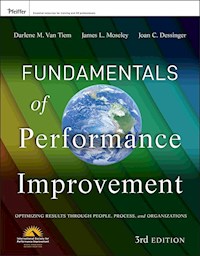
Fundamentals of Performance Improvement, 3rd Edition Fundamentals of Performance Improvement is a substantially new version of the down-to-earth, how-to guide designed to help business leaders, practitioners, and students understand the science and art of performance technology and successfully implement organizational and societal change. Using the Performance Improvement / Human Performance Technology (HPT) model, the expert authors explain step-by-step how to spot performance indicators, analyze problems, identify underlying causes, describe desired results, and create workable solutions. "It does not matter what function you align yourself to in your organization, this book allows you to tap into the secrets that drive organizational success. Several books work to define what is performance improvement and performance technology. This one also provides insights into the Why? And How?" --CEDRIC T. COCO, CPT, SVP, Learning and Organizational Effectiveness, Lowe's Companies "Fundamentals of Performance Improvement is full of practical models and tools for improving the world by partnering with customers, clients, constituents, and colleagues. It provides a path forward for successful transformation and performance improvement at personal, group and collective levels. It is a must read for leaders and consultants seeking to advance opportunities in new and emerging situations." --DIANA WHITNEY, PhD, president, Corporation for Positive Change "If you have an interest in performance improvement, this is simply the best available book on the topic. It addresses the science and craft as well as the intricacies of how to improve workplace performance. Van Tiem, Moseley, and Dessinger have incorporated into this work the best available research on the Certified Performance Technology (CPT) standards and process." --JAMES A. PERSHING, Ph.D., CPT, professor emeritus, Workplace Learning and Performance Improvement, Indiana University "Its international flavor, with practitioner comments and examples drawn from across the world, enhances its appeal as more and more professionals operate in an increasingly global context." --DALJIT SINGH, Asia Pacific Director of Talent Management, Baker & McKenzie, Sydney, Australia
Sie lesen das E-Book in den Legimi-Apps auf:
Seitenzahl: 1046
Veröffentlichungsjahr: 2012
Ähnliche



















Contents
List of Figures
List of Tables
List of Exhibits
List of Case Studies
List of Performance Support Tools
Acknowledgments
Foreword—The Practice of Performance Improvement, by Judith A. Hale
Foreword—Fundamentals of Performance Technology, by Dale Brethower
Foreword—Performance Improvement Interventions, by William W. Lee
Introduction
Section 1: Performance Improvement and the Performance Improvement/HPT Model
Chapter 1: Overview of Performance Improvement
Performance Improvement: Precursors
Performance Improvement: Definition and Scope
Performance Improvement: Key Terms
Performance Improvement: Key Concepts
Performance Improvement: Foundations
Performance Improvement: Leading Contributors
Performance Improvement: Prominent Early Leaders
Multidisciplinary Collaboration
Performance Improvement: Emerging Trends
Chapter 2: Performance Improvement/HPT Model—an Overview
Introduction
Performance Analysis Phase
Intervention Selection, Design, Development Phase
Intervention Implementation and Maintenance
Evaluation
The HPT Model as a Process Model
Certified Performance Technology Standards and Ethics
Other Performance Improvement Process Models
Conclusion
Chapter 3: Change Management
Definitions
Change Management Models
Levels, Modes, and Control of Change
Planning Change
Change Management Roles
Change Management Functions
Change Management and the Performance Improvement Process
Conclusion
Case Study 1.1: Boutique Marketing Company
Background
Situation
Intervention
Critical Business Issue
Case Study 1.2: Strategic Performance Management in Georgia Education
Background
Situation
Critical Issues
Case Study 1.3: Reducing Municipal Strife Through Engagement
Background
Critical Business Issue
Intervention
Case Study 1.4: Amway Corporation: Driving Consistent, Strategic Performance of Distributors Globally
Background
Situation
Intervention
Critical Business Issue
Case Study 1.5: Using Human Performance Technology (HPT) to Select Projects that Yield Results
Background
Critical Business Issue
Intervention
Section 2: Performance Analysis
Chapter 4: Overview of Performance Analysis
Analysis Techniques and Tools
Conclusion
Citations
Chapter 5: Organizational Analysis
Conducting an Organizational Analysis
Organizational Analysis Tools
Chapter 6: Environmental Analysis
Analyzing the World Environment
Analyzing the Workplace
Analyzing Work
Analyzing the Worker
Chapter 7: GAP Analysis
Conducting Gap Analyses
Chapter 8: Cause Analysis
Conducting Cause Analysis
Lack of Environmental Support
Lack of Repertory of Behaviors
Case Study 2.1: The Blake Company/Mutschler Kitchens
Background
Situation
Intervention
Critical Business Issue
Case Study 2.2: Physician Performance Report Accuracy and Timeliness
Background
Situation
Critical Business Issues
Summary
Section 3: Intervention Selection, Design, and Development
Chapter 9: Intervention Selection
Collaborative Approach to Selection
Introduction to the Intervention Selection Process
Preliminary Phase
Survey Phase
Selection Phase
Chapter 10: Learning Interventions
Knowledge Management (KM)
Organizational Learning
Learning Management System (LMS)
Content Management System (CMS)
Education
Training
Self-Directed Learning
On-the-Job Learning
Just-in-Time Learning
Action Learning
Blended Learning
Technical and Non-Technical Learning
Social Learning
Interactive Learning Technologies
Enterprise Learning
Classroom Learning
Distance/Distributed Learning
Online/e-Learning
Wikis
Avatars
And More . . .
Games
Simulations
Chapter 11: Performance Support Interventions
Performance Support Tools (PSTs)/Job Aids
Electronic Performance Support Systems (EPSS)
Documentation and Standards
Expert Systems
Chapter 12: Job Analysis/Work Design Interventions
Job Analysis Interventions
Job Descriptions
Job Specifications
Work Design Interventions
Job Design
Job Enlargement
Job Rotation
Job Enrichment
Job Reengineering, Realignment, Restructuring
Human Factors Interventions
Ergonomics
Safety Engineering
Security Management
Green Workplace
Quality Improvement Interventions
Total Quality Management (TQM)
Continuous Improvement
Preventive Maintenance
Six Sigma
Lean Organizations
Chapter 13: Personal Development Interventions
Feedback
Coaching
Mentoring
Emotional Intelligence
Social Intelligence
Cultural Intelligence
Communities of Practice
Chapter 14: HRD Interventions
Talent Management
Staffing
Employee Development
Retention
Compensation/Benefits
Health and Wellness
Retirement Planning
Labor Relations
Individual Growth Interventions
Motivation
Performance Management
Key Performance Indicators (KPIs)
Performance Appraisal
360-Degree Appraisals
Competencies and Competency Testing
Organizational Growth Interventions
Succession Planning
Career Pathing
Leadership Development
Executive Development
Management Development
Supervisory Development
Chapter 15: Organizational Communication Interventions
Communication Networks
Information Systems
Suggestion Systems
Grievance Systems
Dispute Resolution
Social Media
Chapter 16: Organization Design and Development
Definition and Scope
Empowerment Interventions
Team Strategies
Virtual Teams
Problem Solving
Pro-Action Interventions
Strategic Planning
Environmental Scanning
Appreciative Inquiry
Outsourcing
Benchmarking
Balanced Scorecard
Dashboards
Values
Culture/Organizational Culture
Diversity/Inclusion Strategies
Globalization/Localization
Social Responsibility
Ethics
Decision Making
Chapter 17: Financial Systems Interventions
Open Book Management
Profit Centers Versus Cost Centers
Financial Forecasting
Capital Investment and Spending
Cash Flow Analysis/Cash Flow Forecast
Mergers, Acquisitions, Joint Ventures
Chapter 18: Intervention Design
Definition and Scope
Foundation for Successful Design
Steps to Successful Design
Intervention Elements
Performance Objectives
Evaluation Criteria, Metrics, Methods
Options for Development
Intervention Design Document
Chapter 19: Making The Business Case
Definition and Scope
Purpose
Rationale
Performance Improvement Practitioner Role
Performance Improvement Practitioner Competencies
The Business Case Process
Steps to Take
Leadership Commitment
Feasibility
Sustainability
Sustainability in the Performance Improvement/HPT Context
Challenges to Sustainability
Chapter 20: Intervention Development
Definition and Scope
Purpose
Timing
Practitioner Role and Competencies
Guidelines for Successful Intervention Development
Development Process
Feasibility, Sustainability, Change Management
Conclusion
Case Study 3.1: No Room For Error
Background
Critical Business Issue
Building the Initial Business Case
The Presentation
Interventions
The Second Business Case—Feasibility
Designing the Interventions
Developing the Interventions—Sustainability
Implementing the Interventions
Evaluating Results
Case Study 3.2: Acquisition of Westford Bank by Spring Harbor Bank
Background
Situation
Critical Business Issue
Exhibit 3.1: Information Technology Company Aligns Workforce to Business Strategy and Direction
Situation
Talent Management Intervention
Education and Communication Intervention
HRD System Intervention
Section 4: Intervention Implementation and Maintenance
Chapter 21: Intervention Implementation and Maintenance
Intervention Implementation
Models Lead the Way
Implementation Design
Variables Affecting Successful Implementation
Implementation Strategies
Intervention Maintenance
Chapter 22: Techniques for Implementation and Maintenance
Partnering, Networking, and Alliance Building
Process Consulting
Employee Development
Communication
Change Management
Project Management
Feasibility
Sustainability
Case Study 4.1: Church Pension Fund: The Great Model
Background
Situation
Intervention
Critical Business Issue
Case Study 4.2: St. Luke Lutheran Church and School
Background
Situation
Intervention
Critical Business Issue
Section 5: Intervention Evaluation
Chapter 23: Overview of Evaluation
Definition of Evaluation
Scope of Evaluation
Purpose of Evaluation
Evaluation Models
Predictive Approach to Evaluation
Integrating Evaluation into the PI/HPT Model
Role of the PI/HPT Practitioner as Integrator
Chapter 24: Planning and Conducting Evaluation
Formative Evaluation
Planning a Formative Evaluation
Conducting a Formative Evaluation
Summative Evaluation
Planning a Summative Evaluation
Conducting a Summative Evaluation
Confirmative Evaluation
Planning and Conducting Confirmative Evaluation
Planning Confirmative Evaluation
Conducting Confirmative Evaluation
Role of the Performance Improvement Practitioner/Evaluator
Meta Evaluation
Planning Type Two Meta Evaluation
Conducting Type Two Meta Evaluation
Role of the PI/HPT Practitioner or Evaluator
Conclusion: But Are They Ready?
Case Study 5.1: ABC Automotive Company—Dealership Sales and Marketing Academy
Background
Situation
Intervention
Critical Business Issue
Case Study 5.2: Community Healthcare Association of the Dakotas
Background
Situation/Opportunity
Intervention
Critical Business Issue
Next Steps
Summary
Appendices
Appendix A: ISPI’s Performance Technology Standards
Appendix B: Certified School Improvement Specialist Standards
Appendix C: ISPI’s Code of Ethics
Glossary
About The Authors
Name Index
Subject Index
More Praise for Fundamentals of Performance Improvement
“Succeeding today requires constant adaptation to the changing environment as well as the ability to identify and remove the barriers that confront our best employees. Van Tiem, Moseley, and Dessinger have assembled a comprehensive, easy-to-read, step-by-step guide with fantastic case studies, tools, and references to help everyone succeed in this challenging environment. A must have for everyone’s professional library!”
Matthew Peters, CPT, Vice Deputy Director for Human Capital, Defense Intelligence Agency
“This is more than a third edition, it is a new book and it is simply the most complete and comprehensive resource available . . . a ‘tour de force.’”
Roger Kaufman, CPT, Ph.D., Professor Emeritus, Florida State University, Distinguished Research Professor, Sonora (Mexico) Institute of Technology
“Fundamentals of Performance Improvement is destined to become THE desk reference for all performance improvement professionals. The case studies provided link the detailed content directly to the four principles of the Performance Technology Standards from the International Society for Performance Improvement.”
Guy W. Wallace, CPT, President, EPPIC, Inc.
“You can classify books into a 2 × 2 matrix. There are thousands of examples of books of low practicality and low scholarship, high practicality and low scholarship, low practicality and high scholarship. Fundamentals of Performance Improvement is a rare example that falls into combination of high practicality and high scholarship. What makes the book unique is that it explains universal principles to an international audience.”
Sivasailam “Thiagi” Thiagarajan, Ph.D., The Thiagi Group
“The third edition of Fundamentals of Performance Improvement equips the manager or performance improvement professional with the knowledge and tools necessary to improve workplace performance. It is truly a major upgrade from the first two editions with greatly enhanced models and forty new interventions.”
Roger Chevalier, Ph.D., CPT, A Manager’s Guide to Improving Workplace Performance
“A critical issue for institutional capacity-building in transitioning societies is finding ways to promote sustainable improved performance. USAID has promoted the use of human performance technology in support of improved institutional results for over a decade. This text is extremely valuable laying out a comprehensive framework for applying the principles and techniques across a wide spectrum of organizations.”
Lawrence Held, Acting Mission Director, USAID Kyrgyzstan
“HPT has come into its own as a profession, with an emphasis on a framework of systematic and systemic thinking that frames and coordinates relevant models and interventions. This book is a fully contemporary synthesis of this framework. The detailed discussions of major models, coupled with the illustrative case studies, add valuable depth to the discussion. The examination of future directions will stimulate thought and discussion. This volume merits a prominent position on every HPT professional’s bookshelf. Experienced practitioners will find the book to be useful in organizing and updating their knowledge of HPT. Those new to the field will use the book as an excellent starting point in their development of professional expertise.”
Rob Foshay, Ph.D., CPT, The Foshay Group
“This book is a highly valuable resource about the theory and practice of performance improvement and its results in a wide array of organizations, industries, and levels—from individual to organizational to societal performance. Researchers, performance consultants, managers, and entrepreneurs will find in it ideas and methods tested by experience.”
Mariano Bernardez, Ph.D., CPT, Director, Performance Improvement Institute
“Fundamentals of Performance Improvement is a comprehensive handbook with useful tools for performance improvement. It allows educators to work with stakeholders to apply a positive, systemic approach to school reform and transformation necessary to meet 21st century skills.”
Dr. Phyllis Edwards, Superintendent, City Schools of Decatur, Georgia
“Improvement of performance is a great priority of firms in Central Europe. The traditional human resource function is slowly transitioning into a real performance partner for the innovative executive. This book provides a superb reference for any professional seeking to build a strong foundation for improved company results based on high-quality performance of employees.”
Jake Slegers, Executive Director, American Chamber of Commerce in Slovakia
“I recommend this book to anyone who is interested in improving people, process, and results. It provides a comprehensive coverage of the entire performance technology field and will appeal to those who are new to the field, as well as experienced practitioners, through its clear explanation of performance technology concepts and models, the inclusion of helpful tools and techniques, and excellent case studies that illustrate performance technology in action. Its international flavor, with practitioner comments and examples drawn from across the world, enhances its appeal, as more and more professionals operate in an increasingly global context.”
Daljit Singh, Asia Pacific Director of Talent Management, Baker & McKenzie, Sydney, Australia
“The concepts and principles in this book—performance-based planned change—has been at the heart of new directions for the Sonora Institute of Technology (Mexico). Starting with mega thinking and planning, it delivers important measurable results.”
Gonzalo Rodriguez Villanueva, Rector, Sonora Institute of Technology (Mexico)
www.pfeiffer.com/go/vantiem
About Pfeiffer
Pfeiffer serves the professional development and hands-on resource needs of training and human resource practitioners and gives them products to do their jobs better. We deliver proven ideas and solutions from experts in HR development and HR management, and we offer effective and customizable tools to improve workplace performance. From novice to seasoned professional, Pfeiffer is the source you can trust to make yourself and your organization more successful.
Essential Knowledge Pfeiffer produces insightful, practical, and comprehensive materials on topics that matter the most to training and HR professionals. Our Essential Knowledge resources translate the expertise of seasoned professionals into practical, how-to guidance on critical workplace issues and problems. These resources are supported by case studies, worksheets, and job aids and are frequently supplemented with CD-ROMs, websites, and other means of making the content easier to read, understand, and use.
Essential Tools Pfeiffer’s Essential Tools resources save time and expense by offering proven, ready-to-use materials—including exercises, activities, games, instruments, and assessments—for use during a training or team-learning event. These resources are frequently offered in looseleaf or CD-ROM format to facilitate copying and customization of the material.
Pfeiffer also recognizes the remarkable power of new technologies in expanding the reach and effectiveness of training. While e-hype has often created whizbang solutions in search of a problem, we are dedicated to bringing convenience and enhancements to proven training solutions. All our e-tools comply with rigorous functionality standards. The most appropriate technology wrapped around essential content yields the perfect solution for today’s on-the-go trainers and human resource professionals.
Essential resources for training and HR professionals
About ISPI
The International Society for Performance Improvement (ISPI) is dedicated to improving individual, organizational, and societal performance. Founded in 1962, ISPI is the leading international association dedicated to improving productivity and performance in the workplace. ISPI represents more than 10,000 international and chapter members throughout the United States, Canada, and forty other countries. The society reaches out to more than 20,000 performance improvement professionals through publications and educational programs.
ISPI’s mission is to develop and recognize the proficiency of our members and advocate the use of Human Performance Technology. This systematic approach to improving productivity and competence uses a set of methods and procedures and a strategy for solving problems for realizing opportunities related to the performance of people. It is a systematic combination of performance analysis, cause analysis, intervention design and development, implementation, and evaluation that can be applied to individuals, small groups, and large organizations.
Website:www.ispi.org
Mail: International Society for Performance Improvement
1400 Spring Street, Suite 260
Silver Spring, Maryland 20910 USA
Phone: 1.301.587.8570
Fax: 1.301.587.8573
E-mail:[email protected]
With deep appreciation, we dedicate this book to those who have already contributed to our field and the emerging professionals who are innovating and providing new insights.
Our field is unique because it is possible to pinpoint the date and time of its origin. We fundamentally began in New Orleans in the early 1960s. Our origin was composed of those committed to applied behavioral science and programmed instruction. Our field advanced to performance improvement when programmed instruction and behavioral approaches alone did not resolve educational and workplace issues. Many scholar/practitioners have contributed their powers of observation, reflection, research, and practice to advance the field.
We also dedicate this book to experts beyond the performance improvement field because resolving workplace problems includes theory and practice from related fields such as instructional design, psychology, communications, industrial engineering, ergonomics, quality, communications, and finance to name a few.
To the International Society of Performance Improvement and to my students and graduates at the University of Michigan–Dearborn and Capella University. Our world is better because of them.
—Darlene M. Van Tiem
To my graduate students in performance improvement and evaluation for professional success and career happiness.
James L. Moseley
To our readers—you are the ones who will make performance improvement happen.
Joan Conway Dessinger
Copyright © 2012 by John Wiley & Sons, Inc.
Published by Pfeiffer
A Wiley Imprint
One Montgomery Street, Suite 1200, San Francisco, CA 94104-4594
www.pfeiffer.com
Except as specifically noted below, no part of this publication may be reproduced, stored in a retrieval system, or transmitted in any form or by any means, electronic, mechanical, photocopying, recording, scanning, or otherwise, except as permitted under Section 107 or 108 of the 1976 United States Copyright Act, without either the prior written permission of the publisher, or authorization through payment of the appropriate per-copy fee to the Copyright Clearance Center, Inc., 222 Rosewood Drive, Danvers, MA 01923, 978-750-8400, fax 978-646-8600, or on the Web at www.copyright.com. Requests to the publisher for permission should be addressed to the Permissions Department, John Wiley & Sons, Inc., 111 River Street, Hoboken, NJ 07030, 201-748-6011, fax 201-748- 6008, or online at http://www.wiley.com/go/permissions.
Limit of Liability/Disclaimer of Warranty: While the publisher and author have used their best efforts in preparing this book, they make no representations or warranties with respect to the accuracy or completeness of the contents of this book and specifically disclaim any implied warranties of merchantability or fitness for a particular purpose. No warranty may be created or extended by sales representatives or written sales materials. The advice and strategies contained herein may not be suitable for your situation. You should consult with a professional where appropriate. Neither the publisher nor author shall be liable for any loss of profit or any other commercial damages, including but not limited to special, incidental, consequential, or other damages.
Certain pages from this book are designed for use in a group setting and may be reproduced for educational/training activities. These pages are designated by the appearance of the following copyright notice at the foot of the page:
Fundamentals of Performance Improvement: Optimizing Results Through People, Process, and Organizations, Third Edition. Copyright © 2012 by John Wiley & Sons, Inc. Reproduced by permission of Pfeiffer, an Imprint of Wiley. www.pfeiffer.com
This notice must appear on all reproductions as printed.
This free permission is limited to the paper reproduction of such materials for educational/training events. It does not allow for systematic or large-scale reproduction or distribution (more than 100 copies per page, per year), electronic reproduction, or inclusion in any publications offered for sale or used for commercial purposes—none of which may be done without prior written permission of the Publisher.
Readers should be aware that Internet websites offered as citations and/or sources for further information may have changed or disappeared between the time this was written and when it is read.
For additional copies/bulk purchases of this book in the U.S. please contact 800-274-4434.
Pfeiffer books and products are available through most bookstores. To contact Pfeiffer directly call our Customer Care Department within the U.S. at 800-274-4434, outside the U.S. at 317-572-3985, fax 317-572-4002, or visit www.pfeiffer.com.
Pfeiffer Wiley also publishes its books in a variety of electronic formats and by print-on-demand. Some material included with standard print versions of this book may not be included in e-books or in print-on-demand. If the version of this book that you purchased references media such as CD or DVD that was not included in your purchase, you may download this material at http://booksupport.wiley.com. For more information about Wiley products, visit www.wiley.com.
Library of Congress and CIP data
Van Tiem, Darlene M.
Fundamentals of performance improvement : optimizing results through people, process, and organizations / Darlene Van Tiem, James L. Moseley, Joan C. Dessinger.—Third edition.
pages cm
“The third edition of Fundamentals of Performance Improvement began as a project to revise Fundamentals of Performance Technology and Performance Improvement Interventions and combine them into one book. However, performance improvement is advancing rapidly and our task . . . became updating the contents of both books”—Acknowledgments.
Includes bibliographical references and indexes.
ISBN 978-1-118-02524-6 (pbk.); ISBN 978-1-118-22204-1 (ebk.); ISBN 978-1-118-23574-4 (ebk.); ISBN 978-1-118-26071-5 (ebk.)
1. Performance technology. 2. Performance. 3. Personnel management. I. Moseley, James L. (James Lee), 1942–II. Dessinger, Joan Conway. III. Van Tiem, Darlene M. Fundamentals of performance technology. IV. Van Tiem, Darlene M. Performance improvement interventions. V. Title.
HF5549.5.P37V35 2012
658.3'128—dc23
2012000871
Acquiring Editor: Matthew Davis
Editorial Assistant: Michael Zelenko
Director of Development: Kathleen Dolan Davies
Developmental Editor: Susan Rachmeler
Production Editor: Michael Kay
Editor: Rebecca Taff
Manufacturing Supervisor: Becky Morgan
Cover Design: Charlotte Martin and Jeff Puda
List of Figures
Figure 1.1.Anatomy of PerformanceFigure 1.2.Mager’s Performance Analysis FlowchartFigure 1.3.Beyond HPT: Factors and Contributors to Performance Improvement and Value CreationFigure 1.4.Framework for Colon Panama’s TransformationFigure 1.5.The Four-D ModelFigure 2.1.The Performance Improvement/HPT ModelFigure 2.2.Performance Improvement/HPT Model: Performance Analysis PhaseFigure 2.3.Performance Improvement/HPT Model: Intervention Selection, Design, and Development PhaseFigure 2.4.Performance Improvement/HPT Model: Implementation and Maintenance PhaseFigure 2.5.Performance Improvement/HPT Model: Evaluation PhaseFigure 2.6.Pershing’s Performance Improvement Process ModelFigure 2.7.HPT Model: Appreciative Inquiry ApproachFigure 3.1.Performance Improvement/HPT ModelFigure 3.2.Managing the Change ProcessFigure 3.3.Adoption CurveFigure 4.1.Performance Improvement/HPT Model: Performance Analysis PhaseFigure 5.1.Performance Improvement/HPT Model: Organizational Analysis ComponentFigure 5.2.Grant and Moseley Customer-Focused Performance Analysis ModelFigure 6.1.Performance Improvement/HPT Model: Environmental Analysis ComponentFigure 6.2.Variations on Rothwell’s Environments of Human PerformanceFigure 7.1.Performance Improvement/HPT Model: Gap Analysis ComponentFigure 7.2.Performance Gap Analysis with a Reasonable GoalFigure 7.3.Kaufman’s Definition of NeedFigure 7.4.Rothwell’s Six-Cell Gap AnalysisFigure 8.1.Performance Improvement/HPT Model: Cause Analysis ComponentFigure 8.2.Gilbert’s Behavior Engineering ModelFigure 9.1.Performance Improvement/HPT Model: Intervention Selection ComponentFigure 9.2.Intervention Selection ProcessFigure 10.1.Learning InterventionsFigure 11.1.Scope of Performance Support InterventionsFigure 12.1.Job Analysis/Work Design InterventionsFigure 13.1.Personal Development InterventionsFigure 14.1.Talent Management InterventionsFigure 14.2.Individual Growth InterventionsFigure 14.3.Organizational Growth InterventionsFigure 15.1.Organizational Communication InterventionsFigure 16.1.Organization Design and Development Intervention ComponentsFigure 17.1.Financial Systems InterventionsFigure 18.1.Performance Improvement/HPT Model: Design ComponentFigure 19.1.Business Case: An Iterative ProcessFigure 19.2.RSVPFigure 19.3.Example of Project Management Gantt ChartFigure 20.1.Performance Improvement/HPT Model: Intervention Development ComponentFigure 20.2.Intervention Development Process ModelExhibit 3.1. Figure 1.ProQuest Talent Management ModelExhibit 3.1. Figure 2.ProQuest Organizational Competency ModelExhibit 3.1. Figure 3.ProQuest Individual Contributor Progressive Expectations MapExhibit 3.1. Figure 4.ProQuest Leadership Progressive Expectations MapFigure 21.1.Performance Improvement/HPT Model: Implementation and Maintenance PhaseFigure 22.1.The Consulting ProcessFigure 23.1.Performance Improvement/HPT Model: The Evaluation StepFigure 23.2.Flow of Evaluation Decisions: Why to HowFigure 23.3.Geis and Smith Evaluation ModelFigure 23.4.Dessinger-Moseley Full-Scope Evaluation ModelFigure 24.1.Performance Improvement/HPT Model: Evaluation PhaseFigure 24.2.Dessinger-Moseley Confirmative Evaluation ModelFigure 24.3.Equation for Confirming the Value of a Performance InterventionFigure 24.4.Moseley-Solomon Confirmative Evaluation ModelFigure 24.5.Preliminary Checklist for Confirmative EvaluationList of Tables
Table 1.1.Theoretical Foundations of Performance ImprovementTable 1.2.Leading Contributors to Performance Improvement and Performance TechnologyTable 1.3.Early LeadersTable 1.4.Thomas Gilbert’s Behavior Engineering ModelTable 1.5.Rummler’s Nine Performance Variables MatrixTable 1.6.The Organizational Elements, Related Results, and DefinitionsTable 1.7.Examples for Each of the Organizational ElementsTable 2.1.Overview of Intervention CategoriesTable 3.1.Change Management Theory ModelsTable 4.1.Defining Performance AnalysisTable 4.2.Anatomy of PerformanceTable 4.3.Principles of Performance AnalysisTable 4.4.Linking Basic Analysis Techniques to PurposeTable 4.5.When to Use Specific Analysis Techniques and ToolsTable 5.1.Various Strategic Planning DefinitionsTable 6.1.Corporate Social InitiativesTable 8.1.BEM Adapted to Cause AnalysisTable 8.2.Cause Analysis ToolsTable 8.3.Gilbert’s Behavior Engineering Model—Environmental SupportTable 8.4.Gilbert’s Behavior Engineering Model—Repertory of BehaviorTable 9.1.Summary of Gap and Cause Analysis Conducted After Intervention ImplementationTable 10.1.Self-Directed Learning GuidelinesTable 10.2.Action Learning GuidelinesTable 11.1.Performance Support Tools/Job Aids: Traditional and Expanded ViewsTable 12.1.Suggestions for Selecting Safety Engineering InterventionsTable 12.2.TQM ToolkitTable 12.3.Human Performance and Six Sigma: Parallel ConstructionsTable 14.1.Employee Development OverviewTable 15.1.Dispute Resolution Do’s and Don’tsExhibit 3.1. Table 1.ProQuest Accountability Parameters: Philosophy and PrinciplesExhibit 3.1. Table 2.Elements of Talent Management: DetailsTable 21.1.Stages of Moseley and Hastings’ ModelTable 21.2.Steps for Designing an Intervention Implementation ProcessTable C.4.1.Cause Analyses for Communication Performance GapsTable 23.1.Kirkpatrick’s Four Levels of EvaluationTable 23.2.Kaufman-Keller-Watkins Adaptation of Kirkpatrick ModelTable 23.3.Full-Scope Evaluation: Type, Purpose, and TimingTable 24.1.Traditional and Alternative Formative Evaluation MethodsTable 24.2.Advantages and Disadvantages of Alternative Formative Evaluation MethodsTable 24.3.Tasks to Perform During Confirmative Evaluation PhasesTable 24.4.Timing and Purpose for Type One and Type Two Meta EvaluationList of Exhibits
Exhibit 1.1.The Practitioner’s Voice: SustainabilityExhibit 1.2.Sustainability in ActionExhibit 10.1.The Practitioner’s Voice: Action LearningExhibit 10.2.The Practitioner’s Voice: Technical and Non-Technical LearningExhibit 10.3.The Practitioner’s Voice: Interactive TechnologiesExhibit 10.4.The Practitioner’s Voice: Online or e-LearningExhibit 11.1.The Practitioner’s Voice: EPSSExhibit 11.2.The Practitioner’s Voice: Expert SystemsExhibit 12.1.Job Enlargement ScenarioExhibit 12.2.The Practitioner’s Voice: Continuous ImprovementExhibit 13.1.The Practitioner’s Voice: FeedbackExhibit 14.1.The Practitioner’s Voice: Talent ManagementExhibit 14.2.The Practitioner’s Voice: Employee DevelopmentExhibit 14.3.The Practitioner’s Voice: Health and WellnessExhibit 14.4.The Practitioner’s Voice: Key Performance IndicatorsExhibit 14.5.The Practitioner’s Voice: 360-Degree FeedbackExhibit 14.6.The Practitioner’s Voice: Succession PlanningExhibit 15.1.The Practitioner’s Voice: Social MediaExhibit 16.1.The Practitioner’s Voice: TeamsExhibit 16.2.The Practitioner’s Voice: Problem SolvingExhibit 17.1.The Practitioner’s Voice: Financial IntelligenceExhibit 18.1.Three Examples of CustomizationExhibit 19.1.RSVP: An ExampleExhibit 19.2.Building Capacity: An ExampleExhibit 19.3.Implement for Sustainability: An ExampleExhibit 19.4.Meeting the Challenges: An ExampleExhibit 22.1.The Practitioner’s Voice: Employee DevelopmentExhibit 22.2.The Practitioner’s Voice: Project ManagementExhibit C.4.1.Criticality Ranking of Communication Performance GapsExhibit C.4.2.Summary of RecommendationsExhibit 24.1.Team Roles in a Confirmative EvaluationList of Case Studies
Section 1
Case Study 1.1.Boutique Marketing Company (Appreciative Inquiry)Case Study 1.2.Strategic Performance Management in Georgia Education (School Improvement)Case Study 1.3.Reducing Municipal Strife Through Engagement (Performance Improvement/HPT Model)Case Study 1.4.Amway Corporation: Driving Consistent, Strategic Performance of Distributors Globally (Performance Improvement/HPT Model)Case Study 1.5.Using Human Performance Technology (HPT) to Select Projects That Yield Results (Change Management)Section 2
Case Study 2.1.The Blake Company/Mutschler Kitchens (Performance Analysis)Case Study 2.2.Physician Performance Report Accuracy and Timeliness (Gap and Cause Analysis)Section 3
Case Study 3.1.No Room for Error: Saving a Multi-Office Dental Practice in Michigan (Business Case)Case Study 3.2.Acquisition of Westford Bank by Spring Harbor Bank (Design-Development)Section 4
Case Study 4.1.Church Pension Fund: The GREAT Model (Intervention Maintenance)Case Study 4.2.St. Luke Lutheran Church and School (Intervention Implementation)Section 5
Case Study 5.1.ABC Automotive Company—Dealership Sales and Marketing Academy (Predicting Outcomes)Case Study 5.2.Community Healthcare Association of the Dakotas: A Five-Level Evaluation Model (Five-Level Evaluation Model)Lesen Sie weiter in der vollständigen Ausgabe!
Lesen Sie weiter in der vollständigen Ausgabe!
Lesen Sie weiter in der vollständigen Ausgabe!
Lesen Sie weiter in der vollständigen Ausgabe!
Lesen Sie weiter in der vollständigen Ausgabe!
Lesen Sie weiter in der vollständigen Ausgabe!
Lesen Sie weiter in der vollständigen Ausgabe!
Lesen Sie weiter in der vollständigen Ausgabe!
Lesen Sie weiter in der vollständigen Ausgabe!
Lesen Sie weiter in der vollständigen Ausgabe!
Lesen Sie weiter in der vollständigen Ausgabe!
Lesen Sie weiter in der vollständigen Ausgabe!
Lesen Sie weiter in der vollständigen Ausgabe!
Lesen Sie weiter in der vollständigen Ausgabe!
Lesen Sie weiter in der vollständigen Ausgabe!
Lesen Sie weiter in der vollständigen Ausgabe!
Lesen Sie weiter in der vollständigen Ausgabe!
Lesen Sie weiter in der vollständigen Ausgabe!
Lesen Sie weiter in der vollständigen Ausgabe!
Lesen Sie weiter in der vollständigen Ausgabe!
Lesen Sie weiter in der vollständigen Ausgabe!
Lesen Sie weiter in der vollständigen Ausgabe!
Lesen Sie weiter in der vollständigen Ausgabe!
Lesen Sie weiter in der vollständigen Ausgabe!
Lesen Sie weiter in der vollständigen Ausgabe!
Lesen Sie weiter in der vollständigen Ausgabe!
Lesen Sie weiter in der vollständigen Ausgabe!
Lesen Sie weiter in der vollständigen Ausgabe!
Lesen Sie weiter in der vollständigen Ausgabe!
Lesen Sie weiter in der vollständigen Ausgabe!
Lesen Sie weiter in der vollständigen Ausgabe!
Lesen Sie weiter in der vollständigen Ausgabe!
Lesen Sie weiter in der vollständigen Ausgabe!
Lesen Sie weiter in der vollständigen Ausgabe!
Lesen Sie weiter in der vollständigen Ausgabe!
Lesen Sie weiter in der vollständigen Ausgabe!
Lesen Sie weiter in der vollständigen Ausgabe!
Lesen Sie weiter in der vollständigen Ausgabe!
Lesen Sie weiter in der vollständigen Ausgabe!
Lesen Sie weiter in der vollständigen Ausgabe!
Lesen Sie weiter in der vollständigen Ausgabe!
Lesen Sie weiter in der vollständigen Ausgabe!
Lesen Sie weiter in der vollständigen Ausgabe!
Lesen Sie weiter in der vollständigen Ausgabe!
Lesen Sie weiter in der vollständigen Ausgabe!
Lesen Sie weiter in der vollständigen Ausgabe!
Lesen Sie weiter in der vollständigen Ausgabe!
Lesen Sie weiter in der vollständigen Ausgabe!
Lesen Sie weiter in der vollständigen Ausgabe!
Lesen Sie weiter in der vollständigen Ausgabe!
Lesen Sie weiter in der vollständigen Ausgabe!
Lesen Sie weiter in der vollständigen Ausgabe!
Lesen Sie weiter in der vollständigen Ausgabe!
Lesen Sie weiter in der vollständigen Ausgabe!
Lesen Sie weiter in der vollständigen Ausgabe!
Lesen Sie weiter in der vollständigen Ausgabe!
Lesen Sie weiter in der vollständigen Ausgabe!




