


9,99 €
Mehr erfahren.
- Herausgeber: 50Minutes.com
- Kategorie: Religion und Spiritualität
- Serie: History
- Sprache: Englisch
Keen to learn but short on time? Get to grips with the life of Mahatma Gandhi in next to no time with this concise guide.
50Minutes.com provides a clear and engaging analysis of Gandhi’s life and achievements. In the 19th century, European countries had colonised large parts of Asia and Africa to increase their own power. Gandhi used his incredible conception of nonviolent civil disobedience and unity beyond religions and the class system to fight for the rights of Indians in South Africa, and eventually to gain independence for India itself.
In just 50 minutes you will:
• Understand Gandhi’s life and achievements, from his childhood until his assassination
• Explore the work Gandhi did in the fight for equality in South Africa, Britain and India
• Analyse Gandhi’s methods of nonviolence and civil disobedience and their effectiveness
ABOUT 50MINUTES.COM | History & Culture
50MINUTES.COM will enable you to quickly understand the main events, people, conflicts and discoveries from world history that have shaped the world we live in today. Our publications present the key information on a wide variety of topics in a quick and accessible way that is guaranteed to save you time on your journey of discovery.
Das E-Book können Sie in Legimi-Apps oder einer beliebigen App lesen, die das folgende Format unterstützen:
Seitenzahl: 34
Veröffentlichungsjahr: 2017
Ähnliche









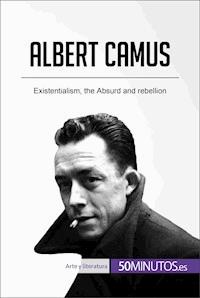






Mahatma Gandhi
Key information
Born: 2 October 1869 in Porbandar (in the Indian state of Gujarat).Died: 30 January 1948 in Delhi (India).Main achievements:The concepts of satyagraha (nonviolent civil disobedience) and of simple living.Indian independence.Introduction
Gandhi was one of the emblematic figures of Indian independence. However, nothing seemed to indicate that this shy and awkward young man would become a symbol of such a movement. He was not always the man of conviction dressed in white of our collective imagination. He was still devoted to British rule and attempting to fit into British society by conforming to dress codes and professional expectations; it would take him several years of disillusionment before he considered separating the future of India from that of Great Britain. In this process, it was his moral strength more than his actions that would inspire his followers, including the architect of independent India, Jawaharlal Nehru (1889-1964).
Gandhi’s struggles took place above all in a colonial context, and not only in India. He started out in South Africa where, as a young lawyer who had just graduated from a London school, he had to deal with the discrimination that his compatriots were subjected to. It was there that he set out his vision of nonviolent civil disobedience and simple living, creating the image of a wise and fair man. He was nonetheless a man full of ambiguities, torn between his spiritual and material desires, imposing his authority in an often authoritarian way on his loved ones, maintaining a traditional view of Hindu society and its hierarchy, which he tried to preserve, sometimes compromising the universality of his fight. Gandhi’s legacy, beyond the idealisation that partly removes his humanity, was ultimately the hope of a nonviolent society – even if this is still not a reality.
Biography
Photograph of Mahatma Gandhi.
An English education
Mahatma Gandhi was born 2 October 1869 in Porbandar, in the state of Gujarat, mid-West India. A member of the merchant caste, his father, Karamchand Gandhi (1822-1886), was the chief minister of the Porbandar principality, and his mother was his father’s fourth wife. His teenage years were marked by his marriage to Kasturba Makhanji Kapadia (1869-1944) in 1882, at the age of 13. In 1886, when his father died and his first son, who died shortly after childbirth, was born, Gandhi decided to go to study in London, the capital of the British Empire of which India was a colony. His caste technically forbade it, but Gandhi, with his mother’s support, ignored this opposition and set sail in September 1888, leaving his young wife and his newborn son Harilal (1888-1948) behind in Porbandar.
He lived in London until 1891, studying law and trying to fit into English society. He wore a suit and hat, learned how to dance and took elocution lessons, but refused to change his diet. After a few unsuccessful attempts at eating meat, he returned to vegetarianism and joined the city’s Vegetarian Society, even writing several pieces for its magazine. After being called to the bar, he returned to India and arrived in time to witness the death of his mother and the birth of his youngest son Manilal (1892-1956). Employed by a law firm, he was a weak litigator due to his crippling shyness, which led him to faint in the middle of a trial. But he was efficient at managing files, and as a result was sent to South Africa to defend the interests of the Indian merchants of Dada Abdullah & Co. there.




