


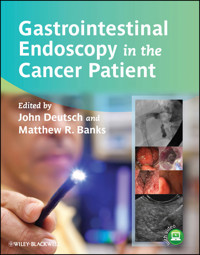
Gastrointestinal Endoscopy in the Cancer Patient E-Book
156,99 €
Mehr erfahren.
- Herausgeber: John Wiley & Sons
- Kategorie: Fachliteratur
- Sprache: Englisch
This book is a full colour, highly clinical multi-media atlas focusing on the role diagnostic and therapeutic endoscopy plays in the management of patients with cancer. Conveniently split into sections for each part of the GI tract, each section will follow a consistent structure. With 400 high-quality images and in addition, 21 high-definition videos showing endoscopy from the experts, this book is the perfect consultation and learning tool for all gastroenterologists, endoscopists, GI surgeons and oncologists.
Sie lesen das E-Book in den Legimi-Apps auf:
Seitenzahl: 1079
Veröffentlichungsjahr: 2013
Ähnliche




















Contents
Cover
Companion website
Title Page
Copyright
List of Contributors
1 Introduction to Endoscopy
Chapter 1: Introduction to Gastrointestinal Endoscopy in the Cancer Patient
Reference
2 Esophagus
Chapter 2: Staging of Premalignant and Malignant Conditions of the Esophagus
Introduction
Benign lesions
Esophageal adenocarcinoma
Squamous cell dysplasia and carcinoma
Malignant melanoma of the esophagus
Small cell cancer of the esophagus
References
Chapter 3: Endoscopic Management of Premalignant and Early Malignant Diseases of the Esophagus
Introduction
Endoscopic resection
Field ablation
Subsquamous specialized intestinal metaplasia
Summary
References
Chapter 4: Palliation of Advanced Tumors of the Esophagus Including YAG Laser, APC, PDT, Ethanol, Stent for Obstruction or Fistula, PEG, and Brachytherapy
Introduction
Nd:YAG laser
Argon plasma coagulation
Photodynamic therapy
Ethanol injection therapy
Stents for obstruction or fistula
Percutaneous endoscopic gastrostomy
Brachytherapy
Conclusions and future directions
References
Chapter 5: Endoscopy in Esophageal Cancer: An Oncologist’s Perspective
Introduction
Preoperative staging
Treatment
Perspectives
References
3 Stomach
Chapter 6: Diagnosis and Staging of Diseases of the Stomach
Introduction
Description of EGC
Endoscopic diagnosis of EGC
Endoscopic staging of invasion depth
Correlations between macroscopic type and invasion depth
Endoscopic ultrasonography
Depth predictive score
Conclusions
Acknowledgments
References
Chapter 7: Endoscopic Management of Premalignant and Early Malignant Lesions
Endoscopic treatment
History of endoscopic treatment
Indications for endoscopic resection
Details of the techniques
Management of during and after endoscopic resection
Training
Current technology and future expectation
References
Chapter 8: Palliation of Advanced Tumors of the Stomach
Introduction
Endoscopic stent placement
Laser therapy
Photodynamic therapy
Argon plasma coagulation
Injection of alcohol and cytotoxic agents
Conclusion
References
Chapter 9: Gastroscopy in Gastric Cancer: An Oncologist’s Perspective
Introduction
Neoadjuvant chemoradiotherapy
Neoadjuvant chemotherapy
Adjuvant chemoradiation
Adjuvant chemotherapy
Targeted biological therapy
Phase 3 trials of cytotoxic chemotherapy for metastatic gastric cancer
Molecular signatures for gastric cancer
Conclusions
References
4 Small Bowel
Chapter 10: Staging of Premalignant and Early Malignant Diseases of the Small Bowel
Introduction
Diagnostic imaging
Conditions predisposing to neoplasms in the small intestine
Lymphoma
Adenoma and adenocarcinoma
Gastrointestinal stromal tumor
Neuroendocrine tumors (carcinoid)
Metastatic tumor
Hamartoma
Mesenchymal tumors
Other types of potentially benign tumors
References
Chapter 11: Endoscopic Management of Premalignant, Early, and Advanced Malignancies of the Small Bowel
Introduction
Summary
References
Chapter 12: The Role of Endoscopy in Small Bowel Malignancies
Introduction
Epidemiology of small bowel malignancies
Clinical presentation of small bowel cancers
Predisposing/premalignant conditions for small bowel malignancies
Endoscopic management of small bowel malignancy
Endoscopic approaches to the distal small bowel
Indications for endoscopic examination of the small bowel
Endoscopic approaches to enteral nutrition
References
5 Pancreatic
Chapter 13: Diagnosis and Staging of Pancreatic Neoplasms
Introduction
Pancreatic adenocarcinoma
Endoscopic ultrasound
Endoscopic ultrasound with fine needle aspiration
EUS staging
Multidetector CT and PET scan
MRI/magnetic resonance cholangiopancreaticography
Endoscopic retrograde cholangiopancreatography
Pancreatic neuroendocrine tumors (PNET)
Diagnosis of pancreatic neuroendocrine tumors
Other pancreatic malignancies
References
Chapter 14: Pancreatic Cystic Lesions
Introduction
Epidemiology
Pancreatic cystic lesions
Diagnostic evaluation of pancreatic cystic lesions
Management
References
Chapter 15: Pancreatic Cancer Screening in High-Risk Individuals
Introduction
Principles of pancreatic cancer screening
Who is at increased risk of developing pancreatic cancer?
Genetic counseling and testing
Screening strategies in high-risk patients for pancreatic cancer
Data on screening strategies
Proposed screening strategy
Summary
References
Chapter 16: Endoscopic Palliation of Pancreatic Cancer
Introduction
Biliary obstruction
Duodenal obstruction
Abdominal pain
Steatorrhea
Gastrointestinal bleeding
Postsurgical complications
Summary
References
Chapter 17: Endoscopy in Pancreatic Cancer: An Oncologist’s Perspective
Introduction
A multidiscipline team to care for patients with pancreatic cancer
Risk factors
Screening
Presentation to oncology
Pathology study and implications for treatment
Celiac plexus block and biliary stent placement
Intratumoral treatment of pancreatic cancer
Intraductal papillary mucinous neoplasms and mucinous cystic neoplasms
Nutritional support with gastroduodenal stent
Summary
References
6 Gallbladder, Bile Duct, and Ampulla of Vater Biliary, Gallbladder, and Ampullary Lesions
Chapter 18: Diagnosis and Staging of Premalignant and Early Malignant Diseases
Introduction
Ampullary lesions
Extrahepatic biliary tree
Gallbladder lesions
Conclusions
References
Chapter 19: Management of Premalignant and Early Malignancies of the Bile Ducts and Ampulla
Introduction
Choledochal cysts and choledochoceles
Bile duct adenomas
Ampullary adenomas
Nonadenomatous ampullary tumors
Conclusion
References
Chapter 20: Palliation of Advanced Tumors
Endoscopic versus surgical management of malignant biliary obstruction
Endoscopic versus percutaneous transhepatic stenting
Palliative endoscopic stenting in malignant biliary obstruction
Photodynamic therapy
Management of SEMS occlusion
Future perspectives
References
Chapter 21: Endoscopy in Biliary Tract Cancers: An Oncologist’s Perspective
Introduction
Future perspectives
Acknowledgements
References
7 Hepatic Tumors (Including Intrahepatic Cholangiocarcinoma)
Chapter 22: Diagnosis and Staging of Premalignant and Malignant Diseases of the Liver
Introduction
Diagnosis and staging of premalignant diseases of the liver
Diagnosis and staging of HCC
Diagnosis and staging of premalignant diseases of the bile duct
Diagnosis and staging of CCA
Other premalignant and malignant diseases of the liver
References
Chapter 23: Endoscopic Evaluation and Therapy for Complications of Cirrhosis
Upper gastrointestinal bleeding in cirrhosis
General concepts about AVH
Emergent management of AVH
Prevention of complications and deterioration of liver function
Ascites and renal function
Emergent treatments for AVH
Secondary prevention of recurrent AVH
Prevention of first AVH: primary prophylaxis for AVH
Management of other portal HTN etiologies for bleeding: variceal and nonvariceal
Mucosal bleeding sources with portal hypertension
Conclusions
References
Chapter 24: Endoscopic Management of Early and Advanced Hepatic Tumors
Introduction
Intrahepatic cholangiocarcinoma
Endoscopic interventions
Biliary drainage
Endoscopic stenting
Cholangitis complicating ERCP
Percutaneous and combined drainage
EUS guided drainage
Endoscopic guided local destructive therapy
Drug-eluting stent
Cholangioscopy
Endoscopic brachytherapy
Endoscopic treatment in HCC
Conclusion
References
Chapter 25: Hepatic Tumors: An Oncologist’s Perspective
Oncological management of hepatocellular cancer
The oncological management of cholangiocarcinoma
The management of colorectal cancer with hepatic metastases
Conclusion
References
8 Colorectal and Anal Tumors
Chapter 26: Diagnosis, Staging, and Management of Premalignant and Early Malignant Diseases of the Colon
Endoscopic detection of neoplastic lesions
Hyperplastic polyps and sessile serrated lesions
Growth morphology and histology
Electronic enhancement of mucosal views
Endoscopic submucosal dissection
Complications of endoscopic therapy
References
Chapter 27: Palliation of Advanced Tumors
Introduction
Colonic stenting
Laser therapy in the management of obstruction
Endoscopic management of nonobstructive complications of colorectal malignancy
References
Chapter 28: Colorectal and Anal Tumors: An Oncologist’s Perspective
Colorectal cancer
Endoscopic palliation
Post-treatment surveillance
Special populations
Anal cancer
Summary
References
Chapter 29: Anal Cancer
Anal intraepithelial neoplasia
Invasive anal cancer
Acknowledgment
References
9 Gastrointestinal Endoscopic Management of Tumors Not of GI Origin–Role of GI Endoscopy
Chapter 30: Endoscopy in Hematologic Malignancies
Introduction
How safe is endoscopy in the myelosuppressed patient?
Neutropenic enterocolitis
Chemotherapy-induced alimentary mucositis
Gastrointestinal graft-versus-host disease
Risk of thrombosis: anticoagulation in the face of thrombocytopenia
Conclusion
References
Chapter 31: Thyroid, Head, and Neck Tumors
Anatomy
Nutrition
Acknowledgment
References
Chapter 32: Prostate Cancer, Ovarian, and Peritoneal Disease
Endoscopic ultrasonography
Endoscopic management of radiation proctopathy
Venting PEGS in extraluminal malignant bowel obstruction
Colonic stenting for extrinsic peritoneal compression
References
Chapter 33: Lung Cancer and Mediastinal Tumors
EUS-guided biopsy in bronchopulmonary disease
EUS-FNA for diagnosis and staging of lung cancer
EUS-FNA in non-lung cancer
EBUS and EBUS-TBNA for bronchopulmonary diseases
EBUS-TBNA for diagnosis and staging of lung cancer
EBUS-TBNA in non-lung cancer
Combined EUS-FNA and EBUS-TBNA for staging of lung cancer
References
Chapter 34: Role of GI Endoscopy in Lymphoproliferative Disorders
Background
Endoscopy and GI lymphomas
Esophageal lymphoma
Gastric lymphoma
Lymphoma of the small intestine and colon
Posttransplant lymphoproliferative disorders
Conclusion
References
Chapter 35: Endoscopy and Radiation Therapy
Introduction
EUS guided brachytherapy
EUS guided fiducial placement
Radiation-induced strictures
Radiation proctitis
Radiation-induced hepatobiliary complications
Conclusion
References
Chapter 36: Endoscopic Complications
Introduction
Generic complications
Complications of specific techniques
Prevention of complications—the endoscopist
References
Index
This edition first published 2013 © 2013 by John Wiley & Sons, Limited.
Wiley-Blackwell is an imprint of John Wiley & Sons, formed by the merger of Wiley’s global Scientific, Technical and Medical business with Blackwell Publishing.
Registered office: John Wiley & Sons, Ltd, The Atrium, Southern Gate, Chichester, West Sussex, PO19 8SQ, UK
Editorial offices: 9600 Garsington Road, Oxford, OX4 2DQ, UK The Atrium, Southern Gate, Chichester, West Sussex, PO19 8SQ, UK 111 River Street, Hoboken, NJ 07030-5774, USA
For details of our global editorial offices, for customer services and for information about how to apply for permission to reuse the copyright material in this book please see our website at www.wiley.com/wiley-blackwell
The right of the author to be identified as the author of this work has been asserted in accordance with the UK Copyright, Designs and Patents Act 1988.
All rights reserved. No part of this publication may be reproduced, stored in a retrieval system, or transmitted, in any form or by any means, electronic, mechanical, photocopying, recording or otherwise, except as permitted by the UK Copyright, Designs and Patents Act 1988, without the prior permission of the publisher.
Designations used by companies to distinguish their products are often claimed as trademarks. All brand names and product names used in this book are trade names, service marks, trademarks or registered trademarks of their respective owners. The publisher is not associated with any product or vendor mentioned in this book. This publication is designed to provide accurate and authoritative information in regard to the subject matter covered. It is sold on the understanding that the publisher is not engaged in rendering professional services. If professional advice or other expert assistance is required, the services of a competent professional should be sought.
The contents of this work are intended to further general scientific research, understanding, and discussion only and are not intended and should not be relied upon as recommending or promoting a specific method, diagnosis, or treatment by physicians for any particular patient. The publisher and the author make no representations or warranties with respect to the accuracy or completeness of the contents of this work and specifically disclaim all warranties, including without limitation any implied warranties of fitness for a particular purpose. In view of ongoing research, equipment modifications, changes in governmental regulations, and the constant flow of information relating to the use of medicines, equipment, and devices, the reader is urged to review and evaluate the information provided in the package insert or instructions for each medicine, equipment, or device for, among other things, any changes in the instructions or indication of usage and for added warnings and precautions. Readers should consult with a specialist where appropriate. The fact that an organization or Website is referred to in this work as a citation and/or a potential source of further information does not mean that the author or the publisher endorses the information the organization or Website may provide or recommendations it may make. Further, readers should be aware that Internet Websites listed in this work may have changed or disappeared between when this work was written and when it is read. No warranty may be created or extended by any promotional statements for this work. Neither the publisher nor the author shall be liable for any damages arising herefrom.
Library of Congress Cataloging-in-Publication Data
Gastrointestinal endoscopy in the cancer patient / edited by John C. Deutsch, Matthew R. Banks. p. ; cm. Includes bibliographical references and index. ISBN 978-0-470-67246-4 (hardback : alk. paper) I. Deutsch, John C. II. Banks, Matthew R. [DNLM: 1. Digestive System Neoplasms--diagnosis. 2. Endoscopy, Digestive System. 3. Digestive System Neoplasms--therapy. 4. Neoplasm Staging. 5. Palliative Care. WI 149] 616.99′4307545--dc23 2012037015
A catalogue record for this book is available from the British Library.
Wiley also publishes its books in a variety of electronic formats. Some content that appears in print may not be available in electronic books.
Cover image: Courtesy of John C. Deutsch
List of Contributors
Seiichiro Abe MD Endoscopy Division National Cancer Center Hospital Tokyo, Japan
Douglas G. Adler MD, FACG, FASGE, AGAF Division of Gastroenterology and Hepatology Huntsman Cancer Institute University of Utah School of Medicine Salt Lake City, UT, USA
Vipul Aggarwal MBBS, FRACP Department of Gastroenterology Royal North Shore Hospital Sydney, NSW, Australia
Jouke Annema MD, PhD Department of Pulmonology Academic Medical Center Amsterdam, The Netherlands
Muslim Atiq MD Sanford Health Sanford-USD School of Medicine Sioux Falls, SD, USA
Matthew R. Banks FRCP, PhD University College London Hospitals NHS Trust London, UK
Manoop S. Bhutani MD, FACG, FASGE, FACP, AGAF Department of Gastroenterology, Hepatology, and Nutrition UT MD Anderson Cancer Center Houston, TX, USA
Stephen Bown MD, FRCP Department of Gastroenterology University College London Hospitals NHS Foundation Trust London; and National Medical Laser Centre University College London London, UK
Maria Ignez F. Melro Braghiroli MD Clinical Oncology Instituto do Cåncer do Estado de São Paulo São Paulo, Brazil
John Bridgewater MD, PhD UCL Cancer Institute London, UK
Alexa Childs MA, MB, BChir Department of Oncology UCL Medical School London, UK
Paul Clementsen MD, DMSc Department of Pulmonary Medicine Gentofte Hospital University of Copenhagen Copenhagen, Denmark
Gregory A. Coté MD, MS Division of Gastroenterology Indiana University School of Medicine Indianapolis, IN, USA
Gilberto de Castro Junior MD, PhD Clinical Oncology Instituto do Cåncer do Estado de São Paulo São Paulo, Brazil
Alexander Dekovich MD Department of Gastroenterology, Hepatology and Nutrition UT MD Anderson Cancer Center Houston, TX, USA
John C. Deutsch MD Essentia Health Systems Duluth, MN, USA
John M. DeWitt MD Indiana University School of Medicine Indianapolis, IN, USA
Jeffrey Dunkelberg MD, PhD Division of Gastroenterology–Hepatology University of Iowa Health Care Iowa City, IA, USA
J.M. Dunn BSc, PhD, MRCP National Medical Laser Centre, University College London London, UK; and Institute of Medical Informatics, Oslo University Hospital Oslo, Norway
Ihab I. El Hajj MD, MPH Indiana University School of Medicine Indianapolis, IN, USA
Imad Elkhatib MD Division of Gastroenterology University of California–San Diego San Diego, CA, USA
Elizabeth Fallon MD Division of Gastroenterology–Hepatology University of Iowa Health Care Iowa City, IA, USA
Syed M. Abbas Fehmi MD, MSc Division of Gastroenterology University of California–San Diego San Diego, CA, USA
Lucia C. Fry MD, PhD, FASGE Department of Gastroenterology, Hepatology and Infectious Diseases Marienhospital Bottrop Otto-von-Guericke University Magdeburg, Germany
Takahiro Fujii MD, PhD Endoscopy Division National Cancer Center Hospital Tokyo, Japan
Ingrid Gonzalez MD Division of Gastroenterology University of California–San Diego La Jolla, CA, USA
Takuji Gotoda MD, PhD Department of Gastroenterology and Hepatology Tokyo Medical University Tokyo, Japan
Jonathan R.B. Green MA, DM, FRCP Gastroenterology Department University Hospital of North Staffordshire Stoke on Trent, UK
Rehan J. Haidry MD National Medical Laser Centre, University College London Department of Gastroenterology University College London Hospitals NHS Trust London, UK
Daniel Hochhauser MA (Cantab), DPhil, FRCP UCL Cancer Institute and University College London Hospital London, UK
Frederick Johlin MD Division of Gastroenterology–Hepatology University of Iowa Health Care Iowa City, IA, USA
Gavin J. Johnson MSc, MD, MRCP Department of Gastroenterology University College London Hospitals NHS Foundation Trust London, UK
Evangelos Kalaitzakis MD, PhD Department of Gastroenterology Skåne University Hospital Lund, Sweden
Tonya Kaltenbach MD, PhD Veterans Affairs Palo Alto Palo Alto, CA Stanford University School of Medicine Stanford, CA, USA
David Kim MD Department of Radiology University of Wisconsin Hospital and Clinics Madison, WI, USA
Hiroto Kita MD Department of Gastroenterology International Medical Center Saitama Medical University Saitama, Japan
Lars Konge MD, PhD Centre for Clinical Education University of Copenhagen and the Capital Region of Denmark Copenhagen, Denmark
Fa-Chyi Lee MD University Health Science Center Albuquerque, NM, USA
Yuk Tong Lee MD, FRCP Institute of Digestive Disease The Chinese University of Hong Kong Prince of Wales Hospital Shatin, New Territories, Hong Kong
Sam J. Lubner MD University of Wisconsin Carbone Cancer Center University of Wisconsin Hospital and Clinics Madison, WI, USA
Lisa Madlensky PhD, CGC Department of Family and Preventive Medicine University of California, San Diego Moores UCSD Cancer Center La Jolla, CA, USA
Jayan Mannath MD, MRCP Department of Gastroenterology University Hospitals Coventry and Warwickshire NHS Trust Coventry, UK
Peter R. McNally DO, MSRF, MACG Department of Gastroenterology Evans Army Medical Center Colorado Springs, CO, USA
P. Alexander McNally MD Department of Surgery University of Colorado Denver Aurora, CO, USA
Joshua Melson MD Division of Digestive Diseases Department of Internal Medicine Rush University Medical Center Chicago, IL, USA
Tim Meyer FRCP, PhD UCL Cancer Institute and Royal Free Hospital London, UK
Klaus E. Mönkemüller MD, PhD, FASGE Basil Hirschowitz Unit of Endoscopic Excellence Division of Gastroenterology University of Alabama at Birmingham Birmingham, AL, USA
Craig A. Munroe MD Division of Gastroenterology University of California–San Diego San Diego, CA, USA
Geetha Nallamothu MD St. Marks Medical Center Salt Lake City, UT, USA
Helmut Neumann MD, PhD Department of Gastroenterology Friedrich-Alexander-University Nürnberg, Germany
Ian D. Norton MBBS, PhD, FRACP, FASGE Department of Gastroenterology Royal North Shore Hospital Sydney, Australia
Ichiro Oda MD Endoscopy Division National Cancer Center Hospital Tokyo, Japan
Abhitabh Patil MD Rush University Division of Digestive Diseases Department of Internal Medicine Rush University Medical Center Chicago, IL, USA
Bjorn Rembacken MB, ChB, MD, FRCP Endoscopy Division National Cancer Center Hospital Tokyo, Japan
Camille Rodrigues da Silva MD Research & Development Department Eurofarma Laboratórios S.A. Sao Paulo, Brazil
William A. Ross MD Department of Gastroenterology, Hepatology and Nutrition MD Anderson Cancer Center Houston, TX, USA
Mohammed H. Saad MD Division of Gastroenterology Department of Internal Medicine American University of Beirut Medical Center Beirut, Lebanon
Thomas J. Savides MD Division of Gastroenterology University of California, San Diego La Jolla, CA, USA
Stefan Seewald MD, PhD Center of Gastroenterology Klinik Hirslanden Zurich, Switzerland
David Shapiro MD Rush University Division of Digestive Diseases Department of Internal Medicine Rush University Medical Center Chicago, IL, USA
Peter D. Siersema MD, PhD, FASGE, FACG Department of Gastroenterology and Hepatology University Medical Center Utrecht Utrecht, The Netherlands
Roy Soetikno MD, PhD Veterans Affairs Palo Alto Palo Alto, CA Stanford University School of Medicine Stanford, CA, USA
Assaad M. Soweid MD, FASGE, FACG Division of Gastroenterology Department of Internal Medicine American University of Beirut Medical Center Beirut, Lebanon
Alan Stolpen MD Department of Radiology University of Iowa Health Care Iowa City, IA, USA
Joseph J.Y. Sung MD, PhD, FRCP The Chinese University of Hong Kong Prince of Wales Hospital Shatin, New Territories, Hong Kong
Raymond S. Tang MD Institute of Digestive Disease The Chinese University of Hong Kong Prince of Wales Hospital Shatin, New Territories, Hong Kong
Muhammed Thoufeeq MBBS, MRCP(UK), MRCP(Gastro) Department of Gastroenterology The General Infirmary Leeds, UK
Evelyn P.M. van Vliet MD, PhD Department of Gastroenterology and Hepatology University Medical Center Utrecht Utrecht, The Netherlands
Peter Vilmann MD, DSc, HC Department of Surgical Gastroenterology Herlev Hospital University of Copenhagen Herlev, Denmark
Katie Weatherstone MRCP Department of Oncology UCL Medical School London, UK
George J. Webster BSc, MD, FRCP Department of Gastroenterology University College London Hospitals NHS Foundation Trust London, UK
Jennifer Weiss MD Division of Gastroenterology University of Wisconsin Hospital and Clinics Madison, WI, USA
Hironori Yamamoto MD, PhD Department of Endoscopic Research and International Education Director of Endoscopy Center Jichi Medical University Tochigi, Japan
Cheng Yeoh MBBS, BMedSc, MRCP, PhD North Middlesex University Hospital Trust London, UK
Shigetaka Yoshinaga MD, PhD Endoscopy Division National Cancer Center Hospital Tokyo, Japan
1 Introduction to Endoscopy
1
Introduction to Gastrointestinal Endoscopy in the Cancer Patient
Matthew R. Banks1 and John C. Deutsch2
1University College London Hospitals NHS Trust, London, UK2Essentia Health Systems, Duluth, MN, USA
Over the last decade, endoscopy has vastly improved the diagnosis, staging, and treatment of patients with cancer affecting the gastrointestinal tract. The complexity and range of procedures now available to manage these patients has led to the development of endoscopists with expertise covering specific conditions such as hepatobiliary or esophagogastric cancers. It is of great importance to ensure that patients receive the best care. In order to achieve this, it is important to ensure that the multidisciplinary team managing patients, with not only gastrointestinal cancers, but other malignancies as well, is fully informed of all available endoscopic procedures. This book demonstrates the current endoscopic procedures available in order to manage patients with malignant and premalignant conditions of the gastrontestinal tract. It will hopefully be of benefit to endoscopists, oncologists, gastroenterologists, and surgeons, as well as all those involved in cancer patient care, both as an informative read and as a reference guide.
The current practice of gastrointestinal endoscopy generally involves placing a flexible tube with a light source, video-chip capture, and a working channel within a luminal structure of the gastrointestinal tract (Figures 1.1, 1.2, and 1.3). The image lens can be in the front, on the side perpendicular to the long axis, or in an oblique orientation of the endoscope (Figures 1.3a–1.3c).
FIGURE 1.1 A cabinet of endoscopes.
FIGURE 1.2 A radial array endoscope just before use.
FIGURE 1.3 (a) The tip of a colonoscope with forward viewing optics. (b) The tip of a duodenoscope with side viewing optics. (c) The tip of a linear array echoendoscope. (Reproduced and used with permission from Pentax Medical Company.)
Fiber optic endoscopy was first described by Hirschowitz et al. in 1957 (1). There have been many improvements in image quality since that report, and the resolution of the images obtained has been revolutionized by megapixel charged coupled devices (video-chip) and 1080p high-definition screens. This has enabled the endoscopist to visualize the mucosal architecture and vasculature in detail not imagined by the earlier investigators. Endoscopes that use different wavelengths of light or various computer-generated modifications have been developed, as seen with selected light wavelengths such as narrow band imaging (Figure 1.4) or various computer enhancements such as iScan and magnification (Figure 1.5). Further detail can be achieved with confocal laser endomicroscopy which utilizes blue laser light focused on a single horizontal level. Magnification on special instruments can be generated to 1000-fold, resulting in images at the cellular level mimicking histopathological sections. One can now appreciate changes suggesting early epithelial neoplasia.
FIGURE 1.4 (a) Esophageal gastric junction by white light. (b) The same location using narrow band imaging.
FIGURE 1.5 High-grade dysplasia and Barrett’s mucosa using ISCAN 2.
Endoscopes with ultrasound probes in the tip have been developed (Figures 1.3c and 1.6a and 1.6b) which allow visualization through the intestinal wall. Ultrasound images can be created perpendicular to or parallel to the endoscope, and needles can be placed into lesions under endoscopic guidance (Figures 1.7a and 1.7b).
FIGURE 1.6 (a) A radial array EUS endoscope with a biopsy forceps in the working channel. (Reproduced and used with permission from Pentax Medical Company.) (b) An EBUS endoscope with a needle in the working channel. (Reproduced and used with permission from Pentax Medical Company.)
FIGURE 1.7 (a) A stromal tumor visualized with radial array EUS. (b) The same lesion seen with linear array EUS during needle aspiration.
Gastrointestinal endoscopes are from 5 to 13 mm in diameter, and generally 100 to 180 cm in length. Some specialized endoscopes are shorter (such as the 60 cm endobronchial ultrasound instrument that is also used in the esophagus) and some are longer (e.g., a 220 cm small bowel enteroscope). There are instruments that are narrower, such as a 2.8 mm diameter choledochoscope or a 2 mm ultrasound miniprobe. White light is commonly used with a curved lens that gives about a 10-fold magnification, depending on the distance of the endoscope tip from the image object. Endoscopes have a hollow channel (Figures 1.3a and 1.3b and 1.6a and 1.6b) to allow the passage of various tools such as biopsy forceps, snares, clips, needles, dilators, and hemostasis devices (Figures 1.8a–1.8f). This allows biopsy, snare, closure of defects, and control of bleeding. Devices that use the outside of the endoscope as well as the internal channel to allow resection while minimizing the risk of perforation are also available (Figures 1.9a and 1.9b). Palliative therapy such as stenting to open a stricture is commonly performed. There are several types of stents and delivery devices that are available (Figures 1.10a–1.10c). Stents can be passed either through the scope or positioned with endoscopic and fluoroscopic assistance.
FIGURE 1.8 Some peripheral devices that can be used during endoscopy. (Images (a–e). Permission for use granted by Cook Medical Incorporated, Bloomington, IN.) (a) Biopsy forceps; (b) snare; (c) endoclip “Instinct Clip”; (d) EUS needle “ProCore”; (e) dilator; (f): hemospray coagulation device.
FIGURE 1.9 (a) The upper handle of a band ligation device with a snare in the working channel. “Duette Band Ligation Device.” (b) The endoscope tip of a band ligation device. Small rubber bands on the end of the endoscope are placed around a lesion creating a pseudopolyp. A snare is used to remove the pseudopolyp. “Duette Band Ligation Device.” (Images a–b. Permission for use granted by Cook Medical Incorporated, Bloomington, IN.)
FIGURE 1.10 (a) Various types of stents. (Reproduced and used with permission from Boston Scientific.) “Wallstents.” (b) Example of a stent deployment devices. (Reproduced and used with permission from Boston Scientific.) (c) Example of a stent deployment device. (Permission for use granted by Cook Medical Incorporated, Bloomington, IN.)
Capsule endoscopy is different from the usual endoscopic examination. With this method, a camera within a pill (Figure 1.11) is ingested and images are transmitted to recorders on the surface of the patient—up to 50,000 images are collected over 8 h and then reviewed as a video file.
FIGURE 1.11 Pill CAM device in package prior to use.
With the wide array of instruments and peripherals, gastrointestinal endoscopy has evolved from primarily a luminal diagnostic procedure to a procedure in which luminal and extraluminal diagnostic and therapeutic interventions are routinely performed.
Endoscopy is very important in the management of patients with premalignant and malignant conditions. Pathological diagnosis using direct visualization biopsy or by endoscopic ultrasonography-guided needle aspiration, evaluation for secondary tumor effects (bleeding, obstruction), curative therapy (endoscopic resection, thermal ablation), and palliative therapy (biliary stents, celiac block) are all part of what an endoscopist can do (Video 1.1).
The following chapters describe what endoscopists can offer in the management of patients with oncologic conditions, as well as an oncologic perspective in the management of various tumor types.
Reference
1. Hirschowitz BI, Peters CW, Curtiss LE. Preliminary report on a long fiberscope for examination of stomach and duodenum. Med Bull (Ann Arbor). 1957;23:178–180.
2 Esophagus
2
Staging of Premalignant and Malignant Conditions of the Esophagus
Rehan J. Haidry and Matthew R. Banks
University College London Hospitals NHS Trust, London, UK
Introduction
Accurate diagnosis and staging of benign and malignant lesions of the esophagus requires an in-depth understanding of current endoscopic techniques and the latest technology. The endoscopic optical technology has evolved rapidly in the last decade such that the resolution of the charge coupled device (CCD) chip is up to 1.4 million pixels. The images are further enhanced by optical filters and post image processing technology, allowing detailed views of the mucosal architecture. This, in turn, allows improved accuracy of diagnosis. We explore the roles of high-definition white light endoscopy (HD-WLE), chromoendoscopy, confocal endomicroscopy, and EUS in the diagnosis and staging of esophageal neoplasia.
Lesen Sie weiter in der vollständigen Ausgabe!
Lesen Sie weiter in der vollständigen Ausgabe!
Lesen Sie weiter in der vollständigen Ausgabe!
Lesen Sie weiter in der vollständigen Ausgabe!
Lesen Sie weiter in der vollständigen Ausgabe!
Lesen Sie weiter in der vollständigen Ausgabe!
Lesen Sie weiter in der vollständigen Ausgabe!
Lesen Sie weiter in der vollständigen Ausgabe!
Lesen Sie weiter in der vollständigen Ausgabe!
Lesen Sie weiter in der vollständigen Ausgabe!
Lesen Sie weiter in der vollständigen Ausgabe!
Lesen Sie weiter in der vollständigen Ausgabe!
Lesen Sie weiter in der vollständigen Ausgabe!
Lesen Sie weiter in der vollständigen Ausgabe!
Lesen Sie weiter in der vollständigen Ausgabe!
Lesen Sie weiter in der vollständigen Ausgabe!
Lesen Sie weiter in der vollständigen Ausgabe!
Lesen Sie weiter in der vollständigen Ausgabe!
Lesen Sie weiter in der vollständigen Ausgabe!
Lesen Sie weiter in der vollständigen Ausgabe!
Lesen Sie weiter in der vollständigen Ausgabe!
Lesen Sie weiter in der vollständigen Ausgabe!
Lesen Sie weiter in der vollständigen Ausgabe!
Lesen Sie weiter in der vollständigen Ausgabe!
Lesen Sie weiter in der vollständigen Ausgabe!
Lesen Sie weiter in der vollständigen Ausgabe!
Lesen Sie weiter in der vollständigen Ausgabe!
Lesen Sie weiter in der vollständigen Ausgabe!
Lesen Sie weiter in der vollständigen Ausgabe!
Lesen Sie weiter in der vollständigen Ausgabe!
Lesen Sie weiter in der vollständigen Ausgabe!
Lesen Sie weiter in der vollständigen Ausgabe!
Lesen Sie weiter in der vollständigen Ausgabe!
Lesen Sie weiter in der vollständigen Ausgabe!
Lesen Sie weiter in der vollständigen Ausgabe!
Lesen Sie weiter in der vollständigen Ausgabe!
Lesen Sie weiter in der vollständigen Ausgabe!
Lesen Sie weiter in der vollständigen Ausgabe!
Lesen Sie weiter in der vollständigen Ausgabe!
Lesen Sie weiter in der vollständigen Ausgabe!
Lesen Sie weiter in der vollständigen Ausgabe!
Lesen Sie weiter in der vollständigen Ausgabe!




