


86,99 €
Mehr erfahren.
- Herausgeber: John Wiley & Sons
- Kategorie: Wissenschaft und neue Technologien
- Sprache: Englisch
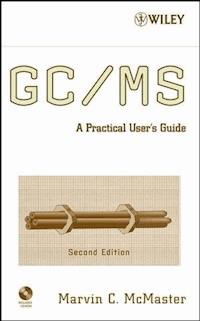
Updated and expanded, the classic guide to GC/MS helps chromatographers quickly learn to use this technique for analyzing and identifying compounds. After explaining the fundamentals, it discusses optimizing, tuning, using, and maintaining GC/MS equipment; explores advances in miniaturized and field-portable GC/MS systems and microfluidic components; and more. Complete with a CD-ROM, it covers applications in the environmental laboratory and in forensics, toxicology, and space science. This is the premier resource for professionals in those fields and for students.
Sie lesen das E-Book in den Legimi-Apps auf:
Seitenzahl: 242
Veröffentlichungsjahr: 2011
Ähnliche


















Contents
PREFACE
PART I A GC/MS PRIMER
1 INTRODUCTION
1.1 WHY USE GC/MS?
1.2 INTERPRETATION OF FRAGMENTATION DATA VERSUS SPECTRAL LIBRARY SEARCHING
1.3 THE GAS CHROMATOGRAPH/MASS SPECTROMETER
1.4 SYSTEMS AND COSTS
1.5 COMPETITIVE ANALYTICAL SYSTEMS
2 SAMPLE PREPARATION AND INTRODUCTION
2.1 DIRECT SAMPLE INJECTION INTO THE MASS SPECTROMETER
2.2 SAMPLE PURIFICATION
2.3 MANUAL GC INJECTION
2.4 AUTOMATED GC/MS INJECTION
3 THE GAS CHROMATOGRAPH
3.1 THE GC OVEN AND TEMPERATURE CONTROL
3.2 SELECTING GC COLUMNS
3.3 SEPARATION PARAMETERS AND RESOLUTION
3.4 GC CONTROL VARIABLES
3.5 DERIVATIVES
4 THE MASS SPECTROMETER
4.1 VACUUM PUMPS
4.2 INTERFACES AND SOURCES
4.3 QUADRUPOLE OPERATION
4.4 THE ION DETECTOR
5 GETTING STARTED IN GC/MS
5.1 MODE SELECTION
5.2 SETTING UP
5.3 MASS SPECTROMETER TUNING AND CALIBRATION
5.4 SAMPLE INJECTION AND CHROMATOGRAPHIC SEPARATION
5.5 DATA COLLECTION PROCESSING
PART II A GC/MS OPTIMIZATION
6 CHROMATOGRAPHIC METHODS DEVELOPMENT
6.1 ISOTHERMAL OPERATION
6.2 LINEAR TEMPERATURE GRADIENTS
6.3 ASSISTED RE-EQUILIBRATION
6.4 HINGE POINT GRADIENT MODIFICATION
6.5 PRESSURE GRADIENT DEVELOPMENT
6.6 COLUMN REPLACEMENT
7 MASS SPECTROMETER SETUP AND OPERATION
7.1 MASS SPECTROMETER CALIBRATION WITH CALIBRATION GASES
7.2 MASS AXIS TUNING
7.3 SYSTEM TUNING FOR ENVIRONMENTAL ANALYSIS
7.4 ACQUIRING INFORMATION
7.5 DATA DISPLAYS AND LIBRARY SEARCHES
8 DATA PROCESSING AND NETWORK INTERFACING
8.1 PEAK IDENTIFICATION AND INTEGRATION
8.2 MULTI-INSTRUMENT CONTROL
8.3 NETWORKING CONNECTION
8.4 REPLACEMENT CONTROL AND PROCESSING SYSTEMS
8.5 FILE CONVERSION AND DATA FILE EXCHANGE
8.6 DATA RE-ENTRY AND TRANSCRIPTION ERRORS
9 SYSTEM MAINTENANCE AND TROUBLESHOOTING
9.1 GAS CHROMATOGRAPH MAINTENANCE
9.2 MASS SPECTROMETER MAINTENANCE
9.3 SYSTEM ELECTRICAL GROUNDING
PART III SPECIFIC APPLICATIONS OF GC/MS
10 GC/MS IN THE ENVIRONMENTAL LABORATORY
10.1 VOLATILE ORGANIC ANALYSIS: EPA METHOD 624
10.2 SEMIVOLATILE ORGANIC ANALYSIS: EPA METHOD 625
10.3 EPA AND STATE REPORTING REQUIREMENTS
11 GC/MS IN FORENSICS, TOXICOLOGY, AND SPACE SCIENCE
11.1 FORENSIC ANALYSIS
11.2 CLINICAL DRUG ANALYSIS
11.3 ARSON AND SECURITY ANALYSIS
11.4 ASTROCHEMISTRY
12 AN INTRODUCTION TO STRUCTURAL INTERPRETATION
12.1 HISTORY OF THE SAMPLE
12.2 ELEMENTAL COMPOSITION
12.3 SEARCH FOR LOGICAL FRAGMENTATION INTERVALS
13 ION TRAP GC/MS SYSTEMS
13.1 ION TRAP COMPONENTS
13.2 ION TRAP OPERATION
13.3 THE LINEAR ION TRAP ANALYZER
13.4 ION TRAPS IN THE ENVIRONMENTAL LABORATORY
13.5 CHEMICAL IONIZATION IN THE ION TRAP
13.6 ION TRAP GC/MS/MS
14 OTHER GC/MS SYSTEMS
14.1 SEQUENTIAL MASS SPECTROMETRY (TRIPLE-QUADRUPOLE OR TANDEM GC/MS)
14.2 MAGNETIC SECTOR SYSTEMS
14.3 LASER TIME-OF-FLIGHT (GC/TOF-MS) GC/MS SYSTEMS
14.4 FOURIER TRANSFORM (GC/FT-MS) GC/MS SYSTEMS
15 AN INTRODUCTION TO LC/MS
15.1 LIQUID INTERFACING INTO THE MASS SPECTROMETER
15.2 ELECTROSPRAY AND NANO-SPRAY LC/MS
15.3 ION SPRAY LC/MS
15.4 LC/MS/MS
15.5 LC/MS VERSUS GC/MS
16 INNOVATION IN GC/MS
16.1 MICROFLUDICS IN GC/MS
16.2 RESISTANCE COLUMN HEATING
16.3 PORTABLE GAS SUPPLY
16.4 PORTABLE GC/MS SYSTEMS
16.5 NEW COLUMN TECHNOLOGY
APPENDIX A: GC/MS FREQUENTLY ASKED QUESTIONS
A.1 GC FAQs
A.2 COLUMN FAQs
A.3 MS FAQs
A.4 GC/MS FAQs
APPENDIX B: GC/MS TROUBLESHOOTING QUICK REFERENCE
B.1 GC INJECTOR PROBLEMS
B.2 GC COLUMN PROBLEMS
B.3 MS VACUUM AND POWER PROBLEMS
B.4 MS SOURCE AND CALIBRATION PROBLEMS
B.5 MS SENSITIVITY AND DETECTOR PROBLEMS
APPENDIX C: SOURCES OF GC/MS BACKGROUND CONTAMINATION
Appendix D: A Glossary of GC/MS Terms
Appendix E: GC/MS Selected Reading L
E.1 JOURNALS
E.2 BOOKS
INDEX
Copyright 2008 by John Wiley & Sons, Inc. All rights reserved
Published by John Wiley & Sons, Inc., Hoboken, New Jersey
Published simultaneously in Canada
No part of this publication may be reproduced, stored in a retrieval system, or transmitted in any form or by any means, electronic, mechanical, photocopying, recording, scanning, or otherwise, except as permitted under Section 107 or 108 of the 1976 United States Copyright Act, without either the prior written permission of the Publisher, or authorization through payment of the appropriate per-copy fee to the Copyright Clearance Center, Inc., 222 Rosewood Drive, Danvers, MA 01923, (978) 750–8400, fax (978) 750–4470, or on the web at www.copyright.com. Requests to the Publisher for permission should be addressed to the Permissions Department, John Wiley & Sons, Inc., 111 River Street, Hoboken, NJ 07030, (201) 748–6011, fax (201) 748–6008, or online at http://www.wiley.com/go/permission.
Limit of Liability/Disclaimer of Warranty; While the publisher and author have used their best efforts in preparing this book, they make no representations or warranties with respect to the accuracy or completeness of the contents of this book and specifically disclaim any implied warranties of merchantability or fitness for a particular purpose. No warranty may be created or extended by sales representatives or written sales materials. The advice and strategies contained herein may not be suitable for your situation. You should consult with a professional where appropriate. Neither the publisher nor author shall be liable for any loss of profit or any other commercial damages, including but not limited to special, incidental, consequential, or other damages.
For general information on our other products and services or for technical support, please contact our Customer Care Department within the United States at (800) 762–2974, outside the United States at (317) 572–3993 or fax (317) 572–4002.
Wiley also publishes its books in a variety of electronic formats. Some content that appears in print may not be available in electronic formats. For more information about Wiley products, visit our web site at www.wiley.com.
Library of Congress Cataloging-in-Publication Data:
McMaster, Marvin C.
GC/MS: a practical user’s guide. – 2nd. ed. / Marvin C. McMaster.
p. cm.
Includes index.
ISBN 978-0-470-10163-6 (cloth/cd)
1. Gas chromatography. 2. Mass spectrometry. I. Title.
QD79.C45M423 2007
543’.85–dc22
2007027370
To the memory of
Chris McMaster
my son, my illustrator,
my partner,
and my brother in Christ
PREFACE
This book arose out of the need for a textbook for an extension course I teach at the University of Missouri-St. Louis. I had been searching for a practical guide for using and maintaining a GC/MS System to help my students drawn from university and company laboratories in our area. I have sold and supported HPLC, GC/MS, and other analytical systems for a number of years, so the course material and slides were created from my notes and experiences. I wrote the text while my son, Christopher, translated my drawings into the illustrations in this book before he pass away from the ravages of Muscular Dystrophy eight years ago.
This second addition has been updated with information on new advances in gas chromatography and mass spectrometry. This handbook is presented in sections because I believe it is easier to learn this way.
Part I presents a comparative look at gas chromatography/mass spectrometry (GC/MS) and competitive instrumentation. Then an overview of the components of a generic GC/MS system is provided. Finally, I discuss how to set up a system and perform an analysis run that provides the information you need.
After obtaining some hands-on experience, Part II on optimization provides information on tuning and calibration of the mass spectrometer, cleaning, troubleshooting problems, processing information, and interfacing to other analytical and data systems; that is, getting the whole system up and running, keeping it up, and getting useful information.
Part III provides information on the use of GC/MS in research, environmental, and toxicology laboratories, as well as more esoteric applications in space science and hazardous materials detection in the field. GC/MS has become the gold standard for definitive chemical analysis. Although quadrupole mass spectrometers predominately are used in commercial laboratories, there is a growing use of ion trap, time-of-flight, and hybrid MS/ MS systems and these are discussed briefly. Magnetic sector systems, which dominated the early mass spectrometry growth, are making a resurgence along with Fourier transform GC/MS in accurate mass determination required for molecular formula and structure reporting in chemical publication, and these are discussed next.
As I taught courses I found myself moving from slide projectors to overhead projection of slides from Microsoft PowerPoint presentations. I decided to include a CD in the book with a microsoft PowerPoint slide presentation as well as tables, FAQs, etc. so a lecturer would not have to reinvent the wheel and the student could slide the CD in a computer and self-study the material. To assist in making this a self-learning tool, I went back and carefully annotated each slide.
I hope you will enjoy this book and find it as useful a reference tool for your laboratory and classroom as I have.
MARVIN C. MCMASTER
Florissant, Missouri
October 2007
PART I
A GC/MS PRIMER
1
INTRODUCTION
The combination of gas liquid chromatography (GC) for separation and mass spectrometry (MS) for detection and identification of the components of a mixture of compounds is rapidly becoming the definitive analytical tool in the research and commercial analytical laboratory. The GC/MS systems come in many varieties and sizes depending on the work they are designed to accomplish. Since the most common analyzer used in modern mass spectrometers is the quadrupole, we will focus on this means of separating ion fragments of different masses. Discussion of ion trap, time-of-flight, Fourier transform mass spectrometry (FTMS), and magnetic sector instruments will be reserved for latter sections in the book.
Lesen Sie weiter in der vollständigen Ausgabe!
Lesen Sie weiter in der vollständigen Ausgabe!
Lesen Sie weiter in der vollständigen Ausgabe!
Lesen Sie weiter in der vollständigen Ausgabe!
Lesen Sie weiter in der vollständigen Ausgabe!
Lesen Sie weiter in der vollständigen Ausgabe!
Lesen Sie weiter in der vollständigen Ausgabe!
Lesen Sie weiter in der vollständigen Ausgabe!
Lesen Sie weiter in der vollständigen Ausgabe!
Lesen Sie weiter in der vollständigen Ausgabe!
Lesen Sie weiter in der vollständigen Ausgabe!
Lesen Sie weiter in der vollständigen Ausgabe!
Lesen Sie weiter in der vollständigen Ausgabe!
Lesen Sie weiter in der vollständigen Ausgabe!
Lesen Sie weiter in der vollständigen Ausgabe!
Lesen Sie weiter in der vollständigen Ausgabe!
Lesen Sie weiter in der vollständigen Ausgabe!
Lesen Sie weiter in der vollständigen Ausgabe!
Lesen Sie weiter in der vollständigen Ausgabe!
Lesen Sie weiter in der vollständigen Ausgabe!
Lesen Sie weiter in der vollständigen Ausgabe!
Lesen Sie weiter in der vollständigen Ausgabe!
Lesen Sie weiter in der vollständigen Ausgabe!




