


20,99 €
Mehr erfahren.
- Herausgeber: John Wiley & Sons
- Kategorie: Geisteswissenschaft
- Serie: Studies in Urban and Social Change
- Sprache: Englisch
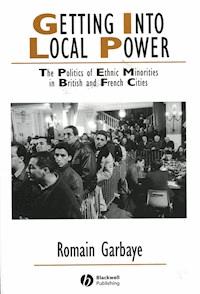
This book presents a comparison of the patterns of ethnic minority politics in British and French city politics. * A comparison of the participation of ethnic minorities in British and French cities * Includes direct comparisons of particular cities Birmingham, Lille and Roubaix * Shows how ethnic and cultural diversity translates into political conflict in different political systems * Considers styles of political mobilisation of ethnic minorities in the context of urban political systems, as well as the strategies used by party leaders and to manage ethnic diversity in political competition * Analyses how ethnic and cultural diversity in urban societies translates into conflictual politics * Enhances our understanding of local politics and of the evolution of political representation in industrialised democracies
Sie lesen das E-Book in den Legimi-Apps auf:
Seitenzahl: 595
Veröffentlichungsjahr: 2011
Ähnliche




















Contents
List of Maps
Foreword by Patrick Weil
Series Editors’ Preface
Acknowledgements
Introduction
The Election of Ethnic Minorities on European City Councils
Comparing Ethnic Minority Politics in Britain and France
Contrasting Levels of Representation and Modes of Access in the 1980s and 1990s
Towards an Analysis of Local Political Processes
1 Historical Institutionalism and the Comparison of Local Cases
Strategies of Management of Ethnic Conflict and Historical Institutionalism
Birmingham, Lille and Roubaix, 1980s–2001
The Main Propositions and the Outline of the Book
2 The British Policy Framework: Liberal Citizenship Regime, Depoliticization and the Race Relationism of British Cities
1948–1958: Pressure on Local Authorities and National Indifference
1958–1968: The Birth of the British Race Relations Policy Framework
The 1970s and 1980s: The Legacy of the 1960s Settlement
The ‘Race Relationism’ of British Cities in the 1980s and 1990s
Conclusion
3 The French Policy Framework: Planned Migration, Xenophobic Politics and Durable Political Exclusion
1945–1973: State Planning and Unintended Effects
1974–1983: The Bureaucratic Management of Political Incertitude
1983–1997: National and Local Politicization of Immigration in Xenophobic Terms
The Construction of Consensus after 1997
Conclusion
4 Birmingham, 1980s–2001: Inner-city Labour Politics and Pluri-ethnic Government
From Indifference to Multi-ethnic Coalition: The Birth of Ethnic Politics in Birmingham
Institutions and Activists: How Ethnic Minorities Penetrated the Labour Party
Conclusion
5 Lille, 1980s-2001: Machine Politics and Exclusion of Minorities in the French Municipal System
Introduction
Lille’s Double Strategy of Externalization and Political Exclusion
The French Municipal System, Machine Politics and Minority Exclusion in Lille
Conclusion
6 Roubaix, 1980s-2001: Inclusion Through Neighbourhood Groups and an Open Municipal Game
Introduction
Urban Crisis, Migrations and the Political Management of the Crisis
Roubaix Political History and Immigrant Incorporation in the 1990s
Conclusion
Conclusion
Strengths and Limitations of Historical Institutionalism in Ethnic Minority Studies
The End of the Path: Muslim Anger in Britain and the Lingering Burden of Beur Failure in France
Ethnic Minorities and the Decline of the European Left
Local Strategies and their Unintended Effects
Appendix: Interviews and Sources
Birmingham
Lille
Roubaix
Main Press Sources
Notes
Bibliography
Index
Studies in Urban and Social Change
Published by Blackwell in association with the International Journal of Urban and Regional Research. Series Editors: Harvey Molotch; Linda McDowell; Margit Mayer; Chris Pickvance
The Blackwell Studies in Urban and Social Change aim to advance debates and empirical analyses stimulated by changes in the fortunes of cities and regions across the world. Topics range from monographs on single places to large-scale comparisons across East and West, North and South. The series is explicitly interdisciplinary; the editors judge books by their contribution to intellectual solutions rather than according to disciplinary origin.
Published
Getting Into Local Power: The Politics of Ethnic Minorities in British and French Cities
Romain Garbaye
Cities of Europe
Yuri Kazepov (ed.)
Cities, War, and Terrorism
Stephen Graham (ed.)
Cities and Visitors: Regulating Tourists, Markets, and City Space
Lily M. Hoffman, Susan S. Fainstein and Dennis R. Judd (eds)
Understanding the City: Contemporary and Future Perspectives
John Eade and Christopher Mele (eds)
The New Chinese City: Globalization and Market Reform
John R. Logan (ed.)
Cinema and the City: Film and Urban Societies in a Global Context
Mark Shiel and Tony Fitzmaurice (eds)
The Social Control of Cities? A Comparative Perspective
Sophie Body-Gendrot
Globalizing Cities: A New Spatial Order?
Peter Marcuse and Ronald van Kempen (eds)
Contemporary Urban Japan: A Sociology of Consumption
John Clammer
Capital Culture: Gender at Work in the City Linda McDowell
Cities After Socialism: Urban and Regional Change and Conflict in Post-Socialist Societies
Gregory Andrusz, Michael Harloe and Ivan Szelenyi (eds)
The People's Home? Social Rented Housing in Europe and America
Michael Harloe
Post-Fordism
Ash Amin (ed.)
Free Markets and Food Riots
John Walton and David Seddon
Fragmented Societies
Enzo Mingione
Urban Poverty and the Underclass: A Reader Enzo Mingione
Forthcoming
Eurostars and Eurocities: Free-Moving Urban Professionals in an Integrating Europe
Adrian Favell
Cities and Regions in a Global Era
Alan Harding (ed.)
Urban South Africa
Alan Mabin
Urban Social Movements and the State
Margit Mayer
Social Capital Formation in Immigrant Neighborhoods
Min Zhou
© 2005 by Romain Garbaye
BLACKWELL PUBLISHING
350 Main Street, Maiden, MA 02148–5020, USA
9600 Garsington Road, Oxford OX4 2DQ, UK
550 Swanston Street, Carlton, Victoria 3053, Australia
The right of Romain Garbaye to be identified as the Author of this Work has been asserted in accordance with the UK Copyright, Designs, and Patents Act 1988.
All rights reserved. No part of this publication may be reproduced, stored in a retrieval system, or transmitted, in any form or by any means, electronic, mechanical, photocopying, recording or otherwise, except as permitted by the UK Copyright, Designs, and Patents Act 1988, without the prior permission of the publisher.
First published 2005 by Blackwell Publishing Ltd
1 2005
Library of Congress Cataloging-in-Publication Data
Garbaye, Romain.
Getting into local power: the politics of ethnic minorities in British and French cities / Romain Garbaye.
p. cm.—(Studies in urban and social change)
Includes bibliographical references and index.
ISBN-13: 978-1-4051-2697-7 (hardback: alk. paper)
ISBN-10: 1-4051-2697-3 (hardback: alk. paper)
ISBN-13: 978-1-4051-2694-6 (pbk.: alk. paper)
ISBN-10: 1-4051-2694-9 (pbk.: alk. paper)
1. Local elections—France—Case studies. 2. Minorities—France—Political activity—Case studies. 3. France—Ethnic relations—Political aspects—Case studies. 4. Local elections—Great Britain—Case studies. 5. Minorities—Great Britain—Political activity—Case studies. 6. Great Britain—Ethnic relations—Political aspects—Case studies. 7. Birmingham (Eng.)— Politics and government. 8. Lille (France)—Politics and government. 9. Roubaix (France)— Politics and government. I. Title. II. Series.
JS4975.G37 2005
323.141'09173'2 – dc22
2005005880
A catalogue record for this title is available from the British Library.
The publisher's policy is to use permanent paper from mills that operate a sustainable forestry policy, and which has been manufactured from pulp processed using acid-free and elementary chlorine-free practices. Furthermore, the publisher ensures that the text paper and cover board used have met acceptable environmental accreditation standards.
For further information on
Blackwell Publishing, visit our website:
www.blackwellpublishing.com
Maps
Map 1Birmingham wards and constituencies in October 1996Map 2Percentage of population of black and minority ethnic groups in Birmingham by ward, 1991Map 3Percentage of population of ethnic Pakistani group in Birmingham by ward, 1991Map 4The neighbourhoods of LilleMap 5Concentration of foreigners in the neighbourhoods of RoubaixForeword
Patrick Weil, Directeur de Recherches, CNRS-Université Panthéon-Sorbonne (Paris I)
It was a challenge, for a young French graduate student, to leave France seven years ago to work towards a PhD in the United Kingdom on French and British local politics, drawing on an American, new institutionalist approach. It was an additional challenge to return successfully to the French academic system, given the relative lack of interest of the French in institutionalist political science and given their traditional distrust of comparative studies.
Yet Romain Garbaye has successfully carried off these challenges, and I am happy to introduce the result. Trained at Oxford University, he is now Assistant Professor at the Sorbonne (University of Paris-IV). In his dissertation that is now published as this book, he compares the politics of ethnic minorities in three cities: a British one, Birmingham, and two French ones, Lille and Roubaix. Examining how ethnic minorities ‘get into local power’, he asks why they have successfully entered Birmingham politics while remaining shut out of Lille politics and slowly gaining ground in Roubaix. Is it because the French are faithful to their republican ideology while the British have embraced multiculturalism? Or should one point to more persistent racism and intolerance in France than in Britain? Neither of these. Using historical institutionalism as a tool of enlightenment, he demonstrates instead that it is features of local political systems such as central-local relations, modes of local party organization and styles of local government that have shaped different patterns of access to political representation across countries and cities.
With these premises, the book unfolds a rigorous, clear and penetrating comparison of 40 years of minority politics on either side of the Channel. In doing so, it constitutes a welcome addition to the field of European migration studies where comprehensive and truly comparative studies are still rare. It also illustrates the pertinence of institutionalist approaches by detailing how political institutions deeply rooted in the history of nations and cities shape in complex ways the birth of multicultural societies in western Europe. It combines an interest in immigration politics with a focus on the workings of urban political systems.
The book highlights the far-reaching consequences of Britain’s peculiar citizenship regime in the post-war period, which, by granting citizenship rights to all migrants upon arrival in the United Kingdom, greatly encouraged minority participation and durably shaped 40 years of minority politics. Symmetrically, the book retraces the linkage between the French nationality regime, under which most first-generation migrants have lived in France as foreigners, and the persistent pattern of manipulation and exclusion that afflicted minority politics in the 1980s and 1990s. It goes on to demonstrate more clearly than has been done before how the disastrous failure of North African secular politics in the 1980s had a lasting impact on the place of ethnic minorities in the French polity, alienating them from the political left, and indeed from the political system as a whole, in the 1990s, with signs of a timid surge in participation appearing only now.
Imagine for a moment that instead of becoming citizens immediately upon their arrival in the United Kingdom, immigrants from the New Commonwealth had been granted the status of foreigners with non-automatically renewable permits; is it not likely, as happened in France, that the restrictionists and ethnocentrists would have insisted that their stay was only temporary, and would have asked their government to focus its political agenda on the immigrants’ return? This is precisely what many French politicians and policy-makers did, and what the British could not do, because immigrants into Britain were citizens of the UK upon their arrival, for better and for worse. Therefore, the restrictionists focused instead on stopping new immigration and reforming the nationality regime. They succeeded, and, in exchange for their acceptance of this policy objective, the Labour Party was able to create anti-racist policies. Romain Garbaye shows how these developments set the institutional framework of British immigration and integration policy for the next 40 years, framing minorities’ demands and shaping political alliances in cities.
In France, the restrictionists did not worry – in the 1960s - about stopping immigration, because they were sure that, whenever it became necessary, they could send immigrants back home. Indeed, they tried to do just that after the 1974 oil shock. Former President Giscard d’Estaing headed an attempt to deport 500,000 legal Algerian immigrants. The left reacted forcibly, as did the Gaullists. This was a battle that lasted from 1974 until 1998, during which the right to settle and then to acquire French citizenship easily was at stake for numerous immigrants and their children. At that time, the Front National picked up Giscard d’Estaing’s programme and campaigned for repatriation. It was not a good time for integrating ethnic minorities into local politics, and the book details how the negative consequences of these poisonous debates were experienced on the ground, at the level of neighbourhood and city politics in France’s deprived post-industrial areas.
The book also analyses the capacity of city governments to react to social and ethnic changes. When New Commonwealth immigrants settled in the UK, immediately becoming citizens, they tended to concentrate in certain urban areas, and in the 1980s started to acquire a degree of recognition and influence in local politics. This was so not only because they were citizens, but also because local councils are elected by ward. Ethnic minorities became intimately, though conflictually, involved in the politics of the local Labour Party in Birmingham, becoming one of the pillars of a strong pluri-ethnic coalition that governed the city in the 1980s and 1990s.
In France, immigrants have also lived in ghettoized areas, although patterns of segregation are often less pronounced than in Britain. However, in these areas, they were not until recently the majority of the citizens; this is because, while being in the majority, they were not citizens. The book shows how this handicap translated into lasting political exclusion in the context of the French local political system. For those naturalized immigrants who became French, their electoral weight was feeble in the context of citywide electoral districts, and they were confronted with powerful and entrenched networks that perpetuated established modes of government without adapting to social change. One of the most penetrating lessons of the book deals with the place of local political elites in the national political system. In France, local mayors can be national figures, nurturing presidential ambitions, as is the case in Lille. This explains why their local policies are scrutinized by the national press and can have a national impact, and therefore why they pursue politics that are traditional to the extreme, while a lesserknown mayor such as Roubaix’s can have a wider margin to innovate in ethnic politics.
Romain Garbaye’s book also opens perspectives for the future. At a time when some British Muslims are using their vote against the Labour Party to vent their anger against its Iraq policy, the book traces the origins of Muslim discontent to disappointment with Labour inner-city policy in the late 1990s. The disastrous failure of North African secular politics in 1980s France alienated them from the political left, and indeed from the political system as a whole, in the 1990s. The signs now appearing of a new, timid resurgence of minorities into city councils reflect not only demographic changes but also the continuing hold of local partisan elites over political representation. As France starts to move towards new approaches to resolving its lingering immigrant integration crisis, such as positive action policies and the institutionalization of Islam, it is worthwhile keeping this political backdrop in mind.
Series Editors’ Preface
The Blackwell Studies in Urban and Social Change series aims to advance theoretical debates and empirical analyses stimulated by changes in the fortunes of cities and regions across the world. Among topics taken up in past volumes and welcomed for future submissions are:
Connections between economic restructuring and urban changeUrban divisions, difference, and diversityConvergence and divergence among regions of east and west, north, and southUrban and environmental movementsInternational migration and capital flowsTrends in urban political economyPatterns of urban-based consumptionThe series is explicitly interdisciplinary; the editors judge books by their contribution to intellectual solutions rather than according to disciplinary origin.
Proposals may be submitted to members of the series Editorial Committee:
Harvey Molotch
Linda McDowell
Margit Mayer
Chris Pickvance
Acknowledgements
This book is a revised version of a DPhil thesis defended at Oxford University. Thanks are due above all to David Goldey and Desmond King, my DPhil supervisors, for their constant encouragement and support. I am also grateful to all the local politicians, activists and social workers who answered my questions in France and Britain. Their cooperation and good will were invaluable to me. Interviews with them often worked as personal lessons on political struggle, which I was privileged to receive.
I have been financially supported during my years of graduate work by the Besse scholarship of my college at Oxford, Worcester, where I have spent four fulfilling years of research and teaching. I am grateful in particular to Kate Tunstall and Alan Ware. The Philip Williams fund of the Pôle Européen of Sciences Po in Paris provided crucial financial backing for the field research in Birmingham and Lille. The Department of European Studies at Aston University, Birmingham, functioned as a logistical base and a source of advice, and for that I am grateful to Anne Stevens and to John Gaffney. John Rex and Danièle Joly of CRER at the University of Warwick encouraged my work in its early stages. In Lille, the Centre d’Études et de Recherches Administratives, Politiques et Sociales de Lille (CERAPS), Université de Lille-II, has also been an invaluable source of material and intellectual support. I am grateful to Patrick Hassenteufel for facilitating my connection with CERAPS, and to Frédéric Sawicki, its director, for welcoming me. My stays there provided the opportunity for many inspiring discussions on Lille politics with Rémi Lefebvre and on French Islam with Nancy Venel. I extend my warmest regards to them here. Marie Poinsot at ADRI in Paris provided precious indications on minority politics in Lille. I thank John Solomos and Les Back for their kind permission to discuss in detail parts of their wonderful book, Race,Politics and Social Change (Routledge, 1995). I also thank Taylor and Francis for their permission to reproduce here as chapter 2 a revised version of an article that I published in Immigrants and Minorities, 22, 2/3 (2003), available online at tandf.co.uk.
The preparation of this book has also been made possible by my stay at the Robert Schuman Centre for Advanced Studies at the European University Institute in Florence, where I held a Jean Monnet post-doctoral fellowship in 2001–2. I benefited from the excellent research atmosphere there and I am grateful to the director of the centre, Helen Wallace, for welcoming me and for her encouragement. At the Université Paris IV-Sorbonne I found a stimulating and friendly academic environment in which to prepare the final version of the book.
Many people have helped in this project, through their advice and guidance. In particular I wish to thank here Patrick Weil, Sophie Body-Gendrot, Randall Hansen, Adrian Favell, Virginie Guiraudon, Peter John, Patrick Le Galès, Yves Mény and Martin Schain. Participation in collective research projects led by Paul Statham and Ruud Koopmans, and by Karen Kraal, Marco Martiniello, Rinus Penninx, Alisdair Rogers, Jean Tillie, and Steve Vertovec, has provided an excellent opportunity for me to learn about on-going research in Europe, and to develop various aspects of the work leading to this book, for which I am extremely grateful. I also wish to thank all friends and colleagues who have helped and contributed in various ways, in particular Lionel Arnaud, Françoise de Barros, Marie-Claude Blanc-Chaléard, Erik Bleich, Hassan Bousetta, Jacques Carré, Alistair Cole, Véronique Dimier, Meindert Fennema, Catherine Fieschi, Andrew Geddes, David Howarth, Riva Kastoryano, Jonathan Laurence, Jonathan Lipkin, Rahsaan Maxwell, Damian Moore, Lorena Ruano, Sonia Tebbakh, Jean Tillie, Valérie Sala-Pala, and John Solomos. I am also grateful to Harvey Molotch for his advice on the preparation of the book. I thank Jacqueline Scott, Angela Cohen and Brigitte Lee at Blackwell for their help with the production of the book. Of course, any mistakes are my responsibility.
Finally, I express my gratitude to my parents Jean and Françoise, to my sister, Anne, and to my friends in Oxford, London and Paris, who supported me as the years passed. Linda shares my life. Thank you for your love, your enthusiasm and your staunch support.
Vincent Wright’s supervision of the early stages of the project was extremely inspiring and friendly. This book is dedicated to his memory.
Map 1 Birmingham wards and constituencies in October 1996.
Source: Birmingham City Council, 1996
Map 2 Percentage of population of black and minority ethnic groups in Birmingham by ward, 1991.
Source: 1991 census; Information Team, Department of Planning and Architecture, Birmingham City Council, 1991
Map 3 Percentage of population of ethnic Pakistani group in Birmingham by ward, 1991.
Source: 1991 census; Information Team, Department of Planning and Architecture, Birmingham City Council, 1991
Map 4 The neighbourhoods of Lille.
Neighbourhoods where ethnic minority concentration was the highest in 1990 were LilleSud (19.3 per cent), Faubourg de Béthune (18.5 per cent), Moulins (14 per cent), Fives (10 per cent) and Wazemmes (9.2 per cent).
Source: Ville de Lille, 1998, based on INSEE 1990 census data
Map 5 Concentration of foreigners in the neighbourhoods of Roubaix.
Source: Giblin-Delvallet, 1990
Introduction
The Election of Ethnic Minorities on European City Councils
Western European societies in the twentieth century were delimited by, and organized within, the structure of the nation-state. This model has entailed a congruence of national cleavages with state boundaries and has ensured the stability of European societies. The result was the relatively low salience of ethnic cleavages as sources of political conflict in these societies (apart from peripheral conflicts such as the Basque conflict or Northern Irish conflict, or such as the Belgian case). But the state-national model has increasingly been challenged by various trends, foremost among which is extra-European immigration, along with European integration and the renewed vitality of regional politics. It is precisely the dominance of the nation-state as a geographically bounded group of people that makes movements of populations a political phenomenon;1 and the scale of these movements has turned them into a potential ‘challenge to the nation-state’ in its role as the framework for European politics (Joppke, 1998).
In particular, the participation of ethnic minorities in politics is a new phenomenon that brings far-reaching changes. Immigrant populations have morphed into well-settled ethnic minorities, that is to say, in political terms, populations which share an interest in agendas of struggle against racial discrimination and for the recognition of cultural and religious differences in various policy areas, for instance education or the construction of custombuilt places of worship.2 Political institutions such as trade unions, elected assemblies and political parties, which used to represent and articulate conflicts within ethnically homogeneous societies, now find themselves faced with agendas related to ethnic diversity. The reaction has often been one of refusing access to minority individuals and interests. This book studies the processes through which western European political systems react to ethnic diversity, in what conditions they react to it or ignore it, how they resist pressures to take on board minority agendas, and why and how they embrace them when they do. It focuses on one particular aspect which is deemed a revealing ‘flash point’: the election of individuals from an ethnic minority background on city councils, and the political careers of these activists that lead to election.
Cities are at the forefront of attempts by ethnic minority populations to participate in urban politics, as is reflected by a growing body of comparative research.3 The already long history of immigrant politics, then black and Hispanic politics, in American cities since the 1960s hints at a similarly durable relevance of cities in European immigrant politics.4 The intensity of ethnic minority participation at the local level has often stood in contrast to its absence or weakness in national scenes. In Britain, for instance, where immigrants of post-colonial background have traditionally voted in all elections, national and local, the number of ethnic minorities has risen much faster in local councils than in the House of Commons. National policies have also channelled the participation of minorities into city politics: in countries where immigrants have no formal national citizenship, they are often granted local voting rights, as in Ireland in 1963, Sweden in 1976, Denmark in 1981, Norway in 1982 and the Netherlands in 1986. That the European Union (EU) gives its citizens the right to vote in the local elections of member countries in which they are resident, but not in national elections, reflects a similar trend.
Lesen Sie weiter in der vollständigen Ausgabe!
Lesen Sie weiter in der vollständigen Ausgabe!
Lesen Sie weiter in der vollständigen Ausgabe!
Lesen Sie weiter in der vollständigen Ausgabe!
Lesen Sie weiter in der vollständigen Ausgabe!
Lesen Sie weiter in der vollständigen Ausgabe!
Lesen Sie weiter in der vollständigen Ausgabe!
Lesen Sie weiter in der vollständigen Ausgabe!
Lesen Sie weiter in der vollständigen Ausgabe!
Lesen Sie weiter in der vollständigen Ausgabe!
Lesen Sie weiter in der vollständigen Ausgabe!




