


51,99 €
Mehr erfahren.
- Herausgeber: John Wiley & Sons
- Kategorie: Fachliteratur
- Sprache: Englisch
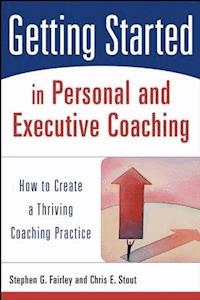
Find satisfaction and financial success with a new career in coaching Getting Started in Personal and Executive Coaching offers a go-to reference designed to help every mental health professional build, manage, and sustain a thriving coaching practice. Packed with hundreds of proven strategies and techniques, this nuts-and-bolts guide covers all aspects of the coaching business with step-by-step instructions and real-world illustrations that prepare you for every phase of starting your own coaching business. This single, reliable book offers straightforward advice and tools for running a successful practice, including: * Seven tools for making a great first impression * Fifteen strategies for landing ten paying clients * Seven secrets of highly successful coaches * Ten marketing mistakes to avoid Complete with sample business and marketing plans and worksheets for setting rates and managing revenue, Getting Started in Personal and Executive Coaching identifies the fifteen biggest moneymaking markets to target and offers valuable recommendations for financing that get the most impact and mileage from every budget. Quick "Action Steps" for applying ideas and techniques make this book useful right away. Get started in coaching today!
Sie lesen das E-Book in den Legimi-Apps auf:
Seitenzahl: 544
Veröffentlichungsjahr: 2010
Ähnliche


















Table of Contents
Cover
Title
Copyright
Dedication
Series Preface
Introduction
1. Decisions, Decisions … Personal Coaching or Business Coaching?
What Kind of Coach are You?
Personal Coaching
Business Coaching
Distinguishing Coaching from Other Fields for Marketing Purposes
Is Personal or Business Coaching Right for You?
Self-Assessment Inventory
Action Step
2. Target Your Market or Waste Your Time
Definition of Marketing
Why Targeting Your Market is Critical to Success
Creating a Target Market Profile
Target Market Identification Inventory
Action Step: Profiling Your Ideal Target Market
Summary
3. The 12 Largest Markets Where Coaches Are Making Money Right Now
Segmentation by Size of the Company
Segmentation By Industry
Segmentation by Position and Department
Your Own Industry or Profession
Summary
4. It Takes Money to Make Money: Financing Your Business
What Does It Really Take to Start a Coaching Business?
Time and Energy
Office Equipment
Office Space
Business Fees
Cash Reserves
Start-up Marketing Expenses
Recurring Marketing Investments
Summary
5. What to Buy on a Budget: Creating Your Financial Plan
Recommendations for a $2,000 to $4,000 Start-up Budget
Recommendations for a $5,000 to $10,000 Start-up Budget
Recommendations for a $10,000 to $20,000 Start-up Budget
Additional Recommendations
Action Steps
Creating Your Financial Plan
Summary
6. Building a Successful Business Requires a Solid Plan
The Right Reasons
The Right Attitude
The Right Plan
Executive Summary and Company Overview
Services and Products
Target Market
Competition
SWOT Analysis
Positioning, Competitive Advantage, and Unique Selling Proposition
Marketing Strategies
Financial Plan
Contingency Planning
Your Biography
Summary
7. You Only Get One Chance: Seven Tools for Making a Great First Impression
How Your Marketing Materials Affect Your Business Image
Tool 1: A Powerful Company Name
Tool 2: A Corporate Identity Package
Tool 3: Dynamic Tag Lines
Tool 4: Business Cards (Cheapest Marketing Tool Ever Created)
Tool 5: Commanding Company Brochures
Tool 6: Audio Logos to Attract Your Target Market
Tool 7: Description of Services and Programs
Summary
8. Relationships and Referrals: Networking, Strategic Referral Partners, and Centers of Influence
The Potential of Strategic Referral Partners
Eight Powerful Questions to Guide Your Conversation
Sources of Strategic Referral Partners
Leveraging Your Most Valuable Asset—Your Time
Summary
9. 15 Key Strategies for Finding Your First 10 Clients
Strategy 1: Develop a Marketing Plan and Follow the Plan
Strategy 2: Work with 10 Clients for Free
Strategy 3: Give a Free Coaching Session to Prospects
Strategy 4: Tell Everyone You Know about What You Do and How You Can Help
Strategy 5: Speak to Every Group You Can
Strategy 6: Find an Experienced Coach to Mentor You
Strategy 7: Develop Multiple Audio Logos
Strategy 8: Refine Your Marketing Materials
Strategy 9: Refine Your Target Markets
Strategy 10: Develop a List of Local Networking Groups and Start Attending Them
Strategy 11: Get Out of the House
Strategy 12: Find Someone to Hold You Accountable
Strategy 13: Network with Successful Coaches
Strategy 14: Interview Professionals, Business Colleagues and Associates in Your Target Market
Strategy 15: Practice Answering the Hard Questions and Overcoming Common Objections
10. Why Most Marketing Fails: The Top 10 Marketing Mistakes Beginning Coaches Make
Mistake 1: Believing in the Myth of the Field of Dreams
Mistake 2: Not Marketing A Business or Selling a Service
Mistake 3: Using Passive Marketing Techniques Versus Active Marketing Techniques
Mistake 4: Relying Too Much on a Natural Network
Mistake 5: Networking Too Much or in the Wrong Places
Mistake 6: Not Testing and Retesting Marketing Efforts
Mistake 7: Targeting the Wrong Market
Mistake 8: Focusing on Services and Features Instead of Benefits and Results
Mistake 9: Trying to be Completely Self-Sufficient
Mistake 10: Starting Out with a Lack of Funding or Marketing Capital
Summary
11. From Counseling to Coaching: Constructing a Connection, Bridging the Gap, and Defining the Differences
Defining Your Target Market
Clarifying the Problems You Help People With
The Typical Sales Cycle
Confidentiality
Competition and Differentiation
Setting Fees
Education Versus Experience
Major Ways to Find New Clients
Discovering Your Strategic Partners
Self-Confidence
Tips for Making the Transition
Summary
12. Harnessing the Power of Internet Marketing, E-zines, and Web Sites
Launching Your Coaching Web Site
Specific Recommendations About Web Sites
Capturing the Power of E-Zines
Discovering the Basics of Internet Marketing
Summary
13. The Seven Secrets of Highly Successful Coaches
Secret 1: Highly Successful Coaches Get More and Better-Qualified Referrals
Secret 2: Highly Successful Coaches Don’t Sell Coaching
Secret 3: Highly Successful Coaches Know How to Market Their Services
Secret 4: Highly Successful Coaches Package Their Services
Secret 5: Highly Successful Coaches Partner with Other Coaches
Secret 6: Highly Successful Coaches Try to Tie Their Fees to Their Results
Secret 7: Highly Successful Coaches Productize Their Services
Secret 8: Other Secrets of Highly Successful Coaches
Action Step
Summary
Index
About the Author
End User License Agreement
Guide
Cover
Table of Contents
Begin Reading
List of Illustrations
Chapter 1: Decisions, Decisions … Personal Coaching or Business Coaching?
Figure 1.1 Maslow’s hierarchy of needs.
Figure 1.2 Relationship of coaching to other fields.(Copyright © 2003 by Stephen Fairley. All rights reserved.)
Figure 1.3 Relationship of the realm of coaching to the realm of counseling and psychotherapy.
Chapter 2: Target Your Market or Waste Your Time
Figure 2.1 Overlapping areas of experience, interest, and location define primary, secondary, and tertiary target markets. (
Copyright © 2003 by Stephen Fairley. All rights reserved
.)
Chapter 3: The 12 Largest Markets Where Coaches Are Making Money Right Now
Figure 3.1 Work experience evaluation chart.
Chapter 4: It Takes Money to Make Money: Financing Your Business
Figure 4.1 First-year financial plan for a start-up: percentage breakdown of total marketing budget.
Chapter 6: Building a Successful Business Requires a Solid Plan
CHART 6.1 Services offered to target market.
CHART 6.2 Benefit to target market of services.
CHART 6.3 Segregating your competition.
CHART 6.4 Developing referrals from strategic referral partners (SRPs).
CHART 6.5 Monthly revenues from new and existing clients.
CHART 6.6 Marketing expense budget.
CHART 6.7 Profit-and-loss statement.
Chapter 7: You Only Get One Chance: Seven Tools for Making a Great First Impression
Figure 7.1 Audio logo development worksheet.
Figure 7.2 Graphic presentation of monthly coaching packages.
Chapter 8: Relationships and Referrals: Networking, Strategic Referral Partners, and Centers of Influence
Figure 8.1 Worksheet for identifying potential SRPs.
Figure 8.2 Scale for gauging potential SRPs.
Chapter 12: Harnessing the Power of Internet Marketing, E-zines, and Web Sites
Figure 12.1 Web site organizational flow chart.
Chapter 13: The Seven Secrets of Highly Successful Coaches
Figure 13.1 Action worksheet.
List of Tables
Chapter 1: Decisions, Decisions … Personal Coaching or Business Coaching?
Table 1.1 Differences between Business Coaches and Personal Coaches
Chapter 4: It Takes Money to Make Money: Financing Your Business
TABLE 4.1 Initial Cash Reserves of
Inc
. 500 CEOs Surveyed
Chapter 10: Why Most Marketing Fails: The Top 10 Marketing Mistakes Beginning Coaches Make
Table 10.1 Handling Start-up Tasks Yourself versus Outsourcing Them
Chapter 13: The Seven Secrets of Highly Successful Coaches
Table 13.1 Coaching Service Packages
Table 13.2 Revised Coaching Service Packages
Pages
Cover
Contents
iii
iv
v
ix
x
1
2
3
4
5
6
7
8
9
11
12
13
14
15
16
17
18
19
20
21
22
23
24
25
26
27
28
29
30
31
32
33
34
35
36
37
38
39
41
42
43
44
45
46
47
48
49
50
51
52
53
54
55
56
57
59
60
61
62
63
64
65
66
67
68
69
70
71
72
73
74
75
76
77
78
79
80
81
82
83
84
85
86
87
88
89
90
91
92
93
94
95
96
97
98
99
100
101
102
103
104
105
106
107
108
109
110
111
112
113
114
115
116
117
118
119
120
121
122
123
124
125
126
127
128
129
130
131
132
133
134
135
136
137
138
139
140
141
142
143
144
145
146
147
148
149
150
151
152
153
154
155
156
157
158
159
160
161
162
163
164
165
166
167
168
169
170
171
172
173
174
175
176
177
178
179
180
181
182
183
184
185
186
187
188
189
190
191
192
193
194
195
196
197
198
199
200
201
202
203
204
205
206
207
208
209
210
211
212
213
215
216
217
218
219
220
221
222
223
224
225
226
227
228
229
230
231
232
233
235
236
237
238
239
240
241
242
243
244
245
246
247
248
249
250
251
252
253
254
255
256
257
258
259
260
261
262
263
264
265
266
267
268
269
270
271
272
273
274
275
276
277
278
279
280
281
282
283
284
285
286
287
288
289
290
291
292
293
294
295
296
297
298
299
300
301
302
303
304
305
306
307
308
309
310
311
312
313
314
315
316
317
318
319
320
321
322
323
324
325
326
327
328
329
330
331
332
333
334
335
336
337
338
339
340
341
342
343
344
345
346
347
348
349
350
351
352
353
354
355
356
GETTING STARTED IN PERSONAL AND EXECUTIVE COACHING
How to Create a Thriving Coaching Practice
Stephen G. Fairley
Chris E. Stout
Copyright © 2004 by John Wiley & Sons. All rights reserved.
Published by John Wiley & Sons, Inc., Hoboken, New Jersey.Published simultaneously in Canada.
No part of this publication may be reproduced, stored in a retrieval system, or transmitted in any form or by any means, electronic, mechanical, photocopying, recording, scanning, or otherwise, except as permitted under Section 107 or 108 of the 1976 United States Copyright Act, without either the prior written permission of the Publisher, or authorization through payment of the appropriate per-copy fee to the Copyright Clearance Center, Inc., 222 Rosewood Drive, Danvers, MA 01923, (978) 750-8400, fax (978) 646-8600, or on the web at www.copyright.com. Requests to the Publisher for permission should be addressed to the Permissions Department, John Wiley & Sons, Inc., 111 River Street, Hoboken, NJ 07030, (201) 748-6011, fax (201) 748-6008.
Limit of Liability/Disclaimer of Warranty: While the publisher and author have used their best efforts in preparing this book, they make no representations or warranties with respect to the accuracy or completeness of the contents of this book and specifically disclaim any implied warranties of merchantability or fitness for a particular purpose. No warranty may be created or extended by sales representatives or written sales materials. The advice and strategies contained herein may not be suitable for your situation. You should consult with a professional where appropriate. Neither the publisher nor author shall be liable for any loss of profit or any other commercial damages, including but not limited to special, incidental, consequential, or other damages.
For general information on our other products and services please contact our Customer Care Department within the United States at (800) 762-2974, outside the United States at (317) 572-3993 or fax (317) 572-4002.
Wiley also publishes its books in a variety of electronic formats. Some content that appears in print may not be available in electronic books. For more information about Wiley products, visit our website at www.wiley.com.
Designations used by companies to distinguish their products are often claimed as trademarks. In all instances where John Wiley & Sons, Inc. is aware of a claim, the product names appear in initial capital or all capital letters. Readers, however, should contact the appropriate companies for more complete information regarding trademarks and registration.
Library of Congress Cataloging-in-Publication Data
Fairley, Stephen.
Getting started in personal and executive coaching : how to create a thriving coaching practice / Stephen Fairley, Chris E. Stout.
p. cm.
ISBN 0-471-42624-5 (pbk.)
1. Personal coaching—Practice. 2. Executive coaching—Practice. I. Stout, Chris E.
II. Title.
BF637.P35F35 2003
650.1—dc22
2003014094
To my wife, Ruth—the best friend and soul mate a man could ever ask for. Thank you from the depths of my being for standing by me, believing in me, and giving me the freedom to live my dreams.
and
To my Mom and Dad—Thanks for instilling in me the greatest gift of all, a lifetime passion for learning.
Series Preface: Getting Started
As the behavioral health care marketplace grows more challenging, providers are finding it necessary to develop smarter business tactics in order to be successful. We are faced with shifting payment structures, increasing competition, complex funding mechanisms, the bankruptcy of many managed care agencies, and growing malpractice liability risks, all against a backdrop of layoffs and dwindling economic resources. It is times like these that make Wiley’s Getting Started series of books all the more important.
Many individuals studying in the mental health professions graduate with no idea of how to go about starting their own mental health practice. Alternatively, there are many mental health practitioners who wish to shift the focus of their current practice into other areas. The Getting Started series of books provides the information, ideas, tools and strategies providers need to enable their practices to evolve and thrive under any circumstances. This series works to break down the ingredients of a successful mental health practice into more manageable components, and thus more achievable components. It is my goal to bring readers the best of the best in the Getting Started series in an effort to help them start, maintain, and expand their successful mental health practices.
The Getting Started series is not discipline specific. It is meant for behavioral health care students at all levels of study, as well as providers—undergraduate students, graduate students, and professionals in all the fields of behavioral health care. Current books include Getting Started in Personal and Executive Coaching and Getting Started in Private Practice. Other titles will focus on various mental health disciplines, including forensic practice, group practice, and marriage and family practice, as well as topics such as integrating technology with your mental health services.
Successful practice in whatever area or specialty takes work; there are no overnight successes. But being successful is quite doable. This series provides the organizing methods most of us never learned in graduate or medical school training, or that were available only by hiring one’s own consultant. You will learn what works and what doesn’t work without having to make costly missteps first.
Is establishing or growing your practice going to be difficult? To a degree, the likely answer is yes. Of course, it will take some work, but it will likely be well worth the effort. I hope you find the Getting Started series to be a helpful set of tools in achieving your professional goals.
Chris E. StoutSeries Editor
Introduction: Getting Started in the Business of Coaching
Is your coaching practice completely full?
Are you getting more referrals than you can really handle?
Do you know exactly when, where, and how to find 10 new clients in the next six months?
Are you making more money than you thought possible in your first years of coaching?
If so, then put this book down! Because someone out there needs it more than you do.
However, if you’re like the more than 50 percent of coaches out there with fewer than 10 paying clients and making less than $20,000 a year, then you absolutely need this book. Before we go any further, let me tell you what this book is not about:
It’s not about a model of coaching or academic theories.
It’s not about strategies that sound good on paper but haven’t actually been tried in real life.
It’s definitely not about fluff, hype, or some ambiguous promise of “Take these five steps and you’ll have a full practice in 90 days.”
Instead, here’s what you’ll find in this book:
Straightforward answers to serious questions about how to build, maintain, and sustain a thriving coaching practice
Hundreds of proven techniques and strategies for finding and landing new business
Real-world illustrations from top coaches all across the country about their secrets to success
Fifteen step-by-step strategies for rapidly finding your first 10 paying clients
Exactly what separates financially unsuccessful coaches from financially successful coaches
Precisely how much money you will need to launch your coaching business if you’re just starting out
The 10 biggest pitfalls new coaches fall into and how to avoid them
Loads of practical action steps you can take to quickly apply these ideas and techniques
The actual nuts-and-bolts of starting and operating a coaching business
What new coaches can do to significantly increase their chances of success
The 11 largest markets for coaching you can tap into right now
The ideas, strategies, techniques, and insights in this book are based on research I (Stephen Fairley) conducted with 300 coaches nationwide, one-on-one interviews with top coaches in the field, my personal experience building a thriving executive and business coaching practice in Chicago (www.TodaysLeadership.com), and my success in helping many coaches, consultants, and other small business owners effectively market their services and obtain a higher return on investment from their marketing dollars. For information on how you can receive free business coaching, see the last pages of this book.
Who is This Book For?
I wrote this book for four groups of people:
New coaches just starting out
who are serious about building a thriving coaching practice and are actively looking for ways to successfully accomplish this
Experienced coaches
who know how tough it is to find new clients and are desperate for more effective ways to market and sell their services and aren’t afraid to try new things
Personal coaches and executive business coaches
who want to discover how to expand their services into new markets and rapidly gain a competitive advantage in the field
Consultants, psychologists, therapists, and professional speakers
who want to add coaching to their repertoire of services, but don’t know the best way to do it and don’t have a lot of time for a long learning curve
If you don’t fit one of these four categories or you’re not really serious about creating a dynamic, successful coaching practice, you will probably find this book a complete waste of your time, and I suggest you would be better off putting it back on the shelf, because even if you read it, the hard-hitting, real-world strategies and illustrations won’t be of much use to you.
However, if you do fall into one of those four categories and you are serious about building your business, then I believe there is no better, more comprehensive book available to help you achieve your goal. A rather bold statement? You bet, but it’s true.
Why Should You Read This Book?
Here are some little-known facts about new coaches:
Seventy-three percent of all coaches make less than $10,000 in their first year.
Only 60 percent of all second-year coaches have managed to find 10 paying clients.
Less than 11 percent of all coaches make more than $50,000 by their second year in practice.
The news doesn’t get much better when talking about coaches in general:
Even though coaches charge an average of $160 a hour for their services, 53 percent of them make less than $20,000 a year.
Thirty percent of all coaches are still not able to find 10 paying clients.
Only 9 percent of coaches make more than $100,000 a year doing coaching.
Here’s the bottom line on why should you read this book: Many people are starting out in the field of coaching, spending thousands of dollars and hundreds of hours undergoing coach certification training, launching new ventures with visions of making a lot of money by doing what they love to do, but are quickly confronted by the cold reality of not being able to find new clients or even make a reasonable living. I’m seeing a growing trend of good people leaving the field because of unmet expectations—based on a false pretense and fueled by unrealistic stories of select people becoming financially successful in a few short months. Many coaches are desperate for someone to show them what really works—not based just on their own personal theories about how things should work, but based on real-world research about what is working right now and what the top coaches in the field are doing to be successful. You should read this book if you’re committed to building your business; you recognize it will take all of your time, energy, and resources to make it a long-term success; and you’re looking for solid answers, because that’s exactly what you will get in this book. I promise.
Here’s the premise of this book: At its core, professional coaching is no different from any other small business. To be successful you must do the things that successful small business owners do—implement a strong marketing plan, use solid sales skills, understand the fundamentals of operating a company, and keep track of your finances. If you want to become a successful coach, you must understand and apply the principles, strategies, and techniques discussed in this book.
Professional coaching is no different from any other small business. To be successful in coaching, you must become successful at running a small business.
Here’s my challenge to you: Take the next 15 minutes, sit down, and go through the questions in the next section. If you can easily and clearly answer all of them, then put this book down and walk away. However, if you can’t, then commit to spending the next few weeks working your way through this book and discovering how to apply what’s in the book. An initial 15 minutes of your time is all I’m asking for, but it could lead to critical decisions that will determine the long-term success of your coaching business.
The Getting Started Inventory
Before you jump right into this book, we strongly encourage you to spend some time carefully going through each of the questions in this inventory. Write down your answers as a record you can refer back to as you go through the book.
I have found that the results you get from this book will be greatly increased if you first answer these questions. This is not a test. These questions are designed to give you a perspective on where you currently are with regard to several critical areas of planning, starting, and marketing your coaching business. As you can see, each question is tied to a particular chapter in the book where you can find out more information about a particular topic.
This book was not designed to be just read straight through, as most chapters can stand alone. When a previously covered topic is referenced in a chapter, we have tried to give you the exact chapter you can go to for your convenience. So as you come across a question or topic in this inventory that you find especially interesting, feel free to turn immediately to that chapter.
Remember: In order to know where you are going, you first have to know where you are. This inventory will help you quickly discover where you are.
What are the major differences between coaching, consulting, and counseling? Can you easily explain them to interested prospects? (See
Chapter 1
.)
What are the three biggest obstacles you will face when trying to market and sell your coaching services (pick one: personal, life, business, or executive coaching)? How can you overcome them? (See
Chapter 1
.)
From an objective point of view, what kind of impression do prospects have when they are first introduced to you and your services? Is this the exact impression you want them to have, and do you know the most effective ways to shape and mold their feelings and thoughts about your company? (See
Chapter 7
.)
What would you say if a prospect said to you, “Amazing! You’re the third person I’ve met this month who does coaching. I’m interested in hiring a coach, but why should I hire you and not one of the other coaches?” (See
Chapter 7
.)
Describe in as much detail as possible who your ideal primary target is. For example, my ideal primary target is at least 40 years of age, usually college educated, has an annual income of $100,000 or more, works within 20 miles of my home, holds a management or leadership position at work, is constantly looking for new challenges, tends to be a rather driven person when it comes to setting and accomplishing professional goals, has a high commitment level to personal growth, reads a lot of self-help books, and attends two or three development workshops a year. (See
Chapter 2
.)
How are you positioning yourself and your services to your target market in terms of quality, service, pricing, and selection, for the elite or everyday person? (See
Chapter 2
.)
What are the most important parts of a successful business or marketing plan? (We mention 10 in the book.) (See
Chapter 6
.)
Approximately how much money does the average person invest in starting up a new small business? (“None” is not an acceptable response.) Is there a correlation between how much you start out with and how quickly you can become financially successful? (See
Chapter 4
.)
In your first couple of years three basic categories will make up the majority of your expenses: marketing materials, office equipment and supplies, and ongoing sales and marketing efforts. What percentage of your annual financial plan do you anticipate spending on each category? Where are you more likely to receive the highest return on investment (ROI)? (See
Chapter 4
.)
What are the absolute necessities you must have in order to officially launch your coaching business? (And “Nothing but a telephone” is not an acceptable response. See
Chapter 5
.)
How much money do you anticipate investing in your first year of business (including all your start-up costs, initial and ongoing sales and marketing efforts, and all capital expenditures), and what are the top 5 to 10 things you will spend it on? (See
Chapter 5
.)
Name as many of the top industries or areas for coaching as you can. (There are 12 detailed in the book; see
Chapter 3
.)
Pick one of the areas from the preceding step that you would like to focus on and write down several specific marketing strategies you can easily use to find new clients in that area. (We discuss almost 100 different strategies in one chapter alone; see
Chapter 3
.)
Name several strategies you can easily implement to rapidly find your next 10 paying clients. (See
Chapter 9
.)
What are the most common objections you will hear from prospects, and how should you reply? (See
Chapter 9
.)
What would you say if a prospect asked, “What are the specific benefits and results I would receive from using your services?” (See
Chapter 10
.)
What are the biggest, most common marketing mistakes new coaches make? (We list 10 in the book; see
Chapter 10
.)
Identify the top four ways coaches are currently finding clients. (See
Chapter 8
.)
What do you say to people who ask, “What do you do?” (To keep their attention and pique their interest you must be able to do it in one or two clear and compelling sentences; see
Chapter 8
.)
What are some specific techniques you can use to significantly increase the number and quality of referrals you receive from other people? (See
Chapter 8
.)
Name a few simple things you can do to limit your risk of being sued. (See
Chapter 11
.)
What are the most powerful Internet tools coaches are using to find new business and land new clients? (See
Chapter 12
.)
Name a few of the biggest mistakes coaches make about their web sites. (There are 28 mentioned in the book; see
Chapter 12
.)
What strategies and systems are the most successful coaches using right now to significantly increase their revenues? (See
Chapter 13
.)
What do coaches who are making more than $100,000 a year know and do that other coaches don’t know or do? (See
Chapter 13
.)
Summary
Well, how did you do? Were you able to answer every question in a clear, concise, and compelling manner, or were there some areas you found difficult? If you are like the vast majority of coaches, your response is the latter—and that’s a good thing, because it means you really thought about each question and the profound impact it has on the short- and long-term success of your coaching business.
Now for the real question: What are you going to do about it? You have probably identified several areas you need to work on, and now you have three choices:
Ignore your discovery and go back to the old way of doing things.
Turn to the next chapter and start working through the book step by step.
Pick a specific area to work on and turn immediately to the applicable chapter.
Here are my recommendations:
Choice 1: Ignore the principles, techniques, and strategies in this book at your own peril and to the detriment of your coaching business. (What did you think I’d say?) Not the best choice.
Choice 2: This is the best option if you are relatively new to the world of coaching, or you have never successfully owned and operated a small business before, or you have started your practice in the past two years.
Choice 3: This is the best alternative for coaches with established practices who are probably applying most of the basic principles, but are looking for more effective ways to grow and sustain their businesses and want strategies that produce better results faster, with less effort.
Whatever your choice, I wish you the best of luck and much success in your business venture. I would love to hear from you periodically as you go through this book as to how it has helped you build, market, and sustain a thriving coaching practice! You can e-mail me at [email protected]. You can also sign up for a free monthly e-zine on how to build your coaching business at our web site, www.TodaysLeadership.com—look for the e-zine, Market Like a Pro!
CHAPTER 1Decisions, Decisions … Personal Coaching or Business Coaching?
What Kind of Coach are You?
Personal Coaching
Positives and Negatives of Personal Coaching
Characteristics of Successful Personal Coaches
Titles Personal Coaches Use
Pricing Your Personal Coaching Services
Business Coaching
Positives and Negatives of Business Coaching
Characteristics of a Great Business Coach
Titles Business Coaches Use
Pricing Your Business Coaching Services
Distinguishing Coaching from Other Fields for Marketing Purposes
Is Personal or Business Coaching Right for You?
Self-Assessment Inventory
Recommended Responses
Action Step
What Kind of Coach are You?
As professional coaching grows in popularity, it will experience an external struggle to define, refine, describe, and distinguish itself from other fields, as well as an internal struggle to create subspecialties. The field of psychology offers a typical model. In the early years, the primary struggle was to differentiate psychology from psychiatry (it struggles with this even today, as most lay people still don’t know the difference between a psychologist, a psychiatrist, and a social worker). As time went on, the field began to divide into other specialties, with the first few being experimental, clinical, and academic psychology. Today, the American Psychological Association recognizes over 50 major divisions with many other specialty areas.
Currently, there are two major branches of professional coaching—personal coaching and business coaching—but each is quickly gaining subspecialties. Each division goes by various names. For example, personal coaching is also known as life coaching, success coaching, personal life coaching, and professional coaching. Some of the more popular subspecialties include spiritual coaching, relationship coaching, coactive coaching, Christian coaching, personal development coaching, and career coaching, among others. This book uses the term personal coaching to refer to all of them, except where noted. Business coaching is also known as corporate coaching, management coaching, executive coaching, and leadership coaching, to mention a few, but some people define each of these areas as a subspecialty of business coaching. This book uses these terms interchangeably and refers to all of them by the generic term business coaching, except where noted. Yes, I do realize there are distinctions and separations between the many areas and even the specific names, but the differences are primarily not in the techniques coaches use, or in their ability, their training, or even their experiences, but in the particular populations served and the problems most commonly encountered during coaching.
In this chapter we will:
Briefly define the two emerging branches, personal and business coaching, for the purposes of this book.
Discuss the positives and negatives of both personal and business coaching.
Provide an overview of the characteristics of successful personal and business coaches.
List the job titles commonly used by people in each field.
Inventory the current prices of services and reported average incomes.
Present a map of how you can distinguish coaching from different fields for the purpose of positioning and marketing yourself.
Give you a self-assessment inventory to help you determine which field would be a better fit for you given your interests, experiences, and location.
As you read through this chapter, if you have not already decided which area you will focus on, please try to keep an open mind. If you have already decided, now is the time to start making yourself more aware of the potential positives and negatives and to develop a plan for maximizing the former while compensating for the latter. However, make no mistake: What title you give yourself and what field you see yourself in will largely determine what kind of clients you attract to your practice. There are some definite advantages and distinct disadvantages with both personal and business coaching. Let’s explore each area in turn.
Personal Coaching
Personal coaches usually work with a wide range of individuals on a host of intrapersonal and interpersonal issues, such as coping with a specific problem or crisis, focusing their energy, achieving their dreams, making career transitions, living a happier, more fulfilled life, overcoming conflict, enhancing their communication skills, specifying and achieving their life goals, and building better relationships, to name a few. Clients may or may not be connected with a business, and their careers or jobs may or may not have anything to do with the focus of the coaching, with the exception of career coaching, which almost always has a professional connection.
Positives And Negatives of Personal Coaching
Every field has its positives and negatives. Personal coaching is no different. On the positive side, the target audience for personal coaching is fairly broad. It can include adolescents, college students, working professionals, people in career transitions, couples, business executives, and adults in general. You can focus on people who are in a crisis situation, adults in a midlife transition, couples with relationship difficulties, professionals who want to advance their careers, soccer moms who want more out of life, elderly people who are facing death—the possibilities are only limited by your imagination … and a few other things. It’s the “few other things” that can make personal coaching a difficult field to be in. Here are the top five negatives of personal coaching:
The market is so big you can have a hard time focusing
.
One of the biggest mistakes new coaches make is targeting too large a market. In your desire to help all different kinds of people with all different kinds of problems, your lack of resources can quickly become a fatal weakness to your business, because no one has the time, energy, or financial wherewithal to effectively target a vast audience. It’s easy to tell when a personal coach has fallen into this trap. Ask them who they help and what kind of problems they commonly coach around. If they list more than three distinct target markets or more than six completely different kinds of problems, it is very likely their business is hurting because they are unfocused. On one personal coaching web site I came across recently, the author listed a few typical clients:
Individuals who want to live a bigger life
Professionals who desire more from their career
Adults who struggle with personal relationships
People trying to balance their work and life
Adults who have elderly parents and are trying to take care of them
People in a midlife transition
Women who are going through a divorce
While their attempts at being comprehensive are laudable, their results are most definitely not. This gives the clear impression that they help everybody, which most prospects interpret as actually helping nobody. Personal coaches have to be very specific about who they help. You must be able to clearly and concisely tell who your target audience is. More about how to do that is found in Chapter 2.
Personal coaching is highly discretionary, so it strongly depends on the economic situation of your target market
.
Simply put, when the economy is good and people feel like they have a lot of extra spending money, personal coaching can be a relatively easy sell, but when the economy is bad and the future is grim, people are focused on surviving the layoffs, not obtaining their dreams. This is a simple principle from psychologist Abraham Maslow, in his “hierarchy of needs” (Figure 1.1). People are most concerned with safety and security needs and can focus on the needs above, like self-esteem, only when the needs below are satisfied. Self-actualization is characterized by being solution-focused and possessing an appreciation for the fullness of life, concern for personal growth and development, and the ability to have peak experiences. Sounds like a great coaching client!
You cannot charge nearly as much for personal coaching as for business coaching
.
Most people do not go into coaching, or any other field, just for the money. Many people are making the transition into coaching from other professional fields where they were very successful, held a 9-to-5 job, and had a steady paycheck and benefits; they have also built up a certain lifestyle they would like to maintain. In addition, many people move into coaching because of what it stands for—balance, fulfillment, happiness, self-control, increased freedom, and an inherent promise to have a completely portable business, allowing you to set up and live anywhere you want—even on the beaches of Hawaii. However, self-employment can be a hard taskmaster. There are the regular bills to pay, your lifestyle to maintain, and all the start-up costs of a new business. In order to cover expenses, coaches have to charge what is often seen by the average consumer as an extremely high amount per hour. Yet this same amount in a business setting is viewed as a normal expense.
Figure 1.1Maslow’s hierarchy of needs.
There are two primary reasons why the average business coach is able to charge significantly more per hour than the average personal coach. First, the number of experienced business coaches is much smaller than the number of personal coaches. The entry bar into the world of business coaching is set much higher than that of the personal coaching world, where literally anyone can set up shop and many people believe they become qualified as soon as they open their doors for business. This problem will only be compounded as thousands of personal coaches enter the field every year. Second, regardless of the economy, individual clients are much less inclined to pay monthly fees of hundreds or thousands of dollars than are companies and organizations that are used to paying high fees to consultants, lawyers, investment bankers, and accounting firms.
With a potential audience so vast, it’s hard to find truly effective ways to reach it
.
In some ways, the potential audience for personal coaching is vast, especially if you think you can help everyone with almost any problem (which is not true). However, in order to actually make a living from coaching, the challenge becomes developing a niche that you can effectively target and finding enough people in that niche who can afford your high hourly fees. The typical client of a personal coach has a family income of at least $60,000 to $80,000 per year. That leaves out about 80 percent of the American population, and in many geographical areas of the country, it leaves out almost everyone. People in the upper income brackets (more than $80,000 a year) have many, many products, services, and companies vying for their time, attention, and financial resources. If you wish to be successful in personal coaching, you have to find effective ways to reach people in your target audience. This book will help you do that.
The biggest danger of personal coaching is how easily it can become confused with or used as a replacement for counseling or psychotherapy
.
This one issue has the potential to totally reshape the field of personal coaching and is something you will begin to hear more about in the near future. Here is the situation I believe will quicken the pace of this debate: There is a small but growing number of coaches currently specializing in coaching various forms of mental illness, such as attention deficit disorder (ADD) coaches and coaches who purport to help people through periods of depression, grief, or life transitions. While this may be the attempt of some psychologists or mental health therapists to be creative in packaging their psychological services, I have personally met several “coaches” who have neither the professional training nor experience to help people with serious mental illness, either from a coaching or psychotherapy perspective. Yet they are targeting people with various diagnosable mental disorders such as ADD, depression, and anxiety and implying that they can help them through coaching. I believe this opens them up to all kinds of litigation, lawsuits, and charges of ethical violations. In my personal opinion, it is only a matter of time until someone accuses a personal ADD coach or someone “coaching” a person out of their depression of illegally practicing psychology without a license and initiates a lawsuit. In addition to this overt problem, many psychologists and mental health clinicians charge that regular personal life coaching looks like, sounds like, and has goals similar to those of a clinician’s psychotherapy practice. With the field of psychology crushed under the weight of managed care, there are many people in the field considering possible alternative streams of revenue, including consulting and coaching services. I believe within the next two to four years there will be a movement at the state level in several jurisdictions to regulate and restrict the practice of personal coaching through licensure. If psychologists, social workers, and mental health counselors band together, they could try to subsume personal coaching under the rubric of mental health and restrict entry into the personal coaching industry only to individuals with graduate degrees and licensure, much as the field of psychology is regulated today. This has already begun in Colorado, where the state professional licensing board has taken a stance that although business coaching does not fall within the purview of the regulatory board, personal coaching does. While I am not aware of any current litigation activity, it is simply a matter of time. Helping the psychologists’ and professional licensing boards’ cause would be their well-developed lobbying groups and the persuasive argument that the coaching field could become another source of taxable revenue for cash-hungry states. If you’re concerned about this issue, be sure to check out Chapter 11.
Characteristics of Successful Personal Coaches
Given the previous section, you may perceive I believe that every personal coach should have a strong background in psychology or counseling. While this certainly can be helpful, I do not believe it is always necessary or sufficient. Many coaching skills were taken directly from the psychology field, and most modern psychotherapeutic treatments are focused on helping people with some of the same techniques and models that coaching uses. For example, psychologists using the Brief Strategic Model of counseling are highly interactive with their clients, use a strength-based model (versus the pathology-based model of the medical profession), form measurable goals, focus on the future, develop specific strategies for overcoming problems, and often see their clients for only 6 to 16 sessions. Sounds a lot like coaching! However, just as a degree in psychology does not guarantee you’ll be a great psychologist, neither does it guarantee you’ll be a great coach. I know of many great personal coaches who have no formal background in psychology.
If you are considering becoming a personal coach, be sure you feel comfortable that you either currently meet or are willing to work hard to meet virtually all of these characteristics:
Are a great listener
Excel in problem solving
Enjoy a good challenge
Have the ability to focus
Willingly offer clients encouragement and support
Are able to be clear and concise
Have the ability to see through the fog to the core issues
Have a wide variety of life experience
Are open to different ideas
Like to brainstorm
Have extraordinary communication skills
Can easily build rapport with people
Have a flexible personality
Are willing to challenge your clients when needed
Feel comfortable holding others accountable
Desire that your clients experience change
Can offer different perspectives
Although these characteristics will not ensure your success as a personal coach, they certainly will help you service your clients more effectively.
Titles Personal Coaches Use
There are many variations of the titles coaches give themselves. Some of the more popular ones include:
Personal coach
Life coach
Success coach
Relationship coach
Career coach
Career and personal coach
Professional coach
Coactive coach
Generally speaking, the top four titles are more appropriate if you are going to specialize in working with individuals and professionals outside of their company or business. The middle two are more associated with coaching people about their careers and job transitions. The last two are perhaps more flexible in that they are appropriate when working with either individuals or inside an organization or company, depending on who you are trying to target within the organization. There have been coaches who have been successful in landing corporate accounts while calling themselves a personal coach, and vice versa, but my suspicion is that in most of these situations there were many other factors working in their favor, helping their prospects not to be turned off by their title (e.g., a direct referral, an outstanding reputation), and that a beginning coach may not fare as well. Also, as in any field, as coaching develops into a recognized industry more and more people will look to hire a coach who specializes in the area they are most concerned about—their personal life or their professional life.
Pricing Your Personal Coaching Services
The hourly fees for personal coaching range from $40 to over $300 per hour, with the average being $132 per hour, according to my survey of 300 coaches nationwide. Living in metropolitan areas seems to correlate with slightly higher hourly rates, possibly because awareness and acceptance of professional coaching has increased over the past couple of years. Eighty percent of personal coaches charge either an hourly or monthly fee.
A staggering 61 percent of full-time personal coaches report making less than $20,000 a year, but 18 percent are making more than $75,000. The average annual income for full-time personal coaches has been estimated to be between $30,000 and $40,000. Chapter 13 goes into detail about what top coaches do to significantly increase their revenues.
Business Coaching
Business coaches typically work with business professionals, managers, executives, and owners on issues such as leadership development, increasing employee motivation, organizational strategy, building a company, organizational development, change-management issues, career advancement, overcoming sales and marketing challenges, career derailment, succession planning, effective communication skills, time-management issues, team building, and management training.
Positives and Negatives of Business Coaching
Business coaching is a fast-emerging field that combines the best of industrial and organizational psychology, management consulting, organizational development, sports psychology, and business consulting to provide a different paradigm of how people function in an organization and how the organization itself functions. There are as many opportunities for business coaching as the number of businesses that exist in a given community. Many successful executives and business owners are used to working with high-powered professionals who charge high fees and bring particular skills and abilities that help businesses be more successful. They are more willing to recognize when they need outside help and expertise to deal with a specific situation. There are a wide variety of situations that a coach could be called in to deal with, including keeping a good manager from derailing his or her career, helping a new leadership team make the transition smoothly, evaluating the potential of top managers for an upcoming VP opening, succession planning, developing a management training program, mediating conflict between executives and employees, developing a marketing strategy for a new product, keeping a president from burning out and leaving, or helping a CEO create a strategic vision for the company. Most of the issues relate somehow to the interaction between the person and their work.
There are also a number of potential negatives of being a business coach, including these:
You have many more sophisticated competitors
.
Competition for an executive’s time and the company’s money for these kinds of services can come from major consulting firms, management training companies, business strategy organizations, well-known consultants, and even law and accounting firms that are adding coaching to their list of services. As a business coach, you are no longer just faced with proving you can do the job; you are up against companies that spend millions of dollars every year marketing and advertising their services. They may have whole professional sales teams that specialize in landing the deal and then another whole team of consultants who just do the work, while you are required to be an expert in all three areas, marketing, sales, and coaching—all at the same time. You have to be faster, smarter, more efficient than, and just as effective as your larger counterparts if you want to build a successful business coaching practice.
The bigger the deal, the bigger the company, and the longer the sales cycle
.
As a business coach, you are most likely to be paid either by the hour or by the project. Only a few coaches are able to obtain the ever-elusive retainer fee, under which a company pays the coach a flat fee for a set number of hours, regardless of whether the company actually uses them. This basically means that if you are not working billable hours, you are not getting paid. In addition, the majority of your time is spent trying to land that first deal with a given company, and you intuitively know that the larger the company, the more likely it will be able to supply you with multiple projects in the future. As such, it is often tempting to target bigger and bigger companies with more and more people, hoping that landing a project with a major company will lead to many more in the future. For some business coaches this strategy works. However, the downside is that the larger the company, the less likely you are to be able to talk to a true decision maker, and the longer you will have to spend on the sales cycle to actually secure your first project. For example, I know a business coach who spent almost two years trying to obtain a coaching project with a major Fortune 500 company. He finally had the contract and was slated to begin work on a $70,000 project in less than 30 days through the development office. One morning he received a phone call. The company had just announced a major cutback, and the entire development office had been laid off. Not only was his contract gone, but so was the high-level contact that he had worked so hard to develop for the past two years.
Business can disappear with the next quarter’s earnings
.
When the economy is up and businesses are experiencing consistent positive cash flow, they are much more willing to try new things (like a business coach) and think outside of the box (they believe real people change over time, not all at once), and they are more tolerant (they’ll work to change a manager’s behavior using one-on-one coaching instead of just firing them), but when times are tough and every quarter is a “make it or break it” one, businesses tend to fall back on what they have tried before (regardless of whether they have had much success). You might spend several months working on getting your first coaching project with a company and be almost there when suddenly two or three of its “for sure” deals fall apart, and all your hard work goes down in flames in a single meeting. If none of their industry peers are using business coaches to solve their problems, businesses don’t want to be known as being out in left field. It’s okay to try something that everyone else is doing and fail at it. After all, everyone else tried it too. But if you try something that no one else is doing and it fails—then you risk looking foolish to your peers, which no business owner or executive wants to experience.
Consultants and coaches are often the last people hired and the first people fired
.
Even though companies are willing to hire outside help to resolve an issue, they are likely to do everything they can to solve the problem using internal resources first, and they are likely to wait way too long before they reach out for help. I have talked with many companies whose problems could have been helped if they had simply called in a coach or consultant a year or two earlier. This directly relates to the next potential downside.
It is more difficult to find corporate coaching work that is developmental rather than remedial
.
Business coaches are not usually called in help some manager achieve a dream. More than likely, they are called in to deal with a specific problem in the form of a derailed executive, a damaged image, or a distressed CEO. It is difficult to find ongoing projects that are truly developmental—“Bill is a good manager and we want to groom him to take over the next opening for a vice president. Can you help?” The more typical assignment is, “Frank is going to get fired if he doesn’t change. You have 60 days to turn him around or he’s gone.” In spite of all the research that strongly indicates that companies that develop their people are financially stronger, real training and development is not commonplace in today’s companies, and it is one of the first areas companies cut back on in an economic downturn.
Characteristics of a Great Business Coach
There is a fair amount of overlap in the personal characteristics of good business coaches and personal coaches, including:
Exceptional problem-solving skills
Great listening ability
Advanced communication skills
Ability to focus on the core issues
Willingness to challenge and confront a client when necessary
Broad life experience
Some other characteristics of good business coaches also include:
Solid knowledge of how a typical business runs and the organizational structure
Results-driven personality
Avoidance of exclusive language (for example, psychobabble or consultant language)
Winsome interpersonal skills
Strong belief that they can create opportunities for positive change and growth within the confines of a business or large organization
A tough skin and a willingness to deal with conflict when it arises
Willingness to stand up for personal values and beliefs
Broad background in business, preferably at the level at which they want to coach (If you want to coach CEOs, it is immensely helpful to have been a CEO, though not absolutely necessary.)
Experience building and maintaining a significant number of mid-to high-level contacts within the business community, especially in their target market
Basic knowledge about a number of business areas: finances, marketing, sales, leadership, management skills, and customer relations
Comfort in speaking the language of business and knowledge of the lingo; for example:
CEO: Chief Executive Officer
COO: Chief Operating Officer
Tim Ursiny, PhD, RCC, CBCPresident and FounderAdvantage Coaching & TrainingWheaton, [email protected](800) 657-5904
Advantage Coaching & Training is a very successful executive, business, and personal coaching practice. Tim Ursiny is a prominent member of the Worldwide Association of Business Coaches and the author of the book, The Coward’s Guide to Conflict (Sourcebooks, 2003).
How did you first get started in coaching?
Well, I had just started my consulting practice prior to attending a Carlson Learning conference when someone introduced herself to me as a coach. I was intrigued and did some research, and when I found out what coaching was all about, I said, “This is it.” From there, I went to a coach training seminar and starting building my coaching practice. Today, we primarily do executive coaching, coach training through the Worldwide Association of Business Coaches, corporate training, and some personal coaching.
You have an interesting twist on a traditional way of getting new clients. Tell us about it.




