


16,99 €
Mehr erfahren.
- Herausgeber: John Wiley & Sons
- Kategorie: Fachliteratur
- Sprache: Englisch
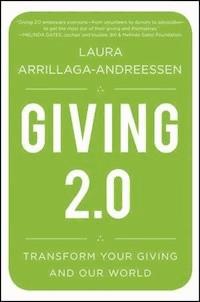
Gold Medal Winner; Philanthropy, Charities, and Nonprofits; 2012 Axiom Business Book Awards Giving 2.0 is the ultimate resource for anyone navigating the seemingly infinite ways one can give. The future of philanthropy is far more than just writing a check, and Giving 2.0 shows how individuals of every age and income level can harness the power of technology, collaboration, innovation, advocacy, and social entrepreneurship to take their giving to the next level and beyond. Major gifts may dominate headlines, but the majority of giving still comes from individual households--ordinary people with extraordinary generosity. Even in 2009, at a time of deep recession, individual giving averaged almost $2,000 per household and drove 82% of the $300 billion donated that same year. Based on her vast experience as a philanthropist, academic, volunteer, and social innovator, Arrillaga-Andreessen shares the most effective techniques she herself pilots and studies and a vast portfolio of lessons learned during her lifetime of giving. Featuring dozens of stories on innovative and powerful methods of how individuals give time, money, and expertise--whether volunteering and fundraising, leveraging technology and social media, starting a giving circle, fund, foundation, or advocacy group, or aspiring to create greater social impact--Giving 2.0 shows readers how they can renew, improve, and expand their giving and reach their fullest potential. A practical, entertaining, and inspiring call to action, Giving 2.0 is an indispensable tool for anyone passionate about creating change in our world.
Sie lesen das E-Book in den Legimi-Apps auf:
Seitenzahl: 518
Veröffentlichungsjahr: 2011
Ähnliche



















Table of Contents
Cover
Praise for Giving 2.0
Title page
Copyright page
Dedication
INTRODUCTION
1 GIVING YOURSELF
A GIFT TO YOURSELF
THE VALUE OF COLLECTIVE PASSION
A BEAUTIFUL LIFE
GETTING OUT THERE
HANDS IN GLOVES
SEEK AND YOU WILL FIND
GETTING ON BOARD
WORKING FOR GOOD
MAKING IT HAPPEN
2 CONNECTING THE DROPS
THE POWER OF THE WEB
GIVING WITH DEEP ROOTS
SHRINKING THE WORLD
AN EVOLVING MODEL
INFORMED AND CONNECTED
MAKING IT HAPPEN
3 CHARTING A COURSE
THE POWER OF TEN
TAKING STOCK
MATCHING SOUL WITH STRUCTURE
BEFORE YOU WRITE THE CHECK
GLOBAL GIVING OPTIONS
AN EASIER WAY TO GIVE
MAKING IT HAPPEN
4 DETERMINING A DESTINATION
SAVING A LIFE OR MOVING A NEEDLE
SHAPING YOUR MEASUREMENT STRATEGY
CLOSING SOME DOORS, OPENING OTHERS
FROM THE TANGIBLE TO THE INTANGIBLE
THE GIFT OF KNOWLEDGE
MAKING IT HAPPEN
5 GAME CHANGERS
CHARITY MEETS A BUSINESS MODEL
FUNDING THE FUNDERS
INVESTMENTS WITH A DIFFERENCE
MORE THAN MONEY
POWER TO THE COPYCATS
MAKING IT HAPPEN
6 SOMETHING VENTURED
ENTER THE VENTURE PHILANTHROPISTS
LIFE AS AN ADVENTURE
GETTING TOGETHER TO GIVE
LEARN, BABY, LEARN!
PARTNERS IN SUCCESS
MAKING IT HAPPEN
7 CHANGING MINDS
GOING INTO BATTLE
LIKE WINNING THE LOTTERY
GIVING TO THE WORLD OF IDEAS
LEARNING TO THINK (AND DRESS) LIKE A PHILANTHROPIST
MEASUREMENT, COOPERATION, AND COLLABORATION
LOOKING THROUGH A LONGER LENS
MAKING IT HAPPEN
8 FAMILY MATTERS
PURPOSE AND PROCESS
FILLING BIG BOOTS
A RICH HERITAGE
YOU’RE NOT ALONE
LEAVING YOUR MARK
MAKING IT HAPPEN
9 IN THE TRENCHES
THE SOUL SEARCHING
THE POWER OF YOUR NETWORKS
GETTING DOWN TO BUSINESS
HELPING HATCH THE EGG
MOVING MOUNTAINS
MOVING ON
MAKING IT HAPPEN
EPILOGUE
APPENDIX I: CREATING YOUR GIVING JOURNAL
APPENDIX II: VEHICLES FOR GIVING
GIVING VEHICLES: KEY
APPENDIX III: RESOURCES FOR GIVING
APPENDIX IV: JARGON BUSTER
NOTE OF GRATITUDE
ABOUT THE AUTHOR
INDEX
Praise for Giving 2.0
“At last! This terrific book cuts through the jargon to demystify philanthropy, proving what’s possible when givers put their hearts and minds to issues that really matter. Laura Arrillaga-Andreessen’s profiles in great giving are beautifully rendered, her insights fresh and compelling, and her practical how-to’s pitch perfect. Giving 2.0 should become the indispensable guide for everyone who’s ready to make the most of what they have to give!”
—Sally Osberg, president and CEO, Skoll Foundation
“Through vignettes of individual and family philanthropists, Laura Arrillaga-Andreessen, a great philanthropist and leader in her own right, captures both the passion and the tough analysis and decision making necessary to turn that passion into results. In a highly engaging style, she covers the value of having clear goals for one’s own philanthropy; the importance of supporting an organization’s real needs, even for quotidian back-office functions; and how to undertake appropriate due diligence and evaluation. Giving 2.0 offers a bounty of valuable information for donors of all levels.”
—Paul Brest, president, William and Flora Hewlett Foundation, and coauthor, Money Well Spent
“Laura Arrillaga-Andreessen has made a great contribution to the philanthropy of this country, combining personal experience and passion with professional insight to create a deeply valuable resource that will help families throughout their philanthropic journeys. Giving 2.0 is a book that provides rich stories, inspiration, and information relevant to all as they continue to give generously of both time and money.”
—Carol Larson, president and CEO, Packard Foundation
“Giving 2.0 opens the door to a new era of philanthropy in which everyone, at every giving level, can combine new and innovative approaches with the power of the Internet to achieve positive social impact and personal joy, whether by helping their neighbors next door or across the world. It offers a rare perspective from one of philanthropy’s most thoughtful leaders that makes it essential reading for anyone who wants to make giving a meaningful part of his or her life.”
—Leslie Crutchfield and Mark Kramer, coauthors, Do More Than Give
“Research shows that happiness comes from spending time connecting with others, not just having or spending money. Giving 2.0 shows how connected the world is, and how to determine the role you’d like to play in changing the world. Whether donating time, money, skill, or voice, Giving 2.0 can show you how to gain greater happiness and fulfillment from your efforts.”
—Jennifer Aaker, coauthor, The Dragonfly Effect, and professor, Stanford Graduate School of Business
Copyright © 2012 by Great Giving LLC. All rights reserved.
Published by Jossey-Bass
A Wiley Imprint
989 Market Street, San Francisco, CA 94103-1741—www.josseybass.com
No part of this publication may be reproduced, stored in a retrieval system, or transmitted in any form or by any means, electronic, mechanical, photocopying, recording, scanning, or otherwise, except as permitted under Section 107 or 108 of the 1976 United States Copyright Act, without either the prior written permission of the publisher, or authorization through payment of the appropriate per-copy fee to the Copyright Clearance Center, Inc., 222 Rosewood Drive, Danvers, MA 01923, 978-750-8400, fax 978-646-8600, or on the Web at www.copyright.com. Requests to the publisher for permission should be addressed to the Permissions Department, John Wiley & Sons, Inc., 111 River Street, Hoboken, NJ 07030, 201-748-6011, fax 201-748-6008, or online at www.wiley.com/go/permissions.
The information in this book is based on the author’s personal experiences and does not constitute financial or legal advice. Readers should consult their financial and/or legal professionals regarding their individual strategies and goals. The author does not personally endorse any organization profiled in this book.
Limit of Liability/Disclaimer of Warranty: While the publisher and author have used their best efforts in preparing this book, they make no representations or warranties with respect to the accuracy or completeness of the contents of this book and specifically disclaim any implied warranties of merchantability or fitness for a particular purpose. No warranty may be created or extended by sales representatives or written sales materials. The advice and strategies contained herein may not be suitable for your situation. You should consult with a professional where appropriate. Neither the publisher nor author shall be liable for any loss of profit or any other commercial damages, including but not limited to special, incidental, consequential, or other damages. Readers should be aware that Internet Web sites offered as citations and/or sources for further information may have changed or disappeared between the time this was written and when it is read.
Jossey-Bass books and products are available through most bookstores. To contact Jossey-Bass directly call our Customer Care Department within the U.S. at 800-956-7739, outside the U.S. at 317-572-3986, or fax 317-572-4002.
Wiley also publishes its books in a variety of electronic formats and by print-on-demand. Not all content that is available in standard print versions of this book may appear or be packaged in all book formats. If you have purchased a version of this book that did not include media that is referenced by or accompanies a standard print version, you may request this media by visiting http://booksupport.wiley.com. For more information about Wiley products, visit us at www.wiley.com.
Library of Congress Cataloging-in-Publication Data
Arrillaga-Andreessen, Laura.
Giving 2.0 : transform your giving and our world / by Laura Arrillaga-Andreessen. —1st ed.
p. cm.
Includes bibliographical references and index.
ISBN 978-1-118-11940-2 (cloth); ISBN 978-1-118-14856-3 (ebk); ISBN 978-1-118-14857-0 (ebk); ISBN 978-1-118-14858-7 (ebk)
1. Charities. 2. Endowments. 3. Humanitarianism. 4. Social action. I. Title. II. Title: Giving two point zero.
HV48.A77 2012
361.7'4—dc23
2011029319
To the Givers
I love most in this world:
Marc Andreessen and John Arrillaga Sr.
I am who I am because of you.
For Frances Arrillaga
1940–1995
In celebration of a beautiful giving life
INTRODUCTION
A philanthropist is anyone who gives anything—time, money, experience, skills, and networks—in any amount to create a better world.
For all of us who give, there are moments, people, events, and experiences that prompt us to take action; that inspire us to live outside ourselves. When we are so moved, we can no longer stand back passively and watch injustice, cruelty, and inequality; we have to do something to make the world better.
My own first inspiration came from my family, and in particular my mother. Frances Arrillaga was my best friend, my mentor, my soul mate. In her living, she inspired me, and in her dying, she showed me a new life path. I took the tragedy of losing her and transformed it into my life’s greatest blessing—my giving.
Giving was more than a part of my mom’s life. It was her life. She sat on multiple nonprofit boards (serving as chairman on several of them). She co-founded two nonprofits and ran the family foundation she and my father created. With a radiant smile for everyone, she found it easy to recruit volunteers for causes and organizations she supported—but she’d never ask anyone to do anything she wouldn’t do herself. She had an astonishing sense of purpose, and she created an extraordinary community around her. Watching her on visits to local nonprofits was inspiring—everyone loved her. Seeing how she helped set up and build new organizations encouraged me to think that perhaps one day I could do the same. I saw how her light drew others to her side. I saw her purpose, her passion, and her peace. And I wanted to live the life she’d led—to share her purpose, her passion, and her peace.
The day my father, brother, and I learned of her illness, I quit my job, deferred my Stanford MBA, and stayed at home to take care of her. Watching my mom in unbearable pain, unable to do anything about it, was the hardest experience of my life. That’s when I learned the reality of human suffering and what it felt like to be completely powerless. Yet I also realized that while forces we cannot control may be ranged against us, they should never stop us from fighting on. What mattered, I discovered, was not achieving the next goal for myself, but making life better for those around me—whether I knew those people or not.
As my mom grew sicker, I became petrified. I felt horribly isolated and yet scared to ask for help, for fear of appearing weak. Then something happened. People came from all over our community to share how my mother had touched their lives. They brought homemade dinners, flowers from their gardens, prayers, and kindness. I discovered that in asking for help, I could give others the opportunity of doing something to help me—just as I was helping my mother.
Devoting myself to her care taught me how to live outside myself. Even in the worst hours of her suffering, my mother showed me, and those around her, grace, gratitude, and unconditional love. Through the terrible experience of losing her, I gained the deep understanding of suffering, compassion, humility, and selflessness that is the force behind my giving.
Her illness also taught me that passion, while driven by our hearts, must be supported by research, goals, and sound strategies. My family and I knew we had to do everything we could to fight her disease. Even if ultimately unsuccessful, our efforts might one day help save someone else’s life. Applying these lessons to my giving has been challenging—such moments of learning can be intensely painful as well as frustratingly difficult. But they’re also beautiful opportunities for transformation, because they give us fresh perspectives and take us on new paths in how we live and how we give.
Just twenty months after receiving her diagnosis, my mother was gone. But as hundreds of people—many of whom I’d never met—came forward to offer their condolences, I learned of her immense contribution to our world, of the selflessness with which she’d given her time and energy. And in those last days, I experienced a profound realization of the reason I was born into my family and what my future should hold. I made a promise—to her, to God, and to myself—that I would keep her light shining brightly, turning her pain and my grief into something positive, helping her spirit live on through me.
In doing so, I was not alone. For I’m blessed to be the daughter of two extraordinary philanthropists, and my father, John Arrillaga Sr., is one of his generation’s most generous. For more than two decades, he’s devoted at least half of his time to giving. He uses the expertise acquired through a career in real estate development to bring to fruition dozens of essential building projects for local schools, universities, and nonprofits. And with the profits from his business, he funds a huge portion of their general operating costs.
Since losing my mom, he and I have become the best of friends and effective partners in our family’s philanthropy. Every day, we get together or talk by phone about how he and I can do more to transform our world for good or about the giving plans I’m making with my husband, Marc. Sometimes we drive around to visit the sites of my father’s nonprofit building projects (he is famous for walking campuses and hallways and picking up any trash he finds along the way).
Intensely private and humble, my father has spent much of his life giving, permitting no acknowledgment of his tremendous generosity. He’s accepted only one of the countless philanthropic awards bestowed on him—Stanford University’s highest volunteer honor, the Uncommon Man Award. Even then he insisted that the awards dinner (an event attended usually by several hundred) should include just eight people (Stanford’s president and his wife, the provost and his wife, and our immediate family). His commitment to giving bonds us more closely, and his unconditional love has supported me in my philanthropic aspirations and actions.
My parents embody the philanthropic spirit at its finest, both individually and as one. Together, they created the Arrillaga Foundation, and together they contributed to countless causes. They were an incredible team, supporting each other’s efforts at every turn. My mom was the public face of their giving. My father was the silent force behind her volunteerism, supporting all her efforts, providing her with an essential platform of stability, resources, and love—support he now gives to me as I strive to live up to their shining examples.
My parents are my philanthropic heroes. Perhaps you feel the same about yours. Perhaps you, too, want to emulate their beliefs and values. Or it could be that you’re driven by other experiences; things that have touched you in a significant way—battling a disease, losing a loved one, caring for a sick child. You may have witnessed or experienced the horrors of domestic abuse, poverty, or discrimination. Or maybe your life was changed by something far from your own world—something you read in a newspaper article or saw in a disturbing television report.
What inspires you may also be positive—the peace and strength of a religious community or the natural beauty of a landscape. The generosity of a friend or colleague may have moved you, or a stranger may have funded your college scholarship. On any day of the week, you could have a conversation with someone or observe something that could change your giving path forever. Each of these moments represents an opportunity, a responsibility, and a privilege.
* * *
We give from the heart—our most powerful engine for action. And we give because it makes us feel good (in fact, medical tests have shown that giving stimulates a part of the brain that gives us the same gratification as when we eat food or have sex).1 We live in a frenetic world, with incessant demands on our time, money, and energy. At home we care for spouses and children and support aging parents; at work, we face constant pressure. Even when times toughen and wallets shrink, we stretch our resources to help those with even less. (In 2009, at a time of deep recession and personal hardship, annual individual giving in the U.S. still averaged almost $2,000 per household).2 But what never ceases to astound me is that through everything, one powerful, beautiful force persists: our giving. And why? Because giving feels good.
But feeling good in the moment doesn’t necessarily accomplish our greater goal—making the world a better place. Too often the warm glow that drives us to give is not backed by knowledge, research, and strategy. We write checks, but we rarely find out exactly how our money is used. We unknowingly waste resources—reinventing the wheel when we could be learning from others—and ultimately at the expense of those we are trying to help. As you probably already know, giving away money is easy—doing so effectively is much harder.
Today, while big problems demand increasingly complex solutions, the world’s philanthropic resources are ever more tightly stretched. We need to do more with less. We need to channel precious philanthropic resources into innovative ways of giving—learning constantly, partnering with others, pooling funds through collaborative giving, inventing new, entrepreneurial models of social investment, and applying more rigorous performance measurement to everything we do philanthropically. For between the signing of a check and the delivery of vaccinations to a family in Liberia or better education to low-income sixth graders in Detroit lies a complex set of decisions, strategies, and infrastructure, all of which contribute to the impact of the money itself.
It was the desire to help other philanthropists navigate these complexities that shaped my philanthropic path. For the past fifteen years I’ve been developing support systems and designing giving “products”—organizations, networks, and resources—that I hope will educate, empower, and inspire anyone who wants to give (myself included) to do so—and more effectively. This book is an important part of those efforts, and I plan to donate all of my royalties from its sales to charity.
My first big step on this philanthropic path came soon after my mom died. I knew I wanted to create an organization to support other philanthropists—but in the meantime, I needed support of my own. As I set out on this journey, I’d never felt so alone or unprepared. I had no idea where to start and, aside from some of the seasoned philanthropists I knew through my parents, I could find no community of givers with whom to share ideas, compare stories, and figure out how to proceed. There was no organization to join that could teach me (or the countless new potential philanthropists born of Silicon Valley’s 1990s technology revolution) how to give more strategically, how to pool resources for greater impact, and how to learn through doing. No gathering place existed where individuals like me could share passions and exchange ideas about what had or hadn’t worked. Like many individual donors, I felt frustrated and isolated.
So I decided to create a new organization—one through which philanthropists could get together and support each other while learning how to give more effectively and dive more deeply into certain social issues. I called it the Silicon Valley Social Venture Fund (SV2). In SV2, I wanted to help people make investments that were relatively small financially but big in terms of expanding their own skills. At SV2, donors (we call them partners) gain hands-on experience by working directly with nonprofit leaders and fellow philanthropists. We invest time in educating ourselves, bringing in field experts to talk about the issues we fund. We not only give and pool our money; we collaborate on grantmaking decisions and use our skills and knowledge to help the cutting-edge nonprofits we support become more effective and scale up their operations. The success of our partners in doing this sends a powerful message: you don’t need to donate huge dollars to have a huge impact.
The experience of setting up and running SV2—along with my volunteer and board service for a number of nonprofit organizations—gave me part of the grounding I needed to help my father steward our family’s philanthropic resources. However, this was just the beginning of my learning journey.
When Stanford Graduate School of Business (GSB) invited me to join its faculty in 2000, I embarked on a formal study of “strategic philanthropy.” Researching and teaching at Stanford has taken me deep into the world of individual giving, philanthropic foundations, venture philanthropy, corporate philanthropy, global social investing, and social innovation. Over the past decade, I’ve taught some amazing students, a few of whom have even gone on to found or run some of the organizations that appear in this book.
As I became immersed in the world of academia at Stanford and the world of practitioners in the professional philanthropic field, I was struck by the gap between the incredible knowledge and insights of my academic colleagues and the extraordinary generosity and vision of my philanthropic sector colleagues. To create a hub where these two communities could share their wisdom, I founded a new university center—Stanford PACS (Center on Philanthropy and Civil Society)—which I now chair.
Working as both a hands-on philanthropist and an academic, I’ve become what I call a pracademic—part practitioner, part scholar. And over the years, immersed in philanthropic pursuits, I’ve gained confidence in my abilities. But I often think of those early days, when I assumed everyone knew much more than I did and wondered how on earth I could ever gain enough knowledge and experience to be an effective philanthropist. Even with my Stanford education, I felt overwhelmed by how much material I needed to absorb. At board meetings, when I was often the youngest person in the room, I was reluctant to ask questions for fear of sounding hopelessly uninformed.
What I’ve learned, of course, is that there are no questions unworthy of asking—in fact, it’s a good thing to further your knowledge or challenge norms. And even though I’m sometimes still shy about asking for feedback and results from my gifts, I try to remember that it’s all part of empowering the nonprofits I fund to do better. Yet, fifteen years into my giving, I still feel that all philanthropists out there (myself included) could benefit from greater support—more knowledge about what works and what doesn’t; a resource from which they can learn about different issues and explore new models of giving; something to show us all not just how to make gifts that feel good but how to make a real difference with those gifts.
The result is this book, and the following chapters address the hundreds of questions that individual givers have asked me over the years about issues we’ve all faced. This book won’t tell you why to give (if you’ve started reading it, you already have a giving heart). But it will tell you how to give, and it will provide you tools with which to give more effectively.
Writing this book has transformed my own philanthropy from “giving 1.0” to “giving 2.0.” For me, it’s been a chance to renew, evolve, and reenergize my giving—to go from being reactive to proactive, to create a strategy that capitalizes on past giving experiences but also embraces new philanthropic activities. I hoped to tap into the amazing reach of the Web and overcome my fear of engaging in the world of social media. I wanted to deepen my exploration of volunteerism, different giving vehicles, social entrepreneurship, advocacy funding, and family foundation best practices. I aspired to have the impact of my giving go beyond the emotional rewards of the moment to something that would be intellectually and spiritually satisfying over the long term.
Over the course of my career, I’ve made gifts that were spectacular successes and ones that were miserable failures. I’ve made gifts whose impact I can measure accurately—and ones for which I couldn’t tell you what happened to the money if my life depended on it. But I’ve tried to learn from every experience. And when I look back on the timid, uncertain girl that I was when I started giving, I realize I’m much more optimistic, ambitious, and empowered today than I was back then.
Part of that empowerment has come to me through writing this book. Even as an experienced giver, the process of setting down the range of philanthropic options, formulating the right questions to ask, and coming up with tools for making gifts with greater impact has fueled my appetite to achieve more. It’s given me the courage to formulate plans that are much bolder than those I would have made even a few years ago. I hope it will do the same for you.
* * *
Giving 2.0 is a book for anyone who gives anything at all—money in any amount, time, skills, networks, or expertise. While you’ll find industry terms used throughout, it talks clearly and simply about different forms of giving. A “Jargon Buster” section at the end of the book demystifies the language that often makes the “strategic philanthropy” described in so many books seem intimidating. And because giving is so deeply personal, I present no formulas or mandates on how you should give. Instead, I offer up an ocean of possibilities for enhancing whatever path you choose to take, helping you design a giving life that’s suited to the way you live and expresses who you are.
Here’s how it works: each chapter takes you through a different form of giving, highlighting opportunities, considerations, and challenges. It explains how to define your aspirations, take stock, change direction, renew existing strategies, acquire critical skills, and create or participate in exciting new models of giving. It shows you how to maximize the impact of your gifts while strengthening your personal connection (the emotional force behind your generosity) to social transformation.
The “Making It Happen” section at every chapter’s end provides an extensive set of questions you can ask yourself and others, as well as suggestions and things to think about when considering the form of giving covered in the main text of the chapter. These sections will help you construct your goals and how you can go about achieving them. They’ll suggest ways of planning your giving, either alone or with your partner, spouse, friends, or children.
Since many volunteers and donors learn their values from their parents, each “Making It Happen” section also includes a component called “For the Family.” “For the Family” shows you how to instill these values in your children and how, through a host of different activities, you can pass philanthropic values down to future generations.
In Chapter Three, I show you how to start a giving journal to track your donations of time and money (an essential thing to do if you want to increase your impact). But I also refer to this journal at various points throughout the book, and Appendix I provides an extensive list of questions and suggestions to help you build your own giving journal. As you go through each chapter, the “Making It Happen” sections give you a portfolio of questions, ideas, and innovations to consider and apply to help you develop your journal, as well.
This book is itself a journey—early chapters focus on volunteering and direct giving, discussing what you can do to make gifts of time or money more rewarding for those you support and for yourself. Other chapters show you how to engage in collaborative giving, or how you can participate in exciting newer models of philanthropy that support entrepreneurs using market-based models to bring about lasting social change. Later chapters tackle more complex forms of philanthropy, such as setting up an unstaffed family foundation or embarking on advocacy. They also provide advice on things such as how to establish a board of directors or what to think about when considering starting a nonprofit.
Yet, no matter how straightforward or complex the type of philanthropy being examined in it, each chapter shows you how—even with just a few hundred dollars or hours of your time—you can participate. You may not, for example, have the wherewithal to engage in advocacy right now. Yet I’ll show how you can donate to organizations that are conducting advocacy, or go online and use social networking websites to create your own campaign for a cause you care about.
Some chapters feature forms of giving established decades ago—tried and tested models such as donor-advised funds, charitable trusts, and tithing. Yet while some systems for giving may have existed for more than a century, they may be new to you. Even if they’re familiar, you can adapt them to your current goals or use them as a way to set yourself more ambitious ones.
For better or worse, we all become creatures of habit, and I’m no exception. I’ve found that my own giving needs a reboot every few years. Sometimes I find myself funding organizations year after year without really knowing what work they’re doing, or giving reactively based on the requests of friends and family, rather than pursuing my own passions. At other times, the chaos of work and family life means I neglect my own philanthropic learning—something I always regret. Here’s where your giving journal can be a critical support tool. By keeping it up to date, you can keep yourself on track.
Throughout the book, you can also follow the giving journeys of the committed and talented individual philanthropists profiled in each chapter—how they found their passions, how they made their giving decisions, their first volunteering experiences, and what they did to make their philanthropy more meaningful and have more impact. These individuals don’t conform to the traditional image of a philanthropist—that of a wealthy older man making large gifts to prestigious institutions. Today, in fact, women play a leading role in philanthropy. In a 2009 national survey, almost half the women surveyed said they made the family’s decisions on which nonprofits to give to and how much to give, while more than 80 percent of men say they defer to their spouses on giving decisions.3
I believe that anyone who gives anything is a philanthropist. After all, the word itself derives from the Greek philanthropus, which translates as “love of humankind”—and there’s nothing in this definition to suggest we need to give away huge sums of money, if any money at all, to make a difference.
The women, men, and organizations featured in this book have been chosen not because they are necessarily more effective than others or because their causes are more important, but because together they illustrate this century’s true philanthropic community in all its glorious diversity. Some donate a few hundred dollars a year using online tools, while others give only their time and expertise. Some have joined forces, pooling their funds to give thousands of dollars collectively. Others tap into the expertise developed by professional foundations to make significant personal investments. A few have even established impressive nonprofits or philanthropic funds. All have married their passion with their knowledge.
Following their journeys will, I hope, help you think about your own. For me, however, their stories were just a beginning. Trying out ideas inspired by the stories of others is how I continue to develop my philanthropy. I hope you’ll do the same. In an age of “giving while living,” it’s a time to experiment, to renew existing forms of giving, and create new ones that are uniquely yours.
It’s also important to think of giving as an evolutionary process. I find it’s helpful to treat every gift not as an independent transaction but as a single note that contributes to a lifelong symphony of philanthropic action—a whole greater than the sum of its parts. And whether you’re giving money, time, skills, or compassion, the opportunities you’ll encounter at different times come with varying levels of complexity—each of which you may embrace at certain stages in your life. Things that worked at one time may not be appropriate at another. Your passions may turn you on to one cause early on in life, while another draws your attention later. You might start modestly, giving to a nonprofit whose work you admire, and intensify your impact by serving on its board. You might even decide to found your own philanthropic or nonprofit organization.
So when do you begin this journey? When do you start acquiring the knowledge needed to enhance your giving? When should you think about doing more with your time and skills? When should you stop simply worrying about the world’s problems and start looking for innovative ways of helping solve them? When should you renew or even reinvent your giving? The answer to all these questions is the same—NOW. If you can manage your personal financial investments more effectively, you can manage your philanthropic ones more effectively, too. If you’re able to learn from what you read in books or online, you have the ability to learn more about how to have a bigger impact. We can all do more to support people who strive to solve the world’s problems and even to help develop those solutions ourselves. We can all transform our giving for the better—let’s start right now.
——————— ∴ ———————
One final note: Throughout the book, whenever you see a Web logo in the margin of this book (as in the margin here), please visit the Giving 2.0 website: www.giving2.com. There you will find direct links to (and in some cases additional information on) the organizations featured in this book, as well as ongoing updates on developments in the world of individual giving. This site will serve as a living, evolving hub, hosting giving blogs (mine and those of inspiring individuals and other philanthropic leaders), interviews, and videos, as well as providing updated references. The Giving 2.0 website also will host a wide range of links to organizations, articles, books, publications, and other resources to use for inspiration, education, action, and community. A section dedicated entirely to this book will have a chapter-by-chapter breakdown for related ideas, resources, and links to help take your giving to the next level. This site will also serve as an online community for philanthropists at all levels to meet and share information—a virtual home for givers globally.
Notes
1. “A team including Dr. Jorge Moll of the National Institutes of Health found that when a research subject was encouraged to think of giving money to a charity, parts of the brain lit up that are normally associated with selfish pleasures like eating or sex.” Nicholas Kristof, “Our Basic Human Pleasures: Food, Sex and Giving,” New York Times, January 16, 2010.
2. Data on household giving per the Center on Philanthropy at Indiana University, cited in the American Express Charitable Gift Survey, Fall 2007: http://www.philanthropy.iupui.edu/research/giving_fundraising_research.aspx.
3. Fidelity Charitable Gift Fund, 2009, described in “Women Take the Lead in Couples’ Charitable-Giving Decisions,” Chronicle of Philanthropy, May 19, 2009.
1
GIVING YOURSELF
A Donation More Valuable Than Money
Jump in and engage—add value by giving your time, experience, skills, and networks.
Giving is a universal opportunity. Regardless of your age, profession, religion, income bracket, and background, you have the capacity to create change. Everything you do, from spontaneous acts of kindness to an hour of your time, constitutes how you give. Indeed, making a gift of time, coupled with expertise and compassion, is a powerful way to make a positive impact on our world.
Lesen Sie weiter in der vollständigen Ausgabe!
Lesen Sie weiter in der vollständigen Ausgabe!
Lesen Sie weiter in der vollständigen Ausgabe!
Lesen Sie weiter in der vollständigen Ausgabe!
Lesen Sie weiter in der vollständigen Ausgabe!
Lesen Sie weiter in der vollständigen Ausgabe!
Lesen Sie weiter in der vollständigen Ausgabe!
Lesen Sie weiter in der vollständigen Ausgabe!
Lesen Sie weiter in der vollständigen Ausgabe!
Lesen Sie weiter in der vollständigen Ausgabe!
Lesen Sie weiter in der vollständigen Ausgabe!
Lesen Sie weiter in der vollständigen Ausgabe!
Lesen Sie weiter in der vollständigen Ausgabe!
Lesen Sie weiter in der vollständigen Ausgabe!
Lesen Sie weiter in der vollständigen Ausgabe!
Lesen Sie weiter in der vollständigen Ausgabe!




