


176,99 €
Mehr erfahren.
- Herausgeber: John Wiley & Sons
- Kategorie: Fachliteratur
- Sprache: Englisch
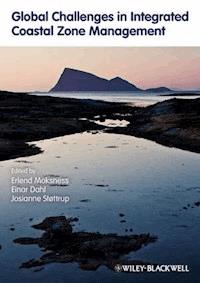
Growing pressure from increasingly diverse human activities coupled with climate change impacts threaten the functional integrity of coastal ecosystems around the globe. A multi-disciplinary approach towards understanding drivers, pressures and impacts in the coastal zone requires effective integration of data and information in policy and management, combining expertise from nature and social science, to reach a balanced and sustainable development of the coastal zone.
This important book comprises the proceedings of The International Symposium on Integrated Coastal Zone Management, which took place in Arendal, Norway between 3-7 July 2011. The main objective of the Symposium was to present current knowledge and to address issues on advice and management related to the coastal zone. The major themes of papers included in this book are:
- Coastal habitats and ecosystem services
- Adaptation/mitigation to change in coastal systems
- Coastal governance
- Linking science and management
Comprising a huge wealth of information, this timely and well-edited volume is essential reading for all those involved in coastal zone management around the globe. All libraries in research establishments and universities where marine, aquatic and environmental sciences, and fisheries and aquatic sciences are studied and taught will need copies of this important volume on their shelves.
Sie lesen das E-Book in den Legimi-Apps auf:
Seitenzahl: 502
Veröffentlichungsjahr: 2012
Ähnliche



















Contents
Cover Page
Title Page
Copyright
About the Editors
Contributors
Referees
Preface
Chapter 1: The Role of Science in the Transition to Sustainability: the Systems Approach Framework for Integrated Coastal Zone Management
1.1 Introduction
1.2 SAF methodology
1.3 Results
1.4 Discussion
1.5 Conclusions
Acknowledgements
References
Section 1: Coastal Habitats and Ecosystem Services
Chapter 2: The Norwegian Programme for Mapping of Marine Habitats – Providing Knowledge and Maps for ICZMP
2.1 Introduction
2.2 Mapped habitats and key areas
2.3 Methods used and main findings
2.4 Linking science and management and making data available for spatial planning
Acknowledgements
References
Chapter 3: Monitoring Ecological Quality of Coastal Waters by the Nature Index (NI) – an Integrated Measure of Biodiversity
3.1 Introduction
3.2 Concepts and calculations of the Nature Index (NI)
3.3 Indicators for coastal waters
3.4 Status and trends in coastal waters
3.5 Discussion
3.6 Conclusions and perspectives
Acknowledgements
References
Chapter 4: The Scomberomorus brasiliensis Gill-net Production System in Northern Brazil; an “Invisible” and Mismanaged Small-scale Fishery
4.1 Introduction
4.2 Methods
4.3 Results
4.4 Discussion
Acknowledgements
References
Chapter 5: A Combination of Seagrass and Macroalgal Beds Enhances Survival of Young-of-the-Year Rockfish Sebastes Cheni
5.1 Introduction
5.2 Methods
5.3 Results
5.4 Discussion
Acknowledgments
References
Section 2: Adaptation/Mitigation to Change in Coastal Systems
Chapter 6: Natural Resource Potential of Macroalgae Harvesting in the Baltic Sea—Case Study Trelleborg, Sweden
6.1 Introduction
6.2 Methods
6.3 Results
6.4 Discussion
6.5 Conclusions
Acknowledgements
References
Chapter 7: Conserving Mangrove Ecosystem for Climate Change Adaptation in the Ganges Basin
7.1 Introduction
7.2 Methods
7.3 Results
7.4 Discussion
7.5 Conclusion
References
Chapter 8: Monitoring Humpback Whale (Megaptera novaeangliae) Behaviour in a Highly Urbanised Coastline: Gold Coast, Australia
8.1 Introduction
8.2 Methods
8.3 Results
8.4 Discussion
8.5 Conclusions
Acknowledgements
References
Section 3: Coastal Governance
Chapter 9: An Overview of the Implementation of SAF Methodology Regarding the Stakeholder Response, in the Mussel-Farming Area of Chalastra, Thermaikos Gulf
9.1 Introduction
9.2 Study area and policy-issue
9.3 Methods
9.4 Results
9.5 Discussion
References
Chapter 10: Knowledge Issues in ICZM and EBM Applied on Small Geographic Scales: Lessons from a Case Study in Risor, Norway
10.1 Introduction
10.2 ICZM and EBM – complementary or competing?
10.3 The SPICOSA project
10.4 The Risr case study
10.5 Top-down requirements
10.6 The quality of the knowledge
10.7 The communication of the knowledge
10.8 Applicability of knowledge
10.9 The call for interdisciplinary and methodological brinkmanship
10.10 Five concluding lessons
Acknowledgements
References
Chapter 11: Governance Systems for Marine Protected Areas in Ecuador
11.1 Introduction
11.2 Governance systems and participation in Ecuador's MPAs
11.3 Ecuador MPA governance systems analysed according to the IUCN governance matrix
11.4 Discussion
11.5 Conclusions
Acknowledgements
References
Chapter 12: The Battle for Space – the Position of Norwegian Aquaculture in Integrated Coastal Zone Planning
12.1 Introduction
12.2 A complicated planning system
12.3 Aquaculture: the new entrant in the coastal zone
12.4 From first to third generation of aquaculture farming
12.5 How much space is occupied by the aquaculture industry?
12.6 How to get access to more space?
12.7 “No pay, no cure”– on the use of area or production fees
12.8 No shortcut to progress
References
Section 4: Linking Science and Management
Chapter 13: Integrated Coastal Zone Management – Preview and Evaluation of its Application on the Coast of Cyprus
13.1 Introduction
13.2 Analysis of the major stakes and challenges for the coastal zone
13.3 Coastal pollution evaluation
13.4 Erosion
13.5 Coastal development in Cyprus – land uses
13.6 The ‘urban metabolism’ issue
13.7 Conclusions
References
Chapter 14: Framing a ‘Post-Normal’ Science–Policy Interface for Integrated Coastal Zone Management
14.1 Introduction
14.2 The science–policy interface as an institution for coastal governance
14.3 Exploring a post-normal science–policy interface in practice
14.4 Lessons from the empirical studies
14.5 Conclusion
References
Chapter 15: Co-Learning in Marine Protected Areas for Integrated Coastal Zone Management
15.1 Introduction
15.2 Community involvement in marine protected areas
15.3 Conceptual framework
15.4 Adaptive learning, management and governance issues in MPA management
15.5 Integration, participation and network
15.6 Stakeholder dynamics in MPA management
15.7 Co-learning framework
15.8 Conclusion
Acknowledgements
References
Chapter 16: Reflexively Mapping the Science–Policy Interface for Coastal Zones
16.1 Introduction
16.2 A science–policy interface for coastal zones
16.3 A reflexive deliberation support tool for coastal zones: the ‘science–policy map’
16.4 Conclusion
References
Chapter 17: Bridging the Science–Policy Divide in the Coastal Zone: Is There a Role for Learning Processes?
17.1 Introduction
17.2 Key questions
17.3 Learning – what is it?
17.4 Learning and coastal management
17.5 Looking forward: a learning framework
17.6 Summary: what does this mean for coasts?
Acknowledgements
References
Chapter 18: Perspectives of Social and Ecological Systems
18.1 Introduction
18.2 Coastal Zone systems
18.3 Ethics
18.4 Systems
18.5 A unified view of social–ecological systems
18.6 Discussion
18.7 Conclusions
18.8 Appendix
References
Index
This edition first published 2013 © 2013 by John Wiley & Sons, Ltd
Wiley-Blackwell is an imprint of John Wiley & Sons, formed by the merger of Wiley’s global Scientific, Technical and Medical business with Blackwell Publishing.
Registered office: John Wiley & Sons, Ltd, The Atrium, Southern Gate, Chichester,West Sussex, PO19 8SQ, UK
Editorial offices: 9600 Garsington Road, Oxford, OX4 2DQ, UKThe Atrium, Southern Gate, Chichester, West Sussex, PO19 8SQ, UK2121 State Avenue, Ames, Iowa 50014-8300, USA
For details of our global editorial offices, for customer services and for information about how to apply for permission to reuse the copyright material in this book please see our website at www.wiley.com/wiley-blackwell.
The right of the author to be identified as the author of this work has been asserted in accordance with the UK Copyright, Designs and Patents Act 1988.
All rights reserved. No part of this publication may be reproduced, stored in a retrieval system, or transmitted, in any form or by any means, electronic, mechanical, photocopying, recording or otherwise, except as permitted by the UK Copyright, Designs and Patents Act 1988, without the prior permission of the publisher.
Designations used by companies to distinguish their products are often claimed as trademarks. All brand names and product names used in this book are trade names, service marks, trademarks or registered trademarks of their respective owners. The publisher is not associated with any product or vendor mentioned in this book. This publication is designed to provide accurate and authoritative information in regard to the subject matter covered. It is sold on the understanding that the publisher is not engaged in rendering professional services. If professional advice or other expert assistance is required, the services of a competent professional should be sought.
Limit of Liability/Disclaimer of Warranty: While the publisher and author have used their best efforts in preparing this book, they make no representations or warranties with the respect to the accuracy or completeness of the contents of this book and specifically disclaim any implied warranties of merchantability or fitness for a particular purpose. It is sold on the understanding that the publisher is not engaged in rendering professional services and neither the publisher nor the author shall be liable for damages arising herefrom. If professional advice or other expert assistance is required, the services of a competent professional should be sought.
Library of Congress Cataloging-in-Publication Data
Global challenges in integrated coastal zone management / edited by Erlend Moksness, Einar Dahl, and Josianne Støttrup. pages cm Includes bibliographical references and index. ISBN 978-0-470-65756-0 (hardback: alk. paper) – ISBN 978-1-118-49648-0 (obook) (print) – ISBN 978-1-118-49649-7 (mobi) (print) – ISBN 978-1-118-49650-3 (epdf/ebook) (print) – ISBN 978-1-118-49651-0 (epub) (print) 1. Coastal zone management–International cooperation. I. Moksness, Erlend, editor of compilation. II. Dahl, Einar, editor of compilation. III. Stttrup, Josianne G., 1955– editor of compilation. HT391.G544 2013 333.91′7–dc23 2012030609
A catalogue record for this book is available from the British Library.
Wiley also publishes its books in a variety of electronic formats. Some content that appears in print may not be available in electronic books.
Cover image: ystein Paulsen, Institute of Marine Research, Norway
Cover design: www.hisandherdesign.co.uk
About the Editors
Einar Dahl is the head of the Coastal Zone Ecosystem Programme at the Institute of Marine Research (IMR) in Norway. His expertise is originally on phytoplankton taxonomy and ecology. His research has mainly been on harmful phytoplankton species, and possible causes to harmful blooms. More recently he has been working with coastal zone ecology in a broader perspective, including the implementation of the EU's Water frame directive. He has contributed to about 50 papers in peer review journals.
Erlend Moksness is a Research Director at the Institute of Marine Research (IMR) in Norway. He has been responsible for establishing a research and management advice programme on the coastal zone ecosystem at the same institute. His background is in recruitment in marine fish, fish ageing, stock enhancement of marine fishes and aquaculture of marine fishes. He has published more than 100 scientific articles and has been co-editor of 11 proceedings and scientific books.
Josianne Støttrup PhD is a senior scientist at National Institute of Aquatic Resources (DTU Aqua, previously Danish Institute for Fisheries Research) since 1984. Her research focus has been on marine larval nutrition initially, but evolved to coastal juvenile fish habitats, flatfish ecology and more recently to integrated coastal management. She has led the marine coastal fisheries management programme since 1994 and now heads the Section of Coastal Ecology.
Contributors
Maurizio Ribera d'Alcalà, Stazione Zoologica Anton Dohrn, 80121 Napoli, Italy
R. Babcock, Marine and Atmospheric Research, Commonwealth Scientific and Industrial Research Organization (CSIRO), 233 Middle Street, Cleveland, QLD 4163, Australia
Denis Bailly, Université de Bretagne Occidentale, UMR AMURE, Centre IFREMER de Bretagne, 29280 Plouzané, France
Trine Bekkby, Norwegian institute for Water Research, Gaustadalléen 21, NO-0349 Oslo, Norway
Robert Bensted-Smith, Fauna & Flora International, Alemania N31-118 y Mariana de Jesús, Apt 3b, Quito, Ecuador
Bianca S. Bentes, Universidade Federal do Pará, Instituto de Estudos Costeiros, IECOS – UFPA. Al. Leandro Ribeiro, s/n, Aldeia, CEP: 68600-000 Bragança – PA, Brazil
Anne Blanchard, Centre for the Study of the Sciences and the Humanities, University of Bergen, P.O. Box 7805, NO-5020 Bergen, Norway
Torjan Bodvin, Institute of Marine Research, Fldevigen Marine Research Station, NO-4817 His, Norway
Reidulv Be, Geological Survey of Norway, P.O. Box 6315 Sluppen, NO-7491, Trondheim, Norway
Nils Brandt, Teknikringen 34, Department of Industrial Ecology, KTH, SE-100 44, Stockholm, Sweden
Scott Bremer, Centre for the Study of the Science and the Humanities, University of Bergen, P.O. Box 7805, NO-5020, Bergen, Norway
R.W. (Bill) Carter, Associate Professor, Heritage Resource Management, Associate Director, Sustainability Research Centre, Co-editor, Australasian Journal of Environmental Management, University of the Sunshine Coast, Maroochydore, DC, QLD 4558, Australia
Grégoire Certain, Norwegian Institute for Nature Research (NINA), NO-7485 Trondheim, Norway. Present address: Institute of Marine Research (IMR), Troms, Norway
Sigurd H. Espeland, Institute of Marine Research, Fldevigen Marine Research Station, NO-4817 His, Norway
Marta Estrada, Institut de Ciències del Mar (CSIC), 08003 Barcelona, Spain
Vincent Gravez, Fundación Futuro Latinoamericano, Guipuzcoa E16-02 y Av. Coruña, Casilla 17-17-558, Quito, Ecuador
Ellen S. Grefsrud, Institute of Marine Research, P.O. Box 1870, NO-5817 Bergen, Norway
Taylor Gregoire-Wright, Yale University, USA
Fredrik Gröndahl, Teknikringen 34, Department of Industrial Ecology, KTH, SE-100 44, Stockholm, Sweden
Nick Harvey, Faculty of Humanities and Social Sciences, University of Adelaide, South Australia, 5005, Australia
Bjrn Hersoug, The Norwegian College of Fishery Science, University of Troms, NO-9037 Troms, Norway
Pippa Heylings, Fundación Futuro Latinoamericano, Guipuzcoa E16-02 y Av. Coruña, Casilla 17-17-558, Quito, Ecuador
Tom Sawyer Hopkins, Instituto per l'Ambiente Marino Costiero (CNR), 80133 Napoli, Italy: Dept. MEAS, North Carolina State University, Raleigh, North Carolina, USA
M. Shahadat Hossain, Institute of Marine Sciences and Fisheries, University of Chittagong, Chittagong 4331, Bangladesh
Victoria J. Isaac, Laboratório de Biologia Pesqueira e Manejo de Recursos Aquáticos, Federal University of Pará, Belém, Avenida Perimetral 2651, CEP 66077 830 Belém, PA, Brazil
Nina M. Jrgensen, Akvaplan-niva, Fram Centre, NO-9296 Troms, Norway
Yasuhiro Kamimura, Takehara Fisheries Research Laboratory, Hiroshima University, 5-8-1 Minato-machi, Takehara, Hiroshima 725-0024, Japan
Nicholas Kathijotes, International Ocean Institute (Cyprus) FP, Professor, Department of Civil Engineering and Geodesy, Cyprus University of Technology, Limassol, Cyprus CY3036
Zoi I. Konstantinou, Division of Hydraulics & Environment, Department of Civil Engineering, Aristotle University of Thessaloniki, 54124, Greece
Yannis N. Krestenitis, Division of Hydraulics & Environment, Department of Civil Engineering, Aristotle University of Thessaloniki, 54124, Greece
Flávia Lucena-Frédou, Universidade Federal Rural de Pernambuco – UFRPE, Departamento de Pesca e Aqüicultura – DEPAQ. Rua Dom Manoel de Medeiros, s/n, Dois Irmãos - CEP: 52171-900 - Recife/PE, Brazil
Maria E. Malmström, Teknikringen 34, Department of Industrial Ecology, KTH, SE-100 44, Stockholm, Sweden
Loraine McFadden, Flood Hazard Research Centre, Middlesex University, London, NW4 4BT, U.K.
Gro I. van der Meeren, Institute of Marine Research, Austevoll Research Station, NO-5392 Storeb, Norway
Anne Mette, KMGNE, Reichenberger Strasse 150, 10999 Berlin, Germany
Jan-Olaf Meynecke, Humpbacks and High-Rises Inc. Gold Coast 4222 and Australian Rivers Institute, Gold Coast 4222 Queensland, Australia
Eirik Mikkelsen, NORUT, P.O. Box 6434 Forskningsparken, NO-9294 Troms, Norway
Frithjof E. Moy, Institute of Marine Research, Fldevigen Marine Research Station, NO-4817 His, Norway
Erlend Moksness, Institute of Marine Research, Fldevigen Marine Research Station, NO-4817 His, Norway
Keila R.M. Mourão, Laboratório de Biologia Pesqueira e Manejo de Recursos Aquáticos, Federal University of Pará, Belém, Avenida Perimetral 2651, 66077 830 Belém, PA, Brazil
S. Myers, Sustainability Research Centre, University of the Sunshine Coast, Maroochydore, DC, QLD 4558, Australia
Melissa Nursey-Bray, Discipline of Geography, Environment and Population, University of Adelaide, South Australia, 5005 Australia
Signe Nyb, Norwegian Directorate for Nature Management, P.O. Box 5672 Sluppen, NO-7485 Trondheim, Norway/Norwegian Institute for Nature Research, NO-7485 Trondheim, Norway
Heidi Olsen, Geological Survey of Norway, P.O. Box 6315 Sluppen, NO-7491, Trondheim, Norway
Eivind Oug, Norwegian Institute for Water Research, Regional Office Srlandet, NO-4879 Grimstad, Norway
Athina Papatheodoulou, Environmental Consultant, 3 Nikonos Street, Limassol, Cyprus CY4044
Joseph Santhi Pechsiri, Teknikringen 34, Department of Industrial Ecology, KTH, SE-100 44, Stockholm, Sweden
Are Pedersen, Norwegian Institute for Water Research, Gaustadalléen 21, NO-0349 Oslo, Norway
Eli Rinde, Norwegian Institute for Water Research, Gaustadalléen 21, NO-0349 Oslo, Norway
Emma Risén, Teknikringen 34, Department of Industrial Ecology, KTH, SE-100 44, Stockholm, Sweden
Audun Sandberg, University of Nordland, Faculty of Social Science, NO-8049 Bod, Norway
Håkan T. Sandersen, University of Nordland, Faculty of Social Science, NO-8049 Bod, Norway
Roberto V.E. Santo, Instituto Federal de Educação, Ciência e Tecnologia do Pará- IFPA Campus Belém. Coordenação de Biologia, Av. Almirante Barroso, 1155. CEP: 66093-020. Belém/PA, Brazil.
Jun Shoji, Takehara Fisheries Research Laboratory, Hiroshima University, 5-8-1 Minato-machi, Takehara, Hiroshima 725-0024, Japan
Mohammad A.L Siddique, Sustainability Research Centre, University of the Sunshine Coast, Maroochydore, DC, QLD 4558, Australia and Upazila Fisheries Officer, Department of Fisheries, Bangladesh
T. Smith, Professor and Director, Sustainability Research Centre, University of the Sunshine Coast, Maroochydore, DC, QLD 4558, Australia
Henning Steen, Institute of Marine Research, Fldevigen Marine Research Station, NO-4817 His, Norway
Daniella Teixeira, Humpbacks and High-Rises Inc. Gold Coast 4222 Queensland, Australia
Paul Tett, Scottish Association for Marine Science, Scottish Marine Institute, Oban, PA37 1QA, U.K
Silje Vindenes, Griffith University, Griffith Centre for Coastal Management, Gold Coast 4222 Queensland and Sea World Whale Watch, Main Beach 4217, Australia
Jon Helge Vlstad, Institute of Marine Research, NO-5817 Bergen, Norway
S. Zafrin, Sustainability Research Centre, University of the Sunshine Coast, Maroochydore, DC, QLD 4558, Australia
Referees
Colin Attwood, University of Cape Town, RSA
Dagný Arnarsdóttir, University Centre of the West Fjords, Iceland
Gulsen Avaz, TUBITAK MRC Environment Institute, Turkey
Trine Bekkby, Norwegian Institute for Water Research, Norway
Anne Blanchard, Centre for the Study of the Sciences and the Humanities, Norway
Peter R. Burbridge, The Orchard, House of Ross, Comrie, Perthshire PH6 2JS, Scotland
Donata Melaku Canu, The National Institute of Oceanography and Experimental, Italy
Hartvig Christie, Norwegian Institute for Water Research, Norway
Franciscus Colijn, Institut für Küstenforschung, Germany
Ragnar Elmgren, Stockholm University, Sweden
Ola Flåten, University of Troms, Norway
Jan Helge Fosså, Institute of Marine Research, Norway
Nici Gibbs, New Zealand Seafood Industry Council, New Zealand
Harald Gjsæter, Institute of Marine Research, Norway
Jakob Gjsæter, Institute of Marine Research, Norway
Alf Håkon Hoel, Institute of Marine Research, Norway
Thomas Sawyer Hopkins, Institute for the Coastal Marine Environment, Italy
Tore Haug, Institute of Marine Research, Norway
Frank Jacobsen, Directorate of Fisheries, Norway
Svein Jentoft, University of Troms, Norway
Silvia de Juan, ICM-CSIC, Spain
Michel Lample, UBO-AMURE Centre IFREMER de Bretagne, France
Finn Larsen, National Institute of Aquatic Resources, Denmark
Cathrine Legrand, Linnæus University, weden
Rachel Long, Saint Mary's University, Canada
Merle Looring, University of Tartu Pärnu College, Estonia
Patrick McConney, University of the West Indies (UWI), Barbados
Anne Mette, Kolleg fuer Management und Gestaltung nachhaltiger Entwicklung gGmbH, Germany
Jan-Olaf Meynecke, Australian Rivers Institute, Australia
Rosita Mileriene, Coastal Research and Planning Institute, Klaipeda University, Lithuania
Even Moland, Institute of Marine Research, Norway
Frithjof Moy, Institute of Marine Research, Norway
Melissa Nursey-Bray, University of Adelaide, Australia
Tor Næsje, Norwegian Institute for Nature Research – NINA, Norway
Dimitri Pavlov, Moscow State University, Russia
Sren Anker Pedersen, International Council for the Exploration of the Sea, Denmark
Nicole Pelton, University of Adelaide, Australia
Alf Ring Kleiven, Institute of Marine Research, Norway
Russell G. Richards, Griffith University, Australia
Audun Sandberg, University of Nordland, Norway
Jan Henrik Sandberg, Norges Fiskarlag, Norway
Håkan T. Sandersen, University of Nordland, Norway
Rafael Sardá, Institut de Ciències del Mar (CSIC), Spain
Jun Shoji, Takehara Fisheries Research Station, Japan
Henning Steen, Institute of Marine Research, Norway
Knut Stokke, Norwegian University of Life Sciences, Norway
Paul Tett, Scottish Association for Marine Science, Scotland
Arild Vatn, Norwegian University of Life Sciences, Norway
Jon Helge Vlstad, Institute of Marine Research, Norway
Victor Øiestad, Post-box 72, Es-36620 Vilanova de, Arousa, Spain
Preface
The Second International Symposium on Integrated Coastal Zone Management took place in Arendal, Norway between 3 and 7 July 2011. The main objective of the Symposium ‘Integrated Coastal Zone Management’ was to present current knowledge and to address issues on advice and management related to the coastal zone.
This international multidisciplinary conference intended to promote science and integration of knowledge for the sustainable management of coastal resources. It provided a venue for scientists, engineers, managers and policy-makers to discuss recent advances and innovative ideas, share experiences and develop networks. A total of 131 persons (including 19 students) from 31 countries participated in the symposium (Australia, Bangladesh, Brazil, Canada, Cuba, Cyprus, Denmark, Estonia, France, Germany, Greece, Iceland, India, Indonesia, Iran, Italy, Japan, Lithuania, Malaysia, New Zealand, Norway, Portugal, Republic of Korea, Russia, Spain, Sweden, The Netherlands, Turkey, UK, USA). The symposium offered financial support to 17 persons from 11 countries: Australia (1), Bangladesh (2), Brazil (1), Canada (1), Cuba (2), India (2), Iran (2), Malaysia (1), Philippines (2), Russia (3), and USA (1). Many of the conference participants (and several of the presentations given) were from the EU integrated project ‘SPICOSA’ (www.spicosa.eu). The project developed a ‘System Approach Framework’ (SAF), which aims at incorporating the ecological, social and economic dimensions for the assessment of policy options for the sustainable management of complex coastal zone systems. The project involved 54 partners and encompassed 18 study site applications, whereby the SAF was tested in different geomorphologic systems, governance structures, cultural conditions and economic characteristics.
During the Symposium, a total of 133 presentations (8 key-note, 55 oral and 70 posters) addressed issues within the following four themes:
Coastal habitats and ecosystem servicesAdaptation/mitigation to change in coastal systemsCoastal governanceLinking science and managementCoastal waters around the globe suffer from strain due to a wide range of human activities. The situation calls for a holistic approach, combining expertise from nature and socio-economic sciences, to reach a balanced and sustainable development of the coastal zone. The concept Integrated Coastal Zone Management (ICZM) was born in 1992 during the United Nations Conference on Environment and Development (UNCED). ICZM is defined as a decision-making process focused on sustainable use, development and protection of seaside terrestrial and coastal marine areas and their resources, in continuous realization. The coastal zone includes both coastal waters and the part of land separating the marine and terrestrial environment. The coastal zone thus offers a myriad of goods and services ranging from production to protection. Despite its relatively small coverage in percentage of global surface area, this zone is highly productive and sustains a high biodiversity.
Growing pressure from increasingly diverse human activities coupled with climate change impacts threaten the functional integrity of these coastal ecosystems. A multidisciplinary approach towards understanding drivers, pressures and impacts in the coastal zone requires effective integration of data and information in policy and management. Competing claims to the coastal areas of a given nation are nothing new, but they are likely to intensify in the future. Currently, about 60% of the world population lives within 60 km of the coast, but at the current rate of growth, this percentage is predicted to increase to 75% within just two decades. In addition, tourism is growing in importance worldwide, adding its share of pressure on the coastal zone and increasing pressure on these coastal resources. Aquaculture, yet another competitor for coastal resources, is also on the increase as capture fisheries stagnate or decline globally. Competition for resources can result in either cooperative or conflicting responses. In the case of coastal resources, the expansion of the aquaculture industry represents the reallocation of common pool resources such as coastal and sea areas in to private hands – converting once common areas into private areas from which others are excluded. In addition, aquaculture carries the potential to impact those resources that remain held in common – wild fish stocks, the seascape and the coastline. The specific mechanisms for handling distribution of coastal goods are to be found within the institutions that exist for ICZM. One key idea behind the concept of ICZM is to create cooperative management solutions for the use of the areas, making them both politically as well as ecologically sustainable. A range of plans may be ecologically sustainable, but for any plan to work, stakeholders must be invested in it. This implies that stakeholders, whether they are local fishermen or local municipalities, have access to and understand the problems and issues with which they are confronted and the choices with which they are faced.
One of the prominent key-note speakers at the conference, Professor Tom Hopkins, science coordinator of SPICOSA, asked why we are moving too slowly towards Sustainability. The answer to the question, of who is responsible for Sustainable Development, is no one and everyone. This may give us a clue as to why we won't get there in time. We are starting to study complex human systems and we know that they have the capacity to reorganize to lower entropic states and that this capacity depends on the health and diversity of its components. The unfortunate reality is instead that these systems are degrading to higher entropic states. We know some scenarios of change that could make the degradation worse, but we don't seem to have any complete scenarios that would reverse this degradation trend. This is where everyone comes in and everyone needs to cooperate. The chain of interacting components that constitutes the circle of responsibility necessary for a sustainable society may start or end with appropriate science and public awareness, but in between there is a lot of inertia against change in the societal components that needs to be overcome in order to make the cycle complete. According to Professor Hopkins, the SPICOSA project has arguably demonstrated a method by which science might help jump-start this reorganization process. It would require accelerating two coupled trends that are already in place, an expansion to complex systems science, and a more interactive role between science and society. To provide specific material for this discussion, Professor Hopkins presented how the ‘systems approach’ was applied to policy issues in eighteen European coastal sites and what was learned about how scientific research, coupled with local societies, can better address coastal issues and guide coastal management for the transition to Sustainable Development.
The strength of the first and present symposium was that there were no parallel sessions, resulting in that all participants had to learn from each other independent of their own background and interest. This resulted in a wide thematic spread, from microalgae to big whales within natural science, governance issues, stakeholder interactions and socioeconomic issues.
Chapter 1
The Role of Science in the Transition to Sustainability: the Systems Approach Framework for Integrated Coastal Zone Management
Tom Sawyer Hopkins and Denis Bailly
Abstract
Sustainability science is emerging as the transdisciplinary research field that provides the information and technical support needed for sustainable development (SD). It has complex and far reaching implications for research and for society. SD is a learning process that requires difficult social changes in paradigms and behaviors. This process involves a circle of responsibility that must start and continue with public awareness, appropriate science, and supporting leadership. In this chapter we present perspectives gained, through the development of the Systems Approach Framework (SAF) SPICOSA project, that emphasize the need to accelerate two coupled research trends already initiated: an expansion to complex systems science, and a strong participatory role between science and society. We present how the SAF was applied to policy issues in eighteen European coastal sites and what was learned about how scientific research, coupled with local societies, can better address coastal issues, and guide integrated coastal zone management in the transition to sustainable development.
Lesen Sie weiter in der vollständigen Ausgabe!
Lesen Sie weiter in der vollständigen Ausgabe!
Lesen Sie weiter in der vollständigen Ausgabe!
Lesen Sie weiter in der vollständigen Ausgabe!
Lesen Sie weiter in der vollständigen Ausgabe!
Lesen Sie weiter in der vollständigen Ausgabe!
Lesen Sie weiter in der vollständigen Ausgabe!
Lesen Sie weiter in der vollständigen Ausgabe!
Lesen Sie weiter in der vollständigen Ausgabe!
Lesen Sie weiter in der vollständigen Ausgabe!
Lesen Sie weiter in der vollständigen Ausgabe!
Lesen Sie weiter in der vollständigen Ausgabe!
Lesen Sie weiter in der vollständigen Ausgabe!
Lesen Sie weiter in der vollständigen Ausgabe!
Lesen Sie weiter in der vollständigen Ausgabe!
Lesen Sie weiter in der vollständigen Ausgabe!
Lesen Sie weiter in der vollständigen Ausgabe!
Lesen Sie weiter in der vollständigen Ausgabe!
Lesen Sie weiter in der vollständigen Ausgabe!
Lesen Sie weiter in der vollständigen Ausgabe!
Lesen Sie weiter in der vollständigen Ausgabe!
Lesen Sie weiter in der vollständigen Ausgabe!




