


38,99 €
Mehr erfahren.
- Herausgeber: John Wiley & Sons
- Kategorie: Fachliteratur
- Serie: Wiley Finance Editions
- Sprache: Englisch
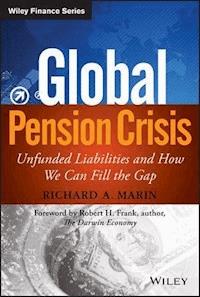
A comprehensive look at the crisis of unfunded pension liabilities and what must be done to avoid the same problem in the future As the generational bubble of the Baby Boomers begins to retire, it is increasingly evident that governments, corporations, and individuals have failed to adequately prepare for the obligations and needs of this giant cohort. Retirees are outliving actuarial life expectancies, pension liabilities are skyrocketing, pension plans are underfunded, and medical costs rise, the United States alone can expect unfunded liabilities to exceed $4 trillion. Even while the American economy shows signs of sustained recovery, states and local governments will still experience sharp increases in pension fund payments through the next year or longer. Global Pension Crisis looks at this situation and offers practical advice for retirement plan managers and financial advisors, while also explaining how to strengthen pensions and prevent similar crises in the future. * Offers a clear and comprehensive explanation of the current pension crisis for retirement fund managers, financial advisors, and economists * Includes prescriptive guidance on how to strengthen the pension fund system and prevent another similar crisis * Written by venture capitalist, entrepreneur, and former senior Wall Street executive Rich Marin
Sie lesen das E-Book in den Legimi-Apps auf:
Seitenzahl: 370
Veröffentlichungsjahr: 2013
Ähnliche



















Contents
Cover
Series
Title Page
Copyright
Dedication
Foreword
Preface
Acknowledgments
About the Author
Chapter 1: Your Worst Nightmare
THE FAMILY
THE WORK
WHERE DOES THAT LEAVE YOU?
Chapter 2: Dimensioning the Problem
CALCULATING THE SUFFICIENCY OF SAVINGS
Chapter 3: You Can't Build Your Walls High Enough
THE PROBLEM OF RETIREMENT INCOME SECURITY
GENERATIONAL WARFARE OVER THE “PRIVILEGE GAP”
FEEDING THE WORLD
POST-CRISIS POLICY ADJUSTMENTS
THE DEMOGRAPHIC MONSTER STALKING US
Chapter 4: Money Matters
ENTER MODERN PORTFOLIO THEORY
THE SEARCH FOR ALPHA
THE AGE OF DERIVATIVES
THE BIRTH OF HEDGE FUNDS
ALPHA/BETA SEPARATION
THE ORIGINS OF ALPHA
STATIC VERSUS DYNAMIC ASSETS AND LIABILITIES
SUMMING UP
Chapter 5: Reinventing Retirement
DEFINED BENEFIT PLANS
DEFINED CONTRIBUTION PLANS
WHO'S THE CLIENT AFTER ALL?
THE CHANGING LANDSCAPE
THE PERFECT STORM
Chapter 6: Alternatives Are Not Only for the Rich and Famous
PENSION ASSETS AND THE MOVE TOWARD ALTERNATIVE ASSETS
THE GREAT HEDGE FUND DEBATE
THE INSTITUTIONALIZATION OF HEDGE FUNDS
Chapter 7: The Long and the Short of It . . . Trust Me
ALPHA FROM OPERATIONS
OPERATIONAL RISK
SECURITIES LENDING HISTORY
THE SECURITIES LENDING MARKET
SECURITIES LENDING FLOW, PROCESS, AND MECHANICS
RATIO LENDING
THE REHYPOTHECATION TWO-STEP
Chapter 8: Liability-Driven Alpha
PAINTING THE RECENT PENSION LANDSCAPE
RISKS
BASIC LDI GUIDELINES
Chapter 9: Power Tools for Pensions
PENSION BENEFIT GUARANTY CORPORATION
FACTORS AFFECTING THE PBGC INSURANCE PROGRAMS2
PLAN TERMINATIONS
PENSION RISK TRANSFER
SYNTHETIC MUTUAL FUND NOTES
THE ROLE FOR PENSION FUNDS
THE YALE MODEL (THE ILLIQUIDITY PREMIUM) VERSUS THE ALL-WEATHER MODEL
Chapter 10: The Poverty of Nations (Apologies to Adam Smith)
IS THERE A PATH TO SALVATION?
THE CHILEAN TERRARIUM
Chapter 11: The Ultimate Solution
THE NATION, STATE, MUNICIPALITY, AND COMPANY
YOU AS AN INDIVIDUAL
Chapter 12: A Peaceful Night's Sleep
WHAT OUR FAMILY LOOKS LIKE NOW
CONCLUDING THOUGHTS
Works Cited
Index
Founded in 1807, John Wiley & Sons is the oldest independent publishing company in the United States. With offices in North America, Europe, Australia and Asia, Wiley is globally committed to developing and marketing print and electronic products and services for our customers' professional and personal knowledge and understanding.
The Wiley Finance series contains books written specifically for finance and investment professionals as well as sophisticated individual investors and their financial advisors. Book topics range from portfolio management to e-commerce, risk management, financial engineering, valuation and financial instrument analysis, as well as much more.
For a list of available titles, visit our website at www.WileyFinance.com.
Cover image: Map © iStockphoto.com/Turnerville; drain © iStockphoto.com/Oxford. Cover design: Wiley.
Copyright © 2013 by Richard A. Marin. All rights reserved.
Published by John Wiley & Sons, Inc., Hoboken, New Jersey. Published simultaneously in Canada.
No part of this publication may be reproduced, stored in a retrieval system, or transmitted in any form or by any means, electronic, mechanical, photocopying, recording, scanning, or otherwise, except as permitted under Section 107 or 108 of the 1976 United States Copyright Act, without either the prior written permission of the Publisher, or authorization through payment of the appropriate per-copy fee to the Copyright Clearance Center, Inc., 222 Rosewood Drive, Danvers, MA 01923, (978) 750-8400, fax (978) 646-8600, or on the Web at www.copyright.com. Requests to the Publisher for permission should be addressed to the Permissions Department, John Wiley & Sons, Inc., 111 River Street, Hoboken, NJ 07030, (201) 748-6011, fax (201) 748-6008, or online at http://www.wiley.com/go/permissions.
Limit of Liability/Disclaimer of Warranty: While the publisher and author have used their best efforts in preparing this book, they make no representations or warranties with respect to the accuracy or completeness of the contents of this book and specifically disclaim any implied warranties of merchantability or fitness for a particular purpose. No warranty may be created or extended by sales representatives or written sales materials. The advice and strategies contained herein may not be suitable for your situation. You should consult with a professional where appropriate. Neither the publisher nor author shall be liable for any loss of profit or any other commercial damages, including but not limited to special, incidental, consequential, or other damages.
For general information on our other products and services or for technical support, please contact our Customer Care Department within the United States at (800) 762-2974, outside the United States at (317) 572-3993 or fax (317) 572-4002.
Wiley publishes in a variety of print and electronic formats and by print-on-demand. Some material included with standard print versions of this book may not be included in e-books or in print-on-demand. If this book refers to media such as a CD or DVD that is not included in the version you purchased, you may download this material at http://booksupport.wiley.com. For more information about Wiley products, visit www.wiley.com.
Library of Congress Cataloging-in-Publication Data
Marin, Richard A., 1954- Global pension crisis : unfunded liabilities and how we can fill the gap / Richard A. Marin. pages cm. – (Wiley finance series) Includes bibliographical references and index. ISBN 978-1-118-58236-7 (cloth); ISBN 978-1-118-58249-7 (ebk); ISBN 978-1-118-58247-3 (ebk) 1. Pensions. 2. Pension trusts. 3. Individual retirement accounts. I. Title. HD7091.M2347 2013 331.25'2–dc23
2013014089
This book is dedicated to the memory of Jerry Haas, one of my mentors at Johnson at Cornell University, who always encourages me to keep getting up when I fall and who wrote and taught with enthusiasm
Foreword
Rich Marin's Global Pension Crisis is a lively, entertaining, yet terrifying book. Before you read very far into it, you'll realize that looming Boomer retirements are a ticking time bomb that threatens even those who have saved prudently for most of their lives. That's because many millions of others will enter retirement with virtually no private savings. The second group, which is far larger than the first, will face unmet needs that governments will find politically impossible to ignore. And to meet those needs, we'll need lots of additional tax revenue, which can only come from those in a position to provide it. As Willie Sutton replied when asked why he robbed banks, “that's where the money is.”
So no matter whether you have planned carefully for your retirement or you haven't, there's some tough sledding ahead. For most of us, private pension plans, Social Security payments, and other assets will combine to generate a flow of monthly income that's much smaller than what we had grown accustomed to spending during our working lives. As people in scores of other countries demonstrate every day, it's possible to live comfortably on even only a small fraction of the average American retiree's Social Security check. So it might seem that future retirees could get along well enough simply by tightening their belts. But it would be a mistake to think that cutting back would be simple or painless.
Retirees can and will tighten their belts, but that won't be enough, because what we feel we need depends so strongly on the social environment. As a young man just out of college, I lived for two years as a Peace Corps volunteer in a village in Nepal. My house there had two rooms; it had no electricity or plumbing, and its grass roof leaked when it rained heavily. At no time did that house ever strike me as unsatisfactory, since it was in fact considerably nicer than the houses of the other teachers in the school where I taught. But it's one thing to live in a hut in a place where huts are the norm, and quite another to live in one when most others live in mansions. In any American community, if you lived in a house like the one I lived in in Nepal, your children would be ashamed to invite their friends over. Context plays a similarly powerful role in retirees' evaluations of their living standards. Those who are forced to tighten their belts will endure some painful adjustments.
People typically employ two different frames of reference when they reflect on a question like “How are things going?” One is interpersonal: “How am I doing compared to others around me?” And the other is intrapersonal: “How am I doing now compared to how I was doing before?” Global Pension Crisis suggests that tens of millions of American retirees are poised to take big hits on both fronts.
Although struggling retirees may take comfort that many others are in the same boat, they'll also see that millions of other retirees are continuing to prosper. Unlike the three decades right after World War II, when incomes grew at almost 3 percent a year for families up and down the income scale, most income growth during the ensuing four decades has been heavily concentrated among those who earned the most to begin with. Those who prospered during those decades will thus continue to be able to afford the amenities that support health and vitality in retirement, whereas those who retire without adequate savings will not. For the latter group, the contrast is bound to be painful.
Their discomfort will be reinforced by the contrast between their preretirement and post-retirement standards of living. People who retire with little savings and are forced to get by on Social Security alone will typically be able to spend less than half of what they spent before retirement. Again, there are many people around the globe who seem to live comfortably while spending even less than that in absolute terms. But even for those people, having to abandon an accustomed standard of living can be extremely unsettling.
The current deficit in retirement savings took a long time to develop, and the resulting problems will require an equally long time to solve. But the important point is that these are soluble problems. The United States is still a very rich country. Growth rates have slowed in recent years, but technology and growing prosperity in emerging markets promise renewed robust growth going forward. If we act quickly, intelligent financial planning can enable us to meet the current challenge.
But we're unlikely to respond forcefully to that challenge unless it becomes more broadly recognized. And that's the main reason to celebrate the publication of Global Pension Crisis.
ROBERT H. FRANK
Preface
This book is a direct result of six years of teaching the practicum in asset management at Cornell University's Johnson Graduate School of Management. In 2007, when the markets dealt Bear Stearns Asset Management (BSAM), via two of its hedge funds, a deathblow, we spent 11 days in June in the top three news items in the Wall Street Journal. In case you were out of the country that month, it all ended abruptly for me as the Chairman and CEO of BSAM. In the first few days that followed I took a call from my old professor Joe Thomas, who was then the dean of Johnson. He called to suggest that if I wanted a break from Wall Street for an indefinite time, the school had a place for me teaching the practicum.
When I accepted the offer for a part-time position, Dean Thomas told me to spend a semester helping with the asset management curriculum and students and find topics to teach that were needed and inspired me. What I found was a hunger for a course about hedge funds, with which I clearly had too much recent experience. What I found was an absence of teaching about securities finance and securities lending (I actually found very few courses in any business school on the topic). I had recently revitalized my involvement in that arcane arena. And finally, what I also found was a desperate need for more education about pension funds and the impact they would have on the world of finance that students would be facing. I had spent a lot of time in the past 20 years doing a lot in the pension and insurance arenas.
Pensions and their kissing cousin, insurance, are very specialized fields in finance and, unless your school has gathered a faculty in that specific space, the chances are your students get no exposure to the subject. I found this the case at Johnson.
So I crafted a course series that I call the Alpha Series, starting with a review of hedge funds, moving up to securities finance and securities lending, and then culminating with a pension course. This would logically emphasize the intersection of pensions and hedge funds. It has become a very popular course series at Johnson. I believe it is popular because it is relevant and I bring to it my 36 years of experience from every corner of Wall Street, anecdotes and all.
Along the way I have had some great students each year. Many stay in touch with me and feed my thirst for data and knowledge from the front lines in their chosen arenas.. One student in particular, Ari Weber, went on to become my teaching assistant, my associate (at a hedge fund we launched), and now, on this project, my researcher and sometimes first draft writer. It is particularly valuable when a member of the Baby Boom generation writes about the Privilege Gap and impending generational warfare to have a co-conspirator from Generation X to keep you honest. It's nice to think that young people like Ari and his Gen X brethren might be able to fix some of the mistakes we Boomers are leaving behind.
Let me be clear—I am not an academic, I am not a researcher, and I am not a pension expert. I have a great respect for primary research and the work that flows from it, but that is not what I do. There is no primary research in this book, just secondary research building on the work of those with the patience and rigor to do it. I actually do testify as an expert witness on hedge funds and securities finance (and even touch on pensions in that capacity), and I have been around pensions from every direction, but it is such a complex topic I hesitate saying I am an expert. Luckily I know a few who do qualify as experts in the field. What I am is an aggregator of data, an integrator of knowledge, a translator of complexity and, more than anything, a storyteller.
The hedge fund story is easy to tell. What student doesn't want to learn how to make $1 billion per annum? Securities finance is an arcane and misunderstood jaw-dropper for finance geeks, so that's fun and rewarding. But never have I found a better, more compelling story than the story of the impending pension crisis that stalks us. This is a story that grabs everybody I speak to about it, whether they are academics, students, practitioners, or just common folk. It is an interesting blend of economics, behavioral finance, actuarial science, demographics, economic anthropology, geopolitical strategy, and plain old common sense. The story hangs together. It is big, it is logical, and it needs to be heard, so here goes.
Acknowledgments
There are many people I must thank for encouraging me to write this book. To Kim, my lovely and caring wife, thank you for trying to be a good listener as I read my latest chapters to you in bed (very romantic). To my three kids, Roger, Carolyn, and Thomas, for giving me the fountain of youth by forcing me to keep working. To David Taggart, my friend and agent, who goaded me into seeking a book deal and then getting one for me faster than I could imagine. To Hal Bierman for teaching me finance even though I knew no accounting. To Bob Frank who inspired me to think that economics ideas could be made inspiring. To my contributors, Peter Freund (SynFunds), Steve Keating (PRT), and Scott Molnar (The Yale Model), thank you for your insights and help. And finally, to my “Boyo” Michael Walsh for constantly reminding me that we're “a long time dead.”
About the Author
Rich Marin, after a long career on Wall Street, now serves as President and CEO of the New York Wheel, a major project being built on New York Harbor at the “Gateway to America.” He also teaches finance and asset management at The Johnson Graduate School of Management at Cornell University where he is a Clinical Professor of Asset Management. He has worked as a senior finance professional and management committee member for three major firms (Bankers Trust, Deutsche Bank, and Bear Stearns), ran a $3 billion distressed property company (AFI-USA), and launched both a successful venture capital fund (Beehive Ventures) and a distressed mortgage hedge fund (Ironwood Global). He has recently taken on expert witness work in securities litigation representing mostly pension funds in their hedge fund and securities finance activities. He is also an advisor to several specialized consulting firms including RogersCasey and Penbridge Advisors, a leading Pension Risk Transfer firm.
As a senior Wall Street executive, entrepreneur, and teacher of the investment practicum, he writes for several professional publications, the Cornell Business Journal, Cornell Alumni Magazine, and contributes as a columnist for COO Connect, a professional hedge fund peer network website. Rich began writing in the 1980s for pleasure, and in 1998 wrote a story that was selected from 3,000 entrants by HBO and was subsequently made into the top-rated (by The New York Times and Daily News) Subway Stories, starring Jerry Stiller and Steve Zahn. He also loves and reviews movies regularly when not riding his motorcycles somewhere in the world.
CHAPTER 1
Your Worst Nightmare
It's 2050 and you are surprised to still be alive. You actually feel pretty good and the combination of a new titanium hip and your daily regimen of a customized Corrective Cocktail of diuretic, beta-blocker, statin, and a few new nanobots seems to keep you on a pretty even keel. You worked longer than many and both did well professionally and saved regularly, but at 96 you have been formally retired for one-quarter of your life. Your children are hoping to set a time frame soon for retirement and your grandchildren are in the peak of their careers, starting to focus on the cost of putting your great grandchildren through college.
You are one of the lucky ones. Your savings have lasted and you live comfortably. Many of your friends are still around, though mostly those who could afford the Corrective Cocktail market since Medicare and many private health insurers simply could not afford the preventative regimen. You sleep reasonably well thanks to increasing doses of soporifics in the Cocktail, but you wake thinking about all the others and what will become of them.
Lesen Sie weiter in der vollständigen Ausgabe!
Lesen Sie weiter in der vollständigen Ausgabe!
Lesen Sie weiter in der vollständigen Ausgabe!
Lesen Sie weiter in der vollständigen Ausgabe!
Lesen Sie weiter in der vollständigen Ausgabe!
Lesen Sie weiter in der vollständigen Ausgabe!
Lesen Sie weiter in der vollständigen Ausgabe!
Lesen Sie weiter in der vollständigen Ausgabe!
Lesen Sie weiter in der vollständigen Ausgabe!
Lesen Sie weiter in der vollständigen Ausgabe!
Lesen Sie weiter in der vollständigen Ausgabe!
Lesen Sie weiter in der vollständigen Ausgabe!
Lesen Sie weiter in der vollständigen Ausgabe!




