


49,99 €
Mehr erfahren.
- Herausgeber: John Wiley & Sons
- Kategorie: Fachliteratur
- Sprache: Englisch
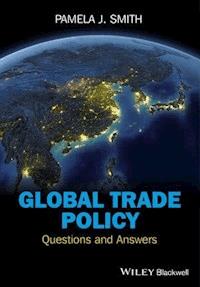
Using a unique, question-based format, Global Trade Policy offers accessible coverage of the key questions in trade and policy; it charts the changing policy landscape and evolving institutional arrangements for trade policies, examines trade theory, and provides students with an economic framework to better understand the current issues in national and international trade policy. * Uses a unique, question-based format to explore the questions and current debates in international trade policy and their implications * Explores trade theory to help guide discussions of trade policy, including traditional theories of inter-industry trade, as well as newer theories of intra-industry and intra-firm trade * Examines the national and international effects of widely used policies designed to directly and indirectly affect trade, and considers the evolving institutional arrangements for these * Charts the changing policy landscape from traditional trade policies - such as tariffs, quantitative restrictions, and export subsidies - to those including intellectual property rights, labor, the environment, and growth and development policies * Covers national as well as global perspectives and their interaction, helping to explain opposing views on trade policy and liberalization * Includes applied exercises enabling students to explore open-ended and realistic questions of policy debate, making it ideal for classroom use; an instructor's manual and a range of other resources are available at href="http://www.wiley.com/go/globaltradepolicy">www.wiley.com/go/globaltradepolicy
Sie lesen das E-Book in den Legimi-Apps auf:
Seitenzahl: 712
Veröffentlichungsjahr: 2013
Ähnliche



















Table of Contents
Title page
Copyright page
Acknowledgments
List of Tables
List of Figures
Preface
Part One: Trade Theory as Guidance to Trade Policy
1: Preliminaries: Trade Theory
1.1 What Are the Core Questions Asked by International Trade Economists?
1.2 How Can Trade Theory Provide Guidance to Trade Policy?
1.3 How Has International Trade Evolved over Time in Practice?
1.4 How Has Trade Theory Evolved over Time?
1.5 How Is the Book Organized?
2: Inter-Industry Trade
2.1 What Are the Effects of Trade in the Long Run, When Countries Differ in Technologies?
2.2 What Are the Effects of Trade in the Long Run, When Countries Differ in Endowments?
2.3 What Are the Effects of Trade in the Short Run, When Countries Differ in Immobile Endowments?
2.4 Summary Remarks
3: Intra-Industry and Intra-Firm Trade
3.1 What Is Intra-Industry Trade and Its Effects?
3.2 What Is Intra-Firm Trade and Its Effects?
3.3 Summary Remarks
Part Two: Trade Policies and Their Effects
4: Preliminaries: Trade Policy and Welfare Considerations
4.1 What Are Traditional Trade Policies?
4.2 What Approaches Are Used to Examine Trade Policy?
4.3 What Are the Welfare Effects of Liberalizing Trade Policy?
4.4 How Is Part Two Organized?
5: Tariffs
5.1 What Are Tariffs, Their Types and Purpose?
5.2 What Are the Effects of Tariffs?
5.3 What Are the Effects of Tariff Liberalization?
5.4 How Protective Are Tariffs of the Domestic Industry?
5.5 Summary Remarks
6: Export Subsidies
6.1 What Are Export Subsidies, Their Types and Purpose?
6.2 What Are the Effects of Export Subsidies?
6.3 What Are the Effects of Liberalizing Export Subsidies?
6.4 Summary Remarks
7: Quantitative Restrictions
7.1 What Are Quantitative Restrictions, Their Types and Purpose?
7.2 What Are the Effects of Quantitative Restrictions?
7.3 Summary Remarks
8: Policy Comparisons
8.1 What Are Policy Equivalents, and Their Purpose?
8.2 What Are the Relative Effects of Policy Equivalents?
8.3 What Are the Relative Effects of Liberalizing Policies?
8.4 What Are the Effects of Substituting Policies?
8.5 Summary Remarks
Part Three: Trade-Related Policies
9: Preliminaries: Trade-Related Policies and Trade in Services
9.1 What Are Trade-Related Policies?
9.2 How Have Trade-Related Policies Evolved over Time in Practice?
9.3 How Have Trade Policies Toward Services Evolved over Time in Practice?
9.4 How Is Part Three Organized?
10: Intellectual Property Rights
10.1 What Are Intellectual Property Rights, Their Types, and Purpose?
10.2 What Are the Effects of Intellectual Property Rights?
10.3 How Have Intellectual Property Rights Evolved over Time in Practice?
10.4 What Are the Intellectual Property Rights Issues on the Policy Frontier?
10.5 Summary Remarks
11: Environmental Policies
11.1 What Are Trade-Related Environmental Policies, Their Types and Purpose?
11.2 What Are the Effects of Trade Policy on the Environment?
11.3 What Are the Effects of Environmental Policy on Trade?
11.4 What Are the Implications of Using Trade Policy to Address Environmental Externalities?
11.5 Summary Remarks
12: Labor Policies
12.1 What Are Trade-Related Labor Policies, Their Types, and Purpose?
12.2 What Are the Effects of Trade Policy on Labor?
12.3 How can the Gains and Losses from Trade Be Redistributed within Countries?
12.4 What Are the Effects of Labor Policy on Trade?
12.5 Summary Remarks
13: Growth and Development Policies
13.1 What Are Trade-Related Development and Growth Policies, Their Types, and Purpose?
13.2 What Are the Effects of Trade on Development and Growth?
13.3 What Are the Effects of Growth on Development (or Welfare) in the Presence of Trade?
13.4 Summary Remarks
Part Four: Trade Arrangements
14: Regional and Multilateral Arrangements
14.1 What Are the Institutional Arrangements for Trade Policy?
14.2 What Are the Effects of Alterative Arrangements for Trade Policy?
14.3 Are Regional Arrangements Stepping Stones or Stumbling Blocks to Multilateral Liberalization?
14.4 Summary Remarks
References
Index
This edition first published 2014
© 2014 John Wiley & Sons, Inc
Wiley-Blackwell is an imprint of John Wiley & Sons, formed by the merger of Wiley's global Scientific, Technical and Medical business with Blackwell Publishing.
Registered Office
John Wiley & Sons Ltd, The Atrium, Southern Gate, Chichester, West Sussex, PO19 8SQ, UK
Editorial Offices
350 Main Street, Malden, MA 02148-5020, USA
9600 Garsington Road, Oxford, OX4 2DQ, UK
The Atrium, Southern Gate, Chichester, West Sussex, PO19 8SQ, UK
For details of our global editorial offices, for customer services, and for information about how to apply for permission to reuse the copyright material in this book please see our website at www.wiley.com/wiley-blackwell.
The right of Pamela J. Smith to be identified as the author of this work has been asserted in accordance with the UK Copyright, Designs and Patents Act 1988.
All rights reserved. No part of this publication may be reproduced, stored in a retrieval system, or transmitted, in any form or by any means, electronic, mechanical, photocopying, recording or otherwise, except as permitted by the UK Copyright, Designs and Patents Act 1988, without the prior permission of the publisher.
Wiley also publishes its books in a variety of electronic formats. Some content that appears in print may not be available in electronic books.
Designations used by companies to distinguish their products are often claimed as trademarks. All brand names and product names used in this book are trade names, service marks, trademarks or registered trademarks of their respective owners. The publisher is not associated with any product or vendor mentioned in this book.
Limit of Liability/Disclaimer of Warranty: While the publisher and author(s) have used their best efforts in preparing this book, they make no representations or warranties with respect to the accuracy or completeness of the contents of this book and specifically disclaim any implied warranties of merchantability or fitness for a particular purpose. It is sold on the understanding that the publisher is not engaged in rendering professional services and neither the publisher nor the author shall be liable for damages arising herefrom. If professional advice or other expert assistance is required, the services of a competent professional should be sought.
Library of Congress Cataloging-in-Publication Data
Smith, Pamela J.
Global trade policy: questions and answers/Pamela J. Smith.
pages cm
Includes bibliographical references and index.
ISBN 978-0-470-67128-3 (hardback: alk. paper) – ISBN 978-1-118-35765-1 (pbk.: alk. paper) – ISBN
1. Commercial policy. 2. International trade. I. Title.
HF1411.S4965 2013
382'.3–dc23
2013006411
A catalogue record for this book is available from the British Library.
Cover image: Earth at night China / Japan, detailed view of the earth from space with night lights. © Matthias Kulka/Corbis.
Cover design by Design Deluxe
Acknowledgments
This book in many ways is not a sole authored text, but rather the cumulative product of the research and teaching of economists who have shaped the field of international trade. I have been blessed to have some of the leaders in the field as my mentors and colleagues. What these individuals have in common is their generosity with their time, their infectious enthusiasm for the topic of international trade, and their human kindness to me as their student (in earlier years) and colleague (in later years). While the content of this book has been shaped by these leaders, the format is my response to the learning styles and feedback of students in my courses over the past 20 years.
The seeds of my interest in international economics were first planted by Shirley Gedeon and Douglas Kinnard, professors at the University of Vermont. I began my path at Vermont in 1978 as a political science major, and gravitated naturally toward political economy courses with significant international content. While at Vermont, Shirley Gedeon provided extensive feedback on my written work on comparative economics and was the first to propose that I should consider a PhD in economics. Douglas Kinnard selected me to participate in a special course in International Relations requiring competitive admission and a non-traditional teaching format. Although three decades have passed, I credit these two mentors for planting the seeds of my interest in international economics.
In 1985, I began my graduate work in economics in the Master's program at Tufts University in Boston. At Tufts, I learned the fundamentals of microeconomic and macroeconomic theory, as well as econometrics, from a number of gifted teachers. This was an important time in my professional development as I had come to economics from political science and did not have the mathematics background that graduate economics programs require. While at Tufts, I took a course on Math for Economists from Drusilla Brown. She recognized my non-traditional background and aggressively called on me in her class and offered extra office hours to help me close the gap. I am grateful to her for her advising in mathematics. Also while at Tufts, I elected to take my field courses at the Fletcher School of Law and Diplomacy. This is where I took my first graduate courses in international economics.
After completing my Master's degree, I decided to explore the policy world before moving on to a doctoral program. During this intermission in my schooling, I worked as a research assistant with Lester Gordon at the Harvard Institute for Economics Development. Together we generated curriculum materials for a program on public budgeting and financial management for government officials in sub-Saharan African countries. This experience was my first exposure to the applied aspects of economic research and deepened my interests in international and development aspects of economic policy. After completing this project, I was offered a position as the Deputy Director of the Office of Science and Technology of the Executive Office of Economic Affairs for the State of Massachusetts. In this position, I worked closely with the Executive Director and wonderful mentor Greg Watson, on science and technology initiatives to promote the economic development of the state, including trade competitiveness. I also had the opportunity to translate our work into speech writing for Governor Michael Dukakis who was then pursuing the Democratic presidential nomination. These practical policy experiences were fundamental in shaping my later research work in international trade, economic growth and development, and intellectual property rights.
In 1989, I began my doctoral work in economics at the University of Wisconsin. During the next four years, I took multiple courses in international trade with Bob Baldwin and Dave Richardson, both leaders in the field and extraordinary mentors. These courses significantly expanded the breadth and depth of my knowledge of international trade and inspired me to become an international trade economist. I was also blessed with the opportunity to work as a research assistant with both Bob Baldwin and Dave Richardson for a substantial portion of my time at Wisconsin. Under their guidance, I learned a great deal about the political economy of trade (from Baldwin) and innovative empirical applications of trade theory (from Richardson). My work with Dave Richardson contributed substantially to my thesis research on the effects of knowledge capital and spillovers on international trade. This guidance was augmented by the strong econometric teaching and advising I received from Arthur Goldberger. These three outstanding role models left a legacy that I am grateful to carry forward.
After completing the doctoral program, I joined the economics faculty at Concordia University in Montreal, Quebec, Canada (1992–93), and then the University of Delaware (1993–98). During this time, I was invited by Dave Richardson to participate in a conference of the National Bureau of Economic Research (NBER) on international trade and growth. This initial experience lead to numerous subsequent research opportunities through the NBER, invited lectures at universities and the Federal Reserve Banks, and presentations at national and international conferences on economics including the American Economics Association meetings, among others. These conferences during the 1990s were enormously influential in shaping the character of my research and teaching.
During the 1990s, the international trade literature was evolving in significant ways to explain new patterns of trade including intra-industry trade and intra-firm trade. I was inspired by numerous leaders in the emerging areas of New trade theory, the economic geography of trade, growth and trade, and trade and multinationals, including Robert Feenstra, Gene Grossman, Elhanan Helpman, Paul Krugman, and James Markusen. I was also inspired by the work of Paul Romer on endogenous growth and Zvi Griliches on the economics of technical change, and Jeffrey Bergstrand on the Gravity model. In Part One of this book, I cover the traditional theme of inter-industry trade as well as the research on intra-industry and intra-firm trade inspired by these economists.
The 1990s was also an important decade in terms of the rapidly changing character of trade policy. The policy focus on tariffs had shifted to non-tariff measures including export subsidies and “trade-related” policies such as intellectual property rights, environmental policies, labor policies, and growth and development policies, among others. Applied research in these areas took a new prominence in the field of international trade. I have been particularly influenced by the research of Keith Maskus and database development of Walter Park on intellectual property rights, Scott Taylor on the environment, and Robert Feenstra on labor. These trade and trade-related policies are the focus of Parts Two and Three of this book, respectively.
Finally, the 1990s was a pivotal decade in terms of the character of arrangements for managing trade policy. A voluminous number of regional trade arrangements emerged as well as the establishment of the World Trade Organization (WTO) in 1995 as the successor of the Generalized Agreement on Tariffs and Trade (GATT). These arrangements focused more extensively on trade-related policies than did previous arrangements. The rapid economic integration via international trade also focused new attention on the forms and effects of alternative institutional arrangements (e.g., free trade areas, customs unions, multilateral arrangements) and political economy aspects of these arrangements. The evolution of this literature was advanced by foundational research by Bob Baldwin, Anne Krueger, and Robert Stern, among others. These institutional arrangements are the focus of Part Four of this book.
In 1998, I joined the faculty at the University of Minnesota in the Department of Applied Economics. Building on the foundations provided by many of the leaders, I have pursued research in the areas of international trade and policy, intellectual property rights, and trade and multinationals. My most recent research extends these themes to policy aspects of international trade in crops that are intensive in genetically modified organisms. My interests in applied research on agricultural trade and policy has been influenced by Vernon Ruttan, my colleague and role model for over a decade. I was blessed with the opportunity to work alongside Vernon Ruttan, who was a leader in research on agricultural development and science and technology policy. I will long remember his kindness, and curious and engaged mind.
I have also benefited at the University of Minnesota from the opportunity to concentrate my teaching almost exclusively in the area of international trade and policy, with periodic deviations into the fields of macroeconomics, and science and technology policy. For this teaching, I have benefited from several outstanding textbooks including Robert C. Feenstra, Advanced International Trade: Theory and Evidence (Princeton University Press, 2004); Robert C. Feenstra and Alan M. Taylor, International Trade (Worth, 2011); Paul R. Krugman, Maurice Obstfeld, and Marc J. Melitz, International Economics: Theory and Policy (Pearson-Addison Wesley, 2010); James R. Markusen, James R. Melvin, William H. Kaempfer, and Keith E. Maskus, International Trade: Theory and Evidence (McGraw-Hill, 1995), Dominick Salatore, International Economics (Wiley, 2007), among others. My own book does not seek to be a substitute for these texts, but rather a complement. The emphasis on “applied economics” in my teaching has shaped the format of this book, which emphasizes the prominent questions that trade theory seeks to answer and the guidance that trade theory can provide in assessing alternative policy choices. My hope is that this format will be accessible for students of economics, business, public policy, and fields of applied economics.
I have worked with some outstanding students over the past 20 years. These students have challenged me to dig deeper into my understanding of international trade and policy. I believe that we teach what we need to learn. I have learned a tremendous amount from teaching undergraduate, masters, and doctoral students from various disciplines and from around the world. These students remind me of two fundamental questions: So what, and who cares? or What's at stake, and for whom? With these questions in mind, I have written this book with explicit attention to the multiple perspectives both within countries and across countries, as well as the perspectives of countries influenced by the policies of their trading partners.
Finally, I am grateful to the reviewers whose input has improved this book, to the editors at John Wiley and Sons, and to Augustine Mok for creating the electronic versions of the tables and figures in this book. I take credit for all remaining errors.
Last but not least, I am thankful for the support of my dear friends Mindy Goldman, Margot Giblin, Kristen Harrington, and Darcie McCann, and my family Teagan Burch, Kurt Burch, Henry Smith, Mary Jane Smith, Kathy Shelley, Chuck Smith, and Betsy Campeau, who have witnessed and blessed my path for decades.
List of Tables
List of Figures
Preface
This book is intended for Master's level (or advanced undergraduate) courses in business, public policy, economics, and applied economics. I assume that readers have completed undergraduate courses in microeconomics and/or macroeconomics. My goal is to bring the reader from that common point up to the recent research on international trade policy. The material covered will give the reader the foundation needed to understand the current debates in international trade policy as well as current research in the field. This book is particularly suitable for courses covering topics in international trade, international economics, economic policy, global economy, theory of international trade, globalization, managing international trade and investment, and other international policy concerns. The website http://www.wiley.com/go/globaltradepolicy provides materials to support instructors in using this book in a variety of environments at the graduate and advanced undergraduate levels.
The book is designed to reflect the evolution of international trade policy in terms of real-world practice and the academic literature. During the past two decades, the character of international trade and policy has changed in unprecedented ways. Trade in different goods across countries (i.e., inter-industry trade) has been augmented by trade in similar goods (i.e., intra-industry trade) and trade between foreign affiliates of multinational firms (i.e, intra-firm trade). At the same time, the instruments of trade policy have evolved. Attention has turned from traditional trade policies (such as tariffs, quantitative restrictions, and export subsidies) to “trade-related policies” (such as intellectual property rights, labor policies, environmental policies, and growth and development policies). The institutional arrangements for these policies continue to evolve with substantial international debate. This book offers an accessible coverage of these topics and an economic framework for thinking.
The book is organized into four parts. The first part covers topics that are typically found in theory books on international economics. The intent of this part is to provide the background in trade theory that is useful to guide discussions of trade policy. The material includes traditional theories of inter-industry trade as well as newer theories of intra-industry and intra-firm trade. The second part of the book covers trade policies and their effects. This part focuses on widely used policies that are designed to affect international trade flows directly. These policies include tariffs, export subsidies, and quantitative restrictions. The intent of this part is to explore the effects (at the national, subnational, and global levels) of both imposing and liberalizing these policies. The third part of the book covers trade-related policies. This part focuses on policies that are designed for a purpose other than targeting trade. However, these policies still have a significant effect on international trade flows. These trade-related policies include intellectual property rights, environmental policies, labor policies, and growth and development policies. The fourth part of the book explores the arrangements within which trade policies are designed, adopted and managed. This part covers multilateral and regional arrangements including customs unions and free trade areas.
The book also provides supplemental materials to deepen the reader's understanding of trade policy. Applied problems provide the reader with the opportunity to explore the overarching themes of each part and to apply these themes to issues of current policy debate. These problems do not have definitive answers. Rather, they are designed to allow the reader to apply the theories/models to explore open-ended questions of policy debate. These applied problems are a particularly important component of the book. They allow to the reader apply the frameworks developed to country and industry scenarios that match with their interests. They also help the reader to identify the perspective of alternative arguments in policy debates and to articulate explicitly the underlying assumptions of these perspectives. Because the applied problems do not have right or wrong answers, they require a level of critical thinking particularly valuable in graduate environments.
The book also provides rich listings of further reading associated with the topics of each chapter. These provide the reader with the classic and recent literature on topics of trade policy and include journal articles, books, reports and working papers that may prompt further graduate research in topics of trade policy. They emphasize the literature that is on the frontier of the field of trade policy. These readings can be used as the core content of PhD courses in international trade policy. In such advanced graduate settings, this book can be used as the foundation or springboard for the advanced research found in the journal articles.
The book is unique in several ways. First, to my knowledge, there are no other books on international trade policy that target a Master's level audience in business, public policy, economics, and applied economics. Because the book targets a multidisciplinary audience, it is written using accessible language, realistic applications, and applied problems. It is designed particularly for readers who are learning to integrate concepts and apply their knowledge/thinking to open-ended questions of policy debate.
Second, the book focuses on international trade policy (a subfield of international economics) and broadens the definition of policy to include trade-related policies, which are the subject of much current debate. This book gives substantial attention to these trade-related policies, including intellectual property rights, environmental policies, labor policies, and growth and development policies. It also gives considerable attention to multilateral and regional trade policy arrangements.
Third, the format of the book is designed around questions, rather than on the traditional model-based format. That is, the models are covered in the book for the purpose of providing the tools and skills to answer the questions. However, these models are presented in the context of the questions to which they apply. This is important because readers can learn the models (using traditional book formats) without much understanding of how to apply the models to real-world questions. They are then unable to take the next step, which is to select the appropriate modeling frameworks to analyze real-world policy questions. This book provides an alternative, in that its organization around questions is designed to support this leap in learning to apply knowledge.
Fourth, the book is designed to explicitly identify perspectives, including the aggregate national, subnational, and global perspectives, as well as the perspectives of consumers, producers, governments, and others who comprise the aggregates. These perspectives are often implicit in discussions of international trade policy and thus can lead to confusion. By making the perspective explicit, this book seeks to help the reader place alternative viewpoints within the larger overarching framework for thinking about trade policy. The book considers the effects of national policies on countries that impose the policies, as well as the effects on trading partners and globally. For example, discussions of international trade policy typically focus on national-level effects, such as the effects of a tariff on the country that imposes the tariff. In contrast, this book covers these national effects as well as the international effects, such as the effects of a tariff on the trading partners of the country that imposes the policy. These perspectives are useful as they help explain opposing views on trade policy and liberalization.
Finally, the applied problems are a particularly distinctive component of the book. These applied problems allow the reader to apply the models and concepts in the book to answer a broad range of contemporary policy issues. These problems require that readers identify the underlying assumptions, choose between alternative frameworks for thinking, and apply the frameworks to open-ended questions that do not have right or wrong answers. The applied problems cover a broad range of issues of interest to a multidisciplinary audience. Examples include: the effects of export subsidies in Europe and North America on farmers in the developing world; the national and international implications of intellectual property rights for genetically modified crops; the use of trade policy to address domestic and global externalities such as water pollution and global warming; the effects of trade policy on income inequality between skilled and unskilled labor in developed and developing countries; and the role of trade in promoting growth and development that is welfare improving.
The ultimate goal of this book is to provide readers with the ability to identify the divergent perspectives around current trade policy debates, clarify what is at stake and for whom, and develop creative policy solutions.
Part One
Trade Theory as Guidance to Trade Policy
1
Preliminaries
Trade Theory
1.1 What Are the Core Questions Asked by International Trade Economists?
The field of international economics within the economics discipline explores transactions that occur across national borders. Flows across national borders include movements of goods, services, factors of production, and financial assets. Flows of goods, services, and factors of production are considered to be “real” movements and fall under the subfield of international trade. Flows of financial assets are considered to be “nominal” movements and fall under the subfield of international finance. These two subfields are the primary branches of the field of international economics. This book focuses on international trade – real flows of goods, services and factors of production across national borders. Furthermore, it focuses specifically on the policy dimensions of international trade, that is, policies that alter international trade in some way.
We begin our study of international trade policy with the basics of trade theory in Part One. The topics of trade theory address three primary dimensions of trade. The first dimension is the patterns of trade. That is, why do countries export and import what they do? The second dimension is gains from trade. That is, who wins and who loses from trade? The third dimension is protectionism. That is, what are the effects of adding or removing policies that distort trade? Our goal in exploring these questions is to show how trade theory can provide guidance to trade policy.
1.2 How Can Trade Theory Provide Guidance to Trade Policy?
Trade theory provides guidance to trade policy in a direct way. Trade theories that explain the patterns of trade and gains from trade typically compare two hypothetical states – autarky and free trade. Autarky is a state of no trade, which cannot be observed in our current reality. Free trade is a state of trade that is undistorted by policies, which also cannot be observed in our current reality. Trade theories typically predict the patterns and gains from trade when we move from the hypothetical state of autarky to free trade or, conversely, when we move from the hypothetical state of free trade to autarky.
In reality, the state of trade lies somewhere in between these two hypothetical extremes. However, understanding the effects of moving between the two extremes in theory provides guidance for understanding trade policy in practice. That is, when barriers to trade are added, we take one step closer to autarky; and when barriers to trade are removed, we take one step closer to free trade. In other words, the direction of the effects of moving from autarky to free trade corresponds with the effects of liberalizing policy barriers to trade. Similarly, the direction of the effects of moving from free trade to autarky corresponds with the effects of adding protectionist policies.
Lesen Sie weiter in der vollständigen Ausgabe!
Lesen Sie weiter in der vollständigen Ausgabe!
Lesen Sie weiter in der vollständigen Ausgabe!
Lesen Sie weiter in der vollständigen Ausgabe!
Lesen Sie weiter in der vollständigen Ausgabe!
Lesen Sie weiter in der vollständigen Ausgabe!
Lesen Sie weiter in der vollständigen Ausgabe!
Lesen Sie weiter in der vollständigen Ausgabe!
Lesen Sie weiter in der vollständigen Ausgabe!
Lesen Sie weiter in der vollständigen Ausgabe!
Lesen Sie weiter in der vollständigen Ausgabe!
Lesen Sie weiter in der vollständigen Ausgabe!
Lesen Sie weiter in der vollständigen Ausgabe!
Lesen Sie weiter in der vollständigen Ausgabe!
Lesen Sie weiter in der vollständigen Ausgabe!
Lesen Sie weiter in der vollständigen Ausgabe!
Lesen Sie weiter in der vollständigen Ausgabe!
Lesen Sie weiter in der vollständigen Ausgabe!




