



1,99 €
Mehr erfahren.
- Herausgeber: Booksell-Verlag
- Kategorie: Gesellschafts- und Liebesromane
- Sprache: Englisch
In "Good-bye, Mr. Chips," James Hilton weaves a poignant narrative that explores the life and career of Mr. Chipping, affectionately known as Mr. Chips, a schoolmaster at the fictional Brookfield School in England. This novella employs a gentle, nostalgic literary style that deftly captures the essence of British boarding school life in the early 20th century. Hilton'Äôs use of rich imagery and heartfelt introspection invites readers into a world where education, tradition, and personal connection are cherished. The story unfolds against the backdrop of a changing society, highlighting themes of love, loss, and the passage of time, all while preserving a sense of humor and warmth that makes the protagonist's journey deeply relatable. James Hilton, an English author and screenwriter, gained prominence in the 1930s with his evocative storytelling. His own experiences growing up in a small town and his affection for the British educational system influenced his portrayal of Mr. Chips's tender, yet bittersweet reflection on a life devoted to teaching. The thematic exploration of nostalgia reflects Hilton's broader concerns about the rapidly evolving world, especially in the wake of two World Wars. "Good-bye, Mr. Chips" is a timeless classic that resonates with educators, students, and anyone who values the significance of human connection and mentorship. Its exploration of the intrinsic rewards of teaching and the bittersweet nature of memory makes it a must-read for those seeking both inspiration and solace in the face of life'Äôs inevitable changes. In this enriched edition, we have carefully created added value for your reading experience: - A succinct Introduction situates the work's timeless appeal and themes. - The Synopsis outlines the central plot, highlighting key developments without spoiling critical twists. - A detailed Historical Context immerses you in the era's events and influences that shaped the writing. - An Author Biography reveals milestones in the author's life, illuminating the personal insights behind the text. - A thorough Analysis dissects symbols, motifs, and character arcs to unearth underlying meanings. - Reflection questions prompt you to engage personally with the work's messages, connecting them to modern life. - Hand‐picked Memorable Quotes shine a spotlight on moments of literary brilliance. - Interactive footnotes clarify unusual references, historical allusions, and archaic phrases for an effortless, more informed read.
Das E-Book können Sie in Legimi-Apps oder einer beliebigen App lesen, die das folgende Format unterstützen:
Veröffentlichungsjahr: 2021
Ähnliche






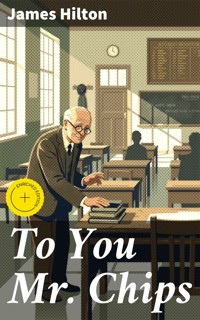







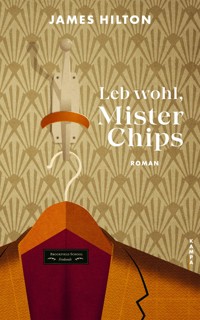


Good-bye, Mr. Chips
Table of Contents
Introduction
A single teacher’s quiet life can become a battleground between private loneliness and the public work of shaping generations.
James Hilton’s novella Good-bye, Mr. Chips has attained classic status because it achieves, with remarkable economy, what longer novels often struggle to do: it makes a modest setting feel like a complete world. Its emotional reach is built from ordinary routines rather than sensational events, inviting readers to consider how character is formed over time. The book’s lasting reputation rests on its ability to turn schooldays, staffroom rituals, and the passage of years into a study of memory and meaning that remains accessible across cultures and eras.
Published in 1934, Good-bye, Mr. Chips belongs to the interwar period in Britain, when many writers and readers were reassessing institutions, authority, and social continuity after the upheavals of the early twentieth century. Hilton places his story within an English boys’ school, using that enclosed environment as a lens on broader changes without requiring the reader to master political history. The result is a narrative that feels historically situated while still speaking to the perennial questions of vocation, belonging, and personal legacy.
The central premise is straightforward: it follows Mr. Chipping, known as “Mr. Chips,” a schoolmaster whose career unfolds over many years at Brookfield, the fictional school where he teaches. Rather than hinging on a single dramatic plot, the book tracks the gradual accumulation of moments—classroom encounters, professional duties, and shifting relationships—that shape how he is seen by others and how he comes to understand himself. This approach allows Hilton to explore how a life can be defined by steady service and incremental change.
Hilton’s craftsmanship lies in how he renders time itself as an artistic subject. The narrative moves through seasons of school life and stages of a career, inviting readers to feel how repetition can deepen into tradition and how routine can conceal quiet transformations. The school becomes a microcosm with its own customs and expectations, and Mr. Chips’s position within it provides a stable viewpoint from which the world subtly alters. In this way, the book dramatizes the tension between continuity and change without resorting to melodrama.
One reason the novella endures is its balanced tone, combining gentle humor with genuine pathos. Mr. Chips is neither a heroic reformer nor a mere caricature of authority; he is allowed to be limited, endearing, and complicated. Hilton treats the staff and pupils as part of a living community rather than as props, emphasizing the small social negotiations that define institutional life. That humane steadiness has helped the book remain readable for audiences who may never have experienced an English boarding school.
As a work of literature, Good-bye, Mr. Chips helped affirm the narrative potential of the “small life” on the page. It demonstrated how a short, focused story could achieve breadth through compression, shaping readers’ expectations of what a novella might accomplish in terms of emotional arc and social portraiture. Its emphasis on the dignity of ordinary work and the resonance of remembered moments contributed to a tradition of school and campus stories that prioritize character, atmosphere, and the slow unfolding of time over plot-driven spectacle.
The book’s influence is also visible in the way later writers have approached educators as central figures in fiction: not simply as mentors or antagonists, but as people whose identities are braided into an institution and tested by it. By presenting teaching as a life rather than a backdrop, Hilton made the classroom a plausible stage for introspection, comedy, and moral reflection. Many subsequent narratives about schools and teachers—across genres—echo this idea that education is as much about community and memory as it is about instruction.
Hilton’s Brookfield is not merely a setting; it is an environment with shared language, rituals, and informal hierarchies. The novella invites readers to notice how institutions cultivate loyalty, how they preserve their myths, and how they respond to gradual cultural shifts. At the same time, it keeps attention fixed on the individual within the system, asking what it costs to belong and what it provides in return. This interplay between person and institution is one of the book’s most enduring thematic engines.
Another lasting theme is the relationship between public role and private self. Mr. Chips is known through a title and a nickname that signal both respect and familiarity, suggesting how a community can shape an individual’s identity through affection, expectation, and memory. Hilton explores how a person’s outward manner may soften or harden over years of duty, and how moments of connection can reorient a life that seems set in its ways. The story’s emotional power depends on this subtle, cumulative portrait.
The classic status of Good-bye, Mr. Chips is reinforced by its broad cultural reach: it has remained widely read and discussed, in part because its subject is immediately recognizable even when the specific school traditions are unfamiliar. It asks what it means to spend one’s life in service to something larger, how recognition arrives—if it arrives at all—and how communities remember those who quietly sustain them. These concerns, handled with restraint and clarity, help explain why the book continues to find new readers.
Today, the novella speaks to contemporary questions about work, identity, and the value of long-term commitment in an age that often prizes constant reinvention. Its portrayal of teaching as a vocation, its attention to the texture of everyday life, and its meditation on how people are remembered within communities remain compelling beyond its 1934 publication moment. By focusing on the human need for belonging and the lasting imprint of small acts, Good-bye, Mr. Chips preserves its appeal as both a period piece and a timeless study of a life measured in years.
Synopsis
James Hilton’s novella Good-bye, Mr. Chips, first published in 1934, presents the remembered life of Mr. Chipping, known as “Chips,” a long-serving teacher at an English boys’ public school called Brookfield. The narrative is framed as a reflective account in which Chips, now elderly, looks back over decades of work, routine, and gradual change. Rather than focusing on a single dramatic event, the book follows the quiet accumulation of experiences that shape a person’s identity and reputation. From the outset, Hilton emphasizes memory, time, and the subtle ways an institution and an individual influence one another.
The story traces Chips’s early years at Brookfield, when he is a shy and somewhat awkward newcomer trying to establish himself among colleagues and pupils. He is conscientious and academically capable, but socially uncertain, and his position requires him to manage both classroom discipline and the unwritten expectations of school life. Hilton depicts the staffroom hierarchy and student culture as forces that test Chips’s confidence. His teaching is competent rather than charismatic, and his initial struggles underscore a central question of the book: how an ordinary person becomes meaningful to a community over the long term.
As Chips settles into his role, the narrative illustrates how repeated terms, lessons, and ceremonies can be both monotonous and stabilizing. The school’s traditions, from forms and timetables to speech patterns and habits, create a world that prizes continuity. Chips begins to understand Brookfield’s rhythms and to find his place within them, even as he remains more reserved than some of his peers. Hilton shows the gradual development of a teacher’s authority, earned through persistence and fairness rather than force. Small interactions with students, remembered years later, become part of the texture of his life.
A pivotal development occurs when Chips’s personal life changes in a way that affects his demeanor and relationship to others. Without turning the story into melodrama, Hilton shows how companionship can widen Chips’s emotional range and soften the severity that sometimes accompanies professional insecurity. This shift influences how he engages with boys and colleagues, and it complicates the boundary between the private man and the public schoolmaster. The book’s focus remains on everyday consequences: altered confidence, a warmer manner, and a strengthened sense that life at Brookfield connects to a broader human world beyond the campus.




