


1,99 €
Mehr erfahren.
- Herausgeber: DigiCat
- Kategorie: Gesellschafts- und Liebesromane
- Sprache: Englisch
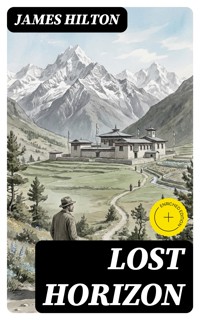
In "Lost Horizon," James Hilton crafts a captivating narrative that blends adventure, philosophy, and social commentary. Set against the backdrop of the tumultuous era of the 1930s, the novel follows a group of plane crash survivors who stumble upon the mythical Shangri-La, a utopian sanctuary in the Himalayas. Hilton's prose is imbued with lyrical beauty and a sense of wonder, drawing readers into a world that contrasts with the chaos of modernity. Thematically, the book explores the tensions between civilization and tranquility, delving into profound questions about happiness, the human experience, and the perpetual search for meaning beyond the confines of a materialistic society. James Hilton, a British novelist and screenwriter, rose to prominence in the early 20th century, with a keen interest in themes of escapism and idealism. Hilton's own experiences during the interwar period and his exposure to various cultures deeply influenced his portrayal of Shangri-La as a symbol of hope and serenity. "Lost Horizon," which first appeared in 1933, not only epitomizes Hilton's literary prowess but also offers a critique of contemporary society's disillusionment. Highly recommended for readers who appreciate thought-provoking literature, "Lost Horizon" invites you to embark on an introspective journey. Its rich storytelling and philosophical undertones encourage reflection on the nature of happiness and fulfillment. Hilton's timeless tale resonates with anyone seeking solace from the trials of life, making it a profound addition to the canon of modern literature. In this enriched edition, we have carefully created added value for your reading experience: - A succinct Introduction situates the work's timeless appeal and themes. - The Synopsis outlines the central plot, highlighting key developments without spoiling critical twists. - A detailed Historical Context immerses you in the era's events and influences that shaped the writing. - An Author Biography reveals milestones in the author's life, illuminating the personal insights behind the text. - A thorough Analysis dissects symbols, motifs, and character arcs to unearth underlying meanings. - Reflection questions prompt you to engage personally with the work's messages, connecting them to modern life. - Hand‐picked Memorable Quotes shine a spotlight on moments of literary brilliance. - Interactive footnotes clarify unusual references, historical allusions, and archaic phrases for an effortless, more informed read.
Das E-Book können Sie in Legimi-Apps oder einer beliebigen App lesen, die das folgende Format unterstützen:
Veröffentlichungsjahr: 2022
Ähnliche

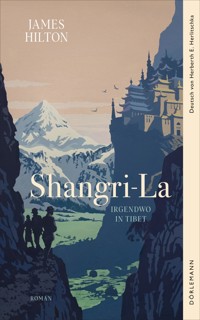






Lost Horizon
Table of Contents
Introduction
While the modern world hurtles forward with jangling purpose, a hijacked flight into uncharted mountains tilts into a hush so profound that it asks whether human beings, bruised by conflict and craving meaning, can choose equilibrium over ambition, patience over panic, and a durable inner order over the glittering, exhausting claims of progress, where the air thins and distances open, where time seems to breathe rather than gallop, and where the ache for rest presses against the pull of responsibility that never quite loosens its grip.
Lost Horizon, published in 1933 by the English novelist James Hilton, stands at the crossroads of the interwar years, when memories of one global conflict met the foreboding shadows of another. Written in the early 1930s, it channels a period of uncertainty and fatigue into a compelling premise: a small group of travelers is carried off course into the high Asian mountains and brought to a secluded lamasery, a place whose serenity unsettles as much as it consoles. Hilton gives readers an adventure that swiftly becomes a meditation, establishing a setting that is both physical refuge and moral test.
Its classic status rests partly on a remarkable cultural afterlife: Hilton coined the word Shangri-La, a name that traveled beyond the novel into everyday language as a synonym for hidden paradise. The term’s endurance signals how deeply the book tapped universal longings for sanctuary and renewal. The story’s reach widened almost immediately, most notably through Frank Capra’s 1937 film adaptation, which carried its atmosphere to new audiences. Yet the novel’s fame is not merely lexical or cinematic; it persists because the narrative frames questions of purpose, memory, and peace with an elegance that invites continual return.
Hilton’s craft balances adventure with poise. A lightly handled frame narrative lends mystery and interpretive openness, encouraging readers to weigh what is told against what might remain unsaid. The prose is unhurried without being inert, and the pacing allows the landscape and its conversations to acquire a reflective sheen. Rather than thundering set pieces, the book offers quiet intensities—moments when a character’s hesitation carries more force than action. This composure does not blunt suspense; it relocates it, from the external dangers of a perilous journey to the interior brink where conviction and desire contest one another.
At the heart of the novel lie enduring themes: the tension between modern speed and contemplative stillness; the costs of empire and professional obligation; and the hope that wisdom might be cultivated, not merely found. Hilton probes the allure of utopia while keeping a skeptical eye on perfection. He asks what kind of peace is genuine, and what peace is escape. The narrative presses gently but firmly on questions of time—how it is measured, how it is felt, and how a life might be shaped when haste is no longer the reigning measure of value.
The protagonist, a seasoned British diplomat shaped by the aftermath of war, provides a humane lens on these dilemmas. Trained to keep his balance amid crises, he is keenly attuned to fatigue and to the subtle erosion of spirit that follows prolonged strain. His professional poise and private weariness make him an ideal observer of a place defined by restraint and longevity. Through him, the novel weighs competing claims: duty to country and companions, responsibility to one’s own battered interior life, and the possibility that true stewardship might sometimes require a slower, more spacious form of attention.
Hilton’s imagined sanctuary is not presented as a mere tourist’s marvel but as a carefully tended experiment in endurance. The high-altitude setting clarifies essentials: breath, bread, conversation, and the discipline of continuity. Material spareness heightens intellectual and ethical richness, and the starkness of the surrounding terrain throws human choices into sharper relief. The book’s atmosphere—crystalline, watchful, and steeped in a courteous reserve—carries readers into a heightened awareness of scale. Against mountain immensities, the agitations of distant political life appear simultaneously urgent and oddly remote, a paradox that animates the characters’ debates.
The novel’s influence on later writers is palpable wherever secluded communities, philosophical adventures, and imagined refuges appear as testing grounds for modernity. Shangri-La became shorthand for an idealized elsewhere, a term invoked by novelists, essayists, and screenwriters to measure the gap between yearning and reality. Its conceptual legacy extends beyond literature into journalism and public rhetoric, where the name still signals the dream of a sustaining refuge. That durability testifies to Hilton’s success in giving form to a recurring idea: that a hidden place might conserve what a hurried age forgets to cherish.
Lost Horizon also became a shared cultural touchstone through adaptation and global circulation. Capra’s film amplified its themes of solace and choice, fixing its imagery in public memory and further consolidating the word Shangri-La in the popular lexicon. The novel’s accessible style enabled wide readership in Britain, the United States, and beyond, and its interwar mood resonated with audiences seeking orientation amid upheaval. Yet readers continue to return not for a single image, but for the book’s steady gait: the way it keeps pace with doubt, and the way it refuses to coerce certainty.
Context sharpens its power. Written as European empires strained and ideologies hardened, the novel reflects both an era’s exhaustion and its compulsions. It draws on long-standing Western imaginations of the East, inviting admiration while also revealing the limitations of its vantage point—features that contemporary readers can note without diminishing the work’s searching intelligence. In the quiet of Hilton’s mountains, a conversation unfolds about how knowledge is preserved, how cultures meet or miss one another, and what civilization might mean when stripped of competition’s incessant din.
For new readers, the book offers an experience that is both story and inquiry. It begins with the immediate drama of survival and dislocation, then gradually widens into an exploration of inward weather: patience, gratitude, loyalty, and the texture of memory. The narrative never demands that the reader resolve its questions; rather, it provides a setting in which competing goods can be weighed. This gentleness of approach, combined with the steady pull of an adventure, helps the novel to feel intimate and expansive at once, hospitable to reflection without sacrificing momentum.
The themes that made Lost Horizon a sensation in 1933 remain strikingly current. In an age of burnout, hyperconnectivity, and relentless acceleration, Hilton’s vision asks what sort of life is defendable, and which forms of belonging deserve our endurance. It offers no facile answers, only the enduring challenge to distinguish rest from resignation and hope from distraction. That is why the book endures as a classic: it transforms a perilous journey into a lasting meditation, reminding readers that the search for a life large enough to hold both duty and peace is never out of date.
Synopsis
Lost Horizon, published in 1933 by James Hilton, is presented through a frame narrative that lends the story an air of recollection and mystery. An initial narrator encounters an acquaintance who reports a remarkable tale about Hugh Conway, a British consular official, and an encounter with a remote sanctuary in the Himalayas. The intermediary, a man of letters who claims to have met Conway later, becomes the conduit for the narrative we read. This structure establishes distance and uncertainty, foregrounding the theme of memory under stress, and setting up a transition from the modern, urbane world to an austere landscape of isolation.
At the core of the tale is an emergency evacuation from the fictional city of Baskul amid unrest. Four Westerners board a small aircraft: Conway, his youthful subordinate Mallinson, an American named Barnard, and a forthright missionary, Miss Brinklow. Expecting a routine flight to safety, they instead discover their plane has been diverted by a taciturn pilot who heads into forbidding mountains. The passengers, uneasy and exhausted, confront dwindling supplies and an uncertain course. When the aircraft ultimately comes down in a desolate region, survival seems doubtful, and the immediate problem becomes finding shelter and understanding why they were brought there at all.
Out of this crisis appears an unexpected rescuer, a courteous guide named Chang, who leads the stranded travelers to a hidden valley shielded from the brutal climate. There, a lamasery called Shangri-La crowns a ridge above fertile slopes and calm waters. The party receives generous hospitality: warm rooms, measured comforts, and provisions that seem to anticipate every need. The setting feels improbably temperate and stable, inviting questions about geography and intention. While grateful for safety, the newcomers sense a quiet watchfulness in their hosts, as if customs and rules lie beneath the gracious surface, and as if their arrival may not be accidental.
Conway emerges as the central consciousness, his prewar schooling and First World War experiences having left him gifted, weary, and self-contained. At Shangri-La he finds a stillness that resonates with his longing for balance after years of duty and disillusionment. Conversations with Chang and the monks introduce a philosophy of moderation, patience, and the conservation of human achievement. The lamasery’s library, music, and multilingual scholarship hint at a deliberate gathering of the world’s best works. Among the residents is Lo-Tsen, a reserved young woman whose grace deepens the allure of the place, suggesting emotional possibilities that Conway scarcely lets himself articulate.
The other evacuees respond in sharply different ways, clarifying the story’s conflicts. Mallinson chafes at delay, bristling at the lamasery’s opacity and pressing to organize a return over dangerous passes. Miss Brinklow regards the valley through the lens of vocation, committed to evangelical purpose and skeptical of refined repose. Barnard, affable and resourceful, enjoys the comfort but keeps an eye on the wider world, his past hinting at entanglements beyond business. Their restlessness collides with the hosts’ unhurried pace, and the question of agency arises: are the guests free to leave, or being gently conditioned to accept a fate chosen for them?
Conway is summoned to speak with the High Lama, a figure whose calm articulates a long view of history. In lucid, unpressured discussions, he hears of a mission to safeguard wisdom against periods of turmoil, to cultivate harmony over haste, and to temper desire with proportion. The lamasery’s ethos values durable well-being over momentary excitement, and the valley’s seclusion appears to nurture unusual vitality among its inhabitants. Without insisting on dogma, the High Lama appeals to Conway’s instincts for stewardship and restraint. The invitation implicit in these meetings is not a command but a test of disposition, patience, and trust.
As time passes, philosophical appeals turn into practical dilemmas. The route out is perilous, and supplies must be husbanded; weather and altitude impose hard limits on timing. Mallinson intensifies his campaign to leave, invoking duty, loyalty, and the risks of complacency. Conway wrestles with the competing claims: obligations to his colleagues, ties to the service that shaped him, and the compelling sense that Shangri-La offers a meaningful answer to an age of acceleration. Barnard weighs opportunities and dangers with a pragmatist’s eye; Miss Brinklow frames the impasse in moral terms. Every conversation compresses choice into a narrowing window.
The narrative periodically returns to the frame, reminding us that what we know of these events has been gathered secondhand, from encounters after the fact and from accounts of uncertain completeness. The intermediary tells of meeting Conway far from the mountains and attempting to piece together the intervening chapters. Gaps remain by design, preserving ambiguity about motives and outcomes, and inviting readers to register the pressures that might fracture memory. Rather than settle every fact, the structure emphasizes tone and temperament: the recollected steadiness of Conway’s voice, the aura of magnanimity at Shangri-La, and the unrest that refuses to stay outside.
Beyond its immediate adventure, Lost Horizon has endured for naming a modern myth of refuge: Shangri-La as a symbol of hidden sanctuary and humane balance. The novel binds travel narrative to a meditation on pace, power, and preservation, asking whether a measured life can resist the shocks of history without retreating into indifference. It probes leadership marked by restraint rather than spectacle, and the scars borne by those who survived war and responsibility. Remaining deliberately inconclusive about decisive outcomes, the book leaves readers with a durable question about stewardship of culture and self, and about the costs of safety and engagement.
Historical Context
Lost Horizon, published in 1933, unfolds within the interwar years and imagines a refuge hidden in the high valleys bordering Tibet. The time is the early 1930s, when imperial, national, and monastic institutions overlapped across Central and South Asia. British colonial governance, Chinese provincial and warlord administrations, and autonomous Tibetan monastic networks all shaped the frontier. The novel’s setting evokes this layered political landscape while relying on the era’s newest institution—civil aviation—to bridge immense distances. The Himalaya and Kunlun ranges, sparsely administered and difficult to traverse, provided Europeans with a powerful image of remoteness, and the book situates its drama within that global imagination of the frontier.
The First World War (1914–1918) profoundly marked European society and literature, and its aftershocks ripple through Hilton’s vision. The unprecedented casualties, mass conscription, and psychological trauma created a public mood of weariness and doubt about modernity’s promise. British culture in the 1920s grappled with memorial rituals, shell-shock discourses, and pacifist activism, alongside attempts at normalcy. Treaties like the Kellogg–Briand Pact (1928) expressed hopes to renounce war even as disarmament faltered. Lost Horizon channels this postwar sensibility: a desire for retreat from violent modernity, a search for composure, and a suspicion that civilization’s velocity and nationalism might drive societies toward another catastrophe.
British imperial structures shaped movements of people, goods, and information that the novel quietly assumes. The Indian Civil Service, political officers on the North-West Frontier, and consular staffs across Asia connected distant enclaves to London. Railways ran to frontier cities; telegraph cables and wireless networks linked colonial administrations; and hill stations functioned as seasonal retreats for officials. Peshawar and other hubs served as staging posts for evacuations during unrest. This imperial infrastructure—built for governance, commerce, and security—underwrites the plausibility of hurried departures and emergency flights in the story, even as the narrative moves beyond the formal reach of British power into less-governed highland zones.
The borderlands of Tibet had been contested for decades in the so-called Great Game and its aftermath. Britain’s 1903–1904 Younghusband expedition to Lhasa forced a treaty and opened channels for influence from India. After the fall of the Qing dynasty (1911–1912), Tibet exercised de facto self-rule under the 13th Dalai Lama, though international recognition remained limited and boundaries were disputed. The 1913–1914 Simla Conference attempted to define Tibet’s status, but China did not ratify the agreement. Through the 1920s and 1930s, the plateau remained a patchwork of local authorities, monasteries, and regional powers—conditions mirrored by the novel’s evocation of a haven beyond centralized control.
Developments in China provide crucial background. The Warlord Era (roughly 1916–1928) fragmented authority, leaving provinces under military strongmen. In 1928, the Nationalist government consolidated power in the Nanjing Decade, yet conflict persisted, particularly in the northwest and border regions. Japanese expansion intensified turmoil: the 1931 occupation of Manchuria led to the puppet state of Manchukuo in 1932, and fighting flared in coastal and interior zones. Foreign residents periodically faced riots or abrupt evacuations in such conditions. Hilton’s fictional crisis at a frontier post derives plausibility from this environment of contested legitimacy and intermittent violence on the edges of Chinese and Tibetan spheres.
Aviation, still novel in the early 1930s, captured imaginations and opened new routes across empire and frontier. Imperial Airways (founded 1924) stitched together long-distance passenger services from Europe to the Middle East, India, and beyond. Aircraft of the period were comparatively fragile, with limited range, rudimentary navigation, and susceptibility to weather—risks that deepened the drama of any high-altitude flight. The 1933 Houston Everest flight expedition demonstrated the era’s audacity by photographing the world’s highest peaks from the air. Lost Horizon harnesses this fascination with flight, using a small aircraft to reach a landscape that seemed simultaneously adjacent to modern routes and impossibly remote.
European and American exploration of Inner Asia and the Himalaya had shaped public expectations for decades. British expeditions to Everest (1921, 1922, 1924) fixed the mountains in the Western imagination; George Mallory and Andrew Irvine’s disappearance in 1924 became emblematic of heroic risk. Travelers such as Sven Hedin mapped deserts and plateaus, while accounts by Alexandra David-Néel, who reached Lhasa in 1924, popularized Tibetan culture for European readers. In the 1920s and early 1930s, Joseph Rock’s richly illustrated National Geographic articles on Yunnan and the Muli region offered vivid images of monastic principalities. Critics have frequently linked such reportage to the novel’s topographical and cultural textures.
Alongside exploration ran a powerful current of spiritual seeking and Orientalist fantasy. Theosophy, founded in the late nineteenth century, presented Tibet and India as repositories of esoteric wisdom for disenchanted Westerners. Nicholas Roerich led Central Asian expeditions in 1925–1928 that spoke of hidden kingdoms and the Shambhala myth from Tibetan Buddhist tradition. While Shambhala has specific religious meanings, Western adaptations often recast it as a timeless sanctuary. Lost Horizon’s Shangri-La resonates with this climate: a mountain retreat fusing Asian and European elements, offering moderation rather than asceticism, and promising humane stability amid a world that seemed morally and politically unmoored.
Tibetan Buddhist institutions provided an additional layer of plausibility for a secluded, scholarly refuge. Monasteries affiliated with the Gelug school—such as Drepung, Sera, and Ganden near Lhasa—functioned as centers of learning, ritual, and governance, supported by estates and trade. Scriptural printing houses, notably the Derge Parkhang in Kham, preserved and disseminated texts via woodblocks. Monasteries often held extensive libraries, administered regional affairs, and maintained caravan connections for tea, salt, and wool. Travel to and from such complexes could be restricted by terrain, politics, or custom. The novel’s lamasery abstracts from these realities, imagining a cosmopolitan archive that gathers and safeguards knowledge.
The book also belongs to a longer tradition of utopian and anti-utopian thought that framed interwar debates about modernity. From Thomas More’s Utopia to H. G. Wells’s A Modern Utopia, writers used ideal societies to test political and ethical principles. After 1918, dystopian warnings and controlled-society visions multiplied, including works by Yevgeny Zamyatin and Aldous Huxley’s Brave New World (1932). Lost Horizon stands apart in tone: a deliberately quiet, moderated utopia. It does not celebrate technocratic control; rather, it weighs the merits of measured life, cultural stewardship, and longevity against the accelerating, militarized, and ideologized world outside.
The Great Depression, beginning in 1929, deepened disillusionment with the social order. Financial collapse, bank failures, and mass unemployment spread across industrial economies; Britain left the gold standard in 1931. Public protests and hunger marches, such as the Jarrow Crusade in 1936, dramatized domestic hardship. For many, faith in linear progress faltered, and political alternatives—from radical economic reform to authoritarian solutions—gained adherents. In this climate, the promise of a stable enclave insulated from market panics and ideological crusades had enormous appeal. Lost Horizon’s calm economy of sufficiency and foresight can be read as a counter-image to the volatility of global capitalism in crisis.
Meanwhile, authoritarian movements surged. Mussolini’s dictatorship consolidated after 1922; Hitler became German chancellor in 1933, and Nazi rearmament followed; Japanese militarists extended empire on the Asian mainland; the League of Nations proved weak, failing to prevent Italy’s 1935 invasion of Ethiopia or the escalation that led to the Spanish Civil War in 1936. International norms seemed fragile, collective security uncertain. The novel’s insistence on preserving humane culture, maintaining perspective, and avoiding extremes reflects interwar anxieties that another conflagration might eclipse the First World War—an anxiety tragically vindicated by events that unfolded after the book’s publication.
Class formation and education in Britain shaped the professional character types that populate Hilton’s fiction. The public-school and Oxbridge pipeline supplied the Foreign Office, the armed services, and the Indian Civil Service with men schooled in restraint, classics, and administrative ethos. Many veterans of the Western Front later held imperial posts, carrying both competence and fatigue into their roles. The novel’s British characters carry this bearing—trained for duty, versed in protocol, but inclined to introspection. Their composure under pressure, combined with a muted skepticism about imperial purpose, mirrors the interwar elite’s mixture of confidence in technique and doubt about long-term direction.
Communications and travel networks explain both reach and remoteness. Rail and road connected Indian plains to hill stations, but high Himalaya and the Tibetan Plateau remained caravan country, dependent on pack animals, porters, and seasonal passes. Telegraphy could leap distances, yet weather and altitude severed lines of rescue. Even in the 1930s, maps of borderlands mixed precise surveys with blank spaces. Such conditions helped sustain the plausibility of a concealed valley accessible by few routes and protected by climate. Lost Horizon draws on that logistical reality: proximity to a global empire coexists with isolation strong enough to suspend time and blunt external pressures.
The novel’s publication and afterlife underscore its historical resonance. Released in 1933 in Britain, it quickly found a wide readership. Frank Capra’s 1937 film adaptation amplified its reach, and in 1939 Lost Horizon became Pocket Books no. 1, a landmark in American mass-market paperback publishing that broadened access to literature in wartime and after. The term Shangri-La entered everyday language as a synonym for hidden paradise; in 1942 President Franklin D. Roosevelt whimsically named the presidential retreat Shangri-La, later renamed Camp David. These cultural echoes demonstrate how Hilton’s imagined refuge crystallized shared interwar desires for sanctuary.
James Hilton (1900–1954) wrote Lost Horizon as an English novelist educated at Cambridge and steeped in the concerns of his generation. He followed it with Goodbye, Mr. Chips (1934) and later moved to the United States, where he worked with Hollywood studios as a screenwriter and presenter. Hilton’s fiction often blended gentleness of tone with pointed social observation. He was not an explorer or a Tibet specialist; rather, he assembled available reportage, ethnography filtered through travel writing, and interwar debates about war and modernity into a compact fable that balanced skepticism about progress with hope for humane endurance.
Read as historical mirror and critique, Lost Horizon distills the tensions of its era. It acknowledges the reach of empire yet doubts its moral authority; it admires technique yet questions speed; it borrows from Orientalist repertoires yet uses them to stage an argument for moderation against extremism. The imagined lamasery’s library and practices speak to interwar fears of cultural amnesia and civilizational collapse, proposing stewardship, patience, and measured desire as antidotes. In doing so, the book offers a consoling myth for a world between wars—one that simultaneously reveals contemporary longings and exposes the blind spots through which those longings were framed.
Author Biography
James Hilton (1900–1954) was an English novelist and screenwriter whose work bridged the interwar and postwar decades. He is best known for Lost Horizon, Goodbye, Mr. Chips, and Random Harvest, books that combined accessible storytelling with reflective, humane themes. His fiction traveled easily across media, inspiring widely seen films and helping shape popular images of utopia, memory, and the teaching profession. Hilton wrote with a measured, sentimental clarity that appealed to a broad readership without abandoning moral seriousness. Though a bestselling author, he also attracted critical attention for the atmosphere and restraint of his prose, becoming one of the era’s most recognizable literary voices.
Educated in England, Hilton attended The Leys School in Cambridge and then read at Christ’s College, Cambridge. While at university he published early work and absorbed the Edwardian and late-Victorian traditions that would inform his mannered, compassionate tone. The discipline and rituals of British school life left a lasting imaginative imprint, later providing material for his portrait of an aging schoolmaster. He also gravitated to travel writing and speculative romances, influences visible in the serene otherworldliness of Lost Horizon. Before establishing himself as a novelist, Hilton worked as a journalist and reviewer, sharpening a concise style and an eye for public moods.
After graduating, Hilton produced a steady stream of novels throughout the 1920s, testing forms that ranged from social drama to mystery. These books built a modest reputation and taught him economical plotting, but it was the early 1930s that brought a clear breakthrough. He refined a voice that balanced wistful nostalgia with moral inquiry, a combination that resonated with readers confronting economic strain and international uncertainty. The period also saw him gain skill at structuring stories around a single, resonant premise—an approach that would characterize his best-known works. By the time he turned to the projects that made his name, he was a practiced professional.
Lost Horizon appeared in the early 1930s and quickly became a cultural touchstone. The novel introduced “Shangri-La” to the global lexicon, framing an image of a remote, orderly refuge from modern turbulence. Critics praised its calm, lucid prose and the poise of its philosophical romance, and it earned the Hawthornden Prize. Frank Capra’s film adaptation amplified its reach, cementing Shangri-La as shorthand for a hidden haven. Hilton’s treatment avoided polemic, opting instead for a reflective meditation on repose, duty, and the burdens of progress, a mood that appealed to readers seeking consolation in an unsettled era.
A companion success soon followed with Goodbye, Mr. Chips, first published as a novella. The book portrays a schoolteacher whose quiet life embodies endurance, courtesy, and the value of everyday work. Without relying on plot shocks, Hilton built emotion through the accumulation of small rituals and memories, offering a dignified counterpoint to the noise of the times. The story resonated strongly in Britain and abroad and led to celebrated screen adaptations that broadened its audience. Its humane vision—neither cynical nor naive—helped secure Hilton’s reputation as a writer who could honor ordinary lives while addressing larger social anxieties.
Hilton settled for extended periods in the United States, writing for Hollywood while continuing to publish novels. He shared an Academy Award for the screenplay of Mrs. Miniver, and his own Random Harvest found further fame in a film adaptation. Other books from his mature period include We Are Not Alone, So Well Remembered, Nothing So Strange, Morning Journey, and Time and Time Again. In the late 1940s and early 1950s he hosted the radio anthology Hallmark Playhouse, introducing listeners to literary adaptations with the same calm authority found on his pages. Across media, his voice remained measured, empathetic, and disciplined.
In his later years Hilton maintained a productive, public-facing career, dividing his energies among fiction, film, and broadcasting. He spent much of this period in California and died in the mid-1950s. His legacy endures in the vocabulary—Shangri-La—that his imagination bestowed, and in the lasting affection for Goodbye, Mr. Chips as a portrait of decency in professional life. Continuing reprints and periodic adaptations keep his work in circulation, while scholars note how he distilled interwar longings for stability without retreating into mere escapism. Hilton remains a reference point for popular literary craft that values clarity, civility, and quietly resilient hope.




