


Erhalten Sie Zugang zu diesem und mehr als 300000 Büchern ab EUR 5,99 monatlich.
- Herausgeber: Polygon
- Kategorie: Geisteswissenschaft
- Sprache: Englisch
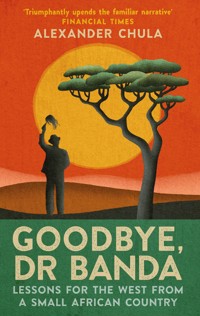
'You may never have been, may never go, may never even have heard of the place – but Malawi will repay your attention. It is one of the smallest, poorest countries in Africa, often overlooked; but its relationship with us in the West has been extraordinary.' How to engage with cultures profoundly unlike our own? We travel the world compulsively, wanting to reach out, but seldom feeling sure of how to do so. A small African country presents us with a near perfect case study. From David Livingstone and the early missionaries, through British colonialists, to today's tourists, aid workers, and even Madonna, Malawi has experienced the whole gamut of Westerners, all trying to connect. This has made for an extraordinary meeting of worlds, between one of the continent's most fascinating indigenous cultures, and the best and worst of our own. Unexpected and exhilarating, by turns edifying and uncomfortable, it is a story with urgent lessons for our vexed age of identity crisis and multi-cultural faltering. Here tribal ritual collides with Ancient Greek theatre; roving classicists with ancestral spirits; poets and pop stars with missionary-explorers; hippies and kleptocrats with long-suffering peasants – a tumultuous masquerade around the enigmatic Dr Banda.
Sie lesen das E-Book in den Legimi-Apps auf:
Seitenzahl: 430
Veröffentlichungsjahr: 2023
Das E-Book (TTS) können Sie hören im Abo „Legimi Premium” in Legimi-Apps auf:
Ähnliche




















‘Triumphantly upends the familiar narrative . . . a quxiotic attempt to show us what countries can learn about love and art from rural Malaŵians’FINANCIAL TIMES
‘Chula’s powerfully thought-provoking book shows the folly of treating Western high culture as merely a tool for self-flagellation. Properly embraced, it can be a route for engagement with the equal wealth of other cultures, rather than division’THE CRITIC
‘Extremely rich and interesting . . . Many people, alas, read to confirm their prejudices; this book will make people reflect on and think about what they have never considered before’NEW ENGLISH REVIEW
‘[Chula] has an authoritative voice, an empathetic writing style and a very shrewd eye. He has written a social monograph, a national history, and philosophical treatise on our times that deserves a warm and wide reception’THINKSCOTLAND.ORG
‘According to fashionable “decolonising” theory, European colonists hoisted an alien culture onto unwilling native peoples. Reflecting on his own particular experience in Malaŵi, Alexander Chula tells a less predictable, more fascinating, and far more plausible story of cultural give-and-take. His astute and thoughtful observations of an African microcosm contain important lessons for the larger discussion of the impact of Western colonialism. There is wisdom here, elegantly expressed’NIGEL BIGGAR
‘Goodbye, Dr Banda is one of those rare books that are hard to classify, but are all the more delightful for that very reason. It is a highly unusual personal memoir, but it is also a sympathetic and perceptive portrait of a country and its past. It is a quite superb book that will linger with the reader for a long time after it is read’ALEXANDER McCALL SMITH
‘This is an impressively researched, beautifully written book. I loved the empathy Chula brings to Malaŵi’s myths, our past and our present. The history of missionaries like Robert Laws and Chauncy Maples showed his thoroughness in research. This is a book to read and enjoy’FELIX MNTHALI
‘A rewarding, delightful and personal examination of Dr Banda’s struggle to reconcile his indigenous Chewa culture with the culture of the Greek and Latin Classics. Radical, deep and surprising, with gentle but trenchant observations on African versus Western cultural dynamics, Chula writes with first-hand knowledge of Greek myths and Nyau traditions’JOHN LWANDA
‘A riveting – and cautionary – tale of a clash of cultures, as seen through the eyes of a young classicist turned medical doctor, who discovers that Ancient Greek legend and the rituals of the Chewa people have much in common. Brilliantly observed and packed with insights, the result is an African classic’MICHAEL HOLMAN
‘I have read this with great enjoyment. Learning about the tradition of Classics in Malaŵi since Banda is fascinating, and the author’s personal experiences as a teacher at Kamuzu Academy – and at Oxford prior to that – are vivid, memorable, and described with directness and elegance’ARMAND D’ANGOUR
‘Reading Alexander Chula’s travelogue, I kept imagining I was soaking in the prose of my travel-writing hero, Bruce Chatwin. Absolutely engaging from beginning to end, Goodbye, Dr Banda is very likely to position Chula as a leading literary voice in years to come. I recommend this work for the way it informs, its cultural insights, and for its keenly observed detail’TAHIR SHAH,Author of Time magazine bestsellerThe Caliph’s House: A Year in Casablanca
‘Timely, erudite, and a fascinating insight into the complex diversity that is the real modern Africa’ROBERT TWIGGER,bestselling author of Red Nile
GOODBYE, DR BANDA
ALEXANDER CHULA is a medical doctor and writer. Born and raised in London, he is of mixed Thai and British ancestry. After reading Classics at Worcester College, Oxford, he studied medicine at the University of London. He has worked in Malaŵi both as a teacher of Latin and Greek, and as a clinician. Goodbye, Dr Banda is his first book.
GOODBYE, DR BANDA
LESSONS FOR THE WEST FROMA SMALL AFRICAN COUNTRY
ALEXANDER CHULA
First published in hardback in Great Britain in 2023 by Polygon, an imprint of Birlinn Ltd. This paperback edition published in 2025 by Polygon, an imprint of Birlinn Ltd.
Birlinn Ltd
West Newington House
10 Newington Road
Edinburgh
EH9 1QS
9 8 7 6 5 4 3 2 1
www.polygonbooks.co.uk
Copyright © Alexander Chula, 2023, 2025
The right of Alexander Chula to be identified as the author of this work has been asserted in accordance with the Copyright, Designs and Patents Act 1988.
All rights reserved. No part of this publication may be reproduced, stored, or transmitted in any form, or by any means electronic, mechanical or photocopying, recording or otherwise, without the express written permission of the publisher.
ISBN 978 1 84697 730 5
EBOOK ISBN 978 1 78885 579 2
British Library Cataloguing-in-Publication Data
A catalogue record for this book is available on request from the British Library.
Typeset in Sabon LT Pro by The Foundry, Edinburgh
Printed and bound in Great Britain by Ashford Colour Limited, Gosport
To RLH
qui haec mihi monstravit
CONTENTS
Preface
PART ONE: ET IN MALAŴI EGO
I DR BANDA & ME
II THE ETON OF AFRICA
III ARRIVAL
IV THE GREAT TRADITION
V RARE BIRDS
VI THE VILLAGE
VII YOUR PROTOTYPE
VIII CULTURE WARS
IXGRADUS AD PARNASSUM
X THE COMMUNICATION OF THE DEAD
XI THE GREAT DANCE
XII DEATH & TRANSFIGURATION
PART TWO: NGWAZI
XIII THE WANDERER
XIV THE GREAT DICTATOR
XV PORTRAIT OF A TYRANT
XVI THE DIALECT OF THE TRIBE
XVIIDE RADICULIS
PART THREE: ONLY CONNECT
XVIII IN WESTMINSTER ABBEY
XIXVITAÏ LAMPADA
XX EVEN UNTO DEATH
XXI INTERLUDE IN ZANZIBAR
XXIIIN MEMORIAM
XXIII LIVINGSTONIA
XXIV ANCIENT & MODERN
XXVDEA EX MACHINA
XXVI PALACES IN THE JUNGLE
XXVII IMPERIAL FOLLY
XXVIII CORNSTALK & LEAF
XXIX ON RUINS
XXX THE USES OF LITERACY
PART FOUR: THE NEED FOR ROOTS
XXXI MODERN TIMES
XXXII SPEECH DAYS
XXXIII THINGS FALL APART
XXXIV THE FORCES OF ENTROPY
XXXV THE AGONY IN THE GARDEN
XXXVILUX IN TENEBRIS
XXXVII LAND OF FIRE
XXXVIII SIGNIFICANT SOIL
XXXIX OLD FIELDS, NEW CORN
XL APOCOLOCYNTOSIS
Epilogue
Acknowledgements
Bibliography
PREFACE
You may never have been, may never go, may never even have heard of the place – but Malaŵi will repay your attention. It is one of the smallest, poorest countries in Africa, often overlooked; but its relationship with us in the West has been extraordinary. A meeting of worlds took place here, between one of the continent’s most fascinating indigenous cultures and the best and worst of our own. The story of this is complicated but exhilarating, by turns edifying and deeply uncomfortable. But we would do well to examine it: Malaŵi presents urgent lessons which resonate piercingly in our vexed age of culture wars and identity crisis.
How should we engage with peoples and societies profoundly unlike our own? Westerners wander the earth compulsively, foreign travel assuming an almost existential importance in our lives. Wherever we go, we want to reach out, want to connect. But besides reading the ‘history and culture’ pages at the back of the Lonely Planet, we are often unsure of how to do this – certainly that was my own feeling when I first arrived in Malaŵi. When globe-trotting was suspended by the pandemic, it seemed a good occasion to pause and reflect on this.
For cultural exchange to work, both sides must have something to give; and if you have a defective attitude to your own culture, you will find it hard to interact with another. These are the chief lessons of this book, which observes in Malaŵi a near perfect case study: from Livingstone and the early missionaries, through British colonialists, to today’s tourists, expatriates, aid workers, and even Madonna, the country has experienced the full gamut of Westerners, all trying to connect. How they have fared in this has proved highly variable, however; and the shared context urges us to compare their efforts, which appear starkly against the strange, luminous backdrop of Malaŵi.
These subjects are approached obliquely, through a mix of history, travelogue, biography and memoir, as I describe the land, its people, and my unlikely presence among them. I first came as a teacher of Latin and Greek, soon after I had completed a Classics degree at Oxford. When I left, it was to study medicine in London, but by then I had grown attached to Malaŵi, so I returned whenever I could. At length I qualified as a doctor and was lucky to be able to go back as a clinician and experience the country very differently. My impressions – some brief, some extended – were therefore varied and collected over several years.
I came to fixate on how closely interwoven Malaŵi’s story is with our own in Britain. It encompasses slavery, imperialism and the struggle for independence, as well as much more recent events. Throughout all this, there has grown a sympathy between Malaŵian and European cultures which runs far deeper than the politics. Embodying this is Dr Banda – Hastings Kamuzu Banda – who lived almost the full hundred years of the twentieth century: a peasant-scholar who became a doctor, a rebel turned reactionary, a champion of African independence who aged into a brutal, senile dictator.
Banda ruled Malaŵi for thirty years until 1994. He was variously monstrous and magnificent, exalted and absurd. My interest in him was stirred by his unusual preoccupations: with culture, identity, belonging. He left home as a boy and wandered to South Africa, America, Britain. He eagerly adopted the ways of others, but always felt the exile’s uprootedness and urge to reconnect. He was infatuated with both Africa and the West, but truly at home in neither. This discord inspired an idiosyncratic vision of how the best of both might be brought together, preserved, and celebrated.
The most flamboyant expression of this was a project to advance his country’s development through the study of Greco-Roman civilisation. In the 1980s, he established ‘the Eton of Africa’, an academy in the Malaŵian bush intended specifically to promote classical education. This institution – or rather its bizarre afterlife – was my introduction to the country. But it also posed the challenge which first impelled me to write this book. I knew from my own student days that Classics had lost its prestige in the West. More and more, the legacy of Greece and Rome was to be forgotten, repudiated, ‘decolonised’. What was I to make of such extravagant homage paid to it in Africa? Banda’s vision was eccentric and deeply flawed, but, in its problems and paradoxes, it illuminates many of our contemporary uncertainties, especially as we falter towards the ideals of multiculturalism.
As I completed this manuscript, Trafalgar Square’s Fourth Plinth has just been adorned with two surprising new statues: of Malaŵian anti-colonial rebel John Chilembwe and an English missionary friend of his. The decision to erect these – in the wake of Black Lives Matter and the toppling of Edward Colston’s statue – suggested to me that others also recognised the relevance of Malaŵi’s history to contemporary Western concerns. As we shall see, however, the story evoked by those statues is not as straightforward as their sponsors had in mind. Like so much else in Malaŵian history, it is ambiguous, and cuts to the core of the current tense debate about Britain’s imperial past.
Trigger warnings are due, although this book perhaps requires more than I can enumerate. Banda was a hero in the struggle for racial equality and against colonialism, but he was also an unashamed elitist, a black man who – in today’s parlance – was ‘on the side of the patriarchy’. As such, he might have been invented to discomfit modern sensibilities.
There is then the broader historical context of the West’s record in Africa, past and present. On this subject, a number of orthodox narratives have come to prevail, but the Malaŵian example does not always reinforce them. In fact, it is frequently subversive.
Lastly, the borrowing and refashioning of others’ heritage is pursued with abandon by many characters in this book, most notably by Dr Banda. Our own society has made of this a grave taboo, in fearfulness of being charged with cultural appropriation. But a more equivocal response seems warranted in Malaŵi. If there has been appropriation here, it has not always traduced or diminished. It may even have revitalised and enriched.
Malaŵi is of course materially poor and undeveloped, so it is impossible to skirt over many sad realities of its daily life. My object is never to denigrate; on the contrary, I write primarily in admiration, especially at so much hardship overcome. For despite its poverty, Malaŵian society strikes me as fundamentally healthy. Its peoples are almost quintessentially rooted in time and place, bound by a rich history to their land and each other. Perhaps it is because of this, above all, that the disconnect with our own unsettled culture is felt most strongly. It was long upheld that Malaŵians could only develop with help and guidance from the West. Well, that is for them to decide. But we might now try to invert this way of thinking: today it is the West that should take lessons from a small African country.
PART ONE
ET IN MALAŴI EGO
I
DR BANDA & ME
I had long been aware of the abandoned palace on the hill. It was pointed out to me soon after my arrival in the country, and I observed it from afar with curiosity whenever I drove past. Now at last I was taking the rough road behind the bustling little town that sat beneath, up through the forest to the frayed perimeter fence. It had been arranged for me to catalogue the palace library (whatever was left of it), but I sensed in advance that there might be more to my visit than this. Part of me wondered if I might even find treasure – but I was really looking for something that would shed light on my own perplexing presence in Malaŵi.
My background was suburban, middle class, raised in the West, half English, half Oriental. I grew up amid the unchallenging cosmopolitanism of south London. I was fresh out of Oxford, optimistically equipped for the world with an undergraduate Classics degree. My friends were all knuckling down to serious office jobs back in Britain, so what on earth was I doing in a tiny, impoverished, landlocked country 5,000 miles away? Notionally I was there to teach Latin and Greek – but this answer only prompted further questions.
The approach to the palace was steep, and the views grew wide with the ascent: vast, empty plains to the east; endless dense forest to the west, both unbroken to distant horizons. Minutes before I had been amid noise and squalor, the heat and the dust, assailed by every stereotype of small-town African life: ragged children, bleating livestock, a frenzied market, monstrous trucks. Now, up on the hillside, it was cool, still, quiet. And I remember the smell: the faint, sweet aroma of the surrounding bush, mingled with that of tarmac grown warm in the tropical sun.
The road snaked up to a rusty steel gate that was creaked open by an elderly caretaker. He appeared to be living alone in an adjacent shack, and the place was otherwise deserted. Formal gardens were turning to scrub. Dead leaves choked dried-out fountains. A sapling thrust through a crack in the disused helipad.
I pulled up before the main house, a mass of peeling white stucco, fallen red roof tiles and colonnades entangled by creepers. It had been stripped bare, but a robust, concrete pavilion was set apart from the rest and appeared to be intact. Baboons scattered from the forecourt as I approached. Once inside, the classicist in me gasped with delight: there were dusty books from ceiling to floor. Luxury commingled with decay, like Miss Havisham’s house reimagined in Africa: lion and leopard skins sprawled under foot, tattered by moths; the silk wallpaper was nibbled by termites; cobwebs spanned crystal chandeliers. I set to work on the collection, heaping books and cataloguing them at a large Louis Farouk desk, taking care not to antagonise the wild bees nesting in a corner behind me.
I found an adjoining strong-room, the thick steel door of which had been left ajar. There was no power, so I had to rummage by torchlight: it was all a jumble of packing crates and filing cabinets overflowing with loose papers and bric-à-brac. Only on my final sweep did I notice a small oak casket bound with brass and leather, hidden under a pile of battered oil portraits of Mugabe, Gaddafi, Nyerere. It was unlocked. I took it out into the sunlight and opened it to discover a 1584 edition of Julius Caesar’s Gallic War, printed in Venice by Aldus Manutius, the most celebrated press of the Renaissance. The front page bore a stamp: EX LIBRIS H. KAMUZU BANDA.
Dr Hastings Kamuzu Banda. The Ngwazi or ‘Conqueror’. And, variously: His Excellency, the Life President of the Republic of Malaŵi, Destroyer of the Federation of Rhodesia and Nyasaland, Father and Founder of the Malaŵi Nation, Messiah, Saviour, Lion of Africa, Doctor of Medicine, Fellow of the Royal Societies of Surgeons & Physicians (Edinburgh), Bachelor of Arts (Indiana), Bachelor of Medicine & Surgery (Tennessee), LRCP, LRFP&S, PHB, Hon. DSc, Hon. LLD (Massachusetts), Hon. LLD (Malaŵi), Hon. LLD (Wilberforce), Hon. LLD (Indiana) and so on.
Even by the rococo standards of post-colonial Africa, Banda was one of the most astonishing leaders the continent has ever witnessed. He was born just a few miles from the palace, on an uncertain date in the late 1890s. His family were peasants, living in what was then British Central Africa, later known as Nyasaland. Malaŵi was the name Banda chose for the country at independence in 1964.
He had been the first of his family to go to school and was taught by missionaries who came to his village. As a teenager, he walked a thousand miles to South Africa and found work in the mines. He was intelligent and lucky: after several years, he was awarded sponsorship to go to America, where he spent a decade studying Classics, history, literature, anthropology and – finally – medicine. On qualifying, he moved to Edinburgh and later London, where he worked for fifteen years.
As a suburban family doctor in Harlesden, he earned the adoration of his patients, moved in sophisticated circles, joined the Fabian Society, entered the Freemasons, had an affair with a married Englishwoman, canvassed for Atlee’s Labour party in the 1945 election and intrigued with African exiles conspiring against imperialism. Never once during this period did he return home.
Malaŵi was part of the ‘great interior’ of Africa, ‘opened up’ by Livingstone, then absorbed into the British Empire in 1891. By the 1950s, however, when Banda might otherwise have been contemplating retirement from medicine, independence was in the air. From his semi-detached house in north London, he coordinated a network of anti-colonialist agents who worked to promote his reputation back at home. When he returned for the first time, in 1958, he was welcomed rapturously. The outgoing British administration initially imprisoned him but realised after a year that he was the most popular and best qualified man to take over power. In 1964 he led Malaŵi to independence, won the country’s first elections, and then ruled as ‘President for Life’ for the next thirty years.
His supporters continue to protest the designation ‘dictator’, but it is difficult to resist. He dispensed with democracy early on and thereafter ruled with authoritarian vigour: ‘Everything I say is law – literally law,’ he proclaimed. His regime operated by one-party rule and rubber-stamp parliament. There was judicial murder and extra-judicial assassination, defenestration and defalcation; there were cabals, cabinet crises and cult of personality, private extravagance, paramilitary enforcement of petty regulation and parcel bombs posted to overseas dissidents. However, almost until the end of his rule, Banda remained popular. He kept Malaŵi stable, orderly, and out of local conflict – utopian conditions by the standards of the region at that time. Within the limitations of such an undeveloped country, Malaŵi prospered, for a while.
But when I arrived in 2009, Banda was twelve years dead and his achievements lay in ruins. I stood in the empty palace, contemplating the desolation. And what of the mysterious book in my hand? It seemed as out of place as I was. How had a priceless, antique edition of the most famous work of Roman history ended up on a remote mountain in the middle of Africa?
Of course it was Banda’s. Like me, he was obsessed with Classics – the study of the Greco-Roman world, its languages, literature, history, culture. His interest began during his early education in America, before he studied medicine. It remained with him all his life and, when he was president, became more and more important to him. Knowledge of the ancient world, he convinced himself, held the key to his country’s advancement. And so in 1981 he opened Kamuzu Academy, a boarding school founded specifically so that the nation’s ablest children, however poor, might study Latin and Greek.
The ‘classical education’ emerged in Europe during the Renaissance and came to occupy a central place in the cultural landscape of the West. In nineteenth-century Britain, it was felt to supply the mental equipment that qualified you for government, at home and in the Empire. Banda first encountered its influence in the colonial administrators, missionaries and settlers whom he met in his boyhood.
By the second half of the twentieth century, however, Classics had become an embarrassment. The subject underpinned a historical narrative that lay in tatters after the barbarism of two world wars. The radical politics of the 1960s condemned it as the paradigm of blinkered Eurocentricism, and it began to fade from the school curriculum. But for Banda, Classics still stood for civilisation. Greek and Latin granted access to the wisdom with which the West had flourished: why should it not do the same for Africa? In The Republic, Plato envisioned a class of philosopher guardians trained from youth to rule with justice and far-sightedness. The alumni of Kamuzu Academy would assume this mantle and ensure their nation’s future.
But the experiment miscarried, and it was only thanks to the strange twilight of Kamuzu Academy that I ended up working there. An attenuated Classics department just about endured into the new millennium, and I learnt that a vacancy had arisen shortly after completing my first degree. I wanted to go to Africa, and it was probably the only job on the entire continent that I was actually qualified to do.
I began to discover odd, sometimes uncomfortable, affinities with Banda. Before I applied to teach at his school, I was already planning the same move from the arts to medicine that he had made in his youth. When I returned to Britain, it was to re-train as a doctor, yet my enthusiasm for Classics stayed with me, as it had with him.
Banda was torn between his African and European identities. Infatuated with both but at home in neither, he spent his life precariously balancing the two. When he returned to Malaŵi after a separation of over forty years, he tried strenuously to recover and reconnect with his own culture while simultaneously promoting the ‘high culture’ of Europe. I suspect he often felt as much a stranger in Africa as he had while living in the West, everywhere conscious of a rootedness in others that was absent in himself.
I had no connection with Africa before moving to Malaŵi. My father is from Thailand, my mother from England. But like Banda, I’ve always felt something of a stranger in the two societies where I might claim membership – never unwelcome or ill at ease, just aware of my own difference. Growing up in London, multiculturalism was my norm, but it left me unsatisfied, and I doubted if I could ever properly get to grips with either my Thai or English heritage. But in the classical world there seemed to glimmer an ideal, universal culture that transcended – without negating – contemporary national differences. Clasping Banda’s prized edition of Caesar, I surveyed the immense view and wondered if he had felt something similar.
II
THE ETON OF AFRICA
‘Latin is not being taught anywhere in the country!’ fulminated Banda throughout the 1970s. ‘To me, education based on no Latin is a house built on stilts.’
A retired engineer explained to me how the site for Kamuzu Academy had been chosen. Banda wanted the school located beside the very kachere tree under which, as a peasant boy, he had received his first lessons at the start of the century. He led a team of surveyors, engineers, and men armed with panga knives into the forest; after three days of grubbing about, the tree was identified and work could begin.
Even promotional material for the school had to admit that its site was remote: somewhere in the country’s sparse Central Region, between two immense national parks. Here, a vast tract was cleared, a road constructed, foundations laid. Then dormitories and classrooms, cloisters and laboratories began to rise above the flat horizon. A clock tower, then the tallest structure in the country, was reflected in an artificial lake graced by ornamental fowl and gigantic monitor lizards. The water was pumped several miles from a specially dug reservoir, which irrigated acres of lawns, gardens, golf course, grain and livestock farms. The latter supplied the kitchens, where the produce was transformed into authentic British school meals. At the centre of the whole complex stood a library styled after that of Congress in Washington, DC and equipped with a multi-volume English dictionary donated by Ronald Reagan. A central thoroughfare, called the Appian Way, passed from the Great Hall through hanging gardens beside a Greek theatre. The academy was designed, above all, to produce classicists.
At the opening ceremony, Banda emerged from a helicopter in his signature three-piece suit, Homburg hat and sunglasses. He then knelt to drink at a well remembered from his boyhood before being cheered to a podium by ululating praise singers and warriors brandishing spears and knobkerries. He returned their salute with a cane in one hand, a fly-whisk in the other, before declaring: ‘Anyone who does not want to study Latin and Greek has no place at Kamuzu Academy!’
All pupils were required to take these subjects to A level. They were drawn from the best-performing candidates in each district of the country, regardless of social status. Most were poor, and many had never before worn shoes or eaten with a knife and fork. Now they had full scholarships, ties, blazers and straw boaters. They received lessons in etiquette from the school dame. Soon they were taking turns to say grace in Latin before meals in the refectory. The use of native languages was forbidden.
What went for the pupils went also for the masters: they all had to demonstrate a basic knowledge of Latin, irrespective of the subject they were employed to teach. Inevitably this meant hiring everyone from abroad. Indeed, Banda preferred that Malaŵians be employed only as ancillary staff.
The construction of the school was supposedly a gift from the president’s own pocket, but the annual running costs consumed almost a third of the national education budget. Regular government schools received on average seventeen US dollars per pupil per year. To educate a child at the academy cost the country 14,000 dollars a year. During an exchange trip, the Head Master of Eton College remarked that Kamuzu Academy was becoming known as ‘the Eton of Africa’. But to his mind, he added, Eton should be referred to as ‘the Kamuzu Academy of England’.
However, even as the pupils busied themselves with Latin declensions and the Greek definite article, the regime was teetering. Banda had grown very old indeed, and his rule had ossified. The foundation of the academy was a final flourish, followed by a decade of decline. Without much resistance, Banda was toppled in 1994. His one-party state was dismantled and elections were held. He died three years later during the kleptocratic rule of his successor, Bakili Muluzi.
When I arrived in 2009, Malaŵi had just re-elected Bingu wa Mutharika, its second president since Banda. There had been questions about the conduct of the election. The bigger picture was that Bingu presided over the tenth poorest country in the world, a mountain of debt and a budget balanced only by foreign aid; but there had not yet been the calamitous misrule which I would soon witness.
Funding for Kamuzu Academy had stopped abruptly when Banda fell from power. The scholarships were terminated and most of the expatriates departed. To survive, the school had become private. The teachers were now mostly Malaŵians, its pupils the children of ‘Big Men’ from the capital who could afford the fees.
Amid a wave of nostalgia for the ancien régime, Bingu decided to honour Banda’s memory by re-establishing a small number of government scholarships. Though the scholars were greatly outnumbered by the private students, the dying embers of Banda’s vision flickered briefly to life once more.
III
ARRIVAL
The plane arrived late into Lilongwe, and the sun was already low in the sky. I was picked up by Dr Highbrow, a fellow classicist, now entering his twelfth year at the academy. He hurried me along to minimise time spent travelling in darkness.
Our journey from the capital took us through the central plains, flat and featureless, mile after mile. I remember my surprise that the road signs were identical – in colour, design, typography – to those in England, only they pointed to exotic, unfamiliar places: Kasungu, Mzimba, Nkhotakhota . . . It was an odd intrusion of the familiar on the prevailing strangeness.
We were periodically stopped at police checkpoints, our papers inspected by smartly dressed officers in khaki, with peaked caps and swagger sticks. As we waited before the first barrier, two young boys – maybe ten years old – leapt towards us proffering half-a-dozen mice skewered on a stick – a common roadside snack for passing motorists. The animals had been flame-roasted whole, the fur singed off, the tiny bodies charred black and contorted by the heat. When I declined, the boys turned to begging, first for almost worthless coins and then for the empty plastic water bottle in my lap.
We were on the M1, the country’s principal motorway, but it was narrow and pot-holed, disintegrating into dirt track at the edges. Larger vehicles sometimes had to slip off the road altogether to pass each other. Cyclists attempted to cleave unsteadily to the outermost inch of jagged tarmac, the wisest allowing themselves to be driven onto the dirt siding as speeding vehicles skimmed past. Many balanced unwieldy burdens on their panniers: a goat, trussed and bleating; a bale of tobacco; a mother and child. Beside them traipsed an endless line of workers returning from the fields with hoes and machetes. In tiny mud dwellings all around, women kindled innumerable cooking fires that made the failing light hazy with wood smoke.
In between dodging other road users, Dr Highbrow began my initiation into the world of Kamuzu Academy. He spoke with the precision and grandiloquence of a species of don that had almost died out at Oxford.
‘It is a fallen institution. The results are execrable. But you will no doubt hear a different account at next week’s staff meeting: “Best GCSE results in almost twenty years . . . Ten per cent better than the UK national average . . . More pass grades than ever!” Such speciousness: like listening to figures of tractor production being read out at a meeting of the Supreme Soviet. If the Head Master says it’s raining, look out the window, as they say.
‘The bright pupils learn stuff; the dim ones do not. There are a few worthy duffers who might be dragged up from an F to a D. But you’ll probably find there are better ways to expend your time and energy in Malaŵi. What is worthwhile lies outside the academy . . .’
As we drove, the sun set impressively, just as in a tourist brochure, a huge softly glowing circle of deep pink intersected by a sharply defined wisp of horizontal cloud. Darkness then fell abruptly, without the lingering twilight I knew from Europe, and all other traffic melted away. There were no road lights, and, as I tried to trace the outlines of the tarmac, all I could perceive was the cone of our headlights illuminating a void.
But suddenly Dr Highbrow slammed on the brakes, and we screeched to a halt. A few yards further on, a man lay prostrate in the middle of the road. He looked up and, with a flash of a smile, leapt to his feet and trotted away into the darkness. It was winter, and the evening was cold. He had been trying to warm himself on the heat absorbed by the tarmac during the day.
A couple of hours later an elaborately ornamented roundabout appeared out of nowhere, and next we were passing through huge steel gates that bore a crest with the Latin motto HONOR DEO ET PATRIÆ. Inside, we were on better tarmac and amid denser vegetation than any we had encountered on our journey. Beside the road were the first street lamps I had seen since leaving the airport access road a hundred miles before. But none was lit – we had arrived at Kamuzu Academy during a power cut.
I ate dinner with Dr Highbrow that night. His villa was well hidden among tall pine trees and dense thickets of bougainvillea. His cook, who had prepared coq au vin when the power was on, now reheated it on a clay brazier fired with charcoal. We looked in on his activities and noticed a large dead swamp rat in the kitchen sink. With an awkward smile, the cook summoned a woman from the servant’s quarters. She came to the door and received the rodent with a silent curtsy.
The coq au vin was tough but flavoursome (‘village chicken – to be treated like a game bird’) and paired with South African wine (‘Allesverloren – all is lost – the name is suited to exile here’).
Conversation dwelt on Oxford, where Dr Highbrow had stayed on to complete a doctorate in Wittgensteinian language theory before coming to Malaŵi. He was familiar with several of the dons, and I supplied a little welcome gossip on a few mutual acquaintances.
‘Civilisation does still exist there,’ Dr Highbrow conceded, ‘but only if you know where to find it. A friend of mine who still hangs around in hope of a position calls it “the Cancer Ward”. You will find Malaŵi humane after the barbarism of Oxford. What we have here – for now – is a “safe house”.’
After dinner, we sat beside the open fire in an imposing living room illuminated by candles wedged into dozens of old wine bottles. Two walls were lined floor to ceiling with books, and a desk was piled high with papers. On the coffee table I noted Plato’s Phaedo, Frazer’s Golden Bough and numerous obscure works of local ethnography.
Over whisky, Dr Highbrow spoke as fluently about local custom and contemporary African literature as about epistemology and the Presocratics. It was like being back in an Oxford tutorial room – except that here the walls were hung with a series of monstrous red and black masks that commingled the animal and the human to demonic effect. The flickering light played on their twisted features to suggest still greater malevolence.
‘Gule wamkulu – the Great Dance,’ said Dr Highbrow, noting my distraction. ‘It is the supreme cultural achievement of the Chewa people. The masks represent an innumerable pantheon of characters, each with its own moral lesson communicated by a masked dancer. In this way, the wisdom of the ancestors is transmitted down the ages.
‘But “representation” does not quite cover it. The dancers are members of a secret society, the Nyau. When they don the masks, they cease to be truly themselves: they become the spirits of the ancestors, manifesting themselves as the characters of gule. As Mr Sangala explains it when asked directly: “They are dead men who come out of the graves to dance for us.”’
‘Mr Sangala?’
‘Felix Sangala. A man of many parts. And a senior figure in the Nyau. You will no doubt meet him, in due course.’
‘And he believes that?’
‘The existence of an afterlife is here considered self-evident, the supernatural everywhere inextricable from the real. Only a few weeks ago, a witch aeroplane crashed outside the academy fence.’
‘A witch aeroplane?’
‘That’s right. A couple of passengers broke limbs, but nobody died. Just over the border in Zambia last year, two people were killed in a similar event.’
Dr Highbrow gestured to a broad shallow vessel of woven grass suspended above the fireplace.
‘That’s a lichero – a winnowing basket. It’s an object with sinister connotations, and I shouldn’t really keep it. But I acquired it early on, and there is now no way of disposing of it that might not arouse even more suspicion. It serves as the cockpit for a witch aeroplane. The witch pilot sits in the basket and steers the craft with a large wooden maize pestle. Some say you need human blood for fuel, but that seems to depend on the wickedness of the witch. Passengers then pay to be transported to otherwise unattainable places: through keyholes, under closed doors, into other people’s bedrooms, even abroad.
‘The group that crashed recently were musicians from a local band. A passing tourist heard their music and said he would arrange for them to perform in the UK. When he failed to keep his promise, they were understandably disappointed. And so they contracted a witch to convey them to London. Unfortunately they crashed just outside the fence here. I suppose in a delusional state they self-inflict or submit to injury.’
The lights flicked suddenly back on and a cassette player whirred to life with a recording of Bach’s Well-Tempered Clavier. The power had returned. I felt as if I had understood nothing, my head reeling from fatigue, whisky and the intense weirdness of everything around me. But the irruption of electricity and that warm, humane sound dispelled the unsettling atmosphere. I stepped out onto the veranda and gazed into the immense darkness. There was no moon, and the Milky Way looked like a cache of tiny diamonds scattered onto black velvet. A hyena whooped in the undergrowth, and from far away drifted the faint thud of electronic music.
IV
THE GREAT TRADITION
When Banda died in 1997, I was still at school. The event stirred my head of Classics, Dr Pelion, to recollect the story of the crazed dictator and his academy in the bush. The idea appealed to me, but I did not think of it again for several years.
Within living memory, Classics had been central to my school’s ethos. Our Classics library had a venerable old building all of its own, and the Great Hall was emblazoned with the names of classicists dispatched to Oxbridge down the centuries. But when I sat A levels, only two of us took Latin and Greek, instructed in these subjects by four teachers.
Yet it remained an enthusiastic department. Dr Pelion had degrees from both Oxford and Cambridge, and had published a book on Euripides. He elucidated the value of the subject in a way that stuck with me: the modern world was complex and chimerical, ceaselessly changing before our gaze. Greco-Roman culture, on the other hand, was static and remote enough in time to be studied dispassionately. The data was finite and the texts were few, many having been lost in the Dark Ages. The physical remains, like pots and stones and coins, were mostly discovered, catalogued, explained. And of course the languages were dead – that was the whole point. Use could no longer distort them; the processes of change and decay had been arrested. They possessed the same instructive fixity as the embalmed cadavers I would later study in medical school.
The classical world was a complete microcosm, the richest we possessed. But it was also just small enough that it could be apprehended in totality. Beside the shifting sands of contemporary culture, the Greco-Roman world was a firm and lofty place to stand and survey both past and present. We are all walking blindly into the future, it has been observed. The only difference between us is how far our vision penetrates backwards into the past.
That was Dr Pelion’s analysis. But he was no wet-eyed miniature don stepped out of Goodbye, Mr Chips or The Browning Version. He had taken his doctorate at King’s College, Cambridge in a welter of leftist radicalism. He was impassioned in speech, shabby in dress, accompanied by a little white dog and occasionally a faint aroma of marijuana. He was also, it demands to be said, a deeply kind man.
In our final year, he taught us Euripides’ last play, The Bacchae – the tragedy of King Pentheus, whose repression of primal urges results in his own violent destruction. It was revelatory of a dark savagery concealed beneath the stereotype of Greek culture as lucid, ordered and rational.
Dr Pelion was also responsible for our initiation into the postmodernist approach to the humanities. We learnt that the scholar’s real task was ‘deconstruction’: the stripping away of unconscious bias (our own and the authors’) so that the real significance of a text could at last be glimpsed. This seemed exciting at the time, and we went to university brimming with the arcane terminology and precepts of Michel Foucault, Jacques Derrida and Edward Said. It was only later that I would sense a pernicious impulse at work in this.
Classics at Oxford was still known then by its historical title: Literae Humaniores or ‘more human(e) letters’. The name was meant to draw a distinction with theology and imply that classical literature is so elevated as to fall only just short of the divine. But in my first term I saw an Old Etonian classicist lick cocaine off another’s face with the advice: ‘You’re an animal – act like one.’
Studying Classics produces conflicting feelings. Until recently, the subject had been central to education in the humanities. It was thought to train the mind, furnish wisdom, teach justice and inculcate virtue. But nobody speaks of wisdom and virtue in Oxford today – it would feel unforgivably gauche. As a classicist, you are supposed to hold the keys to ‘the best that has been thought and said’. At the same time, however, you are studying something that is repudiated, often contemptuously, by the modern world. In choosing Classics, you arouse the suspicion that you must be mired in the past or otherwise unfit for real life. ‘What can you possibly do with that degree?’ is repeatedly asked. Defending the subject grows wearisome, and it is easier to retreat into nostalgia or assume a pose of contempt.
A nineteenth-century Oxford don called Gaisford made one of the most infamous claims about Latin and Greek: ‘The study of ancient tongues not only refines the intellect and elevates above the common herd but also leads not infrequently to positions of considerable emolument.’ This fatuity probably marked the apogee of Classics, with Gaisford epitomising a mentality which would embitter the world against the subject. Immense complacency was followed by protracted decline. Nevertheless, the quotation sticks and might have been better known to many of my contemporaries than any line of Vergil or Homer.
Classics at Oxford felt tired. Students arrived having read a fraction of the texts their predecessors would have done a generation before. Every year, the faculty adapted to decline by cutting down the reading requirements – quite dramatically during the four years I was there. More recently it has even been mooted that Homer and Vergil might be removed from the curriculum altogether.
Ability to write in Latin or Greek had begun to vanish from the university, and the learning of facts, as opposed to opinions, was considered infra dig among arts students in general. The best of the dons possessed humane and brilliant minds, but too often they gave the impression of having retreated into small, defensible corners. The only outspoken academics seemed concerned with disclaiming elitism, decolonising the curriculum and celebrating inclusivity through ‘outreach’ programmes.
Classical scholarship was once highly technical: textual criticism, historical linguistics, mechanisms of oral transmission – these had been the bread and butter of the discipline. But without linguistic proficiency or real faith in the value of the task, such arid challenges are difficult to sustain.
Only the postmodernist school could claim relevance and vitality. Classical texts had to be deconstructed before they could be understood properly as the propaganda of those who wield power. Greece and Rome, it was implied, were the progenitors of the European patriarchy that still exists at every level of our culture. With a postmodernist lens, it is possible to trace the thread of exploitation, racism and misogyny down the millennia from the Bronze Age in Greece to the present day. The classicist’s main duty is to sift the inheritance for evidence of guilt.
This approach makes life easy from the undergraduate point of view, as the rubric can be learnt in five minutes and then applied to everything. The conclusions have been reached already: the authors and their white male confrères were the oppressors; women, slaves and foreigners the oppressed. Any mention of an oppressed group could be read as evidence of this, as could any failure to mention them. There is probably not a classicist in the country who hasn’t written about about Vergil’s portrayal of women in a spirit of lip service to feminist ideology, or about Herodotus’s colonialising purpose in studying the Persians. A few students bring fresh zeal to this work, especially if they hope to pursue careers in academia. But for most it is a convenient way to get through the chore of essays and tutorials. If you played the game and reproduced the right arguments, it was difficult not to pass your exams.
Things might have changed, but, in the mid 2000s, the real energies of Oxford humanities students were expended on dissipation. Barely a day went by without moderate to heavy drinking, which dulled faculties and emboldened opinions, as we staggered about boorishly in silk scarves and evening tails. Drinking like this necessitated long periods of daytime convalescence, perhaps in a college garden with a volume of Tibullus on which to rest your head. Few of the arts students with whom I caroused did much work. The scientists might have suspected this, but our self-confidence was imperturbable and went unchallenged.
The value of the subject was difficult to uphold under these circumstances and, in the final year, cynicism triumphed. Representatives of the big City law firms and finance houses infiltrated our well-heeled binges, laying on lavish networking events which at first we disdained but slowly began to frequent out of interest in the free drinks.
‘Have you ever thought about a career in financial consultancy?’
‘I’m sorry – this is cava,’ spluttered the undergraduate in an explosive spray. ‘We need to get out of here and find a proper drink.’
It was disconcerting to note that the votaries at these events were undismayed by our petulance. They persisted with Mephistophelian calm until theirs was an accepted presence among the balls, cocktail parties and dining clubs. For four years we had pranced without a care in the world, as if the party would never end. But the more alert began to sense that the ship was foundering – and the corporate world seemed to offer a life-raft.
‘You’d be surprised. Oxbridge Classics grads are well regarded in the City. They have a lot of transferable skills . . .’
I recoiled and looked for work abroad – which is how I found myself in Malaŵi.
V
RARE BIRDS
In fierce sunlight Kamuzu Academy shimmers like a mirage against the brilliant blue sky. A mass of bold red brickwork, its architecture nods to the classical vernacular but is otherwise defiantly modern, elegant and oddly congruent with its surroundings of lush tropical greenery. Before the entrance, an ornamental lake is swathed with irises and lilies that gleam purple and gold. The columns of a portico plunge into mirror-like water between banks of papyrus roosted by the sacred ibis.
The gardens and forest have now reached full maturity, an oasis in contrast with the bare central plains outside. With his taste for anomaly, Banda had the grounds planted with exotic trees imported from abroad. This had the unexpected consequence that rare birds are today attracted to the academy in the course of their migration routes. On occasion, the place is sought out by intrepid ornithologists.
The school seemed imposing, but, as I got closer, I noticed missing window panes and long meandering cracks in the masonry. The school bells were silent, and the clocktower told the wrong time. In the Classics department, yellowing posters of the Forum and Acropolis flapped in the breeze that blew through broken louvers. Tattered journals, souvenir guides and OHP slides of archaeological sites teetered in heaps on buckling shelves. Mountains of Greek and Latin texts contained bookplates inscribed with pupils’ names, testifying to generations of use brought abruptly to an end.
At the time of my arrival, Classics endured but in a greatly diminished form. All pupils still had to study one ancient language to fifth-form level, with the odd consequence that the school entered more Greek GCSE candidates than anywhere else in the world. But this policy was regarded by most as an unfathomable atavistic reflex. Only a few engaged seriously with the subjects, and the response of many was complete bafflement.
Teaching was complicated by a dichotomy observable between the small cohort of government scholars and the majority fee-paying students. Most of the former came from conditions of poverty, and had performed exceptionally in their entrance exams. The latter were from wealthy families, their fathers belonging to the class identified elsewhere in Africa as wabenzi, after their predilection for German limousines.
In the first few years, the scholars worked furiously while the rich pupils too often did very little. Ekari came from a village in the south, where his family were subsistence farmers. You could ask him for the first-person plural pluperfect active subjunctive of the Latin verb ‘to love’, and he would snap back the answer immediately: amavissemus. Beside him slouched Hellington, the son of a member of parliament. At age thirteen, he could barely write his own name. It should be observed, however, that the two sat together in perfect amity. On the rare occasions that Hellington was stirred to make an effort, he would prevail upon his friend to produce a piece of homework for him, and Ekari would cheerfully comply.




