


Erhalten Sie Zugang zu diesem und mehr als 300000 Büchern ab EUR 5,99 monatlich.
- Herausgeber: The Lilliput Press
- Kategorie: Geisteswissenschaft
- Sprache: Englisch
A third volume of essays – autobiographical, polemical, political, exploratory – by the most distinctive Irish writer of the age, in the highest tradition of Swift and Shaw. Hubert Butler's remarkable consistency of vision and clarity of mind make him unique among Irish essayists in reconciling diversity of content with unity of impression. The focus of his writing is local, its force and application universal. Like Chekhov, he is an abiding humanist whose work evinces an unsurpassed moral and spiritual integrity.
Sie lesen das E-Book in den Legimi-Apps auf:
Seitenzahl: 497
Veröffentlichungsjahr: 1989
Das E-Book (TTS) können Sie hören im Abo „Legimi Premium” in Legimi-Apps auf:
Ähnliche















GRANDMOTHER AND WOLFE TONE
HUBERT BUTLER
With a Foreword by
DERVLA MURPHY
THE LILLIPUT PRESS DUBLIN 1990
FOR PEGGY
CONTENTS
Title Page
Dedication
Acknowledgments
Foreword by Dervla Murphy
PART ONE IRELAND
1 Otway Cuffe
2 The Auction
3 Home-Coming
4 The Barriers
5 The Two Languages
6 The County Libraries: Sex, Religion, and Censorship
7 Crossing the Border
8 Abortion
9 The Decay of Archaeology
10 Midland Perspectives
11 Influenza in Aran
12 Grandmother and Wolfe Tone
PART TWO POLITICS AND CULTURE IN EUROPE AND AMERICA
13 James Bourchier: An Irishman in Bulgaria
14 Mein Kampf, Mr Eliot and Mr Forster
15 Yugoslavia: The Cultural Background
16 Yugoslav Papers: The Church and Its Opponents
17 Father Chok and Compulsory Conversion
18 Some Encounters: Zagreb 1946
19 Two Faces of Post-War Yugoslavia: Belgrade and Split
20 The Final Solution
21 Escape to Spain
22 American Impressions
By the Same Author
Copyright
ACKNOWLEDGMENTS
Thanks and acknowledgments are due to the editors and publishers of the following periodicals and newspapers in which various parts of this volume first appeared. All other material is previously unpublished.
‘The Barriers’: The Bell, July 1941.
‘Otway Cuffe’: Dublin Magazine, October 1948.
‘The County Libraries: Sex, Religion, and Censorship’: Irish Writing, July 1949, under title ‘The County Libraries and The Censorship’.
‘Midland Perspectives’: Sections I and II, Irish Press, 20 July 1948 and 8 July 1949; sections III, IV and V, The Irish Times, 10 May, 27 July and 6 August 1956.
‘Grandmother and Wolfe Tone’: The Kilkenny Magazine, Spring and Autumn 1963.
‘The City’: The Irish Times, 10 April 1948.
‘The Final Solution’: The Irish Times, 3-6 June 1963.
‘Escape to Spain’: The Irish Times, 1-2 December 1958.
‘American Impressions’: Sections I and II, The Irish Times, 4-5 June 1962; section III, The Irish Times, 18-20 June 1968.
FOREWORD
This volume, like its predecessors, will sharpen the temporal sense of the middle-aged; we have lived through decades during which humankind suddenly reached a watershed. And there we now stand, hesitating about the best way forward. We need good guidebooks, such as Grandmother and Wolfe Tone.
In a gentle essay near the beginning, ‘The Auction’, Hubert Butler recalls his early adolescence when tuberculosis ‘seemed a sordid, almost shameful secret between the doctors and the dying’ and his mother started a branch of the Women’s National Health Association in Bennettsbridge. Seventy years later he was vigorously addressing a Kilkenny anti-Amendment meeting during Ireland’s tendentiously named ‘Pro-Life’ Referendum campaign. In between stretched a long, rich lifetime of travel, study and strenuous activity on behalf of threatened Jews. There were also occasional public controversies, reluctantly entered into but pursued with skill, dignity and tenacity. The most celebrated of these, concerning the barbarously enforced ‘conversion’ to Roman Catholicism of Serbian Orthodox Christians, had an outcome of which Ireland should have felt deeply ashamed – but didn’t.
Seeing the proofs of this book on my desk, an acquaintance exclaimed, ‘That crank! Now what’s he on about?’
Outraged, I protested that for most of this century Hubert Butler has been among this country’s tiny minority of balanced, liberal and fearless thinkers.
‘But you’re just another crank,’ said my visitor, ‘so it’s no wonder you imagine he’s sane.’
Examining this involuntary compliment, I could see that if you’re in the business of crude categorizing, Hubert and I might indeed be graded together – if only because of our loyalty to our rural birthplaces and our distaste for the hectic artificiality of contemporary urban life. Although a generation (thirty-one years) separates us, it is not the ‘dividing generation’ of twentieth-century Ireland. My childhood overlaps with the era in which Hubert matured and we share memories that I do not share with today’s thirty-year-olds. A few of my primary school classmates walked barefooted for miles, then pulled on their nail-studded boots by the convent gate. On Sunday mornings pony-traps and donkey-carts lined the streets around the church. On fair-days scores of cattle, sheep, horses and pigs were driven into the town centre. Lismore then supported seven bakeries, four dressmakers, two tailors, two cobblers, three basket-makers and twenty-three pubs; now only the pubs (and several fewer of those) remain. Too often one heard of whole families being rapidly wiped out by tuberculosis. Puritanical paranoia was rampant and library books were censored according to the revulsions of manic local spinsters. The majority of my contemporaries had no alternative in their teens but to emigrate. Many small farms were occupied only by an unmarried couple – a brother and sister. Most local roads were untarred. All the local rivers were unpolluted. Election campaigns were physically gruelling, emotionally exciting and mentally exhilarating; people walked or cycled for miles to hear Dev speaking outside the Town Hall and afterwards debated important issues rather than the colour of his suit. Everyone knew – and meant not to forget – which side who was on during the Civil War. The clergy ruled O.K.
Life in rural Ireland was incomparably more agreeable then than now – for those of us who did not have to walk barefooted, die of tuberculosis, emigrate to Birmingham or be cowed by the P.P. Discarding all selfish and romantic prejudices, no humane person could regret our present affluence despite its aesthetically offensive side-effects. Yet there are numerous new hazards around. An abrupt transition to comparative material prosperity, especially when it is unevenly experienced, inevitably spreads dangerous viruses throughout society. To combat these we need strong medicine, such as Hubert Butler provides. Many of his essays encourage readers to dose themselves with honesty about modern Ireland, to confront what has gone wrong in this century and to have faith that much can be put right in the next.
In 1943 Hubert wrote ‘The Two Languages’ for The Bell: but only now do we have an opportunity to benefit from this remarkable probing of the Irish psyche. Inexplicably, Geoffrey Taylor, then The Bell’s literary editor, considered it too obscure for publication: too compressed, allusive and idiosyncratic. Here the relevant correspondence between author and editor is perspicaciously included. Taylor pleaded for more ‘FACTS’ and complained, ‘The whole article stimulates my interest and imagination, but it does not illuminate my understanding.’ In a characteristic reply – urbane and kindly, yet unrelenting – Hubert pointed out that ‘before one … agrees to suspend a certain kind of criticism (some sort of suspension accompanies all reading), one must want to arrive at the same place as the writer does, and you probably don’t. I have a picture of the sort of society I would like, so have you; if either of us could describe it we should be almighty geniuses.’
This exchange helps to explain why, until recently, Hubert’s writings reached so few. In 1943, and for long after, your average Irish reader did not want to accompany him on his intellectual journeys. The road he chose was rough and unpredictable; the toll-fees had to be paid in the coinage of courage; the destination was uncertain but bound to demand difficult adjustments when/if the traveller arrived. Happily there is by now a bolder generation eager to explore the unknown.
The Bell expired in December 1954, perhaps because it had mislaid its guts. Then a new literary magazine, to be called The Bridge, was suggested. Hubert wrote a wise and sensitive draft editorial, published here for the first time as ‘Crossing the Border’. Thirty-six years later it makes sad reading, though we can still learn much from it if we will. The Bridge never was built, for lack of a paltry £2000, which fact itself reveals how urgently such a link was needed.
Another hitherto unpublished essay, ‘Abortion’, was prompted by the harrowing Cadden case. In 1956 Nurse Mary Ann Cadden was charged with the murder of a young married woman from Co. Kilkenny and, on largely circumstantial evidence, sentenced to death – a sentence later commuted to life imprisonment. This case deeply distressed Hubert and ‘Abortion’ is not his usual shapely essay. It reads like an extract from a private journal in which the writer is striving to determine his own true feelings and convictions. Thus it has a peculiarly moving poignancy which more than makes up for its lack of polish. Presumably it went unpublished (and therefore unpolished) because thirty-four years ago in Ireland it was impossible publicly to debate such sex-related problems. But by 1983 that taboo was no more and in the course of his powerful address to Kilkenny’s anti-Amendment meeting Hubert proclaimed: ‘I am speaking for myself alone when I say that we have no right, as outsiders, to put pressure on others to bear children against their will, against their judgment and maybe against their consciences. Abortion is always an evil but best seen as a symptom of a far greater evil, the total uncaringness of our society.’
It delighted me to come upon ‘Influenza in Aran’, an entertaining recent essay on a subject about which Hubert has for long had buzzing insects in his headgear. This swarm is best described by himself: ‘My guess would be that the [Irish] saints were the fabulous pre-Christian ancestors of pre-Celtic and proto-Celtic tribes and amalgamations of tribes, and that in their pilgrimages and pedigrees and in the multiplicity of their names, nicknames, cult-centres, we can read the true story of the wanderings of tribes. But since on this early pattern of history-writing later patterns have been superimposed, we have a palimpsest that is very hard to decipher.’ On Aranmore we meet our hero as a diligent but light-hearted scholar who has been invigorated by the challenge of deciphering a remote corner of this palimpsest and revels in subtly mocking the pretensions of pompous or myopic experts. As an elegant amateur, he recoils from that professional jargon which reflects minds long since reduced, by the use of ‘scientific methods’, to mere cerebral machines. No doubt those academics also think him a crank; in most modern university departments there is little room left for intuition or imagination.
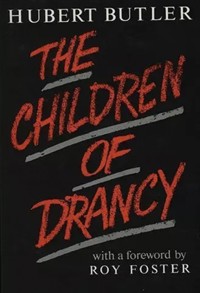
Escape from the Anthill and The Children of Drancy have brought Hubert belated international acclaim (and literary awards) as an essayist of remarkable range and talent. As a human being he is no less remarkable: detached but never cold or cynical, assured and sometimes over-dogmatic but never arrogant, erudite but unstodgy, compassionate but unsentimental, hard-hitting but never spiteful. Although a resolute crusader for honesty in every area of life, he is tolerant of individuals who have been conditioned by Church or State (or both) to operate within a cocoon of hypocrisy. For decades he has been condemning the intellectual and emotional sleaziness of modern society, yet he remains consistently positive and optimistic about the future.
AE wrote of Standish O’Grady: ‘When a man is in advance of his age, a generation, unborn when he speaks, is born in due time and finds in him its inspiration. O’Grady may have failed in his appeal to the aristocracy of his own time but he may yet create an aristocracy of intellect and character in Ireland.’
The same could be written of Hubert Butler.
Dervla MurphyLismore, January 1990
PART ONE
IRELAND
It will be some time perhaps before many of the Anglo-Irish drop that rather provocative hyphen and call themselves simply Irish. First of all there are misunderstandings to be cleared up, suspicions to be allayed. Reconciliation will not, I think, be complete in the South till it has happened in the North too. It may develop out of those regional loyalties which the men and women to whom I have referred (Flood, O’Grady, Otway Cuffe) tried to foster. The Kilkenny Archaeological Society took as its motto a sentence from Camden: ‘If any there be’, he wrote, ‘which are desirous to be strangers in their owne soile, and forrainers in their owne citie, they may so continue, and therein flatter themselves. For such like I have not written these lines, nor taken these paines.’
HUBERT BUTLER Maidenhall, 10 January 1950 on Radio Éireann
1
OTWAY CUFFE
Many Irish historians who do not like political nationalism trace its growth in Ireland to the contagion of the Anglo-Irish. They contrast the noisy and narrow provincialism of the colonist with the broad universalism which should be congenital in the Catholic Irish native. The paradox is arresting but unfair. It is true that the Anglo-Irish have played a part out of all proportion to their numbers in shaping the idea of an Irish nation, but within their own group they have been, except for two decades under Grattan, a tiny, despised and neglected minority, and, when self-government came, they were very quickly pushed on one side. If there are provincial and demagogic traits in the Irish state today displeasing to the Catholic historian, it does not seem just to blame the Anglo-Irish nationalist.
It is difficult to think of anyone less of a provincial or a demagogue than Otway Cuffe, the younger brother of the Earl of Desart, who for a dozen years was the exponent of Irish nationalism in Kilkenny, and yet he seems to me to be typical of many Anglo-Irish nationalists of a generation ago. He was no politician and scarcely ever appeared on a public platform. He never said or did the kind of things that attract attention and headlines. He took so little trouble about publicity for himself or his work that it is only by searching through the local newpapers that it is possible to glean a few facts about his life. Yet it was realized on his death in 1912 that a notable Irishman had died, whose failure to make a permanent mark on his country was Ireland’s failure and tragedy as well as his own.
Most of those who knew him intimately are now dead and almost nothing has been printed about his private life outside the memoirs of his niece, Lady Sybil Lubbock. She writes well enough and was fond of her uncle, but everything he thought and did was a mystery to her, and it is plain that the rest of his family found all his activities equally mystifying and embarrassing. Behind all her praise a single refrain is audible. Why, with his gifts and advantages, did he choose to sacrifice himself for people who would only exploit him and ridicule him behind his back?
When Cuffe came back to Ireland in the late 1890s there was probably a greater gulf of sympathy and experience between the various Irish groups than had ever existed before. The successors of Grattan and Flood had become completely anglicized and neither hoped nor wished for a recovery of influence in their own country except as representatives of England. Anyone who tried to bridge the gulf did so at his peril. Lady Sybil’s father, Lord Desart, kept to the safer bank, not without regrets. It is curious how ignorant they had become of the land in which they had grown to consequence. Lady Sybil believed that Kilkenny was on the Suire (sic), repeating this mistake in two books. Her father was a distinguished lawyer, her mother was related closely to the English royal family, and their attitude to their Callan neighbours was benevolent and correct but very cautious. They seemed to have lived at Desart Court the life not merely of a garrison, but of a beleaguered garrison. Finding the local tradesmen unreliable, they were in the habit of getting their groceries by hamper from London. They did not believe in spreading frivolous ideas among the labouring classes, and Lady Desart was seriously annoyed when a neighbour offered a prize for country dancing in Desart village school. ‘A course in cleanliness and practical housewifery would be more to the point,’ she said. When her brother-in-law, Otway, said that what the Irish country people needed was ‘poetry, poetry and music’, she retorted, ‘In my opinion what the villagers need most are buttons and teeth.’
This was Cuffe’s family background, and against it it is easy for Lady Sybil to represent him, in an affectionate but purblind way, as a versatile but unrealistic person who pandered to the whims of the disaffected. She relates how embarrassing they found Otway’s ‘peasant arts and crafts, his folk-lore and his classes in the Irish language’. Lord Desart considered that these things, ‘though innocuous in themselves were in Ireland inevitably flavoured with political and nationalist controversy and therefore to be eschewed’. ‘Of course,’ he said with mild amusement, ‘the Kilkenny County Council may be genuinely interested in his fairy tales and theosophy and admirable bookbinding but I should hardly have expected it.’ He was particularly hostile to the new interest in Irish legend and folklore, which Standish O’Grady, the editor of The Kilkenny Moderator, had aroused in Ireland.
All country folk [he said] tell the same tales and a backward people like the Irish keep theirs longest. There is nothing wonderful in that. The harm begins when men like Yeats come and make solemn pilgrimages to see the fairies for themselves and then write seriously about them and encourage all the world to think that ignorance and superstition are better than reason and common sense. Of course, there is charm in these fancies but there is cruelty too and there is a danger in any denial of reason.
The wrongness of these views, which are shrewd enough, lies in their complacency and detachment. To O’Grady and to Otway Cuffe it seemed that the Irish landlords were already becoming as obsolete as the fairies; objects, sometimes, of superstitious veneration but seldom seen and of no practical use. Their criticisms could be of value only if they were ready to receive criticism in turn, but they were not.
I have quoted Lord Desart, an astute man eminent in his profession, to show what a lonely furrow an Anglo-Irish nationalist had to plough, and how easily what he did could be misinterpreted and ridiculed even by those who were fond of him. It is strange to find that W. B. Yeats and Desart both later became senators, but unquestionably it was Yeats, the student of theosophy and the fairies, and not the lawyer, who played the greater part in the senate and proved the more staunch and formidable champion of Anglo-Irish culture.
Otway Cuffe had led an adventurous life. He had worked on the railways in America, had learnt bullfighting in Spain, woodcarving and bookbinding in Italy. From India he had acquired an interest in Indian thought which his relations dubbed theosophy, and on a visit to Iceland had met William Morris and been captivated by his social philosophy. But the serious occupations for an Irish gentleman were still hunting, shooting and fishing, and Cuffe’s mild, extraneous enthusiasms were regarded as evidence of affectation and frivolity. I suppose that his neighbours sensed in his enthusiasm an implied criticism of their own apathy, and protected themselves by representing him as a harmless eccentric. In fact he was an able and diplomatic member of committees and councils and he certainly never teased the Kilkenny County Council with bookbinding or theosophy.
In Escape from the Anthill (‘Anglo-Irish Twilight’, pp. 75ff) I have told how Cuffe and his sister-in-law, Ellen, Lady Desart, supported Standish O’Grady in his war upon Lord Ormond and the local potentates of Kilkenny. Soon after that Cuffe became an alderman and then Mayor of Kilkenny. His ancestors had frequently been mayors of Kilkenny but in 1906 it was so strange for a Cuffe to wish to be on the Kilkenny Corporation as to seem sinister. At his first meeting a polite alderman drew attention to the part his great-grandfather had once played in Kilkenny municipal affairs. This seemed sycophantic to another alderman who shouted out: ‘Don’t go on about his great-grandfather or I’ll put you out on your head!’ In fact Cuffe played his part by effacing not only his great-grandfather but himself as well, using his great influence and intelligence indirectly and through others, avoiding always the impression that he was pushing himself forward or trying to recover for his class an influence which it had lost.
King Edward VII had lately visited Ireland and stayed at Kilkenny Castle. The town had been sumptuously decorated by Messrs Womersley of Leeds. If you leant over John’s Bridge and watched the gas jets reflected on the placid Nore from Messrs Womersley’s Venetian Masts, you could easily, it was said, fancy yourself on the Rialto. Because it was Ireland there were banners with ‘God bless our Sporting Monarch!’ on them as well as Union Jacks and shamrocks and harps and triumphal arches. One reporter noted that on the gorgeous banners which spanned the streets, ‘Kilkenny’ stood out fresh and clear, while ‘Welcome to’ was rather faint. Messrs Womersley, like the King, had done this sort of thing hundreds of times before and could produce an overwhelming effect on the inexperienced townsfolk with a wise economy of effort.
The King had been genial, the Queen beautiful. Reluctantly, perhaps regrettably, all had enjoyed themselves, and the psychological reaction when it came was more than usually complex and inarticulate. In thousands of Rural District Councils there were neurotic scenes which even the local reporters were unable to represent as debates. Thus at Callan, near Desart, the Board of Guardians passed a vote of condemnation on itself for passing a vote of condemnation on the Waterford Corporation for presenting an address to King Edward. One of the Board boasted that in Kilmoganny he had himself prevented Earl Spencer, the Lord Lieutenant, from being cheered, but now, he added, he would lead the cheers. An opposition member cried out: ‘Was that the time they had the streets of Kilmoganny covered with beer and porter?’
‘No, no! He came as an accidental gentleman hunting with his red coat on his back.’
‘You’ll get people to sell their bodies and souls for beer anywhere and in Kilmoganny too.’
‘I saw no beer.’
The Callan Board of Guardians ultimately got itself into such a hysterical state about these matters as to attract the attention of ‘The World Animated Picture Company’, which was looking for material for a high-spirited Irish farce It claimed to be The World’s First Fireproof Model and it was drawing huge crowds to Kilkenny by its pictures of the Gordon Bennett Race and the King’s visit. It had settled for a moment on Cuffe’s young theatre like a beautiful freshly hatched butterfly laying its eggs wherever it saw new growth. In a few years its progeny would take over Cuffe’s theatre and every other theatre and devastate the independent drama in every Irish provincial town.
At the next meeting of the Callan Board of Guardians the chairman read out a letter from the Company asking permission to take their picture in action, ‘if possible, wearing any local or characteristic costumes they may adopt when attending meetings. We are prepared to pay them each £5 and guarantee a royalty of 15 per cent on gross receipt of pictures.’
Cuffe had been equerry to the King but his views did not seem to be those of a monarchist. He seems to have taken no part in these embarrassing festivities or in the remorse that followed on them. He tried always as far as possible to be an ‘accidental gentleman’ but this was not always easy for one who had been an officer in the British army. The Kilkenny Corporation, like the Callan Guardians, spent much time passing passionate resolutions of congratulation or condemnation. I cannot agree that these were as petty and ridiculous as they read now in retrospect, though undoubtedly they consumed energy and enthusiasm that could have been spent on the wise conduct of local affairs. There were then very few sensational injustices in the relations of England and Ireland but the old hatred, which in a few years was to burst out in rebellion and civil war, was kept alive by small sneers and sophistries, by unimaginative civil servants and pointless insults to Irish pride.
Whatever Cuffe did or said was bound to be found wrong by someone, and his Kilkenny activities were watched suspiciously by the Dublin press. In one week he was attacked violently by both the unionist Evening Mail and the nationalist UnitedIrishman. There was the affair of G. R. Symes’s play, The DandyFifth, and that of the Gortnahoe District Council’s notepaper. There had been rowdy demonstrations against the play because it was thought to contain sneers against the Irish nation and propaganda for the British army. Kilkenny Corporation passed a vote of congratulation for the demonstrators, and Cuffe, who had not voted, was reproved sternly by the Evening Mail because ‘though holding the King’s Commission’ he had allowed ‘these insults to the Army and its Uniform’ to be uttered.
As for the Gortnahoe District Council, they had in the interests of economy used OHMS notepaper and been censured by the Kilkenny Gaelic League. Cuffe, who maintained that ‘loyalty’ was compatible with an Irish Ireland, threatened to resign from the Gaelic League and for this threat he was severely censured in his turn by the United Irishman. Was he right or wrong? I do not know, but at least he took the problem seriously.
A generation ago these squabbles seemed even more futile than they do today. Yet the problems of the Gortnahoe District Council were real ones and Cuffe was right not to scorn them. Multiplied a millionfold and debated with armies and atom bombs, rather than with simple acrimony, they have become the insoluble enigmas of modern Europe. O’Grady and Cuffe were probably wise in thinking that in a political problem, as in an equation, the solution will come most easily when the numbers on both sides are reduced to their smallest. They believed in the small community, even when it disappointed them.
Cuffe went ahead in his own way. He brought down Douglas Hyde, who was met by a drum and fife band and who spoke to the Kilkenny branch of the Gaelic League of which Cuffe was the president and moving spirit. Hyde told them that no act of parliament could recover their nationality. He said that with her ‘shilling shockers’ England was pelting them with the mud of her streets: ‘If we do not work on Irish lines, we shall become the Japanese of western Europe, capable only of imitation and lost to native initiative.’ He told them that they were all of them deeply conscious of their inadequacy.
If we take hold of that feeling and elevate it, we shall increase Irishmen’s sense of self-respect, of individuality and honour, and that is what the Gaelic League wants to do. The more divergence of thought, of characteristics, habit and customs that obtains in the Commonwealth, the better for the races. Ours is the least reading and most unlettered of peoples. Our art is distinguished above all others by its hideousness.
In all this he showed how very little there was in the early Gaelic League of that spirit of complacency, arrogance and provincialism which invaded it later.
One of Standish O’Grady’s ideas had been that if there was a trained volunteer force, like Charlemont’s Volunteers, the British garrison could withdraw and leave Ireland to defend itself. Cuffe drilled a Kilkenny brigade and started a gymnasium and a club. To advertise and pay for his schemes there were frequent concerts at which Irish songs and dances alternated with gymnastic displays. They were ecstatically described in the local press. ‘Mr Dawson’, we read, ‘brought down the house with his Indian clubs.’ Cuffe himself recited Thomas Davis’s poem ‘Owen Roe O’Neill’. ‘The fine stately figure of this noble and true Irishman, attired in Irish dress, pouring forth his feelings over such a leader and chieftain as Owen Roe O’Neill was decidedly an unusual sight.’ Many jeered at the obvious incongruities and he was suspected of exhibitionism, whereas he was really making his protest against banality. His enterprises were found irresistibly ludicrous by people who find nothing funny in the long patient queues that today wind down the streets of our provincial towns to see some travesty of Irish history concocted in Hollywood or Elstree.
One of Cuffe’s enterprises that is still remembered is the Sheestown play. O’Grady never tired of saying that it was only by the friendly alliance of north and south that Ireland could become a vigorous and civilized land. He was a southerner and yet he believed that all the great and significant movements in Irish history, from the time of Cuchulainn and Owen Roe O’Neill to the ’98, had drawn strength and inspiration from the north. The visit of the Cave Hill Players from Belfast to Kilkenny, on Cuffe’s invitation, was a symbol of this belief. They acted a play of O’Grady’s on Red Hugh O’Donnell at Sheestown, Cuffe’s home on the banks of the Nore. O’Grady had long left The Kilkenny Moderator and all Cuffe’s activities are recorded only in the shoddiest provincial journalism, but through all the clichés it is possible to see that he stirred men’s minds in a way they had not been stirred before. The Belfast men camped upon the banks of the Nore and their huge bonfires lit the woods upon the opposite shore, where Chinese lanterns hung from the trees and pipers played as they marched. The harvest moon cast an enchanted light on the green lawn where the play was acted. ‘It recalled’, said one reporter, trying to do justice to the beauty of the scene, ‘one of the most graphic chapters of Marie Corelli’s great works.’
It was a triumph of friendliness and imagination. The play itself was of a rather simple kind, and it would be unkind to criticize it too severely. Its purpose was explained in the Prologue, of which one verse runs:
Brave, proud Ultonia hither sends today
Her gallant children here to act her play.
In gentle bonds they would unite once more
Ulster and Leinster, Lagan and the Nore.
In all this he had the support of Ellen, Lady Desart, his eldest brother’s widow. She too joined the Gaelic League and told them that her own people, the Jews, had kept alive their language, Hebrew, as a bond of union between them. With her vast wealth, she helped him to start the Kilkenny Woodworkers, the woollen mills, a tobacco farm, a model village and hospital, a recreation hall, a public library and a theatre. There was no cultural or social activity in Kilkenny which they did not support.
It is fashionable now to deride ‘uplift’ and to suspect the wealthy or independent of being patronizing or to pity their innocence in being exploited. In fact, it was no naïve optimism that urged Cuffe on. He knew that the pleasant, not uncivilized life to which he had been born, rested on unstable foundations. A great effort of renunciation and adaptation would have to be made, if even a remnant of the old traditions was to survive. O’Grady had written of the Irish gentry: ‘Ireland and her destinies hang upon you, literally so. Either you will refashion her, moulding us anew after some human and heroic pattern, or we plunge downwards into roaring revolutionary anarchies, where no road or path is any longer visible at all.’ Cuffe may have had some premonition of the smoking walls of Desart, of the tragic exile of his brother and the final negation of that influence which the Anglo-Irish still enjoyed. The need for haste perhaps stimulated them to more ventures than they could reasonably control, and very soon there were bruising disappointments.
You can reconstruct what happened from paragraphs in the Kilkenny press. Under the dust and the cheap varnish, you can see the fine grain of the wood, the careful, fastidious workmanship.
In June 1907 the model village of Talbot’s Inch was being built and Ellen, Lady Desart’s own house was ready, in which all the furniture, except the grandfather clock, had been made by the Kilkenny Woodworkers. One evening, in the words of a reporter, ‘she entered into possession of her picturesque bijou residence’ and the Corporation met her with swords and macebearers on the road from Sheestown. The fire brigade was there and pipe bands and an address was read by the Mayor and the town clerk.
Lady Desart said to them:
I dream of Talbot’s Inch becoming the rallying-point for all Kilkenny, not only of industry (which I may surely say it has already become with our woodworkers and our tobacco and the woollen mills over the river, which we have linked to us with our little golden bridge), but for all also that makes for joy and harmony and the higher pleasures that refine the mind and elevate the spirit and the soul.
Give me the great happiness to know before I die that the name I bear, which is unspeakably dear to me, will go down to your children and your children’s children, enshrined in your hearts as one who loved you and deserved your love.
Otway Cuffe seldom made speeches. He had none of Ellen Desart’s warm Jewish readiness of tongue, her quick facility to interpret a mood and to strive to make it enduring with words and money. I can find only one of his speeches. It is, characteristically, to the Kilkenny YMCA and about the four orders of the Brahmins. He contrasts their organization with that of the ancient Irish society, a system that was patriarchal, regional, communal and yet aristocratic, where the ‘individual personality counted and men felt a responsibility for each other’s defence, a small and savage society, which yet contained in itself the germ of a society happier than our own’. The Christian young men were flattered and interested, and there was a grateful, flurried reply, before they passed on to subjects that were familiar to them, the ‘Catch-my-pal Temperance Club’ and the need of a new table for the Badminton Club. Cuffe was content to cast his ideas on the most unlikely soil, hoping that here and there a seed might one day germinate. Lady Desart’s more commonplace emotionalism, her enthusiasms which were easier to understand, floated his ideas into regions which they would otherwise not have reached. The love she felt for her neighbourhood and its people she had derived from the Cuffes, but she expressed it with a robust sentimentality from which they would have recoiled.
When she was given the Freedom of the City, she said:
I lost my heart to Kilkenny that May morning six and twenty years ago, when it opened its arms to me, a young and happy bride. My husband taught me to love every inch of Kilkenny and every living being within the four corners of this fair county. It is a real solace to me in these days of my widowhood to see that my love, which has deepened with the years, is so overwhelmingly returned. I cannot say thank you for such love. I can only cling to it and appreciate it. I can only hope it will live on and increase and give Kilkenny in the giving something approaching the happiness it has given and gives me to receive it.
Quite soon things began to go wrong. As related in Escape fromthe Anthill (‘Anglo-Irish Twilight’, p. 85), the Kilkenny Woodworkers struck when Cuffe took on a non-trade-union cabinetmaker from Glasgow; there was also a mysterious fire at the Woodworkers whose origins were never cleared up, and finally there was a series of embezzlements on the part of trusted officials. The blame for most of these things rested with outsiders and Kilkenny people remained strong partisans of Cuffe and Ellen Desart and never for a moment suspected the purity of their motives. Lady Desart refused to prosecute or to be discouraged. But after a time the factory had to close its doors.
Bad news also came from the woollen mills. At a meeting of the shareholders in 1911 they were told, ‘After a few years working the great part of the original capital has been hopelessly lost.’ But Lady Desart herself came to the rescue with £10,000. Today the woollen mills is one of the very few of their enterprises to survive.
The strikes cannot be blamed on Cuffe. They were the result of a collision between the routine politics of the Big World with its ready-made strategy and slogans and the subtle personal politics of the small community. As for the repeated evaporation of capital, explanations were not easy. Idealists, especially wealthy ones, are supposed to be easy to deceive and perhaps Cuffe and Lady Desart were too trusting, but they had seen the defeat of Standish O’Grady and must have known disillusionment long before. Possibly they were too arrogant in their refusal to take advice. They were trying to turn the dragon of industrialism into a harmless domestic animal, but by the beginning of the century almost everyone was directly or indirectly in the pay of the dragon. The Cuffes were obliged to depend on experts, thick-witted, lopsided men, who observed only that their employers lacked all interest in personal profit and decided that this deficiency must be due simply to wealth and inattention. They also noticed that the Cuffes were humane people. Delinquents expected and received indulgence.
Cuffe was not a young man. These disappointments wounded him deeply. They undermined his health and clouded his mind. He was advised to go for a long sea-voyage. In January 1912 the news came that he had died at Fremantle in Western Australia and had been carried to his grave by Kilkenny men, members of the Perth Hurling Club.
A provincial press can often be accused of insincerity, but on Cuffe’s death the sense of bewilderment and loss which was recorded was unfeigned and not exaggerated. There were endless deputations, adjournments, condolences.
The day was in mourning for the loss of Kilkenny’s great benefactor. Heavy clouds rolled across a leaden sky from early morning and the surrounding hills were enveloped in mist. In the city all the shops were closed and the flag on the Tholsel was at half-mast….
A man of noble soul, who burst through the prejudices of his class and worked side by side with the humblest of the people … he was one of the greatest promoters of industry that Ireland has known for centuries. That work of his may well be the beginning of a period when the aristocrats of Ireland, so long estranged from the democracy, may come to the front to take the place which every well-wisher of Ireland would be glad to see them occupy.
To his widow, they said: ‘We may be quick-tempered and impulsive but we are not an ungrateful people and to us that lonely grave in Western Australia will be as revered as any spot held sacred by our race.’
She answered that many times he had told her that his country was to him dearer than anything else in the world and that he had indeed given his life for his country.
It would be cynical and untrue to say that Cuffe was quickly forgotten but all his activities were centrifugal, towards the small and local, and the pull upon conventionally educated minds towards great remote events was, in 1912, almost irresistible. A few weeks later Corbett Wilson, who had flown the Channel, settled in Kilkenny and from there did flights of great importance. There was wild excitement and a flow of poetry and prose. The old era seemed to be closing.
He flew over Windgap in a clear atmosphere and over the cliffs known as ‘The Fairy Steps’, where Finvara the King of the Fairies and the White Woman entertained the ancient hunters. Downwards with the graceful sweep of a sea-bird, till the topmost pinnacle of St Canice’s was the centre of a revolving circle and then a low gliding movement and the machine was running along the grass of the Show Ground.
Here was the theme for poetry, which Cuffe, that poetical yet somehow inhibited man, had failed to provide:
’Twas on the 23rd of May and in the afternoon
That Mr Corbett Wilson went up to see the moon.
He gradually ascended just like a big cuckoo
And flew for miles around us that day from Ardaloo.
Kilkenny always held her own with all that came her way
But now through Mr Wilson she proudly takes the sway!
You know he is the first great man, who o’er the channel flew
And landed down in Wexford town not far from Ardaloo!
Long life to Mr Wilson! May his courage never fail!
May a hundred years pass over ere his coffin needs a nail!
For None But Him Who Rules The Waves And Can The Storms Subdue
Could shake the nerve of that brave man that day at Ardaloo!
He was entertained by the Protestant Dean at the Club House Hotel and platitudes that differed from ordinary platitudes by being fantastically false as well as dull were uttered and printed. It was felt that a great new era was being ushered in when nationalism would no longer count. The countries of the earth would be so linked together by speed that all regional jealousies and differences would disappear. Elsewhere in the paper it was written that Lieut. Gregory, a Kilkennyman, had demonstrated at Weymouth that ‘it is possible to release an object weighing 300 lbs without disturbing the flight of the air-craft’ and that in the Reichstag, Herr Bernstein, a deputy, had declared that Germany should take the lead in banning the use of aerial bombs. All these loud noises from far away, ambiguous and contradictory, drowned the message of Otway Cuffe, though it was clear and concrete and from near at hand. He had failed to demonstrate that neighbourliness pays, while what Lieut. Gregory had proved was both dramatic and unanswerable.
After Cuffe’s death Ellen Desart found herself no longer able to pick her way with confidence through the increasing complexities of the Gaelic movement. Like her sister-in-law, she came almost to think that ‘buttons and teeth’ were more urgent necessities than poetry and music. She relapsed into being a very intelligent, very philanthropic Countess, an excellent committee-woman for bee-keeping and cow-testing associations, always ready to give her money or advice for the prevention of disease or the spread of enlightenment, the patroness of public libraries and model hospitals. In fact, as those of the Anglo-Irish who hated the new Ireland left the country, she ceased, as did many others, to be a rebel. Like W. B. Yeats, she found herself latterly defending values that had once seemed so safe that they needed criticism rather than defence. In the senate she became a recognized spokesperson, as he did, against the narrowness of nationalism and all petty encroachments upon personal liberty.
She never gave way to the bitter cynicism and despair which devastated the greater part of the Irish ascendancy class in the twenties nor, like so many, did she treat as a personal grievance disasters whose origins were in Irish history. These came thick and fast. Early in 1923, with the departure of the British army, the Civil War reached a climax and many of the houses of those who had accepted office as senators from the new government were burnt, including Desart Court.
I think that these events gave satisfaction to those who were hostile to the new Ireland. Lady Sybil Lubbock says that her mother seemed almost to feel a sense of relief that with the calamity Lord Desart’s Irish responsibilities might come to an end. Many of the Anglo-Irish had localized all their Irish loyalties on their estates, and when these disappeared it was like the loss of a septic limb, after which they could start again, crippled but healthy. But Lord Desart was more gravely shattered and wrote with the bitterness of despondency: ‘I feel most deeply for all those who whether for business, honour or profession are tied to the miserable future of Ireland, and perhaps to some awful form of minor death. It is too appalling to think of.’ His daughter relates how often when he was working at his small garden in Sussex a look of sadness and indifference came over him and she knew he was thinking ‘of the long borders of Desart and the great flowery terrace at sunset’. Before he died he said, ‘I cannot bear to think of Desart. All gone, all scattered, and we were so happy there. It is sadness itself!’
I quote Lord Desart not to raise regret or sympathy, but to give an idea of the thicket of passionately restricted loyalties from which Otway Cuffe extricated himself and tried to extricate others. Contrasted with the despair which overwhelmed and almost extinguished the rest of the Anglo-Irish, he came very near to success.
[1948]
2
THE AUCTION
I am not quite sure how soon after Otway Cuffe’s death, in 1912, Mrs Cuffe gave up Sheestown and went to live in Kerry, but I was already a public schoolboy, a Carthusian, and ripe to be embarrassed when my relations made scenes publicly, and there had been just such a scene at the Sheestown auction to which I had gone with my mother in the pony-trap. Mr McCreery, the auctioneer, had offered for sale a large wooden hut and my mother, who needed a new hen-house, rather tremulously bid it up to £17. It was knocked down to her, and she was walking away, appalled at her own audacity, when someone remarked how kind the Cuffes had always been to the poor of Kilkenny. Not one tuberculous slum-child but several had passed successive summers in that hut in a leafy glade by the Nore. Tuberculosis! My mother for a couple of seconds was frozen with horror, and then she was gesticulating frantically across the crowd to Mr McCreery and to Aunt Harriet, who stood within reach of him. ‘Tell him! Stop him!’ I felt a frisson of sympathy and dismay. Tuberculosis! Tuberculous poultry! Tuberculous eggs! A quiver like an electric current ran through all the better-dressed bosoms in front of me, because Lady Aberdeen, the Lord Lieutenant’s wife, had started a crusade against tuberculosis – it was a word that was on everybody’s lips, particularly unionist lips. I must here permit myself a digression about tuberculosis.
It was one of those rare and blessed battle-cries, like co-operative creameries and village halls, which appeared to have no political or religious implications. Indeed it was better than either, for often a priest wanted to consecrate a village hall or put a crucifix instead of a clock above the rostrum, and there were rumours that the creameries were used for political agitation when the farmers’ boys for miles around, having taken their milk-churns from their donkey-carts, had leisure for exchanging views. But nobody could say anything of the kind about tuberculosis. When my mother had started a branch of the Women’s National Health Association in Bennettsbridge, Lady Aberdeen had come down and talked to the Association and driven round the neighbourhood. My sister had sat on one side of her and Miss Foley, the priest’s sister, on the other, and Mrs Cuffe beside the chauffeur. It was an immensely amiable, non-political, non-religious occasion. Tuberculosis acted like a love-potion, and at the end of it we children had distinctly heard Miss Foley say, ‘A thousand thanks, Countess, for my most delightful drive.’ With the savage snobbery of children, learning for the first time the exciting art of speaking in inverted commas, we had pestered each other for months and months with poor Miss Foley’s over-unctuous gratitude. So now tuberculosis, which had once seemed a sordid, almost shameful secret between the doctors and the dying, was invested with dignity and importance. Now that it was made everybody’s business, it attracted to itself not only the tender and the charitable but also the ambitious and the interfering and the timid, who saw that sympathy for the sick might be interposed as a fluffy bolster between themselves and Home Rule which they saw irrevocably approaching. But because I found it all a bore when I was in my teens, I am likely to underestimate the self-denial and unrewarded service of those who like my mother spent endless hours with ledgers, petty-cash books, subscription lists, committees. My mother, unlike the Cuffes, had never been sustained by any golden dream of a new era in Ireland, but simply by a Victorian sense of duty to the poor and her own humorous curiosity about other people’s lives.
For a moment or two I felt rather proud of the effect that my mother had caused in the large crowd with the magical word ‘tuberculosis’. All the expected responses could be seen and even Aunt Harriet, who as a Christian Scientist considered tuberculosis ‘a form of false thinking’, had leant over loyally and, seizing Mr McCreery by the sleeve, had whispered some agitated remarks into his ear. But quickly the mystical moment passed, the auctioneer and the public began to get impatient, and at my elbow I heard the curate of St John’s, Kilkenny, say sourly to his neighbour: ‘I don’t wonder she wants to get out of it. £17! Ridiculous! Why, I could knock it up myself for £7. As for tuberculosis, all that’s needed is a little disinfectant.’ I was greatly mortified on my mother’s behalf and scarcely noticed how the episode ended. (I think she decided to write herself to Mrs Cuffe.)
I wriggled unhappily out of the crowd in the yard and walked down past Cuffe’s Model Dairy to the river, which for a mile or two upstream above Sheestown weir flows under park trees through the small demesnes of Sheestown and Kilfera on its western banks. It is full of trout and salmon, and all the way from Durrow in Co. Laois to New Ross in Co. Wexford there are meadows of rich grass on each bank, the Scotch firs and larches grow straight and thick, and every now and then, south of Kilkenny town, beeches spread themselves out extravagantly over bluebells and wood sorrel. Through them you can see the hindquarters of a fat pony, the sparkle of a tomato-house, the corner of a tennis net and, less frequently, a real exotic like a contented Jersey cow or a disconsolate but still defiant cricket pavilion. Surely this valley had everything in the world that anyone could wish for, the raw material for every variety of happiness? Why is the manufactured article so rare? Why, at sixteen, were my parents convinced that I would never be able to live here? Has any river in the world carried so many cargoes of nostalgia and bitter-sweet memories to the sea, for one could cover an acre with faded newsprint about the Nore, sad simple verse composed in Tasmania or Bangkok or Pittsburgh, and sent home to Kilkenny? If the Nore ends one line you will know infallibly that a succeeding line will end with ‘days of yore’, ‘distant shore’, ‘never more’, ‘long years before’, ‘memory’s door’, ‘parting sore’. The answer to my last question is no doubt that all the rivers of Ireland are the same.
In fact, though, I don’t want an answer, because the answer is obvious. I want an admission. Living in social harmony is a most difficult art; the most absolute concentration is required, and perfect equilibrium. Our island is dangerously tilted towards England and towards Rome, good places in themselves but best seen on the level. Everybody is rolling off it and those that remain, struggling hard for a foothold, drag each other down. But it is not necessary to argue, it is only necessary to look.
Sheestown is divided from Kilfera by a small rocky glen in which St Fiachra’s Well is situated, and beyond it across smooth lawns, a tennis court and a high embankment built above the rapids of the Nore, you can see the Norman castle of the Forrestals now incorporated into Kilfera House. There is also the ruined church of Sheestown in which the Forrestals and Shees are buried, and the small cemetery of Kilfera where the roots of the beech trees have tilted or flattened half the tombs. A headless statue of a medieval ecclesiastic is propped against the railings of the Victorian table-tomb of Mr Kenny Purcell, ‘One-time Clerk of the Peace Kilkenny’ and a former owner of Kilfera. It is said locally to be St Fiachra himself, that much-travelled saint, who in Kilkenny gave his name to Kilfera, in Paris gave it to the ‘fiacre’, because there was a cabstand beneath his church; but the statue is a thousand years later than Fiachra’s time and is probably an abbot from some dissolved medieval monastery, Jerpoint perhaps, or Kells. A small stone building, said to be his hermit cell, had to be removed when Mr Kenny Purcell went to his rest in 1869, but he too has been disrespectfully treated because the marble walls of his sepulchre are gaping apart. My toes were just small enough to get a foothold between the iron bars and I could see a couple of stones and a tin can, but no trace of the Clerk of the Peace.
You get all the confusion of Irish history in a few acres. First St Fiachra, then the Norman Forrestals, then, overshadowing them, the Shees, English you would suppose. But no, they are Irish Uí Seaghdha from Kerry, who anglicized their name and their habits with immense rapidity and success in Tudor times. Robert Shee had allied himself with Piers Butler, eighth Earl of Ormond, and had been killed in 1493 in Tipperary fighting against the O’Briens of Munster at the head of a hundred Kilkennymen. The Shees were one of the ten great merchant families of Kilkenny, the other nine all being English. Robert Shee’s son, Richard, had become Sovereign of Kilkenny; his grandson, Sir Richard, had been educated at Gray’s Inn, became legal adviser to Queen Elizabeth’s friend Black Tom Butler, the tenth Earl of Ormond, and when Ormond became Lord Treasurer of Ireland, was made Deputy Treasurer. He and his family acquired great wealth and many houses in Kilkenny town and county and had built the Alms House in which Standish O’Grady had established his knitting industry and permanent craft exhibition. Sir Richard’s son, Lucas, married the daughter of Lord Mountgarret, whose other daughter married the eleventh Earl of Ormond. Lucas’s son, Robert, when the Civil War broke out, persuaded his uncle Mountgarret to accept the presidency of the Confederation. The royalist parliament was held in the Shee mansion in Parliament Street which till 1865 stood where the gates of the Market now are.
The Shees were an urbane and cultivated family who wrote for each other long epitaphs in elegiacs and hexameters, which are more pagan than Christian. ‘Homo bulla … (Man is a bubble)…’:
Nec genus antiquum nec honesta opulentia rerum
Nec necis imperium lingua diserta fugit
Nec fidei fervor nec religionis avitae
Cultus ab extremo liberat ense nihil.
(Neither ancient lineage, nor honourably
amassed wealth nor eloquence can evade
the stern summons of death, nor can fervent
faith and the practice of the religion of our
fathers reprieve us from the sword of
doom.)
Then a prayer is asked for a speedy passage to Heaven, supposing, that is to say, heaven exists:
Sitamen haec mors est transitus ad superos…
Elias Shee, from whose tomb in St Mary’s, Kilkenny, I have taken these five lines, is described by Richard Stanyhurst as ‘born in Kilkenny, sometime scholar of Oxford, a gentleman of passing good wit, a pleasing conceited companion, full of mirth without gall. He wrote in English divers sonnets.’ I do not think the Shees or the nine other Kilkenny merchant families, all Catholics, all dispossessed by Cromwell, could be considered ‘priest-ridden’. Had fate treated them more kindly, would they, like the wealthy Flemish burghers, have become patrons of the arts and sciences; would they have produced their own Erasmus and formed eventually the nucleus of a proud and independent Anglo-Irish civilization? Elias Shee was described by his sorrowing relatives as ‘orbi Britannico lumen’, a light to the British world, because of his wit, his learning, his breeding, but his family remained conscious of their Irish descent, calling themselves after Cromwellian times O’Shee, when more prudent families were dropping their Os and Macs.
Yet I cannot feel very confident of any such Anglo-Irish development in the seventeenth century. Is there, perhaps, as AE (George Russell) suggested, ‘some sorcery in the Irish mind’ rebelling against any peaceful and prosperous fusion, some intense pride of race?
When I got back to Sheestown I found that my mother had bought me a bookcase full of Otway Cuffe’s books. She was looking at them apprehensively, wondering whether she was not infecting me with something more virulent than tuberculosis, and, when we were driving home, she tried to counteract any possible bad effects by telling me how Cuffe’s heart had been broken by ingratitude and that, when a couple of years before he had invited the Cave Hill Players from Belfast to act in a play of O’Grady’s about Red Hugh O’Donnell at Sheestown, a couple of thousand spectators had streamed out from Kilkenny. They had trampled down some rare shrubs, and stolen and broken teacups. She also said that O’Grady’s play was very bad, and that she had had to laugh at Otway Cuffe in a saffron kilt reciting a roistering rebel Irish ballad in a refined English voice. Manager after manager had cheated Cuffe at the woollen mills and woodworks. And she said that all the intelligent people had emigrated. Her own brothers, Etonians, Harrovians, Carthusians, had all gone, except Uncle Charlie at Graiguenoe, and were British officers or Indian civilians. Ireland was an exhausted country. ‘Look how stupid X is!’ and she mentioned one of my father’s oldest friends.
Everything she said was true, yet I knew that she herself would never grudge her teacups or her shrubs where her own ideals and affections were involved, and that she was trying to inoculate me against the terrible virus of nationalism. My responses cannot have satisfied her, for a few days later I found that she had torn out from some of the books the blank page on which Cuffe had written his name, and had used upon the title-page the little machine for stamping notepaper with our address, Maidenhall, Bennettsbridge, Co. Kilkenny. I diverted some of the annoyance I felt with my mother to the little machine, which I ever afterwards regarded with abhorrence. I could remember our excitement when it had arrived ten years before and we had won countless pennies for ‘The League of Pity’ by stamping notepaper for my mother and father with it.
My mother bought a large red book called Careers for OurBoys and tried vainly to engage me in conversation about the British consular and diplomatic services. She suspected rightly that I was not merely indifferent but hostile: she trembled for me because the 1914-18 War was on and all the heresies which had seemed so venial a couple of years earlier now carried on them the mark of Cain. Our bishop, Dr d’Arcy, the successor of Dr Crozier, a mild and scholarly commentator on the Pauline Epistles, had himself a few years before, as Bishop of Down, consecrated Unionist machine-guns to be used against Home Rulers, and sometimes Kipling’s poem on Ulster was quoted. I remember only one verse:
We know the war declared
On every peaceful home,
We know the Hell prepared
For those who serve not Rome.




