


Erhalten Sie Zugang zu diesem und mehr als 300000 Büchern ab EUR 5,99 monatlich.
- Herausgeber: The History Press
- Kategorie: Geisteswissenschaft
- Sprache: Englisch
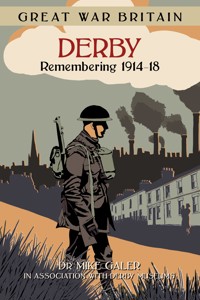
The First World War claimed over 995,000 British lives, and its legacy continues to be remembered today. Great War Britain: Derby offers an intimate portrayal of the city and its people living in the shadow of the Â'war to end all warsÂ'. A beautifully illustrated and highly accessible volume, it describes local reaction to the outbreak of war; charts the experience of individuals who enlisted; the changing face of industry; the work of the many hospitals in the area; the effect of the conflict on local children; the women who defied convention to play a vital role on the home front; and concludes with a chapter dedicated to how the city and its people coped with the transition to life in peacetime once more. The Great War story of Derby is told through the voices of those who were there and is vividly illustrated through evocative images from the archives of Derby Museums.
Sie lesen das E-Book in den Legimi-Apps auf:
Seitenzahl: 168
Veröffentlichungsjahr: 2014
Das E-Book (TTS) können Sie hören im Abo „Legimi Premium” in Legimi-Apps auf:
Ähnliche



















The author would like to thank the staff at the Derby Local Studies Library for their help, support and patience.
CONTENTS
Title
Dedication
Timeline
Introduction
1 Outbreak of War
2 Preparations at Home
3 Work of War
4 News from the Front Line
5 Home Fires Burning
6 Coming Home
Postscript: Legacy
Sources
About the Author
Copyright
TIMELINE
INTRODUCTION
This book is dedicated to the men and women from Derby and Derbyshire who fought, served, died and sacrificed so much in the First World War. This horrific conflict ripped the world apart and ended the hopes and dreams of a whole generation of young men and women. We, along with many other towns and cities, have the opportunity to tell the story of Derby and its people, while honouring the dead and those who survived with respect.
The war in Europe (known at the time as the Great War, or sometimes the War to End All Wars) began on 28 July 1914. Shortly after, Britain declared war on Germany, on 4 August 1914. The war officially ended in 1919 with the signing of the Treaty of Versailles on 28 June 1919, but a ceasefire was in effect from 11 November 1918.
There were many causes of the conflict which smouldered in the background for many years: naval and military expansion, especially by a belligerent Germany, challenging British superiority; the failure and breakdown of earlier treaties; old tensions flaring up between increasingly imperialist powers; and expansionist policies in the Balkans causing tension on all sides.
The actual spark of war was the assassination of Archduke Franz Ferdinand of Austria on 28 June 1914 by Serb nationalists. This led to violence in Bosnia and Herzegovina, ruled by the Austro-Hungarian Empire. One thing led to another and soon the Austro-Hungarian Empire declared war on Serbia; due to interlocking and complex treaties, all Europe was rapidly drawn into conflict.
Who was involved? France, UK, Russia, Italy, USA, Romania, Japan, Serbia, Belgium and Greece on one side as the Allies (a total of 42 million men under arms). And Germany, the Austro-Hungarian Empire, the Ottoman Empire and Bulgaria on the other as the Central Powers (a total of 25 million men under arms).
By the end of the conflict, 5.5 million Allied men had been killed, 12.8 million were wounded and another 4.1 million missing: a total of 22.4 million casualties. Of the Central Powers, 4.3 million men were killed, 8.3 million wounded and 3.6 million missing: a total of 16.4 million casualties. Taking into account the effect on families, loved ones and future generations, that is a staggering 38.8 million lives lost or changed forever.
Market Place, Derby, 1905. Looking south at the west side of the Market Place, the Victorian Guildhall is just out of view on the left of the photograph. Note the horse-drawn trams on the road. (© 2004 Derby Museums collection DMAG001200)
Derby was settled by both the Romans and the Vikings and is the capital city of the county of Derbyshire, receiving city status in 1977. It is famous for its eighteenth-century Enlightenment legacy (its 1720s silk mill claims to be the first mechanised factory in the world) and huge output during the Industrial Revolution of the nineteenth century. Today the city hosts Rolls-Royce PLC, which makes half the world’s aircraft engines in Derby, and the rail vehicles production facility for Bombardier Inc., which took over the Midland Railway legacy and is now the sole manufacturer of trains in the UK. Derby is one of the few remaining UK cities to export heavy industry products around the world to an extent that affects world economies.
Dr Mike Galer, 2014
1
OUTBREAK OF WAR
Pre-war Derby
The best view of pre-war Derby comes from the 1911 census, from which we can build a picture of what life was like just three years before the war. Comparison with the next census (1921) reveals some interesting changes and some areas where life appears no different, despite the war. The 1911 census was the first where the ‘Return’ for a household or institution was written directly by the ‘Head of Household’. It also asked more detailed questions about employment and industries in which respondents worked, and questions about marriage and children. The census looked at Derby in two ways: just the parliamentary borough (known as Derby PB), which had a population of 105,912 in 1901 and 109,864 in 1911, and the slightly wider context of the county borough of Derby (referred to as Derby CB), which had a population of 114,848 in 1911 and 123,410 in 1911. The ‘Derby CB’ context is the more widely used throughout the census, and so this book will use that definition throughout. At the time, Alvaston (population 1,398) and a few other areas which we take for granted as belonging to the modern city were considered separate from Derby CB and information was collected separately.
The population of the county borough of Derby in 1901 was 114,848. By 1911, this had grown to 123,410 (59,999 men and 63,411 women), organised in 27,720 families. From 1 April 1901 to 31 March 1911, there were 9,747 marriages, 31,949 births and 17,730 deaths, resulting in an excess of births over deaths of +14,219. Total growth since 1901: +8,562.
The most populated areas of the town were Pear Tree, Normanton, Dale and Abbey wards, each having a population of just under 10,000. Normanton barracks is recorded separately, with 198 ‘officers and men’ recorded and an additional sixteen males and forty-eight females under the ‘other inmates’ section (presumably servants and washerwomen). Interestingly, forty-one males and twenty-six females are recorded as living ‘in the open’ or in sheds, barns, tents and caravans. Whether or not these persons would be classed as ‘homeless’ or ‘sleeping rough’ (as we might call it today), or just living permanently in very poor housing, is unclear.
The census starts by looking at age, births and marriage and from these we can get a view of a rapidly growing town where births considerably outstrip deaths, but also where people are leaving to go elsewhere as the town’s total population is growing at about half the excess of births over deaths. It was a young population; the majority (72 per cent) were aged less than 40, and 60 per cent were unmarried. Very few people were married under the age of 20 in 1911. In fact, only sixty-six people in the whole of Derby were married that young. That said, there was a widower aged just 17 and a 19-year-old widow, revealing the harsh realities of life in the early twentieth century. The vast majority of people who were married were aged between 25 and 50; not very different from today.
Cornmarket, Derby 1910s, showing the tower of All Saint’s church in the middle. On the left is the statue of Michael Thomas Bass, MP and benefactor to Derby, now moved to Museum Square. (© 2004 Derby Museums collection DMAG000319)
The census looks at the occupation of males and females in great detail, recording details at an administrative county level (essentially Derbyshire) as well as the county borough of Derby (effectively just the town). Perhaps shocking is that the employment statistics count anyone over the age of 10 as the boundary between a child and a working person; what we might call ‘available for work’. Employment among men was quite high: out of those ‘available for work’, 84 per cent appeared to be employed. Perhaps 16 per cent unemployment sounds high to us today in a political world dominated by various economic indicators, but this includes persons who were classed as ‘retired’, with their own income (a rare occurrence in 1911), and also, presumably, young persons over the age of 10, but not yet what we call an adult. For women the picture was very different; only 31 per cent were classed as employed, and the rest retired or ‘unoccupied’, though it is pretty clear that most of these must have been housewives and would likely be unhappy with the term ‘unoccupied’. These proportions are largely unchanged in the census of 1921, despite advances in acknowledging women’s potential to work.
In 1911, 59,771 people were aged under 25 (13,174 of whom were under 5) and 89,979 were aged under 40. 109 people were aged 85–90, 17 people were aged 90–95 and there were none over the age 95. There were 47,286 males, and 50,591 females were aged over 10. The census records 68,723 unmarried persons, 48,293 married and 6,394 widowed.
Looking at women first, what is immediately clear is that there were certain careers and jobs in which there were few, if any, women engaged; shocking to our modern notions of equality. For example, in 1911, there were no female police officers, military personnel, priests or solicitors (though there was one female law clerk in Derby, against ninety-one men and one barrister in 1921). There were four doctors; however, all were unmarried and that number pales in comparison to sixty-one men (although the number of female doctors rose to twelve in 1921). There does, however, appear to have been a fair number of women working in local and national government, most of whom were unmarried. Though it is unclear, these might be secretaries or clerks. Perhaps not surprising for the age, quite a number of women were recorded as teachers, nurses, midwives, washerwomen and in the arts. However, the vast majority of those women working are either in domestic service (against very few men) or in textile factories (nearly double the number of men), or associated trades like dressmakers, milliners and similar. A few are recorded in insurance and a large number (but still less than half that of men) in ‘commercial occupations’.
In 1911, 39,857 men were employed (7,429 were retired or unoccupied, of which 1,427 received a pension) and 15,678 women were employed (35,018 were retired or unoccupied, of which 147 received a pension and 22,507 were married). Additionally, 75 men are recorded as having ‘private means’, against 520 women saying the same.
For men, the picture is very different. As indicated above, the professions such as clergy, police, law and medicine are all well represented, but in small numbers overall. Large numbers of men worked on the railways; in engineering and metal work, such as foundries; manufacturing; and in construction, which is understandable given the heavy industry for which Derby was famous. Despite the presence of historical famous ceramic works, relatively few men (and less than half the number of women) appear to have worked in the pottery industries.
Victoria Street, Derby, looking towards St Peter’s Street. Published by Philco, series no. 2536. Postmarked 30 March 1912. (© 2013 Derby Museums collection 1984-187/5)
CHILDREN AND YOUNG ADULTS IN WORK IN 1911
According to the 1911 census, there were 5,914 males under 14 (3,666 of them between the ages of 10 and 13) and 5,388 aged between 15 and 20. There were 5,830 females under 14 (3,516 of them between 10 and 13) and 6,058 aged between 15 and 20. These figures reveal a young, growing population, with roughly equal male and female populations.
There were three girls aged between 10 and 13 in work in the whole of Derby, against nineteen boys. Fifty-nine girls aged between 13 and 14 were in work compared to eighty-four boys and 645 girls aged 14 to 15 against 760 boys. Approximately 92 per cent of all boys aged 16 to 17 were in work and 96 per cent of all ‘boys’ aged 18 to 19 were in some sort of employment. Most of these were working on the railways or in textiles manufactories, but many were in the food and tobacco trades, most likely as delivery boys. The highest number of boys in Derby (between 15 and 16 years old) for any occupation is in the category of ‘messengers, porters and watchmen’, in which 141 boys were employed, compared to just two girls of the same age.
Records show that 78 per cent of all girls aged 16 to 17 were in work and 81 per cent of all girls aged between 18 and 19 were in some sort of employment; significantly higher than for adult women (31 per cent). For girls and young women, the main occupations were roughly the same as their older counterparts (namely textile manufacturing and domestic service); the highest number of young women in any occupation is recorded against the ‘domestic indoor service’ category.
Most boys and young men (over 90 per cent) were in some sort of employment, over double the percentage of adult women. What the census does not reveal is the hours worked – which were likely to be long– or their (presumably low) wages.
Cope and Taylor Chemists around 1900. Many young people worked in shops or as delivery boys and girls in establishments like this. © 2004 Derby Museums collection DMAG000013.
Unlike today’s Derby, the town does not appear to have been very diverse, with the overwhelming majority of people having been born in Derbyshire, Leicestershire, Staffordshire or Nottinghamshire. The census didn’t quite ask the right questions either – the early twentieth century having no real modern understanding of ethnicity – and instead simply asked the question ‘where were you born?’, rather than questions about ethnicity or nationality of parents that are found in recent censuses. It does make the distinction, however, about whether persons are now ‘British Subjects’ or ‘Naturalised British Subjects’; the rest, rather bluntly, are called ‘Foreigners’. Only just fewer than 350 people living in Derby in 1911 were born overseas (seventeen at sea), and those were mainly from Europe, with most people born in France and Germany, followed by Poland and Russia, with a few from Italy. Two residents are recorded as coming from China, one from Japan and two from Africa (both of whom are described as ‘British Subjects’, so they are likely to be white British). Quite a few people hailed from the USA (110), though all but six were ‘British Subjects’. In all, only 160 people in Derby were ‘Foreigners’ and the highest number (thirty-three) – unfortunately for them, considering what was about to happen – were German.
Victoria Street, Derby, looking towards the Wardwick and Derby Museum and Art Gallery/Library. (© 2013 Derby Museums collection 1988-330/30)
The census also collected information on disabilities at a county level, most under headings likely to cause offence today, namely: totally blind, totally deaf, deaf and dumb, lunatic, imbecile, feeble-minded and combined infirmities with different combinations. Across the county, nearly 2,000 people were entered into the rather vague and likely imprecise mental illness/disability categories (a roughly equal number for men and women) and several hundred for the other categories, again roughly equal for men and women. Information about physical disabilities such as missing limbs, or illnesses likely to cause mobility problems and similar effects, were not recorded in this census.
One other area in which the census attempted to make sense of a complicated state of affairs was the type and quality of housing people occupied. The census analysed the data by looking at the number of rooms per ‘tenement’ or housing unit and how many people, especially children, lived within. The vast majority of people lived in housing with five or six rooms (just over 80,000 people), with the majority at least having between three and five people per household, but a large number still lived in tenements with four rooms or fewer (nearly 22,000 people in 6,000 families), with the majority of those having between two and four people per household. There was a significant number of families in Derby that had over six people in the family; some were recorded as having as many as between ten and fourteen per family unit, and some of those were living in housing with five rooms or fewer. The statistics are very detailed; for example, eight families comprised eleven people in total and lived in a tenement with fewer than four rooms.
Ordinary Lives and Concerns in 1914 Derby
1914 started quite ordinarily for the people of Derby. Industry was booming, particularly in the metal production trades and machinery manufactories. A new glass bottle-making firm had been attracted to the town and demand for sugar-refining machinery was up. In the early part of the year, a number of serious fires threatened the town, with a number of businesses affected; for example, in March, a motor-car facility in Bourne Street burnt impressively, drawing large crowds, and in May, the mills of Thomas Smith & Son in Abbey Street were seriously damaged by fire (the spate of fires was covered by the Derby Daily Telegraph). There was also industrial action, with a strike at Leys Malleable Castings Co., which occurred after the management sacked a number of men. There were labour difficulties at Rolls-Royce too in June and July, forcing the company to declare that they were in talks with unions and denying that they had dismissed lots of men, but stating it was unlikely that many of its European orders for luxury cars would be fulfilled, and that they might have to move to a war footing soon.
The staff of George Fletcher and Co., 1912, who made sugar-refining machines for the West Indies. (© 2013 Derby Museums collection 1985-286/431)
The famous socialist leader Keir Hardie addressed the local Derby branch of the Independent Labour Party at the Temperance Hall in February, where he had not talked since 1894. Suffragette meetings were also held at the Temperance Hall in February, March (with Mrs Pethick-Lawrence as principle speaker) and in June at the Market Place, where Mrs Pethick-Lawrence denied that they were anti-men or anti-Liberal. Some of these meetings, particularly open-air events in Breadsall, were said to have an air of menace about them. ‘Vote for Women’ messages were found scrawled at the premises of Mr Sowter’s millinery shop at The Spot after a window was broken in May. A fire which nearly destroyed Breadsall church on 5 June 1914 was blamed on the suffragettes, based on an open window, a hat-pin and a posted message hinting (but not quite claiming) responsibility.
Top occupations: 4,755 men and 13 women worked on ‘The Railways’. An additional 2,141 were employed in making coaches and wagons (7 of them women). There were 7,697 men (and 97 women) in heavy industry and a further 588 (91 women) in electrical engineering. 1,472 men and 3,481 women worked in in textile manufacturing. Meanwhile, 2,641 women worked in indoor domestic service (as well as 33 men).
There were balls held in February at the Assembly Rooms for the Meynell Hunt for the leading families of Staffordshire and Derbyshire, and at the Drill Hall (Royal Drill Hall, Beckett Street, the headquarters of the 5th Battalion Sherwood Foresters) for the annual Midland Railway Ball. The Drill Hall was transformed with bright lights and people were provided with free rail and omnibus travel from the station. April was considered to be one of the hottest months, with brilliant weather, although at least one child died of heat exhaustion. In July, also in fine weather, the annual mayor’s Garden Party was held at Garfield House, Littleover, with over 700 people attending, according to the Derby Daily Telegraph.
Postcard of Market Place, Derby, c. 1905. (© 2013 Derby Museums collection 1988-330/31)
Elsewhere, there were park-band concerts in June at the arboretum (among other venues), and the Derby Sketching Club held its 27th exhibition at the Athenaeum Room in February, featuring A.J. Keene’s watercolours and works by Ernest Townsend. At the museum and art gallery, there was an exhibition focusing on embroidery, including items by William Morris and Edward Burne-Jones.
Midland Railway Station, Midland Road, c. 1910. (© 2004 Derby Museums collection DMAG001068)
The platform of Midland Railway Station, Midland Road, c. 1910. (© 2004 Derby Museums collection DMAG001065)
A postcard from Derby, showing London Road and the Florence Nightingale statue. It was sent to F. Hainsworth of the Derbyshire Yeomanry while serving in Salonika, May 1916. (© 2013 Derby Museums collection 2004-827/15)
In early May, in fields and above streets near the Nottingham Road cemetery, large crowds enjoyed an air display by flyer Gustav Hamel, who looped the loop several times. Hamel, who was born in 1889, went missing on 23 May 1914, shortly after this display, while returning from Paris in a monoplane he had just collected. In June – according to the




