


Erhalten Sie Zugang zu diesem und mehr als 300000 Büchern ab EUR 5,99 monatlich.
- Herausgeber: The History Press
- Kategorie: Geisteswissenschaft
- Sprache: Englisch
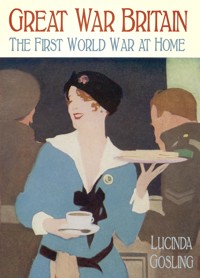
The declaration of war in August 1914 was to change Britain and British society irrevocably as conflict came to dominate almost every aspect of civilian life for the next four years. Popular weekly magazines such as The Tatler, The Sketch and The Queen, recorded the national preoccupations of the time and in particular, the upper-class experience of war. Targeted at a well-heeled, largely female audience, these magazines were veteran reporters of aristocratic balls, the latest Parisian fashions and society engagements, but quickly adapted to war-like conditions without ever quite losing their gossipy essence. Fashion soon found itself jostling for position with items on patriotic fundraising, and Court presentations were replaced by notes on nursing convalescent soldiers. The result is a fascinating, at times amusing and uniquely feminine perspective of life on the home front during the First World War.
Sie lesen das E-Book in den Legimi-Apps auf:
Seitenzahl: 349
Veröffentlichungsjahr: 2014
Das E-Book (TTS) können Sie hören im Abo „Legimi Premium” in Legimi-Apps auf:
Ähnliche




















CONTENTS
Title
Introduction
1. Everybody Should Do His Bit
2. Women and Work
3. Charity and Fundraising
4. Nursing, Hospitals and Convalescence
5. Food
6. Fashion
7. Royalty
8. Births, Deaths and Marriages
9. Entertainment
Aftermath – Peace, Celebration and Remembrance
Copyright
Although The Tatler catered for an upper-class readership, it was keen to emphasise its popularity with all classes of society, including, as here, troops at the Front. (Illustrated London News/ME)
INTRODUCTION
If there was anything to distinguish the summer of 1914 from any other it was the exceptional heat. As the mercury rose, The Tatler magazine’s staff worked through the suffocating heat. ‘With the thermometer at goodness knows what, these lines are grudgingly contributed by a perspiring and waistcoatless staff,’ it informed readers. ‘The office cat is undergoing a course of ice massage; life is very trying.’ But despite the uncomfortable working conditions, the magazine continued as usual, and it being the height of the ‘Season’, there was plenty on which to report. There were the usual preoccupations and highlights of that time of year – speech day at Harrow; centenary cricket at Lord’s attended by the King, and Children’s Day at the exclusive Ranelagh club. Advertisements reflected the hot, lazy days of high summer – golf balls from J.P. Cochrane, Whiteway’s famous Devon Cyders, Colgate’s Talc Powder available in violet and cashmere bouquet (‘delightful after bathing in the sea’) and the Casino at Dieppe reminded potential customers that it was just five hours from London. Ostend, ‘Queen of the Sea-Bathing Resorts’, in Belgium was publicised as easily accessible by motor car from Paris or Brussels. The sensational murder trial of Madame Caillaux in Paris, accused of killing the editor of Le Figaro, was the talk of smart society, while the equally sensational ‘ravishing’ Russian Ballet was performing at Drury Lane.
In its 8 July issue, there was a ripple of concern over the news that in Sarajevo, the heir to the Austrian Empire, Archduke Franz Ferdinand, had been assassinated along with his ‘brave wife’. Under the heading, ‘Flutter and unrest in the diplomatic circle of the near-eastern powers’, a page of pictures showed various ministers and ambassadors flitting from embassy to embassy in London. But it was one story of many, given as much space as the forthcoming boxing match between the French idol Georges Carpentier and ‘Gunboat’ Smith or the tragic death of Sir Denis Anson, who had fallen overboard and drowned in the Thames during a nocturnal riverboat party, also attended by Lady Diana Manners and the eldest son of the Prime Minister, Raymond Asquith. In its Small Talk section, At Wimbledon, the American Norman Brookes had beaten four-times champion, the dashing Anthony Wilding, to win the championship while Mrs Lambert Chambers slugged her way to a seventh victory beating Mrs Larcombe in the final. The Tatler ran photographs of the two ‘Titans of Tennis’ exhibiting remarkably similar jaw lines.
By the end of July, ‘Gay and Glorious Goodwood … the last great gathering of society swallows before dispersing to the sea, the stream and the moors, or the cure’ marked the end of the Season. Eve, The Tatler’s gossip columnist, worried what she would wear in the heat, as ‘Goodwood frocks get smarter and smarter, and really now they’re very much the same as the Ascot ones.’ Some ‘Pictorial Consolation for the Perspiring Londoner’ was offered in the form of a page of pretty women in swimsuits, including ‘a charming young German lady in a quaint costume pour la plage.’ Further on, a fashion spread suggested Burberry for ladies heading to the grouse moors of Scotland that August.
Due to being a weekly magazine, The Tatler was at a disadvantage when it came to reporting immediate news and when Britain declared war on Germany at midnight on 4 August, the Wednesday issue had already gone to press. Thus, inappropriately, its first issue of the war featured the benign subject of Princess Mary on its front cover, looking awkward and a little frumpy, but, significantly, with her hair up for the first time, prompting the caption to read, ‘Our Grown Up Little Princess.’ Perhaps the only hint of the cataclysm about to erupt was a portrait of the popular Count Mensdorff-Pouilly, the Austro-Hungarian Ambassador in the same issue – ‘a great sportsman and a prominent member of the Jockey Club’ – and two small sketches in the ‘Letters of Eve’ column which commented on the ‘growing military influences on fashion’, though Eve seemed to think that if young men were to be called up for military service then it would more likely be to deal with the situation in Ireland.
Notable members of society, including Sir Herbert Tree and his daughter Iris, attending the inquest into the tragic death of Sir Dennis Anson and Mr William Mitchell during a nocturnal riverboat trip on the Thames. Other members of the party had included Lady Diana Manners and Raymond Asquith, eldest son of the Prime Minister. (Illustrated London News/ME)
It is only fair to point out that The Tatler was not alone in this blinkered view. Not far from The Tatler offices in Milford Lane, off the Strand, were those of The Sketch magazine, in Great New Street, on the north side of Fleet Street. The Sketch was a friendly rival and senior by eight years (launched in 1893; The Tatler in 1901). It also had the newly mature Princess Mary as its cover girl on 5 August, and its enthusiasm for girls in bathing costumes was even greater, with four whole pages of comely bathing belles shared with readers. Elsewhere, the actresses Phyllis Monkman and Eileen Molyneux were featured wearing a strapless gown and shockingly short skirts respectively, in photographs entitled: ‘Costumes to be Recommended in Hot Weather.’ ‘The Clubman’ column on the 29 July commented, somewhat petulantly, how the London Season had been spoilt by a combination of court mourning (for the Austrian Archduke), troubles on the stock exchange and militant suffragette activity. The Royal Horse Show a few weeks previously had been disrupted by protests, and museums and galleries were closing their doors to visitors in fright because of the potential damage that might be wreaked by the troublemakers. The previous week, the same columnist had written about the current shortage of men in the Regular Army, ‘should any national emergency come suddenly upon this country.’ The next week, a photograph of the baby son of the Duke and Duchess of Brunswick (the daughter of the Kaiser) was published with the news that he, and any future children, would be styled ‘Highness’ and designated a Prince of the United Kingdom of Great Britain and Ireland. His uncle, described as ‘our very friendly Crown Prince, the Kaiser’s heir,’ was pictured at a tennis tournament in Zoppot. Elsewhere, The Sketch ran a page of pictures on the lavish party held by Mrs Keiller, aka the artist Doll Phil-Morris, at her home, No. 13 Hyde Park Gardens. The theme of a Venetian masquerade required everyone to dress in masks and eighteenth-century gowns, and her commitment to authenticity led her to flood the terrace of her garden to replicate the Grand Canal and have a miniature Bridge of Sighs constructed to traverse the water.
As weekly magazines, both The Sketch and The Tatler, were at a disadvantage when it came to reporting immediate news. Their first issues of the war featured a photograph of Princess Mary on their covers, wearing her hair up for the first time. (Illustrated London News/ME)
This was the world of The Tatler and The Sketch; a world of ballrooms and bazaars, duchesses and debutantes, royal babies, engagements, marriages, fashions from Paris and polo at Hurlingham. As the country’s social compasses, they reported on the smartest functions and the cream of society, casting a spotlight on those who had talent, influence, pedigree, power or simply a pretty face. In an entertaining blend of theatre, society gossip, royal doings, sport, fashion, motoring, travel and irreverent writing and opinion they paint a portrait of a gilded and glamorous elite, whose privileged lives were about to be shaken, damaged and, in some cases, destroyed by the outbreak of war. The Tatler and The Sketch had chronicled Edwardian society at play through a golden era for the upper classes. In August 1914, they turned to depicting society at war.
The Tatler and The Sketch, at 7d and 6d respectively, pitched themselves as quality magazines aimed predominantly at a middle- and upper-class market. They were part of a small group of titles known as the ‘mid-weeklies’ due to the fact they were published each Wednesday) or ‘sixpenny weeklies’, designed to ‘appeal to cultivated people who in their leisure moments look for light reading and amusing pictures with a high artistic value’ (the Illustrated London News, 1928). These were magazines rooted in the tradition of the illustrated press. The Sketch had been launched by the Illustrated London News, the world’s first illustrated newspaper when it was first published in 1842. The Tatler was the younger sibling of The Sphere (though only by eighteen months) and its editor, Edward Huskinson, pioneered what was described at the time as ‘personal journalism’, determining to ‘yoke the snapshot, ephemeral as it appeared, to the lasting quality of the printed word. In this way, The Tatler may be said to have begun to speak in a new language and to record the appearance of people in what was generically spoken of as Society, with a capital “S”.’ It was a complementary arrangement. The Illustrated London News (ILN) and The Sphere concentrated on event-driven news reporting which during war meant battles, political changes and overseas developments, leaving The Sketch and The Tatler free to be more eclectic, gossipy and, occasionally, frivolous.
To this duo should be added a third title, catering to a similar audience. The Bystander launched in 1903 as a protégé of The Graphic, claiming to be ‘Everything About Everybody Everywhere’ and to look at the lighter side of life with a satirical touch. Early on, it concentrated on political satire (though this decreased after the war), along with cartoons, sport, travel, motoring and, again, society news, all carried out with a characteristic, tongue-in-cheek humour. Tailored perhaps to a slightly more masculine audience, The Bystander trumped both The Sketch and The Tatler in terms of popularity with the troops when it began to publish the cartoons of Bruce Bairnsfather in 1915, an unexpected golden goose for the magazine as Bairnsfather rapidly became the most popular cartoonist of the war. The Bystander was humorous and opinionated and, although it supported the female contribution to the war effort (albeit as a novel temporary arrangement), it had been an unabashed critic of the suffragette movement in the preceding decade.
The Tatler in particular, which had increased in price to a shilling by the end of the war, positioned itself as the unofficial organ of the smart set, frequently picturing persons of note engrossed in the magazine, reading about their friends, acquaintances and perhaps themselves. In 1915, the Aga Khan was photographed by Sarony reading a copy; the theatre and film actress Jessie Winter was pictured reading it two years later; Queen Sophie of Greece, sister of the Kaiser, was photographed on the beach at Eastbourne absorbed in a copy of The Sketch. The magazines also proved essential reading at the front. Not only were officers occasionally pictured with The Tatler, but humble Tommies too. In December 1915, The Tatler ran a photograph showing four members of the Royal Artillery perched on their gun, engrossed in the magazine’s Christmas number. Keen to demonstrate it could have widespread appeal, it published a request from one anonymous soldier on its cover:
Marthe Troly-Curtin, who, under the pen name of Phrynette, wrote a similar column to Eve in The Sketch. The magazine wrote of her way with words during wartime: ‘it is the gift of laughter and of tears which has won for her such favour…’ (Illustrated London News/ME)
Olivia Maitland Davidson, the journalist who was the voice of Eve pictured with her Master Tou-tou and Miss Bing, both of whom were also fictionalised in her columns. (Illustrated London News/ME)
I have wondered if one of your very generous readers would care to send me their copy after they have finished with it. It does not matter how old or dirty it may be so long as the inside is there. I would not trouble you, but my folk at home are not in a position to send it … It would do your eyes some good if you could only see our boys crowding around the one book, and on some occasions, it may only be a few pages someone has found. I expect some lucky officer had it sent to him.
The Sketch, which would always have a slightly risqué streak, became another favourite of soldiers when it exclusively published a series of illustrations by Raphael Kirchner in 1915. The ‘Kirchner Girls’, with their faint whiff of eroticism, were the first illustrated wartime pin-ups, as soldiers at the front literally pinned them up to decorate the walls of their dug-outs, bringing a little feminine allure to an otherwise unappealing environment. In fact, illustration and cartoons constituted a significant and popular proportion of each magazine. The Sketch particularly (whose by-line was ‘Art and Actuality’) championed the work of a number of illustrators who would go on to become household names, William Heath Robinson and George Studdy (who drew the cartoon dog Bonzo in the 1920s) among them.
By 1928, The Tatler, The Sketch and The Bystander would all have become part of the same group owned by Illustrated Newspapers known as the ‘Great Eight’. Together they tell a lively and compelling story of the First World War. Another magazine whose war issues provide us with a particularly interesting narrative of the home front experience is The Queen. First launched in 1861 as the brainchild of entrepreneurial journalist Samuel Beeton (husband of the more famous ‘Mrs’, Isabella), The Queen magazine was named after Queen Victoria with her blessing. Therefore it was staunchly royalist and set out to inform and engage its female readers on a whole range of topical issues and domestic matters. It would always be a standard bearer for women’s issues both in the home and on the subject of child rearing, but also on women’s education and employment. The Queen in wartime was a force to be reckoned with, picking up the baton of voluntarism without hesitation and spurring its readers to do whatever they could for the war effort. A week into the war, on 12 August, the magazine was already asking, ‘What Can We Do?’
This country is now passing through what is perhaps the gravest crisis of its history, a crisis which every one of us, great and small, will have to combine to render less acute. For young men there is the one and easiest course of action and that is to respond to the appeal for recruits, which has been issued by the Government at the instance of Lord Kitchener. For women there is an equally clear course of conduct and that is to assist in some small way in alleviating the condition of the injured in some form or another. Even if they are not versed in the science of nursing they can readily obtain employment in minor capacities by enrolling themselves under the services of the Red Cross League or other allied societies.
The Tatler’s popularity spread even beyond the British trenches. The magazine was delighted to report that this picture, of Miss Phyllis Elaine, originally published on 14 June 1916, was found in a captured German trench along with the hopeful inscription: ‘May victory soon come. We must see more of such beauties. England is indeed the home of true beauty. Karl Tipzer (Captain).’ (Illustrated London News/ME)
This was The Queen’s style; dutiful, practical, tenacious. It was not a magazine to take no for an answer. It was convinced, quite rightly, that Britain’s women could rise to the challenge of war and assaulted its readers with advice on training courses, identified avenues of employment, guidance on voluntary services and charities that needed help. It featured knitting patterns for soldiers’ comforts as well as sewing patterns for clothing for Belgian refugee children, a myriad of war savings ideas were offered and food shortages were tackled by a weekly food column, ‘Le Ménage’, written by an old hand of women’s magazine journalism, Constance Peel (Mrs C.S. Peel). Alongside all this practical advice were the latest fashions from Paris, Court news and the usual round of weddings and society engagements. In comparison to The Tatler, The Sketch and The Bystander, The Queen seems rather staid and worthy – lots of words, fewer pictures – a magazine for bluestockings, middle-class mothers and philanthropic spinsters. If The Tatler et al. are the frivolous and glamorous younger siblings, then The Queen is the sensible older sister. But though it may lack wit and revelry, it more than compensates with a detailed depiction of women and their role in the war.
Despite a delayed reaction in some quarters, by the middle of August, the mid-weeklies had entirely turned their attention to the war. It was a rapid transformation, but one that reflected the frenetic activity across the country as people and resources were galvanised and prepared for what lay ahead. The Tatler featured Lord Kitchener on its cover, and inside, portraits of national icons – the Prince of Wales, Admiral Jellicoe and First Lord of the Admiralty, Winston Churchill, under the title ‘Bravo Winston!’ in admiration for the rapid mobilisation of the Navy. In the ‘Letters of Eve’ column, Eve commented, ‘It’s rather awful and frightening, isn’t it, the sudden way things happen? It seems hardly possible – does it? – that scarcely two weeks ago those of us who live to be amused were, well, just amusing ourselves, and that with such an amazing volte face all the things don’t matter, all the non-essentials have been swept away.’
Coverage of the usual subjects continued but in some cases, adjustments were necessary. After a hesitant start, wartime theatre thrived and fashion remained a dominant interest, not least because it kept people employed. Weddings, if anything, increased in number – ‘Cupid also busy mobilising in this sad period’, wrote The Tatler in its report on a cluster of nuptials – but many were quieter affairs than they might otherwise have been. Sport limped on in reduced circumstances as many of its protagonists left the playing fields for what was to be dubbed ‘the greater game’. War ensured there were plenty of alternative news stories to report. ‘Adversity makes strange companions and war is a great leveller of class and caste. In these times of stress, Society is finding things of all kinds to do, and is doing it with all its might’, reported The Sketch in its 26 August issue. Replacing balls and parties were countless charity events; and instead of debutantes in their court gowns, well-known young women were photographed in nursing uniforms. The mid-weeklies never ignored the fundamental issues affecting the nation, but they reacted in their own way and from the unique perspective of the beau monde. Taxes on luxury goods sent a shiver of anxiety through fashionable Mayfair dressing rooms while the government restrictions on drinking and licensing hours saw nightclub society making do with ginger beer after hours at Ciro’s and Murray’s. The upper classes found ways to reconcile the pleasures and pastimes of the old world, with the urgent requirements of the new. By September, The Tatler reported that the Countess of Wilton had accepted presidency of a war fund to be organised by the women golfers of the Empire, and Lord Tredegar was converting his luxurious steam yacht, Liberty, into a hospital ship. Lady Beatty, wife of Admiral David Beatty and fabulously wealthy thanks to her father, the Chicago department store founder Marshall Field, was doing the same with her yacht, Sheelagh. Aristocratic and wealthy women offered the two things they could easily spare – time and money. Distinguished ladies, among them the Marchioness of Salisbury and Mrs Asquith, the Prime Minister’s wife, were heading branches of Queen Mary’s Needlework Guild after an appeal by the Queen herself on 10 August, ‘to organise a large collection of garments for those who will suffer on account of the war.’ Lady Lovat was providing forty beds for the wounded at her home, Beaufort Castle, while Mrs Waldorf Astor (Nancy Astor) was lending her riverside house at Taplow for hospital purposes. Mrs Anthony Drexel, wife of the American millionaire, was ‘a prominent worker on the American Ladies’ Fund organised by the Duchess of Marlborough’, and Lady Sarah Wilson, the aunt of Winston Churchill who had turned war correspondent during the Siege of Mafeking, was pictured with news that she was appealing for funds to equip a stationary base hospital somewhere on the Continent. The details were sketchy but, being posed with a bulldog and a resolute expression, nobody was about to question her patriotic credentials. In the world of the stage, the actresses Lena Ashwell, Eva and Decima Moore were seen hard at work in the Little Theatre as members of the Women’s Emergency Corps.
Eve of The Tatler was introduced in May 1914 and is imagined here at her writing desk, quill poised, by Annie Fish. Her column entertained and amused readers throughout four years of war. (Illustrated London News/ME)
‘A Topping Tonic after taking Turkish Trenches − some officers of the gallant Lancashire Fusiliers enjoying a short respite with an old and valued friend. ’Officers at Gallipoli reading several issues of The Tatler magazine during a break in the fighting. (Illustrated London News/ME)
Annie Fish at the time of her marriage to Walter Sefton of the well-known textile manufacturing firm of J. R. Sefton & Co. Her illustrations for the ‘Letters of Eve’ column were fresh, modern and reflected Eve’s joie de vivre. (Illustrated London News/ME)
As the war began to take its unforgiving toll on the officer classes, The Tatler in particular found the very core of its social sphere dramatically eroded. Many of the personalities gracing magazine pages during those final heady days of the summer of 1914 did not survive the war. That July, The Tatler had celebrated such well-known personalities as Captain Leslie Cheape, the polo supremo who had helped England to a historic win over America in the Westchester Cup that year. By 1916, he had been killed in Egypt. Tennis heartthrob Tony Wilding died on the Western Front, killed by a shell explosion on top of a dug-out during the Battle of Aubers Ridge. The latest portraits of the Grand Duchesses of Russia, the beautiful daughters of the Tsar, featured on the front cover of The Sketch magazine’s 29 July 1914 issue. By July 1918, they would be dead, executed along with the rest of their family by Bolsheviks in the cellar of a house in Yekaterinburg. At the Chaloner-Benyon wedding in July 1914, one photograph featured Mrs Dubosc Taylor, ‘one of the most beautiful women in society’, leaving the church. She threw herself into nursing work during the war but four years later, the same magazine was reporting her death due to the influenza epidemic. Lady Victoria Pery (later Brady), who garnered admiration with her aviation exploits, including looping-the-loop with the French airman, Gustav Hamel, was cited as living proof by The Sketch in September 1914 that there should be a R.F.F.C. (Royal Feminine Flying Corps). She too was another victim of flu in 1918. In its 2 September issue, The Sketch suggested reprising the stage play An Englishman’s Home, which, when written in 1909, predicted the consequences of an enemy invasion. Its author, Guy du Maurier, brother of the actor Gerald du Maurier, was a Lieutenant Colonel in the Royal Fusiliers and killed by shell fire near Kemmel in March 1915. Lord Desborough was pictured in The Sketch arriving at the Eton and Harrow match at Lord’s with his youngest son, Ivo. He would lose his two elder sons, Julian and Billy Grenfell, in the war, two bright and promising men who very much symbolise the ‘lost generation’ of the First World War. Magazines such as The Tatler and The Sketch, which delighted in reporting on bright and promising people, must have found the job of informing their readers that so many flames had been cruelly and prematurely extinguished a poignant task.
Quality magazines called for quality writers and The Tatler, The Sketch and The Bystander could boast plenty, among them Richard King, author of ‘Silent Friends’ in The Tatler, and Keble Howard who wrote ‘Motley Notes’ in The Sketch. But the voice that is most audible of all is that of Eve, The Tatler’s inimitable gossip columnist who each issue shared with readers the ‘Correspondence between the Hon. Evelyn Fitzmaurice and Lady Betty Berkshire’. ‘Letters of Eve’ was written by Olivia Maitland-Davidson and first appeared in the magazine on 20 May 1914, continuing on through the war and out the other side. It was an instant hit and was copied with some success by a similar column in The Sketch, ‘Phrynette’s Letters from London’, authored by Marthe Troly-Curtin and illustrated by Gladys Peto.
Eve is a chatty, light-hearted society girl, flirtatious, vivacious, fun loving, fond of fashion and ‘frivol’ (frivolity). To her fictional friend Betty she confides all her thoughts, grumbles and views on wartime life using an odd but endearing form of upper-class slang. As a tour guide to Great War Britain, she is enormous fun. Eve plays up her shallow concerns and superficiality but deep down she is sincere; occasionally indiscreet but never cruel. Best of all, Eve is a master – or mistress – of self-deprecation, fully aware of her flaws and that her own activities and daily concerns are petty and minor in comparison to bigger issues at stake. But by mocking herself, she also holds up a mirror to the society she is part of. Eve, as the representative of The Tatler’s readership, never allows society to get above itself and is fully aware that to those outside her tribe, the upper classes promoted so enthusiastically in the magazine could be little more than indulgent show-offs. It is a self-awareness that is perfectly expressed in a scheme she tells Betty about in 1916; to star in a film along with her nursing society chums:
I’m always being asked for new ideas, but I’m being horribly selfish and not giving any away, ’cos I want all I’ve got for my own parties. Still, there was one I just flung ’em in passing, so to speak. It was cinema films of us doing war work, which I thought’d be awf’ly amusin’. You know, pictures of the Duchess of X giving the wrong man the wrong medicine in her hospital of Y – Z__. The Princess B waking an insomnia case out of his first sweet natural slumber to give him his sleeping draught, and Lady Ermyntrude Blank scrubbing the floors with best Pears’ soap at Pompom-sur-Mer. Jolly good idea, don’t you think so? Most people’d simply love it – the people film’d, I mean – and if the rest of the world didn’t rush to it it wouldn’t matter, there’d be such a rush of us to see what we looked like on the movies in those fascinating Red Cross head-dresses that we do so dearly love assuming with, or without, excuse.
While Ms Maitland-Davidson gave Eve her voice, equally important was her image. Annie Fish, whose stylised linear drawings soon became synonymous with the character, illustrated the ‘Letters of Eve’ column. They felt modern and fresh, far more akin to the 1920s than the 1910s. Eve, through the drawings of Fish, became a celebrity beyond the confines of the magazine. She was the subject of an exhibition, books and appeared in human form on stage (in the revue, Tina) and screen (in The Adventures of Eve, starring Eileen Molyneux). Her image was used on a range of costume jewellery and as a design on fabric by the firm Sefton, whose owner was Annie Fish’s husband. When the actress Isobel Elsom posed for some publicity photographs with a stuffed toy dog, everybody knew it was Tou-tou, based on Eve’s – and the author’s – Pekingese dog. Such was Eve’s renown that Olivia Maitland-Davidson even took The Sphere and Tatler Ltd to court over ownership of the pseudonym. She had previously threatened action against Annie Fish when the latter held an exhibition of drawings under the name of Eve and when a new magazine entitled Eve appeared in 1919, with articles within by an Eve who was not Ms Maitland-Davidson, the judge ordered the proprietors to desist from using the name and to choose an alternative nom de plume.
Olivia Maitland-Davies had a busy and successful journalistic career during wartime. Not only was she the woman behind ‘Eve’, she also wrote the weekly ‘In England Now’ column by Blanche in The Bystander, but her career was cut tragically short when she died suddenly after an operation in 1920.
After the passage of almost one hundred years, it is surprising how easily Eve and her imitators are still able to fascinate and amuse. War can be a dry subject in the wrong hands but their writing brings alive a fascinating cast of characters living through a tumultuous time. Through them we learn of the preoccupations of the time, the coping mechanisms, the minutiae, discomforts and joys of daily lives. Certain individuals emerge repeatedly; names such as Lady Diana Manners, Lady Drogheda, Elizabeth Asquith and the dancer Irene Castle, Gladys Cooper, Elsie Janis and the adorable Gaby Deslys. These were the celebrities of the day, at the fulcrum of London life, and their personal experiences of the war can be pieced together through the gossip columns, society notes and theatrical reviews in the mid-weeklies.
There are aspects that grate against our twenty-first century sensibilities; in many ways the magazines of the war period did little to dilute the deeply driven class distinctions of British society. Cartoons of the time played up to class stereotypes, the highlighting of those from society who got their hands dirty in munitions factories or scrubbing hospital floors shows just what a novelty it was and the officers-only policy in the weekly rolls of honour seems a gross misrepresentation of those who served and gave their lives for their country. But we must be careful to apply a rational perspective and not to dismiss the contribution of the upper classes and aristocracy to the war. It is well known that officers from the educated middle and upper classes, the subalterns who were expected to lead from the front during an attack, proportionately suffered more losses during the war than any other rank. The Tatler and other weeklies were simply reporting, with dignity, on those who were part of the social class it represented. And there were many women who used their rank, wealth and status to help and comfort those less fortunate – not just wounded soldiers and sailors, but refugees, the unemployed, widows and orphans. Though the roles of both warrior leader and lady philanthropist continued to follow the expected feudal patterns, the upper classes could not be accused of fiddling while Rome burned.
It has been a pleasure and a privilege to turn the pages of these volumes and see the war through the eyes of those who lived during an exceptional period in British history. In the course of my research, I’ve discovered a society that worked as hard as it played, and through the pain and anguish of loss on an unprecedented scale, still found room to laugh as well as cry. War transformed Great War Britain, a transformation recorded with skill, elegance and style in the magazines forming the heart and soul of this book. It is an honour to be able to share it here.
‘Your King & Country Want You’ by Paul A. Rubens was written as a women’s recruiting song and dedicated by special permission to Queen Mary with all profits going to the Queen’s Work for Women Fund. The cover, depicting a woman with her arms outstretched, is by John Hassall, the well-known poster artist and illustrator who frequently contributed his artistic skills for free during the war. (ME)
EVERYBODY SHOULD DO HIS BIT
Recruitment, Patriotism & the War Effort
About halfway along the Strand in central London stands the façade of the old Hotel Cecil, behind which now lie office buildings. When it opened in 1896 it was the largest building of its kind in Europe, with 800 rooms stretching from the Strand down to the Thames Embankment, where its looming outline dominated the riverside vista. The majority of the magnificent structure was demolished in 1930 but it was here in August 1914 that Mrs Cunliffe-Owen, a daughter of the late Philip Cunliffe-Owen, director of the Victoria and Albert Museum, raised the 23rd and 24th Service Battalions, better known as the 1st and 2nd Sportsman’s Battalions.
The Sportsman’s Battalions worked on the same principles as the Pals Battalions, but instead of recruiting from the same geographical area, they encouraged sportsmen past and present to join up together. The battalions also had the distinction of including men up to the age of forty-five, a dispensation gained by Mrs Cunliffe-Owen from the War Office – her argument being that due to their sporting backgrounds, their health and fitness was superior to that of the average volunteer. In the early weeks of the battalion’s formation, before it was moved to a training camp in Harlow, recruits would drill daily in Embankment Gardens, do physical jerks on the slopes of Savoy Street and route march through the London streets. Police officers would stop the traffic for them as they marched down the Strand, turning into the small alleyway, Carting Lane, by the Coal Hole public house before being dismissed. With few members measuring less than 6ft, the battalions must have been an impressive sight.
Today, the idea of an Army battalion being recruited at a five star hotel and trained and drilled in the heart of central London among public gardens and theatres is incongruous to say the least. But the Hotel Cecil, which would in 1918 become the first headquarters of the newly formed Royal Air Force, was just one of many London buildings requisitioned for the war effort, and the men of the Sportsman’s Battalion were just some of those who tolerated makeshift facilities. In December 1914, Eve in The Tatler whispered conspiratorially about the discomfort felt by some of the residents of exclusive Grosvenor Square, which had become occupied by army huts: ‘It was the last to go, but now it’s gone – the sanctity of Grosvenor Square. I expect you’ve heard how a thousand ‘Terriers’ are in residence there – the Queen Victoria Rifles to wit … I did hear it faintly whispered that not all the other residents, those in houses I mean, are quite so pleased about it as they might be. Tommy, you see, is a noisy bird at best, dear thing. And – well, I suppose you don’t bargain for a perpetual smell of onioned stew when you scheme – and pay – for a Grosvenor Square residence.’
An impression of new recruits being drilled in Temple Gardens while men play tennis on a court nearby is by J.F.- Woolrich and was published in The Bystander. The title references the famous quote of Sir Francis Drake, who insisted on finishing his game of bowls before confronting the Armada. (Illustrated London News/ME)
By March 1917, she described the way in which the war had changed the ‘once so delightful and lovely St James’ Park’ into ‘huts, huts all the way, and the very latest, the Ministry of Shipping, almost vies with Buckingham Palace itself.’
The Tatler painted a picture of the rapidly changing scenery in London at the end of September 1914 in a piece entitled ‘O Listen to the soldiers in the park’:
Regent’s Park (or any other park for that matter) on any ordinary autumn afternoon presents an extraordinary peaceful appearance. With the exception of perambulators, children playing in groups, dogs, nurses, and the usual complement of loafers, there is “nothing doing”. Now how different it all is. Sitting in that particular corner facing the end (or is it the beginning?) of Mappin Terrace, Regent’s Park affords much food for thought. Its grassy expanse is being worn day by day by the tramp, tramp, tramp of a thousand feet. Over by the bandstand on the right a company is marching in motley array to that maddening, monotonous, and apparently unending step that prompted Kipling’s lines:-
Boots, boots, boots, boots, moving up and down again.
There’s no discharge in war!
At the end of the piece it singled out the ‘loafer, [who,] as he grins at these coatless civilian-clad recruits doubling, forming fours, and marking time on this pleasant sunny afternoon, may feel, perhaps, somewhere in himself the call of those hoarse words of command and the everlasting rhythm of the moving feet. If he is wise he will know how to act. Every taxicab in London bears a message that tells him what to do, and the nearest recruiting station is not so far away.’
Not only taxi cabs but advertising hoardings, railway stations – even the Carlton Hotel in Pall Mall draped its entire exterior in patriotic slogans exhorting men to join up for King and Country. The recruitment drive in the autumn of 1914 was a national effort. Mrs Cunliffe-Owen had first been inspired to form the Sportsman’s Battalion while buying a uniform for her own son in Bond Street. She had met two acquaintances, renowned big game hunters, who had been unable to enlist due to the upper age limit, and the initial half-joking suggestion that she form a battalion herself where birth certificates were secondary to physical capabilities soon became a reality.
But she was by no means the only civilian to turn recruiting sergeant. The Tatler featured a photograph of sisters Ivy and Winifred Mulroney, who spent their days riding around Hyde Park, their horses wearing banners that read: ‘Do Not Hesitate – To Arms – for King and Country.’ Children in uniform, such as the Master Teddy Benson who could also be found most mornings in Hyde Park angling for recruits, effectively used their diminutive charms to persuade men to take the King’s Shilling. The former England cricket captain Archibald Maclaren joined the Army Service Corps, where he was actively involved in recruitment, giving speeches at theatres and music halls as well as working in his Manchester recruiting office.
Arthur Winnington Ingram, the Bishop of London, was one of the most vociferous supporters of the war and a tireless and effective recruiter in its early weeks. Harbouring a profound belief in the Allies’ just cause, he spoke fervently against German atrocities to the point of xenophobia. Asquith commented that Winnington-Ingram’s views were ‘jingoism of the shallowest kind’. The Tatler, writing in September 1914, was more willing to acknowledge his achievements: ‘His help and influence are enormous. His popularity with men of all grades of society is exceptional.’
At the London Palladium that month, Phyllis Dare and Evie Greene sang the recruiting song ‘Your King and Country Want You’, penned by Paul Rubens, donating their fees to the Queen’s Work for Women Fund; over at the Lyceum the play Tommy Atkins, starring Jessie Winter and Henry Kendall, was staged, featuring what would be one of the most popular of wartime songs, ‘It’s a Long Way to Tipperary’. Sheet music for various patriotic songs was sold, with the dual advantage of raising money for war charities as well as conveying the right sentiment to inspire men to enlist. The Bystander carried an advertisement for the song ‘The Homes They Leave Behind’ in October 1914, with profits to be devoted to the National Relief Fund and the Variety Artistes’ Benevolent Fund. Rudyard Kipling, the country’s leading writer and an a high profile advocate of military preparedness before the war, devoted his efforts to the national cause during this period – mainly through writing, but he used his celebrity too; in February 1915 he spoke at the Mansion House in support of the formation of bands as aids to recruiting and route marching.
The recruitment campaign of the Great War permeated every area of life. This patriotic Bovril advertisement has a British bull offering his services at an Army recruitment tent. (Illustrated London News/ME)
The popular music hall comedians George Robey and Harry Lauder were both indefatigable recruiters. Lauder toured his native Scotland and the North of England with a pipe band in tow to stimulate his call for 1,000 men; Robey spent much time amusing wounded soldiers but was one of a number of speakers at Trafalgar Square in September 1915, ‘and spoke very seriously, and with an eloquence which had the happy result of bringing forward a few recruits’. Another speaker that day was Horatio Bottomley, editor of John Bull magazine, whose levels of journalistic vulgarity were matched by his own oratorical megalomania. The Tatler predicted he ‘may well be thrown up into a position of great prominence and power. He knows the working classes and how to appeal to them, and already enjoys a great following amongst them.’ In fact, Bottomley was later convicted of swindling John Bull readers out of £900,000 worth of Victory Bonds in 1919, a scheme that led to him serving five years in prison.




