


59,99 €
Mehr erfahren.
- Herausgeber: John Wiley & Sons
- Kategorie: Fachliteratur
- Sprache: Englisch
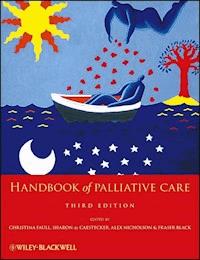
This handbook offers a practical, thorough approach to the clinical practice of palliative care. Adding North American authors to its roster of UK contributors, the third edition of this award-winning book addresses important changes in the evidence base of palliative care, as well as an emphasis on end-of-life community-based care. It features new chapters on dementia and advance care planning, a simplified lymphoedema discussion, and an ongoing commitment to providing essential guidance for physicians, nurses, and all primary care providers involved in palliative care in hospital, hospice, and community settings.
Sie lesen das E-Book in den Legimi-Apps auf:
Seitenzahl: 1133
Veröffentlichungsjahr: 2012
Ähnliche



















Contents
Cover
Dedication
Title Page
Copyright
List of Contributors
Foreword
Preface to the Third Edition
Acknowledgements
Acknowledgement: Cover illustration
List of Abbreviations
Chapter 1: The Context and Principles of Palliative Care
Introduction
What are hospice, palliative care, and end-of-life care?
Issues in palliative care worldwide
Enabling people to be at home
The principles of palliative care
Attaining quality in palliative care
References
Chapter 2: Palliative Care in the Community
Introduction
Palliative care and the general practitioner
Training in palliative care for GPs
District nurses
Community matrons and case mangers
Specialist palliative care services in the community
Palliative care and the primary care team
Gold standards framework for palliative care
Gold standards framework and the multidisciplinary team
Palliative and end-of-life care in care homes or residential facilities
Out-of-hours palliative care in the community in the United Kingdom
The future: planning and commissioning future palliative care
Conclusion
References
Chapter 3: Public and Patient Involvement in Palliative Care
Introduction
Part 1: Examples from end-of-life care
Part 2: Why public and patient involvement?
Discussion
Conclusions
References
Chapter 4: Palliative Care: Choice, Equality, and Diversity
Introduction
The environment that breeds inequalities
The current context of care: the model in the United Kingdom
Understanding inequalities
International dimensions and global disparities
Conclusions: Building choice, equality, diversity, and responsiveness into comprehensive supportive and palliative care service
References
Chapter 5: Ethical Issues in Palliative Care
Introduction
Ethics in the context of palliative care
Principles of ethical decision making
Ethical issues in practice
Summary
Legal references and standard abbreviations
References
Useful resources
Chapter 6: Communication Skills in Palliative Care
Introduction
Barriers to effective communication
Facilitative skills
Structuring an assessment
Strategies for specific challenging scenarios
Future care planning: initiating end-of-life care discussions (see also Chapter 8, Advance Care Planning)
Dealing with denial or unrealistic expectations
When language is not shared
Conclusion
References
Chapter 7: Adapting to Death, Dying, and Bereavement
Introduction
Fear of death in society
Holistic needs assessment and identification of emotional distress
Personal spirituality
Adapting to the stark reality of dying
Adapting to bereavement
Summary
References
Chapter 8: Advance Care Planning
Introduction
Terminology and definitions
The rationale and evidence for ACP
Content of an ACP discussion
Undertaking ACP discussions
Recording the advance care plan
Appointing health-care proxies
What to do when individuals lack capacity for discussions
“Do not resuscitate” discussions
Concerns with ACP
Conclusions
References
Chapter 9: Pain and Its Management
Introduction
The problem of pain in palliative care
Definition of pain and the concept of “total pain”
Terminology
The biology of pain: neuroanatomy and neurophysiology of nociception and analgesia
Pain types and syndromes
Spiritual and cultural aspects of pain
Assessment of pain
Management of pain
Nondrug interventions
Conclusion
References
Further reading
Chapter 10: The Management of Gastrointestinal Symptoms and Advanced Liver Disease
Introduction
Cachexia, anorexia, and nutrition
Mouth care
Oesophageal problems
Nausea and vomiting
Malignant bowel obstruction
Hiccup
Endoluminal stents
Liver disease
Constipation
Rectal problems of advanced cancer
Stoma care
References
Further reading
Chapter 11: The Management of Respiratory Symptoms and Advanced COPD
Dyspnoea introduction
Dyspnoea pathophysiology
Dyspnoea aetiology
Dyspnoea assessment
Management of dyspnoea
Cough in palliative care
Assessment of cough
Management of cough
Suggested approach to cough
Pleural effusions in palliative care
Haemoptysis
Approach to advanced chronic obstructive pulmonary disease
References
Chapter 12: Managing Complications of Cancer
Introduction
Spinal cord compression
Superior vena cava obstruction (SVCO)
Bone metastases
Pathological fracture
Brain metastases
Surgical and interventional management of other sites of metastatic disease
Hypercalcaemia
Obstructive nephropathy
Haemorrhage
Itch
Fever and sweating
Side effects of palliative oncology treatments
Lymphoedema
Airway patency and care of the patient with a tracheostomy or laryngectomy
References
Chapter 13: Palliative Care for People with Progressive Neurological Disorders
Introduction
Background
Symptom management
Holistic care for patients with neurological conditions
End-of-life care
Conclusions
Supportive organisations in the United Kingdom
References
Chapter 14: Palliative Care for People with HIV Infection and AIDS
Introduction
Global epidemiology
HIV and AIDS in the United Kingdom
HIV and AIDS in the Americas
What exactly is palliative care in the context of HIV/AIDS?
Gold standards in palliative care
A new paradigm?
Issues relating to palliative care
Management of common physical symptoms
Issues relating to medication and HIV/AIDS in palliative care
The end of life
Conclusion
References
Further reading
Appendix A
Precautionary measures at home [12]
Chapter 15: Palliative Care for Children
Introduction
What kinds of children receive palliative care? Is it just children with cancer?
When is the right time for the clinician to consider palliative care for a child?
Does palliative care in children allow “curative” treatments to be continued?
What symptoms are children likely to have?
How do I deal with developmental differences in assessing symptoms?
Are there any tools to help with symptom assessment?
General principles for symptom management in children
Symptom patterns
Notes about some specific symptoms
What medications can I use in children and what doses?
How do I make a reliable prognostication for a child?
Does the primary care provider have a role in caring for children with complex conditions?
What is the best way to work with families of children in palliative care?
How do I advise parents to talk to their children about the illness?
Should families try to continue their routines, or is it better to focus on the ill child?
Is it helpful to tell siblings everything that is happening?
The final stages
The bereaved family
What kinds of professionals provide PPC?
Where is PPC provided (and what difference does it make)?
Conclusions
References
Chapter 16: Palliative Care for Adolescents and Young Adults
Introduction
The challenge of providing palliative care for young people
The psychology of adolescence and young adulthood
From health to illness
Quality of life
Toward the end of life
Conclusions
References
Chapter 17: Palliative Care for People with Advanced Dementia
Introduction
Types of dementia
Epidemiology
How is palliative care in advanced dementia different?
Communication issues
Advance care planning
Caring for the carers
Spirituality in dementia
Common physical symptoms in people with advanced dementia
Terminal care
Admiral nurses
Conclusions
References
Further reading
Useful resources
Chapter 18: Palliative Care in Advanced Heart Disease
Introduction
Heart failure
Prognosis and prognostic models
Interventional aspects of care
Barriers/challenges in extending palliative care to patients with HF
Palliative care delivery in HF
Symptom management
Dyspnoea
Pain
Fatigue
Anaemia
Oedema/ascites
Psychological/psychosocial
Discontinuing medical therapies
End-of-life care
Conclusion
References
Chapter 19: Palliative Care in Advanced Renal Disease
Introduction
ESRD management
Conservative management
Renal replacement therapy
Symptom management in ESRD
Pain
End of life
Conclusions
References
Chapter 20: Pressure Ulcer Care and the Management of Malignant Wounds
Introduction
Pressure ulcers
Malignant wounds
Conclusion
References
Further reading
Chapter 21: Terminal Care and Dying
Introduction
Helping people to achieve the preferred place for their death
When is a patient terminally ill?
How to assess the needs of a terminally ill patient
Clinical care at the end of life
Therapeutics at the end of life
Special needs of family and lay carers during the last days of life
Care after death
Conclusions
References
Appendices1
Appendix 1: Management of Pain with Fentanyl Transdermal Patches at End of Life
Appendix 2: Management of Pain at the End of Life
Appendix 3: Management of Breathlessness at the End of Life
Appendix 4: Management of Nausea and Vomiting at the End of Life
Appendix 5: Management of Respiratory Secretions at the End of Life
Appendix 6: Management of Restlessness and Agitation/Delirium at the End of Life
Appendix 7: Management Diabetes in the Last Days of Life: A Pragmatic Approach2
Appendix 8: Management of Bleeding at the End of Life
Chapter 22: The Syringe Driver and Medicines Management in Palliative Care
Introduction
Pharmacist in palliative care: a key team member
Use of drugs beyond licence
Medication compliance aids
Use of the “syringe driver” for continuous infusion in palliative care
Obtaining the drugs for the palliative care patient—seamless care at the hospital/hospice/community interface
Prescribing and dispensing of controlled drugs
Unwanted medicines or disposal of CDs after a death at home
Pharmacy and palliative care: the future
References
Further reading
Chapter 23: Complementary Approaches to Palliative Cancer Care
Introduction
Similarities between complementary therapies and holistic palliative care
Acupuncture
Dietary interventions
Healing
Herbalism
Homoeopathy
Massage, aromatherapy, and reflexology
Mind–body techniques: hypnosis, meditation, relaxation, and visualisation
Potential problems with CT approaches in palliative care settings
Supervision and responsibility
Interprofessional issues
Conclusions
References
Further reading
Chapter 24: Spirituality in Palliative Care
Introduction
Spirituality and the need for spiritual care
Who provides the spiritual care?
Impact of providing spiritual care on members of the professional care team
Strategies for addressing the spiritual aspect of palliative care
Spirituality and liminal time
Teamwork
Conclusion
References
Further reading
Index
Yvonne Carter has been very much in our minds throughout the preparation of the third edition of the Handbook of Palliative Care. Sadly, she was not part of the team on this occasion. After many years living with cancer, she died in 2009 but her voice has been heard loudly by us, giving encouragement and direction throughout the process. We dedicate this edition to her.
Copyright © 2012 by John Wiley & Sons, Inc. All rights reserved
Published by John Wiley & Sons, Inc., Hoboken, New Jersey
No part of this publication may be reproduced, stored in a retrieval system, or transmitted in any form or by any means, electronic, mechanical, photocopying, recording, scanning, or otherwise, except as permitted under Section 107 or 108 of the 1976 United States Copyright Act, without either the prior written permission of the Publisher, or authorization through payment of the appropriate per-copy fee to the Copyright Clearance Center, Inc., 222 Rosewood Drive, Danvers, MA 01923, (978) 750-8400, fax (978) 750-4470, or on the web at www.copyright.com. Requests to the Publisher for permission should be addressed to the Permissions Department, John Wiley & Sons, Inc., 111 River Street, Hoboken, NJ 07030, (201) 748-6011, fax (201) 748-6008, or online at http://www.wiley.com/go/permission.
Limit of Liability/Disclaimer of Warranty: While the publisher and author have used their best efforts in preparing this book, they make no representations or warranties with respect to the accuracy or completeness of the contents of this book and specifically disclaim any implied warranties of merchantability or fitness for a particular purpose. No warranty may be created or extended by sales representatives or written sales materials. The advice and strategies contained herein may not be suitable for your situation. You should consult with a professional where appropriate. Neither the publisher nor author shall be liable for any loss of profit or any other commercial damages, including but not limited to special, incidental, consequential, or other damages.
For general information on our other products and services or for technical support, please contact our Customer Care Department within the United States at (800) 762-2974, outside the United States at (317) 572-3993 or fax (317) 572-4002.
Wiley also publishes its books in a variety of electronic formats. Some content that appears in print may not be available in electronic formats. For more information about Wiley products, visit our web site at www.wiley.com.
Library of Congress Cataloging-in-Publication Data:
Handbook of palliative care / edited by Christina Faull … [et al.]. – 3rd ed. p. ; cm. Includes bibliographical references and index. ISBN 978-1-118-06559-4 (pbk. : alk. paper) I. Faull, Christina. [DNLM: 1. Palliative Care–Handbooks. WB 39] 616′.029–dc23 2012014815
Cover Image: © The Map Foundation Cover Design: Michael Rutkowski
List of Contributors
Debbie Allanson, RGN, HND
Lymphoedema Clinical Nurse Specialist
The Queen's Centre for Oncology and Haematology
Hull, UK
Megory Anderson, MA
Director
Sacred Dying Foundation
San Francisco, USA
Rachael Barton, MA MSc DM MRCP FRCR
Consultant Clinical Oncologist and Honorary Senior Lecturer
The Queen's Centre for Oncology and Haematology
Hull, UK
Fraser Black, MD, CCFP, FCFP
Medical Director and Palliative Care Physician, Victoria Hospice, Canada InspireHealth, Integrative Cancer Center, Victoria, Canada
Clinical Professor, University of British Columbia, Canada International Network for Cancer Treatment and Research (Belgium/Canada)
Deb Braithwaite, MD, CCFP, FCFP
Community Lead and Palliative Care Physician Victoria Hospice
Victoria, Canada
Camara van Breemen, MN, CHPCN(c)
Nurse Practitioner (F)
Canuck Place Children's
Hospice, Vancouver, Canada
Sharon de Caestecker RN, BN, MA
Director of Education and Training
LOROS, The Leicestershire and Rutland Hospice
Leicester, UK
Rodger Charlton, MD, FRCGP
Associate Clinical Professor, Division of Primary Care, Nottingham Medical School
Honorary Professor
College of Medicine
Swansea University
Swansea, UK
Andrew Chilton, MBBS, FRCP
Consultant and Honorary Senior Lecturer
Gastroenterologist and Hepatologist
Kettering General Hospital Foundation Trust
Kettering, UK
Monica Compton, BS, AAS
Nutrition Team Dietitian and Lead Dietetic Prescribing Advisor
Kettering General Hospital
NHS Foundation Trust
Kettering, UK
Rachael E. Dixon, MBBS, BSc, MRCP
Consultant in Palliative Medicine
Dove House Hospice
Hull, UK
Joanna Dunn, MBBS, MRCP, MA
Specialist Registrar in Palliative Medicine
UCLH,
Camden and Islington Palliative Care Team
London, UK
Jacqueline Edwards, RGN, RSCN, MSc, BSc (Hons)
Head Nurse, Children, Quality and Governance Heart of England NHS Foundation Trust Bordesley Green East Birmingham, UK
Christina Faull, BMedSci, MBBS, MD, FRCP, PGCert Med Ed, Dip Clin Hypnosis
Consultant in Palliative Medicine
University Hospitals of Leicester and LOROS
The Leicestershire and Rutland Hospice
Leicester, UK
Liz Grant, PhD
Deputy Director
Global Health Academy
University of Edinburgh
Edinburgh, UK
Jo Griffiths, MBChB, MRCPCH, Dip Pall Med (Paeds)
Consultant in Paediatric Palliative Medicine & Community Child Health Abertawe Bro Morgannwg Health Board, Swansea, Wales, UK
Christine Hirsch, BPharm, PhD
Lecturer in Clinical Pharmacy
Medical School
University of Birmingham, Birmingham, UK
Christine Jones, MD, CCFP, FCFP
Palliative Medicine Physician
Victoria Hospice Society
Vancouver Island Health Authority
Victoria, Canada
Daniel Kelly, PhD, MSc, BSc, RN, PGCE, FRSA
Royal College of Nursing Chair of Nursing Research
School of Nursing & Midwifery Studies
Cardiff University
Wales, UK
Victoria Lidstone, BM, FRCP
Consultant in Palliative Medicine & All Wales Clinical Lead for transition in Palliative Care
Department of Paediatric Palliative Care
University Hospital of Wales
Cardiff, UK
Ryan Liebscher, MD, CCFP
Palliative Care Physician
Victoria Hospice
Victoria, Canada
Maria McKenna, MBBS, MRCP
Newcastle upon Tyne Hospitals NHS Foundation Trust, UK
Daniel Munday, MBBS, FFARCSI, DRCOG, MRCGP, Dip Pall Med, PhD, FRCP
Associate Clinical Professor/Honorary Consultant in Palliative Medicine
Division of Health Sciences, Warwick Medical School
Coventry, UK
Alex Nicholson, MBBS, FRCP
Consultant in Palliative Medicine, South Tees Hospitals NHS Foundation Trust, Visiting Fellow, University of Teesside School of Health and Social Care,
Middlesbrough, UK
David Oliver, BSc, FRCP, FRCGP
Consultant in Palliative Medicine
Wisdom Hospice
Rochester, UK
And
Honorary Reader
Centre for Professional Practice
University of Kent
Kent, UK
Wendy Prentice, MBBS, FRCP, MA
Consultant/Honorary Senior Lecturer in Palliative Medicine
King's College Hospital NHS Foundation Trust
Cicely Saunders Institute
London, UK
Aziz Sheikh, BSc, MBBS, MSc, MD, DRCOG, DCH, FRCGP, FRCP
Professor of Primary Care Research & Development
Director of Research Centre for Population Health Sciences
University of Edinburgh
Edinburgh, UK
Harold Siden, MD, MHSc, FRCPC
Medical Director
Canuck Place Children's Hospice
Clinical Associate Professor, Pediatrics
University of British Columbia
Vancover, Canada
Surinder Singh, BM, MSc, FRCGP
Senior Clinical Lecturer in General Practice
Research Department of Primary Care & Population Health
UCL Medical School
London, UK
Neil Small, BSc (Econ), MSW, Phd.
Professor of Health Research
School of Health Studies
University of Bradford
Bradford, UK
Sue Taplin, BA (Joint Hons), MA/PgDipSw, DSW
Education Facilitator, LOROS The Leicestershire and Rutland Hospice
Leicester, UK
Nick Theobald, MA, MSc, MBBS
Clinical Lecturer and Associate Specialist
St Stephen's Centre
Chelsea and Westminster Hospital
London, UK
Elizabeth Thompson, DMOxon, MBBS, MRCP, FFHom
Lead Clinician/Consultant Homeopathic Physician and
Honorary Senior Lecturer in Palliative Medicine
University Hospitals Bristol NHS Foundation Trust
Bristol Homeopathic Hospital
Bristol, UK
Mary Walding, RGN, BSc (Hons), PGDip
Clinical Nurse Specialist Palliative Care
Katharine House Hospice
Banbury, UK
Richard K.M. Wong, MA, MD, FRCP
Consultant Geriatrician
University Hospital of Leicester NHS Trust
Leicester, UK
Catherine Zollman, BA(Oxon), MBBS, MRCP, MRCGP
GP
Bristol and Lead Doctor
Penny Brohn Cancer Care
Bristol, UK
Foreword
Every minute over 100 people die in the world but far too many people still do not get the palliative and end-of-life care they need or want. Even patients in countries with well-developed health-care systems such as Europe, Australasia, and North America, who could benefit from the full range of palliative care support and services, never have that opportunity. The consequence is that many die with the distress of uncontrolled symptoms and with relatives and carers who are unsupportive. A difficult time may be made worse because no one has established the wishes of the patient, and they die in a place they would not have chosen and are perhaps subject to inappropriate and futile interventions, such as resuscitation, that they would have declined. Furthermore, it is still unfortunately true that access to palliative care services varies according to age, diagnosis, gender, and geography, and the basic levels of palliative care that are available are of inconsistent quality. The time has come to change this and to change it for good.
My vision is for a “good death” to be the norm. We only get one chance to get it right for people living in the late stages of incurable illness and those who are dying. I believe the Handbook of Palliative Care will undoubtedly contribute to achieving this vision by providing evidence-based knowledge for doctors and nurses, and for other members of the multiprofessional team. This new edition is highly impressive and should be required reading for all those involved in delivering palliative care at any level wherever they work in the world. As a practicing general practitioner, I know on a daily basis how a clinician can be faced with complex clinical and ethical dilemmas in patient management. I would find a resource like this book very reassuring, providing as it does a wide range of trusted knowledge, experience, and expertise.
An ageing population with complex health and social care needs requires a new caring approach and a new deal for the dying. All health-care systems need to effect a change in clinical practice to recognise the dying patient earlier and improve access for these patients to the palliative care and hospice approach—for example, through use of supportive and palliative care registers—particularly for patients with conditions other than cancer. The development of better generalists is a must, as is implementing comprehensive evidence-based guidelines for palliative care. Key to grasping this opportunity is development of the workforce.
And we need to achieve fundamental changes in public and professional attitudes. A society that is more comfortable with talking about death, dying, and bereavement is much needed. I am therefore delighted that the handbook includes a chapter on communication skills. I also welcome the new chapter on spirituality in this edition. Spirituality is often the missing piece in palliative care plans, even though meeting the individual spiritual needs of a patient is an important part of that person's journey at the end of life.
In 2008, readers of the British Medical Journal voted “palliative care beyond cancer” as the area of health care in which doctors could make the most improvement. This is an outstanding book that is to be thoroughly commended for its broad range of clinical issues and particularly for its focus on noncancer palliative care. All clinicians will recognise that the noncancer patient presents challenges when we are trying to determine the starting point for the last few months of life, but this is critical if we are to identify those patients who need palliative attention and for whom we should be starting advance care planning discussions. I am glad to see practical guidance on this area of practice.
We know that there is still considerable room for improvement in palliative care. Although maybe 70% of people would prefer to die at home, more than half currently die in hospital in the United Kingdom. This is replicated in many countries in the developed world. The realities of living and dying well are at the heart of palliative care, an important clinical area that deserves to be more widely understood.
I restate my ambition to reduce the fear of dying and make a “good death” the norm. The authors of this book share their expertise, experience, and wisdom in guiding us towards these goals. I am confident that good progress will be made and I invite readers ofThe Handbook of Palliative Care to join me in making good end-of-life care not only a priority but also a reality.
Prof. Mayur Lakhani, CBE, FRCGP, FRCP (Edin), FRCPPracticing GP and Chairman of theNational Council for Palliative Care and theDying Matters Coalition (www.ncpc.org.uk andwww.dyingmatters.org)Past Chairman, Royal College of General PractitionersNational Council for Palliative CareLondon, UK
Preface to the Third Edition
In preparing the third edition of the Handbook of Palliative Care, we are encouraged and grateful that the previous editions have been so well received. However, both the specialty of palliative care and the place it occupies in modern health and increasingly social care continues to evolve. The third edition seeks not only to retain the strengths of the previous editions but also to prove responsive to feedback and to have been adapted with additional content and chapters reflecting relevant developments in palliative care practice and scope.
Our main aim has been to provide a handbook that is informative and practical, thereby supporting the care professional delivering palliative care in any setting and enhancing the quality of both everyday and unusual clinical practice. Thus, the content on assessment and symptom management, communication skills, and ethics remains key and emphasises the essential nature of a holistic, patient-centred approach to care. We have also included sections that allow more expansion into some philosophical and historical background in order to provide breadth and balance in a handbook about a type of care that is wide-ranging and deeply rooted. For example, the chapters User Voices, Palliative Primary Care, and Spirituality in Palliative Care support this ambition. These dual approaches are intended to improve the understanding of what really “makes palliative care work” as well as increasing the confidence and skills of those working to support patients and their families. As in previous editions, emphasis is placed throughout on the importance of teamwork and highlighting the multidisciplinary nature of palliative care. Never forgetting that “the team” must include the patient and those who are important to them.
Taking a global perspective, the need for palliative care remains great. Estimates suggest that more than 100 million people worldwide would benefit from palliative care provision every year, yet only a small fraction of those individuals in need actually receive the necessary support. Worldwide we know that close to three-quarters of people diagnosed with cancer and other life-limiting illnesses present late with incurable disease and that this is accompanied by a burden of significant symptoms and suffering that is both physical and nonphysical.
There continues to be an expanding knowledge and recognition of how palliative care can benefit not only patients with cancer but also those with noncancer illnesses, and the updated chapters include significant new content in the areas of heart failure, renal failure, advanced respiratory diseases, and HIV and AIDS. We have also added a new chapter Palliative Care for People with Advanced Dementia, arguably the biggest issue on the horizon. The chapter Palliative Care for Adolescents and Young Adults now includes the important issue of transition from children's to adult palliative care for the growing number of young people with life-limiting diseases surviving to their early adult years.
Advance care planning is another area that is recognised increasingly to be fundamental to sound holistic patient-centred palliative care provision, and a new chapter gives the reader a sure grounding in key considerations.
Table P.1 Drug names used in Handbook of Palliative Care.
Recommended International Non-proprietary Name (rINN) (European market)British Approved Name (now replaced by rINN)United States Adopted Name (used in USA in preference to rINN)AspirinOften known as aspirin but also Acetyl salicylic acidNo UK equivalentBenzonatateCalcitoninSalcatoninCalcitoninChlorphenamineChlorpheniramineChlorpheniramineColestyramineCholestyramineNot marketed in UKDesipramineFurosemideFrusemideFurosemideGlitazonesThiozolidinedionesGuaiphenesinGuaifenesinNot marketed in UKHydrocodoneHyoscineScopolamineNo UK equivalentLevodropropizineLevomepromazineMethotrimeprazineLevothyroxineThyroxineNo UK equivalentMiltefosine (hexadecylphosphocholine)ParacetamolAcetaminophenPethidineMeperidinePhenobarbitalPhenobarbitoneRifampicinRifampinRiluzoleRisperidoneSSennaSertralineSilver sulphadiazineSodium citrateSodium cromoglicateSodium cromoglycateCromolyn sodium and Sodium cromoglycateThis table lists drugs which may be known by different names in Europe and North America. Names shown in bold appear in the text.In this third edition, a decision was made to expand the remit of the text beyond the perspectives of the United Kingdom, and the result has been a book that has been authored and edited by a team drawn from the United Kingdom and North America. Contributing to this edition are new authors from two longstanding hospice palliative care programmes in Canada. Victoria Hospice was among the early hospice palliative care programmes established in Canada, and Canuck Place Children's Hospice in Vancouver was the first free-standing children's hospice in North America.
There is so much to learn from one another in making progress to address the need for increased access to palliative care worldwide, and we hope that this collaboration has added a richness and variety to the handbook's content that will appeal to all readers. Naturally, there are some differences in terminology and language and we have tried to accommodate these as far as possible while leaving the content intelligible to all. We recognise that drug names vary in different countries—sometimes subtly, sometimes significantly—and have included a list of drugs used in the handbook to aid the reader to align their European and North American names (see Table P.1). For important drugs that are mentioned often in the text, both names are used. Spellings have followed the British tradition. Where terminology varies, we have tried to explain this within the text of the relevant chapter. An interpretation of abbreviations also appears in the front of the book (page xvi).
It is our hope that this third edition will succeed in its aims of keeping prominent those parts of hospice and palliative care that we know make a difference to patients and families while also incorporating new knowledge and approaches that will help improve the provision of palliative care to patients and families worldwide. Thank you for your efforts in this regard by using this handbook and by providing the care that you do to patients, families, and communities around the world.
Acknowledgements
This book has only been made possible by the hard work of many contributing colleagues and we hope that this edition does justice to the efforts of all the individuals who have given so much of their time over and above their normal duties and responsibilities. We are aware of how much personal complexity some of the writing team have been dealing with and we should like to pay tribute not only to their determination in fulfilling their commitment to this book but also to their efforts in trying to ensure that high-quality palliative care is available to those who need it. We would particularly like to acknowledge Richard Woof who contributed so much to the first edition and whose legacy lasts in this third edition.
Acknowledgement: Cover illustration
A water-colour titled Between Night and Day (1995) reproduced with kind permission of the artist Michele Angelo Petrone who sadly died in 2007. It is reproduced with kind permission of the MAP Foundation, an arts in health organization founded by Mr. Petrone to promote expression, communication, and understanding for people affected by life-threatening illness. Michele painted and wrote of his experience during treatment for Hodgkin's disease:
‘As time goes by, night follows day and day follows night- a natural cycle without beginning, without end and without gaps. Life's cycle continues without interruption, or at least it should do. Suddenly illness arrives, uninvited, unexplained. I found myself caught between life and death, light and dark, banished to an unknown place- between night and day. The illness forced itself into my life where there was no place for it. The arrival of the illness stole a place and time that should have been destined for better things.’
List of Abbreviations
AIDSacquired immune deficiency syndromeADLActivities of Daily LivingACPadvance care planningADRTadvance decision to refuse treatmentADadvance directiveADAAfter Death AnalysisANDallow natural deathALSamyotrophic lateral sclerosisBPIBrief Pain InventoryCPRcardiopulmonary resuscitationCVDcardiovascular diseaseCPcare professionalCKDchronic kidney diseaseCOPDchronic obstructive pulmonary diseaseCNSsclinical nurse specialistsCHFcongestive heart failureCDscontrolled drugsDNACPRdo not attempt cardiopulmonary resuscitationDNAR/PNDdo not attempt resuscitation/permit natural deathEoLCSend-of-life care strategyESRDend-stage renal diseaseEAPCEuropean association for palliative careGIgastrointestinalGMCGeneral Medical CouncilGPgeneral practitionerGFRglomerular filtration rateGSFGold Standards FrameworkHF heart failureHIVhuman immunodeficiency virusHDHuntington's diseaseIVintravenousLPAlasting power of attorneyLANSSLeeds assessment of neuropathic symptoms and signsLLCslife-limiting conditionsLCPLiverpool Care PathwayMSCCmalignant spinal cord compressionMLDmanual lymphatic drainageMCAMental Capacity ActMRmodified releaseMNDmotor neuron diseaseMNDAMotor Neurone Disease AssociationMDTmultidisciplinary teamMSmultiple sclerosisMSAmultiple system atrophyMDmuscular dystrophiesNGnasogastricNHSNational Health ServiceNICENational Institute for Health and Clinical ExcellenceNPSANational Patient Safety AgencyNMDAN-methyl-D-aspartateNIPPVnoninvasive positive pressure ventilationNIVnoninvasive ventilationNSAIDnonsteroidal antiinflammatory drugNRnormal releaseOToccupational therapyPOoralPDParkinson's diseasePCTprimary care trustPEGpercutaneous endoscopic gastrostomyPPIproton pump inhibitorRFAradiofrequency ablationSSRIselective serotonin reuptake inhibitorSNRIserotonin noradrenaline reuptake inhibitorsSLDsimple lymphatic drainageSCsubcutaneousSVCsuperior vena cavaTENStranscutaneous electrical nerve stimulationTCAtricyclic antidepressantWHOWorld Health Organization1
The Context and Principles of Palliative Care
Lesen Sie weiter in der vollständigen Ausgabe!
Lesen Sie weiter in der vollständigen Ausgabe!
Lesen Sie weiter in der vollständigen Ausgabe!
Lesen Sie weiter in der vollständigen Ausgabe!
Lesen Sie weiter in der vollständigen Ausgabe!
Lesen Sie weiter in der vollständigen Ausgabe!
Lesen Sie weiter in der vollständigen Ausgabe!
Lesen Sie weiter in der vollständigen Ausgabe!
Lesen Sie weiter in der vollständigen Ausgabe!
Lesen Sie weiter in der vollständigen Ausgabe!
Lesen Sie weiter in der vollständigen Ausgabe!
Lesen Sie weiter in der vollständigen Ausgabe!
Lesen Sie weiter in der vollständigen Ausgabe!
Lesen Sie weiter in der vollständigen Ausgabe!
Lesen Sie weiter in der vollständigen Ausgabe!
Lesen Sie weiter in der vollständigen Ausgabe!
Lesen Sie weiter in der vollständigen Ausgabe!
Lesen Sie weiter in der vollständigen Ausgabe!
Lesen Sie weiter in der vollständigen Ausgabe!
Lesen Sie weiter in der vollständigen Ausgabe!
Lesen Sie weiter in der vollständigen Ausgabe!
Lesen Sie weiter in der vollständigen Ausgabe!
Lesen Sie weiter in der vollständigen Ausgabe!
Lesen Sie weiter in der vollständigen Ausgabe!
Lesen Sie weiter in der vollständigen Ausgabe!
Lesen Sie weiter in der vollständigen Ausgabe!
Lesen Sie weiter in der vollständigen Ausgabe!
Lesen Sie weiter in der vollständigen Ausgabe!
Lesen Sie weiter in der vollständigen Ausgabe!
Lesen Sie weiter in der vollständigen Ausgabe!
Lesen Sie weiter in der vollständigen Ausgabe!
Lesen Sie weiter in der vollständigen Ausgabe!
Lesen Sie weiter in der vollständigen Ausgabe!
Lesen Sie weiter in der vollständigen Ausgabe!




