


Erhalten Sie Zugang zu diesem und mehr als 300000 Büchern ab EUR 5,99 monatlich.
- Herausgeber: epubli
- Kategorie: Geisteswissenschaft
- Sprache: Englisch
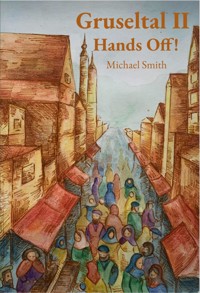
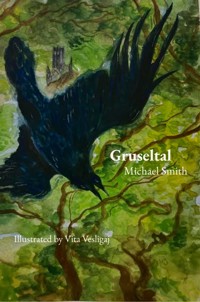
A stranger arrives in a remote village set deep in the secluded valley of Gruseltal. He is a bounty hunter seeking to capture a local werewolf. Elsewhere, an unhappy and relapsed vampire searches for love by sending out his pet bats. The arrival of a comet one night portends strange events. Meanwhile, in the city of Wurststadt, a devious, high-ranking politician plots revenge for his humiliation at the hands of the villagers a generation earlier. Ultimately, he is challenged by the local pastor, and a group of courageous villagers willing to travel to Wurststadt to thwart his divisive plans. And, throughout, local hero, Karl, uses his ingenuity to improve the living conditions of his fellow villagers. These, and other events and characters, combine to form an intertwining tale that is as thought-provoking as it is comical.
Sie lesen das E-Book in den Legimi-Apps auf:
Seitenzahl: 445
Veröffentlichungsjahr: 2026
Das E-Book (TTS) können Sie hören im Abo „Legimi Premium” in Legimi-Apps auf:
Ähnliche















Introduction
1 The Journeyman
2 The Cauldron
3 The Comet
4 The Stones
5 The Contract
6 The Plan
7 The Search
8 The Reward
9 The Palace
10 The Archbishof
11 The Return
12 The Waterfall
13 The Sermon
14 The Sailor
15 The Offer
16 The Law
17 The Switch
18 The Birthday
19 The Wedding
IMPRINT
Introduction
It was a dark and stormy night.
No, seriously, it was. Ask anyone who was there.
It has become somewhat of a cliché that novels should not, under any circumstances, begin with ‘It was a dark and stormy night,’ suggesting authors should be sufficiently skilled in employing a clever scattering of well-selected adjectives to portray this fact without resorting to direct, descriptive text. If successful, this will, presumably, engender in the reader the notion that here is a serious writer, one who may hope, at some future point in their career, to be accused of ‘literature’.
The fact remains, however, that the particular night employed as the starting point of this narrative was both dark (as nights tend to be) and stormy.
This novel is a loose continuation of the original tale, which took place predominantly within the confines of Gruseltal, a secluded, narrow valley cut deep through some middle-European plain by the erosive action of the Gruselbach, a body of water initially plunging violently down rocks at the western end of the valley, before continuing its journey eastwards in a sedate and sensible manner, meandering languidly through the small village of Niedergruseldorf, depositing nutrients to feed the surrounding fields, before entering the dark, mysterious environment of Gruselwald, a dense forest of mighty pines. This forest contains just one thoroughfare, a dirt track often turned to mud by the seemingly ever-present rain of Gruseltal, and forming the outside world’s only real access to the village. The villagers lead a happy, mainly undisturbed, existence under the beneficent eye of the Graf, the latest head of an ancient aristocratic family destined to preside over their subjects from Gruselfels Castle, a crumbling collection of mismatched walls, towers and battlements, perched precariously on a rocky outcrop on the northern edge of the valley.
But this is not a direct continuation of the first story, we have moved on a generation or so. The young characters, such as local heroine Sophia, are now middle-aged; the middle-aged characters, such as castle guard Karl, are now old; and the old characters, such as Oma Schaurig, are just about hanging on to life.
In addition to the original characters, we will meet new arrivals to the village. In fact, one is approaching now, along that muddy forest track …
1The Journeyman
Eight powerful hooves pounded the sodden earth as four sturdy wheels cut ruts deep into the cloying mud of the forest path. The driver snapped leather reins smartly on the wet backs of two powerful steeds pulling the new monthly coach service towards the lonely destination lying just beyond the forest’s edge. Inside, a solitary passenger bounced off his wooden seat each time a wheel struck a rock in the road. Outside, the sound of rushing water was everywhere. Torrential rain battered everything within the steep valley, causing the Gruselbach to race, its riverbanks close to bursting with the raging waters. Overhead, lightning forked above the trees, simultaneous with the crack of thunder. A thick bough plummeted, rent from its trunk, and just missing the speeding coach, its single lamp swaying violently close by the coachman’s head. The horses’ flying manes flapped in the penetrating wind; flaring nostrils and wide, manic eyes betraying fear. As the vehicle exited the forest, the lone passenger peered curiously across the whitewater torrent of the river and beyond to the cabbage fields surrounding the village. On cue, lightning cracked the sky once more, briefly illuminating Niedergruseldorf. This was the Journeyman’s first, split-second view of his destination. Fortunately, he was not a superstitious man, choosing to ignore this dark, other-worldly omen. Arriving at the village, the coach pulled to a sliding stop at its prescribed halt outside The Ox tavern. It truly was a dark and stormy night.
The soaked coachman leapt from his seat and busied himself with instilling calm on his two panicked horses. Slowly, the coach door opened outwards. The Journeyman placed his right-boot on the step down from the coach’s interior. He paused, then lifted his head. From the shadow of his wide-brimmed hat, two eyes burnt deep into the darkness, greedily drinking in the few visible details of this new location. He nodded slightly; yes, this was the place.
He completed alighting the coach by placing his left boot on the village’s main street. As he surveyed the mismatched collection of small hovels, using the few shafts of weak candlelight seeping from un-shuttered windows, he realised he was sinking. Glancing down, he observed his boot being sucked further into the large puddle that seemed to constitute the majority of the road. This was not the auspicious entrance for which he had hoped. Extricating himself from the quagmire, he half-walked, half-slid to the rear of the coach to collect his one and only piece of luggage. A career consisting of years on the road had taught him the benefits of travelling light.
Luggage in hand, the Journeyman turned cautiously to view the village and gauge his options. He saw a light moving towards him from down the street; to his surprise, the torch flame moved swiftly. How was such speed possible in this mud? By the growing illumination of the approaching flame, the new arrival perceived it to be carried by a tall, stout, elderly man walking on wooden planks helpfully placed end-to-end along the thoroughfare. The man with the flame drew closer.
“Evenin’,” the villager began in a cheery voice, “just arrived, have you?”
An uncomfortable silence ensued.
“Er, hello, there. I asked if you’d just arrived.”
“… Yes,” was the simple, reluctant reply.
“Come in on the coach, have you?”
“… Apparently.”
“You look soaked.”
“… Yes.”
“Er, are you looking for someone or something in particular?”
“… Yes …”
The uncomfortable silence returned.
“Er, can I be of assistance?”
“… Yes.”
“How?”
“… I need a room.”
“Ah. No problem. I can recommend The Ox. It’s the tavern here. In fact it’s our only tavern. I’m heading there myself. I’ll introduce you to the landlord.”
Without a word, the Journeyman moved his luggage from one hand to the other and strode, with as much upright dignity as he could muster, toward the closest wooden plank.
“This way,” encouraged the cheery voice.
The Ox’s old and badly drawn tavern sign swung vigorously in the wind, creating a high-pitched, yet strangely comforting, rhythmic squeak. The Journeyman followed the villager through the tavern’s aged, wooden door, paused and observed, as his self-appointed guide strode with confident familiarity through the busy scene, and up to the bar.
Several patrons held tankards aloft and called, “Evenin’, Karl.” To which Karl replied, “Evenin’ all.”
“Your usual, Karl?” asked the barman and long-time owner of the tavern.
“Yes, please, Edgar. Better, make that two; we have a visitor.” Karl glanced behind, saw the Journeyman still waiting by the entrance and, assuming some shyness on the part of the visitor, beckoned him forward.
As is tradition in these circumstances, the tavern became silent as all eyes turned to the tall, shadowy stranger framed in the doorway. They observed that he was plainly dressed in brown cape, brown boots and a wide brown hat. Clearly, here was a man who desired anonymity over fashion.
“Welcome, stranger,” called Edgar, inviting in the village’s newcomer, while simultaneously breaking the tense, awkward silence. The villagers returned slowly to their own conversations, which centred mainly on the potential for storm-related damage to this year’s cabbage harvest. The Journeyman strode confidently to the bar. He raised one of the tankards Edgar had placed in front of Karl, took a long, deep drink, wiped his mouth and moustache with the back of a mud-spattered, gloved hand, replaced the tankard on the bar, turned to Karl and quietly said, “Thank you.”
“There’s a spare table over here, if you’d like to join me,” encouraged Karl.
“Thank you,” repeated the Journeyman.
Karl knew most villagers would be keeping half an eye on the new arrival. Before the advent of the monthly coach service, the isolated village generally did a good job of welcoming strangers; paradoxically, the increased frequency of visitors in recent times had caused Niedergruseldorf to become more insular, less willing to accept strangers. Karl had observed this trend, yet was determined to keep a friendly, open mind to all. Innocent until proven guilty was his guiding principle.
“I must say,” began Karl, “you don’t seem very talkative.”
“… No,” confirmed the Journeyman.
Karl decided on a new approach, “What do you think of Edgar’s ale?”
“Good.”
“I’m Karl, as you probably heard. Er … what’s your name?”
The stranger took a long drink, wiped his mouth once more, and replied with some reluctance, “Sven.”
“Stephen?”
“No, Sven.”
“Oh. Sorry, my hearing ain’t what it used to be.”
The silence returned.
“Have you come far?”
“… Perhaps.”
“Look, this is difficult. I’m tryin’ to make conversation, but in my experience it should be a two-way thing. Folk round here know most things about most people. There are no secrets. Well, not that I know of. So, if you’re just passin’ through for the night and want to be left alone, just say so and I’ll take my ale elsewhere. But, if you’re thinkin’ of stayin’ longer, I recommends you try bein’ a bit friendlier.”
Sven tipped back his tankard and drained the remainder of the ale. “My round, I believe. Same again?”
Karl smiled, “Yes, please.”
Sven nodded to Edgar, raised his empty tankard, and made his intention clear with a universally recognised gesture. Two refills arrived promptly.
Both men raised their tankards, tapped them together, and took another satisfying drink. Karl continued, “So, I know your name, and that you like Edgar’s ale. What else would you like to tell me? Are you staying here long?”
“… That depends.”
“On what?”
“On what I find.”
“Hmm. Where have you come from?”
“North.”
“How far north?”
“… A few days.”
“You’re still not giving much away.”
“Thank you.”
“It wasn’t meant as a compliment.”
Both men took another drink.
“What’s your business here?” asked Karl.
“… My own.”
“If you intend to stay, it will soon become other people’s business too.”
Sven stared into his half empty tankard. Karl knew to wait.
“I’m searching.”
“What for?”
“… Something of value. But, more than that, I’m not prepared to say,” Sven replied, adding, “yet.”
“I suppose that’s a start,” considered Karl, “Here’s a question you can easily answer; are you hungry?”
“That I am.”
Karl called to Edgar, “Two slices of pie, please.”
“Thank you,” added Sven.
As both men cut into their pie, Sven said, “I’ve told you something of me, so tell me now about you, and this place.”
Karl finished his mouthful and began, “I’ll be sixty soon, and I’ve lived here all my life. I used to be the guard up at the castle, but the dampness finally got into my achin’ bones, and I had to retire. We’re a close community, everyone looking out for each other. We’ve had several newcomers, but not all of ‘em chooses to stay. For some it’s a bit too quiet, but I like it that way.”
“Newcomers, you say?” Sven interjected between mouthfuls.
“Oh, yes. After a locally famous incident involvin’ the Elector, the reputation of Niedergruseldorf as a safe and happy place to live, raise a family, even retire, meant we had a steady stream of settlers keen to improve their miserable lot as citizens of the Grand Alliance. Many of the people arrivin’ in the village were decent folk, looking for a better life; but the place’s reputation also attracted less … desirable elements of society; those lookin’ to make a quick profit from what they thought were ‘soft’ people. But we showed ‘em. The village’s new found notoriety also attracted other drifters.”
“Go on.”
Karl took another mouthful of pie, washed it down with a swig of ale, and continued, “Well, there were those down on their luck, and hopin’ a change of location would help ‘em turn a corner, and, of course, those seekin’ a change of location for less noble reasons. You know the sort, folk escapin’ the law or debtors.”
The Journeyman gave a slight, knowing nod.
“And finally,” continued Karl, “there were members of the artistic community, seekin’ to capture the innocence of Niedergruseldorf before it disappeared due to the steady influx of which they were a part; I think the irony was lost on ‘em.”
“And what about the people who have been here throughout all this?”
“Oh, yes, there are quite a few of us.”
Sven took another drink and asked, with possibly a little too much innocence, “Anyone in particular?”
Karl occupied his mouth with a large piece of pie, and took the opportunity to consider carefully his next response. He had a nagging feeling he was maybe giving away too much. After all, who was this man?
“You’ve seen the castle up the hill, I suspect; that’s where the Graf lives. A few years ago he was joined by his daughter, Sophia, who used to live down here in the village. Don’t ask; it’s a long story.
“You’ve already met Edgar, the landlord here. Business has been pickin’ up since the village started growin’ and he’s been able to employ a bit of help around the place when it gets busy; that’s the tall lad, Till, over there. Reckon Edgar might be retirin’ soon, though. Pity.
“Father Paul is in charge of the chapel. He’s a good man. We’ve learnt not to let his youthful looks fool us. Many’s the time his wisdom has helped us.
“There are a few businesses in the village. Thomas and Christoph, a pair of brothers-in-law, have worked hard to grow their tanning business. They produce fine leather, and have a keen eye for something new. Father Braun still has the family farm, and his sons have been gradually taking more responsibility for the runnin’ of it.”
Edgar joined Karl and Sven at their table. “If young Till is going to take over this place, the sooner he learns the better,” explained Edgar, indicating the tall, thin youth now standing behind the bar, with a look of innocent enthusiasm beaming from his acned face.
“He’s got a good teacher, Edgar,” encouraged Karl.
“What about those two dwarves over there?” asked Sven, rerouting the conversation back to its original course.
“Those are our butchers, Horace and Hector,” replied Edgar. “Many years ago they flew, Ow!”
“What Edgar was about to say,” continued Karl seamlessly, “was that they flew into a rage one day, and nearly broke up their partnership. Your old cramp playing up again, Edgar?” Edgar glared at Karl, while rubbing his ankle. Karl continued, “But now they’ve settled their differences, and provide good quality meat for everyone; as you’ve just tasted in Edgar’s pie.”
“Anyone else of note?” asked Sven at the conclusion of Karl’s description.
“Oh, yes, but not everyone is here tonight. In fact, you may have to wait several days to see some of the others.”
As older, more seasoned drinkers, Karl and Edgar had learned the art of sipping and savouring good ale. Sven, as a younger man, soon finished his drink, and asked to be shown to the guest room. Edgar obliged, before returning to Karl at his table.
“What’d you kick me for?”
“I’m not sure I trust that Sven,” replied Karl in unnecessarily hushed tones. “Don’t know why, just a feelin’. And you were about to tell him of that time we discovered how to fly. That surprise air attack saved the village, and I don’t think we should give away our defensive secrets so easily.
“Also, I deliberately didn’t mention Woody, who is out in the woods at the moment; you know, it’s that time.”
“Huh?”
“You know; it’s that time of the month.”
Edgar squinted momentarily, before, “Oh! The werewolf thing?”
“Ssshhh … Exactly; and how would I explain that to a stranger?”
“I see what you mean.” Both men emptied their tankards before Edgar continued, “I don’t know how Woody does it, each full moon, month after month, year after year. It can’t be getting any easier.”
“No, but …”
“What?”
“We’re all goin’ grey and losin’ our hair, but Woody’s still got all his hair, and it’s still black as night, with that white streak across the front.”
“It must be the wolf in him.”
——————
The following morning, Sven woke to the call of a cockerel and the smell of bacon; not an unpleasant way to start a day. Opening the shutters, he had his first real view of the village. Puddles remained, but were easily circumnavigated in the daylight of this fresh, dry autumnal morning, by the village folk who were already up and about their business. His eye followed the windings of the Gruselbach, tracing a curve along the valley, bordering meadows, rich in an assortment of grazing livestock, and fields containing neat rows of cabbages, before reaching the edge of Gruselwald, the dark forest through which he had been transported during yesterday evening’s storm. In complete contrast to twelve hours earlier, the sky was an uninterrupted blue; the sun, rising over the valley edge, sent rays to catch the myriad tiny liquid optics clinging to yellowing leaves and gnarled branches following their downward descent from the now departed rain clouds.
The coolness of the early air finally penetrated Sven’s nightshirt; he closed the window, washed and dressed, before pursuing the aromatic bacon.
“Mornin’,” enthused Edgar, as his solitary guest entered the bar area. “We’ve bacon, fresh eggs, and black sausage for breakfast.”
“… That would be most welcome,” replied Sven quietly, adding as an afterthought, “Thank you.”
Within minutes Sven had consumed a plateful of Niedergruseltal’s finest produce, and was currently enjoying a tankard of ale and a full pipe.
“Any plans for today?” asked Edgar in the disinterested manner of landlords everywhere.
“… No.”
“Weather’s due to remain good,” continued Edgar, still in landlord mode, “you should make the most of it.”
“Why? Is it due to rain?”
“Haha, this is Niedergruseldorf, the answer to that question is always yes.”
“… Oh, thank you for the advice,” answered Sven, adding with some reluctance, “I may wander around a while.”
Breakfast concluded, Sven donned his hat, but decided against the cape, and began as idle a walk through the village as possible, keen to be considered as someone passing through with time to kill. Looking around the village was not an activity that could be stretched to fill an entire morning, and soon Sven drifted further afield. He inspected at close hand the straight rows of uniform cabbages. He marvelled at the crop of apples ready to be plucked from ancient trees. He spent time imagining the pies Edgar could make from the varied livestock grazing peacefully in the meadows. Eventually, he bent his steps to the Gruselbach and wondered at the fast-flowing, crystal-clear water and the varied selection of fresh-water fishes. He sat on the stream’s bank and paused. He weighed up the disparity between his current idyllic location in the valley, and the unsavoury task he was keen to complete within its confines. A softer, less-driven man would have aborted the mission, unwilling to desecrate such a branch of paradise. Sven, however, was focussed, and keen to see the bigger picture, which in this case, involved a large sum of money for the bounty he was seeking.
Hearing the distant chapel bell strike the hour, the Journeyman awoke from his reverie and stood. In doing so, he lost his footing on the muddy bank and slid slowly into the Gruselbach, losing his hat in the process. Swiftly, he regained his balance, feet placed firmly on the riverbed just beyond the bank, and was able to grab his wide-brimmed hat before the current could steal it downstream.
Since retiring from guard duty, Karl had not been an early riser, preferring a slow start to his morning, involving a small breakfast of fried fish before a leisurely stroll to The Ox for a more substantial second breakfast. It was during this inter-breakfast walk that Karl saw Sven’s slip by the stream. From his vantage point across the meadow, Karl could see this newcomer, calf deep in water, bent over with his sodden wide-rimmed hat in hand. “So that’s his secret,” thought Karl, “and I never knew there was gold in the Gruselbach.”
——————
Following his second breakfast, Karl reasoned to himself that there probably wasn’t much point returning home before lunch, so he remained in the tavern, chatting amicably with villagers he’d known for years. Many in the village were currently taking a little time to rest before the gruelling weeks ahead of cabbage harvesting.
As Karl had expected, a rather damp Journeyman entered The Ox, and ordered from Edgar a tankard of warm ale. Sven then removed his jacket and boots, before sitting next to the newly lit fire. Before long, the damp clothing steamed nicely, and Sven was being warmed from without as well as from within. Karl sauntered over to join him.
“Is it rainin’ again,” asked Karl, innocently.
Sven’s only reply was a silent look with an edge to it.
“Haha, I know what you did,” Karl continued, “I saw from the other side of the meadow.”
“… Oh?”
“Yes, did you find what you were looking for?”
“… Uh?”
“You know what I mean,” responded Karl, with a knowing look.
“… Do I?”
“Of course you do. There can only be one explanation.”
“What exactly did you see?” Sven asked.
Karl thought for a moment before proceeding, “No harm in explainin’, I s’pose. There you were, stood in the stream, with your hat turned upside down in the water. That looked like somethin' I’ve seen done before, but only rarely.”
Now it was Sven’s turn to think before responding, “Go on, what do you think I was doing?”
As Karl honestly could not think of any alternative explanations for what he’d seen by the stream, he decided to take a risk, “You’re the first person to try it round here. I’ve heard of other folk who’ve been successful on rare occasions, in other places, but never here. I reckons you needs to proceed with care. If you do find any … any … you know, I reckons you should keep it to yourself. We’re a quiet community here, and we don’t want no … rush. If you understand my meanin’?”
“… Hmm. Possibly.”
“It can’t be easy with a hat, though. Why don’t you ask Edgar to lend you one of his pewter plates if you want to search again this afternoon, or tomorrow.”
“… Ah. I see.”
“You do?”
“… Oh, yes. Hmm … that’s an excellent suggestion. A plate you say? Thank you.”
“You’re welcome, I’m sure.”
“Would you excuse me, I’d like to change into some dry clothes in my room.”
“Of course.”
With Sven gone for a few minutes, Karl took the opportunity to replenish his tankard and chat with Edgar, asking “What do you make of him, then?”
“Sven, you mean? Oh, I thought he was going to be trouble when he first arrived, but he seems fine now. He paid for his room up front; not many guests do that. Not sure why he’s here, though, this is not the sort of out-of-the-way place you’d visit wi’out a reason.”
“True, Edgar. I did see a clue this mornin’ though.”
“Oh, yes?”
“Aye, I was out walkin’ by Farmer Braun’s meadow when I saw our visitor standin' in the Gruselbach, hat in hand.” Karl shared this information with a conspiratorial air, and concluded with a brief nod and knowing wink.
“Huh?”
“Oh come now, Edgar, what could he have been up to?”
“Dunno. What do you think?”
“Well, I suggested he stop usin’ his hat, and ask to borrow a plate from you.” Another nod and wink ensued.
Eventually, Edgar made a cautious suggestion, “You mean … gold?”
Karl smiled.
“Never,” Edgar exclaimed, followed by a more interested, “Really?”
“Aye, I reckons so.”
“But there’s no gold in the Gruselbach.”
“Shhh, keep your voice down; we don’t want to start a gold rush.”
“What shall we do?”
“I want to get more information from him. I’m still not sure we can all trust him. There’s somethin’ not qui …”
“Hello again, Sven,” Edgar interjected swiftly to prevent Karl from any unnecessary embarrassment. The Journeyman, now in dry clothing, reappeared behind Karl.
So, both Karl and Sven were in the unusual position of wanting to question the other to gain information to further their own schemes. Karl wanted to discover more of Sven’s apparent interest in panning in the river; and Sven had yet to conclude his investigations into the population of Niedergruseldorf. Unaware of the intensions of the other, both assumed they were making good progress in their schemes when they each readily agreed to take a post-lunch stroll with the other.
Following the inevitable pie, vegetables and ale, Sven strode purposefully out of The Ox, keen to discover more of this village, followed by an equally enthusiastic Karl who, on his way out, turned to Edgar and gave a sly wink.
Outside, in the weak afternoon sun, Karl and Sven struck up conversation simultaneously. While Karl began with, “Now, about this morn…”, Sven chose, “I’d really like to know…” Untangling the ensuing embarrassment, Karl, meeting only token resistance, insisted Sven continue, “Well, I’d really like to know more about the inhabitants of the castle up there.”
“I think you’ve asked the right person. I was the guard up there for many a year. Got to know the Graf quite well. In fact, I was there when he was reunited with his daughter, Sophia. She was only a young woman at the time, and preferred to stay in the village until the Graf’s health started to get a little worse; he’s still healthy enough, though. She moved up there a few years ago to help him. I was worried she might find it a bit lonely, but last year we had a city woman visit, and the two became good friends; Charlotte-Ann is her name, but I don’t know much about her. She keeps herself to herself when she’s here.”
“Anyone else of interest?”
“Oh, everyone is of interest, don’t you think?”
“Yes,” replied Sven, without conviction.
“There’s Oma Schaurig. She’s the only villager who lives in the forest. She has a cottage just off the path. Lives there alone. Used to have a vicious cat, called Rache. Most of us think she’s a witch, but not a nasty witch. She’s probably the oldest person in the valley, now that Old Seth has gone. I’ve heard her talk about finding a new girl to take over the cottage, but nothing more, only talk.”
“And that’s it?” asked Sven with a frustrated edge to his voice.
“Oh, there’s others, of course. Did I mention Thomas and Christoph, who run the tanning business. They each married a twin sister, and between them they’ve now got at least half a dozen youngsters.”
“Yes, you did mention them,” said Sven with a little impatience.
“Oh, and how could I forget my old friend Woody?”
“Woody?”
“Aye, he’s not around at the moment, though. He’s away … er, on business.”
“Business? What is his business?”
“Woody? Well, wood.”
As they walked through Niedergruseldorf, Sven had been constantly looking around, and Karl couldn’t quite comprehend why he found this unsettling, until he realised that rather than looking at something, Sven had been looking for something, or someone. Karl was now convinced Sven was not all he claimed to be, which wasn’t very much anyway, and he decided to bring their walk to an abrupt end, using the sun sinking beyond the steep valley walls as an excuse for the parting of their ways. Karl walked home and Sven returned to the guest room at The Ox.
Following a light evening meal of dark bread and pickled cabbage, Sven retired to his room, but didn’t close the shutters. By candlelight he searched in his bag for the piece of paper that had started his quest. After finding it, he unfolded the paper and laid it out on the bed. The flickering candle added just enough light to the weak moonlight to allow Sven to read again the following words:
Reward
One thousand Guldiner
For the capture of a dangerous werewolf.
This beast has already murdered three people.
To be handed over to the Elector’s Guard, Wurststadt.
Werewolf’s distinguishing feature:
A white stripe on his head.
Sven smiled. He knew he was closing in on this beast. He’d heard rumours on his recent journeys in this part of the world, all pointing to Niedergruseldorf. And all day he’d had a feeling the villagers, especially that Karl, were not being completely honest in their answers to his questions. But had he asked too many questions?
He refolded the document, and returned it to the hiding place in his bag. He wandered to the window and looked out at the moonlit village. It seemed such a pleasant place, but he felt sure it held mysteries. Soon his attention was diverted by the rapid, erratic flight of several bats careening through the night sky. Were they too searching for something? Within a few minutes he saw the bats head north, towards the castle.
2The Cauldron
For the continuance of the narrative, it is necessary at this juncture to exit briefly the environs of Gruseltal, and visit a dark, dilapidated stately home some two hours south-east as the crow flies (or more accurately, as the bat flies). Within this home, we will encounter Yasper, a middle-aged Batchelor, and victim of a vicious mid-life crisis.
The decrepit house in question is the ancestral home of the von Xanville family, currently occupied by, Yasper, its latest, and possibly, terminal member. Both family and home have fallen upon hard times. The recent realigning of local, political and economic forces produced a power-shift away from the more traditional aristocratic hierarchy, and towards a mercantile-based society run along semi-democratic lines.
Yasper’s formative years had been managed by his grandfather, Count Leo von Xanville XIII, his parents being too self-absorbed to have their vain lives disrupted by anything so mundane as a child. Children are naturally inquisitive, until a formal education teaches them the futility of asking sensible questions. Yasper had learnt much from his grandfather, most of it concerning ancestry, heraldry, and his special place in the world. In other words, it was of very little practical use. For example, from an early age, Yasper’s grandfather insisted his young charge adopt the archaic spelling of his species; ’Vampyr’, and not vampire.
Yasper’s grandfather was considered, even amongst his contemporaries, as ‘old school’. During the day he shunned the more up-to-date open casket, preferring still to sleep upside down in the attic. And he avoided daylight at all costs. He had tried to pass on these old-fashioned traits, and others, to his only grandchild, ensuring that, as a child, Yasper felt himself to be a complete anachronism. Tradition, it appears, trumps practicality.
In an attempt to broaden the boy’s education, his parents reluctantly agreed to spend part of their considerable fortune on a boarding school place for Yasper. Like all private schools, Blackstone’s, the top boarding house for vampires, took much pride in its ancient collection of out-of-date rules and traditions. These included such regulations as, ’Only boys of the lower fifth and above are permitted to wear a black cape lined with red silk; younger boys may wear blue lined capes for formal occasions’. It was the sort of boarding school where, perhaps, a keen observer might have gained the impression that the gargoyles possessed just a little too much realism.
But, Yasper didn’t last long at Blackstone’s. His first week had gone well enough, until his timetable led him to Beginners’ Fencing. Traditionally, one wall of any room used for this activity is lined, from floor to ceiling, with mirrors. On this occasion, the other vampire boys had teased Yasper mercilessly upon discovering he was the only one present with a reflection. Such feelings of isolation can leave emotional scars on young minds, and Yasper never recovered. Before he could add further to his, and the family’s, shame he was taken from Blackstone’s and enrolled in the local school. Initially designed as a shaming punishment, Yasper soon found this new start much to his liking.
Of course, like all young children, even vampire children hit puberty and grow to become revolting adolescents. And, like all teenagers, Yasper sought a path divergent to that taken by his parents and, in his case, also that of his grandfather.
By the time the old Count’s casket lid closed permanently, Yasper, as de facto heir, had received a comprehensive education in how to be a member of an ancient and noble vampiric family, but little else. Following his grandfather’s death, Yasper’s insensitive parents continued to ignore their only offspring. They preferred to continue a good life consisting of extensive travel, fine food, rare wine, and dancing until dawn. In summary, they pursued relentlessly a life of selfish indulgence.
One night, during a brief and rare home visit, Yasper’s parents informed him of their decision to leave the ancestral home for good, for a new life much further north, in a land promising only short hours of daylight and an apparent abundance of virgins. This left Yasper baffled.
So, as a seventeen year old vampire, Yasper had been left alone to run the decrepit ancestral pile. The crumbling crenelations and teetering towers were in need of much repair following years of neglect. Yasper knew his family’s reputation among the pitchfork wielding members of the local villages was at such a low ebb that he could not employ their help in making restorations. Oh, how he longed to live what he considered a ‘normal’ life. A life where he could sleep in a bed; at night. A life where people didn’t run screaming from him every time he attempted a fang-revealing smile. And a life where he could find a decent dentist, one who would file down his uncomfortable upper incisors, a hereditary trait he seriously loathed, mainly as it caused a shyness-inducing speech impediment (a phrase he had once attempted to use when explaining his feelings to his grandfather, but the syllables had ganged up against him as they fell incomprehensibly out of his mouth, spattering spittle all over the old man’s silk waistcoat).
With absent parents and a deceased grandfather, Yasper had been left to his own devices. To fill the void in his young life, he had started experimenting with garlic. At first, just a few drops of some lightly flavoured oil he’d managed to procure from a disreputable source in the local village. But it wasn’t long before he’d become a three-bulb-a-day man.
Then the change came. One night, he overdid the garlic and found sleep elusive. But that first sunrise! What beauty! He couldn’t understand why other vampires were revulsed by those deep purples imperceptibly turning blue. Since this revelation, he’d lived a secret non-nocturnal life. Increasingly, he shunned his vampire friends and their tedious all-night parties. All he wanted was a good eight hours sleep, overnight.
During his twenties and early thirties, Yasper had mentally sifted through all he’d learnt from his grandfather, searching for those few traits he could employ usefully in his chosen contemporary, non-vampiric life-style. For this he needed the courage to reject useless family traditions. One tradition he did retain, however, and indeed saw a use for, was the sharing of minds with bats. His grandfather had bequeathed Yasper his own personal Cauldron of Bats, currently numbering over one hundred creatures. The basic idea was not to share minds with any individual bat, rather, the bat-master could, with practice, gain an insight into the collective consciousness of the entire colony, or Cauldron, to use the correct collective noun. His grandfather had been something of a celebrity amongst the vampire world, due to his uncanny ability to use bats for seeing far beyond the grounds of the family home. Of course, with bats, one does not see in the ocular sense, rather one receives a detailed three-dimensional echo picture, and lacking in colour. And when such pictures are composites of nearly a hundred individual images, the details can be astonishing. Not only had Yasper inherited the Cauldron of Bats, but also the ability to use the bats’ consciousness for his own ends.
Normally, following an exploratory foray, the bats would return to the ancestral home and communicate their findings in the musty attic; rather like a bee will use a detailed dance to communicate to the rest of the hive the location of pollen. In the early days, this had not been easy, but the Count had begun by encouraging Yasper to simultaneously enter the minds of just two bats. Within a year, young Yasper had learnt to use the consciousness of at least a dozen of the mammals. His grandfather would set him tasks, such as discovering how many sheep were grazing on the other side of a hill. Yasper would concentrate hard and, once the image was complete, would then inform the Count of the size of the flock. Finally, the pair would walk over the hill, view the sheep fold, and count. Yasper was invariably correct. He had gained The Knowledge.
For most of Yasper’s contemporaries, using bats as emissaries involved sending them out to discover details in the immediate area, traditionally the location of any tasty-necked virgins. However, Yasper could not generate any interest in these vampiric traits. As an awkward teenager, he had found it difficult to join in the laddish behaviour of his peers. Long nights on the tiles (literally, in some cases), did not interest him. He knew instinctively that he was somehow different from the other vampire boys, but the detailed nature of that difference eluded him. He gradually withdrew into his own small world. Had they shown any interest in him, his parents would have been worried, his grandfather certainly was; but he was also sufficiently wise to allow Yasper a certain degree of freedom to ‘find himself’. Yasper had grown to relish this freedom, and later considered himself to be a self-made man.
He knew he could command a large Cauldron of Bats reconnoitering a distant territory, but what good was that when what Yasper really wanted was a meaningful relationship with someone who understood both him, and the difficulties of inheriting an outdated name and home? He wanted someone who knew the feelings associated with being a misfit in one’s own village? And someone who understood the disappointments of being part of a family, yet also detached from it? His melancholy reached new depths when he began to realise that unless he could find himself a partner, the ancient name of von Xanville would terminate with him.
During his final years, Yasper’s grandfather had vaguely realised this same problem and, in his fumbling way, did try to introduce the boy to maidens from other families of the vampiric persuasion. But Yasper had always found their straight, jet black hair unattractive, and their cold, haughty manner was a real turn-off to someone with his delicately developing sensibilities. In desperation, his grandfather had resorted to introducing him to ‘young gals’ from local villages, girls his grandfather described longingly as having strong necks (initially, this had confused young Yasper). But it always ended the same way, things would go well until Yasper tried to smile. No village girl, no matter how desperate, would want a first kiss with the added potential for a seriously ruptured upper lip. Following one disastrous encounter with a girl who showed promise, Yasper resolved that smiling was not a good move and, henceforth, he would restrict himself to displaying outwardly the misery that was steadily growing within him. That’s the trouble with adults; they have no idea just how difficult it is to be a teenager.
And this is how Yasper has reached his current situation as a middle-aged vampire suffering from a rather extended mid-life crisis. He is a member of a long line of aristocratic vampires, so out of touch with the modern world that they still insist on using the old ‘Vampyr’ spelling. He lives in an archaic ancestral home that will, within a few years, finally collapse. He is without an inheritance, his parents having blown it all on the good life (or the bad life, depending on one’s perspective). And he is without the necessary social skills to gain the useful, everyday employment needed to raise cash for himself and the upkeep of the home. But what really frustrates him is that he also lacks the social skills to find a wife. Now, as a middle-aged vampire, he has finally resolved to take matters into his own hands, and change all that.
He had previously read of these mid-life crises. There were tales involving others of his species, vampires who would try to rekindle the escapades of youth by spending long nights searching for virgins, buying new, extravagant cloaks with purple lining (shunning the traditional red), and ordering brand new showy caskets constructed with exotic woods and overly ostentatious brass fittings. But Yasper related to none of these things. He just wanted to live a normal life with a woman he could love. Forty had hit him hard, and he’d resolved to do something about the mess of his life. He’d resolved to leave the ancient family home, and search for a woman he could love, even if it took him far away. Of course, he knew this would not be easy, but at least he still had the natural good looks all vampires inherit. He knew he had to leave his ancestral home and its environs, his family’s reputation being something of a hinderance in affairs of … well, in affairs.
Additionally, the upkeep of the ancient home was something he did out of habit and duty to his ancestors. But it was becoming increasingly loathsome, and prohibitively expensive. The West Tower was leaning dangerously, rats had taken over the cellar, the plumbing was a joke, and the woodwork contained more wildlife than the surrounding forest. He was certainly in the market for a new home. But, ideally, Yasper wanted both a home and a wife, preferably simultaneously. Basically, he wanted to settle.
For some months, he’d been sending his Cauldron of Bats out each evening far and wide to reconnoitre alternatives to his current location; even entertaining the distant hope that the bats might also spy a suitable female partner. One village, secluded in a steep valley, did seem particularly promising and, on this particular evening of our narrative, he had sent out his emissaries for a second look. Could this be the one?
——————
Sophia slept well, comfortable in the old four-poster bed. The first eighteen years of her life had been spent as a peasant in the village of Niedergruseldorf, until she discovered her father was, in fact, the Graf, owner of Gruselfels Castle. The reconciliation had been a boon to both parties. The villagers had even started affectionately referring to her as ‘Grafin’. Both father and daughter were keen scientists, working together on several projects of benefit to the villagers. Her feisty nature and reputation for having “opinions” had left Sophia without many true friends in the village, and definitely without any suitable suitor. She was now dealing with middle age using the same direct and dignified manner she’d used for all life’s challenges. She still had a good figure, a pleasant face and plenty of flowing blonde hair.
Her conscience was generally clear, meaning she could always sleep well. So, on this particular evening, Sophia was completely unaware of the nocturnal visitation from the Cauldron of bats. She rested peacefully, without any inkling of the profound effect she would soon have on someone she had yet to meet. Had she known such things, Sophia would have unreservedly given him a very strong piece of her mind. Fingers would have been wagged. As it was, she just slept on.
——————
Sven remained at the window of the tavern’s guest room. His eyes followed the strange collection of bats as they darted to and from the castle, and around the valley. He thought little of it, assuming such behaviour to be quite normal.
As a bounty hunter, he knew the value of navigation. He prided himself on an ability to find his way through most environments, and he knew how to use the night sky as a map to guide his movements on earth. But something was different; something was not quite right. Tonight the moon was nearly full, but the night sky was brighter than one would expect in such circumstances. He scanned the heavens until he discovered the reason for his unsettled feelings. He’d heard about such things but had never himself witnessed such a sight. It was simultaneously both beautiful and frightening. He knew it could unsettle wildlife, and create strange happenings during its time in the sky. He knew also it could create divisions in the closest of communities, as opinions would be wide-ranging and diverse.
Hanging in the night sky, unbidden and unwelcome, was the long-tailed star.
As Sven marvelled at the spectacular, astronomical visitor, his attention was distracted by noises from the village below. Several others had also seen the comet, and were keen to share the experience with friends and relatives. Sleepy children were awoken from their slumbers and ordered to enjoy the sight of one of nature’s true wonders. Dogs barked their confusion to the night in general.
The understandable focus of everyone was on the comet, so much so that not even the usually observant Sven noticed the Cauldron of bats finally leave the valley and head south-east.
——————
Yasper knew he had an affinity with the mind of bats and, even before the Cauldron returned to hang in the attic and pass on their message, Yasper sensed they were excited, more excited than he’d ever known them.
He waited patiently for the last bat to reach its perch. The Cauldron grew still. Even the rats in the rafters knew better than to disturb this ancient process. Within an hour, Yasper had probed thoroughly every corner of bat consciousness. A lifetime of acute disappointment had taught him to avoid enthusiastic optimism, but tonight he was allowing himself to be almost excited. Initially, as he had joined the bat-mind, it flew over the dark, steep-walled valley. The bat-mind focussed on the grey castle perched precariously on a rocky outcrop. They circled the ancient monument to crumbling aristocracy, and Yasper’s mind followed them into the castle courtyard, gaining new details with every sudden change of direction. Yasper perceived this solid, well-established, elevated castle to be exactly the type of modest dwelling for which he was searching.
But Yasper’s heart leapt when he sensed several of the bats entering one of the castle’s bed chambers. The dying flickers of a well-spent candle briefly illuminated a lone female figure recumbent on the four-poster bed. Light tresses cascaded down a silk pillow, reflecting a few streaks of moonlight breaking through the window. The bat-mind circled the bed chamber, enabling Yasper to gain a full, three-dimensional image of what proved to be the most beautiful woman he had ever seen.
But he immediately became disgusted with himself. Perceiving that he was acting as little more than a leering voyeur, he broke contact with the bat-mind. But the image of perfection remained.
Any chance of sleep for himself was now lost. He knew he would be spending the rest of the night dreaming and scheming. He had found his castle and, more importantly, he had found his wife.
To ease his restless state he needed vigorous physical activity. So, he retired to the music room, and spent longer than usual manually pumping air into the creaking bellows of the ancestral organ. The traditional sombre minor keys of vampiric music were swept aside in a joyous display of upbeat, four-to-the-floor ecstasy. For the next hour, Yasper really did pull out all the stops.
As the final major chord shook every window in the rotting building, Yasper collapsed, spent both physically and emotionally. Never before had he felt so invigorated. Never before had he felt so alive. The braver of the rats returned cautiously to the music room, eager to see what damage had been done to their hidden environment. Spiders began the lengthy task of reconstructing ancient webs. The dust settled.
And, the dawn broke.
During his joyous recital, Yasper had been formulating a plan. He intended to travel by horse to the valley of his vision and seek an audience with the woman of his dreams.
Having waited decades for this moment, he was in no mood for further delay. He breakfasted well, assembled the better elements of his wardrobe, scraped together what cash he could find around the place, tended his horses, and, as a final nod to his ancestry, he lowered the tattered family flag that had hung limply for years over the decaying house. He knew he could leave the family home with no regrets. He had tried to live a vampiric life, but the selfishness of his parents and the eccentricities of his grandfather had made this an impossibility. That afternoon, he left the von Xanville family home for good, convinced he was heading out to meet his destiny. At last he could be true to himself, free from the heavy burden of family expectations.
He knew this was the day his life would truly begin.
3The Comet
Sven extinguished the candle, yet remained as motionless as possible by the open window of the guest room at The Ox. From this unobserved, elevated position he was able to overhear snippets of conversation drifting through the still night air from the growing knot of locals collecting in the village centre. In truth, Niedergruseldorf didn’t have a centre as such, but all villages have a focal point, a point towards which people gravitate in unusual times. No one ever designates this place as the village centre, it’s just the place people congregate. In this case, it was the tavern’s weather-worn sign which acted as the unofficial meeting point; a social magnet, as it were.
“Well, that comet portends, that does. Stands to reason.”
“How do you mean?”
“Well-known fact that is; comets portend.”
“Oh, yes, definitely, I’ve heard that too. They portend, they do.”
“But what does it actually mean?”
“Means something bad is going to happen; something evil.”
“It’s a sign, it is; a sign from heaven, I reckons; from God hisself.”
The night air was filling with the tension of uncomfortable reflections made by minds that strayed only rarely from the relatively safe topics of rain, ale and cabbages. Minute by minute the assembled villagers grew in number.
With commercial skills honed over decades, The Ox’s landlord, Edgar, seized the unexpected nocturnal opportunity and opened wide the tavern’s door for business. Comet-gazing was, after all, thirsty work.
“You’d have thought God would have made it a bit more, you know, obvious, wouldn’t you? I mean, what’s the bad thing what’s about to happen, then?”
“Could be anything, s’ppose.”
“Failed cabbage harvest.”
“But it’s never failed.”
“A cow could miscarry.”
“That’s hardly worth gettin’ a long-tailed star all fired up for, is it? Be fair.”
“So, let’s get this right. A star with a tail appears in the night sky, right? And this is God’s way of telling us something bad is going to happen?”
“Yeah, makes sense,” agreed a few present, accompanied by the tentative nods of some villagers.
“But we’ve no way o’ knowin’ what that bad thing’s goin’ to be? Seems a bit vague, really. If God knows something bad is going to happen to us, he could give us more of a clue, surely?”
“It portends, it does,” repeated someone quickly, not wishing to lose the discussion’s initial momentum.
“So, what happens then, if, before the comet arrives, right, there’s several cloudy nights in a row, and nobody actually sees the long-tailed star? Nobody knows it’s there. What then? Will the bad thing still happen? Hmm?”
“You mean … is evil weather-dependent?”
“Exactly.”
A pause ensued, during which Edgar, who’d been joined by the half-awake servant boy Till, circulated with ale and a few remnants of yesterday’s pie. Confused dogs continued their sporadic barking, and birds seemed to be more active than is usually the case at this hour of the night. Somewhere a baby was crying.




