


Erhalten Sie Zugang zu diesem und mehr als 300000 Büchern ab EUR 5,99 monatlich.
- Herausgeber: epubli
- Kategorie: Fachliteratur
- Sprache: Englisch
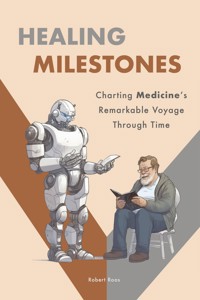
Discover the captivating history of medicine through the all-encompassing lenses of a large language model (GPT-4). "Healing Milestones" takes you on an entertaining journey through the annals of medical history in the beloved storytelling style of Bill Bryson. From ancient healers to groundbreaking surgeons, experience the triumphs and tragedies behind today's healthcare. Marvel at visionaries like Hippocrates, Florence Nightingale, and Louis Pasteur, who revolutionized medicine against all odds. Delve into the origins of important clinical specialties, from the emergence of surgery to the development of anesthesia. Observe how groundbreaking discoveries – the microscope, germ theory – ignited turning points in understanding the human body. Venture into the future, where personalized medicine tailored to our genes and intelligent robots assisting surgeons could redefine healthcare. This captivating history reveals that the advances in medicine result from human ingenuity and an unrelenting spirit.
Sie lesen das E-Book in den Legimi-Apps auf:
Seitenzahl: 149
Veröffentlichungsjahr: 2023
Das E-Book (TTS) können Sie hören im Abo „Legimi Premium” in Legimi-Apps auf:
Ähnliche



















dedicated toour friendsand families
Prologue
Imagine, if you will, a world where humanity had no idea what caused illness, pain, or death. A world where diseases were attributed to curses, demons, or vengeful spirits. This world is not just a flight of fancy; it was the reality for much of human history. Fortunately, over the millennia, humans have embarked on an incredible journey to understand and cure the ailments that have plagued us since time immemorial. This is the story of medicine, a never-ending quest that has shaped our past, present, and future.In this volume, we shall explore the vast and intricate world of medicine from its humble beginnings to its modern-day triumphs, and even take a peek at what the future holds. Along the way, we will meet the trailblazers and unsung heroes of various clinical specialties who, against all odds, have striven to heal the human body and mind. And, in true Bill Bryson fashion, we shall uncover the delightful, humorous, and often extraordinary details that make this journey as engaging as it is educational.Our journey begins over 12,000 years ago, a time when the causes of disease and ailments were poorly understood. Instead, people turned to supernatural explanations and sought remedies through rituals, prayers, and offerings to the gods. As we move forward, we will encounter the first inklings of a systematic approach to medicine in ancient civilizations like Egypt, Mesopotamia, China, and India. It was here that humankind first began to discern the patterns that govern health and illness.The heart of this book lies in the evolution of clinical specialties, branches of medicine dedicated to the diagnosis and treatment of specific ailments or conditions. These specialties emerged as the body of medical knowledge expanded and the complexity of the human body came into clearer focus. We will traverse the globe and traverse time, from the origin of surgery in ancient Egypt to the development of anesthesia in the 19th century, from the birth of psychiatry in the Enlightenment era to the emergence of modern oncology.In our travels, we will learn how new technologies and discoveries have revolutionized medicine. Consider, for instance, the leaps in understanding that resulted from the invention of the microscope, the development of germ theory, or the unraveling of the human genome. We will see how each of these innovations has transformed clinical practice and improved patient outcomes across the spectrum of specialties.As we approach the present, we shall examine the ways in which medicine has become increasingly specialized and sophisticated. We will witness the triumphs and challenges of modern medicine, from the eradication of smallpox to the ongoing battle against HIV/AIDS, from the remarkable progress in organ transplantation to the persistent scourge of antibiotic resistance. We shall also delve into the ethical questions that arise as medical science pushes the boundaries of what is possible.Finally, we will peer into the future, exploring the innovations and advancements that may come to define the next generation of medical care. From personalized medicine tailored to our unique genetic makeup to the potential of artificial intelligence and nanotechnology, the possibilities for healing are as vast as they are exciting.So, dear reader, let us embark on this fascinating odyssey, one that will not only illuminate the past and present of medicine but also offer a tantalizing glimpse of its future. Together, we will uncover the remarkable story of human endeavor, resilience, and ingenuity that is the history of medicine and all its clinical specialties.
A brief history of AI
Before delving into the depths of medicine's history, let us take a brief detour to acknowledge another remarkable achievement of human ingenuity: artificial intelligence, or AI. Our story here is short but no less intriguing, and as we shall see, the potential for AI to revolutionize medicine is immense.The seeds of artificial intelligence were sown in the mid-20th century when mathematician and logician Alan Turing pondered the question, "Can machines think?" His seminal work on the subject laid the foundation for the field of AI, igniting the imaginations of scientists, engineers, and philosophers alike.From these early musings, AI evolved in fits and starts, riding waves of enthusiasm followed by troughs of disillusionment. Along the way, several milestones stood out. In the 1950s, the development of the perceptron marked the dawn of machine learning, the process by which computers learn from experience. The 1960s saw the emergence of natural language processing, a subfield of AI dedicated to understanding and generating human language. Fast forward to the 21st century, and the field of AI has witnessed a veritable explosion of progress, driven by advances in computing power, algorithms, and the availability of massive datasets. This progress has culminated in an array of AI applications, from self-driving cars to virtual personal assistants.One of the most notable breakthroughs in recent AI history has been the development of machine learning models called "transformers." Introduced by researchers at Google in 2017, transformers have revolutionized natural language processing by enabling machines to process and generate text with a previously unattained level of fluency and coherence. Among the most famous of these transformer models is the GPT, or Generative Pre-trained Transformer, series developed by OpenAI. The release of GPT-3 in June 2020 marked a watershed moment, as its 175 billion parameters made it the largest and most powerful language model of its time, capable of an astonishing range of tasks, from language translation to creative writing.But the relentless march of progress did not stop with GPT-3. OpenAI continued to refine its models, and by 2023, it had unveiled GPT-4. This latest iteration boasts even greater capabilities and serves as a testament to the incredible strides made in artificial intelligence in just a few short decades.As we return to our journey through the history of medicine and its specialties, let us keep in mind the potential for AI and, more specifically, GPT-4 to play a role in shaping the future of medical care. From aiding in diagnosis to discovering new treatments, the possibilities are as limitless as they are exciting.So, with the world of AI firmly etched in our minds, let us now proceed with our exploration of the rich tapestry that is the history of medicine, bearing witness to the triumphs, challenges, and astonishing advancements that await us.
Part 1
The Evolution of Caregivers
Nurses, Physician Assistants, and Barbers Who Became Doctors
Of Compassion and Courage: The Unsung Heroes of Nursing
Imagine wandering the labyrinthine corridors of medical history, a breathtaking odyssey through the ages, punctuated by monumental discoveries and groundbreaking innovations. A pantheon of heroes, both ancient and modern, has shaped our understanding of health and disease. But at the very heart of this grand narrative lies the tale of an often overlooked, yet no less heroic group: nurses. These compassionate and intrepid caregivers have worked tirelessly at the forefront of patient care, offering solace, support, and healing to countless souls in need.Our journey begins in the misty realms of antiquity when the responsibility of caring for the sick was shouldered by family members or religious institutions. In these early societies, women - mothers and midwives, in particular - formed the nucleus of nursing, providing tender care and age-old remedies to the ailing and infirm.Let us now leap to the early Christian era, a time that witnessed the birth of organized nursing. The Byzantine Empire, for instance, established the first hospitals, staffed by a corps of dedicated deaconesses. These pioneering women laid the groundwork for modern nursing, blending religious zeal with practical caregiving. In Europe, monastic orders like the Knights Hospitaller followed suit, creating infirmaries and leprosariums for the sick and marginalized.Fast-forward to the Middle Ages, and we encounter the Sisters of Charity, a fearless and determined sisterhood who devoted their lives to serving the sick and the poor. With their singular blend of religious devotion and practical caregiving, they paved the way for the nursing profession as we know it today.But our story would be woefully incomplete without a nod to the indomitable Florence Nightingale. Appalled by the abysmal conditions and callous treatment of wounded soldiers during the Crimean War, she seized her lamp and took to the wards at night, providing care and comfort. Nightingale's dedication earned her the affectionate sobriquet "The Lady with the Lamp" and forever changed the perception of nursing.Her passion and determination culminated in the creation of the world's first secular nursing school in 1860, setting the stage for modern nursing education and practice. Nightingale's unwavering emphasis on hygiene, compassionate care, and evidence-based practice inspired future generations of nurses, ushering the profession into the 20th century and beyond. In the ensuing years, nursing blossomed and diversified, spawning new roles like nurse anesthetists, nurse-midwives, and public health nurses. From the ravages of world wars to the scourge of global pandemics, nurses have served as the very backbone of healthcare, offering hope and healing to those in need.Today, nursing encompasses a dazzling array of specialties and subspecialties, bound together by a shared dedication to patient care, advocacy, and the highest standards of professional practice. In a world beset by illness and injury, the indomitable spirit and tireless dedication of nurses stand as a beacon of hope and a force for good.As we traverse the annals of medical history, let us pause and salute the unsung heroes of nursing. For it is their unwavering compassion, courage, and commitment to the betterment of humanity that have touched countless lives and forever etched their legacy in the annals of medicine.
The Versatile Virtuosos: A Tale of Physician Assistants and Their Vital Role in Healthcare
Amidst the captivating landscape of medical history, we encounter a remarkable group of unsung heroes who have played a vital role in healthcare—the physician assistants (PAs). These versatile and highly skilled practitioners seamlessly bridge the gap between nursing and medicine, working in harmony with physicians to deliver exceptional healthcare to countless patients.Our tale begins in the mid-20th century United States, a time when the nation faced a dire shortage of healthcare providers, particularly in rural and medically underserved regions. Dr. Eugene A. Stead, a visionary at Duke University Medical Center, recognized the gravity of the situation and formulated an ingenious plan: the creation of a new breed of healthcare professionals who would work in tandem with physicians, providing comprehensive care across diverse settings.The year 1965 marked a watershed moment in the evolution of the PA profession, as the inaugural class of PAs embarked on their groundbreaking journey. Stead's revolutionary idea—repurposing the skills and expertise of former military medical corpsmen—gained traction and rapidly garnered support, culminating in the establishment of PA training programs throughout the nation.In the years that followed, the PA profession blossomed, placing a renewed emphasis on a robust educational foundation. Today's PAs undergo demanding graduate-level programs, encompassing a blend of classroom learning and hands-on clinical experience. After successfully navigating their studies and passing the national certification examination, PAs are equipped to diagnose and treat patients under a physician's supervision, prescribe medications, order and interpret diagnostic tests, and perform a wide array of medical procedures.Throughout their storied history, PAs have proven themselves to be indispensable assets within the healthcare system. Their remarkable adaptability has enabled them to carve out a niche in virtually every medical specialty—from primary care and pediatrics to emergency medicine and oncology. By working closely with physicians, PAs have enhanced patient access, particularly in underserved communities, and fostered a more efficient and effective healthcare delivery system.In the true spirit of pioneers, PAs have not only revolutionized the American healthcare landscape but have also inspired other nations to embrace the PA model. This global expansion of the profession attests to its undeniable value and versatility, as well as the critical role PAs play in addressing the challenges of a constantly evolving healthcare system.As our enthralling journey through medical history unfolds, let us honor the physician assistants—those versatile virtuosos who have deftly woven themselves into the fabric of healthcare. Through their unwavering dedication, adaptability, and commitment to the well-being of patients, PAs have emerged as a vital cornerstone of modern medicine, enhancing the delivery of quality healthcare, and leaving an indelible mark on the lives of those they serve.
From Barbers to Healers: The Unlikely Odyssey of Razor-wielding Practitioners into Modern-Day Physicians
Delving deeper into the captivating annals of medical history, one cannot help but marvel at the remarkable metamorphosis of barbers—those unassuming masters of the razor and shears—into the knowledgeable and revered physicians of today. This fascinating transformation bears witness to the dynamic nature of medicine and the human spirit's relentless pursuit of knowledge and self-improvement.Picture medieval Europe, a time when barbers donned multiple hats, serving not only as hair and beard groomers but also as makeshift surgeons. Out of necessity, the medical field's division of labor was unambiguous: university-trained physicians diagnosed ailments and prescribed remedies, while barbers, with their comparatively rudimentary education, tackled practical tasks like bloodletting, tooth extractions, and minor surgeries.This unconventional partnership between barbers and physicians solidified in the 13th century when Pope Alexander III prohibited clergy members from shedding blood. Consequently, barbers assumed these duties, and by the 16th century, the establishment of barber-surgeon guilds cemented this peculiar alliance. These guilds regulated surgical practice and provided apprenticeships for budding barber-surgeons.However, the tide was destined to turn. With the advent of groundbreaking discoveries in anatomy, physiology, and microbiology, surgery emerged as a complex and intricate field, a far cry from the unsophisticated practices of the barber-surgeons. An appetite for specialized surgical training burgeoned, fueled by the expanding corpus of medical knowledge. This shift became increasingly evident in the 18th century, as eminent surgeons like John Hunter and Percivall Pott began to scrutinize and challenge traditional barber-surgery practices. These visionaries championed a more rigorous education and profound understanding of human anatomy, prompting a reexamination of the surgeon's role within the medical realm.The final curtain fell on the barber-surgeon era in the 19th century when the Royal College of Surgeons in England stopped admitting barbers as members, signifying a definitive schism between barbering and surgery. The once-celebrated barber-surgeons gradually receded into the shadows of history, making way for the specialized and scientifically grounded surgeons who now stand at the vanguard of modern medicine.The intriguing tale of barber-surgeons serves as a testament to the resilience, curiosity, and adaptability that characterize humanity's quest for medical knowledge. As we continue to unveil the mesmerizing story of medicine, we must always remember that progress is ever-present, and the potential for growth and change is infinite. With reverence, let us recognize the modest origins of the barber-surgeons, whose unpretentious demeanor and dexterous hands laid the foundation for the skilled and erudite physicians who now grace the hallowed halls of medical history. Their enduring legacy is a testament to the healing arts' evolution and the indelible mark they have left on the world.
Part 2
Healing Through the Ages
A Panoramic View of Medical Progress
Whispers of the Ancients: Unraveling the Magic of Prehistoric Medicine (circa 10,000 BCE - 3000 BCE)
Venturing into the annals of human history, we find ourselves transported to the hallowed caverns and untamed landscapes of prehistoric times. In this mystical epoch, the burgeoning threads of medicine and magic wove a captivating tapestry of survival, ritual, and nature's awe-inspiring power.Life in prehistoric cultures teetered precariously on the brink, with danger lurking at every corner. Cunning predators, merciless diseases, and debilitating injuries threatened our ancestors' daily existence. To triumph over these perils, they embraced a tantalizing blend of pragmatic wisdom, astute observation, and supernatural beliefs.Devoid of modern technology, prehistoric peoples harnessed their intimate knowledge of the plants, animals, and minerals in their environment. They discovered the therapeutic properties of various natural substances and crafted rudimentary concoctions to mend wounds, relieve pain, and ward off infections.Prehistoric healing embraced a holistic approach, encompassing body, mind, and spirit. The revered shaman, a central figure in many prehistoric cultures, safeguarded the community's health and well-being. As healer, spiritual guide, and proto-psychologist, the shaman symbolized the synergy of the physical, mental, and spiritual realms.Equipped with a myriad of techniques, shamans utilized herbal remedies, bone-setting, rituals, incantations, and spirit journeys to cure the ailing and maintain harmony between the natural and supernatural worlds. Their profound comprehension of life's interconnected web and the significance of balance in health paved the way for holistic healing wisdom that resonates today.While prehistoric medicine may appear worlds apart from the sterile, cutting-edge realm of contemporary healthcare, a remarkable continuity traverses the ages. Numerous herbal remedies and natural treatments employed by our ancient forebears persist today, and the shaman's intuitive understanding of the mind-body-spirit connection deeply resonates with modern perspectives on psychological and emotional well-being in physical health.Delving deeper into medical history, echoes of our ancestors reverberate, showcasing their enthralling interplay with nature's forces, the enigmas of the human body, and the indomitable power of the human spirit. These shadowy caverns and wind-swept landscapes set the stage for the story of medicine - a testament to humanity's relentless pursuit of knowledge, healing, and triumph over adversity.
Elixirs of Immortality: The Wonders of Ancient Chinese Medicine (circa 2700 BCE - 220 CE)
Bidding farewell to the shimmering sands and awe-inspiring structures of ancient Egypt, we embark on an eastward journey to the realm of the dragon. Here, ancient China's mist-enveloped mountains and fertile valleys shelter one of humanity's oldest and most tenacious civilizations. Delving into the captivating annals of Chinese medicine, we uncover a holistic approach to healing, where the natural world, philosophy, and human spirit intertwine in an exquisite tapestry of ingenuity and wisdom.Ancient Chinese medicine




