


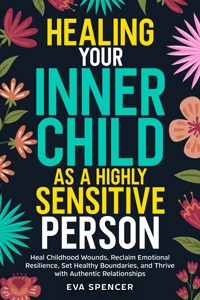
Healing Your Inner Child as a Highly Sensitive Person: Heal Childhood Wounds, Reclaim Emotional Resilience, Set Healthy Boundaries, and Thrive with Authentic Relationships E-Book
Eva Spencer
3,49 €
Mehr erfahren.
- Herausgeber: Eva Spencer
- Kategorie: Ratgeber
- Sprache: Englisch
Heal Deep Emotional Wounds and Embrace Your Sensitivity as a Source of Strength
Do you often feel overwhelmed by your emotions or the emotions of others? Do you find yourself trapped in patterns of people-pleasing, self-doubt, or emotional exhaustion? These are not signs of weakness but reflections of an inner child still longing for safety, understanding, and acceptance.
In the Healing Your Inner Child as a Highly Sensitive Person collection, Eva Spencer brings together two empowering guides, Highly Sensitive Person and Healing Your Inner Child, to help you reconnect with your true self, restore emotional balance, and build healthy, fulfilling relationships.
Inside, You’ll Discover How To:
- Understand your sensitivity: Learn how your heightened empathy and awareness can become your greatest strengths.
- Heal childhood wounds: Release the emotional pain that fuels anxiety, self-criticism, and codependency.
- Rebuild confidence and self-worth: Develop habits that nurture self-compassion and inner stability.
- Set healthy emotional boundaries: Protect your energy without shutting down or disconnecting from others.
- Release toxic guilt and shame: Free yourself from the need for external validation and approval.
- Create authentic, supportive relationships: Build deeper bonds rooted in respect, empathy, and understanding.
Start reading today on your favorite device and begin your journey toward inner healing and authentic self-acceptance.
Das E-Book können Sie in Legimi-Apps oder einer beliebigen App lesen, die das folgende Format unterstützen:
Veröffentlichungsjahr: 2025
Ähnliche










Healing Your Inner Child As A Highly Sensitive Person
Heal Childhood Wounds, Reclaim Emotional Resilience, Set Healthy Boundaries, and Thrive with Authentic Relationships
Healing Your Inner Child
Highly Sensitive Person
Eva Spencer
©CopyrightAndaronPublishing 2025 - All rights reserved.
The content contained within this book may not be reproduced, duplicated, or transmitted without direct written permission from the author or the publisher. Under no circumstances will any blame or legal responsibility be held against the publisher, or author, for any damages, reparation, or monetary loss due to the information contained within this book, either directly or indirectly.
Legal Notice:
This book is copyright-protected. It is only for personal use. You cannot amend, distribute, sell, use, quote, or paraphrase any part of the content within this book without the consent of the author or publisher.
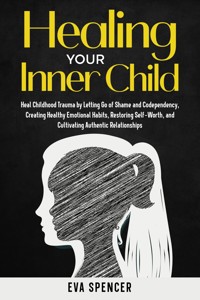
Healing Your Inner Child
Heal Childhood Trauma by Letting Go of Shame and Codependency, Creating Healthy Emotional Habits, Restoring Self-Worth, and Cultivating Authentic Relationships
Eva Spencer
Contents
Introduction
"The wound is the place where the Light enters you."- Rumi.
WhenIfirstventured into the world of inner child healing, I was both skeptical and desperate. The concept seemed abstract, perhaps even indulgent; after all, weren't we supposed to simply "grow up" and move on from childhood? Yet, as I witnessed person after person transform through this profound work, I realized that what many of us call "adult problems" are often the echoes of our earliest wounds calling for attention.
This book emerged from that revelation and from the countless stories I've been privileged to hear over the years, stories that may resemble your own.
Like Michael, who couldn't understand why he kept sabotaging promising relationships until he reconnected with the abandoned five-year-old within who had learned that love inevitably leads to loss. Or Sophia, whose relentless perfectionism and inability to celebrate achievements stemmed from a childhood where only flawlessness earned affection. Perhaps you see yourself in Rachel, who spent decades people-pleasing and neglecting her own needs because she had internalized that her value lay solely in caring for others.
These patterns (codependency, shame, and chronic self-doubt) aren't character flaws. They're adaptive strategies that once helped you survive. The problem isn't that you developed these responses; it's that they're no longer serving you now.
The journey I'm inviting you to embark upon isn't about blaming your past or those who raised you. It's about reclaiming the authentic self that may have been buried beneath layers of protective armor. It's about understanding that healing doesn't mean forgetting or minimizing your experiences; it means integrating them into your story with compassion and a new perspective.
When I began writing, I wondered: what would have helped me when I was struggling to understand why I kept repeating the same painful patterns despite my best intentions? What would have guided me through the fog of shame that convinced me I was fundamentally flawed? The answer became this book, a compassionate roadmap for those ready to heal their inner child and, by extension, their adult lives.
Throughout these pages, you'll find both validation and challenge. We'll explore together how childhood experiences shape adult behaviors, how to recognize when your inner child is steering your reactions, and most importantly, how to nurture that child with the wisdom and love that perhaps wasn't available to you then. You'll learn practical techniques for setting healthy boundaries, releasing shame, building authentic relationships, and cultivating genuine self-worth.
I'm profoundly grateful to the teachers, therapists, and pioneers in trauma healing whose wisdom has informed this work, especially Alice Miller, John Bradshaw, and Bessel van der Kolk, whose groundbreaking insights have transformed our understanding of childhood's impact on adult life. My deepest thanks also go to the brave individuals who shared their healing journeys with me, illuminating the path for others through their vulnerability and courage.
But my greatest appreciation is reserved for you, holding these pages with perhaps a mixture of hope and hesitation. The very fact that you're here speaks to your resilience and desire for change. Know that this work takes tremendous courage, the courage to look at painful truths, to feel what you may have needed to numb, and to reimagine a life beyond the limitations of old wounds.
This book is written for anyone who senses that their past is influencing their present in ways they don't fully understand or control. No special knowledge is required, only an openness to self-discovery and a willingness to approach yourself with kindness. Whether childhood trauma for you meant dramatic events or quieter forms of emotional neglect, your experiences and their impact are valid.
As we begin this journey together, I invite you to read not just with your mind but with your heart. Notice what resonates, what brings discomfort, what sparks recognition. These responses are signposts on your healing path. Trust them.
Thank you for choosing to take this step toward wholeness. The work ahead isn't always easy, but I promise you this: the child within you has been waiting for exactly this moment, the moment when you turn toward them with open arms and say, "I'm here now, and we're going to heal together."
Turn the page. Your journey home to yourself begins now.
Reconnect With The Child Within And Begin To Heal
Have you ever felt an unexplained sadness that seems older than the moment you’re in? Sometimes the emotions we carry aren’t rooted in the present, but in the experiences of the child we once were. These early wounds shape how we love, trust, and protect ourselves. When left unacknowledged, they can quietly influence our adult relationships, creating cycles of self-doubt, overgiving, or emotional withdrawal that feel difficult to break.
Your inner child isn’t a fragile part of you, it’s the foundation of your emotional life. Within it live your original hopes, fears, and needs for safety and love. When that part remains unseen, it can continue seeking healing through patterns that no longer serve you. Real recovery doesn’t mean erasing the past. It means learning to respond to it with compassion, understanding, and conscious choice.
To help you bring the healing principles in this book into your daily life, I worked with Books4Growth to develop a free reflective self-discovery experience: the “What Is Your Psychological Archetype?” quiz. It combines psychological insight with emotional self-awareness, helping you understand how your early conditioning, nervous system, and inner energy patterns interact. The insights you’ll receive can guide you toward deeper healing and authentic self-trust.
You have the power to create emotional safety within yourself. Let this awareness become the foundation for peace, resilience, and a renewed sense of self-worth.
Take the next step in your healing at quiz.books4growth.com.
Breaking The Cycle - Understanding Your Inner Child
Are Your Adult Struggles Actually Childhood Wounds In Disguise?
Whenthesamepainful patterns keep appearing in your life, the relationships that fizzle out in familiar ways, the persistent feelings of not being enough, the endless striving for validation, you're experiencing something far deeper than bad luck or poor choices. These recurring struggles often trace back to unresolved moments from our earliest years, invisible threads connecting our past to our present. The child you once were, with all their unmet needs and unhealed hurts, continues to influence your adult decisions in ways you might not recognize.
Many of us move through life unaware that we're operating from outdated emotional blueprints. We develop complex coping mechanisms as children to navigate challenging environments, perhaps becoming the peacekeeper in a volatile home, or learning to hide our true feelings to earn love. These strategies, once essential for emotional survival, become limitations in adulthood. The perfectionism that once protected you from criticism now prevents authentic connection. The self-reliance that kept you safe when adults were unreliable now makes it impossible to trust partners. Without addressing these childhood adaptations, we remain trapped in cycles that no longer serve us.
This first chapter marks the beginning of a transformative journey toward understanding and healing these early wounds. Together, we'll uncover how formative experiences shaped your emotional landscape and created the patterns you struggle with today. By connecting these dots, you'll gain crucial insight into why certain situations trigger overwhelming emotions or why specific relationship dynamics feel uncomfortably familiar. This awareness is the essential first step in breaking free from unconscious repetition.
The process we're embarking on isn't about assigning blame or dwelling in the past. Rather, it's about recognizing how childhood experiences continue to shape your present reality so you can make conscious choices about your future. When we understand the origins of our emotional reactions, why rejection feels catastrophic, or why setting boundaries seems impossible, we gain the power to respond differently. This chapter will help you identify those origins, recognize their impact on your current relationships and self-perception, and preview how resolving these core issues can transform your life.
Throughout this book, we'll explore how childhood wounds manifest in adult behaviors like codependency, people-pleasing, and shame. We'll examine how these adaptive responses once protected you but now limit your capacity for authentic connection and self-love. The subsequent chapters will build upon this foundation, offering specific tools for releasing shame, establishing healthy boundaries, rebuilding self-worth, and creating genuine relationships based on mutual respect rather than unconscious needs.
The work of healing your inner child requires courage and compassion, both qualities you already possess, even if they feel buried beneath years of protective layers. As we move forward, you'll develop a nurturing relationship with the vulnerable parts of yourself that have been carrying these emotional burdens. This internal relationship becomes the template for all your external connections, creating ripple effects that extend into every area of your life. What begins as personal healing ultimately transforms how you engage with the world around you.
What would life feel like if you weren't constantly driven by unconscious childhood programming? How might your relationships change if you could respond to present circumstances rather than reacting to old wounds? These questions point toward the freedom and authenticity waiting on the other side of this healing journey. By understanding and addressing the root causes of limiting patterns, you create space for new possibilities, not just in how you relate to others, but in how you experience yourself and your place in the world.
Recognizing Patterns As Messengers
The patterns you've been struggling with aren't enemies to be conquered but messengers pointing toward what needs healing. They represent your psyche's persistent attempt to resolve unfinished emotional business. When you find yourself repeatedly drawn to unavailable partners or consistently sacrificing your needs for others, your inner child is trying to rewrite an old story, hoping for a different ending this time. By identifying these patterns with curiosity rather than judgment, you begin the process of genuine transformation. In the pages that follow, we'll help you decode these messages and respond with the understanding and care your inner child has always deserved.
The Child Within Us All
The kitchen window cast long rectangles of afternoon light across the wooden floor. Michael stood in this warmth, feeling the heat seep into his socked feet as he chopped vegetables for dinner. The knife came down with measured precision, creating a steady rhythm that matched the tick of the wall clock. Thud, tick. Thud, tick.
His mind wandered to the conversation with his therapist earlier that day. "Those feelings of abandonment when Sarah leaves for business trips, they're not about Sarah at all," she had said. "They're about your father leaving when you were eight." Michael's hand paused mid-chop. The carrot remained half-cut on the board as he stared through the window at the oak tree in the yard, its branches swaying in a gentle breeze.
He remembered standing at a different window thirty years ago, watching his father's car disappear down the street. His mother had told him to be strong, not to cry. He obeyed. He always obeyed. The memory brought a tightness to his throat that he tried to swallow away. The therapist called it his "inner child"; this wounded part of him still waiting at the window for someone who would never return. Michael resumed chopping, pressing the knife harder into the cutting board. The sound changed. Thunk, tick. Thunk, tick.
The phone rang. It was Sarah. "Hey, just checking in. The meeting ran late, so I'll be staying another night." Michael felt the familiar weight settle in his chest, the sudden hollowness. "That's fine," he said, his voice neutral, controlled. "Everything's good here." After hanging up, he gripped the edge of the counter. The therapist's words echoed: "Notice the feelings when they come. They're not about now, they're about then." Michael closed his eyes. The eight-year-old boy inside him believed Sarah was leaving forever, just like his father. But that wasn't true. He knew that wasn't true. He took a deep breath, feeling the air fill his lungs, his chest expanding against the pressure.
Outside, the neighborhood children played, their laughter floating through the open window. Michael watched them, remembering games he once played. He had been happy once, before learning to guard himself against loss. Sarah wasn't his father. He wasn't eight years old anymore. The realization felt both obvious and profound. He returned to the vegetables, slicing a bell pepper into thin strips. The knife moved smoothly now. His phone buzzed with a text from Sarah: "Miss you. Love you." Something in Michael's chest loosened slightly. The boy at the window turned away from the glass, walking back into the room of memory. Not healed, not yet, but acknowledged.
The setting sun painted the kitchen orange. Michael seasoned the food, tasting as he went, fully present in the act. This was what his therapist called "grounding", connecting to the now, not living in the echoes of the past. The eight-year-old inside him would always be there, but perhaps they could learn to talk to each other. Perhaps they could both learn to trust again.
What parts of ourselves remain frozen in time, waiting for someone to notice them, to tell them it's safe to grow up now?
The Roots Of Our Emotional Patterns
Every adult carries within them the echoes of their childhood experiences. These echoes aren't just memories; they're active forces shaping our responses to life's challenges. The patterns of behavior we develop as children often become our automatic responses as adults. When a child grows up in an environment where emotional needs go unmet, they develop coping mechanisms. These might include people-pleasing, emotional withdrawal, perfectionism, or constant self-criticism. These strategies help the child navigate a difficult environment, but they rarely serve the adult well.
Think of these patterns as paths in a forest. As children, we create these paths by walking them repeatedly, finding the safest routes through threatening terrain. With each step, the path becomes more defined, more automatic. By adulthood, these paths are so well-worn that we follow them without thought, even when they no longer lead us where we need to go. The forest may have changed entirely, but our feet remember the old ways.
Research in developmental psychology confirms this phenomenon. Studies have shown that our attachment styles, the ways we connect with others, form primarily during our first years of life. Children who experience consistent, nurturing care typically develop secure attachment patterns. Those who face unpredictable or inadequate emotional support often develop anxious, avoidant, or disorganized attachment styles. These early patterns become the templates for our adult relationships, influencing everything from our choice of partners to our communication styles.
The impact of childhood emotional wounds can be particularly profound. When children experience trauma, neglect, or consistent invalidation of their feelings, their developing nervous systems adapt accordingly. This adaptation occurs at both psychological and neurobiological levels. Brain imaging studies have demonstrated that chronic stress in childhood can actually alter brain development, particularly in areas responsible for emotional regulation and stress response. These physical changes help explain why childhood patterns can feel so deeply ingrained; they're wired into our very biology.
Our emotional patterns often have specific origins in childhood experiences. A child whose emotions were regularly dismissed might grow into an adult who struggles to identify and express their feelings. Someone raised by critical parents may develop harsh internal self-talk and perfectionism. Those who had to earn love through achievement may become workaholics, eternally seeking external validation. Recognizing these connections is crucial because awareness is the first step toward change.
The human mind naturally seeks meaning and coherence. As children, we create explanations for our experiences that make sense from our limited perspective. A child whose parent is emotionally unavailable might conclude, "I'm not important enough," rather than understanding the parent's limitations. These explanations become core beliefs that shape our view of ourselves and others. They operate below conscious awareness yet influence nearly every aspect of our lives.
Children are remarkably adaptable, developing sophisticated strategies to maintain attachment to caregivers even under challenging circumstances. A child with an unpredictable parent might become hyper-vigilant, constantly scanning for mood changes. Another might become the "perfect child" to avoid triggering parental anger. A third might take on a caretaker role, tending to a parent's emotional needs while suppressing their own. While these adaptations demonstrate the resilience of the human spirit, they often become limiting when carried into adulthood.
Recognizing the childhood origins of our emotional and behavioral patterns is the first crucial step in breaking free from cycles that no longer serve us.
The Shadows Cast By Our Past
Our childhood patterns don't remain confined to memory; they actively shape our adult relationships. The coping mechanisms we developed to navigate childhood challenges become default responses in our interactions with partners, friends, colleagues, and even our own children. Someone who learned to suppress their needs to keep peace at home might continue this pattern in romantic relationships, leading to resentment and emotional distance. A person who grew up with inconsistent care might develop anxious attachment, constantly seeking reassurance from partners and interpreting neutral actions as potential abandonment.




