


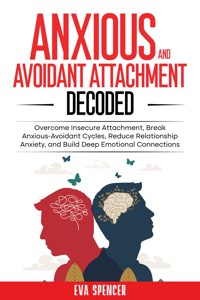
Anxious and Avoidant Attachment Decoded: Overcome Insecure Attachment, Break Anxious-Avoidant Cycles, Reduce Relationship Anxiety, and Build Deep Emotional Connections E-Book
Eva Spencer
3,49 €
Mehr erfahren.
- Herausgeber: Eva Spencer
- Kategorie: Geisteswissenschaft
- Sprache: Englisch
Heal Attachment Wounds and Build the Lasting, Secure Love You Deserve
Do you find yourself craving closeness yet fearing rejection? Do you pull away when relationships start to feel too intimate, or overthink every message and moment with your partner? These patterns are not your fault; they are signs of insecure attachment that can be healed with awareness and care.
In the Anxious and Avoidant Attachment Decoded collection, Eva Spencer combines two transformative guides, Anxious Attachment No More and Avoidant Attachment Recovery, to help you understand your attachment style, break unhealthy cycles, and create the emotional security you have always longed for.
Through powerful therapeutic tools, mindfulness practices, and compassionate exercises, this collection will show you how to stop chasing love out of fear, release emotional walls, and open yourself to genuine connection.
Inside, You’ll Discover How To:
- Recognize attachment triggers: Identify the fears and patterns that cause anxiety or distance in relationships.
- Reprogram your emotional responses: Calm your mind and body so you can feel safe in intimacy.
- Communicate needs clearly and confidently: Express your feelings without fear of rejection or withdrawal.
- Heal old wounds and rebuild trust: Let go of past pain and nurture relationships built on respect and understanding.
- Establish healthy boundaries: Stay open and connected while protecting your emotional well-being.
- Cultivate secure, lasting love: Develop the confidence and balance to build deep, fulfilling bonds.
Start reading today on your favorite device and begin building the secure love you deserve.
Das E-Book können Sie in Legimi-Apps oder einer beliebigen App lesen, die das folgende Format unterstützen:
Veröffentlichungsjahr: 2025
Ähnliche
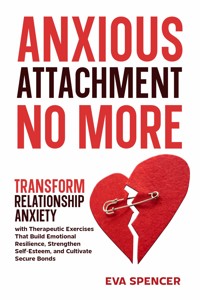





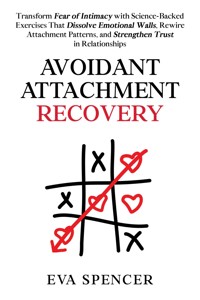











Anxious And Avoidant Attachment Decoded
Overcome Insecure Attachment, Break Anxious-Avoidant Cycles, Reduce Relationship Anxiety, and Build Deep Emotional Connections
Anxious Attachment No More
Avoidant Attachment Recovery
Eva Spencer
©CopyrightAndaronPublishing 2025 - All rights reserved.
The content contained within this book may not be reproduced, duplicated, or transmitted without direct written permission from the author or the publisher. Under no circumstances will any blame or legal responsibility be held against the publisher, or author, for any damages, reparation, or monetary loss due to the information contained within this book, either directly or indirectly.
Legal Notice:
This book is copyright-protected. It is only for personal use. You cannot amend, distribute, sell, use, quote, or paraphrase any part of the content within this book without the consent of the author or publisher.
Anxious Attachment No More
Transform Relationship Anxiety with Therapeutic Exercises That Build Emotional Resilience, Strengthen Self-Esteem, and Cultivate Secure Bonds
Eva Spencer
Contents
Introduction
"What a wonderful thing it is to feel emotionally safe with another person. To know that they will catch you when you stumble, and that you, too, are capable of becoming their safe harbor."- Rachel Naomi Remen.
Iremembersittingacrossfrom Sara during one of our therapy sessions, watching her twist a tissue between her fingers as she described the paralyzing anxiety she felt whenever her partner didn't respond to her texts quickly enough. "I know it's irrational," she said, "but my mind immediately goes to the worst-case scenario, that he's losing interest or about to leave me." Though Sara's story is unique to her, the underlying pattern is one I've witnessed countless times in my practice, a pattern called anxious attachment.
This book was born from these moments, from witnessing bright, capable individuals whose relationships were shadowed by fear, whose self-worth seemed contingent on others' validation, and whose emotional peace was constantly under siege by worry. The pages that follow represent my commitment to providing practical, accessible tools for those who recognize themselves in Sara's experience or in the countless other manifestations of attachment anxiety.
When Thomas first came to me, he couldn't understand why his relationships followed such a predictable trajectory: intense connection, growing insecurity, suffocating behavior, and inevitable collapse. "I just love too much," he'd explain, until our work together revealed that what felt like love was actually fear, fear of abandonment that had roots in his earliest attachments. Thomas's journey of transformation began with understanding, continued with self-compassion, and flourished with intentional practice of new ways of connecting.
Or consider Mei, whose anxious attachment was masked by perfectionism and achievement. Behind her impressive resume was a woman desperate for approval, whose relationships crumbled when she perceived the slightest criticism. Through the therapeutic approaches I share in this book, Mei learned to build her sense of self from within rather than seeking external validation.
I've been fortunate to walk alongside many individuals on their path from anxious attachment to secure connection. Their courage in facing deeply ingrained patterns, their resilience in practicing new ways of being, and their transformations have been my greatest teachers. While names and specifics have been changed to protect privacy, the essence of their journeys informs every exercise, reflection, and strategy in these pages.
Beyond Understanding To Transformation
This book differs from others you might have read on attachment. Rather than merely explaining the concept, I focus on change, tangible, measurable change that begins with increased awareness but doesn't end there. The exercises you'll find here are drawn from evidence-based therapeutic approaches, including Cognitive Behavioral Therapy, mindfulness practices, somatic experiencing, and emotionally focused techniques.
Each chapter builds upon the last, creating a pathway that honors where you are now while guiding you toward where you want to be. You'll find opportunities for self-reflection alongside concrete practices that help rewire neural pathways and create new emotional habits. I've designed these exercises to be accessible whether you're currently in a relationship or not, because secure attachment begins with your relationship to yourself.
I'm deeply grateful to the mentors who shaped my understanding of attachment theory and therapeutic practice. Dr. Elena Fernandez's pioneering work on adult attachment interventions provided a foundation for many approaches I share. My colleagues at the Center for Relational Healing offered invaluable feedback on early drafts. And my editor, James, challenged me to eliminate jargon and speak directly to readers' lived experiences.
Most importantly, I'm grateful to you. By opening these pages, you've demonstrated courage and hope, two qualities essential for growth. Your willingness to examine deeply rooted patterns and consider new possibilities is the first step in a transformative journey.
A Companion For Your Journey
This book is written for anyone who recognizes patterns of anxiety, insecurity, or overdependence in their relationships. While some concepts draw from psychological theory, I've worked to make everything accessible regardless of your background. No prior knowledge of attachment theory is required, only a willingness to explore, reflect, and practice.
You'll find this book most helpful if you approach it not as a quick fix but as a thoughtful companion for ongoing growth. Some exercises may challenge you; others might bring immediate relief. I encourage you to move through the material at your own pace, returning to sections that resonate particularly strongly or that present welcome challenges.
As you turn the page and begin this journey, remember that the path toward secure attachment isn't linear. There will be setbacks along with breakthroughs, confusion along with clarity. This is normal and expected. The practices in this book are designed to be revisited throughout your life, offering new insights as you grow.
Thank you for trusting me to accompany you on this path. Your decision to explore these patterns shows tremendous self-awareness and courage. I believe wholeheartedly in your capacity to transform relationship anxiety into security, to build lasting emotional resilience, and to create the authentic connections you deserve.
Turn the page when you're ready. The work ahead isn't always easy, but I promise it's worth it. Your journey toward secure attachment begins now.
Heal The Fear Of Losing Love
Have you ever found yourself waiting anxiously for a reply that doesn’t come, feeling your heart race as your mind fills with worry? I know that ache all too well, the fear that love might slip away unless you prove yourself worthy of it. But healing anxious attachment isn’t about needing less; it’s about understanding your needs deeply enough to meet them with compassion rather than panic.
When you begin to see your patterns clearly, you stop fighting your emotions and start guiding them. Each moment of awareness becomes an act of healing, slowly replacing self-doubt with calm, connection, and trust, both in yourself and in others.
Over the years, I’ve seen how understanding your attachment patterns can completely change how you experience love. To help you take this work further, I’ve partnered with Books4Growth to design the free “What Is Your Psychological Archetype?” quiz. Together, we created it to help you uncover the emotional patterns that shape your attachment style and discover how to begin creating the security you deserve. It’s a simple yet profound next step toward deeper self-awareness and healing.
You are worthy of love that doesn’t require fear to survive. Take the quiz now at quiz.books4growth.com.
Shackled Souls - Unveiling Anxious Attachment
Are Your Fears Sabotaging Your Connections?
Eachtimehecalled late, your heart raced. Each unanswered text sent your mind spinning into worst-case scenarios. You've found yourself apologizing for needs you have every right to express, desperately trying to maintain a connection that feels perpetually at risk of dissolving. If these experiences resonate with you, you're not alone, and you're not broken. What you're experiencing has a name: anxious attachment.
The patterns of anxious attachment don't emerge from weakness or neediness but from deeply ingrained survival mechanisms formed early in our lives. When our young minds interpreted love as conditional or inconsistent, we developed hypervigilant systems designed to protect us from the pain of abandonment. These protective mechanisms, however, often become the very obstacles that prevent us from experiencing the secure, fulfilling relationships we truly desire.
In this opening chapter, we'll explore the intricate landscape of anxious attachment, examining how this attachment style shapes not only your relationships but your fundamental sense of self. We'll identify the characteristic patterns: the desperate need for reassurance, the fear that love might vanish at any moment, the tendency to lose yourself in relationships, which signal anxious attachment at work. Understanding these patterns is the first crucial step toward transforming them. When you recognize the ways anxiety infiltrates your connections, you gain the power to respond differently.
We'll also delve into the profound influence anxious attachment has on self-perception. Many of us with this attachment style have become expert emotional meteorologists, constantly scanning our partners' moods for signs of potential rejection or withdrawal. This hyperawareness often comes at a steep cost: our sense of self becomes contingent on others' responses, and we lose touch with our intrinsic worth. Throughout this chapter, we'll begin examining how this dependence on external validation shapes your relationship with yourself and others.
The journey ahead involves honest self-examination. We'll provide thoughtful prompts and reflective exercises designed to help you identify your personal anxious attachment patterns with compassion rather than judgment. Self-awareness without self-criticism forms the foundation of lasting change. By recognizing your unique triggers and responses, you'll begin to see that your anxious behaviors aren't random or irrational but predictable reactions to perceived threats to connection.
This first chapter sets the stage for the transformative work ahead. In subsequent chapters, we'll build upon this foundation of understanding, exploring the origins of your attachment style, developing practical tools for emotional regulation during relationship stress, establishing healthy boundaries, communicating needs effectively, and ultimately cultivating a secure attachment style that allows for both intimacy and autonomy. The skills and insights you'll gain throughout this book are designed not just to improve your romantic relationships but to enhance your connection with yourself and others across all domains of life.
The path we're embarking on together isn't always easy. Confronting deeply held fears and long-established patterns requires courage. Yet with each insight gained and each new skill practiced, you move closer to freedom from the grip of anxious attachment. You deserve relationships where love doesn't feel like a perpetual test of worthiness but rather a secure foundation from which you can grow. This journey toward secure attachment isn't about becoming a different person; it's about reclaiming parts of yourself that anxiety has overshadowed and discovering new possibilities for connection that honor both your needs and those of your partner.
Breaking Free From The Anxious Cycle
Our approach throughout this book integrates evidence-based therapeutic techniques, attachment theory, and practical exercises designed to create lasting change. Rather than offering quick fixes or surface-level advice, we focus on addressing the root causes of anxious attachment while building concrete skills for emotional resilience. The transformation we seek isn't merely the absence of anxiety but the presence of security, the deep knowing that you are worthy of love and capable of healthy interdependence. As we move forward together through these pages, hold this truth close: your attachment style is adaptable, your relationship patterns can change, and a more secure way of connecting is within your reach.
The Unspoken Fear Of Losing Her
The rain tapped against the window as Emma stared out at the gray city skyline. Three text messages from David blinked on her phone screen. She had not answered any of them. In her chest, a tightness gathered and spread like ink in water. She picked up the phone, put it down, and picked it up again. The weight of her need to respond felt heavier than the device itself.
"I shouldn't need his validation this much," she thought, watching a raindrop race down the glass. The thought settled in her stomach like a stone. Outside, the world moved in blurs of umbrellas and taxi lights. Emma remembered the fight they'd had last night, how small it started, how large it grew. David had mentioned wanting space to think about their relationship. Those words had opened a void beneath her feet.
The apartment felt too large and too small at once. Emma paced from the window to the bookshelf, running her finger along the spines of books she'd never finish. The silence of the room pressed against her ears. In this moment of solitude, memories surfaced: her mother's abrupt departures during childhood, the way Emma had learned to cling to anyone who showed her affection, the way she measured her worth by how much she was wanted. "Is there something wrong with needing someone this much?" she wondered. The question hung in the air, unanswered.
She sat on the edge of her unmade bed and opened her journal. Her therapist had suggested writing when the anxiety became overwhelming. The pen hovered over the blank page. "I am afraid David will leave," she wrote, the words stark and honest. "I am afraid I am too much." She paused, then added: "I am afraid I am not enough." Her handwriting looked strange to her, like it belonged to someone else. On the nightstand, a framed photo showed her and David laughing at the beach last summer. She remembered feeling secure that day, anchored by his presence. Now she wondered if she had ever felt secure alone.
The phone buzzed again. David's name appeared on the screen. Emma's heart raced as she reached for it, then stopped. For the first time, she recognized the pattern: the panic when he pulled away, the relief when he reached out, the constant seeking of reassurance like water in a desert. She saw how this dance had played out in every relationship before him. Emma took a deep breath and felt the air fill her lungs completely. Outside, the rain had softened to a gentle patter against the windows. The city lights began to emerge through the thinning clouds.
What would it mean to find value in herself separate from David's approval? What would it take to stand in a room alone and feel complete?
The Shadows Of Attachment
At its core, anxious attachment is a persistent fear of abandonment and rejection. This attachment style typically develops in early childhood when caregivers are inconsistently responsive, leaving children uncertain about whether their needs will be met. As adults, these individuals carry forward this uncertainty, constantly scanning for signs of potential rejection or abandonment. They become hypervigilant to the smallest changes in their partner's behavior or tone, interpreting neutral actions as negative signs. This hypervigilance is exhausting, keeping them in a near-constant state of emotional alertness that can be difficult for others to understand.
Imagine a radio perpetually tuned to a station with poor reception. Most people might hear static and move on, but someone with anxious attachment hears every crackle and pop as a potential message. They strain to interpret meaning from the noise, always listening for signals of trouble that might not actually exist. This constant attention to "relationship static" becomes their default setting, making relaxation nearly impossible when the connection feels threatened.
In relationships, these anxious tendencies manifest in several recognizable patterns. People with anxious attachment often engage in approval-seeking behaviors, constantly checking in with partners and requiring frequent reassurance about the relationship's stability. They may become overly accommodating, sacrificing their own needs and boundaries to maintain harmony and prevent potential conflict. When their fears are triggered, they might engage in protest behaviors such as excessive calling or texting, emotional outbursts, or making threats to end the relationship, not because they want to leave but as a desperate attempt to elicit reassurance from their partner.
The physical symptoms of anxious attachment can be equally intense. When triggered by real or perceived threats to the relationship, those with anxious attachment often experience racing thoughts, a pounding heart, shortness of breath, and a gnawing sensation in their stomach. Sleep becomes elusive as their mind replays conversations, looking for hidden meanings. Their nervous system, primed for danger, remains in a heightened state of arousal that makes it difficult to concentrate on anything beyond the perceived relationship threat.
Communication patterns become distinctly characterized by need and fear. Questions like "Are you mad at me?" or "Is everything okay between us?" become frequent refrains. When partners fail to respond quickly to messages, those with anxious attachment may spiral into catastrophic thinking, imagining the worst possible scenarios rather than mundane explanations. This catastrophizing further reinforces their belief that abandonment is imminent, creating a self-fulfilling cycle of anxiety and relationship strain.
Beneath the surface behaviors lies an intense emotional world. People with anxious attachment often experience emotions at a higher intensity than others, particularly negative emotions related to separation or rejection. Minor disagreements can feel like relationship-ending conflicts. Brief periods without contact can feel like abandonment. This emotional intensity is not a choice or an overreaction; it's the lived reality of a nervous system programmed to be exquisitely sensitive to signs of rejection.
One of the most challenging aspects of anxious attachment is the emotional roller coaster it creates. When the relationship feels secure, anxiously attached individuals can be loving, attentive, and deeply committed partners. But when triggered, they can swing rapidly between clinging behaviors and angry pushing away, between desperate attempts to reconnect and protective withdrawal. These seemingly contradictory behaviors all stem from the same core fear: the terror of being left alone.
The inner monologue of someone with anxious attachment often includes thoughts like: "What if they leave me?" "What did that text really mean?" "They seem distant today. Did I do something wrong?" or "If I were enough, they wouldn't need space from me." These thoughts create a constant background of worry that colors every interaction, making genuine presence difficult and eroding self-confidence over time.
Self-worth becomes tragically entangled with relationship status for those with anxious attachment. Being in a relationship, any relationship, can feel safer than being alone, even if the relationship is not meeting their needs or is actively harmful. This dependency makes ending unhealthy relationships particularly difficult, as the pain of separation can feel literally unbearable, triggering the deepest abandonment wounds from childhood.
Anxious attachment is not a character flaw but a deeply ingrained survival strategy developed in response to early experiences of unpredictable care and connection.
The Mirror Of Dependency
Self-perception becomes fundamentally altered through the lens of anxious attachment. Rather than developing a stable internal sense of worth, individuals with this attachment style often come to view themselves primarily through their partner's eyes. Their self-esteem rises and falls with perceived approval or disapproval from significant others. This external validation becomes the cornerstone of their identity, making them vulnerable to dramatic shifts in self-worth based on relationship status or quality.




