


40,99 €
Mehr erfahren.
- Herausgeber: John Wiley & Sons
- Kategorie: Fachliteratur
- Serie: SAS Institute Inc
- Sprache: Englisch
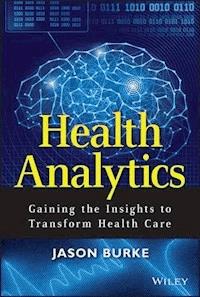
A hands-on, analytics road map for health industry leaders The industry-wide transformation taking place across the health and life sciences ecosystem is mandating that organizations adopt new decision-making capabilities, based on science and real-world information. Analytics will be a required competency for the modern health enterprise; this book is about how to "cross the chasm." The ultimate analytics guide for the health industry leader, this essential book equips business leaders with little-to-no experience in analytics to understand how to incorporate analytics as a cornerstone of their 21st century competitive business strategy. * Paints the picture for a new health enterprise, one focused on the patient * Explores the financial components of this new operating model, using analytics to optimize the tradeoffs between cost and value * Deals with the rising role of the consumer, using analytics to create a completely new health engagement model with individual recipients of care * Looks at how analytics can drive innovations in care practice, patient-experienced medical outcomes, and analytically driven novel therapies optimized for the individual patient * Presents a variety of text, tables, and graphics illustrating the various concepts being described Within each section and chapter, Health Analytics assesses the current landscape, proposing a new model/concept, sharing real-world stories of how the old and new world come together, and framing a "how-to" for the reader in terms of growing that particular set of capabilities in their own enterprises.
Sie lesen das E-Book in den Legimi-Apps auf:
Seitenzahl: 343
Veröffentlichungsjahr: 2013
Ähnliche



















Contents
Cover
Wiley & SAS Business Series
Title Page
Copyright
Foreword
Preface
Acknowledgements
Chapter 1: A Changing Business for a Changing Science
The Gathering
How Can Medicine Become Smarter?
Complexity Exceeding Cognition
Learning From Other Industries
Nancy
Characterizing Health Analytics
The Gathering Revisited
Chapter 2: Convergence and the Capability Map
Nice Job, But...
Fifty Flashlights
Convergence Defined
Is Convergence Really Required?
The Rush to Health It
The Capability Map
Putting the Capability Map to Use
Health Analytics as A Discipline
Chapter 3: The Four Enterprise Disciplines of Health Analytics
Heresy
Health Analytics for the Nonanalytical
Information Management
Statistics
Information Delivery
High-Performance Computing
Maturation and Scale
Enterprise-Class Analytics: Putting it all Together
Chapter 4: Dealing with Data
Callimachus
Not A Drop to Drink
Defining Data
Big Data
Growth in Data Provisioning
The Excuses Every Leader Needs to Know
Building for Tomorrow
Conclusion
Chapter 5: BEST Care, First Time, Every Time
Medicine: Art, Science, or Both?
Leveraging Evidence to Deliver Improved Outcomes
What are Clinical Outcomes?
Supplementing the Unaided Human Mind
Health Care's Dark Fiber
Identifying Hidden Patterns
Chapter 6: Financial Performance and Reimbursement
Goals
Structures and Models
Many Names, Common Attributes
What is Needed
Surviving and Thriving
Chapter 7: Health Outcomes Analysis
No Leeches Necessary
Orientation
The Big Seven+One
Timing is Everything
Groupers
The Population-Patient Pivot
Patients Like This One
One Model, Many Beneficiaries
The Role of Rules Engines
Challenges in Health Outcomes Analytics
Health Outcomes Analytics in Practice
The Marvelous Leech
Chapter 8: Health Value and Cost
An Asymmetrical Industry
Kaplan and Porter's Stand
The Elusive Health Value
Dissecting Value
Linking Costs to Risk
Value Innovation
Chapter 9: The New Behavioral Health
Dangerous Portals
The Health-Mindedness Gene Experiment
Engel's Model
The New Evolving Science of Behavioral Health
What You Are
What You Experience
What You Do
What You Believe
Influencing Change
Putting Into Practice
Outcomes
Chapter 10: Customer Insights
The Consumerized Patient
Will the Real Customer Please Stand Up?
What are Customer Analytics?
A Framework of Customer Analytics
Sharing Insights
Adherence
Beyond Commercial
Chapter 11: Risk Management
Risky Business
Why are Risks so Hard?
Recharacterizing Risk Factors
The Example of Customer Segmentation
Risk Interdependencies
Everybody in the Pool
The Catch
Risk Adjustment
Borrowing from Other Industries
Growing Risks
Chapter 12: Quality and Safety
Defining Quality
Not Your Father's Toyota
On Track
Avoiding the Obvious
We Just Have to Do This
The Growing Inventory
Strategy and Performance Management
Transparency and Benchmarking
Setting Quality Targets
Drug Safety
The Burden of Insight
Chapter 13: The New Research and Development
Returning to Alexandria
The End of Theory
Goals of a New Research Model
Characteristics of a New Research Paradigm
Target Improvement Areas
The Data Conundrum
The Big Four
One That Does What It Should
Chapter 14: Conclusions
Taking on Research
Five Phases of Value-Based Analytical Innovation
Phase 0: The Plan
Managing Capability Maturity
Wisdom and Health
About the Author
Index
Wiley & SAS Business Series
The Wiley & SAS Business Series presents books that help senior-level managers with their critical management decisions.
Titles in the Wiley & SAS Business Series include:
For more information on any of the above titles, please visit www.wiley.com.
Cover image: top © iStockphoto.com/polygraphus, bottom © iStockphoto.com/johan63
Cover design: Mike Rutkowski
Copyright © 2013 by SAS Institute, Inc. All rights reserved.
Published by John Wiley & Sons, Inc., Hoboken, New Jersey.
Published simultaneously in Canada.
No part of this publication may be reproduced, stored in a retrieval system, or transmitted in any form or by any means, electronic, mechanical, photocopying, recording, scanning, or otherwise, except as permitted under Section 107 or 108 of the 1976 United States Copyright Act, without either the prior written permission of the Publisher, or authorization through payment of the appropriate per-copy fee to the Copyright Clearance Center, Inc., 222 Rosewood Drive, Danvers, MA 01923, (978) 750-8400, fax (978) 646-8600, or on the Web at www.copyright.com. Requests to the Publisher for permission should be addressed to the Permissions Department, John Wiley & Sons, Inc., 111 River Street, Hoboken, NJ 07030, (201) 748-6011, fax (201) 748-6008, or online at www.wiley.com/go/permissions.
Limit of Liability/Disclaimer of Warranty: While the publisher and author have used their best efforts in preparing this book, they make no representations or warranties with respect to the accuracy or completeness of the contents of this book and specifically disclaim any implied warranties of merchantability or fitness for a particular purpose. No warranty may be created or extended by sales representatives or written sales materials. The advice and strategies contained herein may not be suitable for your situation. You should consult with a professional where appropriate. Neither the publisher nor author shall be liable for any loss of profit or any other commercial damages, including but not limited to special, incidental, consequential, or other damages.
For general information on our other products and services or for technical support, please contact our Customer Care Department within the United States at (800) 762-2974, outside the United States at (317) 572-3993 or fax (317) 572-4002.
Wiley publishes in a variety of print and electronic formats and by print-on-demand. Some material included with standard print versions of this book may not be included in e-books or in print-on-demand. If this book refers to media such as a CD or DVD that is not included in the version you purchased, you may download this material at http://booksupport.wiley.com. For more information about Wiley products, visit www.wiley.com.
Library of Congress Cataloging-in-Publication Data:
Burke, Jason, 1969-
Health analytics: gaining the insights to transform health care / Jason Burke.
pages cm. — (Wiley and SAS business series; 60)
Includes index.
ISBN 978-1-118-38304-9 (hardback) — ISBN 978-1-118-73427-8 (ePDF) —ISBN 978-1-118-73395-0 (ePub)
1. Health services administration—Decision making—Mathematical models.
2. Health facilities—Business management. 3. Medical care–Information technology—Management. 4. Medical informatics—Management. I. Title.
RA971.B87 2013
362.1068–dc23
2013015634
Foreword
Medieval cartographers, whenever they attempted to map areas of the globe that they didn't understand well, marked “Here be dragons” or “Here are lions” on entire continents. Their intent was to suggest to travelers that they weren't sure just what perils might be encountered in these unexplored regions. Anyone venturing to Asia or Africa was thereby warned to look out for dangerous beasts of various types.
When we travel in the world of contemporary health care today, there are unexplored dangers at every turn. We spend far more money than our outcomes justify. We get lost among the fragmented silos of providers, payers, and life sciences manufacturers. New science and care protocols emerge daily, leading to more complexity than most practitioners can comprehend. Every dramatic new development, from personalized genetic medicine to robotics and telemedicine, opens up new frontiers, but confuses patients and their caregivers.
One of the most powerful new developments in health care is the use of analytics to help make decisions. This new tool has the potential to shed considerable light on the entire terrain of health care. When executed well, analytics can tell us who is likely to acquire particular diseases, which treatments work for which patients, and how much a treatment protocol should—and does—cost. Data and statistics can shed light on which provider organizations—and even which individual providers—are doing a good job. They can even begin to bridge the large gaps between industry sub-segments, providing a much more comprehensive perspective on patient care processes, spending, and outcomes. In short, health care is poised on the edge of an analytics-driven transformation. Should we jump? After you've read this book, your answer will be “Yes.”
We will need guides and maps for this transformative journey, and Jason Burke is our experienced cartographer for this relatively unexplored territory. He's well suited to play this role, having founded and led a research center for health analytics at SAS, which is the leading provider of analytics software. I worked with Jason at the International Institute for Analytics, where he was one of the faculty members, and I found his thinking and writing to be consistently clear and thoughtful.
I use the cartographic analogy for a reason. At the center of this book is a map of the health analytics territory—a taxonomy of the things a health care organization can do with analytics. When I saw the first version of this map a few years ago in one of Jason's blog posts, I was immediately struck by its usefulness. I remember thinking to myself at the time that the taxonomy would provide a great structure for a book. While it's not by any means the only framework Burke employs in the book, it does underpin several of the early chapters.
There are many different questions that the map can help to address. When I work with companies—regardless of industry—on analytics, one of the key issues is always where to start and how to evolve. As Burke makes clear, there are many different areas of health care to which one can apply analytics. Do you want to improve clinical practice? Understand and improve financial results? Provide greater operational efficiencies? You might want to do all of these things with analytics, but you can't do them all at once. The map lays out all the options for health care organizations to decide among. Just like tourists traveling in Europe, who need to prioritize what cities and countries to visit, health care executives need to prioritize their analytical initiatives, and Burke's map will be an invaluable guide.
Burke realizes that analytics can be a scary subject for many readers, so he has avoided jargon and technical terms. I'm a big fan, not only of the map, but also the four capabilities he lists that health care organizations need if they're going to be successful with analytics. One of the four—high-performance computing—ventures into the fashionable but poorly understood world of big data. Burke treats this topic like all the rest—in a calm, sober fashion. He knows that big data in health care will simply be added onto a variety of other technologies and issues, and that there is no value in treating it as a separate subject.
Like it or not, health analytics is a long-term journey for any organization wishing to undertake it. But like other long trips, it will be accomplished through a series of smaller steps. By breaking down and illuminating the territory of health analytics, Jason Burke makes it possible for any organization to understand the options, make a plan, and demonstrate progress. Analytics will bring a revolution to health care, but there will be many evolutionary advances to get us there.
Thomas Davenport
Distinguished Professor, Babson College
July, 2013
Preface
When it comes to writing a book about health care, it is a lot harder these days to decide on the topic. Do you talk about the crippling impact of ever-rising health care costs? Or perhaps the implications of U.S. health reform legislation on national and international health care markets and business models? Another approach might be to focus on the need for performance-based incentive structures in driving health delivery transformation. Or how medical tourism and the rise of the informed health consumer are driving changes in behaviors for both businesses and consumers. You could even spend a few pages talking about the effect of doubling the health IT market size through federal subsidies and incentives. The list of potential topics is pretty long, and the picture is evolving at an unprecedented rate. The only absolute certainly is this: the future practice of medicine will look considerably different than the model prevalent in the 20th century.
This book is about painting a tangible picture of a different future for health care—one where the business of health care is more closely connected to the evolving science of medicine and the evolving role of individual health care consumers (i.e., patients). It builds the case for a fairly singular idea; namely, that using health-related information in new and creative ways can dramatically lower costs, enhance profitability, improve patient outcomes, grow customer intimacy, and drive medical innovation. We call this opportunity “health analytics.”
Why do we believe health analytics offers such an opportunity? Well, for starters, other industries take advantage of advanced analytics every day. These industries have already made major shifts in becoming information-based businesses. Though the journey is never over, the world of proven possibilities is extensive. And we believe it is the responsibility of every health leader today to identify and learn from those experiences in other markets.
Another reason we believe in the opportunity for health analytics is that consensus is emerging within the health and life sciences markets about what a modernized health enterprise will look like—and it looks highly information driven: collaborative, cost-aware, and outcomes-oriented.
In short, creating a collaborative, cost-aware, outcomes-oriented health care system requires embracing an ability and priority of information-based decisions.
Embracing Health Analytics
The term we use to describe this opportunity for transformation is “health analytics.” But we use this term with some trepidation.
By any objective measure, the term “analytics” is loaded. It is an over-used term that has been associated with an unbelievably broad set of concepts. In the minds of many executives, analytics can mean one of two less-than-comfortable things: either a set of simple reports that have yet to be a useful catalyst for fundamental change, and/or a mathematical discipline requiring highly specialized people that are certainly in small numbers if found on their employee rosters at all.
This book seeks to disentangle the concept of analytics—especially advanced analytics—in the context of health care. We will not be discussing complex mathematical models, sharing any software code, showing you a better way to construct a Web report, or describing a set of unattainable business capabilities. This book is not about setting the stage for big consulting projects or explaining why the massive technology infrastructure you already have is insufficient.
Our goals are simple. First, we want to more fully define, in terms relevant to nontechnical business leaders, a new health care ecosystem powered by information. Second, we want to establish the core capabilities that enterprises will need in order to operate successfully in that new health ecosystem. Third, we want to provide sufficient examples of these concepts actually being applied to prove that what we are describing is actually attainable and not science fiction. And lastly, we want to outline a road map—one that any enterprise can follow to assess their current ability to participate in this new health ecosystem, and plan how to grow those capabilities over time.
A Future In Insights
The applications of analytics to improving health outcomes and costs are limited only by the imaginations and motivations of the people enabling change. And the opportunity for innovation is astounding. More importantly, though, the journey to fully utilizing health analytics to drive health transformation is just beginning. In addition to dealing with the practical aspects—data integration, quality management, computing capacity, governance—institutions must also face up to the changes in organizational capability and culture that accompany any evolution of this type. It is a tall order, but through the ideas captured here, you will see that this is not some far-off future. Organizations are successfully making the transitions today and reaping the benefits of a more fully empowered, efficient, and even profitable health enterprise.
Acknowledgements
It is impossible to list all of the people who have helped, encouraged, and supported me in my quest to raise the quality of questions we are asking of our health data. But there are a few I wanted to make sure I mentioned.
In 2011, SAS launched an initiative called the Center for Health Analytics and Insights (CHAI). The goal of this ambitious effort was to assemble a group of industry professionals to research and prove how existing advanced analytical capabilities could be applied to solve health and life sciences problems in new and creative ways. The initiative was supported by a wide variety of executives at SAS, including Dr. Jim Goodnight, Carl Farrell, Kecia Serwin, Dan Cain, and Michael Hower among many others. Without their support, I would not have had the opportunity to build, lead, and collaborate with many of the talented people I acknowledge in the following paragraphs.
As part of building CHAI, I was fortunate enough to meet and hire Dr. Graham Hughes as our Chief Medical Officer. Beyond his obvious contribution to this book (he wrote Chapter 5), Graham has been a wonderful friend and colleague who has consistently supported and shared my beliefs in the opportunity for analytical innovation. I'm grateful for his spirit, intellect, collaboration, and friendship.
Innovation projects notwithstanding, the best part of CHAI is the people. My colleagues in CHAI have included (in alphabetical order) Bassel Abu-Hajj, Cindy Berry, Walter Boyle, Carol Dorn Sanders, David Handelsman, Gary Kohan, Dr. Jiacong Luo, Dipti Patel-Misra, Sarah Rittman, Chris Scheib, Brad Sitler, Alice Swearingen, and Anne Wiles. I am grateful for their creativity, energy, and commitment to moving our industry toward more data-based decision making.
I'm also very grateful to Tom Davenport for his pioneering work in raising the awareness of how analytics can and should be driving better business results across all industries, including health care. His books on analytics should be required reading for every 21st century health executive, and his work with the International Institute for Analytics has provided one of the few forums for the exchange of business experiences and ideas related to analytics. And I'm especially grateful for his contribution of the Foreword to this book.
The publishing teams at Wiley and SAS provided great support to me on this project. I am especially grateful to Stacey Hamilton for her oversight and management of this project, and for Shelley Sessoms for getting the ball rolling.
This book has been a labor of love for me, but it took my time and attention frequently away from home. I am sincerely grateful to my wife Christina and daughter Hadley for their love, support, and many sacrifices that gave me the opportunity to do this work.
Throughout this book, I've incorporated specific industry examples that illustrate some of the topics being discussed. People who have never had the experience of working in software or consulting companies may not appreciate how difficult it is to get organizations to agree to share their stories; fear, risk avoidance, and lack of openness to industry collaboration usually win the day. Yet as an industry, we need to learn collectively. So although I have intentionally obscured the identities of any organizational example I've cited, I'd like to thank those organizations that have been willing to share their challenges and solutions. It takes leadership, and we all benefit from it.
For any one I may have missed, please know I am nonetheless grateful.
Lesen Sie weiter in der vollständigen Ausgabe!
Lesen Sie weiter in der vollständigen Ausgabe!
Lesen Sie weiter in der vollständigen Ausgabe!
Lesen Sie weiter in der vollständigen Ausgabe!
Lesen Sie weiter in der vollständigen Ausgabe!
Lesen Sie weiter in der vollständigen Ausgabe!
Lesen Sie weiter in der vollständigen Ausgabe!
Lesen Sie weiter in der vollständigen Ausgabe!
Lesen Sie weiter in der vollständigen Ausgabe!
Lesen Sie weiter in der vollständigen Ausgabe!
Lesen Sie weiter in der vollständigen Ausgabe!
Lesen Sie weiter in der vollständigen Ausgabe!
Lesen Sie weiter in der vollständigen Ausgabe!
Lesen Sie weiter in der vollständigen Ausgabe!
Lesen Sie weiter in der vollständigen Ausgabe!
Lesen Sie weiter in der vollständigen Ausgabe!




