


11,99 €
Mehr erfahren.
- Herausgeber: Saqi Books
- Kategorie: Geisteswissenschaft
- Sprache: Englisch
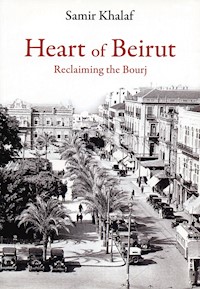
The Bourj in central Beirut is one of the world's oldest and most vibrant public squares. Named after the mediaeval lookout tower that once soared above the city's imposing ramparts, the square has also been known as Place des Canons (after a Russian artillery build-up in 1773) and Martyrs' Square (after the Ottoman execution of nationalists in 1916). As an open museum of civilizations, it resonates with influences from ancient Phoenician to colonial, post-colonial and, as of late, postmodern elements. Over the centuries it has come to embody pluralism and tolerance. During the Lebanese civil war (1975-90), this ebullient entertainment district, transport hub and melting-pot of cultures was ruptured by the notorious Green Line, which split the city into belligerent warring factions. Fractious infighting and punishing Israeli air raids compounded the damage, turning the Bourj into a no-man's-land. In the wake of former Prime Minister Rafik al-Hariri's assassination (14 February 2005), the Bourj witnessed extraordinary scenes of popular, multi-faith and cross-generational protest. Once again, Samir Khalaf argues, the heart of Beirut was poised to re-invent itself as an open space in which diverse groups can celebrate their differences without indifference to the other. By revisiting earlier episodes in the Bourj's numerous transformations of its collective identity, Khalaf explores prospects for neutralizing the disheartening symptoms of reawakened religiosity and commodified consumerism.
Das E-Book können Sie in Legimi-Apps oder einer beliebigen App lesen, die das folgende Format unterstützen:
Veröffentlichungsjahr: 2006
Ähnliche



















Samir Khalaf
HEART OF BEIRUT
Reclaiming the Bourj
SAQI
To
Ghassan Tueni
A man for all seasons but, above all, a quintessential cosmopolitan
Contents
Foreword and Acknowledgments
Preface: Rafik Hariri’s Martyrdom and the Mobilisation of Public Dissent
1. On Collective Memory, Central Space and National Identity
City and Mountain
Post-War Setting
Global, Regional and Local Encounters
Collective Memory vs Collective Amnesia
The Heritage Crusade
Mediating Agencies of Social Forgetting
2. Beirut’s Encounters with the Social Production of Space: A Historical Overview
Urban Landscape and Architectural Heritage
Egyptian, Ottoman and French Legacies
The Endemic Failure of Successive Urban Planning Schemes
The Architects’ Legacy
3. The Spaces of Post-War Beirut
The Reconstruction of Spatial Identities
The Geography of Fear and its By-Products
4. Post-War Construction of Beirut’s Central District
The Recovery of Foch-Allenby and Etoile
Saifi Village
The Souks
An Open-Air Museum
Waterfront and Marina Projects
Religious Edifices
5. The Bourj as a Cosmopolitan Public Sphere
Genesis and Emergence as a Public Sphere
Re-Inventing its Identity and Public Image
6. Public Sphere as Playground
Venues for Self-Expression and Conviviality
Public Entertainment and Social Mobilisation
The Commercialisation of Sexual Outlets
The Press as a Fourth Estate
The Cosmopolitanism of a ‘Merchant Republic’
7. Future Prospects
Notes
Bibliography
Index
Picture Credits
Foreword and Acknowledgements
Writing this book was largely serendipitous. The project was propelled by considerations unrelated to those that initially sparked it, and thus acquired a life of its own.
In June 2004 Solidere – the private land development company established by the late Rafik Hariri to spearhead the reconstruction of downtown Beirut – launched an international competition to rehabilitate Martyrs’ Square, the once historic and cosmopolitan center. The competition drew over 400 participants from forty-six different countries, and a seven-member international jury was appointed to select the winning designs.
As the only social scientist on the jury familiar with the social and urban history of Beirut, I was asked to prepare a position paper elucidating the historic transformations of the Bourj. The provisional report I submitted in April 2004 ended with a prophetic and promising conjecture. Throughout its checkered history, I maintained, the Bourj has displayed a relentless proclivity to re-invent itself in order to accommodate the changes generated by regional and global events. Indeed, it had undergone a dozen striking mutations in its official identity and the popular labels it assumed.
Three such labels stand out: First, as Place des Canons, connoting its colonial legacy; second, as Martyrs’ Square, to commemorate martyrdom and to celebrate the country’s liberation from Ottoman control; finally, as the Bourj, perhaps its most enduring label, in reference to its medieval ramparts.
Despite this perpetual change in its collective identity, it managed to retain its basic character as an open, mixed and cosmopolitan central space. It was this malleability which rendered it more receptive in fostering high and popular culture, mass politics and the mobilization of advocacy groups, popular entertainment and, as of late, global consumerism. The latter has brought the disheartening manifestations of excessive commodification, kitsch and the debasement of the already threatened legacy of the arts and the spirited intellectual debate the Bourj once nurtured during its ‘golden’ or ‘gilded’ heydays. This receptivity, eclecticism and cross-cultural context helped the Bourj become a porous, tolerant and pluralistic setting.
The treacherous residue of three decades of strife and political instability, compounded by other regional and global uncertainties, suggests why Lebanese people now seem inclined to seek refuge either in religious and communal affinities or in the faddish and seductive appeals of consumerism. Herein lies the challenge for urban planning and design. Participants in the competition were urged to consider strategies through which the redemptive and healing features of the Bourj as a public sphere might be embraced while safeguarding it from slipping into a sleazy touristic resort or a ritualized sanctuary for sectarian communities to assert their threatened public identities. The prospects of neutralizing both forms of ‘false consciousness’ and, by doing so, reclaiming its vibrant legacy, seemed close at hand for the first time in over three decades. I concluded my report by declaring that the Bourj was now poised to become the harbinger of yet another watershed. What, I wondered, were the forces that might usher in these fateful transformations?
It was not long before these prospects surfaced again, amidst cataclysmic forces which brought about a national tragedy transcending the benign and parochial history of the Bourj. By embracing these forces of change, the Bourj, Beirut and Lebanon – let alone neighboring regimes – are bound never to be the same again.
On 14 February 2005 a massive bomb blasted Rafik Hariri’s motorcade, killing him and Basil Fuleihan (an Member of Parliament, former minister and one of his closest associates), along with twenty-one others. It also devastated much of the fashionable Saint-Georges bay area, the site of the explosion. Hariri’s martyrdom was epochal for the events it unleashed. His poignant funeral procession, the succession of public protests and demonstrations and his makeshift shrine next to the Martyrs’ monument, propelled the Bourj once again to play host to momentous transformations. From then on, I felt irresistibly impelled to recapture the unfolding events of the story within the context of the dialectical interplay between the social production of space and political and socio-cultural transformation – how and why, in other words, a particular setting may invite certain forms of socio-cultural mobilization, and how in turn they are bound to redefine the character of that spatial setting.
In narrating this story, another serendipitous circumstance dictated the nature of my own ‘participant observation’, as it were. Our residence in Saifi Village is barely 50 yards away from Martyrs’ Square. Hence I had a front-row seat in a theatrical spectacle played out before my own eyes. I vividly recall stretches of research and writing done against the background commotion of collective enthusiasm sparked by the populist uprising of the ‘Cedar Revolution’.
By reworking the report into narrative form, I had to redirect its basic thrust and tone. The intention shifted to illuminating the Bourj’s ebullient and enigmatic past and, hopefully, to enlighten the quality of the impending public debate and the future prospects it is bound to invite. The timing is most propitious. At the moment, the Bourj is still largely an empty strip of about 50,000 square meters, sandwiched between the massive profusion of religious edifices and the seductive venues and artifacts of mass consumerism and popular entertainment. Ironically, it was both the ruinous devastation of protracted strife, together with the bulldozers of reconstruction schemes, that made this unique prospect possible.
The international competition, it must be pointed out, was intended as a competition for ideas and not for the production of a definitive design or master plan. The foresight and intuitive judgment of Solidere’s Urban Planning Division must be complimented in this regard. There is, then, considerable latitude for public intervention in shaping the defining features of the envisioned schemes. It is my earnest hope that this book will play a role in enhancing the quality of public awareness and informed debate so urgently needed in such critical moments of our urban history and threatened civility. To this effect, I have toned down the heavy academic jargon in the hope of rendering the ‘Bourj story’ more accessible to a wider audience.
Written during such a short interval, suffused with a scurry of unpredictable events, I had to rely often impetuously on the informed judgments and documentation extracted from a variety of sources. The extensive number of references I dipped into reveal how much I borrowed from others. I also benefited from conversations with architects, town planners, colleagues and friends. The late Pierre El-Khoury, Sheikh Michael El-Khoury, Myrna Boustani, John Keane, Walter Wallace, Touma and Leila Arida, Hashim Sarkis, Angus Gavin, George Arbid, Nabil Azar, Bernard Khoury, and Amira Solh, among others, were particularly helpful. Nouhad Makdisi and her technical staff at Solidere must be praised for their assistance in selecting images. Nor did I spare my students: as a captive audience, they were often compelled to listen, in paraphrase or verbatim, to many earlier drafts of the book.
Throughout my career I have been blessed with a loving family and a long-lasting circle of caring colleagues and friends. They never ceased to inspire and offer the critical and sobering counsel one needs. Hence I never felt short in returning the favors to those passionate few who merit the gratitude a book dedication carries. Such modest tokens are almost always self-selected.
This is Ghassan Tueni’s book from beginning to end. Perhaps more than any other living Lebanese individual, he has been tireless in inciting the discourse on how to safeguard our maligned archeological troves, built and natural environment and cultural heritage from being debased further by the mindless aggrandizement of greedy capitalists and corrupt and self-seeking politicians. As in other threatened realms of our public life, he has been our lightning rod. His sharp, acerbic Monday morning editorials – rare for their staying power, range and erudition – are matchless even among the world’s most accomplished journalists. But it is his tenacious, often combative and adversarial actions and campaigns on behalf of the cherished virtues of civility, liberalism and free-spirited cosmopolitanism that I acknowledge here. Much like Kant and his Stoic mentors, whom I know Ghassan admires, he has gone beyond mere contemplation and study. By grounding his thoughts in action he has enriched the common good and quality of our public life. Like the Stoics, he too harbors the view that in being a world citizen one does not need to break away from his local affiliations. It is in this sense that he is the godfather of the kind of cosmopolitanism I celebrate in this book. In a culture so anemic for role models, he towers luminously, and has continued to inspire and dazzle for the best part of six decades.
Like earlier works of mine, this one was achieved by withdrawing ‘quality time’ from Roseanne, George and Ramzi. Over the years they have been understanding and appreciative of such lapses. They have also become my sounding boards, unwavering in their eagerness to question and debunk. Roseanne, as usual, has done more than her due share in polishing the rough edges of my prose. For these and much more, I am grateful.
I have also been privileged during the past eight years to enjoy the sustained support of the Andrew Mellon Foundation. Without the summer research awards which allowed me to devote uninterrupted stretches of time to research and writing this, like the rest of my recent output, would not have been possible.
Finally, I wish to acknowledge the devoted professional attention of Saqi Books. Mai Ghoussoub and André Gaspard were generous in accommodating some of my seeming idiosyncrasies. Thanks are also due to Ken Hollings for his editorial labor and Ourida Mneimné for her aesthetic skill in designing the layout of the book. The research assistance of Ghassan Moussawi, particularly in scouting for sources, scanning images and preparing the final manuscript for publication, were invaluable. His technical proficiency and spirited enthusiasm are disarming. Mrs Leila Jbara, my devoted administrative assistant, displayed her noted keyboard skills in preparing the multiple versions of the manuscript.
PREFACE
Rafik Hariri’s Martyrdom and the Mobilisation of Public Dissent
‘The spatial dimensions in which we live our everyday lives are not as natural or innocent; they are shaped by social forces and are, in turn, a shaping force in social life’
Edward Soja, Postmodern Geographies
‘Only by engaging with the changing fabric of the city and by acknowledging change as both loss and enrichment can we adequately approach the experience of living in urban space, without being caught between utopia and decay’
Elizabeth Wilson, The Contradictions of Culture
Ring the bells that still can ring;
Forget your perfect offering.
There is a crack in everything
That’s how the light gets in.
Leonard Cohen
As a Lebanese, I feel at long last a bit redeemed by the startling and exultant events that took place during February and March of 2005. For almost four decades of my active life as a social scientist and humanist, I have been documenting and accounting for Lebanon’s enigmatic and contested existence, but this is the first time I genuinely feel more than just a flush of elusive enthusiasm.
Throughout its chequered history, the country has been bedevilled by an almost Janus-like character. During interludes of relative stability and prosperity, its admirers described it euphorically as the ‘Switzerland’ or ‘Paris’ of the Middle East. The more chauvinist went even further to depict the country, often in highly romanticised tones, as a ‘wondrous creation’, a ‘valiant little democracy’, a ‘miraculous’ culture and economic experiment. In the late-1960s and early-1970s, when the country started to display early symptoms of political instability (largely the by-product of internal disparities compounded by unresolved regional rivalries), it became fashionable to depict Lebanon as a ‘precarious’, ‘improbable’, ‘fragmented’, ‘torn’ society: so divided and fractured, in fact, that it was deemed impossible to piece together again.
No sooner had the country lapsed into the abyss of violent strife in 1975 than it became the easy target for outright disparagement. To many of Lebanon’s detractors, and to the obituary writers who came out in droves, the country was dismissed as an artificial creation. Others rushed to vilify it as a congenitally flawed entity doomed to self-destruction. Indeed, by the mid-1980s, Lebanon was reduced in the global media to an ugly metaphor: a mere figure of speech that conjured up images of the grotesque and unspoken or, worse, only to highlight the anguish of others.
More grievously, the country’s history and some of its vivid accomplishments were either overlooked or maligned. Lebanon, as it were, was only acknowledged when it was being held accountable for the havoc and collective violence with which the country was beleaguered, although repeated scholarly and diplomatic evidence revealed that it was no more than a proxy battlefield for other peoples’ wars.
There is a painful irony in this. This once vibrant republic, after nearly three decades of political subservience to one of the most autocratic and ruthless regimes in the region, should continue to be declared unfit to govern itself or to enjoy the most basic civil virtues, namely autonomy, balloting and constitutionalism (the ‘ABC’ of any viable democracy). The only country in the Arab world that could boast of carrying out periodic and free national elections, imperfect as they were at times, has had to suffer the indignity of putting up with uninspiring and inept leaders not of its own choosing.
Those who harboured a deep-seated resistance to the futility of violence and other belligerent strategies of change (and I am one of them) sought instead to expose the more redemptive features of Lebanon’s pluralism and its consociational democracy. We also felt that silence, muted discontent and impotent rage are fundamentally antithetical to democracy. If the disruptive consequences of global incursions and unresolved regional rivalries were beyond our control, we shifted instead to more accessible and redeemable problems of post-war rehabilitation and reconstruction: enhancing municipal autonomy, civil liberties, advocacy groups and voluntary associations, urban planning and landscape design and efforts to pronounce and safeguard our habitat and architectural heritage. Most of all, we sought to resuscitate the public spheres and other venues for collective mobilisation in an effort to forge transcending and hybrid cultural and national identities.
We took heart from other troubled spots in the world. We marvelled how, often in the least likely of places (Budapest, Gdansk, Silesia, Estonia, Beijing ...), the springtime of nations, so to speak, ushered in blissful signs of change. These and other collective icons of defiance, the voices of resistance, wrath and determination, shook and reawakened the conscience of the world to lingering injustices and crushing brutalities. The cynics among us thought that Lebanon had become much too mired and duplicitous to entertain, or be the beneficiary of, such redemptive outbursts. This is why the momentous events of February and March 2005 are destined to become a historic milestone.
Naturally, one must temper this first rush of contagious enthusiasm with some of the disheartening realities of local and geopolitical considerations. The raw and unalloyed sensibilities they have already aroused are, however, unlikely to be quelled. They were unleashed by the solemn funeral procession of Rafik Hariri. The hushed outpouring of grief, as throngs meandered through the streets and neighbourhoods of Beirut to Hariri’s final resting place in the city’s central square, was transformed into a resounding collective protest that transcended all the fractional loyalties and divisions within society. Enigmatic in his spectacular rise to public prominence, his cold-blooded murder inspired and galvanised a national uprising of immense proportions. Rather than laying him to rest in Saida, his birthplace, his family had the presence of mind instead to settle on Martyrs’ Square next to the imposing al-Amin Mosque he had bequeathed to the nation’s capital.
This seemingly serendipitous choice has made all the difference. Judged by the momentous changes it has generated thus far, particularly at the level of popular culture, it is destined to become a watershed in Lebanon’s political and urban history. More compellingly, it might well turn out to be another pacesetter for other peoples’ grassroots uprisings elsewhere in the region.
If the seething and repressed rage needed a tipping point, the moment and the setting could not have been more auspicious. The Bourj, in particular, has historically served as a vibrant public sphere and testing ground for collective mobilisation. Indeed, nowhere else in the Arab world could such a spectacle of unalloyed national sentiment and the voices of dissent have been released with such stupendous expression. The initial uprising, together with the countermobilisations it has provoked, displays all the uplifting elements of pure and spontaneous consciousness-raising happenings. Unlike other forms of protest, they are emotionally charged rallies, not riots. They have, thus far, remained expressive but peaceful and measured. Above all, the makeshift grave of Hariri was turned into a national shrine for the evocation of collective grief and deliverance from the oppressive designs of our ‘sisterly’ Syrian regime and its hapless cronies in Lebanon.
By acquiring a life of its own, the uprising was ‘Lebanonised’ into a mélange of seemingly dissonant elements: a Woodstock or a Hyde Park gathering, a triumphal post-World Cup rally or a bit of a carnival, a rock concert, a ‘be-in’ or other rejectionist manifestation of early-1970s ‘counterculture’. Youngsters, who could never finish a basketball match without the intervention of the army, were now in restrained frenzy. They observed candlelit vigils, formed human chains, scribbled artistic manifestos, graffiti and posters beseeching Syria to ‘get out’. Little children in white overalls offered flowers to stunned soldiers. Others, propped on their parents’ shoulders, cheered joyously. Most touching to see were the Christians and Muslims praying in unison or bearing cross-religious placards as they observed moments of silence over Hariri’s gravesite.
To commemorate the thirtieth day of Hariri’s murder, the coalition of opposition forces called for a public gathering in Martyrs’ Square on 21 March 2005 to reinforce their demands and sustain the peaceful mobilisation of public dissent the youth had been staging there. The gathering, both in sheer numbers and form, was truly stunning: clearly the largest and most compelling display of collective dissent the country has ever witnessed. It dwarfed the pro-Syrian public demonstration staged by Hizbullah and its allies a week earlier. Estimates of the numbers attending range between 800,000 and a million: more than twice the size of that of its political adversaries. This is almost one quarter of the entire population of the country. In the United States this would have meant close to eighty million protesters; just imagine what would have happened had the equivalent of twenty million agitated Egyptians hijacked the streets of Cairo!
Riad el-Solh Square, its adjoining courtyards, parking lots and construction sites were dense with overzealous crowds. All major arteries and thoroughfares converging on the city’s centre were clogged with heavy traffic. Those from the northern coast crossed over by boats. Countless numbers were unable to reach their ultimate destination. More striking was the composition, mood and character of the rally. While the Hizbullah demonstration was sombre, stern, homogeneous and almost monolithic in its composition and message, the 14 March event was altogether a much more joyous, ebullient and spirited spectacle. It was also a hybrid of all the sectarian and regional communities, most visible in their outward demeanour, slogans and placards and the rich diversity of dress codes: from traditional horsemen in Arab headscarves and clerics in their distinctive robes and turbans to young girls with bared midriffs and pierced navels. But the most resounding image was the red, white and green hues of the Lebanese flag. From a distance, the flickering flags along with the white and red scarves of the protesters seemed like a flaming sea of dazzling gladiolas. Those who were not carrying flags had them painted on their faces or tattooed and inscribed on visible parts of their bodies. This was one event in the history of the country when such a unifying and patriotic national symbol transcended all other segmental and sub-national loyalties.
Lebanese youth, often berated as a quietist, disaffected, self-seeking generation in wild pursuit of the ephemeral pleasures and consumerism of the new world order, have been reawakened with a vengeance. To the surprise of their own parents and mentors, they have emerged as the most recalcitrant disparaging voices against the sources undermining the sovereignty, resources and well-being of their country. On their own, and without the support of political parties, blocs and mainstream voluntary associations, they are forming a variety of advocacy and emancipatory grassroots movements to shore up national sentiments and sustain modes of resistance. Most refreshing is the new political language of resistance they are offering, which is in stark contrast to the belligerent overtones of car bombs, suicidal insurgency and counterinsurgency that continue to beleaguer the political landscape in the region.
Also, generations too young to have participated in or to recollect earlier episodes of national emancipation are now receiving their own overdue tutelage in national character-building. They are giving notice, at a time when the gaze and conscience of the world are attentive, that the future architects of sovereign, free and independent Lebanon have just made their exultant entry into public life.
Once again, Lebanon’s destiny seems delicately and precariously poised between such aroused aspirations and the impervious dictates and vengeful ploys of the ‘benevolent’ regime expected to shelter us from such calamities. The unsettling episodes of those few days – when massive explosives devastated the four suburban neighbourhoods of New Jdeideh, Kaslik, Sad al-Boushrieh and Broumana, part of the country’s Christian heartland – are stark reminders of such grim prospects.
For once, however, thanks to the tragic martyrdom of Rafik Hariri and the treacherous legacy of Syria’s thirty years of ruthless hegemony over Lebanon, the voices of dissent seem more tenacious and united than ever before. Both inside and outside sources have a rare moment to capture and act upon such propitious times. Otherwise, the renewed victimisation of Lebanon is bound this time to have ominous implications for stability in the entire region.
This fateful coincidence between the startling transformations incited by Hariri’s tragic death and the role that the Bourj is currently playing in hosting the momentous events and then serving as a compelling setting for political mobilisation is not that unusual. Throughout its chequered history the Bourj was receptive in embracing a diversity of subcultures and ideological perspectives, playing host to some of the more resourceful artists, performers, advocacy groups and political activities. Most compelling was its proclivity to attract marginal groups, unconventional activities and deviant lifestyles. Groups who continue to harbour reservations or misgivings about mixing freely with others somehow find their reservations disappear around the Bourj.
As a vibrant, open space, almost akin to a ‘commons’ ground or a public ‘maidan’, the Bourj always managed to encourage people to let down their inhibitions: to melt, as it were, in the intensity and transcending encounters nurtured there. It is then that groups become freer to experiment with, or cultivate, new visions and collective identities. What has transpired in the wake of Hariri’s assassination, and as of the time of this writing (15 April 2005), the momentous changes sparked by the uprising continue to be formidable sources of collective mobilisation. Indeed, in their magnitude, diversity of expression and likely consequences, the unfolding events are unprecedented in Lebanon’s history.
What accounts for the emergence of such public spheres? What socio-cultural and historical circumstances are associated with their emergence, growth and demise? When posed in this manner, inevitably the query turns into an exploration of the interplay between social structure and spatial forms. More explicitly, how are particular spatial settings socially produced and reproduced? By virtue of its commanding historic pedigree, as the birthplace of the world’s most ancient civilisations, Beirut’s Bourj has always displayed some curious attributes and defining elements which account for its survival as a cosmopolitan urban setting in the throes of persistent change.
I will first situate the thrust of this book within a few salient conceptual concerns that inform most current debates on the social production of space. I will then provide a historical overview and an exploration of Solidere’s massive reconstruction and rehabilitation of downtown Beirut. I will then move on to consider how the Bourj managed to incorporate and reconcile pluralistic and multicultural features and be so inventive in reconstituting its collective identity and public image. The last two chapters will focus on the Bourj as a cosmopolitan public sphere and how it evolved into an effective venue for self-expression, public entertainment, the commercialisation of sexual outlets, nurturing the press in its formative years and as a forum for public discourse and political mobilisation.
In effect, what we are witnessing at this critical interlude in Beirut’s spatial and socio-cultural history is yet another metamorphosis in what Kevin Lynch calls the ‘imageability’ of a city.1 To Lynch, and other associated reformulations by Frederic Jameson2 and Jim Collins,3 imageability is an expression of the predisposition of certain cities to generate strong visual impressions in the minds of their inhabitants. In the context of our interest in the social production of space, this will certainly allow us to substantiate more explicitly the relationship between ‘self-identity’ and ‘self-location’.4 Jameson’s notion of ‘cognitive mapping’ is also of relevance. What these perspectives suggest is that new cultural forms may be learned as they are made meaningful through the appropriation of individuals of exigent modes of behaviour as they face new circumstances demanding instant accommodation. This is, after all, how mass culture is converted into folk-cultural phenomena exhibiting all the spontaneous and organic qualities associated with popular cultural movements. By playing host to such momentous transformations, the Bourj is reclaiming and extending its historic legacy in this regard.
The pictorial character of the book is, in my view, inevitable and desirable. Given Beirut’s appealing natural endowments and distinct architectural heritage, an image-bound representation will certainly enrich the textual analysis. An intuitive synthesis of both will highlight more concretely how these attributes, and other derivative elements, might inform the envisioned prospects for reclaiming and reconstituting the Bourj once again as a vibrant public sphere.
ONE
On Collective Memory, Central Space and National Identity
Observing Beirut in the throes of reconstruction is a bewitching, often beguiling, experience, both existentially and conceptually. From a close and intimate range, one is not only struck by the massive physical and material transformations under way but one also gains insight into how new socio-cultural spaces and territorial entities are being invested with new meanings. One becomes aware of how disembedded groups and communities are recreating and reinventing their familiar daily rhythms and the city’s social fabric. More compellingly, we become conscious of the artefacts, objects and spaces in the built environment which are being effaced and discarded and those which are being restored, embellished and rendered more pronounced.
Beirut today is akin to a living laboratory where one is in a sustained state of being captivated by the perpetual thrills of new discoveries unfolding, as it were, before one’s very eyes. It is a marvel to live in such an urban milieu where one, literally, never encounters the same familiar and unchanging street or neighbourhood. One is liberated, in an existential sense, from the deadening effects of habit and the sterility of familiar places. A daily stroll always carries with it the visceral sensation of surprise and the prospects of levitating, as it were, into another world. It always heightens one’s visual and aesthetic sensibilities. To borrow one of the metaphors of Ghassan Hage, one is in a sustained state of being pushed, pulled, propelled upward and whirled downward at one and the same time.
More compellingly still, Beirut is at another critical threshold in its chequered history. A restless and buoyant city is in the throes, once again, of redefining itself. I say ‘once again’ because it has been in this predicament many times before. It has reinvented itself on numerous occasions. This is, however, the first time that the process has incited such a contested and public debate regarding the rehabilitation scheme itself and its impact on the envisioned or projected public image of Beirut. Indeed, in the popular imagination a plurality of images is invoked: a future Honk Kong or Monaco, a Mediterranean town or Levantine seaport, a leisure resort, a playground or tourist site. Incidentally, we are not only talking about tourism in its ordinary or conventional form. At least two new types have become salient recently: health or medical tourism and war tourism engendered by the curiosity of travellers to behold sites of the ravages of war and how they are being reconstructed. Beirut is also envisioned as a tempting hub for services, communication networks, popular mass entertainment and faddish consumerism. It is rather ironic that the appeals of Beirut, at this moment in its contested collective identity, are embodied and informed by the dissonant forces of ruination, havoc, loss but also rehabilitation, restoration and well-being.
The spectacular events sparked by the ‘Independence Uprising’ in the wake of Rafik Hariri’s assassination on 14 February 2005 have been so riveting in their manifestations and consequences that they have drawn the attention of the world and driven global powers to take remedial action. Spontaneous and self-propelled, the uprising – largely because it could exploit the commanding setting of Beirut’s historic centre – displayed so much daring and inventiveness that it evolved into a formidable public sphere. Sustained demonstrations and expressions of collective grievances allowed the protesters to articulate a coherent set of demands and to mobilise normally passive and quiescent groups to participate in popular grassroots movements in support of the uprising. Thus far, the by-products have been vast in their immediate consequences and promise to be more consequential in their anticipated future reverberations. The massive sustained uprising forced the resignation of the government and precipitated a sharply contested political crisis. It expedited the formulation of two decisive UN resolutions: 1559, calling for the immediate withdrawal of Syrian troops and security agencies from Lebanon, and 1595, to set up an international commission of inquiry into the assassination of Hariri. Perhaps more compellingly, in view of its future fallouts, the uprising initiated the country’s youth into a hands-on and direct tutelage in civic virtues and emancipatory political struggle.
By virtue of its centrality and commanding historic setting – almost akin to an open museum of the world’s most ancient civilisations – Beirut’s central square has always displayed curious historical features that account for its survival as a fairly open, pluralistic and cosmopolitan urban district. Archaeological findings repeatedly show that this very site, often dubbed the ‘nursery of Homo sapiens’, has served as an abode for humanity almost since its first appearance on the face of the earth. Indeed, some of the implements (mainly stone artifacts) that continue to be unearthed on site may be traced back to the Lower Palaeolithic period, roughly two or three million years ago. The relentless succession of dynasties and civilisations that have left their indelible legacies on this site is truly overwhelming. The massive reconstruction efforts under way, particularly around Beirut’s historic centre, continue to come across almost daily finds that reconfirm the most distinguished heritage of its ancient past.
Stunning as its archaeological relics are, one need not be misled by the prehistoric eminence of Beirut. Nor should one go too far back into the past to disclose the circumstances associated with the distinctive role its central square came to play. Despite its momentous history, its emergence as a modern, cosmopolitan urban centre is of recent vintage. In fact, the most definitive symptoms of urbanisation – rural exodus and the spill of the population beyond its medieval walls – did not really appear in any substantial form until the 1860s. Of course, there were earlier signs of rural exodus. Dislocation in native crafts, the decline in silk production and the shift in the pattern of trade, particularly during the Egyptian occupation (1831–41) had generated a shift in population movement towards coastal towns. These and earlier movements, however, were limited in scale. For example, when Volney visited Beirut in 1773, he described it as a small town with no more than 6,000 people. There was not, it must be noted, any perceptible increase in the population during the next six decades. By 1830 the population was still in the neighbourhood of 8,000.
The decade of Egyptian presence, with its concomitant commercialisation and opening up of Mount Lebanon to western incursions, added only another 2,000 to Beirut’s population. This relatively slow rate of increase (about five hundred annually) was maintained during the 1840s and 1850s. In short, it was not until the outbreak of civil disturbances in the late-1850s and early-1860s that the impact of a massive shift in population began to be felt. Beirut’s population leaped from 22,000 in 1857 to 70,000 in 1863, an annual increase of almost 10,000. During the height of civil disturbances and in the short span of only two months (from August to September 1860), an Anglo-Saxon committee of local missionaries gave aid to more than 20,000 refugees in Beirut.5
Every description of Beirut prior to the 1860s attests to this. Until then, it was no more than a small, fortified medieval town with seven main gates and about half a square kilometre surrounded by gardens. The central core of the city was built around its historic port and mole with defences on the landward side and two towers at the entrance of the port. As in most European towns before industrialisation, people in Beirut lived and worked within the same area and carried on nearly all their daily routines within the same urban quarter. Ethnic and religious affiliation created relatively homogeneous and compact residential neighbourhoods. Daily routines were carried out within clearly defined quarters, and the neighbourhood survived as an almost self-sufficient community with which the individual identified. There was a strong sense of neighbourliness, and patterns of behaviour were largely regulated through kinship and religious ties. Physical and social space, in other words, were almost identical. More importantly, these neighbourhoods offered the urban dweller a human scale and types of social networks that he could comprehend and in which he could find a uniquely individual space.
Gross density was high – around 300 per hectare – and the town gave an overwhelming impression of congestion. Lamartine, who visited Beirut in 1832, said, for example, that the roofs of some houses served as terraces to others. Except for souks, khans, baths, places of worship and other public buildings which dominated the town, the prevailing house types were flat-roofed farmhouses and the traditional two or three-storied, red-tiled villas with elaborate facades and decorative railed stairways and balconies. Sandstone blocks, quarried in the area, were the predominant construction form. Lush, subtropical vegetation graced the well-tended gardens of its houses and lined its winding alleyways.
The cactus-lined alleys were soon converted to macadamised streets. Urban construction leaped beyond the medieval walls of the city to accommodate the persistent inflow of rural migrants into Beirut. The construction of the wharf in Beirut’s port in 1860 to accommodate the increasing maritime traffic, like all the other infrastructural developments and public amenities undertaken throughout the second half of the nineteenth century (e.g. harbour facilities, Damascus railways, gaslights, potable water, electric tramways, telegraph and postal services, quarantine, dispensaries and hospitals along with schools, colleges and printing houses) assisted naturally in the expansion and urbanisation of Beirut. As a residence for consul generals, headquarters for French, American and British missions and a growing centre of trade and services, it gradually began to attract a cosmopolitan and heterogeneous population. It is then that some of the early symptoms of cosmopolitanism, marked by elements of sophistication and savoir-faire in public life, started to surface. This was particularly visible in the opening up and receptivity of seemingly local and provincial groups and neighbourhoods to novel and mixed lifestyles and mannerisms.
But Beirut’s swift urbanisation (the consequences of both internal migration and natural growth rates in the population) carried with it other more disheartening consequences. Since nearly two-thirds of the rural exodus was directed toward Beirut, the capital trebled its residential population between 1932 and 1964 and grew by nearly tenfold between 1932 and 1980. This rapid growth of Beirut was not only due to internal demographic factors, but to a large extent it was also a reflection of external pressures that generated increased demand for urban space. First, the Armenian Massacres of 1914 brought over 50,000 Armenian refugees from Turkey. The waves of Palestinian refugees after 1948 and the political instability in neighbouring Arab countries intensified this demand, as did the subsequent inflow of capital from the Gulf States and foreign remittances, which poured into the already lucrative real-estate and construction sectors of the economy. The building boom of the 1950s and 1960s, with its manifestations of mixed and intensive land-use patterns and vertical expansion, was largely a by-product of such forces. The resulting uncontrolled and haphazard patterns of growth were maintained during the early-1970s. Shortly before the outbreak of civil disturbances in 1975, greater Beirut was probably absorbing 75 per cent of Lebanon’s urban population and close to 45 per cent of all the inhabitants of the country. In addition, its already overcrowded 101–square kilometre area had to accommodate an estimated 120,000 daily commuters from adjoining suburbs.1
By the early-1970s Beirut’s annual rate of growth was estimated at 4 per cent, which implied that the city was bound to double in less than twenty years. The magnitude of this change may be expressed in more concrete terms: if the current rates of growth were maintained, Beirut would have had to accommodate and provide housing, schooling, medical services, transportation and other services for at least 40,000 new residents every year. It is in this sense that Beirut was associated at the time with the phenomenon of primacy and over urbanisation. Insofar as the degree of urbanisation was much more than would be expected from the level of industrialisation, then Lebanon was among the few countries – along with Egypt, Greece and Korea – that may be considered over urbanised.2 We will subsequently explore some of the spatial and socio-cultural implications of such over urbanisation. Suffice it to note that this is one of the most critical problems Lebanon continues to face: a problem with serious social, psychological, economic and political implications. Urban congestion, blight, depletion of open spaces, disparities in income distribution, rising levels of unemployment and underemployment, housing shortages, exorbitant rents, problems generated by slums and shantytowns and, to a considerable extent, the urban violence of the war years, were all by-products of over urbanisation. In short, the scale and scope of urbanisation had outstripped the city’s resources to cope effectively with continuously mounting demand for urban space and public amenities.
Hence, Beirut has always been gripped by a nagging dissonance between conceived and lived space. The city, as we shall see, has never been short on blueprints or the often idealistic conceptions of how planners and builders perceive the defining elements and shape of the spatial environment. For a variety of reasons, such perceptions were not consistent with the concrete spatial realities. In other words, lived space almost always assumed a life of its own, unrelated to its original or intended expectations.
From its eventful past, much like its most recent history, a few distinct but related features stand out. Together, these defining elements continue to be vital in informing the way Beirut, and its central square in particular, could continue to serve as a vibrant and transcending public sphere amenable for collective mobilisation and for forging a hybrid popular culture for tolerance and peaceful coexistence.
City and Mountain
First, and without doubt one of its most striking attributes, is the dual role Beirut managed to embody throughout its eventful history as a port city and a national capital linked to its hinterland. Hence, any understanding of this distinctive feature requires an elucidation of the timeless interplay between the accidents of its geographic and ecological endowments, namely the sea and its mountainous hinterland. Indeed, to many of its historians, philosophers and writers who often evoke these natural gifts with emotive hyperbole, much of their country’s accomplishments are seen as an outgrowth of such seemingly dissonant attributes. Some, like Charles Malik, Michel Chiha, Said Akl and Kamal el-Hajj, speak with more than just a hint of geographic determinism of the ‘horizontal’ effects of the sea and the ‘perpendicular’ effects of the mountain to account for the two most distinctive characteristics that informed its distinguished history: the open, adventurous, itinerant and worldly predispositions generated by its seafaring heritage, along with the role its mountains served as a secure asylum for displaced minorities and dissident groups.
To Albert Hourani, Lebanon’s political culture, particularly its republican and liberal features, managed to reconcile two distinct visions or ideologies which had been tenuously held together since the creation of Greater Lebanon in 1920:
On the one hand, there was the idea of Mount Lebanon: a society rural, homogeneous, embodied in an institution, the Maronite church, with a self-image ... and with a vision of an independent and predominantly Christian political community. On the other, there were the urban communities of Beirut and other coastal cities, mainly Sunni Muslim but with Orthodox and other Christian elements, and with a different idea: that of a trading community open to the world, and serving as a point of transit and exchange, and therefore a community where populations mingled and coexisted peacefully; of a society which needed government and law, but preferred a weak government to which the leaders of its constituent groups had access and which they could control.3
Hourani traces the theoretical basis of this vision and its embodiment in the mithaq or ‘covenant’ of 1943 to the writings of Michel Chiha, in which we can see the marriage of the two ideologies: the mountain and the city. To Chiha, this largely accounts for what he termed Lebanon’s ‘spiritual dominance’:
Lebanon the mountain of refuge and Lebanon the meeting place, rooted in its own traditions but open to the world, with bilingualism or trilingualism as a necessity of its life; possessing stable institutions which correspond with its deep realities, an assembly in which the spokesmen of the various communities can meet and talk together, tolerant laws, no political domination of one group by another, but kind of spiritual domination of those who think of Lebanon as part of the Mediterranean world.4
Chiha’s optimistic vision notwithstanding, the marriage was strenuous from its very inception. It was, after all, an arranged liaison: a contract, not a romantic bond. With all the bona fides of its architects and the noblesse oblige of the consenting parties, the Mithaq could not have possibly survived the multi-layered pressures (local, regional and international) with which it was burdened. It was a partial covenant. It did not fully express the changing demographic and communal realities of the time. With the creation of Greater Lebanon, Christians as a whole were no longer in a majority, although the Maronites were still arguably the largest single community. The annexation of the coast and the Beqaa also ushered in an unsettling variety of political cultures and disparate ideologies.
Incidentally, it is these ‘New Phoenician’ voices who captured the attention of the American Legation offices in Beirut at the time: particularly those of Chiha, Gabriel Menassa and Alfred Kettaneh, and their extended network of families and close associates of the commercial and political elite. As staunch advocates of free trade, they were opposed to any form of central planning and protectionism, shunned industrialisation, jealously guarded the sources of their new wealth and lived by the edict ‘import or die’. Writing to the secretary of state on 19 August 1947, Lowell Pinkerton of the US Legation had this to say:
The ancient commercial craft of the Phoenicians is still very evident ... perhaps it will prevail upon more modern counsels, or be more effectively supplemented by expert foreign advice. In any case, here are vigorous exponents of the capitalist system who now look only to the United States for ideas and encouragement.5
Chiha himself, incidentally, was fully aware that his vision was far from an exemplar of stability and harmony. His liberal image of Beirut as a cosmopolitan city-state coexisting with the more archaic tribal and primordial loyalties of the mountain and hinterland was, to say the least, a cumbersome and problematic vision. This was compounded, particularly after 1920, by the impassioned claims of the rival ideological currents taking root in the coastal cities. The ‘Lebanism’ of the Christians was pitted against the ‘Arabism’ of the Sunni Muslims with reverberations among the Shi‘ites and Druze of the hinterland. No wonder that during the 1930s the neighbourhoods of Beirut were periodically ‘the scene of violent clashes between Christian and Muslim gangs, one side brandishing the banner of Lebanism, the other of Arabism’.6
The shortcomings of the Mithaq, it should be noted, are not inherent in its basic philosophy or modus vivendi to arrive at a compromise between communities seeking to contain potentially explosive issues of sovereignty, collective or national representation and peaceful coexistence. The Mithaq was also addressing perhaps the more delicate problems associated with the ‘fears’ of the Christians and the ‘demands’ and ‘grievances’ of the Muslims. Like most pacts, it involved mutual renunciation. The Christians undertook to renounce their traditional alliances with the West, and France in particular, while the Muslims promised to abandon their pan-Arabist aspirations. In effect both communities were to turn away from the larger world to help galvanise their loyalties to Lebanon. George Naccache’s pungent aphorism notwithstanding – ‘deux negations ne font pas une nation’ – this double renunciation seemed both feasible and appropriate at the time.
The Ta’if Accord of 1989 has not fared any better in allaying some of the disheartening manifestations of such persistent fragmentation and conflict-filled images regarding Beirut’s collective memory and national identity as the nation’s capital. The Accord is often heralded as an innovative and remarkable pact marking the threshold of a new republic. It is credited with putting an end to nearly two decades of protracted violence and for laying the foundation for reconciling differences over the three implacable sources of long-standing discord and hostility: namely, political reforms, national identity and state sovereignty.
The tensions between the two seemingly dissonant ‘ideologies’ – those of the city and those of the mountain – have been compounded by yet another unsettling feature: the ‘ruralisation’ of Beirut as seen in the tenacity and survival of large residues of non-urban ties and loyalties. Repeated studies have shown that the swift and extensive urbanisation Lebanon was experiencing at the time was not associated, as is the case in most other societies, with a comparable decline in kinship and communal loyalties.7 In other words, the intensity and increasing scale of urbanisation as a physical phenomenon was not accompanied by a proportional degree of urbanism as a way of life.
What this suggests, among other things, is that a sizable portion of Beirut was, in an existential sense, in but not of the city. To both recent migrants and relatively more permanent urban settlers, city life was predominantly conceived as a transient encounter, to be sustained by periodic visits to rural areas, or by developing rural networks within urban areas. In practice, urbanisation in Lebanon has not meant the erosion of kinship ties, communal loyalties and confessional affinities and the emergence of impersonality, anonymity and transitory social relations.
As in other dimensions of social life, the network of urban social relations, visiting patterns and the character of voluntary associations still sustain a large residue of traditional attachments, despite increasing secularisation and urbanisation. In many respects, Beirut remains today more a ‘mosaic’ of distinct urban communities than a ‘melting pot’ of amorphous urban masses. Often neighbourhoods emerge that consist of families drawn from the same village and the same religious group, resulting in patterns of segregation in which religious and village ties are reinforced. The survival of such features has been a source of communal solidarity, providing much of the needed social and psychic supports, but they also account for much of the deficiency in civility and the erosion of public and national consciousness. More importantly, as will be shown later, they may obstruct rational urban planning and zoning.
The protracted civil disturbances between 1975 and 1992 not only reinforced the communal character of neighbourhoods but also generated other problems of a far more critical magnitude. Vast areas, in addition to the central business district, were totally or partially destroyed. Massive population shifts generated further disparities and imbalances between the various communities and intensified religious hostilities and feelings of paranoia and/or indifference towards the ‘other’.
We are, of course, concerned here with the implications such unresolved socio-cultural and political realities have for the spatial and architectural heritage of Beirut and its central square. More particularly, what role can urban planning and landscape design play in providing spatial settings conducive to allaying some of the segmental and divisive loyalties which continue to undermine prospects for forging transcending and cosmopolitan urban environments?
Post-War Setting
Another compelling reality, with substantial implications for the envisioned role the Bourj can play in providing venues and outlets for forging the desired collective and spatial identities, has much to do with the process of post-war reconstruction. Such ventures, even under normal circumstances, are usually cumbersome. In Lebanon, they are bound to be more problematic because of the distinctive character of some of the residues of collective terror and strife with which the country was besieged for almost two decades and which set it apart from other instances of post-war reconstruction. The horrors spawned by the war are particularly galling because they were not anchored in any recognisable or coherent set of causes. Nor did the violence, ugly as it was, resolve the issues that might have sparked the initial hostilities. It is in this poignant sense that the war that devastated Beirut was wasteful, futile and unfinished.
As such, the task of representing or incorporating such inglorious events into Beirut’s and the country’s collective identity becomes, understandably, much more problematic. But it needs to be done. Otherwise, the memory of the war, like the harrowing events themselves, might well be trivialised and forgotten and hence, more likely to be repeated. The disheartening consequences of unfinished wars are legion. Two are particularly poignant and of relevance to the concerns of this study. The first of these is the salient symptoms of ‘retribalisation’ apparent in reawakened communal identities and the urge to seek shelter in cloistered spatial communities. The second is a pervasive mood of lethargy, indifference and weariness bordering at times on ‘collective amnesia’. Both are understandable reactions that enable traumatised groups to survive the cruelties of protracted strife. Both, however, could be disabling, as the Lebanese are now considering less belligerent strategies for peaceful coexistence.
Both manifestations – the longing to obliterate, mystify and distance oneself from the fearsome recollections of an ugly and unfinished war, or efforts to preserve or commemorate them – coexist today in Lebanon. In fact, retribalisation and the reassertion of communal and territorial identities, perhaps a few of the most prevalent elements in post-war Lebanon, incorporate both these features. In other words, the convergence of spatial and communal identities serves both the need to search for roots and the desire to rediscover or invent a state of bliss that has been lost; it also serves as a means of escape from the trials, tribulations and fearful recollections of the war.
Expressed more concretely, this reflex or impulse for seeking refuge in cloistered spatial communities is sustained by two seemingly opposed forms of self-preservation: to remember and to forget. The former is increasingly sought in efforts to anchor oneself in one’s community or in the reviving and reinventing of its communal solidarities and threatened heritage. The latter is more likely to assume escapist and nostalgic predispositions to return to a past imbued with questionable authenticity. The two, however, as will be seen, are related. It is only when certain artifacts and objects are remembered that, by exclusion, they begin to cause others to be forgotten.
If there are, then, visible symptoms of a ‘culture of disappearance’ evident in the growing encroachment of global capital and state authority into the private realm and heedless reconstruction schemes which are destroying or defacing the country’s distinctive architectural and urban heritage, there is a burgeoning ‘culture of resistance’ which is contesting and repelling such encroachment and dreaded annihilation, as well as the fear of being engulfed by the overwhelming forces of globalisation.
One unintended but compelling consequence of all this is that through this restorative venture, and perhaps for the first time in recent history, a growing number of Lebanese are becoming publicly aware of their spatial surroundings. It has enhanced, in appreciable ways, their spatial sensibilities and public concern for safeguarding the well-being of their living habitat. By doing so, consciously or otherwise, they are transforming their tenuous, distant and instrumental attachments to ‘space’ into the more personal and committed identities engendered by deep, more meaningful and supportive loyalties to one’s ‘place’. It is these loyalties, after all, which are receptive to the needs of urbanity and civility. Hence, rather than berating and maligning one’s ‘roots’ and primordial attachments (religious, sectarian, kinship, communal and otherwise) as sources of retrograde or infantile nostalgia, they could, if judiciously mobilised, become routes for forging new cosmopolitan identities and transcending loyalties and commitments.8
Global, Regional and Local Encounters
Lebanon is not only grappling with all the short-term imperatives of reconstruction and long-term needs for sustainable development and security, but it has to do so in a turbulent region with a multitude of unresolved conflicts and contested strategies for steering post-war rehabilitation and the broader issues of national development. Impotent as the country might seem at the moment to neutralise or ward off such external pressures, there are measures and programmes already proven to be effective elsewhere, which can be experimented with to fortify Lebanon’s immunity against the disruptive consequences of such destabilising forces. Such efforts can do much in reducing the country’s chronic vulnerability to these pressures. A central premise of this book is the belief that urban planning and design, architecture and landscaping, among other overlooked forms of public intervention, can offer effective strategies for healing symptoms of fear and paranoia and, also, offer a way to transcend parochialism.
This is not, after all, the first time that the country – Beirut, in particular – faces such predicaments. As will be seen, during earlier confrontations with both Ottoman and French attempts at the production of social space, local builders, architects and other indigenous groups displayed considerable awareness, knowledge and skills relevant to the processes of construction and reconstruction under way at the time.
Since Beirut, as capital and imposing port city, was subjected to successive planning schemes – the construction of monumental edifices, thoroughfares and public squares – it is instructive to re-examine how such attempts were perceived and implemented. Were local groups, in other words, merely passive recipients in such instances of struggle for power and control over lived space? Or were they active participants who often succeeded in resisting and changing the imperial and colonial impositions? The experience of Beirut, particularly its central square and contiguous urban spaces, becomes instructive in conceptual and comparative terms. In this respect, Beirut offers another grounded and living instance of the production of social space that departs from other common experiences and patterns observed in other settings.9 Beirut’s experience, as will be argued, was not – and is not – merely a process of transfer, transplantation or imposition of external visions and schemes on a willing, compliant and non-participative public. More vitally, perhaps, by disclosing the interplay between this inevitable plurality of forces – local, regional and trans national – that are involved in the construction of the collective identity of a particular settlement, one is also probing into the elements which make up the ‘imagined community’ of the Bourj, Beirut and Lebanon as a nation-state.
Regardless of what perspective or paradigm one adopts for contextualising the nature of spatial identities – i.e., the perspective of world systems, globalisation, postcolonialism or postmodernism – in the final analysis this requires an understanding of both the broader structural transformations along with the nature, scale and the particular manner in which local considerations continue to make their presence felt in redefining and reconstituting social space. Indeed, in some instances, so-called ‘postmodern’ attributes – i.e., fragmentation, fluid and multiple identities, the mixing of different histories, pastiche, irony, the destruction of the vernacular and the provincial – were present in Beirut long before they had appeared elsewhere, including Europe and America.
No matter how we define globalisation it involves, as Roland Robertson reminds us, ‘an increasing consciousness of the world as a whole’.10 He goes on to suggest that:
the contemporary concern with civilisational, societal (as well as ethnic) uniqueness – as expressed via such motifs as identity, tradition and indigenisation – largely rests on globally diffused ideas. In an increasingly globalised world ... there is an exacerbation of civilisational, societal and ethnic self-consciousness. Identity, tradition and indigenisation only make sense contextually.11
While Anthony King is in agreement that identities are established and validated contextually, he is not of the view that they are usually the outcome of the broad and distant forces of ‘globalisation’. Instead, he argues that they are usually ‘constructed in relation to much more specific, smaller, historical, social and spatial contexts’. He goes on to say that people ‘express their resistance to the global political and economic situations that engulf them, and at the same time may also immerse themselves within these situations’.12
Such state of consciousness and the proclivity to engage with cosmopolitan encounters were also present in Beirut before the advent of globalism and postmodernity. The identity of some urban Beirutis – if one were to infer this from the architectural styles of their residences, their mannerisms, fashions and other cultural manifestations of everyday life – was also a hybrid of seemingly dissonant and inconsistent features. Expressed more concretely, the Lebanese are certainly becoming more interconnected at all three levels: globally, regionally and locally. They cross over with greater ease. At least they seem less guarded when they do so. They visit areas they never dared to visit before. These and other such symptoms of interconnectedness should not, however, be taken to mean that the Lebanese are becoming more alike or that they are becoming more homogenised by the irresistible forces of globalisation and postmodernity.




