


0,99 €
Mehr erfahren.
- Herausgeber: Valene Tolman
- Kategorie: Geisteswissenschaft
- Sprache: Englisch
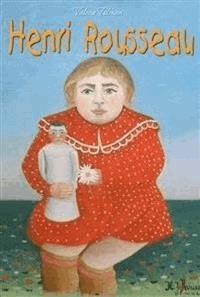
Henri Rousseau was a French Post-Impressionist painter. Many observers commented that he painted like a child, but the work shows erudition with his scrupulous technique. His best known paintings depict jungle scenes despite the fact that he never left France or saw a jungle. His inspiration came from illustrated books and the botanical gardens in Paris. Along with his exotic scenes there was a concurrent output of smaller topographical images of the city and its suburbs. He claimed to have invented a new genre of portrait landscape, which he achieved by starting a painting with a view such as a favorite part of the city, and then depicting a person in the foreground. Rousseau's flat, seemingly childish style was disparaged by many critics; people often were shocked by his work or mocked it.
Das E-Book können Sie in Legimi-Apps oder einer beliebigen App lesen, die das folgende Format unterstützen:
Veröffentlichungsjahr: 2015
Ähnliche

















Henri Rousseau
ByValene Tolman
First Edition
Copyright © 2015 byValene Tolman
*****
Henri Rousseau
*****
Foreword
Henri Julien Félix Rousseau (1844 –1910)was a French Post-Impressionist painter in the Naïve or Primitive manner.Ridiculed during his lifetime, he came to be recognized as a self-taught genius whose works are of high artistic quality.
His best knownpaintings depict jungle scenesdespute the factthathe never left France or saw a jungle. Stories spread by admirers that his army service included the French expeditionary force to Mexico are unfounded. His inspiration came from illustrated books and the botanical gardens in Paris, as well as tableaux of taxidermied wild animals. He had also met soldiers during his term of service who had survived the French expedition to Mexico, and he listened to their stories of the subtropical country they had encountered. To the critic Arsène Alexandre, he described his frequent visits to the Jardin des Plantes: "When I go into the glass houses and I see the strange plants of exotic lands, it seems to me that I enter into a dream."
Along with his exotic scenes there was a concurrent output of smaller topographical images of the city and its suburbs.
He claimed to have invented a new genre of portrait landscape, which he achieved by starting a painting with a view such as a favourite part of the city, and then depicting a person in the foreground.
Rousseau's flat, seemingly childish style was disparaged by many critics; people often were shocked byhis work or ridiculed it.His ingenuousness was extreme, and he always aspired, in vain, to conventional acceptance.Many observers commented that he painted like a child, but the work shows sophistication withhis particular technique.
Henri Rousseau was born in Laval, France in 1844 into the family of a plumber; he was forcedto work there as a small boy.He attended Laval High School as a day student and then as a boarder, after his father became a debtor and his parents had to leave the town upon the seizure of their house. He was mediocre in some subjects at the high school but won prizes for drawing and music.He worked for a lawyer and studied law, but "attempted a small perjury and sought refuge in the army,"serving for four years, starting in 1863. With his father's death, Rousseau moved to Paris in 1868 to support his widowed mother as a government employee.
In 1868, he married Clémence Boitard, his landlord's 15 year-old daughter, with whom he had six children (only one survived). In 1871, he was appointed as a collector of the octroi of Paris, collecting taxes on goods entering Paris. His wife died in 1888 and he married Josephine Noury in 1898. He started painting seriously in his early forties, and by age 49 he retired from his jobto work on his art full-time.
Rousseau claimed he had "no teacher other than nature",although he admitted he had received "some advice" from two established Academic painters, Félix Auguste Clément and Jean-Léon Gérôme.Essentially he was self-taught and is considered to be a naïve or primitive painter.
From 1886, he exhibited regularly in the Salon des Indépendants, and, although his work was not placed prominently, it drew an increasing following over the years. Tiger in a Tropical Storm (Surprised!) was exhibited in 1891, and Rousseau received his first serious review, when the young artist Félix Vallotton wrote: "His tiger surprising its prey ought not to be missed; it's the alpha and omega of painting." Yet it was more than a decade before Rousseau returned to depicting his vision of jungles.
In 1893, Rousseau moved to a studio in Montparnasse where he lived and worked until his death in 1910.In 1897, he produced one of his most famous paintings, La Bohémienne endormie (The Sleeping Gypsy).
In 1905, Rousseau's large jungle scene The Hungry Lion Throws Itself on the Antelope was exhibited at the Salon des Indépendants near works by younger leading avant-garde artists such as Henri Matisse in what is now seen as the first showing of The Fauves. Rousseau's painting may even have influenced the naming of the Fauves.
In 1907, he was commissioned by artist Robert Delaunay's mother, Berthe, Comtesse de Delaunay, to paint The Snake Charmer.
When Pablo Picasso happened upon a painting by Rousseau being sold on the street as a canvas to be painted over, the younger artist instantly recognised Rousseau's genius and went to meet him. In 1908 Picasso held a half serious, half burlesque banquet in his studio in Le Bateau-Lavoir in Rousseau's honour.
After Rousseau's retirement in 1893, he supplemented his small pension with part-time jobs and work such as playing a violin in the streets. He also worked briefly at Le petit journal, where he produced a number of its covers.
Rousseau exhibited his final painting, The Dream, at the 1910 Salon des Independants a few months before his death on 2 September 1910 in the Hospital Necker in Paris.
Paintings
Landscape with Bridge
1875-1877, oil on canvas
Wagon in Front of the Mill
1879, oil on canvas
A Carnival Evening
1885-1886, oil on canvas




