



0,99 €
Mehr erfahren.
- Herausgeber: DigiCat
- Kategorie: Geisteswissenschaft
- Sprache: Englisch
In the 'HENRY BERGSON Premium Collection', readers are presented with a comprehensive compilation of Bergson's seminal works, reflecting his profound influence on 20th-century philosophy. The collection is marked by a distinctive literary style; Bergson employs an engaging and accessible prose that blends philosophical rigor with artistic imagery, inviting readers into a rich intellectual milieu. From his exploration of time and consciousness to his critique of mechanistic views of life, these texts resonate with the complexities of existence, situating them within the broader context of metaphysical inquiry and dynamism in philosophical thought. Henri Bergson (1859-1941), a French philosopher and Nobel laureate, emerged as a critical voice against the prevailing positivism of his time. His explorations into intuition, creativity, and the philosophy of process were influenced by various disciplines, including psychology, biology, and literature. Bergson's unique perspective championed the importance of lived experience over static definition, giving rise to ideas that would later influence existentialist and postmodern thinkers. This premium collection is a must-read for anyone interested in the evolution of modern philosophy. It serves as both an introduction and a deep dive into Bergson's ideas, inviting contemporary readers to engage with questions about the nature of time, reality, and human experience. For scholars and enthusiasts of philosophical thought alike, this collection offers invaluable insights into the mind of one of the great thinkers of the modern era. In this enriched edition, we have carefully created added value for your reading experience: - A comprehensive Introduction outlines these selected works' unifying features, themes, or stylistic evolutions. - The Author Biography highlights personal milestones and literary influences that shape the entire body of writing. - A Historical Context section situates the works in their broader era—social currents, cultural trends, and key events that underpin their creation. - A concise Synopsis (Selection) offers an accessible overview of the included texts, helping readers navigate plotlines and main ideas without revealing critical twists. - A unified Analysis examines recurring motifs and stylistic hallmarks across the collection, tying the stories together while spotlighting the different work's strengths. - Reflection questions inspire deeper contemplation of the author's overarching message, inviting readers to draw connections among different texts and relate them to modern contexts. - Lastly, our hand‐picked Memorable Quotes distill pivotal lines and turning points, serving as touchstones for the collection's central themes.
Das E-Book können Sie in Legimi-Apps oder einer beliebigen App lesen, die das folgende Format unterstützen:
Veröffentlichungsjahr: 2023
Ähnliche










HENRY BERGSON Premium Collection
Table of Contents
Introduction
Henri Bergson stands among the seminal thinkers of the modern era, a philosopher whose treatment of time, consciousness, and creative life reshaped intellectual horizons and reached a wide public. This collection presents five major works that, together, chart the arc of his project: from analyses of everyday experience to ambitious metaphysical proposals and reflections on historical crisis. The purpose of gathering them is to offer a coherent gateway to Bergson’s central ideas as they were addressed to general readers as well as specialists. By reading them side by side, one sees how his inquiries interlock and how his prose develops a single, living philosophy.
The volumes assembled here represent diverse text types—extended essays, philosophical treatises, and public addresses—originally published in French and widely read in translation. Laughter examines aesthetic and social experience; Time and Free Will and Creative Evolution unfold systematic arguments in philosophy of mind and life; Meaning of the War brings Bergson’s ideas to bear on the public sphere; Dreams distills research on psychology and perception. The range shows a thinker determined to meet readers wherever they stand: in the theater, in the laboratory, in the study, and in the troubled square of history.
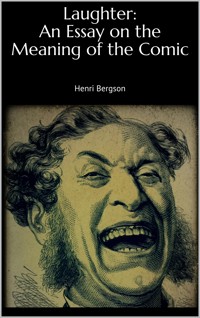
Laughter: An Essay on the Meaning of the Comic approaches the phenomenon of laughter as a social and intellectual event. Bergson explores how we recognize the comic in gestures, situations, and characters, and why laughter arises at moments where life appears rigid, automatic, or out of step with living flexibility. Without presupposing technical training, he sketches a theory that connects aesthetic experience to communal life. The essay is notable for its agility: concrete cases illuminate general claims, and the argument moves with ease between observation and conceptual clarification, opening Bergson’s philosophy through a familiar, everyday doorway.
Time and Free Will: An Essay on the Immediate Data of Consciousness introduces the notion of duration as lived time, distinct from the measurable intervals of clocks and calendars. Bergson argues that inner states interpenetrate and resist the spatial separations often assumed by psychology. From this analysis flows a rethinking of freedom as an expression of the whole person rather than a choice among isolated units. The book’s method is reflective and descriptive, aiming to return readers to what they actually experience when they attend to feelings, decisions, and memory without imposing external schemes upon them.
Creative Evolution extends the inquiry from individual consciousness to the movement of life as a whole. Bergson critiques explanations that reduce living processes to either rigid mechanism or preordained design and develops a view of evolution as inventive, open-ended, and genuinely novel in its productions. He engages scientific findings while maintaining a philosophical focus on growth and transformation. The writing is expansive yet precise, using images and counterexamples to test distinctions and refine concepts. The work supplies a cosmology for Bergson’s insights into duration, locating creativity not only in minds but in the very rhythm of life.
Meaning of the War: Life & Matter in Conflict brings Bergson’s philosophical concerns into conversation with the upheavals of his time. Addressed to a broad audience, it interprets the war as a confrontation between living values—initiative, responsibility, and spiritual energy—and conceptions that treat persons and societies as mere mechanisms. The text does not offer strategic analysis; rather, it clarifies stakes and ideals in language intelligible beyond the academy. In doing so, it shows Bergson’s conviction that philosophy has public import, and that the distinctions he draws between life and inert matter bear upon civic commitment.
Dreams turns to the nocturnal life of the mind. Bergson examines how memories, sensations, and bodily conditions participate in the formation of dream imagery, and why dreaming can seem at once vivid and elusive. The treatment is concise and empirically attentive, designed to clarify phenomena that scientific psychology and ordinary introspection both confront. By grounding its account in the dynamics of attention and memory, the work complements the broader theory of consciousness articulated elsewhere in this collection, offering an accessible entry point into Bergsonian method and a practical illustration of his descriptive discipline.
Across these books, certain themes bind the enterprise. Duration is the key: an insistence that life unfolds as continuity rather than as a sequence of detached instants. From duration follows an emphasis on creativity and unforeseeable novelty, whether in personal action, artistic expression, or biological development. Bergson consistently distinguishes between spatializing habits of thought that immobilize movement and a more faithful intuition that stays with processes as they occur. The result is a philosophy alert to transitions and thresholds, one that resists reduction of living realities to fixed models while still pursuing clarity and argumentative rigor.
Bergson’s style is integral to his philosophy. He writes in exact but supple prose, trusting careful description and the strategic use of examples to carry difficult ideas. Concepts are introduced through images that move, as though thinking itself must keep pace with its object. This is not ornament but method: the movement of the text mirrors the mobility of life and mind under study. The works collected here demonstrate how such writing can remain accessible while building dense, carefully layered arguments, bringing readers along step by step without sacrificing the complexity of the phenomena under consideration.
The diversity of genres in this collection invites multiple paths of reading. One might begin with the shorter essays to grasp the sensibility—Laughter and Dreams are concise and concrete—before taking up the more architectonic arguments of Time and Free Will and Creative Evolution. Alternatively, readers drawn to the public relevance of philosophy may approach Meaning of the War first, then trace its conceptual roots in the other texts. In each case, the works illuminate one another, showing how Bergson’s insights travel from the theater and the clinic to metaphysical reflection and civic discourse.
The lasting significance of Bergson’s work is widely recognized. His ideas shaped conversations about time, memory, perception, and creativity that continue in philosophy and the human sciences. His influence reached artists and readers beyond academic circles, and his achievements were acknowledged internationally when he received the Nobel Prize in Literature in 1927. The durability of his appeal stems from the combination of conceptual ambition and experiential fidelity: he asks large questions yet never strays far from phenomena that any attentive person can observe. These texts exemplify that balance and help explain why his thought remains a living resource.
The HENRY BERGSON Premium Collection offers readers a coherent, concentrated encounter with a thinker whose work connects inner life to the rhythms of the world. Gathered here are studies of the comic, of duration and freedom, of living creativity, of dream experience, and of public commitment in a time of crisis. Their juxtaposition is meant to reveal a single thread running through them all: a philosophy that takes movement, invention, and attention as first principles. To approach these pages is to practice that attention, and to measure thought not by abstraction alone but by the vitality it restores to experience.
Author Biography
Henri Bergson (1859–1941) was a French philosopher whose work reshaped discussions of time, consciousness, and creativity in the decades straddling the turn of the twentieth century. Known for a lucid prose style unusual among academic philosophers, he sought to reconnect speculative thought with lived experience. His central notions—duration (durée), intuition, and creative becoming—offered an alternative to mechanistic models dominant in science and psychology. Bergson lectured to large audiences and became a public intellectual of international stature. His achievements were recognized with the Nobel Prize in Literature in 1927, honoring both the originality of his ideas and the literary grace with which he expressed them.
Born in Paris, Bergson received a rigorous education in the French lycée system before entering the École Normale Supérieure, where he specialized in philosophy. After passing the agrégation, he taught in secondary schools and pursued research that combined psychology, biology, and metaphysics. He engaged critically with traditions that shaped late nineteenth‑century thought, including empiricism, Kantianism, and evolutionary theory. French spiritualist philosophers also influenced his trajectory, and he read widely in the new experimental psychology. This background prepared his critique of reductionism: he argued that analytic, spatialized concepts were ill‑suited to capture the inner flow of consciousness, which had to be grasped through intuition and attentive description.
Bergson’s early masterpiece, Time and Free Will: An Essay on the Immediate Data of Consciousness, appeared in the late 1880s as part of his doctoral work. It introduced durée, the qualitative, interpenetrating continuity of inner time, distinct from homogeneous, measurable clock time. Treating mental states as quantities, he argued, creates the illusion of determinism by forcing living processes into spatial molds. Freedom, for Bergson, arises in acts that express the whole of a person’s becoming rather than a sum of discrete motives. The book combined careful analysis with illustrative examples, inaugurating the method that would characterize his later writings and propel his reputation beyond academic circles.
At the turn of the century Bergson turned to accessible topics to clarify his method. In Laughter: An Essay on the Meaning of the Comic, he proposed that the comic arises when the mechanical is “encrusted” upon the living—rigidity intruding upon flexible life. Humor, on this view, performs a social function by correcting inelastic habits. Around the same time he published Dreams, a compact inquiry into how dreaming reworks memory and sensation. Rejecting both supernatural readings and simplistic physiology, he showed how the dreaming mind organizes residual perceptions into coherent scenes. These works broadened his audience and displayed his distinctive blend of analysis and concrete examples.
Creative Evolution consolidated Bergson’s fame. Engaging debates about Darwinism and vitalism, he argued that life is an open‑ended, inventive process irreducible to mechanical causation or fixed teleology. Introducing the controversial idea of an élan vital, he used it as a heuristic to describe the forward thrust of life, emphasizing novelty and unforeseeable forms. The book combined biology, psychology, and metaphysics in an expansive narrative that energized philosophers, scientists, and writers. It provoked criticism from strict mechanists and enthusiasm from readers seeking a philosophy attuned to growth and creativity. Public lectures associated with the book drew large crowds and reinforced his status as a cultural figure.
The First World War prompted Bergson to address civic and moral concerns directly. In Meaning of the War: Life & Matter in Conflict, he framed the struggle as a confrontation between living, creative freedom and the rigidities of material force. Without abandoning his philosophical vocabulary, he emphasized the defense of spiritual values and human dignity against aggressive mechanization. The text exemplifies his belief that ideas about time, life, and action matter in public life, not merely in classrooms. It also showed his willingness to write occasional works responsive to historical crises, complementing the more systematic treatises that had made his reputation.
In later years Bergson continued to refine his views and to serve as a widely read public thinker. He held prestigious academic posts in Paris and was elected to the Académie française, reflecting his dual status as philosopher and man of letters. Recognition culminated in the Nobel Prize in Literature in 1927. Despite declining health, he remained intellectually active into the 1930s. He died in 1941 in Paris. Bergson’s legacy persists in debates on consciousness, free will, and the philosophy of biology, and his method of intuition influenced writers and thinkers across disciplines. His works remain accessible entry points to a vivid, process‑centered view of reality.
Historical Context
The works gathered in HENRY BERGSON Premium Collection emerged during the late nineteenth and early twentieth centuries, a period spanning France’s Third Republic, the Belle Époque, and the cataclysms of the First World War. Industrialization, mass politics, and scientific innovation reshaped everyday rhythms and intellectual life. Bergson’s writings from 1889 to the mid-1910s respond to these transformations: Time and Free Will reframes psychological experience against mechanistic models; Laughter interprets the modern comic; Dreams situates oneiric life amid new psychologies; Creative Evolution engages evolutionary theory; and Meaning of the War addresses the moral stakes of 1914–1918. Together, they register a society negotiating science, secularization, and national crisis.
Henri Bergson (1859–1941) was educated at the École Normale Supérieure and taught in provincial and Parisian lycées before joining the Collège de France in 1900. His early research matured in Clermont-Ferrand, where he developed the thesis that became Time and Free Will (1889). French philosophy at the time moved between spiritualist inheritances and positivist ambitions; Bergson’s training included mathematics and classical studies, positioning him to critique psychophysics without rejecting science. The doctorate he completed in 1889 signaled a new style of French philosophical writing—at once literary and technical—that would make him a public intellectual and draw unprecedented lecture audiences in the first decade of the twentieth century.
Time and Free Will appears against a backdrop of debates about measurement and determinism. Nineteenth-century mechanics and the prestige of Laplacian predictability encouraged the view that human actions could be rendered in quantitative terms. Yet newer scientific developments complicated this picture: thermodynamics raised questions about irreversibility; and mathematicians such as Henri Poincaré examined limits of measurement and conventional definitions. Bergson’s argument for durée—lived duration irreducible to spatialized, homogeneous time—intervened amid these discussions. Rather than rejecting science, he separated inner experience from the constructs of measurement, framing freedom not as a metaphysical exception but as a feature of qualitative temporal flow resistant to calculus-like partitioning.
Industrialization introduced synchronized timetables, railway schedules, and factory shifts, making clock time an organizing force in modern life. The spread of standardized time zones across the late nineteenth century, along with telegraphy and expanding urban transit, amplified demands for punctuality and quantification. Against this background, Time and Free Will’s insistence on qualitative duration reads as a cultural counterpoint to new temporal disciplines. Bergson did not deny practical utility, but he highlighted the mismatch between lived succession and mechanical simultaneity. The book thus resonates with the social experience of modernity: the human subject managing the pressures of synchronization while preserving a sense of interior continuity and choice.
French psychological science likewise changed rapidly. The Salpêtrière school under Jean-Martin Charcot had publicized hypnosis and hysteria; Pierre Janet advanced studies of dissociation and subconscious processes; and laboratories inspired by Wilhelm Wundt multiplied experimental methods. Within this environment, Dreams (1901) addressed popular curiosity about sleep and hallucination without reducing dreaming to pathology. Bergson analyzed how memory and perception persist during sleep, drawing on contemporary case reports and everyday observation. The essay offered a scientifically informed, non-dogmatic explanation of dreaming at a moment when newspapers, medical journals, and lecture halls circulated new accounts of mind, suggestion, and the boundaries of consciousness.
At the same time, psychoanalysis began to enter French discourse following Sigmund Freud’s The Interpretation of Dreams (published 1899; widely discussed in the 1900s). Bergson’s Dreams neither adopted Freudian theory nor ignored it; instead, it worked within broader French concerns about memory and attention shaped by Janet and experimental psychology. He argued that dreams reorganize residual sensations and memories, emphasizing continuity between waking and sleeping life. The essay’s accessible style reflects a public hunger for authoritative yet non-sectarian guidance about the psyche, and it documents how fin-de-siècle France processed competing explanations—neurological, moral, and symbolic—of mental life.
The Belle Époque was also an age of entertainment: boulevard theater, café-concerts, music-halls, illustrated journals, and, after 1895, early cinema. In this milieu, Laughter (1900) examines comedic effects as social phenomena. Bergson’s famous notion of “the mechanical encrusted upon the living” captures how rigidity of habit or automatism provokes laughter. The idea resonated in a culture that watched standardized gestures in factories and on stage. Without relying on literary plot summaries, Bergson analyzed stock types, manners, and situations—highlighting how comedy exposes inelasticity in individuals who fail to adapt. The essay reads the comic not as mere frivolity, but as a diagnostic of modern social life.
French sociology, notably Émile Durkheim’s work in the 1890s, had stressed collective norms and the regulation of behavior. Laughter engages similar concerns from a philosophical angle, construing humor as a mild social sanction that corrects eccentricity without cruelty. The Dreyfus Affair (1894–1906) intensified debates on collective judgment and public opinion, demonstrating how ridicule and satire could both police and polarize. Bergson’s analysis, though not about politics, implicitly registers a France learning the power of publicity, newspapers, and caricature. The comic becomes a lens on conformity and tact—central issues in a republic negotiating mass democracy and expanding modes of expression.
Bergson’s appointment to the Collège de France in 1900 situated him at the pinnacle of public philosophy. His lectures drew overflowing crowds, including writers, scientists, and visitors from abroad, who heard a style that combined rigor with evocative imagery. This institutional platform amplified the reception of Laughter and later works. Translations and reviews circulated rapidly in Britain and the United States, helped by intellectual ties with William James, who praised Bergson’s approach to experience and freedom. The lecture-hall culture of Paris—open to all who queued—made philosophy a civic spectacle, and it reinforced Bergson’s role as mediator between technical debates and general audiences.
Creative Evolution (1907) arrived amid profound shifts in biology. Darwinian natural selection had been debated for decades; in France, neo-Lamarckian ideas about the inheritance of acquired characteristics retained influence. Around 1900, the rediscovery of Gregor Mendel’s work reoriented heredity studies, while August Weismann’s germ-plasm theory challenged Lamarckism. Bergson proposed élan vital to account for life’s inventive differentiation, seeking to reconcile empirical findings with a philosophical account of creativity in nature. He criticized mechanistic and finalist explanations alike, arguing that evolution involves genuine novelty. The book connected biological arguments with a broader philosophy of freedom, memory, and duration.
The success of Creative Evolution was immediate and controversial. Biologists disputed vitalism, while many readers found Bergson’s language of creativity a compelling alternative to reductive models. The book catalyzed cross-disciplinary debate in salons and journals, engaging philosophers, Catholic thinkers, and literary modernists. In the Anglophone world, translations from 1911 expanded his reach. Pragmatists such as William James and, later, John Dewey saw affinities with their emphasis on process and experience. Even where scientists resisted Bergson’s metaphysics, the text captured a public desire to see evolution not as blind mechanism alone but as a story with intelligible, open-ended development.
French politics before 1914 were marked by anticlerical reforms, notably the 1905 law separating church and state, and by social reforms addressing labor, education, and welfare. These changes sharpened questions about morality, spiritual values, and national cohesion—questions that Bergson’s vocabulary of vitality and duration seemed able to articulate without relying on doctrinal theology. His election to the Académie française in 1914 confirmed his status as a national figure. As Europe drifted toward war, his philosophical emphasis on intuition and creative agency offered a counterweight to narratives of inevitable conflict and mechanistic necessity circulating in geopolitics and military planning.
The outbreak of the First World War transformed the intellectual field. In Meaning of the War: Life & Matter in Conflict (published during 1914–1915 for a broad public), Bergson framed the war as a confrontation between a civilization of life and a machinery of force. This rhetoric echoed the Union sacrée, the French political truce at the war’s start, and the broader Allied effort to cast the conflict in moral terms. Governments enlisted prominent writers and academics to explain and justify national aims; Bergson’s pamphlets and speeches fit this pattern, mobilizing his authority to interpret unprecedented violence within a language of values and purpose.
Bergson’s wartime influence extended beyond print. In 1917 he joined a French diplomatic mission to the United States, working to shape opinion and strengthen cooperation after American entry into the war. He met political leaders and intellectuals, supporting a vision of postwar order that would culminate, for many, in hopes invested in the League of Nations. The contrast between “life” and “matter” was not a biological thesis but a moral-political distinction that resonated with wartime mobilization, mass industry, and the spectacle of artillery, trenches, and mechanized killing—developments that seemed to embody the dominance of impersonal technique over human spontaneity.
The experience of industrialized warfare retroactively reframed earlier Bergsonian themes. Laughter’s treatment of rigid automatism and Time and Free Will’s defense of qualitative interiority gained new poignancy when societies confronted standardized destruction and bureaucratic mobilization. Readers understood Meaning of the War as a continuation of Bergson’s long-standing concern with freedom and creativity, now projected onto international conflict. While the Allied narrative sometimes simplified complex causes, Bergson’s participation exemplifies how European intellectuals translated philosophical vocabularies into wartime public discourse—seeking to counter fatalism and to preserve a language in which human initiative still mattered.
After 1918, science and philosophy entered another phase. Einstein’s relativity (1905–1915) had already challenged classical conceptions of time; by the early 1920s, its public prestige in France was substantial. Bergson’s subsequent Duration and Simultaneity (1922) criticized certain interpretations of relativity, sparking a famous exchange with Einstein during the latter’s 1922 Paris visit. Although beyond this collection’s dates, the episode shows how Bergson’s earlier analyses of qualitative time fed into headline debates about physics and philosophy. It also illustrates the period’s porous boundaries between scientific authority and public intellectual life, where lectures and pamphlets shaped educated opinion.
The international reception of Bergson’s work grew through translations and university courses. Creative Evolution influenced literary and artistic modernisms interested in process and memory, while Laughter informed theories of comedy across theater and the emerging film criticism of the 1910s and 1920s. Dreams circulated in psychology and popular science venues, offering a non-Freudian framework for understanding nocturnal imagery. In 1927 Bergson received the Nobel Prize in Literature for the rich, imaginative power of his ideas and style—a testament to the cultural impact of these earlier books. The prize confirmed that his writings were read across disciplines as contributions to both knowledge and expression.','The collection also mirrors institutional changes in knowledge-making. Universities and grandes écoles professionalized research; journals multiplied specialized audiences; and popular lecture circuits bridged experts and lay readers. Bergson’s clear prose and metaphorical precision allowed participation in technical disputes without abandoning accessibility. Time and Free Will and Creative Evolution cite scientific literature while preserving philosophical autonomy; Laughter and Dreams turn everyday phenomena into occasions for rigorous analysis; Meaning of the War demonstrates how public writing can translate complex ideas into civic language. In each case, the form of exposition responds to the modern infrastructure of knowledge circulation and public debate.','Historically, these texts register tensions central to the Third Republic: secularization without nihilism, scientific advance without reductive materialism, social conformity without the eclipse of individuality. Laughter treats conformist pressures with irony; Time and Free Will protects an experiential core against oversimplification; Dreams integrates laboratory psychology with common sense; Creative Evolution offers a non-mechanistic nature; and Meaning of the War rallies values under existential strain. The works neither reject modernity nor capitulate to it. Instead, they stage negotiations between precision and intuition—negotiations that characterized French intellectual life from the 1880s through the aftermath of 1914–1918.','Later readers have revisited the collection with new tools. Cognitive science reexamines memory and attention discussed in Dreams; media studies tests Laughter against cinema and broadcast comedy; philosophy of biology reassesses Creative Evolution alongside genetics and developmental biology; and historians analyze Meaning of the War in the context of wartime propaganda and diplomacy. Even where specific theses faced criticism, the books remain documents of how a culture thought about time, creativity, community, and crisis. As historical commentary, the collection captures the aspirations and anxieties of its era; as a living corpus, it continues to provoke debate about what counts as knowledge of life and mind.
Synopsis (Selection)
Laughter: An Essay on the Meaning of the Comic
Bergson analyzes why we laugh, linking the comic to a kind of rigidity or mechanical habit that appears within living, social beings. He argues that laughter has a corrective social function, gently pushing individuals toward flexibility and vitality. The tone is lively and example-driven, extending his broader concerns with life, adaptability, and the tension between the mechanical and the living.
Time and Free Will: An Essay on the Immediate Data of Consciousness
This work distinguishes between measurable, spatialized time and lived duration, proposing that inner experience is a continuous flow where states interpenetrate. Bergson grounds free will in this qualitative continuity rather than in external causality, challenging reductionist models of mind. The tone is introspective and analytic, laying conceptual foundations that recur across his later writings on intuition and becoming.
Creative Evolution
Bergson reinterprets biological evolution as a creative process driven by a vital impetus that generates novelty, rather than by purely mechanistic or fixed ends. He contrasts the limits of the intellect with the insight of intuition, arguing that life unfolds as duration and cannot be fully captured by static concepts. Expansive and synthetic in scope, the book deepens and extends themes of freedom, creativity, and anti-reductionism from his earlier thought.
Meaning of the War: Life & Matter in Conflict
Framed by a time of conflict, this essay reads the struggle as a confrontation between living spontaneity and material forces, asking what moral and philosophical stakes are involved. Bergson applies his opposition of life and mechanism to collective action and values, exploring how societies justify and sustain effort. The tone is urgent and reflective, translating his metaphysical themes into the register of public crisis.
Dreams
A concise inquiry into how dreams form, this essay explains the role of memory images and diminished sensory control in shaping nocturnal experience. Bergson shows how dream time and identity shift within the fluidity of duration, using everyday phenomena to illuminate his account of consciousness. The tone is calm and explanatory, linking practical observations to his broader philosophy of perception and mind.
HENRY BERGSON Premium Collection
Laughter: An Essay on the Meaning of the Comic
TRANSLATORS: CLOUDESLEY BRERETON FRED ROTHWELL
TRANSLATORS' PREFACE
This work, by Professor Bergson, has been revised in detail by the author himself, and the present translation is the only authorised one. For this ungrudging labour of revision, for the thoroughness with which it has been carried out, and for personal sympathy in many a difficulty of word and phrase, we desire to offer our grateful acknowledgment to Professor Bergson. It may be pointed out that the essay on Laughter originally appeared in a series of three articles in one of the leading magazines in France, the Revue de Paris. This will account for the relatively simple form of the work and the comparative absence of technical terms. It will also explain why the author has confined himself to exposing and illustrating his novel theory of the comic without entering into a detailed discussion of other explanations already in the field. He none the less indicates, when discussing sundry examples, why the principal theories, to which they have given rise, appear to him inadequate. To quote only a few, one may mention those based on contrast, exaggeration, and degradation.
The book has been highly successful in France, where it is in its seventh edition. It has been translated into Russian, Polish, and Swedish. German and Hungarian translations are under preparation. Its success is due partly to the novelty of the explanation offered of the comic, and partly also to the fact that the author incidentally discusses questions of still greater interest and importance. Thus, one of the best known and most frequently quoted passages of the book is that portion of the last chapter in which the author outlines a general theory of art.
C. B. F. R.
CHAPTER I
THE COMIC IN GENERAL — THE COMIC ELEMENT IN FORMS AND MOVEMENTS — EXPANSIVE FORCE OF THE COMIC.
What does laughter mean? What is the basal element in the laughable? What common ground can we find between the grimace of a merry-andrew, a play upon words, an equivocal situation in a burlesque and a scene of high comedy? What method of distillation will yield us invariably the same essence from which so many different products borrow either their obtrusive odour or their delicate perfume? The greatest of thinkers, from Aristotle downwards, have tackled this little problem, which has a knack of baffling every effort, of slipping away and escaping only to bob up again, a pert challenge flung at philosophic speculation. Our excuse for attacking the problem in our turn must lie in the fact that we shall not aim at imprisoning the comic spirit within a definition. We regard it, above all, as a living thing. However trivial it may be, we shall treat it with the respect due to life. We shall confine ourselves to watching it grow and expand. Passing by imperceptible gradations from one form to another, it will be seen to achieve the strangest metamorphoses. We shall disdain nothing we have seen. Maybe we may gain from this prolonged contact, for the matter of that, something more flexible than an abstract definition, — a practical, intimate acquaintance, such as springs from a long companionship. And maybe we may also find that, unintentionally, we have made an acquaintance that is useful. For the comic spirit has a logic of its own, even in its wildest eccentricities. It has a method in its madness. It dreams, I admit, but it conjures up, in its dreams, visions that are at once accepted and understood by the whole of a social group. Can it then fail to throw light for us on the way that human imagination works, and more particularly social, collective, and popular imagination? Begotten of real life and akin to art, should it not also have something of its own to tell us about art and life?
At the outset we shall put forward three observations which we look upon as fundamental. They have less bearing on the actually comic than on the field within which it must be sought.
I
The first point to which attention should be called is that the comic does not exist outside the pale of what is strictly HUMAN. A landscape may be beautiful, charming and sublime, or insignificant and ugly; it will never be laughable. You may laugh at an animal, but only because you have detected in it some human attitude or expression. You may laugh at a hat, but what you are making fun of, in this case, is not the piece of felt or straw, but the shape that men have given it, — the human caprice whose mould it has assumed. It is strange that so important a fact, and such a simple one too, has not attracted to a greater degree the attention of philosophers. Several have defined man as "an animal which laughs." They might equally well have defined him as an animal which is laughed at; for if any other animal, or some lifeless object, produces the same effect, it is always because of some resemblance to man, of the stamp he gives it or the use he puts it to.
Here I would point out, as a symptom equally worthy of notice, the ABSENCE OF FEELING which usually accompanies laughter. It seems as though the comic could not produce its disturbing effect unless it fell, so to say, on the surface of a soul that is thoroughly calm and unruffled. Indifference is its natural environment, for laughter has no greater foe than emotion. I do not mean that we could not laugh at a person who inspires us with pity, for instance, or even with affection, but in such a case we must, for the moment, put our affection out of court and impose silence upon our pity. In a society composed of pure intelligences there would probably be no more tears, though perhaps there would still be laughter; whereas highly emotional souls, in tune and unison with life, in whom every event would be sentimentally prolonged and re-echoed, would neither know nor understand laughter. Try, for a moment, to become interested in everything that is being said and done; act, in imagination, with those who act, and feel with those who feel; in a word, give your sympathy its widest expansion: as though at the touch of a fairy wand you will see the flimsiest of objects assume importance, and a gloomy hue spread over everything. Now step aside, look upon life as a disinterested spectator: many a drama will turn into a comedy. It is enough for us to stop our ears to the sound of music, in a room where dancing is going on, for the dancers at once to appear ridiculous. How many human actions would stand a similar test? Should we not see many of them suddenly pass from grave to gay, on isolating them from the accompanying music of sentiment? To produce the whole of its effect, then, the comic demands something like a momentary anesthesia of the heart. Its appeal is to intelligence, pure and simple.
This intelligence, however, must always remain in touch with other intelligences. And here is the third fact to which attention should be drawn. You would hardly appreciate the comic if you felt yourself isolated from others. Laughter appears to stand in need of an echo, Listen to it carefully: it is not an articulate, clear, well-defined sound; it is something which would fain be prolonged by reverberating from one to another, something beginning with a crash, to continue in successive rumblings, like thunder in a mountain. Still, this reverberation cannot go on for ever. It can travel within as wide a circle as you please: the circle remains, none the less, a closed one. Our laughter is always the laughter of a group. It may, perchance, have happened to you, when seated in a railway carriage or at table d'hote, to hear travellers relating to one another stories which must have been comic to them, for they laughed heartily. Had you been one of their company, you would have laughed like them; but, as you were not, you had no desire whatever to do so. A man who was once asked why he did not weep at a sermon, when everybody else was shedding tears, replied: "I don't belong to the parish!" What that man thought of tears would be still more true of laughter. However spontaneous it seems, laughter always implies a kind of secret freemasonry, or even complicity, with other laughers, real or imaginary. How often has it been said that the fuller the theatre, the more uncontrolled the laughter of the audience! On the other hand, how often has the remark been made that many comic effects are incapable of translation from one language to another, because they refer to the customs and ideas of a particular social group! It is through not understanding the importance of this double fact that the comic has been looked upon as a mere curiosity in which the mind finds amusement, and laughter itself as a strange, isolated phenomenon, without any bearing on the rest of human activity. Hence those definitions which tend to make the comic into an abstract relation between ideas: "an intellectual contrast," "a palpable absurdity," etc., — definitions which, even were they really suitable to every form of the comic, would not in the least explain why the comic makes us laugh. How, indeed, should it come about that this particular logical relation, as soon as it is perceived, contracts, expands and shakes our limbs, whilst all other relations leave the body unaffected? It is not from this point of view that we shall approach the problem. To understand laughter, we must put it back into its natural environment, which is society, and above all must we determine the utility of its function, which is a social one. Such, let us say at once, will be the leading idea of all our investigations. Laughter must answer to certain requirements of life in common. It must have a SOCIAL signification.
Let us clearly mark the point towards which our three preliminary observations are converging. The comic will come into being, it appears, whenever a group of men concentrate their attention on one of their number, imposing silence on their emotions and calling into play nothing but their intelligence. What, now, is the particular point on which their attention will have to be concentrated, and what will here be the function of intelligence? To reply to these questions will be at once to come to closer grips with the problem. But here a few examples have become indispensable.
II
A man, running along the street, stumbles and falls; the passers-by burst out laughing. They would not laugh at him, I imagine, could they suppose that the whim had suddenly seized him to sit down on the ground. They laugh because his sitting down is involuntary.
Consequently, it is not his sudden change of attitude that raises a laugh, but rather the involuntary element in this change, — his clumsiness, in fact. Perhaps there was a stone on the road. He should have altered his pace or avoided the obstacle. Instead of that, through lack of elasticity, through absentmindedness and a kind of physical obstinacy, AS A RESULT, IN FACT, OF RIGIDITY OR OF MOMENTUM, the muscles continued to perform the same movement when the circumstances of the case called for something else. That is the reason of the man's fall, and also of the people's laughter.
Now, take the case of a person who attends to the petty occupations of his everyday life with mathematical precision. The objects around him, however, have all been tampered with by a mischievous wag, the result being that when he dips his pen into the inkstand he draws it out all covered with mud, when he fancies he is sitting down on a solid chair he finds himself sprawling on the floor, in a word his actions are all topsy-turvy or mere beating the air, while in every case the effect is invariably one of momentum. Habit has given the impulse: what was wanted was to check the movement or deflect it. He did nothing of the sort, but continued like a machine in the same straight line. The victim, then, of a practical joke is in a position similar to that of a runner who falls, — he is comic for the same reason. The laughable element in both cases consists of a certain MECHANICAL INELASTICITY, just where one would expect to find the wide-awake adaptability and the living pliableness of a human being. The only difference in the two cases is that the former happened of itself, whilst the latter was obtained artificially. In the first instance, the passer-by does nothing but look on, but in the second the mischievous wag intervenes.
All the same, in both cases the result has been brought about by an external circumstance. The comic is therefore accidental: it remains, so to speak, in superficial contact with the person. How is it to penetrate within? The necessary conditions will be fulfilled when mechanical rigidity no longer requires for its manifestation a stumbling-block which either the hazard of circumstance or human knavery has set in its way, but extracts by natural processes, from its own store, an inexhaustible series of opportunities for externally revealing its presence. Suppose, then, we imagine a mind always thinking of what it has just done and never of what it is doing, like a song which lags behind its accompaniment. Let us try to picture to ourselves a certain inborn lack of elasticity of both senses and intelligence, which brings it to pass that we continue to see what is no longer visible, to hear what is no longer audible, to say what is no longer to the point: in short, to adapt ourselves to a past and therefore imaginary situation, when we ought to be shaping our conduct in accordance with the reality which is present. This time the comic will take up its abode in the person himself; it is the person who will supply it with everything — matter and form, cause and opportunity. Is it then surprising that the absent-minded individual — for this is the character we have just been describing — has usually fired the imagination of comic authors? When La Bruyere came across this particular type, he realised, on analysing it, that he had got hold of a recipe for the wholesale manufacture of comic effects. As a matter of fact he overdid it, and gave us far too lengthy and detailed a description of Menalque, coming back to his subject, dwelling and expatiating on it beyond all bounds. The very facility of the subject fascinated him. Absentmindedness, indeed, is not perhaps the actual fountain-head of the comic, but surely it is contiguous to a certain stream of facts and fancies which flows straight from the fountain-head. It is situated, so to say, on one of the great natural watersheds of laughter.
Now, the effect of absentmindedness may gather strength in its turn. There is a general law, the first example of which we have just encountered, and which we will formulate in the following terms: when a certain comic effect has its origin in a certain cause, the more natural we regard the cause to be, the more comic shall we find the effect. Even now we laugh at absentmindedness when presented to us as a simple fact. Still more laughable will be the absentmindedness we have seen springing up and growing before our very eyes, with whose origin we are acquainted and whose life-history we can reconstruct. To choose a definite example: suppose a man has taken to reading nothing but romances of love and chivalry. Attracted and fascinated by his heroes, his thoughts and intentions gradually turn more and more towards them, till one fine day we find him walking among us like a somnambulist. His actions are distractions. But then his distractions can be traced back to a definite, positive cause. They are no longer cases of ABSENCE of mind, pure and simple; they find their explanation in the PRESENCE of the individual in quite definite, though imaginary, surroundings. Doubtless a fall is always a fall, but it is one thing to tumble into a well because you were looking anywhere but in front of you, it is quite another thing to fall into it because you were intent upon a star. It was certainly a star at which Don Quixote was gazing. How profound is the comic element in the over-romantic, Utopian bent of mind! And yet, if you reintroduce the idea of absentmindedness, which acts as a go-between, you will see this profound comic element uniting with the most superficial type. Yes, indeed, these whimsical wild enthusiasts, these madmen who are yet so strangely reasonable, excite us to laughter by playing on the same chords within ourselves, by setting in motion the same inner mechanism, as does the victim of a practical joke or the passer-by who slips down in the street. They, too, are runners who fall and simple souls who are being hoaxed — runners after the ideal who stumble over realities, child-like dreamers for whom life delights to lie in wait. But, above all, they are past-masters in absentmindedness, with this superiority over their fellows that their absentmindedness is systematic and organised around one central idea, and that their mishaps are also quite coherent, thanks to the inexorable logic which reality applies to the correction of dreams, so that they kindle in those around them, by a series of cumulative effects, a hilarity capable of unlimited expansion.
Now, let us go a little further. Might not certain vices have the same relation to character that the rigidity of a fixed idea has to intellect? Whether as a moral kink or a crooked twist given to the will, vice has often the appearance of a curvature of the soul. Doubtless there are vices into which the soul plunges deeply with all its pregnant potency, which it rejuvenates and drags along with it into a moving circle of reincarnations. Those are tragic vices. But the vice capable of making us comic is, on the contrary, that which is brought from without, like a ready-made frame into which we are to step. It lends us its own rigidity instead of borrowing from us our flexibility. We do not render it more complicated; on the contrary, it simplifies us. Here, as we shall see later on in the concluding section of this study, lies the essential difference between comedy and drama. A drama, even when portraying passions or vices that bear a name, so completely incorporates them in the person that their names are forgotten, their general characteristics effaced, and we no longer think of them at all, but rather of the person in whom they are assimilated; hence, the title of a drama can seldom be anything else than a proper noun. On the other hand, many comedies have a common noun as their title: l'Avare, le Joueur, etc. Were you asked to think of a play capable of being called le Jaloux, for instance, you would find that Sganarelle or George Dandin would occur to your mind, but not Othello: le Jaloux could only be the title of a comedy. The reason is that, however intimately vice, when comic, is associated with persons, it none the less retains its simple, independent existence, it remains the central character, present though invisible, to which the characters in flesh and blood on the stage are attached. At times it delights in dragging them down with its own weight and making them share in its tumbles. More frequently, however, it plays on them as on an instrument or pulls the strings as though they were puppets. Look closely: you will find that the art of the comic poet consists in making us so well acquainted with the particular vice, in introducing us, the spectators, to such a degree of intimacy with it, that in the end we get hold of some of the strings of the marionette with which he is playing, and actually work them ourselves; this it is that explains part of the pleasure we feel. Here, too, it is really a kind of automatism that makes us laugh — an automatism, as we have already remarked, closely akin to mere absentmindedness. To realise this more fully, it need only be noted that a comic character is generally comic in proportion to his ignorance of himself. The comic person is unconscious. As though wearing the ring of Gyges with reverse effect, he becomes invisible to himself while remaining visible to all the world. A character in a tragedy will make no change in his conduct because he will know how it is judged by us; he may continue therein, even though fully conscious of what he is and feeling keenly the horror he inspires in us. But a defect that is ridiculous, as soon as it feels itself to be so, endeavours to modify itself, or at least to appear as though it did. Were Harpagon to see us laugh at his miserliness, I do not say that he would get rid of it, but he would either show it less or show it differently. Indeed, it is in this sense only that laughter "corrects men's manners." It makes us at once endeavour to appear what we ought to be, what some day we shall perhaps end in being.
It is unnecessary to carry this analysis any further. From the runner who falls to the simpleton who is hoaxed, from a state of being hoaxed to one of absentmindedness, from absentmindedness to wild enthusiasm, from wild enthusiasm to various distortions of character and will, we have followed the line of progress along which the comic becomes more and more deeply imbedded in the person, yet without ceasing, in its subtler manifestations, to recall to us some trace of what we noticed in its grosser forms, an effect of automatism and of inelasticity. Now we can obtain a first glimpse — a distant one, it is true, and still hazy and confused — of the laughable side of human nature and of the ordinary function of laughter.
What life and society require of each of us is a constantly alert attention that discerns the outlines of the present situation, together with a certain elasticity of mind and body to enable us to adapt ourselves in consequence. TENSION and ELASTICITY are two forces, mutually complementary, which life brings into play. If these two forces are lacking in the body to any considerable extent, we have sickness and infirmity and accidents of every kind. If they are lacking in the mind, we find every degree of mental deficiency, every variety of insanity. Finally, if they are lacking in the character, we have cases of the gravest inadaptability to social life, which are the sources of misery and at times the causes of crime. Once these elements of inferiority that affect the serious side of existence are removed — and they tend to eliminate themselves in what has been called the struggle for life — the person can live, and that in common with other persons. But society asks for something more; it is not satisfied with simply living, it insists on living well. What it now has to dread is that each one of us, content with paying attention to what affects the essentials of life, will, so far as the rest is concerned, give way to the easy automatism of acquired habits. Another thing it must fear is that the members of whom it is made up, instead of aiming after an increasingly delicate adjustment of wills which will fit more and more perfectly into one another, will confine themselves to respecting simply the fundamental conditions of this adjustment: a cut-and-dried agreement among the persons will not satisfy it, it insists on a constant striving after reciprocal adaptation. Society will therefore be suspicious of all INELASTICITY of character, of mind and even of body, because it is the possible sign of a slumbering activity as well as of an activity with separatist tendencies, that inclines to swerve from the common centre round which society gravitates: in short, because it is the sign of an eccentricity. And yet, society cannot intervene at this stage by material repression, since it is not affected in a material fashion. It is confronted with something that makes it uneasy, but only as a symptom — scarcely a threat, at the very most a gesture. A gesture, therefore, will be its reply. Laughter must be something of this kind, a sort of SOCIAL GESTURE. By the fear which it inspires, it restrains eccentricity, keeps constantly awake and in mutual contact certain activities of a secondary order which might retire into their shell and go to sleep, and, in short, softens down whatever the surface of the social body may retain of mechanical inelasticity. Laughter, then, does not belong to the province of esthetics alone, since unconsciously (and even immorally in many particular instances) it pursues a utilitarian aim of general improvement. And yet there is something esthetic about it, since the comic comes into being just when society and the individual, freed from the worry of self-preservation, begin to regard themselves as works of art. In a word, if a circle be drawn round those actions and dispositions — implied in individual or social life — to which their natural consequences bring their own penalties, there remains outside this sphere of emotion and struggle — and within a neutral zone in which man simply exposes himself to man's curiosity — a certain rigidity of body, mind and character, that society would still like to get rid of in order to obtain from its members the greatest possible degree of elasticity and sociability. This rigidity is the comic, and laughter is its corrective.
Still, we must not accept this formula as a definition of the comic. It is suitable only for cases that are elementary, theoretical and perfect, in which the comic is free from all adulteration. Nor do we offer it, either, as an explanation. We prefer to make it, if you will, the leitmotiv which is to accompany all our explanations. We must ever keep it in mind, though without dwelling on it too much, somewhat as a skilful fencer must think of the discontinuous movements of the lesson whilst his body is given up to the continuity of the fencing-match. We will now endeavour to reconstruct the sequence of comic forms, taking up again the thread that leads from the horseplay of a clown up to the most refined effects of comedy, following this thread in its often unforeseen windings, halting at intervals to look around, and finally getting back, if possible, to the point at which the thread is dangling and where we shall perhaps find — since the comic oscillates between life and art — the general relation that art bears to life.
III
Let us begin at the simplest point. What is a comic physiognomy? Where does a ridiculous expression of the face come from? And what is, in this case, the distinction between the comic and the ugly? Thus stated, the question could scarcely be answered in any other than an arbitrary fashion. Simple though it may appear, it is, even now, too subtle to allow of a direct attack. We should have to begin with a definition of ugliness, and then discover what addition the comic makes to it; now, ugliness is not much easier to analyse than is beauty. However, we will employ an artifice which will often stand us in good stead. We will exaggerate the problem, so to speak, by magnifying the effect to the point of making the cause visible. Suppose, then, we intensify ugliness to the point of deformity, and study the transition from the deformed to the ridiculous.
Now, certain deformities undoubtedly possess over others the sorry privilege of causing some persons to laugh; some hunchbacks, for instance, will excite laughter. Without at this point entering into useless details, we will simply ask the reader to think of a number of deformities, and then to divide them into two groups: on the one hand, those which nature has directed towards the ridiculous; and on the other, those which absolutely diverge from it. No doubt he will hit upon the following law: A deformity that may become comic is a deformity that a normally built person, could successfully imitate.
Is it not, then, the case that the hunchback suggests the appearance of a person who holds himself badly? His back seems to have contracted an ugly stoop. By a kind of physical obstinacy, by rigidity, in a word, it persists in the habit it has contracted. Try to see with your eyes alone. Avoid reflection, and above all, do not reason. Abandon all your prepossessions; seek to recapture a fresh, direct and primitive impression. The vision you will reacquire will be one of this kind. You will have before you a man bent on cultivating a certain rigid attitude — whose body, if one may use the expression, is one vast grin.
Now, let us go back to the point we wished to clear up. By toning down a deformity that is laughable, we ought to obtain an ugliness that is comic. A laughable expression of the face, then, is one that will make us think of something rigid and, so to speak, coagulated, in the wonted mobility of the face. What we shall see will be an ingrained twitching or a fixed grimace. It may be objected that every habitual expression of the face, even when graceful and beautiful, gives us this same impression of something stereotyped? Here an important distinction must be drawn. When we speak of expressive beauty or even expressive ugliness, when we say that a face possesses expression, we mean expression that may be stable, but which we conjecture to be mobile. It maintains, in the midst of its fixity, a certain indecision in which are obscurely portrayed all possible shades of the state of mind it expresses, just as the sunny promise of a warm day manifests itself in the haze of a spring morning. But a comic expression of the face is one that promises nothing more than it gives. It is a unique and permanent grimace. One would say that the person's whole moral life has crystallised into this particular cast of features. This is the reason why a face is all the more comic, the more nearly it suggests to us the idea of some simple mechanical action in which its personality would for ever be absorbed. Some faces seem to be always engaged in weeping, others in laughing or whistling, others, again, in eternally blowing an imaginary trumpet, and these are the most comic faces of all. Here again is exemplified the law according to which the more natural the explanation of the cause, the more comic is the effect. Automatism, inelasticity, habit that has been contracted and maintained, are clearly the causes why a face makes us laugh. But this effect gains in intensity when we are able to connect these characteristics with some deep-seated cause, a certain fundamental absentmindedness, as though the soul had allowed itself to be fascinated and hypnotised by the materiality of a simple action.




