


7,99 €
Mehr erfahren.
- Herausgeber: Arkadia Editore
- Kategorie: Geisteswissenschaft
- Sprache: Englisch
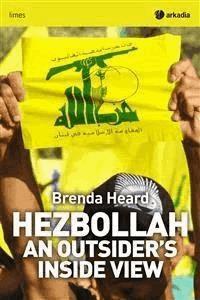
Hezbollah: An Outsider’s Inside View is the answer to the question that has been asked for years by the concerned Westerner: who are those people over there and do we really need to be scared of them? Based on an increasingly inside view of Hezbollah, this book is an opportunity for the Western reader to see for himself what this headline-grabbing groupis all about. Against a backdrop of records documenting the context from which Hezbollah has developed, you are invited to meet the administrators and the sheiks, the leaders and the fighters, the individuals and the families who are Hezbollah. Written from a Western perspective, this inside view of the Islamic Resistance of Lebanon offers the opportunity to explore the militants at the horizon.
Das E-Book können Sie in Legimi-Apps oder einer beliebigen App lesen, die das folgende Format unterstützen:
Veröffentlichungsjahr: 2015
Ähnliche




















Brenda Heard
Hezbollah
An outsider’s inside view
First edition - February 2015
Preface
This is not just another book on Hezbollah. This is the answer to the question that has been asked for years by the average Westerner: who are those people over there and do we really need to be scared of them?
For every book written that denounces Hezbollah and warns of its threat to the Western world, there is another book that extols the virtues of what Hezbollah is and what it has accomplished. And for every author who highlights Hezbollah’s accomplishments, there is another author ready to challenge Hezbollah’s motives and ultimate goal. How can the average concerned citizen of the Western world know what to believe?
Hezbollah: An Outsider’s Inside View is an opportunity for the Western reader to see for himself what this headline-grabbing group is all about. This book focuses on primary sources of information, from the people of Hezbollah themselves to a wealth of supplementary information derived from a variety of sources to offer a full breadth of validation. In presenting an inside view, I have challenged the statements from Hezbollah representatives to establish consistency (1) within Hezbollah itself and (2) between Hezbollah’s stance and external records of the context from which Hezbollah has developed. I have thus summarised and cited documentation derived from international NGO’s, from the United Nations, from the governments of Lebanon, Israel, the US and the UK, and from historically contemporary news media.
This book recreates my own experience as a Westerner getting to know Hezbollah. In circumstances when its character is perhaps culturally foreign to the average Westerner, then, I have provided analytical commentary throughout to explain from the Western sensibility. In order to benefit from this Outsider’s Inside View, the reader should note that, regardless of any personal religious faith he may or may not have, Hezbollah is by definition a religious system. An overview of that system does not require its rejection or acceptance.
The reader will note the general, sometimes vague, use of the label “Western.” This is deliberate. The term is not meant to indicate a specific country. The label “Western” here implies a wide spectrum of qualities that have in common parlance become associated with not only Western Europe (notably the British Isles), but also with the United States, Canada, and Australia. The people within these countries, even within a given country, of course can vary greatly from one another. The label “Western” indicates those characteristics that make these people more alike than different. The label may therefore be understood to include populations outside of these countries who share a similar set of qualities or values. While labels cannot accurately be affixed to a physical populace, they can be used effectively to designate a conceptual populace. Please note the distinction.
Given this use of labels, it should be underscored that in referring to the “average Westerner” this book is referring to a general, cultural identity. This includes aspects of political, economic, social and religious characteristics. It is readily acknowledged that there are many philosophical strains contributing to this Western identity. While presenting the Western political-economic system, for example, as being “democratic” or “capitalist,” this in no way implies that there are not varying, even competing, factors, many of which actively affect this identity: socialism, communism, and so on. Likewise, while presenting its predominant religious system as Christianity, it is readily acknowledged that there exist significant differences between Catholicism and Protestantism, and also that there exist many other religious systems (including agnosticism and atheism) within Western culture.
Similarly, Lebanon as a culture is multi-faceted. But dissimilarly, Hezbollah is a clearly defined entity within that culture. In this book, therefore, when the label “Hezbollah” is used, it refers to the Party and its members, both of which are defined by a specific set of principles. This usage should be distinguished from references to “Hezbollah supporters,” whether casual admirers or avid followers. These supporters will vary in the degree to which they themselves reflect the principles of Hezbollah. Lastly, this book in part will look at Western perception of Hezbollah. When the label of “Hezbollah” is used in this context, it refers only to that perception. In each of these three categories, the reference will be clearly indicated.
The phrase “inside view” refers to my eight years of being able to see, to study and to question their culture. Far from being the clandestine figures portrayed in Western media, representatives of Hezbollah have been open and accommodating. I have visited their offices, their homes, their battlefields and their underground barracks. I have come to know the administrators and the sheiks, the politicians and the fighters. Chapter 2 “Impressions” elaborates on why and how I first approached representatives of Hezbollah. From those whom I have met only briefly, to those whom I have come to know as friends, their personalities are frankly portrayed in this book.
I feel that it is significant to underscore the nature of the cooperation I have received for this project. While they have been openly generous in fulfilling my requests for information, no one from Hezbollah has ever urged me to include or to exclude any topic. This project has been at my sole discretion. They have never attempted in any fashion to influence any facet of what was written. It says a great deal when an organisation is that comfortable with an outsider looking in.
If you would like to understand the people of Hezbollah, then I invite you to share my experience in getting to know them. I invite you to expand your Western perspective to include the perspective of those who are Hezbollah. As a Westerner who has already done so, I welcome you to this outsider’s inside view.
This book is supported by a website offering a glossary, additional narratives, reference tools, and full documentation, including links to all online sources referenced in this book.
Chapter 1
A home in Dahiya, southern suburb of Beirut
Sunday, 13 August 2006
They thought it was finally over. They had stayed in their Dahiya home for the first sixteen days of the war. They had stayed until the heavy, sickening booms they could hear outside their windows drove them to seek refuge in the town of Chiyah. There, with the boys’ grandfather, they waited. There, for two weeks, they telephoned friends and family to reassure themselves that they were all getting by. Then Chiyah too was bombed. For the next few days the mother, 38-years old, and the father, 40, looked at their sons and thought back to when they too had been young and nervous of the Israeli bombs blasting Beirut. And then finally the UN called for a ceasefire. The Lebanese had agreed. And today the Israelis had agreed. It would be official by morning.
Eager to return to Dahiya, the father suggested that they should all go to their home for a family meal. A simple engineering mechanic, the father had four sons—Mohamad, 20, Yasser, 18, Sam 16, and Ibrahim, 13. He now hoped that they would be able to return to school in September after all. But today was the day to enjoy being together. He looked at his weary wife and asked Mohamad to go to a nearby shop to get some grilled chicken for dinner.
They lived on the top floor of the apartment building. It was a typical, ten-story building with each floor divided into three homes. Mohamad stepped into the persistent afternoon sun. He felt somehow different. He checked to make sure he’d brought the money and walked on. He’d gone no more than a couple blocks when a massive thundering noise slammed against him. He lurched forward as though he had stumbled over an unseen rift in the pavement. He breathed in thick, foul dust. He staggered back a few paces. A roaring panic filled his ears as he looked back. He stood in disbelief, unable to think of which way to turn or what to do. He swallowed hard against what he knew.
He knew, but he could not comprehend that the home he had left not two minutes earlier was now a shifting, smoking stack of rock. They had dared to be hopeful, and now they were dead. His parents and his brothers were dead. And Mohamad stood alone, fingering the money in his pocket to buy their dinner.
A Neighbourhood Visit
I first heard Mohamad’s story in December 2006, as I stood before the gaping pit in Dahiya that had been the site of his home just months before. I was in Lebanon to see for myself the effects of the July War. I was accompanied by Sheik Taher, a man who had been working with the foreign relations department of Hezbollah for several years. We climbed over leftover piles of rock and rubbish, and stood beside a short cement safety wall Hezbollah volunteers had built along the edges of the pit.
I had seen hundreds of photos of the war damage, so I had thought seeing such sights would be rather familiar. But the magnitude of what lay before me was astounding. It reminded me of the eerie disorientation I had experienced years before, having only ever seen mountains in photographs, when I first stood engulfed by the Swiss Alps. There was just no comparison. Now, the scene of the ravaged neighbourhood before me at once left my curiosity tinged with disquiet.
Taher pointed across the street to where a sweet shop had been re-opened on the ground floor of a building whose side looked as though it had been ripped off. He pointed to an area cluttered with flattened, distorted cars. Clearance was slow as the roads had been broken or clogged or both. It had taken weeks, he explained, to haul away the heaps of debris that had so recently been people’s shops and homes, that had been the offices of doctors and accountants.
Still, amidst the enormity of the destruction that stretched in all directions, there were men sweeping up little patches and pushing wheelbarrows of rubble. Over the last four months, they had shifted from collecting the bodies to hauling away broken buildings to sweeping the dust-coated clutter. As Taher related the tales of Dahiya, there seemed to be a pain in his tone, despite the matter-of-fact delivery he attempted.
He pointed out a shoe shop that the owner had recently re-opened. I insisted on stopping. I had to meet him. I went in and was warmly welcomed by a small, elderly man who was busy tidying boxes. He helped me find a shoe size. Were it not for the ever-present dust, the shop could have been anywhere, any day.
As I left, I could spot a man in the distance busy with his broom. I wondered at the steadfast determination of this community—and this was surely a community, not a “militant stronghold,” as the media had so casually dubbed it. Here were ordinary people who hurt, but who would not be beaten down. I thought of young Mohamad, who had seen and heard and felt the force that had crushed his parents and his brothers to death. Had he despaired?
Meeting Mohamad
In January 2009, I asked Mohamad myself. After nearly two and a half years, for the first time since the war, Mohamad had agreed to share his story with a Western journalist. I wondered if he had been too angry or too distraught to talk about the death of his family. Or, I wondered, had the tragedy turned him cold and bitter and bent on revenge?
When I met him, Mohamad smiled. He was a bit nervous. With determined effort he spoke to me directly in his limited English. I explained that I had brought along a translator, but Mohamad looked at me intently and recounted his story in English as best he could.
His family were six people, he said, and the four brothers were students. He paused to make sure I understood this, his first and later repeated observation. Yes, they lived in Dahiya. But they were not fiercely armed militants, as portrayed in the Western media. Yes, they supported Hezbollah. But they were just a family. The father was a mechanic; the four boys were students. At least they had been.
And so we drank tea and introduced ourselves. We talked of common matters. The conversation gradually turned back to the topic that had brought us together. Mohamad struggled for words to describe the fateful day. He looked directly at me for a moment and then spoke.
“After I’d left two minutes, 200 meters, first I couldn’t believe it. I heard the sound of the bomb, I couldn’t believe it. Two minutes earlier I had been in my house. Then the mujama was destroyed. Eight buildings, every building ten floors, every floor three houses, homes. So 240 homes.”
In the midst of relating his personal loss, he recognised that there had been many others who had also fallen victim to the Israeli bombing. There he sat before me, a young man awaiting my next question in his shyness. I knew I could obtain statistics from a number of sources. What I really wanted to know, though, was what he had done with his grief. I asked Mohamad if he would show me photographs of his family. He turned to the woman in whose home we were meeting and said a few words. She left the room and came back with a wallet-sized photograph. She handed it to me.
The background of the image was a sunset. Superimposed were the five faces of Mohamad’s family, along with the faint representations of a Hezbollah emblem, an open Quran and five doves flying toward the horizon. It was a martyr’s portrait. They all had Mohamad’s dark brown eyes. Yet they were not smiling, as Mohamad so naturally did as he talked with me. I thanked him, but asked if he would share some photos in a natural setting, perhaps at a birthday celebration. He shrugged his shoulders and apologised he could not. All of the family photographs had been in the home that was demolished.
He went on to explain that the martyr’s portraits were most often made using photographs from the files of agencies that issued national identity cards and passports. That is why the martyrs were not smiling. It was not that they had been stern individuals. It was just that their identity card photos were too often all that was left. He looked away for a quiet moment.
A question had been pressing itself on me. At the risk of seeming impertinent, I asked him frankly: had he ever wished that he had not escaped the building only to suffer forever the loss of his family? Did he regret not having been martyred alongside them?
Mohamad smiled slightly, without speaking. He then looked at me directly and answered with a slow, steady tone. “The Shia of Lebanon they think that if anyone dies, his soul goes to Allah and to Jena (paradise/heaven). Nobody is crying for anybody who dies, he is crying for himself. There is no crying for another one.”
At first, he went on to explain, he had been merely numb. He had felt disjointed. But he was sure his family were in Jena, and in that knowledge he believed he would one day follow them. One day. But another day.
I asked Mohamad what, if given the chance, he would say to the Israelis. He replied, “There are no words, they don’t work. The Zionists have killed the prophets, killed so many people, children, women. Now the Zionists have killed my own family. They started this. They attacked our country, raped our country; it is our duty to get our country back.”
His resentment may have been personal, but his position was reasoned. He had not said that he wished to avenge the horrific deaths of his mother, his father, his three brothers. Instead, he said that he knew the Zionists—not Israelis, not Jews, but Zionists specifically—to be rapacious murderers. His tone intensified as he spoke, so much so that he began to lapse into Arabic. He said that his experience made him understand that the wrath of the Zionists was void of conscience and so they had never been talked down, and would never be talked down.
His words were bold. But there was no hint of anger in his manner; there was only certitude. Before I met Mohamad, I wondered why he had not spoken with other Western journalists. He answered me simply: no one had asked. He wanted me to know and understand, he said, that he held no grudge against me as a Westerner. And although I was probing his temperament, I noted to myself, he continued to speak frankly about the topic at hand.
By chance, the 22-day war on Gaza, Palestine, had come to a ceasefire just days before I met with Mohamad. I asked him how he felt when he saw the reports from Gaza. He answered without hesitation, in Arabic. Although his command of English had grown significantly as he had warmed up his language skills in the earlier stages of the interview, so too had he grown more involved with the topic.
It is a linguistic phenomenon that when people discuss a topic that touches them fundamentally they will most likely lapse into their primary language patterns. For instance, when a linguist doing field study wants to record regional dialect, he will often lure the speaker into a discussion of strong, personal emotion. Within such context, the speaker becomes distracted by the topic and momentarily forgets the standardised patterns and pronunciations he has learned. Pure emotion tends to be expressed in the purest mother-tongue.
In the couple of hours we spent talking over tea and sweets, Mohamad’s English went from good to better; it then started fragmenting back into Arabic until he was speaking completely in Arabic again. By the end of the conversation, he seemed oblivious to the fact that my translator had noticed the shift and was softly and simultaneously translating at my side.
When I asked Mohamad what he felt when he saw images of Gaza, he said it felt as though the war—the July 2006 War in Lebanon—was continuing. Even so, he said, “like us, the Palestinian Resistance will stand strong. We are a people,” he explained, “we are a people who are used to injustice, to destruction, to death, to becoming refugees. But we believe in God. We are a people who will win, who will prevail because of our will, our determination and our belief. We are all mujahideen, fighters of the resistance. We are not the invaders. We are the owners of the land. We are the owners of the cause. It is our cause, our land and our dignity.”
Resistance and confrontation
The statement “We are all mujahideen” is apt to set off danger alarms in the mind of the Western reader. It will set off alarms because he has been conditioned to hear alarms. As we will explore, there has been a systematic campaign built against Hezbollah since the party became known to the Western world. The American-led campaign strikes against the concept of resistance to the Zionist project. Hence the proponents of that project—primarily Israel, the United States and the United Kingdom—have stoked that campaign in order to garner popular and legislative support for Zionism on the one hand, and condemnation of any opposition to Zionism on the other.
Hit the snooze button. Turn off the danger alarm. Evaluate for yourself whether that alarm can remain turned off. Look, listen and reflect. Consider the puzzle of confronting resistance and resisting confrontation.
“We are all mujahideen.” Who is the “we” to whom Mohamad refers? He moved seamlessly from pointing to the Palestinian Resistance, to the Lebanese Resistance, to the commonality of the culture of resistance. He spoke without hesitation. With an intense focus propelling his words, he stated a conviction that had developed through a lifetime of experience as direct as it comes. Mohamad had the uncanny ability to be able to see his own loss not as distinctive, but as a symptom of a condition greater than himself. He instinctively accredits this perspective to his faith.
But notice how he explains the role of faith. We have suffered, he says, but our faith gives us the will to overcome the pain so that we are not victimised. His faith is a tool, a vehicle, an integral part of understanding his life. His faith, then, is process. Throughout this book, you will find this viewpoint also consistently voiced by the members of Hezbollah.
Such a stance holds that to resist injustice—and surely, for instance, the cold-blooded, anonymous murder of Mohamad’s family was unjust—to oppose the forces of that injustice is inherent in the way of God, who is the epitome of Righteousness and Dignity. This fundamental characteristic of Islam overrides any superficial differences between Sunni and Shia, between Palestinian and Lebanese. When Mohamad says that “We are all mujahideen, fighters of the resistance,” he says that to feel the ache of injustice is to feel the compulsion to confront it.
Commonality
“We are all Hezbollah” said the placards in London during July 2006. Amongst a great variety of flags, signs and slogans displayed, it was this particular phrase that seemed to attract keen attention. It was promptly censured by mainstream media, which gasped at the seemingly blatant evidence of the Islamic revolution underfoot. The demonstrations were dubbed “anti-Israel rallies.”
But having myself attended all of the massive demonstrations held in London, I knew this was a gross distortion of their actual theme: the demand for an immediate ceasefire. Demonstrators carried just as many signs showing photographs of the victims of the on-going conflict. Somehow, though, the images of dead children seemed less shocking to the major media and to their blogging groupies than the mere statement of solidarity with Hezbollah.
Nonetheless, the phrase gathered popular appeal. Independent media and demonstrators of varying age, faith and nationality picked up on the phrase “We are all Hezbollah” as an expression of commonality. In many instances the phrase was taken up not as a voice of political solidarity, but as a voice of shared humanity.
While I myself had seen the diverse popularity of the placard during the English demonstrations in July and August 2006, I contacted the placard’s designer, the UK-based organisation “Innovative Minds.” Their spokesperson Abbas confirmed that the phrase pre-dated the July War, having been in popular use at least as far back as Quds Day 2002.
Innovative Minds designed placards featuring the phrase and images of 2006 Lebanon for use in the public demonstrations. Abbas recalled:
“On the day of the 22 July 2006 demonstration, the [London Metropolitan] police tried to confiscate the placards, both the Hizbullah and the Sayyed Nasrallah ones, as well as the Hizbullah flags we had made, but we stood our ground and challenged them on the legality of their action and they backed down. The placards were a great success with everyone, Muslim and non-Muslim happy to hold one.
I think its success was in part due to the different meanings the phrase on the placards can have. It could refer to the children in the placards’ photographs, victims of Israel’s attack, and Israel’s claim that it was only attacking Hizbullah. It could refer to our solidarity with the oppressed when they are attacked, like we were all ‘Vietnamese’, etc. Or it could mean that we ARE all Hizbullah, that we support them ideologically. And you could see on the day people took different meanings - many people were not happy with just the slogan and were looking for versions which had a photo of Sayyed Nasrallah on the other side to show their support, while others specifically put the placard down when they saw the other side had Sayyed Nasrallah, so I found them one which had “we are all Hizbullah” on both sides and they were happy to carry that.”
Between the Here and There
The struggle over the English phrase “we are all Hizbullah” has been both multi-faceted and longstanding. This spirited response within the Western world reflects a basic confusion over the relationship between “us” and “them.” We can easily attribute the dichotomy of reaction to conflicting opinions on what “Hezbollah” represents.
When considering the confusion, though, we must also acknowledge the murky nature of the “we” in this equation. Consider as example a placard-bearing Englishman whose own war years sparked an empathy with the Lebanese Resistance. In this instance “we” are the populace who, as expressed by Mohamad, feel the ache of injustice and strive to confront it. But consider another example: a young woman blogging her objection to the Resistance from her flat in central London. In this instance “we” are the general English-speaking public made nervous by a development in a foreign land, a development known only through the media.
In both instances, though, there remains a fundamental question left virtually unstudied. Why are “we” addressing the issue at all? After all, “we” the general public of the English-speaking world, do not routinely concern ourselves at length with the business of small countries on foreign continents. Why Hezbollah? Who are these people to us? Is there a need for concern?
In answering such questions, both our empathetic war veteran and our sceptical young blogger hazardously begin with their respective predispositions. As each looks at the phenomenon of Hezbollah from his own perspective, each attempts to assess second- and third-hand, largely pre-digested information. Most Westerners, despite their curiosity, are not going to pop on a plane for Beirut to see for themselves whether Dahiya is indeed an ominous militant stronghold, or whether Dahiya is, on the other hand, a straightforward community. And so they rely on their ability to sift through the dubious estimations of others.
Hezbollah: An Outsider’s Inside View offers an alternative approach to answering these questions. This book offers the Western reader the next best thing to boarding that plane for Beirut. Within these pages I have recreated many of my own encounters as a Westerner getting to know Hezbollah. Over the last few years, I have been welcomed to see where and how and why the people of Hezbollah have prevailed against all odds. For every personality you will meet in these pages, there are many more I have come to know. While their sheer numbers prevent me from including them all individually in this book, these encounters have helped to shape my understanding of Hezbollah. I have been able to share their lives, discovering both the ordinary and the extraordinary elements that define who they are.
Within this book, then, I provide the words and manners of the people themselves—translated into English and explained according to Western cultural norms. I also provide contextual background to ease the gap in experience between the here and there. Lastly, I provide third-party documentation of the development of Hezbollah and of our understanding of who they are. Together these pages form a study of relationship and mutual perception. Why do we address the issue of Hezbollah? Because when political paths cross, so do the people.
Chapter 2
Connections
I have travelled extensively throughout the world and have had interesting conversations with the full range of humankindyoung and old, religious and atheist, tradesman and academic, commoner and royalty. Whether the person was a random shopkeeper or a celebrity politician, I have made it a point to listen to the person beyond his or her status. Our global society is dependent on basic human interaction. There may be defined roles to play, but the ultimate health of our continued existence depends on a fundamental level of cooperation.
Picture yourself sitting alone in the doctor’s waiting room and, after a few minutes, another patient comes in and sits down. The awkwardness of suddenly being in a small room with a stranger is at once alleviated when you look up from your magazine and perhaps nod and offer half a smile. The newcomer will likely respond in kind. And then the two of you sit comfortably in your acknowledgement. If significant time passes, one of you may venture a comment on how the doctor must be running late, or how loud the wind is blowing outside. Chances are the two of you will never meet again. Nonetheless, this basic interaction reinforces a respect for the social orderwe are all in this together.
One of the most prevalent criticisms of Hezbollah has been that its supporters live in a cocoon of religious fervour. It is said that these “extremists” shun interaction with anyone outside their realm. Inevitably, a female journalist from the West will proffer a handshake with a Hezbollah Sheik, and thereupon become indignant when he declines her hand. “How rude!” she shudders scornfully, “thinking he is better than I am.” In her Western world, of course, the unaccepted handshake is indeed a snub. In his world, however, the alternate gesture of touching hand over heart is an act of respect for her, for himself, and for their professional relationship.
Such daily idiosyncrasies may be mere cultural differences, perhaps misinterpreted by those unfamiliar with the customs. In Muslim societies, the guidelines for social interaction may have originated from the Quran. They may also have evolved from a given society’s own perception of suitability. From a Western perspective, it is quite difficult to separate the two.
In the case of the troublesome handshake, there is indeed Quranic instruction restricting physical proximity. While there is scholarly debate about the particulars, generally the devout Muslim, whether man or woman, will decline physical contact with any non-familial member of the opposite sex. This guideline is indeed observed amongst the people of Hezbollah.
Such customs can be uncomfortable to the Westerner. They can also lead to confusion when perceived amidst the varying social circumstances across the Muslim world. I experienced this matter of misconception, for example, during the July 2006 War. Like many Londoners, I joined the many public demonstrations in support of the Lebanese people being brutally bombarded. As the days wore on, like many demonstrators, I would carry a Hezbollah flag as a symbol of that supportthey were, after all, the ones under fire. While I received several approving nods or thumbs-up, I also received several scornful looks from passers-by.
Lesen Sie weiter in der vollständigen Ausgabe!
Lesen Sie weiter in der vollständigen Ausgabe!
Lesen Sie weiter in der vollständigen Ausgabe!
Lesen Sie weiter in der vollständigen Ausgabe!
Lesen Sie weiter in der vollständigen Ausgabe!
Lesen Sie weiter in der vollständigen Ausgabe!
Lesen Sie weiter in der vollständigen Ausgabe!
Lesen Sie weiter in der vollständigen Ausgabe!
Lesen Sie weiter in der vollständigen Ausgabe!
Lesen Sie weiter in der vollständigen Ausgabe!
Lesen Sie weiter in der vollständigen Ausgabe!
Lesen Sie weiter in der vollständigen Ausgabe!
Lesen Sie weiter in der vollständigen Ausgabe!
Lesen Sie weiter in der vollständigen Ausgabe!
Lesen Sie weiter in der vollständigen Ausgabe!
Lesen Sie weiter in der vollständigen Ausgabe!
Lesen Sie weiter in der vollständigen Ausgabe!
Lesen Sie weiter in der vollständigen Ausgabe!




