


Erhalten Sie Zugang zu diesem und mehr als 300000 Büchern ab EUR 5,99 monatlich.
- Herausgeber: The History Press
- Kategorie: Geisteswissenschaft
- Sprache: Englisch
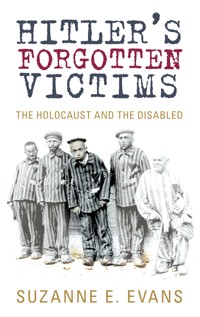
The appalling story of Hitler's murderous policies aimed at the disabled including tens of thousands of children killed by their doctors. Between 1939 and 1945 the Nazi regime systematically murdered thousands of adults and children with physical and mental disabilities as part of its 'euthanasia' policy. These programmes were designed to eliminate all people with disabilities who, according to Nazi ideology, threatened the health and purity of the German race. Hitler's Forgotten Victims explores the development and workings of this nightmarish process, a relatively neglected aspect of the Holocaust. Suzanne Evans's account draws on the rich historical record, as well as scores of exclusive interviews with disabled Holocaust survivors. It begins with a description of the Children's Killing Programme, in which tens of thousands of children with physical and mental disabilities were murdered by their doctors, usually by starvation or lethal injection. The book goes on to recount the AktionT4 programme, in which adults with disabilities were disposed of in six official centres, and the development of the Sterilisation Law, which allowed the forced sterilisation of at least half a million young adults with disabilities.
Sie lesen das E-Book in den Legimi-Apps auf:
Seitenzahl: 208
Veröffentlichungsjahr: 2016
Das E-Book (TTS) können Sie hören im Abo „Legimi Premium” in Legimi-Apps auf:
Ähnliche




















First published in the United Kingdom by Tempus Publishing 2007 This edition published 2010 Published by arrangement with Ivan R. Dee Publishers
The History Press The Mill, Brimscombe Port, Stroud, Gloucestershire, GL5 2QGwww.thehistorypress.co.uk
This ebook edition published in 2016
All rights reserved © 2004, 2007, 2010 Disability Rights Advocates
The right of Suzanne E. Evans to be identified as the Author of this work has been asserted in accordance with the Copyrights, Designs and Patents Act 1988.
This ebook is copyright material and must not be copied, reproduced, transferred, distributed, leased, licensed or publicly performed or used in any way except as specifically permitted in writing by the publishers, as allowed under the terms and conditions under which it was purchased or as strictly permitted by applicable copyright law. Any unauthorised distribution or use of this text may be a direct infringement of the author’s and publisher’s rights, and those responsible may be liable in law accordingly.
EPUB ISBN 978 0 7509 7978 8
Typesetting and origination by The History Press
eBook converted by Geethik Technologies
CONTENTS
Acknowledgements
Preface
Introduction
1 The Children’s Killing Programme
2 The T4 Adult Euthanasia Programme
3 Racial Hygiene, Nazi Doctors, and the Sterilisation Law
4 Perpetrators and Accomplices
5 After the Atrocities
6 The Need to Remember
Notes
List of Illustrations
ACKNOWLEDGEMENTS
Disability Rights Advocates (DRA) wishes to thank the United States Department of State for its encouragement and its financial support, without which the publication of this book would not have been possible.
Disability Rights Advocates is a nonprofit corporation run by people with disabilities for people with disabilities. With headquarters in Oakland, California, and an affiliate office in Budapest, Hungary, the organisation’s mission is to be an advocate for people with disabilities in order to ensure their full participation in all aspects of life locally, nationally, and internationally. DRA established the Disability Holocaust Project with several objectives: (1) to shatter the silence that has surrounded the fate of people with disabilities during the Holocaust; (2) to heighten public awareness about the current desperate plight of people with disabilities; (3) to utilise the shared history of the Holocaust as a vehicle for building greater co-operation between organisations of people with disabilities; and (4) to relate pre-Holocaust Nazi concepts to pernicious contemporary attitudes and enhance awareness of the existing stigmatisation of people with disabilities.
As part of the Disability Holocaust Project, DRA interviewed Holocaust survivors and historians, surveyed materials available in major archives, and analysed all of the information currently available on Nazi-era atrocities committed against people with disabilities. This book represents a documentation of the horrors inflicted upon people with disabilities during the Holocaust and of the central role that the extermination and exploitation of people with disabilities played in Hitler’s vision.
Disability Rights Advocates thanks the following individuals and organisations for their help with and support of the Disability Holocaust Project: Centre for Independent Living, Sofia, Bulgaria; De juRe Alapitvany, Budapest, Hungary; Disabled Persons International, Winnipeg, Manitoba; Equal Ability Limited, Yorkshire, England; German Council of Centres for Self-Determined Living of Disabled People–ILS e.V., Kassel, Germany; Legal Advocacy for the Defence of People with Disabilities, Tokyo, Japan; World Institute on Disability, Oakland, California; Berkeley Center for Independent Living, Berkeley, California; California Foundation for Independent Living Centers, Sacramento, California; Computer Technologies Program, Berkeley, California; Disability Rights Education and Defense Fund, Inc., Berkeley, California; Independent Living Resource Center of San Francisco, San Francisco, California; National Federation for the Blind, Baltimore, Maryland; Jewish Deaf Community Center, Los Angeles, California; Canadian Center on Disability Studies, Winnipeg, Canada; Avocado Press, Louisville, Kentucky; Prof. Adrianne Asch; Laura Eichhorn; Henry Enns; Dean Edwin Epstein; Rabbi A. Freehling; Prof. Henry Friedlander; Jonathan Friedman; Hugh Gregory Gallagher; Robin Gerber; Robert Gnaizda; Herbert Gunther; Prof. Hurst Hannum; Dr Zsofia Kalman; Deborah Kaplan; Karen Kaplowitz; Patricia Kirkpatrick; Bengt Lindqvist; Prof. Paul Longmore; Commissioner Paul Miller; Sybil Milton; Sandy O’Neill; Kapka Panayotova; Dr Adolf Ratzka; and Harilyn Rousso, among many others.
LAURENCE W. PARADIS
Executive Director
SID WOLINSKY
Director of Litigation
SHAWNA PARKS
International Co-ordinator
PREFACE
Dehumanisation of people with disabilities did not begin with the Holocaust. Nor did it end with the Nazis’ defeat. While the actions of Hitler’s Germany represent the most structured and far-reaching attempt to eradicate the class of people with disabilities, it reflects the treatment of disabled people throughout history. Unfortunately society has long segregated and marginalised people with disabilities, defining them as inherently nonproductive, or ‘useless eaters’ in Nazi parlance. The labelling of people with disabilities as burdensome, noncontributing members of society then often becomes a self-fulfilling prophecy. As occurs in many forms of discrimination, the person is labelled inferior and on the basis of that label is then restricted in education, work, and life opportunities. Rather than recognise the attitudinal basis of the cycle, society then imputes these characteristics as intrinsic to the person, rather than a result of societal barriers and discrimination.
How did this process during the Nazi era become so extreme that people with disabilities became, in the eyes of the perpetrators, so unworthy of life as to become the target of categorical destruction? Holocaust scholars estimate the total death toll from the Nazi disability killings to number in the hundreds of thousands of men, women, and children. What are the patterns of dehumanisation that generate such actions?
These questions are neither historical nor academic. The propaganda used by the Nazis to stigmatise people with disabilities, the kinds of attitudes that pervaded the German medical profession, and the shameful regard of disability as abhorrent, all continue to be part of a pervasive and lasting historical legacy. They directly implicate the status of people with disabilities throughout the world today. Millions of disabled men, women, and children continue to be subjected to the same kind of isolation, exclusion, and negative stereotypes that allowed the ‘euthanasia’ killings to occur.
Throughout the world, people with physical, sensory, and mental impairments now live largely without enforceable rights. They struggle to gain some measure of dignity in a world that is both figuratively and literally inaccessible to them. Negative attitudes create often insurmountable barriers to living independently, gaining an education or a job, and marrying and having children. Disability remains something to be hidden or fixed. At best, it becomes an object of charity or pity. Thus an analysis of the Nazi campaign against people with disabilities can inform our dialogue about contemporary issues and provide insight into the continued struggle of people with disabilities against segregation and marginalisation.
The notion of ‘imperfect’ human beings, and the unproductivity and unworthiness of people with disabilities, which played such an integral role in the Nazi programmes, also lies at the root of current policy issues. They form the basis of ongoing debates involving such highly charged topics as gene testing, assisted suicide, and the rationing of health care. They creep quietly into policy debates and judicial decisions concerning access to insurance and reasonable accommodation in the workplace. The discourse on each of these topics is fraught with assumptions about the inherent worth and potential contribution of a person with a disability. In a world where the deliberate medical killing of a newborn, solely because of the infant’s disability, is a matter of serious discussion as an ‘ethical’ issue among both academics and physicians, the Nazi experience cannot be ignored or forgotten. On the contrary, important insights and warnings can and should be drawn from the Holocaust, especially when scientists, academicians, or politicians begin to make judgements about the quality of human life.
It is against the background of this history, its shameful legacy and the unavoidable questions it generates, that we can begin to understand the nightmarish reality of the Nazi disability killings. This book, which presents a detailed history of those killings, contributes immeasurably to that understanding. Disability Rights Advocates is to be commended for producing this important work, which can help all of us understand and address the persecution and neglect of people with disabilities in all its forms. Forgotten Crimes is an important and very timely contribution to the debate on how the full enjoyment of human rights and fundamental freedom by people, who happen to live with a disability, should be obtained. Above all the book presents convincing evidence that the human rights of persons with disabilities must be more effectively promoted, protected, and monitored.
BENGT LINDQVIST
United Nations Special Rapporteur
on Disability 1994–2002
INTRODUCTION
Between 1939 and 1945 the Nazi regime systematically murdered hundreds of thousands of children and adults with disabilities as part of its so-called ‘euthanasia’ programmes. These programmes were designed to eliminate all persons with disabilities who, according to Nazi racialist ideology, threatened the health and purity of the German race. The first category of people the Nazis began exterminating as part of their quest to build a master ‘Aryan’ race was the so-called Ausschusskinderer, ‘garbage children’ or ‘committee children’, who had been born with certain supposedly hereditary disabilities. Pursuant to a decree issued by Hitler in the autumn of 1939, German doctors, nurses, health officials, and midwives were required to report, in exchange for a fee, all infants and children up to the age of three who showed signs of ‘mental retardation’ or physical deformity. Based on this information, a panel of ‘medical experts’ decided which of those children should live or die. The children selected for death were then transferred from their homes or home institutions to a pediatric killing ward. There, shortly after their arrival, they were killed by lethal injection or placed in so-called ‘hunger houses’ where they died slowly and painfully from malnutrition.
Ridding Germany of children born with disabilities was central to Hitler’s vision of the volkish (people’s) state. Because children represented Germany’s future, Hitler considered the elimination of all mentally and physically ‘defective’ children as a crucial step in his quest for racial purification. Scholars disagree on how many children with disabilities were exterminated by the Nazi regime, but most agree that the number falls somewhere between 5,000 and 25,000.
With the extermination of Germany’s disabled children under way, Hitler was asked by Dr Karl Brandt and Philipp Bouhler, the two men in charge of the children’s killing programme, to sign a decree that would expand the authority of German physicians to provide a ‘mercy death’ to all German adults suffering from ‘incurable’ diseases and disabilities. Shortly after Hitler signed this order in October 1939, Nazi officials began disseminating questionnaires and registration forms to all German hospitals, asylums, and institutions that cared for the chronically ill. The forms required hospital officials to report all patients who were suffering from conditions such as schizophrenia, epilepsy, paralysis, encephalitis, Huntington’s disease, and severe physical deformities. Based on the information provided on these forms, Nazi doctors decided, pursuant to procedures similar to those used in the children’s killing programme, which patients should be killed. The men and women selected for death were transported to one of six official ‘euthanasia’ centres, where they were gassed to death in chambers built to resemble large shower or ‘therapeutic inhaling’ rooms. Between January 1940 and August 1941, at least 275,000 Germans with disabilities were exterminated as part of the Nazi regime’s ‘Aktion T4’ euthanasia programme, so named for the location of the programme’s central offices at Tiergartenstrasse No. 4 in Berlin.
Despite attempts to disguise the true purpose of the T4 programme, the secrecy surrounding the killings eventually broke down. Some staff members spoke of the killings while drinking in local pubs after ‘work’; women’s hairpins turned up in urns sent to the relatives of murdered male victims; or the cause of a victim’s death was listed as appendicitis when the victim’s appendix had previously been removed. By the summer of 1941 concerned parents and priests throughout Germany began publicly protesting the killings. On 3 August 1941, for example, Bishop Clemens August Graf von Galen delivered a sermon to his parishioners in which he detailed everything he knew about the murders. Around the same time, grieving parents began turning to the courts or placing public notices in local newspapers about the sudden and unexpected deaths of their children who had died from mysterious ailments while under the ‘care’ of Nazi physicians.
In response to such public criticism and concern Hitler ordered, on 24 August 1941, the immediate halt of all ‘mercy killings’ at the six official euthanasia centres. Despite this official stop order, the Nazi regime continued exterminating people with disabilities in other regions and by other means. During this period of decentralised mass killings, sometimes referred to as the period of ‘wild euthanasia’, Nazi doctors decided, according to their own arbitrary standards, which patients should live or die. Indiscriminate mass murder thus became part of general hospital routine as hundreds of thousands of patients with disabilities in Germany, Austria, and the occupied territories were shot, burned, frozen, starved, tortured, or poisoned to death.
Meanwhile, in the wake of Hitler’s stop order, a new killing programme code-named Aktion 14f13 was established in order to ‘weed out’ from the overcrowded Nazi concentration camps all ‘asocial’ prisoners who were too sick or disabled to work. After brief medical exams, these prisoners were transferred to nearby killing centres where they were gassed to death simply because they were unable to work.
But even before the T4 and Aktion 14f13 programmes began, Nazi officials had begun killing psychiatric patients in the Prussian provinces, occupied Poland, and the former Soviet Union. Between 29 September and 1 November 1939, for example, special Einsatzgruppen squads shot 3,700 patients in asylums in the region of Bromberg, Poland. And between December 1939 and January 1940, special SS units gassed 1,558 patients from Polish asylums in specially adapted gas vans in order to make room for anticipated wartime casualties and military barracks. By 1945 as many as 750,000 people with disabilities had been murdered by the Nazi regime.
In addition to the mass slaughter, the Nazi regime also forcibly sterilised nearly half a million Germans with disabilities pursuant to the Law for the Prevention of Offspring with Hereditary Diseases. Enacted by the German government in July 1933, the law called for the compulsory sterilisation of all persons suffering from supposedly ‘hereditary’ diseases, such as congenital feeblemindedness, schizophrenia, manic-depressive psychosis, hereditary epilepsy, Huntington’s chorea, hereditary blindness, hereditary deafness, and physical deformities. Thousands of young German men and women died as a result of botched sterilisation procedures and experiments involving the injection of corrosive chemicals into their reproductive tracts.
After the war, disabled victims were not recognised by government or legal authorities as persons who had been persecuted by the Nazi regime. Survivors of the euthanasia and sterilisation programmes received no restitution for time spent in the killing wards or for having been forcibly sterilised. Although the sterilisation law had been declared invalid by the Allies, the postwar German state did not recognise sterilisation under the Nazi era as racial persecution, and postwar German courts consistently held that forced sterilisation under the law had followed legally proper procedures. Disabled persons challenging such rulings consistently lost their cases in court. The appeal of a sterilised deaf person, for example, was denied in 1950 after two court-appointed physicians certified that the original finding of congenital deafness had been correct and that his sterilisation was therefore legally permissible under the then-existing law. Similarly, in 1964, the appeal for restitution from another survivor who had been sterilised during the Nazi era was denied on the grounds that since he was deaf, his sterilisation did not constitute Nazi persecution. To this day the German state has not fully recognised or compensated disabled persons for the atrocities committed against them by the Nazi regime. To this day, few people are aware that such atrocities happened.1
Although the crimes described in this book were unique to Nazi Germany, inhumane and degrading treatment of people with disabilities continues to be endemic in contemporary society. For example, Greek authorities recently ignored a concentration camp for the insane on the island of Leros until several Western European television stations made a public issue of it. And in Britain, patients in secure hospitals such as Ashworth or Rampton have been regularly abused, particularly if they are of Afro-Caribbean origin. Recent debates over the ideas of the moral philosopher Peter Singer, who maintains that ‘killing … a chimpanzee is worse than the killing of a gravely defective human’ serve as a chilling reminder that the very same ideas and attitudes that led to the Holocaust are still prevalent in the world today.2
Remembrance of the mass slaughter of people with disabilities during the Holocaust is therefore crucial to an understanding of both (1) how and why people with disabilities continue to be marginalised in contemporary society, and (2) the attitudes and moral failures that allowed the Holocaust to happen. Until a full account of Nazi atrocities is acknowledged and remembered, we all remain at risk.
1
THE CHILDREN’S KILLING PROGRAMME
The right of personal freedom recedes before the duty to preserve the race. There must be no half measures. It is a half measure to let incurably sick people steadily contaminate the remaining healthy ones. This is in keeping with the humanitarianism which, to avoid hurting one individual, lets a hundred others perish. If necessary, the incurably sick will be pitilessly segregated – a barbaric measure for the unfortunate who is struck by it, but a blessing for his fellow men and posterity.
Adolf Hitler (1923)
Sometime in the fall of 1938, a baby was born to the Knauer family near Leipzig, Germany, a tiny village about two hundred kilometres south-west of Berlin. But what should have been a joyous occasion for the family proved to be a source of sadness and despair: the infant had been born blind and deformed. After a brief examination, Leipzig physicians diagnosed the infant as an idiot.1
Several days later, the baby’s father met with Dr Werner Catel, director of the Leipzig University Children’s Clinic, who agreed to admit the infant to the clinic. Catel later claimed that the father had requested that the clinic’s physicians kill the infant, but that he had refused to do so because ‘killing children was against the law.’ The father then reportedly appealed directly to Adolf Hitler, requesting that he bring about the child’s death. After reading the appeal, Hitler ordered Karl Brandt, his personal physician, to meet with the Leipzig physicians to determine whether the information presented in the petition was accurate. ‘If the facts given by the father were correct,’ Brandt later testified, ‘I was to inform the physicians in [Hitler’s] name that they could carry out euthanasia.’ Brandt was also authorised to inform the physicians that any legal proceedings that might be brought against them for killing the child would be quashed by Hitler himself. After meeting with the physicians and briefly examining the child, Brandt confirmed the original diagnosis. Shortly thereafter, one of the Leipzig physicians ‘euthanised’ the child, thus setting the stage for what ultimately became the Nazi regime’s children’s killing programme, in which thousands of infants and children with disabilities were brutally and systematically killed.2
At the Nuremberg trials, Karl Brandt described what happened to the Knauer baby:
BRANDT: The father of a deformed child approached the Führer and asked that this child or creature should be killed. Hitler turned this matter over to me and told me to go to Leipzig immediately … to confirm the fact on the spot. It was a child, who had been born blind, and an idiot – at least it seemed to be an idiot – and it lacked one leg and part of an arm.
QUESTION: Witness, you were speaking about the Leipzig affair, about this deformed child. What did Hitler order you to do?
BRANDT: He ordered me to talk to the physicians who were looking after the child to find out whether the statements of the father were true. If they were correct, then I was to inform the physicians in his name that they could carry out the euthanasia. The important thing was that the parents should not feel themselves incriminated at some later date as a result of this euthanasia that the parents should not have the impression that they themselves were responsible for the death of the child. I was further ordered to state that if these physicians should become involved in some legal proceedings because of this measure, these proceedings would be quashed by order of Hitler.
QUESTION: What did the doctors who were involved say?
BRANDT: The doctors were of the opinion that there was no justification for keeping such a child alive.3
Werner Catel later testified that he had discussed the Knauer case with the child’s father but that he (Catel) left for a holiday soon after the infant was admitted to the clinic. When he returned, Catel was reportedly informed that one of his subordinates, a Dr Kohl, had given the child a lethal injection while the nurses were taking a coffee break. Although both Brandt and Catel tried to evade responsibility for the child’s death, both men stressed the importance of the Knauer case to the beginning of the children’s killing programme.4
While some historians argue that the Nazi regime’s euthanasia programmes developed on an informal, ad hoc basis, this view conflicts with existing testimony and evidence. For example, Karl Brandt testified at Nuremberg that in 1935 Hitler told Gerhard Wagner, a prominent German physician, that ‘if war should break out, he would take up the euthanasia question and implement it … because the Führer was of the opinion that such a problem would be easier and smoother to carry out in wartime’, and because ‘the public resistance which one would expect from the churches would not play such a prominent role amidst the events of wartime as it otherwise would.’ Brandt also recalled a meeting with Hitler at Obersalzberg shortly after the conclusion of the Polish campaign at which Hitler stated that he ‘wanted to bring about a definite solution in the euthanasia question.’ Hitler, Brandt recalled, ‘gave me general directives on how he imagined it, and the fundamentals were that insane persons who were in such a condition that they could no longer take any conscious part in life were to be given relief through death. General instructions followed.’5
Other sources also argue against the ad hoc development of the euthanasia programmes. In the summer of 1939, Hitler’s physician, Theo Morel, reviewed everything that had been written since the nineteenth century on the subject of euthanasia. Morel then used those materials to write a lengthy memorandum about the need for a law authorising the ‘Destruction of Life Unworthy of Life.’ Among other measures, Morel proposed killing people who suffered from congenital mental or physical ‘malformations’ because such ‘creatures’ required costly long-term care, aroused ‘horror’ in other people, and represented the ‘the lowest animal level.’ Morel also stressed the economic savings that would result from such a law:
As Morel was preparing his memorandum, a Ministry of Justice Commission on the Reform of the Criminal Code drafted a similar law sanctioning the ‘mercy killing’ of people suffering from incurable diseases. The law read, in part:
Clause 1. Whoever is suffering from an incurable or terminal illness which is a major burden to him or others, can request mercy killing by a doctor, provided that it is his express wish and has the approval of a specially empowered doctor.
Clause 2. The life of a person who because of incurable mental illness requires permanent institutionalisation and is not able to sustain an independent existence, may be prematurely terminated by medical measures in a painless and covert manner.7
Inspired by these ideas, the Reich Committee for the Scientific Registration of Severe Hereditary Ailments issued a decree on 18 August 1939, that called for the compulsory registration of all ‘malformed’ newborn children. In return for a small payment, German doctors and midwives were obliged to report all children under their care who had been born with Down’s syndrome, microcephaly, hydroencephaly, paralysis, congenital deafness, blindness, and other physical and neurological disorders. These reports were to be returned to the Reich Committee central offices in Berlin where they would be reviewed by a panel of three ‘medical experts.’ Without seeing or examining the children whose lives were at stake, these so-called experts reviewed the registration forms, marking them with a plus sign if they believed the child should be killed, a minus sign if they believed the child should live, and a question mark in those rare borderline cases that needed further consideration. Based on these recommendations, the Reich Committee instructed local public health officials to arrange for the transfer of the children to nearby institutions that were serving as pediatric killing wards.8




