



1,99 €
Mehr erfahren.
- Herausgeber: DigiCat
- Kategorie: Lebensstil
- Sprache: Englisch
In "How I Found Livingstone," Henry M. Stanley recounts his audacious journey into the heart of Africa in search of the legendary missionary and explorer David Livingstone, who had become silent amidst his explorations. The narrative is characterized by vivid descriptions and immersive storytelling that capture the treacherous landscapes, the vibrant cultures, and the harrowing challenges Stanley faced. Written in the late 19th century, the book reflects the period's imperialist attitudes, while simultaneously illuminating the complexities of cross-cultural encounters and the human spirit's resilience. Henry M. Stanley, a Welsh-American journalist and explorer, was driven by a passion for adventure and a commitment to journalism, shaped by a life marked by hardship and perseverance. His experiences as a war correspondent during the American Civil War and his subsequent travels imbued him with both a fervent curiosity about Africa and a sense of responsibility to bring its stories to a wider audience. Stanley's quest to find Livingstone stemmed not only from a personal ambition but also from a deep-rooted desire to chronicle the unknown. This compelling account is essential reading for those interested in exploration, imperial history, and the intricate tapestry of human experiences. Stanley's vivid prose and gripping tales will appeal to readers drawn to adventure narratives, whilst providing critical insights into 19th-century perceptions of Africa. In this enriched edition, we have carefully created added value for your reading experience: - A succinct Introduction situates the work's timeless appeal and themes. - The Synopsis outlines the central plot, highlighting key developments without spoiling critical twists. - A detailed Historical Context immerses you in the era's events and influences that shaped the writing. - An Author Biography reveals milestones in the author's life, illuminating the personal insights behind the text. - A thorough Analysis dissects symbols, motifs, and character arcs to unearth underlying meanings. - Reflection questions prompt you to engage personally with the work's messages, connecting them to modern life. - Hand‐picked Memorable Quotes shine a spotlight on moments of literary brilliance. - Interactive footnotes clarify unusual references, historical allusions, and archaic phrases for an effortless, more informed read.
Das E-Book können Sie in Legimi-Apps oder einer beliebigen App lesen, die das folgende Format unterstützen:
Veröffentlichungsjahr: 2022
Ähnliche






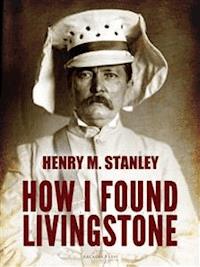









How I Found Livingstone
Table of Contents
Introduction
Into the heart of a continent, one reporter ventures to bridge a silence that has gripped the world. That tension—between absence and discovery, rumor and verification—drives the drama of How I Found Livingstone, where the unknown is not only a mapless interior but a public imagination starved for certainty. In this story, distance is measured as much in doubts and dispatches as in miles. The stakes are human and historical: a single meeting promised to recalibrate global attention. The journey, however, is not merely geographical; it is an expedition through the disciplines of observation, endurance, and narrative craft.
Henry M. Stanley, a journalist associated with the New York Herald, authored this account, first published in 1872 after his return from Central Africa. The book narrates his expedition inland from the East African coast to locate the Scottish missionary and explorer Dr. David Livingstone, whose prolonged lack of contact had stirred international concern. Composed in the immediate aftermath of the journey, Stanley’s narrative fuses the urgency of reportage with the structure of a sustained travel chronicle. Without revealing the particulars of the encounter, the book presents the search itself as the central arc, balancing practical detail with mounting suspense.
The work has long held classic status because it crystallizes a defining nineteenth-century moment: the convergence of exploration and mass media. It brought a wide readership into close proximity with the logistics, hazards, and hopes of a high-stakes quest. The book’s literary impact stems from the clarity of its scene-setting, the cadence of its unfolding route, and the disciplined control of tension from dispatch to dispatch. Enduring themes—persistence under uncertainty, the ethics of leadership, and the press’s role in shaping public knowledge—have given the narrative a life beyond its immediate news value, ensuring its continued reading and discussion.
Stanley’s style exhibits the immediacy of a correspondent and the patience of a field observer. He records the scaffolding of a long march—supply lists, negotiations, navigation—while keeping the story’s emotion calibrated to a journalist’s restraint. The first-person perspective admits the fatigue and calculation of each choice without turning the account into private confession. The result is a prose that feels paced by footfall and measured by compass bearings. Readers experience not only grand vistas but also the steady accumulation of decisions that make movement possible, a rhythm that lends the narrative both credibility and momentum.
At its core, the book explores how information is made under pressure. To reach a man beyond correspondence and rumor requires building a pathway of facts: interviewing, mapping, bargaining, recording. Stanley shows how knowledge emerges from a chain of small verifications—weather, tracks, reports from guides—assembled with care. The story dramatizes doubt as a working condition rather than an obstacle, and depicts perseverance as an intellectual discipline as much as a physical one. In this way, it invites reflection on the practice of truth-seeking when the terrain is hostile, the signals are faint, and the margin for error is thin.
The historical context is essential. Published in the Victorian era, the narrative reflects a period of public fascination with the African interior and an expanding transatlantic press. Stanley’s commission from the New York Herald aligns the expedition with the ambitions and resources of modern journalism. The caravan route from the East African coast into the interior followed commercial and cultural pathways that predated European reporters, and the book acknowledges reliance on local knowledge. The press, the trading world, and scientific curiosity intersect here, forming a backdrop that gives the story both urgency and a distinctly nineteenth-century texture.
How I Found Livingstone also mapped a new relationship between the reporter and the public: the correspondent as protagonist. Readers followed a named figure through verifiable stages of a mission, connecting the authority of observation to the charisma of the traveler. This model proved durable. It validated a mode of narrative non-fiction in which careful description supports suspense, and in which the writer’s presence is a tool rather than a distraction. The book thus helped set expectations for later long-form reporting in remote or volatile settings, where the path to facts is itself part of the story.
The influence of Stanley’s account extends across adventure writing and travel reportage. Later authors in these traditions would adopt its disciplined pacing, granular attention to logistics, and careful use of cliff-edge uncertainty to move a narrative forward. Even without naming direct lines of inheritance, one can see its template: a quest framed by limited information, a measured unveiling of landscape and witness, and a restrained yet propulsive first-person voice. By demonstrating that reportage could carry the architecture of a quest narrative, the book broadened the palette of non-fiction storytelling for generations.
Yet the narrative is anchored in its time, and modern readers can interrogate its perspectives. The book reflects nineteenth-century assumptions about empire, race, and commerce that require critical attention. Its portraits of people and places, while often detailed, arise from a traveler’s standpoint shaped by contemporary institutions and audiences. Recognizing this context does not diminish the work’s significance; it sharpens it. The text becomes both a record of a particular expedition and a document of the intellectual world that made the expedition legible, revealing the frameworks through which information was gathered and interpreted.
As literature of experience, the book excels in orchestrating scale. It moves from the intimate to the panoramic: the weight of a single package against the sweep of a shoreline, the tone of a negotiation against the pressure of a storm season. Stanley’s restraint produces genuine suspense without melodrama, and his methodical descriptions allow readers to aggregate meaning as a caravan does distance—step by step. In doing so, the narrative demonstrates how cumulative detail can yield a panoramic understanding, and how patience in storytelling can be as gripping as speed.
For first-time readers, it helps to see the book not only as a historical report but as a study in narrative architecture. The initial problem is finite and clear—reach a man beyond the horizon of news—while the path remains elastic, determined by weather, testimony, and health. Stanley’s choices show how a narrative can maintain clarity while honoring uncertainty. The absence of sensationalism serves the story: the stakes are sufficiently high to make restraint compelling. That balance—between singular objective and fluid route—continues to make the work instructive to journalists and engaging to general readers.
Today, How I Found Livingstone retains its appeal because it speaks to ongoing questions: How do we verify truth when sources are distant? What responsibilities attend the gathering of knowledge across cultural lines? In an era of global reporting, humanitarian missions, and scientific fieldwork, the challenges of logistics, leadership, and ethical representation endure. Stanley’s account remains a touchstone for narratives that transform hard travel into clear understanding. Its themes of perseverance, disciplined observation, and respect for evidence grant it lasting relevance, while its measured drama preserves the timeless satisfaction of a quest brought into focus.
Synopsis
How I Found Livingstone by Henry M. Stanley is a first-person narrative of a journalistic expedition undertaken to locate the missionary-explorer Dr. David Livingstone, who had fallen out of regular contact during travels in Central Africa. Commissioned by the New York Herald, Stanley sets out to verify Livingstone’s condition and, if possible, to bring news back to the public. The book traces the journey from initial preparations on the East African coast through difficult inland travel, culminating in an encounter that confirms the mission’s purpose. Along the way, Stanley blends logistical detail, geographic description, and observations of trade networks and societies encountered en route.
The narrative opens in Zanzibar, where Stanley organizes a caravan capable of penetrating far into the interior. He secures interpreters, guides, porters, and armed escorts, and acquires trade goods essential for passage, provisioning, and negotiation. This phase emphasizes the practical demands of long-distance travel in the era: arranging permissions, establishing credit, and balancing cost against endurance. Bagamoyo on the mainland serves as the initial springboard, from which the caravan departs with considerable ceremony but uncertain prospects. Stanley presents the enterprise as a complex coordination problem, with diverse participants, overlapping interests, and a constant need to adjust plans to local conditions and available information.
Once inland, the book turns to the mechanics of caravan travel: route selection, pace, rationing, and the difficult calculus of carrying capacity. Stanley relates the routine crises that test leadership, including illness, desertion, and disputes over pay or loads. Negotiations at village gates, demands for tolls, and occasional threats require a mix of diplomacy and resolve. Terrain and climate magnify these challenges, with stretches of heavy rain alternating with heat and dust. Rivers must be crossed, swamps skirted, and forest paths widened. Stanley’s account underscores how progress depends on accommodation with local authorities and on the morale of a workforce drawn from many backgrounds.
As the caravan reaches the drier plateaus toward Ugogo and presses on toward Unyamwezi, the search becomes an exercise in information management as much as movement. Stanley collects rumors about Livingstone’s whereabouts, sifting contradictory reports from travelers, traders, and headmen. Health concerns grow more acute, with fevers and fatigue disrupting schedules and straining supplies. He notes market towns and established caravan routes, reflecting an economy linked to the coast yet shaped by regional politics. The narrative carefully records stages, halts, and bargaining sessions, making clear that timing, water, and food are as decisive as courage in determining whether the expedition can sustain its momentum.
The midpoint of the journey centers on Tabora, a major inland hub also known as Kazeh, where coastal-linked traders maintain depots and influence. Stanley arrives amid instability caused by conflict involving Mirambo, a prominent regional leader, and trading interests allied with the coast. This unsettled situation threatens to sever routes, inflate costs, and expose caravans to attack. The book details defensive arrangements, discussions over escorts, and decisions about whether to wait, advance, or detour. Through these chapters, Stanley highlights the interdependence of exploration, commerce, and local power struggles, showing how broader events shape the possibilities for safe passage.
Eventually, the expedition threads a path beyond contested zones and regains momentum toward Lake Tanganyika. Stanley emphasizes renewed logistical focus: rechecking supplies, synchronizing marches, and choosing guides who know the lakeward tracks. The caravan navigates forests, rises, and river crossings before reaching Ujiji, a renowned lakeside market town. Here the long pursuit culminates in the encounter that gives the book its title. The meeting fulfills the journalistic brief to verify Livingstone’s situation, while also allowing an exchange of supplies and news. Stanley presents the moment with restraint, focusing on confirmation and relief rather than dramatization, and quickly turns to practical next steps.
In the chapters that follow, Stanley recounts collaboration with Livingstone to clarify aspects of regional geography. The narrative records short expeditions on or along Lake Tanganyika, measurements of distances, and conversations with residents and traders whose knowledge of routes and watersheds supplements direct observation. Without advancing sweeping claims, the account captures contemporary questions about the lake’s outlets and the relation of rivers and basins in Central Africa. Stanley’s method is to combine personal reconnaissance, cautious mapping, and the collection of local testimony, while noting uncertainties and the limits of what could be established during constrained forays from a temporary base.
As plans coalesce for onward movements and eventual return, Stanley reflects on documentation and duty to his sponsors. He compiles journals, observations, and dispatches that will inform readers at home, while acknowledging the daily demands that make writing and measuring difficult in the field. The book’s descriptive passages attend to social customs, trade practices, and environmental conditions, yet remain framed by the immediate needs of travel: maintaining discipline, treating illness, safeguarding stores, and negotiating safe passage. Throughout, Stanley credits the indispensable labor and knowledge of his African companions, even as his interpretations remain anchored in the perspectives of his time.
The work’s enduring significance lies in how it connects public curiosity with concrete geographic and logistical detail. How I Found Livingstone captures a moment when newspaper patronage intersected with exploration, and when access to inland routes depended on relationships with regional powers. Rather than resting on a final revelation, the book emphasizes the cumulative labor of preparation, negotiation, and observation that makes such journeys possible. Its broader message concerns perseverance amid uncertainty and the value of local expertise in opening paths across unfamiliar terrain, offering a record that shaped later understandings of Central African travel and exchange.
Historical Context
How I Found Livingstone is set in the early 1870s, when East and Central Africa were connected to the global economy through coastal hubs yet remained largely unmapped in European cartography. The narrative unfolds around 1871 in what is now Tanzania and the eastern Congo region, framed by the Omani-ruled Sultanate of Zanzibar, British consular influence, and the caravan-based inland trade. Dominant institutions included missionary societies, the Royal Geographical Society, and expanding newspaper empires. This was an era of exploration as a public spectacle, scientific inquiry, and imperial ambition, with religious, commercial, and philanthropic motives overlapping in complex and often contradictory ways.
Zanzibar functioned as the key entrepôt for the mainland. Governed by the Omani sultans, its ports handled ivory, cloves, and enslaved people, while Indian merchant networks extended credit for caravans. By 1870–1871 Sultan Barghash bin Said sat atop a polity dependent on plantation slavery and on Arab–Swahili trading houses that organized long-distance expeditions. The British maintained a strong consular presence, notably through John Kirk, combining diplomacy, science, and anti-slavery activism. Stanley’s expedition begins and ends within this coastal political economy, relying on local brokers, customs, and permissions that reflected Zanzibar’s hybrid Arab, African, and South Asian commercial order.
From the coast, caravans departed from places like Bagamoyo into the interior toward Unyamwezi, Tabora, and ultimately Ujiji on Lake Tanganyika. The caravan system relied on hundreds of porters, armed guards, and guides, with payments in cloth, beads, and brass wire functioning as currency. Routes were maintained by negotiation with chiefs, the payment of tribute, and arrangements with Arab–Swahili traders already embedded inland. Stanley’s account mirrors this logistical reality: his progress depended less on European technology than on adopting East African practices, hiring experienced caravan leaders, and working through existing supply chains that sustained the ivory and slave trades as well as legitimate commerce.
The search for David Livingstone drew on the missionary-explorer ideal that had made him a Victorian celebrity. Livingstone’s mid-century journeys from the Kalahari to the Zambezi, followed by the British government-backed Zambezi Expedition (1858–1864), linked evangelical goals with geographical discovery. After setting out again in 1866 to investigate the river systems of Central Africa and the sources feeding the Nile, he fell largely out of contact. His apparent disappearance intensified public fascination. Stanley’s mission, undertaken as a journalist rather than a government agent, showcases how the heroic image of Livingstone mobilized international attention, funding, and practical support.
Behind the drama lay a scientific controversy. In the late 1850s and early 1860s Richard Burton and John Hanning Speke had brought Lakes Tanganyika and Victoria to European knowledge, with Speke asserting Victoria as the Nile’s principal source. Debate persisted over the hydrology of the region, particularly the course of the Lualaba River. Livingstone suspected connections that were still unproven. Stanley’s book repeatedly engages this puzzle, reporting observations and itineraries that fed into broader cartographic and hydrographic debates. The work reflects how nineteenth-century exploration fused narrative adventure with data collection, as latitude, longitude, and river flow were matters of heated, public dispute.
Equally central was the rise of mass-circulation journalism. Commissioned by James Gordon Bennett Jr. of the New York Herald, Stanley’s expedition exemplified a new model in which the press financed global reporting to secure readers and prestige. The transatlantic telegraph (successfully operating after 1866) and the 1869 opening of the Suez Canal accelerated news and travel between Europe, America, and the Indian Ocean world. Although messages from the African interior moved slowly, the Herald leveraged steamships and telegraph lines from coastal ports to turn exploration into headline news. Stanley’s later book consolidated and elaborated those field dispatches for a broader audience.
Technological developments shaped daily survival and record-keeping. Quinine was used to mitigate malaria, though disease remained deadly. Breech-loading rifles and revolvers altered the balance of force in encounters, yet supply chains for ammunition and food were fragile. Compasses, sextants, and chronometers enabled approximate mapping, while notebooks, sketches, and collected vocabularies documented observations. Stanley’s narrative shows reliance on porters, local guides, and river craft in addition to imported kit. The contrast between European instruments and African logistical knowledge underscores how exploration hinged on practical adaptation as much as on technology, with illness, injury, and attrition constant threats.
Regional warfare complicated movement. In 1871 the Nyamwezi leader Mirambo fought Arab–Swahili traders in a conflict that disrupted routes around Tabora. This fighting—rooted in control over trade corridors and political ascendancy—blocked caravan traffic, increased prices, and forced detours and delays. Stanley’s journey reflects the need to navigate shifting alliances, circumvent blockades, and balance tribute with security. The episode reveals that interior polities were dynamic actors with their own military strategies and commercial interests, and that European travelers, whatever their aims, moved within African conflicts they neither controlled nor fully understood.
The intertwined trades in ivory and enslaved people dominated the economy that Stanley traversed. Caravans transported tusks to the coast and often carried captives, feeding markets on Zanzibar and beyond. British abolitionism had ended slavery within the British Empire decades earlier, and the Royal Navy patrolled the Indian Ocean, yet the East African slave trade persisted into the early 1870s. Diplomatic pressure would culminate in a Zanzibar treaty to curtail exports shortly thereafter. Stanley’s book offers firsthand depictions of slave caravans and markets, condemning brutality while still depending on the same commercial circuits and intermediaries that profited from coerced labor.
Cultural encounters in the narrative occurred within the Swahili sphere that linked coast and interior. Kiswahili functioned as a lingua franca; Islam structured daily life in many caravan towns; and Arab–African households mediated exchange, hospitality, and justice. Stanley’s account records etiquette in audiences, bargaining practices, and the role of interpreters, while also revealing the racial and civilizational hierarchies common in European writing of the era. The text thus documents real interactions—sharing food, negotiating passage, exchanging gifts—yet is framed by Victorian assumptions that shaped how African societies were described and morally evaluated for readers at home.
Missionary endeavors formed another facet of this world. The London Missionary Society had first sent Livingstone, and Anglican and other missions—such as the Universities’ Mission to Central Africa—established posts from the coast inland, often after suffering severe losses to disease and conflict. Their aims combined evangelization, education, and anti-slavery activism. Livingstone’s rhetoric of “commerce and Christianity” helped mobilize British support for opening the interior through lawful trade. Stanley’s narrative, focused on finding the explorer, nevertheless echoes this missionary ethos, presenting a moral geography in which condemning slavery and extolling progress coexisted with admiration for African resilience and frequent cultural misunderstandings.
Geographical knowledge in 1871 remained provisional. Many lake shores and river courses were unmapped, and the relationships among the great equatorial lakes were debated. Stanley’s observations around Lake Tanganyika, his recording of settlements, and his estimates of distances contributed data later compared with other travelers’ reports. The book exemplifies how explorers compiled routes, bearings, and place-names from a mosaic of measurements and local testimony. Subsequent expeditions would refine, correct, or challenge these findings, but Stanley’s volume helped standardize a toponymy and a set of itineraries that cartographers and the Royal Geographical Society incorporated into contemporary maps.
Daily governance in the interior did not resemble European state structures. Political authority rested with chiefs and councils, and commercial nodes like Tabora blended African leadership with Arab–Swahili merchant influence. Passage required formal greetings, gifts, and sometimes oaths of friendship; disputes were settled through mediation as much as by force. Stanley’s reliance on letters of introduction from Zanzibar officials and on the patronage of powerful caravan leaders illustrates how explorers traveled under borrowed authority. The book highlights these protocols—audiences, palavers, arbitration—emphasizing that diplomacy, not just endurance, determined success along the routes to Tanganyika.
International diplomacy framed the expedition at the coast. British consuls cultivated relations with the sultan and pressured for anti-slavery reforms, while serving scientific and humanitarian agendas. American commercial interests existed but were limited; the United States was in Reconstruction, and news value rather than territorial ambition drove the Herald’s investment. The sultan’s government, seeking revenue and stability, regulated customs and granted permissions. Stanley’s preparations, hiring, and outfitting depended on this matrix of consular influence, local law, and merchant capital, demonstrating an era of “informal empire” in which European power operated through treaties, finance, and publicity more than formal annexation.
Events following the journey reshaped how the book was read. Livingstone died in 1873 in the interior, intensifying his stature as a martyr to science and philanthropy. Stanley soon returned to Africa (1874–1877) and traced the Congo River to the Atlantic, resolving the Lualaba question and later aiding King Leopold II’s designs that culminated in the Congo Free State after the Berlin Conference (1884–1885). These later developments were not foreordained by the 1871 expedition, yet the earlier narrative helped generate the public enthusiasm and logistical knowledge that made large-scale penetration of Central Africa by European powers seem feasible.
Publication and reception embedded the work in contemporary print culture. Issued in 1872, the book combined travel narrative, geographic description, and moral commentary, accompanied by maps and illustrations familiar to readers of exploration literature. Stanley lectured, and extracts circulated widely. Admirers praised the endurance and the humanitarian tone; detractors questioned elements of the story, including the precise wording of the famous greeting and aspects of his conduct. Nevertheless, the volume fixed key scenes and places in the public imagination and supplied details that scholars, missionaries, and commercial agents mined for practical guidance.
As a historical document, How I Found Livingstone mirrors dominant nineteenth-century themes: faith in exploration as science; the press as global impresario; abolitionist sentiment harnessed to commercial expansion; and reliance on African systems even as European writers claimed civilizational superiority. The book condemns slave raiding and celebrates individual perseverance, yet it also normalizes power disparities and advances a geography that later facilitated imperial ventures. Its pages register the voices, goods, and routes that made East–Central Africa legible to European and American audiences, functioning both as an archive of encounters and as a text that helped shape the age it describes.
Author Biography
Henry Morton Stanley (1841–1904) was a Welsh-born journalist and explorer whose best-known books and dispatches shaped nineteenth-century understandings of central Africa. Writing in the high Victorian era, he combined newspaper reportage with expeditionary narrative, presenting exploration as a drama of logistics, geography, and endurance. His public profile grew from widely read accounts that mapped rivers and lakes while framing Africa for European audiences eager for news, commerce, and mission. Celebrated for energy and organization yet criticized for harsh methods and imperial assumptions, he remains a pivotal, contested figure whose works still inform debates about exploration, media, and the colonial project that followed in his wake.
Stanley’s early life in Wales involved limited formal schooling before he migrated to the United States as a young man, where he developed as a self-taught writer. His practical education came through the press: he learned the craft of concise, vivid reporting in American newspapers and later at the New York Herald. Service during the American Civil War, followed by assignments as a roving correspondent, honed his resilience and appetite for long-distance reporting. Literary influences included the period’s travel literature and the example of missionary-explorer narratives, especially the public esteem for David Livingstone, which provided both a model of purpose and a template for framing distant regions for readers at home.
His breakthrough came with a Herald commission to locate David Livingstone, who had fallen out of contact while pursuing research in east-central Africa. Stanley’s overland journey culminated in a meeting at Ujiji on Lake Tanganyika in 1871, an encounter memorialized by the oft-quoted greeting, “Dr. Livingstone, I presume?” Whether or not the phrase was spoken exactly as printed, the story and its aftermath established Stanley’s global reputation. He recounted the search in How I Found Livingstone (1872), a brisk, first-person narrative that fused diary detail with telegraphic pacing. The book’s commercial success confirmed his authority as both explorer and stylist of expeditionary journalism.
Seeking to complete geographic puzzles left by earlier travelers, Stanley led a major expedition across central Africa from the mid-1870s. He surveyed the great lakes, probed river systems, and followed the Lualaba westward to establish its continuity with the Congo River toward the Atlantic. These achievements, documented in Through the Dark Continent (1878), offered maps, route data, and ethnographic observation intended for both general readers and scientific audiences. While admired for precision and persistence, his methods—including reliance on armed escorts and stringent discipline—drew criticism even in his own day, foreshadowing later reappraisals of the human costs embedded in such feats of exploration.
In the late 1870s and early 1880s, Stanley undertook work in the Congo Basin that facilitated a network of stations and transport routes later consolidated as the Congo Free State under European control. He defended these efforts as advancing commerce and communication, arguments he presented in The Congo and the Founding of Its Free State (1885). Subsequent histories have emphasized how these foundations enabled an extractive regime characterized by coercion and dispossession. Stanley’s writings from this period thus occupy an uneasy place, offering logistical and geographic detail while embodying the era’s “civilizing” rhetoric that contemporary scholarship interrogates for its assumptions and consequences.
Stanley’s last major African journey, the Emin Pasha Relief Expedition (1887–1889), sought to reach an isolated Ottoman-Egyptian official in equatorial Africa. The expedition endured severe losses, logistical breakdowns, and public controversy, particularly over conduct in the Ituri forest and treatment of African communities. He chronicled the ordeal in In Darkest Africa (1890), combining defense of his decisions with granular route descriptions and river measurements. He also published My Early Travels and Adventures in America and Asia during the 1890s, consolidating his persona as a global reporter. Reviews praised his narrative force and documentary value, even as critics challenged the ethical frame and racial language common to his age.
In later years, Stanley lectured widely, advised on imperial and geographic questions, and served in the British Parliament during the late 1890s. He was knighted toward the end of the century, recognition of fame that coexisted with intensifying debate about empire. He died in the early twentieth century in Britain. His legacy endures through place-names, maps, and a canon of travel writing that remains central to studies of Victorian media and colonial expansion. Contemporary readers approach his work both for its contributions to geographic knowledge and as a record of attitudes that helped legitimate conquest, making his oeuvre a key site for critical historical reflection.
How I Found Livingstone
CHAPTER I.— INTRODUCTORY. MY INSTRUCTIONS TO FIND AND RELIEVE LIVINGSTONE.
On the sixteenth day of October, in the year of our Lord one thousand eight hundred and sixty-nine, I was in Madrid, fresh from the carnage at Valencia. At 10 A.M. Jacopo, at No.— Calle de la Cruz, handed me a telegram: It read, "Come to Paris on important business." The telegram was from Mr. James Gordon Bennett, jun[1]., the young manager of the 'New York Herald.'
Down came my pictures from the walls of my apartments on the second floor; into my trunks went my books and souvenirs, my clothes were hastily collected, some half washed, some from the clothes-line half dry, and after a couple of hours of hasty hard work my portmanteaus were strapped up and labelled "Paris."
At 3 P.M. I was on my way, and being obliged to stop at Bayonne a few hours, did not arrive at Paris until the following night. I went straight to the 'Grand Hotel,' and knocked at the door of Mr. Bennett's room.
"Come in," I heard a voice say. Entering, I found Mr. Bennett in bed. "Who are you?" he asked.
"My name is Stanley," I answered.
"Ah, yes! sit down; I have important business on hand for you."
After throwing over his shoulders his robe-de-chambre Mr. Bennett asked, "Where do you think Livingstone is?"
"I really do not know, sir."
"Do you think he is alive?"
"He may be, and he may not be," I answered.
"Well, I think he is alive, and that he can be found, and I am going to send you to find him."
"What!" said I, "do you really think I can find Dr Livingstone? Do you mean me to go to Central Africa?"
"Yes; I mean that you shall go, and find him wherever you may hear that he is, and to get what news you can of him, and perhaps"—delivering himself thoughtfully and deliberately—"the old man may be in want:—take enough with you to help him should he require it. Of course you will act according to your own plans, and do what you think best—BUT FIND LIVINGSTONE[1q]!"
Said I, wondering at the cool order of sending one to Central Africa to search for a man whom I, in common with almost all other men, believed to be dead, "Have you considered seriously the great expense you are likely, to incur on account of this little journey?"
"What will it cost?" he asked abruptly.
"Burton and Speke's journey to Central Africa cost between £3,000 and £5,000, and I fear it cannot be done under £2,500."
"Well, I will tell you what you will do. Draw a thousand pounds now; and when you have gone through that, draw another thousand, and when that is spent, draw another thousand, and when you have finished that, draw another thousand, and so on; but, FIND LIVINGSTONE."
Surprised but not confused at the order—for I knew that Mr. Bennett when once he had made up his mind was not easily drawn aside from his purpose—I yet thought, seeing it was such a gigantic scheme, that he had not quite considered in his own mind the pros and cons of the case; I said, "I have heard that should your father die you would sell the 'Herald' and retire from business."
"Whoever told you that is wrong, for there is not, money enough in New York city to buy the 'New York Herald.' My father has made it a great paper, but I mean to make it greater. I mean that it shall be a newspaper in the true sense of the word. I mean that it shall publish whatever news will be interesting to the world at no matter what cost."
"After that," said I, "I have nothing more to say. Do you mean me to go straight on to Africa to search for Dr. Livingstone?"
"No! I wish you to go to the inauguration of the Suez Canal[2] first, and then proceed up the Nile. I hear Baker is about starting for Upper Egypt. Find out what you can about his expedition, and as you go up describe as well as possible whatever is interesting for tourists; and then write up a guide—a practical one—for Lower Egypt; tell us about whatever is worth seeing and how to see it.
"Then you might as well go to Jerusalem; I hear Captain Warren is making some interesting discoveries there. Then visit Constantinople, and find out about that trouble between the Khedive and the Sultan.
"Then—let me see—you might as well visit the Crimea and those old battle-grounds, Then go across the Caucasus to the Caspian Sea; I hear there is a Russian expedition bound for Khiva. From thence you may get through Persia to India; you could write an interesting letter from Persepolis.
"Bagdad will be close on your way to India; suppose you go there, and write up something about the Euphrates Valley Railway. Then, when you have come to India, you can go after Livingstone. Probably you will hear by that time that Livingstone is on his way to Zanzibar; but if not, go into the interior and find him. If alive, get what news of his discoveries you can; and if you find he is dead, bring all possible proofs of his being dead. That is all. Good-night, and God be with you."
"Good-night, Sir," I said, "what it is in the power of human nature to do I will do; and on such an errand as I go upon, God will be with me."
I lodged with young Edward King, who is making such a name in New England. He was just the man who would have delighted to tell the journal he was engaged upon what young Mr. Bennett was doing, and what errand I was bound upon.
I should have liked to exchange opinions with him upon the probable results of my journey, but I dared not do so. Though oppressed with the great task before me, I had to appear as if only going to be present at the Suez Canal. Young King followed me to the express train bound for Marseilles, and at the station we parted: he to go and read the newspapers at Bowles' Reading-room—I to Central Africa and—who knows?
There is no need to recapitulate what I did before going to Central Africa.
I went up the Nile and saw Mr. Higginbotham, chief engineer in Baker's Expedition, at Philae, and was the means of preventing a duel between him and a mad young Frenchman, who wanted to fight Mr. Higginbotham with pistols, because that gentleman resented the idea of being taken for an Egyptian, through wearing a fez cap. I had a talk with Capt. Warren at Jerusalem, and descended one of the pits with a sergeant of engineers to see the marks of the Tyrian workmen on the foundation-stones of the Temple of Solomon. I visited the mosques of Stamboul with the Minister Resident of the United States, and the American Consul-General. I travelled over the Crimean battle-grounds with Kinglake's glorious books for reference in my hand. I dined with the widow of General Liprandi at Odessa. I saw the Arabian traveller Palgrave at Trebizond, and Baron Nicolay, the Civil Governor of the Caucasus, at Tiflis. I lived with the Russian Ambassador while at Teheran, and wherever I went through Persia I received the most hospitable welcome from the gentlemen of the Indo-European Telegraph Company; and following the examples of many illustrious men, I wrote my name upon one of the Persepolitan monuments. In the month of August, 1870, I arrived in India.
On the 12th of October I sailed on the barque 'Polly' from Bombay to Mauritius. As the 'Polly' was a slow sailer, the passage lasted thirty-seven days. On board this barque was a William Lawrence Farquhar—hailing from Leith, Scotland—in the capacity of first-mate. He was an excellent navigator, and thinking he might be useful to me, I employed him; his pay to begin from the date we should leave Zanzibar for Bagamoyo. As there was no opportunity of getting, to Zanzibar direct, I took ship to Seychelles. Three or four days after arriving at Mahe, one of the Seychelles group, I was fortunate enough to get a passage for myself, William Lawrence Farquhar, and an Arab boy from Jerusalem, who was to act as interpreter—on board an American whaling vessel, bound for Zanzibar; at which port we arrived on the 6th of January, 1871.
I have skimmed over my travels thus far, because these do not concern the reader. They led over many lands, but this book is only a narrative of my search after Livingstone, the great African traveller. It is an Icarian flight of journalism, I confess; some even have called it Quixotic; but this is a word I can now refute, as will be seen before the reader arrives at the "Finis."
I have used the word "soldiers" in this book. The armed escort a traveller engages to accompany him into East Africa is composed of free black men, natives of Zanzibar, or freed slaves from the interior, who call themselves "askari[3]," an Indian name which, translated, means "soldiers." They are armed and equipped like soldiers, though they engage themselves also as servants; but it would be more pretentious in me to call them servants, than to use the word "soldiers;" and as I have been more in the habit of calling them soldiers than "my watuma"—servants—this habit has proved too much to be overcome. I have therefore allowed the word "soldiers" to appear, accompanied, however, with this apology.
But it must be remembered that I am writing a narrative of my own adventures and travels, and that until I meet Livingstone, I presume the greatest interest is attached to myself, my marches, my troubles, my thoughts, and my impressions. Yet though I may sometimes write, "my expedition," or "my caravan," it by no means follows that I arrogate to myself this right. For it must be distinctly understood that it is the "'New York Herald' Expedition," and that I am only charged with its command by Mr. James Gordon Bennett, the proprietor of the 'New York Herald,' as a salaried employ of that gentleman.
One thing more; I have adopted the narrative form of relating the story of the search, on account of the greater interest it appears to possess over the diary form, and I think that in this manner I avoid the great fault of repetition for which some travellers have been severely criticised.
CHAPTER II. — ZANZIBAR.
On the morning of the 6th January, 1871, we were sailing through the channel that separates the fruitful island of Zanzibar from Africa. The high lands of the continent loomed like a lengthening shadow in the grey of dawn. The island lay on our left, distant but a mile, coming out of its shroud of foggy folds bit by bit as the day advanced, until it finally rose clearly into view, as fair in appearance as the fairest of the gems of creation. It appeared low, but not flat; there were gentle elevations cropping hither and yon above the languid but graceful tops of the cocoa-trees that lined the margin of the island, and there were depressions visible at agreeable intervals, to indicate where a cool gloom might be found by those who sought relief from a hot sun. With the exception of the thin line of sand, over which the sap-green water rolled itself with a constant murmur and moan, the island seemed buried under one deep stratum of verdure.
The noble bosom of the strait bore several dhows[5] speeding in and out of the bay of Zanzibar with bellying sails. Towards the south, above the sea line of the horizon, there appeared the naked masts of several large ships, and to the east of these a dense mass of white, flat-topped houses. This was Zanzibar, the capital of the island;—which soon resolved itself into a pretty large and compact city, with all the characteristics of Arab architecture. Above some of the largest houses lining the bay front of the city streamed the blood-red banner of the Sultan, Seyd Burghash, and the flags of the American, English, North German Confederation, and French Consulates. In the harbor were thirteen large ships, four Zanzibar men-of-war, one English man-of-war—the 'Nymphe,' two American, one French, one Portuguese, two English, and two German merchantmen, besides numerous dhows hailing from Johanna and Mayotte of the Comoro Islands, dhows from Muscat and Cutch—traders between India, the Persian Gulf, and Zanzibar.
It was with the spirit of true hospitality and courtesy that Capt. Francis R. Webb, United States Consul, (formerly of the United States Navy), received me. Had this gentleman not rendered me such needful service, I must have condescended to take board and lodging at a house known as "Charley's," called after the proprietor, a Frenchman, who has won considerable local notoriety for harboring penniless itinerants, and manifesting a kindly spirit always, though hidden under such a rugged front; or I should have been obliged to pitch my double-clothed American drill tent on the sandbeach of this tropical island, which was by no means a desirable thing.
But Capt. Webb's opportune proposal to make his commodious and comfortable house my own; to enjoy myself, with the request that I would call for whatever I might require, obviated all unpleasant alternatives.
One day's life at Zanzibar made me thoroughly conscious of my ignorance respecting African people and things in general. I imagined I had read Burton and Speke through, fairly well, and that consequently I had penetrated the meaning, the full importance and grandeur, of the work I was about to be engaged upon. But my estimates, for instance, based upon book information, were simply ridiculous, fanciful images of African attractions were soon dissipated, anticipated pleasures vanished, and all crude ideas began to resolve themselves into shape.
I strolled through the city. My general impressions are of crooked, narrow lanes, white-washed houses, mortar-plastered streets, in the clean quarter;—of seeing alcoves on each side, with deep recesses, with a fore-ground of red-turbaned Banyan[4]s, and a back-ground of flimsy cottons, prints, calicoes, domestics and what not; or of floors crowded with ivory tusks; or of dark corners with a pile of unginned and loose cotton; or of stores of crockery, nails, cheap Brummagem ware, tools, &c., in what I call the Banyan quarter;—of streets smelling very strong—in fact, exceedingly, malodorous, with steaming yellow and black bodies, and woolly heads, sitting at the doors of miserable huts, chatting, laughing, bargaining, scolding, with a compound smell of hides, tar, filth, and vegetable refuse, in the negro quarter;—of streets lined with tall, solid-looking houses, flat roofed, of great carved doors with large brass knockers, with baabs sitting cross-legged watching the dark entrance to their masters' houses; of a shallow sea-inlet, with some dhows, canoes, boats, an odd steam-tub or two, leaning over on their sides in a sea of mud which the tide has just left behind it; of a place called "M'nazi-Moya," "One Cocoa-tree," whither Europeans wend on evenings with most languid steps, to inhale the sweet air that glides over the sea, while the day is dying and the red sun is sinking westward; of a few graves of dead sailors, who paid the forfeit of their lives upon arrival in this land; of a tall house wherein lives Dr. Tozer, "Missionary Bishop of Central Africa," and his school of little Africans; and of many other things, which got together into such a tangle, that I had to go to sleep, lest I should never be able to separate the moving images, the Arab from the African; the African from the Banyan; the Banyan from the Hindi; the Hindi from the European, &c.
Zanzibar is the Bagdad, the Ispahan, the Stamboul, if you like, of East Africa. It is the great mart which invites the ivory traders from the African interior. To this market come the gum-copal, the hides, the orchilla weed, the timber, and the black slaves from Africa. Bagdad had great silk bazaars, Zanzibar has her ivory bazaars; Bagdad once traded in jewels, Zanzibar trades in gum-copal; Stamboul imported Circassian and Georgian slaves; Zanzibar imports black beauties from Uhiyow, Ugindo, Ugogo, Unyamwezi and Galla.
The same mode of commerce obtains here as in all Mohammedan countries—nay, the mode was in vogue long before Moses was born. The Arab never changes. He brought the custom of his forefathers with him when he came to live on this island. He is as much of an Arab here as at Muscat or Bagdad; wherever he goes to live he carries with him his harem, his religion, his long robe, his shirt, his slippers, and his dagger. If he penetrates Africa, not all the ridicule of the negroes can make him change his modes of life. Yet the land has not become Oriental; the Arab has not been able to change the atmosphere. The land is semi-African in aspect; the city is but semi-Arabian.
To a new-comer into Africa, the Muscat Arabs of Zanzibar are studies. There is a certain empressement about them which we must admire. They are mostly all travellers. There are but few of them who have not been in many dangerous positions, as they penetrated Central Africa in search of the precious ivory; and their various experiences have given their features a certain unmistakable air of-self-reliance, or of self-sufficiency; there is a calm, resolute, defiant, independent air about them, which wins unconsciously one's respect. The stories that some of these men could tell, I have often thought, would fill many a book of thrilling adventures.
For the half-castes I have great contempt. They are neither black nor white, neither good nor bad, neither to be admired nor hated. They are all things, at all times; they are always fawning on the great Arabs, and always cruel to those unfortunates brought under their yoke. If I saw a miserable, half-starved negro, I was always sure to be told he belonged to a half-caste. Cringing and hypocritical, cowardly and debased, treacherous and mean, I have always found him. He seems to be for ever ready to fall down and worship a rich Arab, but is relentless to a poor black slave. When he swears most, you may be sure he lies most, and yet this is the breed which is multiplied most at Zanzibar.
The Banyan is a born trader, the beau-ideal of a sharp money-making man. Money flows to his pockets as naturally as water down a steep. No pang of conscience will prevent him from cheating his fellow man. He excels a Jew, and his only rival in a market is a Parsee; an Arab is a babe to him. It is worth money to see him labor with all his energy, soul and body, to get advantage by the smallest fraction of a coin over a native. Possibly the native has a tusk, and it may weigh a couple of frasilahs, but, though the scales indicate the weight, and the native declares solemnly that it must be more than two frasilahs, yet our Banyan will asseverate and vow that the native knows nothing whatever about it, and that the scales are wrong; he musters up courage to lift it—it is a mere song, not much more than a frasilah. "Come," he will say, "close, man, take the money and go thy way. Art thou mad?" If the native hesitates, he will scream in a fury; he pushes him about, spurns the ivory with contemptuous indifference,—never was such ado about nothing; but though he tells the astounded native to be up and going, he never intends the ivory shall leave his shop.
The Banyans exercise, of all other classes, most influence on the trade of Central Africa. With the exception of a very few rich Arabs, almost all other traders are subject to the pains and penalties which usury imposes. A trader desirous to make a journey into the interior, whether for slaves or ivory, gum-copal, or orchilla weed, proposes to a Banyan to advance him $5,000, at 50, 60, or 70 per cent. interest. The Banyan is safe enough not to lose, whether the speculation the trader is engaged upon pays or not. An experienced trader seldom loses, or if he has been unfortunate, through no deed of his own, he does not lose credit; with the help of the Banyan, he is easily set on his feet again.
We will suppose, for the sake of illustrating how trade with the interior is managed, that the Arab conveys by his caravan $5,000's worth of goods into the interior. At Unyanyembe the goods are worth $10,000; at Ujiji, they are worth $15,000: they have trebled in price. Five doti, or $7.50, will purchase a slave in the markets of Ujiji that will fetch in Zanzibar $30. Ordinary menslaves may be purchased for $6 which would sell for $25 on the coast. We will say he purchases slaves to the full extent of his means—after deducting $1,500 expenses of carriage to Ujiji and back—viz. $3,500, the slaves—464 in number, at $7-50 per head—would realize $13,920 at Zanzibar! Again, let us illustrate trade in ivory. A merchant takes $5,000 to Ujiji, and after deducting $1,500 for expenses to Ujiji, and back to Zanzibar, has still remaining $3,500 in cloth and beads, with which he purchases ivory. At Ujiji ivory is bought at $20 the frasilah, or 35 lbs., by which he is enabled with $3,500 to collect 175 frasilahs, which, if good ivory, is worth about $60 per frasilah at Zanzibar. The merchant thus finds that he has realized $10,500 net profit! Arab traders have often done better than this, but they almost always have come back with an enormous margin of profit.
The next people to the Banyans in power in Zanzibar are the Mohammedan Hindis. Really it has been a debateable subject in my mind whether the Hindis are not as wickedly determined to cheat in trade as the Banyans. But, if I have conceded the palm to the latter, it has been done very reluctantly. This tribe of Indians can produce scores of unconscionable rascals where they can show but one honest merchant. One of the honestest among men, white or black, red or yellow, is a Mohammedan Hindi called Tarya Topan. Among the Europeans at Zanzibar, he has become a proverb for honesty, and strict business integrity. He is enormously wealthy, owns several ships and dhows, and is a prominent man in the councils of Seyd Burghash. Tarya has many children, two or three of whom are grown-up sons, whom he has reared up even as he is himself. But Tarya is but a representative of an exceedingly small minority.
The Arabs, the Banyans, and the Mohammedan Hindis, represent the higher and the middle classes. These classes own the estates, the ships, and the trade. To these classes bow the half-caste and the negro.
The next most important people who go to make up the mixed population of this island are the negroes. They consist of the aborigines, Wasawahili, Somalis, Comorines, Wanyamwezi, and a host of tribal representatives of Inner Africa.
To a white stranger about penetrating Africa, it is a most interesting walk through the negro quarters of the Wanyamwezi and the Wasawahili. For here he begins to learn the necessity of admitting that negroes are men, like himself, though of a different colour; that they have passions and prejudices, likes and dislikes, sympathies and antipathies, tastes and feelings, in common with all human nature. The sooner he perceives this fact, and adapts himself accordingly, the easier will be his journey among the several races of the interior. The more plastic his nature, the more prosperous will be his travels.
Though I had lived some time among the negroes of our Southern States, my education was Northern, and I had met in the United States black men whom I was proud to call friends. I was thus prepared to admit any black man, possessing the attributes of true manhood or any good qualities, to my friendship, even to a brotherhood with myself; and to respect him for such, as much as if he were of my own colour and race. Neither his colour, nor any peculiarities of physiognomy should debar him with me from any rights he could fairly claim as a man. "Have these men—these black savages from pagan Africa," I asked myself, "the qualities which make man loveable among his fellows? Can these men—these barbarians—appreciate kindness or feel resentment like myself?" was my mental question as I travelled through their quarters and observed their actions. Need I say, that I was much comforted in observing that they were as ready to be influenced by passions, by loves and hates, as I was myself; that the keenest observation failed to detect any great difference between their nature and my own?
The negroes of the island probably number two-thirds of the entire population. They compose the working-class, whether enslaved or free. Those enslaved perform the work required on the plantations, the estates, and gardens of the landed proprietors, or perform the work of carriers, whether in the country or in the city. Outside the city they may be seen carrying huge loads on their heads, as happy as possible, not because they are kindly treated or that their work is light, but because it is their nature to be gay and light-hearted, because they, have conceived neither joys nor hopes which may not be gratified at will, nor cherished any ambition beyond their reach, and therefore have not been baffled in their hopes nor known disappointment.
Within the city, negro carriers may be heard at all hours, in couples, engaged in the transportation of clove-bags, boxes of merchandise, &c., from store to "godown" and from "go-down" to the beach, singing a kind of monotone chant for the encouragement of each other, and for the guiding of their pace as they shuffle through the streets with bare feet. You may recognise these men readily, before long, as old acquaintances, by the consistency with which they sing the tunes they have adopted. Several times during a day have I heard the same couple pass beneath the windows of the Consulate, delivering themselves of the same invariable tune and words. Some might possibly deem the songs foolish and silly, but they had a certain attraction for me, and I considered that they were as useful as anything else for the purposes they were intended.
The town of Zanzibar, situate on the south-western shore of the island, contains a population of nearly one hundred thousand inhabitants; that of the island altogether I would estimate at not more than two hundred thousand inhabitants, including all races.
The greatest number of foreign vessels trading with this port are American, principally from New York and Salem. After the American come the German, then come the French and English. They arrive loaded with American sheeting, brandy, gunpowder, muskets, beads, English cottons, brass-wire, china-ware, and other notions, and depart with ivory, gum-copal, cloves, hides, cowries, sesamum, pepper, and cocoa-nut oil.
The value of the exports from this port is estimated at $3,000,000, and the imports from all countries at $3,500,000.
The Europeans and Americans residing in the town of Zanzibar are either Government officials, independent merchants, or agents for a few great mercantile houses in Europe and America.
The climate of Zanzibar is not the most agreeable in the world. I have heard Americans and Europeans condemn it most heartily. I have also seen nearly one-half of the white colony laid up in one day from sickness. A noxious malaria is exhaled from the shallow inlet of Malagash, and the undrained filth, the garbage, offal, dead mollusks, dead pariah dogs, dead cats, all species of carrion, remains of men and beasts unburied, assist to make Zanzibar a most unhealthy city; and considering that it it ought to be most healthy, nature having pointed out to man the means, and having assisted him so far, it is most wonderful that the ruling prince does not obey the dictates of reason.
The bay of Zanzibar is in the form of a crescent, and on the south-western horn of it is built the city. On the east Zanzibar is bounded almost entirely by the Malagash Lagoon, an inlet of the sea. It penetrates to at least two hundred and fifty yards of the sea behind or south of Shangani Point. Were these two hundred and fifty yards cut through by a ten foot ditch, and the inlet deepened slightly, Zanzibar would become an island of itself, and what wonders would it not effect as to health and salubrity! I have never heard this suggestion made, but it struck me that the foreign consuls resident at Zanzibar might suggest this work to the Sultan, and so get the credit of having made it as healthy a place to live in as any near the equator. But apropos of this, I remember what Capt. Webb, the American Consul, told me on my first arrival, when I expressed to him my wonder at the apathy and inertness of men born with the indomitable energy which characterises Europeans and Americans, of men imbued with the progressive and stirring instincts of the white people, who yet allow themselves to dwindle into pallid phantoms of their kind, into hypochondriacal invalids, into hopeless believers in the deadliness of the climate, with hardly a trace of that daring and invincible spirit which rules the world.
"Oh," said Capt. Webb, "it is all very well for you to talk about energy and all that kind of thing, but I assure you that a residence of four or five years on this island, among such people as are here, would make you feel that it was a hopeless task to resist the influence of the example by which the most energetic spirits are subdued, and to which they must submit in time, sooner or later. We were all terribly energetic when we first came here, and struggled bravely to make things go on as we were accustomed to have them at home, but we have found that we were knocking our heads against granite walls to no purpose whatever. These fellows—the Arabs, the Banyans, and the Hindis—you can't make them go faster by ever so much scolding and praying, and in a very short time you see the folly of fighting against the unconquerable. Be patient, and don't fret, that is my advice, or you won't live long here."
There were three or four intensely busy men, though, at Zanzibar, who were out at all hours of the day. I know one, an American; I fancy I hear the quick pit-pat of his feet on the pavement beneath the Consulate, his cheery voice ringing the salutation, "Yambo!" to every one he met; and he had lived at Zanzibar twelve years.
I know another, one of the sturdiest of Scotchmen, a most pleasant-mannered and unaffected man, sincere in whatever he did or said, who has lived at Zanzibar several years, subject to the infructuosities of the business he has been engaged in, as well as to the calor and ennui of the climate, who yet presents as formidable a front as ever to the apathetic native of Zanzibar. No man can charge Capt. H. C. Fraser, formerly of the Indian Navy, with being apathetic.
I might with ease give evidence of the industry of others, but they are all my friends, and they are all good. The American, English, German, and French residents have ever treated me with a courtesy and kindness I am not disposed to forget. Taken as a body, it would be hard to find a more generous or hospitable colony of white men in any part of the world.
CHAPTER III. — ORGANIZATION OF THE EXPEDITION.
I was totally ignorant of the interior, and it was difficult at first to know, what I needed, in order to take an Expedition into Central Africa. Time was precious, also, and much of it could not be devoted to inquiry and investigation. In a case like this, it would have been a godsend, I thought, had either of the three gentlemen, Captains Burton, Speke, or Grant, given some information on these points; had they devoted a chapter upon, "How to get ready an Expedition for Central Africa." The purpose of this chapter, then, is to relate how I set about it, that other travellers coming after me may have the benefit of my experience.
These are some of the questions I asked myself, as I tossed on my bed at night:—
"How much money is required?"
"How many pagazis, or carriers?




