


16,99 €
Mehr erfahren.
- Herausgeber: John Wiley & Sons
- Kategorie: Geisteswissenschaft
- Serie: China Today
- Sprache: Englisch
How can we make sense of human rights in China's authoritarian Party-State system? Eva Pils offers a nuanced account of this contentious area, examining human rights as a set of social practices. Drawing on a wide range of resources including years of interaction with Chinese human rights defenders, Pils discusses what gives rise to systematic human rights violations, what institutional avenues of protection are available, and how social practices of human rights defence have evolved. Three central areas are addressed: liberty and integrity of the person; freedom of thought and expression; and inequality and socio-economic rights. Pils argues that the Party-State system is inherently opposed to human rights principles in all these areas, and that - contributing to a global trend - it is becoming more repressive. Yet, despite authoritarianism's lengthening shadows, China's human rights movement has so far proved resourceful and resilient. The trajectories discussed here will continue to shape the struggle for human rights in China and beyond its borders.
Sie lesen das E-Book in den Legimi-Apps auf:
Seitenzahl: 374
Veröffentlichungsjahr: 2017
Ähnliche




















Table of Contents
China Today Series
Title page
Copyright page
Map
Chronology
Acknowledgements
Abbreviations
Introduction
Notes
1: Human Rights and Competing Conceptions of Justice, Law and Power
The
Yuan
Tradition of Righting Wrongs
The Rights Tradition
Official Counterdiscourses
Conclusion
Notes
2: Institutional Avenues of Human Rights Advocacy
The Place of Human Rights in the Normative Framework
Institutional Avenues: The Judiciary
Institutional Avenues: ‘Letters and Visits’ and The Media
Advocacy As Resistance
Conclusion
Notes
3: Liberty and Life
Restrictions of Personal Liberty
Torture
The Right to Life and the Death Penalty
Conclusion
Notes
4: Expression and Thought
The Limits of the Right of Free Expression
Censorship and Crimes of Expression
‘Smart’ Technologies of Expression vs ‘Smart’ Control Technologies
‘Public Opinion Guidance’, ‘Thought Work’ and ‘Social Credit’ Governance
Conclusion
Notes
5: Inequality and Socio-economic Rights
The Impact of Urbanization On Land and Housing Rights
Education Rights of Rural and Migrant Worker Children
The Human Rights Effects of Environmental Degradation
Conclusion
Notes
6: Rights Defenders
The Emergence of Civil Society Advocates
The Consequences of Authoritarian Revival
Conclusion
Notes
Conclusion
Notes
Index
End User License Agreement
Guide
Cover
Table of Contents
Start Reading
CHAPTER 1
Index
Pages
ii
iv
vii
viii
ix
x
xi
xii
xiii
xiv
xv
xvi
1
2
3
4
5
6
7
8
153
154
155
9
10
11
12
13
14
15
16
17
18
19
20
21
22
23
24
25
26
27
28
29
30
31
156
157
158
159
160
32
33
34
35
36
37
38
39
40
41
42
43
44
45
46
47
48
49
50
51
52
53
54
161
162
163
164
165
166
167
168
169
55
56
57
58
59
60
61
62
63
64
65
66
67
68
69
70
71
72
73
74
75
76
170
171
172
173
174
175
176
177
178
179
180
77
78
79
80
81
82
83
84
85
86
87
88
89
90
91
92
93
94
95
96
97
98
99
181
182
183
184
185
186
187
188
189
190
191
100
101
102
103
104
105
106
107
108
109
110
111
112
113
114
115
116
117
118
119
120
192
193
194
195
196
197
198
199
200
121
122
123
124
125
126
127
128
129
130
131
132
133
134
135
136
137
138
139
140
141
142
143
144
201
202
203
204
205
206
207
208
209
210
211
145
146
147
148
149
150
151
152
212
213
214
215
216
217
218
219
220
221
222
223
224
225
226
227
228
China Today Series
Greg Austin,
Cyber Policy in China
Jeroen de Kloet and Anthony Y. H. Fung,
Youth Cultures in China
Steven M. Goldstein,
China and Taiwan
David S. G. Goodman,
Class in Contemporary China
Stuart Harris,
China's Foreign Policy
William R. Jankowiak and Robert L. Moore,
Family Life in China
Elaine Jeffreys with Haiqing Yu,
Sex in China
Michael Keane,
Creative Industries in China
Joe C. B. Leung and Yuebin Xu,
China's Social Welfare
Hongmei Li,
Advertising and Consumer Culture in China
Orna Naftali,
Children in China
Eva Pils,
Human Rights in China
Pitman B. Potter,
China's Legal System
Pun Ngai,
Migrant Labor in China
Xuefei Ren,
Urban China
Nancy E. Riley,
Population in China
Judith Shapiro,
China's Environmental Challenges 2nd edition
Alvin Y. So and Yin-wah Chu,
The Global Rise of China
Teresa Wright,
Party and State in Post-Mao China
Jie Yang,
Mental Health in China
You Ji,
China's Military Transformation
LiAnne Yu,
Consumption in China
Xiaowei Zang,
Ethnicity in China
Copyright page
Copyright © Eva Pils 2018
The right of Eva Pils to be identified as Author of this Work has been asserted in accordance with the UK Copyright, Designs and Patents Act 1988.
First published in 2018 by Polity Press
Polity Press
65 Bridge Street
Cambridge CB2 1UR, UK
Polity Press
101 Station Landing
Suite 300,
Medford, MA 02155 USA
All rights reserved. Except for the quotation of short passages for the purpose of criticism and review, no part of this publication may be reproduced, stored in a retrieval system or transmitted, in any form or by any means, electronic, mechanical, photocopying, recording or otherwise, without the prior permission of the publisher.
ISBN-13: 978-1-5095-0069-7
ISBN-13: 978-1-5095-0070-3(pb)
A catalogue record for this book is available from the British Library.
Typeset in 11.5 on 15 pt Adobe Jenson Pro
by Toppan Best-set Premedia Limited
Printed and bound in Great Britain by CPI Group (UK) Ltd, Croydon.
The publisher has used its best endeavours to ensure that the URLs for external websites referred to in this book are correct and active at the time of going to press. However, the publisher has no responsibility for the websites and can make no guarantee that a site will remain live or that the content is or will remain appropriate.
Every effort has been made to trace all copyright holders, but if any have been inadvertently overlooked the publisher will be pleased to include any necessary credits in any subsequent reprint or edition.
For further information on Polity, visit our website: politybooks.com
Map
Chronology
1894–5
First Sino–Japanese War
1908
Draft Constitution incorporates individual rights
1911
Fall of the Qing dynasty
1912
Republic of China established under Sun Yat-sen
1927
Split between Nationalists (KMT) and Communists (CCP); civil war begins
1934–5
CCP under Mao Zedong evades KMT in Long March
December 1937
Nanjing Massacre
1937–45
Second Sino–Japanese War
1945–9
Civil war between KMT and CCP resumes
October 1949
KMT retreats to Taiwan; Mao founds People's Republic of China (PRC)
1950–3
Korean War
1953–7
First Five-Year Plan; PRC adopts Soviet-style economic planning
1954
First Constitution of the PRC and first meeting of the National People's Congress
1956–7
Hundred Flowers Movement, a brief period of open political debate
1957
Anti-Rightist Movement
1958–60
Great Leap Forward, an effort to transform China through rapid industrialization and collectivization
1958
The household registration (hukou) system is introduced
March 1959
Tibetan Uprising in Lhasa; Dalai Lama flees to India
1959–61
Three Hard Years, widespread famine with tens of millions of deaths
1960
Sino–Soviet split
1962
Sino–Indian War
October 1964
First PRC atomic bomb detonation
1966–76
Great Proletarian Cultural Revolution; Mao reasserts power
February 1972
President Richard Nixon visits China; ‘Shanghai Communiqué’ pledges to normalize US–China relations
September 1976
Death of Mao Zedong
October 1976
Ultra-Leftist Gang of Four arrested and sentenced
December 1978
Deng Xiaoping assumes power; launches Four Modernizations and economic reforms
1978
One-child family planning policy introduced
1979
US and China establish formal diplomatic ties; Deng Xiaoping visits Washington
1979
PRC invades Vietnam
1982
Census reports PRC population at more than one billion
1982
Fourth Constitution of the PRC
December 1984
Margaret Thatcher co-signs Sino–British Joint Declaration agreeing to return Hong Kong to China in 1997
1988
PRC ratifies the Convention Against Torture
1989
Tiananmen Square protests culminate in June 4 military crackdown
1991
First government White Book on Human Rights
1992
Deng Xiaoping's Southern Inspection Tour re-energizes economic reforms and drive to urbanization
1993–2002
Jiang Zemin is president of PRC, continues economic growth agenda
1998
PRC signs the ICCPR (not yet ratified)
2001
PRC ratifies the ICESCR
November 2001
WTO accepts China as member
2002–12
Hu Jintao, General-Secretary CCP (and President of PRC from 2003)
2002–3
SARS outbreak concentrated in PRC and Hong Kong
2003
Sun Zhigang Incident and founding of NGO Gongmeng
2004
Constitution includes phrase ‘the state respects and protects human rights’
2004–5
Lawyer Gao Zhisheng publishes open letters on Falun Gong torture
2006
PRC supplants US as largest CO
2
emitter
December 2006
Founding of anti-discrimination NGO Yirenping
August 2008
Summer Olympic Games in Beijing
December 2008
Publication of Charter 08, imprisonment of Liu Xiaobo
2010
Shanghai World Exposition
2011
The ‘Jasmine Crackdown’ targets human rights defenders
2012
Xi Jinping appointed General-Secretary of the CCP (and President of PRC from 2013)
2013
Abolition of RTL
2013
Document No. 9 rejects ‘so-called “universal values” ’
2014
CCP Central Committee Decision Concerning Some Major Questions in Comprehensively Moving Governing the Country According to the Law Forward
2015
National Security Law, Counterterrorism Law, Anti-Espionage Law
July 2015
‘709’ crackdown on human rights lawyers begins amidst intensified civil society persecution
2016
Cybersecurity Law, Foreign NGO Management Law, Charity Law
July 2017
Death of Liu Xiaobo
Acknowledgements
I would like to thank the two External Readers for their most helpful and encouraging comments on the draft manuscript, Helin Laufer Gencaga for her excellent research assistance, and Jonathan Skerrett and Neil de Cort at Polity for the excellent work on the book's production. I am greatly indebted to the Law School at King's College London for giving me an academic home to work from and for its generous support for my fieldwork research through the 2015–16 PC Woo Fellowship. I am also deeply grateful for conversations about the issues discussed in this book while I was working on it, with many colleagues and friends in academia, the media, and human rights NGOs. Among them are – with apologies for any negligent omissions – BjÖrn Ahl, Stéphanie Balme, Jean-Philippe Béja, Jérémie Béja, Mayling Birney, Michel Bonnin, Alain Bouc, Chris Buckley, Albert Chen, Chen Weitseng, Chen Yongxi, Alvin Cheung, Jerry Cohen, Elena Consiglio, Rogier Creemers, Jeremy Daum, Jacques DeLisle, Matthew Erie, Harriet Evans, Octavio Ferraz, Corinna-Barbara Francis, Fu Hualing, Guo Yicong, Stephen Guest, Terry Halliday, Kathrin Hamenstädt, He Weifang, Jane Hendersen, Marie Holzmann, Jiang Jue, Perry Keller, Tom Kellogg, Katrin Kinzelbach, Ben Liebman, Sida Liu, Darius Longarino, Elizabeth Lynch, Nicola Macbean, Aruna Nair, Elisa Nesossi, Will Partlett, Tom Phillips, Tim Pringle, Kathryn Rand, Sophie Richardson, Stein Ringen, Joshua Rosenzweig, Flora Sapio, Ewan Smith, Marina Svensson, John Tasioulas, Teng Biao, Frank Upham, Sebastian Veg, Sophia Woodman, Zeng Jinyan, and Zhang Yihong. Some of those whose contributions have been particularly important unfortunately cannot be named, including the anonymized interlocutors quoted here. I am deeply grateful to them, too. All errors are of course my own.
Eva Pils
London, April 2017
Abbreviations
Introduction
In 1991, the Chinese government published a White Book on Human Rights which declared its commitment to the ‘lofty goal’ of human rights, as well as support for the United Nation's treaty framework.1 Two years after its violent suppression of the June Fourth movement for democracy, and at a time of major political transitions around the world, China found itself under some pressure to overcome its global image as a dictatorship prepared to murder its young. It needed to reconnect to the international community.2 This community, in turn, expected it to change and, eventually, conform to a liberal model. China was already then a signatory to some United Nations (UN) human rights treaties and was to sign (and in most cases ratify) several more in years to come.
As of today, China takes an active part in some of the United Nations based mechanisms, notably the Universal Periodic Review (UPR) process.3 It has written ‘respect and protection of human rights’ into its Constitution, and produced two five-year Human Rights Action Plans (the most recent one for 2016–20).4 It also argues that it has greatly furthered human rights goals by ‘lifting millions out of poverty’5 and that, anyway, there is no universal idea of human rights.6
These claims have met with criticism from many quarters. The catalogues of Chinese human rights violations are long. They include torture and other abuses in the criminal justice system, the lack of media and internet freedom; land rights, labour rights, ‘birth planning’ policies; and various kinds of discrimination, including against the physically or mentally disabled, the persecution of dissidents, communities of faith and minorities.7 The news media, reports by non-governmental organizations' (NGO), reports generated by UN bodies and processes and foreign governments' commentary on human rights in China8 testify to a strong interest in how and why human rights in China are violated, and how they can be defended and protected. Their comments on human rights issues in China are complemented by scholars, domestic and international, journalists, artists, and so on; and these comments often draw attention to the bleak and dire.9
Yet, even the bleakest comments tend to be framed in a language of reform, of potential, expected, and on the whole likely, albeit sometimes obstructed or thwarted, improvement. There has long been a widely held belief that China is – must be – on a path of slow transition towards improved rule of law.10 The magic word appeared to be ‘engagement’ – through engaging China at governmental and non-governmental levels, it would be possible to bring the relevant actors round to the ideas inspiring rule of law and human rights, thus preparing the ground for a liberal transition. Complementing and, arguably, nurturing this expectation, a large industry of governmental and academic programmes led by NGOs or government-organized NGOs (GONGOs), working with Chinese institutions to promote rule of law and civil society, sprang up.
Some versions of the ‘incremental reform’ argument went even further, asserting that Party-State leadership was in fact best suited to achieve the difficult transition towards rule of law.11 The continued violation of certain human rights seemed to be a regrettable but necessary evil attendant on China's slow, incremental transformation. It required acceptance of certain domestic taboos around ‘sensitive’ human rights topics, such as the topic of persecuted ‘enemies of the People’. ‘Economic reforms first, political reforms later’, in the words of one of the Chinese scholars of the ‘Chinese model’.12 The claim that China was undergoing a gradual, incremental reform process appeared to solve some problems of engagement, allowing transnational actors to stay clear of downright political issues,13 and domestic ones to stay safer. In some ways, it might be said to suit everybody.
Almost everybody. In the earlier years, the victims of human rights violations did not have much of a voice; and the more ‘sensitive’ their cases, the less they could be discussed domestically. But throughout the post-Mao reform era, and especially from the 1990s onwards, victims – or survivors – of rights violations grew more vocal. The ideas, the vocabulary, arguments and techniques of rights advocacy these programmes disseminated reached those who needed them through oblique and serendipitous channels. Networks inside and outside of China developed and overcame some of the divides induced by control and self-censorship; and gradually, they also changed how victims saw themselves, and how advocates related to them and to the system surrounding them. They started disrupting the ‘incremental reform’ narrative.
Both the paradigmatic claim that China is transitioning to better rule of law through top-down reform and human rights protection, and the arguments for authoritarian governance call for a critical assessment. This book discusses human rights in China in the light of this need. It challenges the paradigmatic, predictive expectation of transition through top-down reform as increasingly untenable. But it also argues that human rights' enduring importance and vibrancy is demonstrated by human rights advocates who challenge the system's authoritarian practices and principles.
We can only understand the bottom-up dynamic of human rights if we are not imprisoned in too narrow and authority-driven a conception of rights, and if we are sensitive to political context. In Nickel's introductory definition – helpful as a starting point – human rights are ‘norms that help to protect all people everywhere from severe political, legal, and social abuses’.14 The discussion in the following chapters will focus on a few of these rights, here considered as central nodes in a web of interconnected human rights principles – expression and thought, liberty and life, and socio-economic and anti-discrimination rights. It will engage with rules and principles that have been created to safeguard these rights through international treaties and domestic legal norms, and use the further definitions contained in these texts. But it will not claim that these or any other definitions close down disagreement over the rights they safeguard. Treaties and national constitutions have given us a shared language and some basis of consensus, of recognition-in-principle;15 but they give rise to interpretive social practices that sustain deep disagreement.16 State governments, courts and legislatures, and international bodies may get to decide about legal human rights norms; but according to the view adopted here, they too do not have a monopoly on defining what human rights are or how they ought to be understood, just by virtue of holding power or status.
Conversely, while international human rights treaties create institutional obligations the concluding state parties did not previously have, whether the people in these states have human rights does not depend on their governments' signing of treaties – rather, there is a moral argument for ‘human rights universalism’ (such as is expressed in Nickel's definition). Once a state has acknowledged obligations under human rights law, it is generally ‘not necessary to argue the moral issues from the ground up’;17 generally – but not always. As will be seen in the chapters to come, acceptance of the authority of international human rights law can turn out to be especially weak in China's authoritarian environment, and rights defenders keep having to make the argument that human rights ought to be respected.
A non-positivist, non-voluntarist approach to human rights does not mean that human rights is a hopelessly ‘subjective’ idea that cannot be defended against criticism. It means, rather, that human rights is a contested concept;18 that the argument for human rights is persuasive rather than peremptory; that ‘the authorities’ interpreting human rights, whoever they are, may get it wrong just like anyone else; and that any textual expression of human rights or constitutional principles is not conclusive of what these rights and principles mean. As discussed throughout this book, the textual basis for a human rights argument may in fact be thin or contradictory; it may consist in no more than a sentence in the Constitution, or a clause in a treaty that is routinely ignored; and it may be buried underneath language that is in tension with human rights; or made to an institution downright hostile to the very idea of rights.19 Human rights defenders' claims here discussed as part of the social practice of human rights include many instances where the defenders cannot get access to the institutions, because the Party-State will not let them, or where even when they do get access, their human rights arguments go unheard.
The chapters to follow therefore track ways in which rights defenders in contemporary Chinese society use the concepts of human rights (renquan) and rights (quanli), as well as official or establishment discourse about rights. They draw interpretively on fieldwork,20 as well as a variety of textual and audio-visual resources, including legal instruments, scholarly literature, NGO reports, media reports and commentary, conversations and documentaries. They emphasize the importance of engaging with the ‘vernacular’ human rights discourse; and they are intent on understanding the political dimensions of different human rights arguments. The idea that there is a justifying connection between rights protection and the coercive actions of the state is particularly important to the argument developed here. For example, the recognition and protection of a right to be treated as a ‘human being whose dignity fundamentally matters’21 can be taken to be central to any justification. A human rights violation, on such an account, violates a state's duty towards its citizens in a way that upsets the state's authority, or the political obligation of citizens to obey the law; and it is connected to a right of resistance. Other accounts are less immediately concerned with human rights' political justification;22 they might, for example, focus more on the interests that human rights are central to protecting.
An examination of how relevant actors in China discuss human rights reveals a great diversity of attitudes and arguments. The authorities sometimes – for example when employing utilitarian arguments about welfare – gesture in the direction of an ‘interest’ theory of rights; but as argued in chapter 5, they do not commit to any coherent version of the interest theory. Their claim to govern in accordance with laws that protect rights, insistence that central authorities respect the law even when local authorities do not, and the wider ‘liberal transition’ argument mentioned earlier, seem to assume that human rights will become increasingly central to the justification of its power. Yet on some occasions, the authorities advocate some version of human rights particularism or relativism, or simply reject human rights. Overall, the discussion in this book shows that it is not possible to identify one coherent position taken by the Party-State; rather, the authorities employ arguments that seem convenient in the moment without recognizing any need to provide a coherent account, and without having to adopt a coherent position in the disciplining setting of a judicial process. Rights defenders, in turn, often emphasize the political dimension of human rights;23 they engage in advocacy whose point is to demand systemic change as a political human rights requirement.24 As discussed in chapter 1, they do not always do so to the exclusion of other conceptions of justice, including some that are not compatible with rights; and the positions they advocate are not always coherent. But broadly speaking, rights defenders' arguments are based on liberal ideas of every person's entitlement to protection against abuse of (public) power.
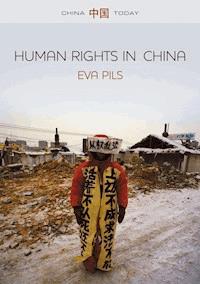
While the discussion in this book shows human rights in China to be a vibrant and important social practice, it also portrays it as a practice in the shadows of an authoritarian system, in which victims like the one depicted on the cover of this book may hide their face while seeking justice; in which some systematic rights violations cannot be discussed in the media, effectively challenged in the courts, or addressed by reform efforts in legislation and law enforcement; and in which many rights advocates live in peril. Even theoretical accounts of human rights produced by scholars in China, while they have their independent value and importance,25 meet with directives and exhortations such as, for example, to produce accounts that will ‘strengthen China's international image’;26 and the most important arguments and practices undermining human rights come from authoritarianism.
Authoritarian conceptions and practices of governance privilege state sovereignty and security over individual rights, and treat the universality of liberal and democratic values with relativistic scepticism. Such ideas and practices can also be found in nominally liberal-democratic systems; but it will be argued here that the Party-State has in recent years turned to more authoritarian positions, supporting law (or ‘legal governance’, fazhi) but opposing human rights, or rights liberally conceived. It is increasingly using claims of systemic superiority over liberal democracy, becoming increasingly repressive, and more often invoking Maoist legacies. For some, this has raised the question whether China today should be characterized as totalitarian or neo-totalitarian,27 i.e. using labels that would more clearly bring out the incompatibility between the Chinese system and respect for human rights.28
Yet, while the claim of superiority over other systems is arguably typical of totalitarian dictators,29 characterizations as totalitarian would capture an intention more than the reality of the current system. The system hardly meets all of the criteria political scientists have come up with to describe totalitarian systems: it does not have a ‘state monopoly on information’ and a ‘concentration of all of the means of domination in the hand of the party and the state, so that finally the economy becomes subordinated to bureaucratic coordination and central control’, in Brzezinski's definition;30 and it would be hard to describe it, with Juan Linz, as having ‘an ideology, a single mass party and other mobilizational organizations, and concentrated power in an individual and his collaborators or a small group that is not accountable to any large constituency and cannot be dislodged from power by institutionalized, peaceful means’.31 As its responses to public protest in some instances show, the current system in China is somewhat responsive to popular demands, and in that sense sometimes held politically accountable.32 It would also be hard to describe Chinese society as ‘atomized’ in the sense coined by the philosopher Hannah Arendt;33 indeed, showing how Chinese civil society coordinates human rights based action is one of the aims of this book. Similar considerations could apply to the perhaps even more problematic term ‘fascism’.34 Against the background of such taxonomical quandaries,35 the term ‘authoritarian’ will be used here in consciously broad fashion: it is well suited to a language of gradation that seems appropriate to the present discussion, not only of China but also of the global trends toward authoritarianism.36
The following chapters begin by situating human rights discourse within a plurality of competing justice traditions and discourses, and provide an initial examination of the chief counterdiscourses used to reject human rights (chapter 1). This provides the background for an outline of the place of human rights within the legal-political system, and an initial account of institutional avenues for access to justice (chapter 2). The next three chapters address the substantive rights of liberty and integrity of the person (chapter 3), freedom of thought and expression and cognate rights (chapter 4), and economic and social rights (chapter 5). A concluding chapter discusses human rights advocates, human rights defenders and wider civil society (chapter 6). Each of these chapters observes a current trend to reconceptualize and redesign the legal-political process in ways that further undermine human rights and, ultimately, law itself. Each chapter also tries to identify the peculiar and characteristic way in which China's version of authoritarianism shapes its systemic rights-violating practices. In conclusion, this development is briefly considered in the light of its wider, transnational implications, and of a global trend of ‘democratic recession’ and ‘authoritarian resurgence’.
Notes
1
State Council Information Office, White Paper on Human Rights (November 1991), Preface, available at <http://china.org.cn/e-white/7/index.htm> [last accessed 30 October 2016]; Sun Pinghua,
Human Rights Protection System in China
(Heidelberg, Berlin: Springer Verlag, 2014), at p. 35.
2
Cf. Andrew Nathan, ‘China and international human rights – Tiananmen's paradoxical impact’, in Jean-Philippe Béja (ed.),
The Impact of China's 1989 Tiananmen Massacre
(Abingdon: Routledge, 2009), 207–20; Robert Weatherley,
Making China Strong: The Role of Nationalism in Chinese Thinking on Democracy and Human Rights
(Basingstoke: Palgrave Macmillan, 2014) at p. 148f.
3
Discussed in
chapter 2
.
4
Discussed in
chapter 2
.
5
Discussed in
chapter 5
.
6
Discussed in
chapter 1
.
7
Camilla Ruz, ‘Human rights: What is China accused of?’, BBC News, 21 October 2016, available at <http://www.bbc.co.uk/news/magazine-34592336> [last accessed 13 November 2016].
8
Such as reports issued by the US State Department and Congressional-Executive Commission on China; the Swedish government and the UK government.
9
For example, the artist-activist Ai Weiwei recreated scenes from his own experience of enforced disappearance in the Royal Academy of Arts in London. A digital audio-visual tour of the exhibition is available at <https://www.royalacademy.org.uk/exhibition/ai-weiwei-360> [last accessed 10 November 2016].
10
An important exponent of this type of argument in the field of legal scholarship is Randall Peerenboom. See Randall Peerenboom,
China's Long March Toward Rule of Law
(Cambridge: Cambridge University Press, 2002).
11
Randall Peerenboom, ‘Fly high the banner of socialist rule of law with Chinese characteristics! What does the 4th Plenum decision mean for legal reforms in China?’,
Hague Journal on the Rule of Law
, 7:1 (2015) 49–74.
12
Zhang Weiwei, ‘The allure of the Chinese model’,
International Herald Tribune
, 2 November 2006, available at <http://www.sinoptic.ch/textes/articles/2006/20061102_zhang.weiwei_chinese.model-en.pdf> [last accessed 12 November 2016].
13
For various reasons, some important international human rights NGOs have explicitly committed to being non-political. The best-known example is Amnesty International. Amnesty International European Institutes Office, ‘Frequently Asked Questions’, available at <http://www.amnesty.eu/en/about-amnesty-international/faq/#faq1>.
14
James Nickel, ‘Human rights’, in
Stanford Encyclopaedia of Philosophy
, 2014, <https://plato.stanford.edu/entries/rights-human/>.
15
For a discussion of ‘rights language’ and its critics, see Leif Wenar, ‘Rights’,
Stanford Encyclopaedia of Philosophy
, 2015, <https://plato.stanford.edu/entries/rights/>.
16
Ronald Dworkin,
Justice for Hedgehogs
(Cambridge, MA: Harvard University Press, 2010); and Ronald Dworkin,
Law's Empire
(Cambridge, MA: Harvard University Press, 1986). On human rights as ‘
lingua franca
’, see Michael Ignatieff, ‘Human rights as politics / Human rights as idolatry’, The Tanner Lectures, Princeton, 4–7 April 2000, available at <http://tannerlectures.utah.edu/_documents/a-to-z/i/Ignatieff_01.pdf> [last accessed 10 November 2016]. On human rights as a social practice, see ‘Isabel Trujillo and Francesco Viola,
What Human Rights Are Not
(Hauppauge, NY: Nova Science Publishers, 2014).
17
Allen Buchanan,
The Heart of Human Rights
(Oxford: Oxford University Press, 2013), ch. 1. Buchanan makes a stronger claim about the authority of international human rights law practice.
18
W.B. Gallie, ‘Essentially Contested Concepts’,
Proceedings of the Aristotelian Society
, 56 (1955–6) 167–98.
19
Chapter 4
will argue that recognition of freedom of expression and cognate rights is almost absent in China.
20
The fieldwork has included loosely structured conversations with lawyers, other human rights defenders, academics, petitioners, citizen journalists and videographers, as well as observation of gatherings, workshops, seminars and discussions, conducted mainly between October 2010 and February 2017. Some ninety per cent of these conversations were conducted in mainland China, mostly in urban and semi-public settings, such as coffee-shops and parks. All quoted passages have been anonymized, using standard social science techniques, and bearing in mind the fact that the interlocutors are at high risk of government abuses. To illustrate: I conducted recorded conversations with about eighty rights lawyers and about forty non-lawyer rights defenders between October 2010 and February 2017. Of these interlocutors, as of November 2016, some nine lawyers and four non-lawyers have been criminally convicted for their advocacy. Some twenty-two have suffered detention without trial, including forced disappearances; and well over half have reported suffering physical violence, including torture. The lawyers who were interlocutors for this project include many of those targeted in the so-called ‘7-09’ crackdown on lawyers discussed in
chapter 6
.
21
Ronald Dworkin,
Justice for Hedgehogs
(Cambridge, MA: Harvard University Press, 2010).
22
John Tasioulas, ‘Human rights’, in
Routledge Companion to the Philosophy of Law
(London: Routledge, 2012), which juxtaposes orthodox and political accounts.
23
For example,
chapter 3
quotes Teng Biao on a connection between the death penalty and ‘having enemies’.
24
Discussed in
chapters 2
and
6
.
25
Elena Consiglio, ‘The doctrines of human rights in China’, unpublished manuscript on file with author.
26
Anonymous (
匿名
), ‘
法理学研究会
2016
年度工作计划
[2016 Annual Working Plan of the Legal Theory Association]’, 10 May 2016, available at <http://www.lawinnovation.com/index.php/Home/Xuejie/artIndex/id/13458/tid/1.html> [last accessed 10 April 2017].
27
Teng Biao (
滕彪
), ‘The political meaning of the crime of “subverting state power”’, in Jean-Philippe Béja, Fu Hualing and Eva Pils (eds),
Liu Xiaobo, Charter 08, and Challenges of Political Reform in China
(Hong Kong: Hong Kong University Press, 2012).
28
Others have used concepts such as deliberative or consultative democracy or meritocracy to capture what the Chinese system is – or what it strives to be. Daniel Bell,
The China Model: Political Meritocracy and the Limits of Democracy
(Princeton, NJ: Princeton University Press, 2015).
29
P.S. Sondrol, ‘Totalitarian and authoritarian dictators: A comparison of Fidel Castro and Alfredo Stroessner’,
Journal of Latin American Studies
, 23:3 (2009) 599.
30
Klaus Müller, ‘East European studies, neo-totalitarianism and social science theory’, TIPEC Working Paper 03/7, available at <www.trentu.ca/tipec/3muller7.pdf> [last accessed 10 November 2016].
31
Juan Linz,
Totalitarian and Authoritarian Regimes
(Boulder, CO: Lynne Rienner Publishers, 2000), at p. 67.
32
On responsive authoritarianism, see e.g. Robert P. Weller, ‘Responsive authoritarianism and blind-eye governance in China’, in Nina Bandelj and Dorothy J. Solinger (eds),
Socialism Vanquished, Socialism Challenged: Eastern Europe and China, 1989–2009
(Oxford: Oxford University Press, 2012).
33
Hannah Arendt,
The Origins of Totalitarianism
(New York: Harcourt, Brace, Jovanovich, 1973).
34
The approach taken here is sympathetic to Umberto Eco's account of ‘ur-fascism’, which emphasizes that there is no definitive list of criteria that can be ticked off to determine if a system is fascist. Umberto Eco, ‘Ur-fascism’,
New York Review of Books
, 22 June 1995, available at <http://www.nybooks.com/articles/1995/06/22/ur-fascism/> [last accessed 10 November 2016].
35
Emphasizing the uniqueness of the Chinese system, and avoiding entanglement in pre-established terminology, Ringen has come up with the term ‘control-o-cracy’ to characterize the Chinese system. Stein Ringen,
The Perfect Dictatorship: China in the 21st Century
(Hong Kong: Hong Kong University Press, 2016).
36
This dimension is revisited in the Conclusion.
1Human Rights and Competing Conceptions of Justice, Law and Power
In the 2010 documentary film Emergency Shelter, a group of friends gather in a park in downtown Beijing. The friends are there to support a couple temporarily rendered homeless by a long-term fight with local authorities against the demolition of their house. Seated on park benches around the wheelchair-bound rights defender Ni Yulan and her husband, the small group chat about their own experience of petitioning and complaining against the authorities. Their conversation reflects the presence of history in contemporary Chinese discourses about law, rights and justice: the words people use, the ideas they draw on, some of the assumptions they make. Zhang Aixiang, a middle-aged woman who has brought her friends clothes and food, thinks that the officials of the legal system are all in collusion, and that this is why the authorities fail to handle complaints properly.
If you infringe ordinary people's rights (quanli), you should correct your mistake without delay. If you correct it, they will not complain against you, right? But the longer you fail to correct it, the more they will complain.1
Wang Guihua, who points out that she has some teeth missing from an encounter with the authorities, says,
Are they afraid of you, or are you afraid of them? Why is it that people with grievances (yuanqing) have no recourse, that the courts cheat us, and that staff of the Supreme Procuratorate2 beat me into this condition? The Police won't even file your case. They say, we're all under the control of the Supreme Procuratorate, none of us dares to handle this case. That means there's no respect for law or heaven. They can beat people for nothing.3
And Ye Guozhu cites the proverb, ‘No injustice (yuan) without perpetrator, no debt without creditor.’4 Clearly he thinks that corrupt and undutiful officials will get what was coming to them one day.
We do not learn much about the individual stories behind their comments, and we do not get to hear the government's argument in their respective cases. Only Ni's and her husband's story is told in some greater detail in the film: old Beijing residents, they lost their home along with thousands of others in the great construction wave in the early 2000s; and Ni – disabled as a result of earlier police brutality, she explains – was sent to prison for her attempts to advocate on behalf of their own and other families. At the time of the film, she has just been released, and she and her husband are camping out not far from where their home once stood. Focusing away from this individual story, the conversation with their friends shows how her experience is mirrored in theirs. We are given a glimpse of the way citizens are complaining to and reasoning with the government, and see them explaining their situation to the invisible videographer, and to us. They are deeply critical, for example when Zhang Aixiang comments on the official jargon of ‘social stability maintenance’ that is typically used to justify coercive measures against petitioners like herself:5
It's you who are responsible for ‘social instability’. Not your victims.6
They are also sceptical about getting anywhere with their complaints, but nevertheless defiant: one can sense that, regardless of how difficult it may be, they are not going to give up easily. They have a sense of their own power: they know that even if they won't get justice (whatever this might mean) they can at least make life difficult for the officials supposed to deal with them and keep them in check. In Havel's phrase, one might call it a form of ‘power of the powerless’.7 It is a power connected to people's experience of injustice and their willingness to seek justice.
Through the individual chapters that follow, human rights and related ideas are interpreted and reinterpreted across a variety of national, cultural and political boundaries,8 and it is shown how deeply contentious they are: not only (for reasons discussed in chapter 2) and not even primarily in the courts, but also in the streets and on the internet, in books and bars, in lecture halls and on social media. Of course, one might say, views gathered in these venues are individual. For example, the above brief comments and attitudes of Zhang, Wang and Ye do not tell us much about the thoughts, expectations and aspirations of the 1.4 billion Chinese people as a whole. Taking stock of these as a whole would be a giant undertaking – and it would not be very helpful in any case, since all we would discover is that people in China, like elsewhere, disagree about big abstract ideas such as rights, wrongs and justice; and that what they say is not always coherent. Assessing what rights people hold as human rights, whether or how these are – or are not – protected, and how they are discussed and asserted and used in contentions between citizens and the state requires moral and legal judgment, according to the view adopted here. It cannot be limited to describing others' views, but needs to engage critically with the views and practices it describes, working through them towards a normative assessment.9 To do so, it is particularly important to examine the views and attitudes of those who, like the three speakers above, experience human rights violations, those who are involved in addressing them, as well as those who perpetrate or justify violations – often, but not always, government officials.
The purpose of the following sections of this chapter is to give a sense of the most important disagreements and debates affecting human rights in China, understood as an interpretive social practice. It sets out what one might usefully call the justice and governance traditions of China: the conceptions and practices related to justice reflected in its political and institutional history, as well as in its vast philosophical and literary heritage. These traditions remain present in contemporary official and public discourse about rights. Subsequent chapters will address some aspects of the legal-political system, some basic substantive rights or groups of rights, and wider social practices related to rights assertion.10 The picture that emerges is rich and colourful, as well as full of tensions. There are great differences not only in pre-PRC Chinese engagement with the concept of justice, but also within the history of the PRC, from the totalitarian years under Mao Zedong to the ‘post-Mao reform’ and what one might call the current ‘post-reform’ era. All of this history informs how justice-based claims and complaints about injustice are articulated and dealt with today. There are continuities, as well as tensions, ruptures and contradictions.
Three themes are particularly important. First, there is the tradition of bringing grievances and the closely related concept of yuan, ‘wrong’ or ‘injustice’. It centres in the belief that the wrongs suffered by any individual person must be addressed and righted. Second, there is the concept of rights, part of a liberal conception of law and justice, which began to be articulated and debated in China from the nineteenth century onwards. By now, human rights have become part of the justice traditions of China. Lastly, there are what I will call human rights counterdiscourses: an assemblage of influential ideas and arguments, practices and institutions that propagate a vision of order in which human rights would have no place or, at best, a very diminished function, even though the language of human rights might still be used when convenient: a politically authoritarian order claimed to be more appropriate for China. Those who propagate these countervisions of order sometimes use morally relativist arguments; but far from upholding a distinctly traditional, Chinese conception of justice (as moral relativism might suggest), they suppress the more indigenous yuan discourse when convenient. These counterdiscourses explain, in part at least, why human rights in China remains so fiercely contested a practice. As they are propagated beyond China's territorial borders, they play a role in what some have discussed as a global revival of authoritarianism.11
The Yuan Tradition of Righting Wrongs
In the fourteenth century, the scholar and novelist Guan Hanqing wrote the story of The Injustice to Dou'E




