


Erhalten Sie Zugang zu diesem und mehr als 300000 Büchern ab EUR 5,99 monatlich.
- Herausgeber: Mercier Press
- Kategorie: Geisteswissenschaft
- Sprache: Englisch
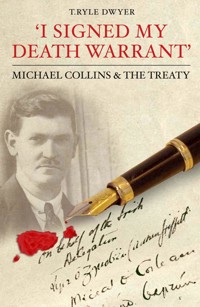
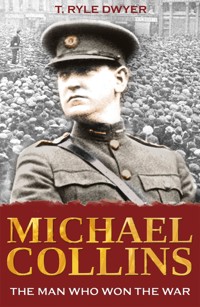
To Michael Collins the signing of the Treaty between Ireland and Britain in 1921 was a 'stepping stone'.Eamon de Valera called it 'treason'.The controversy surrounding the Treaty and how it led to the Civil War of 1922-1923, is examined here. T. Ryle Dwyer not only takes an in-depth look at the characters and motivations of the two main Irish protaginaists but also gives many insights into the views and ideas of the other people involved on both sides if the Irish sea. Eamon de Valera sent Michael Collins to London in October 1921 to negotiate a treaty with the British Empire. The difficult negotiations took eight weeks before the Treaty was signed by Collins, Arthur Griffith and the other delegates in December 1921.To Collins, the Treaty was simply the start of a process that, in his eyes, would lead to full independence for what was now the Irish Free State, but there were many in the south who believed that Collins had betrayed the republican movement.Just hours after signing the Treaty Collins' wrote 'Will anyone be satisfied at the bargain? Will anyone? I tell you this early morning I signed my death warrant…' Eighty-five years on from the historic signing of the Treaty, I Signed My Death Warrant is a compelling study of the controversy surrounding the infamous negotiations and the motivations of the two main Irish protagonists, de Valera and Collins.
Sie lesen das E-Book in den Legimi-Apps auf:
Seitenzahl: 444
Veröffentlichungsjahr: 2006
Das E-Book (TTS) können Sie hören im Abo „Legimi Premium” in Legimi-Apps auf:
Ähnliche


















To Brian Looney
MERCIER PRESS
3B Oak House, Bessboro Rd
Blackrock, Cork, Ireland.
www.mercierpress.ie
http://twitter.com/IrishPublisher
http://www.facebook.com/mercier.press
© T. Ryle Dwyer
ISBN: 978 1 85635 526 1
Epub ISBN: 978 1 85635 856 9
Mobi ISBN: 978 1 85635 873 6
Moved to Digital Print-On-Demand in 2025
This eBook is copyright material and must not be copied, reproduced, transferred, distributed, leased, licensed or publicly performed or used in any way except as specifically permitted in writing by the publishers, as allowed under the terms and conditions under which it was purchased or as strictly permitted by applicable copyright law. Any unauthorised distribution or use of this text may be a direct infringement of the author’s and publisher’s rights and those responsible may be liable in law accordingly.
Preface
Although I grew up in Ireland from the age of four, my first real introduction to modern Irish history was at University of North Texas in 1965, when I wrote a term paper on the the causes of the Irish civil war. I was staggered to learn that the partition question had essentially nothing to do with that conflict. Ever since I have had a deep and abiding interest in the subject, so this book is the product of an interest stretching over forty years. Some of those involved with the negotiations were still alive when I first became interested and I corresponded with Robert Barton, the last surviving signatory and Sir Geoffrey Shakespeare, an aide and confidant of the British prime minister.
I wrote a master’s thesis on the Anglo-Irish Treaty in 1968 and the first article I published was a revision of that thesis under the title of ‘The Anglo-Irish Treaty and Why they Signed’, Capuchin Annual, 1971. Many of the Irish documents relating to the negotiations were not released until the mid 1970s. In 1981, Mercier Press published my third book, Michael Collins and the Treaty in conjunction with the sixtieth anniversary of the Treaty.
In the quarter of a century since then a wealth of material has been released, including the papers of Eamon de Valera and Robert Barton. Much of the early material written on the Anglo-Irish negotiations came from a particular perspective. Frank Pakenham’s book Peace by Ordeal was a brilliant study that threw a phenomenal amount of new light on the subject in 1935, because he had access to the papers of Robert Barton and Erskine Childers and also personal access to Eamon de Valera. But the book did not show as keen an understanding of the role of Arthur Griffith and Michael Collins, because he did not have access to the papers of Collins, especially those that subsequently appeared in the biography by Rex Taylor, which threw considerable new light on the part played by Michael Collins.
My aim is to make an honest appraisal of the part Collins played in the making of the Anglo-Irish Treaty. People on all sides made mistakes, but all too often the history of these troubled time is marred by partisanship. Too many have tried to depict Collins as always right and de Valera as almost always wrong, or the other way around. In reality there were rights and wrongs on all sides.
Ultimately the Treaty provided the stepping-stones to an Irish Republic for twenty-six of the thirty-two counties of Ireland, as Collins had confidently predicted. His views in relation to the partition issue were not justified, but this was not an issue of contention between himself and his republican critics during his lifetime. After his death some of his strongest supporters insisted that they had an obligation to complete the Big Fellow’s unfinished work. This kind of thinking led to the Army Mutiny of 1924, but thereafter those of his supporters who retained power behaved as if Collins had died trying to ensure that the Treaty was the ultimate settlement rather than a means to an end. Ironically it was Eamon de Valera who ultimately proved that Collins was right in relation to the Treaty controversy when he said the Treaty ‘gives us freedom, not the ultimate freedom that all nations desire and develop to, but the freedom to achieve it’.
TRD
Tralee, 2006
Foreword
‘At this moment,’ Michael Collins wrote after the Truce came into effect on 11 July, 1921, ‘there is more ill-will within a victorious assembly than ever could be anywhere else except in the devil’s assembly. It cannot be fought against. The issues and persons are mixed to such an extent as to make discernability an utter impossibility except for a few.’
He and President Eamon de Valera would later pretend that they had trusted each other implicitly at this stage, but that is clearly contradicted by any examination of the true state of relations between them. Michael Collins had come to prominence as a result of his involvement in the Irish Republican Brotherhood (IRB) as a trusted confidant of Thomas Ashe, who took over as the IRB leader following the Easter Rebellion. Ashe was the most successful commandant and the last to surrender during the Easter Rebellion. After his death on hunger strike in September 1917, Collins formed a close relationship with Ashe’s Kerry colleague Austin Stack. This relationship developed largely through correspondence while Stack was in prison.
Collins – who was nicknamed the Big Fellow because he was so full of self-importance – came very much to the fore within the movement following the so-called German Plot of May 1918 when most of the Sinn Féin leadership were arrested. He and his friend Harry Boland played a major role in organising the party’s successful performance in the 1918 general election, in which Sinn Féin won almost all the seats outside the north-east. In January 1919, Collins was appointed director of intelligence of the Irish Volunteer Force, which was shortly to become known as the Irish Republican Army (IRA).
From the outset, he had a distinct plan. He believed the Dublin Metropolitan Police (DMP) and the Royal Irish Constabulary (RIC) were the eyes and ears of the British administration, and he advocated that the most effective detectives should be killed. Once they were silenced he believed the British would retaliate, but without proper intelligence they would react blindly and hit out at totally innocent Irish people. In the process they would drive the Irish people into the arms of the IRA.
In developing his intelligence organisation, Collins enlisted the help of a number of policemen, the most important of whom were three detectives. Ned Broy was a confidential typist at the Detective Division Headquarters of the DMP. He would insert an extra carbon paper and make a copy of any reports that Collins desired. One night he invited Collins into the headquarters to go through the police records with a colleague for some hours. Liam McNamara and Seán Kavanagh, two detectives based in Dublin Castle, also provided invaluable information.
Collins hoped that de Valera would lead that struggle and he therefore helped to arrange his escape from Lincoln Gaol in February 1919, but de Valera had other ideas when he got out. He believed the movement’s best chance of success was to exploit President Woodrow Wilson’s promise to make the world safe for democracy when he led the United States into the First World War. He thought that the influence of Irish-Americans would be Ireland’s most potent force in persuading the British to make concessions, especially after they had supposedly fought for the rights of small nations in the recent war. De Valera therefore decided to go to the United States, but not before he had frustrated the designs of Collins.
All of those arrested for supposed involvement in the German Plot were released in March and so de Valera was able to return to Dublin before setting out for the United States On 25 March a notice was placed in the newspaper:
President de Valera will arrive in Ireland on Wednesday evening next, the 26th inst., and the Executive of Dáil Éireann will offer him a national welcome. It is expected that the homecoming of de Valera will be an occasion of national rejoicing, and full arrangement will be made for marshalling the procession. The Lord Major of Dublin will receive him at the gates of the city, and will escort him to the Mansion House, where he will deliver a message to the Irish people. All organisations and bands wishing to participate in the demonstration should apply to 6 Harcourt Street, on Monday the 24th inst., up to 6 p.m.
H. Boland
T. Kelly, Honorary Secretaries.
Such arrangements were usually reserved for royalty, so Dublin Castle banned the reception, and the Sinn Féin Executive held an emergency meeting. Arthur Griffith presided at what was for him and Darrell Figgis, the first meeting since their arrest the previous May. Cathal Brugha had complained privately to Figgis some days earlier that Collins and his IRB colleagues had essentially taken over the movement from within while the others were in jail.
‘He told me that he had seen what had been passing, but that he had been powerless to change events,’ Figgis wrote. ‘It was at this meeting I saw for the first time the personal hostility between him and Michael Collins.’
When the executive met to discuss what to do about Dublin Castle’s ban on the planned reception, members witnessed the Big Fellow at his most arrogant. Figgis asked to see the record of the Executive meeting authorising the honorary secretaries to announce the plans to welcome de Valera, but he was told that the issue had never come up. ‘I therefore asked Alderman Tom Kelly on what authority he, as one of the signatories, had attached his name as secretary, and he answered with characteristic bluntness that, in point of fact, he had never seen the announcement, and had not known of it till he read it in the press.’
There followed a ‘tangled discussion’ before Collins rose. ‘Characteristically, he swept aside all pretences, and said that the announcement has been written by him, and that the decision to make it had been made, not by Sinn Féin, though declared in its name, but by “the proper body, the Irish Volunteers”,’ Figgis wrote. ‘He spoke with much vehemence and emphasis, saying that the sooner fighting was forced and a general state of disorder created through the country (his words in this connection are too well printed on my memory ever to be forgotten), the better it would be for the country. Ireland was likely to get more out of a state of general disorder than from a continuance of the situation as it then stood. The proper people to take decisions of that kind were ready to face the British military, and were resolved to force the issue. And they were not to be deterred by weaklings and cowards. For himself he accepted full responsibility for the announcement, and he told the meeting with forceful candour that he held them in no opinion at all, that, in fact, they were only summoned to confirm what the proper people had decided.
‘He had always a truculent manner, but in such situations he was certainly candour itself,’ Figgis continued. ‘As I looked on him while he spoke, for all the hostility between us, I found something refreshing and admirable in his contempt of us all. His brow was gathered in a thunderous frown, and his chin thrust forward, while he emphasised his points on the back of a chair with heavy strokes of his hand.’
Arthur Griffith certainly was not impressed. Tapping the table in front of him with a pencil, Griffith emphasised that the decision was one to be taken by the meeting and by no other body.
‘For two hours the debate raged fiercely,’ according to Figgis. Going ahead with the announced plans would undoubtedly lead to trouble, while abandoning them could have disastrous implications for the morale of the whole movement. Parallels were drawn with the disastrous consequences of Daniel O’Connell’s decision to accede to the British decision to ban the monster meeting at Clontarf some seventy years earlier.
De Valera was contacted and he requested the welcoming demonstrations be cancelled. ‘I write to request that you will not now persist in your idea,’ he wrote. ‘I think you must all agree with me that the present occasion is scarcely one on which we would be justified in risking the lives of the citizens. I am certain it would not.’
In the following days de Valera ensured that the Standing Committee of Sinn Féin would have a veto over some of the plans the Big Fellow had been developing. Collins wrote to Austin Stack in frustration, but once de Valera went to the United States Collins soon got his way. At the end of July 1919, five specially selected IRA men shot and mortally wounded Detective Sergeant Patrick Smyth. The British retaliated by banning Sinn Féin, Dáil Éireann and other organisations, thereby undermining the measures that de Valera had put in place to control Collins.
When the DMP raided Sinn Féin headquarters, Collins retaliated by having another detective killed that night. He also went over to Manchester and visited Austin Stack in Strangeways Jail as part of an elaborate escape plan.
Collins helped to spring Stack in October 1919, but thereafter Stack turned out to be a dreadful disappointment as far as the Big Fellow was concerned. In comparison with Collins, who was an administrative genius, Stack was a bungler, yet Collins initially admired Stack greatly. This was probably as result of the latter’s friendship with his fellow Kerryman Thomas Ashe, while the latter was president of the IRB. But Stack and Collins could hardly have known each other very well, because Stack had been in jail since Ashe’s death in September 1917.
If Collins had known Stack better, he might not have had such confidence in him. Stack had been caught by surprise when Roger Casement showed up near Tralee on Good Friday 1916, but Stack showed no leadership. He made no effort to rescue Casement even though Head Constable John A. Kearney of the local RIC went out of his way to facilitate his rescue. Stack ruled out a rescue attempt, saying that he was under orders to ensure that nothing happened that might impede the planned landing of guns that Sunday.
On the fateful Friday evening Stack decided to visit another prisoner in custody in the RIC barracks instead. Before going, he was advised to ensure he had nothing incriminating on him. He handed over a revolver but he then went to the barracks with what he wrote to his brother was, ‘a large number of letters, i.e. fully 20 or 30 letters I imagine’. Those included letters from Patrick Pearse, James Connolly and Bulmer Hobson. He was duly arrested, which may have been what he desired in order to insure that he would be safely incarcerated when the rebellion began.
Part of Stack’s local prowess rested on his reputation as a footballer, having captained the Kerry team to win the All-Ireland championship of 1904. In addition, he had a rebel pedigree, as his father was known locally as a Fenian patriot, having been arrested and jailed in December 1866. Moore Stack initially protested his innocence, but then pleaded guilty in the hope of a lighter sentence. He was sentenced to ten years in jail. The British released him after little over two years, in March 1869. He returned home to a hero’s welcome and it would not be for more than a century that documentary evidence would emerge casting a shadow over his patriotic credentials.
It was largely through the influence of Collins that Stack was appointed deputy chief of staff of the IRA, but he never even attended a meeting of the general headquarters staff. It was hardly because he was so busy as minister for home affairs, seeing that he never came to grips with the proper formation of the republican courts either.
The Squad, an assassination team set up by Collins, targeted a number of individuals, including some prominent detectives with the Dublin Metropolitan Police and people who were providing them with information. The British retaliated by killing Tomás MacCurtain the lord mayor of Cork, and Collins revenged this killing by having at least three people suspected of involvement shot. Amid the tit-for-tat killings there was a mass of police resignations. Most of the police considered themselves Irishmen and they had no stomach for a fight against their fellow countrymen. As a result they were quite prepared to turn a blind eye, and many even provided republicans with information.
The British introduced recruits to bolster the police, and they became known as Black and Tans, after a pack of hounds. Minister for War Winston Churchill persuaded the government to recruit an elite force of former military officers as police Auxiliaries. Operating on poor intelligence the Auxiliaries and Black and Tans sacked towns around the country, often striking at innocent people. In the process they drove the bulk of the Irish people into the arms of the republicans, as Collins anticipated.
Meanwhile de Valera antagonised Irish-American elements by indicating that they would support Woodrow Wilson if the president provided official recognition of the Irish Republic. The dispute really centred over who would speak for the Irish-Americans – de Valera or Daniel Cohalan. The whole thing came to ahead when de Valera stated in an interview with the Westminster Gazette that the Irish regime would be prepared to provide an assurance that Irish independence would never be used to undermine Britain’s security.
Having fought alongside Britain in the Great War, he feared that Americans would be afraid to support Ireland as this would be seen as a betrayal of the recent ally, so he suggested that Britain should declare a kind of Monroe Doctrine in relation to the British Isles and Ireland would provide an assurance to Britain like Cuba gave to the United States in a 1901 treaty. The Cubans said that they would maintain their independence and not allow their territory to be used against the United States. The Americans were also afforded the base that they still hold at Guantanamo Bay. Irish-Americans denounced de Valera’s interview on the somewhat spurious grounds that it would mean that Ireland would side with Britain in the event of a war between Britain and the United States.
‘The trouble is purely one of personalities,’ de Valera admitted. ‘I cannot feel confidence enough in a certain man [Cohalan] to let him have implicit control of tactics here without consultation and agreement with me.’ De Valera was insisting on having the final say on policy matters, though he was prepared to consult with Irish-American leaders, but they were insisting that he should have nothing to do with American politics. ‘On the ways and means they have to be consulted,’ de Valera conceded, ‘but I reserve the right to use my judgment as to whether any means suggested is or is not in conformity with our purpose.’
Collins supported de Valera against Cohalan and the Clan na Gael leader John Devoy, going so far as to sever relations between the IRB and its sister organisation in America, Devoy’s Clan na Gael, even though Devoy had actually been touting Collins as the real Irish leader in his Gaelic American newspaper. But in one matter the Big Fellow’s help was probably less than welcome.
Throughout the period that de Valera was in the United States, Collins helped his family, and de Valera’s wife, Sinéad, remained deeply appreciative of this help throughout the remainder of her life. As the dispute between de Valera and the Irish-Americans intensified, there were rumours that de Valera was having an affair with his secretary, Kathleen O’Connell, a Kerry woman that he met in the United States. They were travelling about America together, and de Valera later accused a Catholic bishop in Chicago of spreading rumours that he was philandering. Collins arranged for Sinéad to join de Valera in the United States, but he was less than pleased to see her as he felt her place was at home with the children.
‘The visit to America was one of the biggest mistakes I ever made,’ she later wrote. ‘It was a huge blunder for me to go to America. I derived neither profit nor pleasure from my visit.’ Her son Terry wrote that she often remarked that the six weeks there were ‘the longest and least profitable part of her life’.
Meanwhile in Ireland the struggle entered its bitterest phase with the Black and Tan and Auxiliaries wreaking havoc around the country, sacking towns like Balbriggan, Carrick-on-Shannon, Tuam, Ennistymon, Miltown-Malby and Tralee, which was closed down for the first ten days of November 1920. No businesses or schools were allowed to open and people were warned to keep off the streets.
The British had infiltrated many intelligence agents into Dublin, and some of those closest to Collins had very narrow escapes. Lloyd George proudly proclaimed that he had ‘murder by the throat’ during his address at the annual Lord Mayor’s banquet at the Guildhall on 9 November. The IRA decided to kill simultaneously as many of those agents as they could at nine o’clock on the morning of Sunday, 21 November 1920. Members of the Squad, backed up the various battalions of the Dublin IRA, targeted as many as thirty-five agents. Sixteen of the agents were shot – eleven fatally. Another officer was killed as a result of mistaken identity and two Auxiliaries were taken prisoner and then shot dead, bringing the total dead for the morning to fourteen.
That afternoon the Auxiliaries retaliated blindly, raiding a football game and firing into the crowd, killing fifteen innocent civilians, including one of the footballers on the field. The dead included a ten-year-old boy who was shot in the head, a fourteen-year-old boy, and a young woman who had gone to the game with her fiancée. They were due to marry five days later. Over sixty people required hospital treatment, and eleven of those were detained in hospital.
The day was remembered as Bloody Sunday. The following Sunday seventeen Auxiliaries were killed in the famous Kilmichael ambush in Cork, and another was taken prisoner and killed a couple of days later. Arthur Griffith, the acting president of the Dáil, was arrested and Collins became acting president.
Lloyd George asked Archbishop Patrick J. Clune of Perth, Australia, to contact IRA leaders in Dublin to sound out the prospects for a settlement. The archbishop met Griffith in jail and Collins in a private house. Terms for a ceasefire were agreed but the whole thing fell through because Dublin Castle contended that the IRA was about to collapse, and Sinn Féin vice-president Fr Michael O’Flanagan made some intemperate remarks that were seen as defeatist. The British also learned that de Valera was secretly returning to Ireland. He had planned to stay in the United States for at least another six months, but on hearing that Collins had taken over at home, he decided to return to Ireland immediately. Upon his return he promptly complained to IRA chief of staff Richard Mulcahy that the war was being waged in the wrong way.
‘Ye are going too fast,’ he told Mulcahy. ‘This odd shooting of a policeman here and there is having a very bad effect, from the propaganda point of view, on us in America. What we want is one good battle about once a month with about 500 men on each side.’
It was insensitive to criticise the way the campaign had been run without, at least, waiting to consult a few people. In the following days, de Valera tried to send Collins to the United States, but the Big Fellow refused to go. ‘That Long Whoor won’t get rid of me as easy as that,’ he complained.
But Collins had lost some of his clout at home, not only with the return of de Valera, but also with the uncovering of his main police spies. Kavanagh had died of natural causes, McNamara had been dismissed on suspicion of leaking material, and Ned Broy was arrested after the carbon copies of some of his reports were found among captured documents.
While Collins had targeted selected individuals, de Valera called for battles in which numbers became more important. A distinct rift widened between Collins and Minister for Defence Cathal Brugha, who revived an old plan to target members of the British cabinet.
‘This is madness,’ Collins thundered when Seán MacEoin told him that Brugha had asked him to lead an attack on the cabinet in London. ‘Do you think that England has the makings of only one cabinet?’ He told MacEoin to discuss the matter with Mulcahy, who ordered MacEoin to forget about the operation and return to his battalion. On the way back to Longford, MacEoin was arrested, having being wounded in a shoot-out with crown forces.
De Valera was adopting a two-pronged approach in the quest for negotiations with the British. He was encouraging more activity on the part of the IRA, but at the same time, he was speaking in moderate terms to encourage the British to negotiate. Collins appeared to adopt the opposite approach. He deliberately frustrated what he considered the more irrational plans, such as the scheme to kill members of the British cabinet, or engaging 500 members of the IRA in an open battle with the British. But at the same time he adopted a hard-line approach in his public utterances.
In an interview with the American journalist Carl Ackermann in early April, for instance, Collins said the IRA was going to fight on ‘until we win’.
‘What are your terms of settlement?’ Ackermann asked.
‘Lloyd George has a chance of showing himself to be a great statesman by recognising the Irish Republic.’
‘Do you mean a Republic within the British commonwealth of Nations or outside?’ Ackermann asked.
‘No, I mean an Irish Republic.’
‘Why are you so hopeful?’
‘Because I know the strength of our forces and I know our position is infinitely stronger throughout the world,’ Collins explained. ‘The terror the British wanted to instill in this country has completely broken down. It is only a question of time until we shall have them cleared out.’
‘So you are still opposed to compromise?’
‘When I saw you before I told you that the same effort which would get us Dominion Home Rule would get us a Republic. I am still of that opinion, and we have never had so many peace moves as we have had since last autumn.’ Off the record, Collins indicated that ‘he was much more accommodating’, according to Ackerman, who noted that Collins had pointedly indicated that ‘No one has ever defined a Republic.’
The British concluded there was a power struggle within Sinn Féin in which de Valera was little more than a figurehead, crying in the wilderness for a negotiated settlement, while Collins, the real leader, wanted to fight it out to the bitter end.
‘De Valera and Michael Collins have quarrelled,’ Lloyd George told his cabinet on 27 April 1921. ‘The latter will have a Republic and he carries a gun and he makes it impossible to negotiate. De Valera cannot come here and say he is willing to give up Irish independence, for if he did, he might be shot.’
Lloyd George’s government had the greatest majority ever in the House of Commons, but he was drifting into a precarious position. Of course, he was an extremely talented politician. Born in Manchester in 1863, his family promptly moved to north Wales, where he was reared as a native Welsh speaker. He qualified as a lawyer and was elected to parliament as a Liberal in a by-election in April 1890, and he held the seat for fifty-five years. He was appointed to the cabinet in 1905 and served as chancellor of the exchequer from 1908 to 1915. He then became minister for munitions and secretary for war the following year when, with the help of Unionists and Conservatives, he managed to oust prime minister Herbert Asquith and split the Liberal Party into two factions. Lloyd George enjoyed unprecedented popularity following the successful conclusion of the First World War. He would be dubbed as ‘the man who won the war’, and the ‘architect of victory’.
In the first post-war general election in 1918, Lloyd George led the coalition to a massive landslide victory, winning 473 of the 707 seats throughout Great Britain and Ireland, but the abstention of Sinn Féin with its 73 seats, meant the Conservatives with 322 seats, enjoyed an overall majority of their own in parliament.
The coalition’s majority was so big that cracks quickly began to appear, as it was a combination of very different ideologies. The traditional wing of the Unionist Party had little desire for reform, and there was a gulf of suspicion between them and Lloyd George’s faction of the Liberal Party. The events in Ireland and the behaviour of the Black and Tans raised serious issues.
Following the general election Lloyd George was preoccupied with the peace negotiations in Paris. He had created problems for himself by promising to squeeze the Germans until the pips squeak, but he was unable to command the kind of influence he would have liked at the Peace Conference in the midst of strong personalities like President Woodrow Wilson of the United States and Premier Georges Clemenceau of France. Asked how he felt he had fared in Paris, Lloyd George replied, ‘Not badly, considering I was seated between Jesus Christ and Napoleon.’ Such irreverence was symptomatic of another problem. The prime minister was having an affair with his secretary, Frances Stevenson, whom he eventually married after his wife’s death. Although this affair had not been publicised, it was well known in political circles and did not go down well with the moralistic element in the Conservative Party that included Stanley Baldwin, especially when there were also rumours of growing sleaze with whispers that Lloyd George was selling knighthoods and peerages.
Rather than strengthening his character, his popularity tended to bolster his weaknesses, such as his passions for intrigue and self-assertion, his indifference to principle and his naked manipulation of public opinion by his adroit handling of the press. He even endorsed the outrageous tactics of the Black and Tans and Auxiliaries by bragging that he had ‘murder by the throat’.
Lloyd George had been sending out peace feelers in Ireland since the autumn of 1920, and de Valera encouraged those by suggesting that Ireland would be prepared to satisfy Britain’s legitimate security needs. The Big Fellow’s approach was clearly unhelpful as far as de Valera was concerned, and he was naturally annoyed. He later told his authorised biographers that from April 1921 onwards, ‘Collins did not seem to accept my view of things as he had done before and was inclined to give public expression to his own opinions even when they differed from mine.’
Collins organised a daring rescue attempt after Seán MacEoin was transferred to Mountjoy Jail, but it failed due to an inopportune change in procedures that day. De Valera’s advocacy of major battles seem to bear fruit in late May when the IRA launched an attack on the Custom House. As this was the biggest operation since the Easter rebellion, it seemed to make a mockery of British claims that they were winning the war, as they suffered their heaviest casualties that month since the rebellion, but it was something of a pyrrhic victory for the IRA, especially from the perspective of Collins, as the Squad was virtually eradicated with the arrest of most of its members.
Alfred Cope, known to his friends as Andy, had been a detective in the office of customs and excise when he was sent to Ireland as an assistant under-secretary. His real function was to act as a kind a secret envoy on behalf of Lloyd George, making contact with Sinn Féin leaders as part of a peace initiative. He met with Fr Michael O’Flanagan, Sinn Féin vice-president, and Bishop Michael Fogarty, a strong Sinn Féin supporter, and he even met with Michael Collins. He also arranged meetings between de Valera and Lord Derby in April 1921 and with Sir James Craig the following month.
Cope had talks with senior republicans in Mountjoy Jail, such as Arthur Griffith, Eamonn Duggan and Eoin MacNeill, and he was instrumental in securing their release from prison, along with the release of Desmond Fitzgerald and Robert Barton. He also arranged the release of Erskine Childers, the editor of the Irish Bulletin, following his arrest. Cope actually met with Childers while he was being held at Dublin Castle on 9 May 1921. A couple of weeks later when British intelligence raided Collins’ finance office in Mary Street, they found a letter from Childers informing Collins of the ‘settlement outlined to me by Cope in the Castle a week ago’. Childers noted that Cope ‘is probably a good actor, but his ostensible attitude was one of almost feverish anxiety to get something done and the business over’.
The assistant under-secretary’s efforts to initiate a negotiated settlement were bitterly resented by the military. One British officer noted that Cope was ‘universally detested by everyone in the Castle, it being generally supposed that he was going to sell us all to the rebels’.
Sir John Anderson, the under-secretary for Ireland, warned assistant under-secretary Mark Sturgis that if Cope succeeded in persuading Lloyd George to talk with Sinn Féin that the British military might ‘upset the apple cart not because they want to but out of a mixture of personal pride, soldierly prejudice and downright stupidity’.
After the events in Dublin and the heavy crown losses during May, Sir Neville Macready, the general officer in charge of British forces in Ireland, argued that the British had to change their policy in Ireland. If Sinn Féin did not accept the new southern parliament by the deadline of 14 July, he suggested that as many as a hundred men a week should be executed, and that the government could not turn around and say ‘this cannot go on’ after the first week. ‘The Cabinet must understand that any man found with revolvers or bombs would be shot at once,’ he said. Sir Maurice Hankey, the chief cabinet secretary, told Lloyd George that General Macready asked him if the cabinet would go through with the coercion.
‘Will they begin to howl when they hear of our shooting a hundred men a week?’ Macready asked. Maybe his argument was just designed as shock treatment to force the cabinet to think seriously about changing its Irish policy. The Irish Situation Committee of the cabinet was warned on 15 June that it has to be ‘all out or get out’.
‘Military action to be effective must be vigorous and ruthless,’ Anderson told Chief Secretary Hamar Greenwood. ‘Dreadful things must happen. Many innocent people must inevitably suffer and the element of human error cannot be eliminated.’ He added that resorting to such all-out coercion without the full support of parliament and the country would be ‘the wildest folly’.
Collins learned that the British had decided to declare martial law throughout the twenty-six counties and intensify their campaign. British forces, which would be trebled, would intensify their operations, especially their searches and internment. ‘All means of transport, from push bicycles up, will be commandeered, and allowed only on permit,’ he warned de Valera.
On 24 June de Valera was arrested and Austin Stack was designated to take over from him as acting president. It was Collins who had taken over the previous November, following the arrest of Griffith, so he was obviously being relegated.
At this point Cope succeeded in persuading the British cabinet, which was already shaken by doubts shown by the scenario outlined by Macready, to try to negotiate with the Irish first. ‘No British government in modern times has appeared to make so complete and sudden a reversal of policy,’ Churchill noted.
Cope organised de Valera’s prompt release and asked him to make himself available for a letter from Lloyd George. Cope actually brought this letter from Downing Street. It was an invitation to de Valera and anyone he wished to accompany him to London for discussions with representatives of the British government and Sir James Craig, the new prime minister of Northern Ireland.
Cope arranged for Jan C. Smuts, the South African prime minister, to visit Dublin for secret talks with the president on 5 July 1921.
Chapter One
‘I mean to make them responsible’
Part of the aim in having Prime Minister Jan C. Smuts of South Africa come to Ireland was for him to get an idea of the kind of peace settlement that Sinn Féin leaders desired, so that he could pass on the information to Lloyd George. De Valera explained that before there could be any talks with the British, there would have to be a truce, and he insisted that he would not take part in three-way talks that included Craig.
‘What do you propose as a solution of the Irish question?’ Smuts asked
‘A republic,’ de Valera replied.
‘Do you really think that the British people are ever likely to agree to such a republic?’
Such a status was so desirable, de Valera explained, the Irish side would agree to be bound by treaty limitations guaranteeing Britain’s legitimate security needs, but he emphasised they would not be prepared to accept any limitations on dominion status. In short, he insisted the Irish people should have the choice between a ‘republic plus treaty limitations and dominion status without limitations’.
‘We want a free choice,’ de Valera emphasised. ‘Not a choice where the alternative is force. We must not be bullied into a decision.’
‘The British people will never give you this choice,’ Smuts replied. ‘You are next door to them.’ He then talked about the difficulties in South Africa following the Boer War and noted that when the people were subsequently asked if they wanted a republic, ‘a very large majority’ preferred free partnership with the British empire. ‘As a friend,’ Smuts added, ‘I cannot advise you too strongly against a republic. Ask what you want but not a republic.’
‘If the status of dominion rule is offered,’ de Valera replied, ‘I will use all our machinery to get the Irish people to accept it.’
Smuts reported on his Irish visit to a cabinet-level meeting in London next day. It was decided to accede to de Valera’s demands for a truce, and it was left to him to take the initiative for Craig’s exclusion. He did this by agreeing to meet the prime minister to discuss ‘on what basis such a conference as that proposed can reasonably hope to achieve peace’.
Robert Barton, one of those recently released from jail in order to promote the peace initiative, helped to conclude what he called ‘an armed truce. It was, as I understood, agreed to by our side for one reason only, mainly to enable the volunteers to rearm and equip,’ he explained. ‘I was one of those who negotiated it.’
William Darling, who later became chancellor of Edinburgh University, was serving as Major-General Tudor’s secretary in Dublin Castle at the time. He recalled a strange incident one night before the Truce when he was sent out to collect a ‘high official’ following an accident in Newry. A police car was in collision with the vehicle containing the official. When Darling arrived at the scene he found a group of men standing around with the official. They had been going from Belfast to Dublin, and they piled into Darling’s car.
Collins got into the front with Darling and the driver. He could feel the gun that Darling was carrying. ‘Are you carrying a gun?’ Collins asked.
‘I am.’
He then guessed at Darling’s name but was wrong, so he said he was one of two other people. This time he was right.
‘Do you know me?’
‘No,’ Darling replied. ‘I think I know your friends, but I don’t know you.’
‘I am Michael Collins.’
‘Are you the Michael Collins whom the British police have made famous?’
‘What do you mean by that?’
‘A police force has a duty to apprehend criminals,’ Darling explained. ‘If they fail to apprehend criminals one defence is to say that the criminal whom they cannot apprehend is the most astute, remarkable, astonishing criminal in history, and so I say: “Are you Michael Collins whom the British police force have made famous?”’
Collins laughed at that. They talked on the way to Dublin and they were driven to ‘an hotel in one of Dublin’s squares’. The official went into the hotel with the other two, while Collins and Darling followed and had a couple of bottles of stout and chatted together until the official was ready to leave.
‘That was an astonishing thing meeting Michael Collins,’ Darling remarked when they got into the car.
‘What do you mean?’ the official asked.
‘You knew that was Michael Collins with whom I sat in the car?’
The man rushed back into the hotel, but Collins was not there. Darling did not identify the official, but it may well have been Cope, because very shortly afterwards, just before the Truce came into effect, Cope and Collins met. Tim Kennedy, who had worked for Collins in Dublin and was the intelligence officer in charge of the Kerry No. 1 Brigade of the IRA, was in Dublin to meet with Collins. He called to Vaughan’s Hotel in Parnell Square. Christy Harte, the porter, was rather drunk and he called Collins out to meet Kennedy as he had a companion with him. Collins brought the two of them in.
‘When we got inside the door in the hall he told me the war was over and Sir Alfred Cope of the Castle was in the room to which he was taking me and that I wasn’t to disclose anything to him and his two bodyguards. Collins introduced Kennedy under an assumed name to Cope and the two RIC head constables accompanying him. One of the head constables had actually been stationed in Castleisland, County Kerry, so he and Kennedy recognised each other immediately.
‘Mick again announced about the Truce’, and they drank brandy and champagne to celebrate it. ‘Cope and I got talking and we discussed the troubled times,’ Kennedy noted. ‘I was regretting it was over and said I enjoyed it. Both Cope and I and Mick kept drinking glass after glass and Mick pretended to be drunk but I discovered afterwards he was drinking some coloured liquid.’ Kennedy said that he and Cope passed out, and Collins arranged for Kennedy to be taken back to his hotel in a taxi. ‘I awoke that evening in a bed fully clothed, with the taxi driver, also fully clothed, outside me,’ Kennedy continued. ‘Apparently he was warned by Mick to look after me and to stay with me ’til he knew that I was all right and over the shock of the war ending.’
The Truce came into effect at noon on 11 July. The terms were the subject of an honourable understanding with no signed, formal agreement. In the following months each side tended to interpret the terms differently, even though there was a remarkable similarity in their understanding of the Truce. De Valera issued instructions to the IRA to cease all attacks on crown forces and civilians, to prohibit the use of arms, to cease military manoeuvres, to abstain from interference with public and private property, and to avoid any disturbances of the peace that might necessitate military interference.
De Valera selected a delegation consisting of four cabinet colleagues, Griffith, Stack, Count George N. Plunkett and Robert Barton, as well as Erskine Childers, the acting minister for propaganda, to accompany him, along with a number of others.
On the evening of the Truce Kathleen O’Connell noted that ‘Collins called out this evening and spent several hours with the President’. He tried to insist on his own inclusion in the team going to London, but the president flatly refused to have him, saying that he feared the negotiations ‘might end in a stalemate and that war might be resumed, so he saw no reason why photographers should, at this stage, be given too many opportunities of taking pictures of Collins’. They had an acrimonious meeting, with the Big Fellow refusing to accept the explanation because, for one thing, it could not be squared with de Valera’s attempt to send him to the United States earlier in the year. ‘Hot discussion,’ Kathleen noted. ‘President rather upset.’
Having been demoted in favour of Stack of all people, Collins was now being ignored for peripheral figures like Laurence O’Neill, the lord mayor of Dublin, and the Dáil deputy, Robert Farnan, who had been invited along with his wife. In addition, there were two secretaries, Kathleen O’Connell and Lily O’Brennan. The delegation set up headquarters at the Grosvenor Hotel, but de Valera and Kathleen stayed with the Farnans in a private house acquired for them.
It was in the context of these events that Collins wrote the opening words of this foreword about the ill will among members of the Dáil. He was clearly despondent.
‘I think you would be warned of the changes here,’ he wrote to Harry Boland in the United States some days later. ‘There’s something about [them] which I don’t like, and I have the impression that the whole thing is pressing on me. I find myself looking at friends as if they were enemies – looking at them twice just to make sure that they really are friends after all. I mention no names. After all it may be a wrong impression that’s got into me. Frankly, though, I don’t care for things as they are now.’
Prior to his arrest in February 1920 ‘all members of the Cabinet were, as far as I knew, fast friends with complete trust in one another,’ Robert Barton noted. ‘There was not a sign of disunion, suspicion or ill feeling. I verily believe that had the occasion arisen each of us would have given his life for any other member without a thought. We acted like a one-man team. If we disagreed it was upon matters of detail rather than of policy or principle. Every member appeared to have implicit faith in the integrity of his comrades.’
‘Seventeen months later when I returned from imprisonment a great change had come over relationships in the cabinet,’ Barton added. ‘Michael Collins whom I knew best, for we had worked together every evening in Cullenswood House for more than 6 months, told me that efforts were being made to get rid of him as he and Richard Mulcahy were distrusted by Cathal Brugha and Stack. I soon found this to be true.’ Barton found he had difficulty meeting other cabinet colleagues. ‘All ministers were too busy with their own departments to meet except for cabinet meetings or when necessity required.’ He had ‘practically no acquaintance’ with either Austin Stack, or W. T. Cosgrave, and he had never even met Kevin O’Higgins before. The cabinet was apparently split. ‘There was an obvious rift between Brugha and Stack on one side and Collins and Griffith on the other,’ according to Barton. As he saw it IRA chief of staff Dick Mulcahy was ‘at loggerheads’ with Defence Minister Cathal Brugha, with ‘Collins obviously supporting Mulcahy’ and ‘Stack supporting Brugha’. In fact, the real rift was between Brugha and Collins, with Mulcahy being drawn into the vortex because of his support of Collins.
‘I tried to discover from Collins what was the root cause of his antipathy to Brugha,’ Barton wrote. ‘I failed but learned that he bore resentment to Dev also for the impartial attitude he adopted regarding this quarrel with Brugha. Brugha was, I consider, a difficult man to work with. A man of iron will and scrupulous honesty he often argued fiercely over details that were of little moment and in a manner that was at times offensive though generally unintentionally so. At every meeting Dev exercised self-control and patience that filled me with admiration in his endeavours to prevent an open rupture between Brugha, Collins, Stack and Griffith. Brugha had, I believe, always distrusted Griffith as a Republican.’
Barton would later come to the conclusion that the rift with Collins was at least partly the result of the Big Fellow’s ‘effort to control the national movement through the IRB of which he was the leader’. The IRB had been ‘strengthening its hold upon the Volunteers by appointing its nominees to all the important positions in the Army as vacancies occurred through capture or casualties’.
‘De Valera on all occasions played the role of peacemaker and I endeavoured to support him,’ Barton added. ‘I never spoke to him alone and knew as little about him as I did of my other colleagues.’ Barton concluded that his lack of familiarity with cabinet colleagues was partly the result of the circumstances of being in jail for so long, but it was also partly due to his own upbringing as a member of the Protestant landowning class, who were generally unionist in outlook. He had worked with Collins, but their relationship was tempered more by the ‘risks to which we were subjected than by temperamental affinity’.
Barton was obviously more sympathetic to de Valera than to Collins, as he was clearly not impressed with the manner in which the Big Fellow was critical of the president. Barton held de Valera in enormous regard. ‘He is a patriot without personal ambition,’ Barton wrote. ‘A supremely honest and conscientious leader.’ The faults of other leaders were conspicuously lacking in de Valera.
In the light of history it was absurd to suggest that de Valera had no personal ambition. He grew up as an unwanted child with enormous ambition. He had a driving need to be recognised as somebody, and this was a significant factor in his difficulties in the United States, where he admitted that his problems were largely the result of his personal determination to block Daniel Cohalan, unless the judge was prepared to consult him first. De Valera would demonstrate his ambition by serving as head of government more than twice as long as any other Irish leader in the twentieth century. He also served as chancellor of the National University from 1919 to his death in 1975.
Collins had a different kind of appeal. On Tuesday night, 12 July 1921, Collins sent a message to Brigid Lyons to arrange for him to accompany her to see Seán MacEoin in Mountjoy Jail the following afternoon. He entered the prison with her under the name of James Gill.
‘It was a joy to see Seán MacEoin’s surprise when he saw Mick Collins walk into Mountjoy that day,’ according to Brigid. ‘Seán just greeted him as a visitor but there was no hiding his inner delight.’
‘I don’t know how to explain to you how grateful I am to you for your visit yesterday,’ MacEoin wrote to Brigid next day. ‘My old heart beat high with joy and all I could do was stare and murmur to myself “Thank God”. I am sure you understand how I felt.
‘I will be forever grateful to you for that visit,’ he continued. ‘Never were you so welcome and that welcome will always remain so long as I remain.’
There was no doubting the intensity of MacEoin’s appreciation at the gesture by Collins. Part of the loyalty that Collins attracted was prompted by the sense of caring that he generated. Men believed that he was really concerned about them as individuals and that he would go to extraordinary lengths to try to help them.
Even though de Valera brought a whole delegation with him to London, he essentially suggested that he and Lloyd George should meet privately. ‘For my own part,’ he wrote to the prime minister on 13 July, ‘I am quite ready, if you prefer it, to meet you alone.’
Lloyd George would almost inevitably have preferred such a meeting because, despite his personal popularity, he was in a virtually unique position of political weakness. He was in a coalition with the Conservative Party, which had traditionally been opposed to even Home Rule for Ireland, but unlike any normal coalition, the Conservatives actually enjoyed an overwhelming majority in parliament. Thus, they could bring down the government at will and they had the numbers to form a government on their own.
De Valera had the first of four private meetings with Lloyd George at 10 Downing Street on the afternoon of 14 July. Immediately afterwards the prime minister dictated a note to his private secretary, Edward Grigg, indicating that de Valera had been more inclined to listen than he had expected and had ‘listened well’. The same evening, however, he gave a very different account to another secretary, Geoffrey Shakespeare, as the latter drove him to an official dinner.
‘I listened to a long lecture on the wrongs done to Ireland starting with Cromwell, and when I tried to bring him to the present day back he went to Cromwell again,’ the prime minister said. ‘It reminded me of a circus roundabout when I was a boy. I used to sit on a rocking horse that raced round and round after the horse in front, and when the roundabout came to rest I was still the same distance from the horse in front as when I started. That’s how I ended with de Valera.’




