


9,49 €
Mehr erfahren.
- Herausgeber: Sonicbond Publishing
- Kategorie: Geisteswissenschaft
- Serie: On Track
- Sprache: Englisch
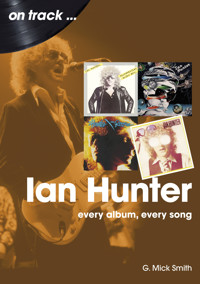
As well as his time in Mott The Hoople, Ian Hunter has had a long and adventurous solo career. In this book, we unlock the secrets behind every lyric, riff, and melody. From the soul-stirring anthems that defined an era to the hidden gems that eluded the spotlight, we leave no chord unheard. It is an immersive voyage into the evolution of a songwriter extraordinaire, as we explore the stories, inspirations, and the mind of the creative maverick that brought these songs to life. With a mix of anecdotes, in-depth analyses, and a touch of rockstar charisma, this book isn't just a collection of pages, it's a front-row seat to Hunter's musical legacy.
Whether you've been inspired by ‘All The Young Dudes’ since its debut or you're just discovering the magic of the Defiance series, Hunter’s music has become the soundtrack to so many people’s lives. It’s a deep dive into the heart and soul of Hunter's almost unparalleled musical journey. This book will appeal to all casual or diehard fans of Mott The Hoople's legendary frontman, making it the ultimate backstage pass Hunter fans have been waiting for.
G. Mick Smith, PhD, The Doctor of Digital, is a consultant and recovering academic. He is the Chief Digital Officer at The Doctor of Digital Podcast and Smith Consulting, having formerly been an Executive Region Director and Campus Dean. Smith earned a PhD in the History of Religions from UCLA, and nine certificates in executive management and educational technology. Mick currently resides far from the madding crowd in sunny California, enjoying his parent's first new car, a 1957 Buick Special. He co-hosts The Aftermath Podcast, and wrote Burning America: In The Best Interest Of The Children?
Das E-Book können Sie in Legimi-Apps oder einer beliebigen App lesen, die das folgende Format unterstützen:
Seitenzahl: 295
Veröffentlichungsjahr: 2024
Ähnliche




















Dedications
This book is dedicated to Michael Riah who from the first time I heard him sing his song ‘Whose My Friend’, I knew what he was here for:
As iron sharpens iron, so a friend sharpens a friend.
Proverbs 27:17 New Living Translation
Contents
Introduction
Ian Hunter
All American Alien Boy
Overnight Angels
You’re Never Alone With A Schizophrenic
Welcome To The Club
Short Back ‘N’ Sides
All Of The Good Ones Are Taken
Hunter’s 80s Hiatus
YUI Orta
The Hunter Ronson Band BBC Live In Concert
Ian Hunter’s Dirty Laundry
The Artful Dodger
Rant
Strings Attached
The Truth, The Whole Truth And Nuthin’ But The Truth
Shrunken Heads
Man Overboard
When I’m President
Ian Hunter And The Rant Band: Live In The UK 2010
Fingers Crossed
Stranded In Reality Box Set
Bibliography
Introduction
In the realm of rock ‘n’ roll, where legends are born and icons take the stage, there exists a rare breed of musician who defies conventions and leaves an indelible mark on fans worldwide. And in the midst of this electrifying tapestry of musical brilliance stands a figure whose name reverberates through and beyond classic rock: Ian Hunter.
In the vibrant tapestry of rock ‘n’ roll history, Hunter emerges as a dynamic figure, embodying the essence of rock ‘n’ roll from his earliest musical efforts in the 1950s to 1969, just before he embarked on a legendary journey with Mott The Hoople. With a spark of rebellious spirit and an insatiable hunger for sonic exploration, Hunter, armed with only a guitar, a vision, and a voice that could shake listeners, he honed his craft, capturing the raw energy of the era while seeking his own unmistakable style. His early years were a whirlwind of gigs in smoky clubs, crafting his songwriting, and playing in semi-pro settings. Hunter crackled with the electricity of possibility. As the clock ticked closer to 1969, a new chapter was about to unfold, setting the stage for Hunter’s monumental collaboration with Mott The Hoople and solidifying his status.
Enter the realm of rock majesty, where, over time, Ian Hunter emerged as the vibrant force behind the legendary Mott The Hoople. From the moment he joined forces with the band, he unleashed a whirlwind of creativity and swagger, transforming their sound into a sonic spectacle that defied convention. With his charismatic stage presence and an arsenal of electrifying lyrics, Hunter became the beacon guiding Mott The Hoople towards greatness. But it was their David Bowie-penned signature anthem, ‘All The Young Dudes’, that catapulted them to immortal fame. Once he arrived at pop success, Hunter walked away from success because he was about to embark on the infectious magic of his own unforgettable opuses.
Imagine, if you will, a sonic alchemist with a pen in one hand and a guitar in the other, crafting timeless lyrical landscapes. Hunter, the singer-songwriter extraordinaire, has been the mastermind behind some of the most exhilarating rock ever recorded. From the gritty passion of ‘Once Bitten, Twice Shy’ to the personal defiance of ‘This Is What I’m Here For’, his music has stirred souls and married rock ‘n’ roll to classic rock and beyond under a common love for the power of music.
Hunter has produced a significant body of work; thus, there is quite a bit to be reviewed, as this is the first track-by-track book ever about his artistry. The series is designed to provide a contrast between solid, factual information and critical analysis. Hunter’s comments are the primary sources I used, and Campbell Devine’s Authorised Biography was indispensable. Unless stated elsewhere, all references to Ian Hunter’s opinions of his own work are taken from Devine’s biography or from his comments in Ian Hunter Stranded In Reality by Proper Records. The author is a lifelong fan and an academic by training. I hope to balance these two critical components into a compelling story about the man who I consider to be the best representative of classic rock and post-rock based on the fact that Ian heard the early rock and rollers; moreover, he had his fifteen minutes of fame in his first genuine rock band, then in a second part of his career he teamed up with one of the best guitarists of the classic rock era, and finally, he produced yet another vibrant period of high-quality works that extended the rock genre beyond classic rock.
My discussion of live performances accounts for Hunter’s significant variations in arrangements, dynamics, and musicians as Ian has creatively rearranged his songs throughout his solo career. Listeners can enjoy the studio versions of songs and live alternatives, especially now with the Stranded In Reality massive box set as accompaniment. I analyse each song at its first mention in the book, but the reader can follow the evolution of Ian’s songs since 1975.
Hunter broke the mould of classic rock, where musicians had numerous hits and then repetitively performed them live, as he wrote in ‘All The Way From Memphis’:
Yeah it’s a mighty long way down rock ‘n’ rollFrom the Liverpool docks to the Hollywood bowl
Ian has never been a nostalgia act, and hits were not his forte, but insightful lyrics and the quality of his music characterised his lifetime contribution. Hunter has achieved belated recognition considering the fact that, as the sales of rock have declined, Ian has reemerged on the charts for his last three studio releases. Ian has blossomed as the master of the post-classic rock era. Paradoxically, as classic rock has declined in sales as a genre, Hunter has gotten more popular: quality wins out.
I am striking a balance between the discussion of Hunter’s music and lyrics. Although I am not bogged down in too much analysis of lyrical content, kindly note that the artist is an exceptionally well-read individual. Hunter is not an intellectual, but, is an intelligent individual who makes numerous historical, literary, and cultural allusions. The point of my discussion is to provide the reader with a greater appreciation of Hunter’s music.
Here is the way to proceed. Each chapter stands alone thus, you can be entertained, educated, and jump in and out at any point of musical direction. Finally, the next step, if you have not joined already, is to find a community of Ian Hunter aficionados, if not in person, then online. Welcome!
Ian Hunter
Personnel:
Ian Hunter: vocals, rhythm guitar, piano, percussion, backing vocal
Mick Ronson: lead guitar, organ, Mellotron, mouth organ, bass guitar
Geoff Appleby: bass guitar, backing vocals
Dennis Elliott: drums, percussion
Pete Arnesen: piano, keyboards
John Gustafson: bass guitar on ‘Lounge Lizard’
All songs written by Ian Hunter unless stated
Produced at AIR, London, by Ian Hunter and Mick Ronson
Release date: 28 March 1975
Running time: 40:38
Current edition: CBS
Highest chart places: UK: 21, US: 50
With the startling departure from his troubled band Mott The Hoople, Hunter and the Spider with the platinum hair, Mick Ronson, joined forces. Picture this: Ian finds himself settling into the cosy quarters of Rockland, New York, under the watchful eye of Bobby Colomby, the jazz-rock fusion drummer, while Colomby ventures out on tour. It is within these walls that Hunter’s creative spirit ignites, giving birth to the compelling compositions of his first solo LP.
As Ronson takes flight back to England to assemble a new band, he plants the seeds of collaboration, suggesting the addition of Geoff Appleby on bass, a former comrade from their shared days in The Rats back in Hull. Intriguingly, Hunter’s quest for the perfect rhythm leads him to the swing-infused prowess of drummer Dennis Elliott, whose jazz-rock background struck a harmonious chord with Ian’s musical vision. But the ensemble wouldn’t be complete without the enchanting melodies brought forth by the gifted Hans-Peter Arnesen, plucked from his student realm to join the ranks as the master of keys.
While Mott had already secured the legendary Air Studios in London for their next endeavour, Hunter and Ronson daringly opted for a different path, venturing into uncharted musical waters. The stage is set, the characters assembled, and the magic awaits as we unveil the captivating tale of Ian’s first bold step into the realm of his own musical destiny.
Ian signed a solo deal with Columbia with the idea of taking some of the work he started in Mott but with his new direction in mind. The leftover Mott material included ‘Colwater High’, ‘One Fine Day’ and ‘Lounge Lizard’. The latter song was re-recorded with the new band but the first two songs were not completed originally. Nine original tracks burst free. Only ‘Boy’ was co-written with Ronson; all other tracks were Hunter’s.
Ian Hunter’s self-titled debut album introduced the world to a raw, untamed talent whose music echoed with an unbridled spirit of rebellion and a burning desire to break free from the shackles of pop conformity that Mott The Hoople had become. With his distinct voice and poetic songwriting, Hunter captivated audiences and left an indelible mark with the hit ‘Once Bitten Twice Shy’. But as the echoes of his debut faded into the distance, a new chapter was about to unfold – an evolution that would solidify Hunter’s status as a true musical force. Enter the realm of his second album AllAmericanAlienBoy. The release would be an artistic tour de force – and commercial suicide.
‘Once Bitten Twice Shy’
‘Once Bitten Twice Shy’ is one of Ian’s best-known songs, which was both a single and an album track, and he summarises it briefly as 1970s Chuck Berry with a twist. It’s a strong track that has just about everything going for it: beat, build, and restraint. In the latter part of the AIR sessions, it started with a Little Queenie rhythm guitar style vamp along with the unplanned but signature ‘Allo’ intro paralleling the ‘Goodbye’ that concluded Mott The Hoople’s ‘Saturday Gigs’. Building in intensity, then mid-way, Ronson’s guitar sparkled, culminating in a fifteen-second vibrato held over the bridge until driven home to the final choruses. Mick doubled on bass as well.
It took Hunter ten hours to write the music and lyrics while at Mick’s home when Ronson’s wife Suzi brought in coffee for the effort while working at their flat behind the Albert Hall. The verse and the bridge came first using a little drum machine, but the hook took longer. One night, Ian sat with a drummer in the Speakeasy, talking about the song when the drummer made a comment and something clicked in Ian’s head; this was ironic timing since they were both sitting there drunk. In any case, a bell went off for Hunter and he rushed home to write the song while saying a bit about a girl, the Mott breakup, and rock business all at once.
Hunter thinks of it as a first-rate track. The regal presence of Marc Bolan popped into the studio where Hunter and Ronson were recording and reacted by saying he always underestimated Ian: better late than never. It would be the only time they spoke.
It was a 1975 UK Top Ten hit, and Hunter was sure that it would be. Later, Guns ‘n’ Roses would share a manager with Great White and both wanted to record the song. Great White only sold two million copies, while Guns and Roses sold seven million on the album that it would have been featured on; that meant Hunter lost a few bob there. Oddly, the lead singer was nominated for a Grammy and the band’s version was an American Top Five single in 1989. The song was later covered also by Shaun Cassidy and Status Quo.
‘Who Do You Love’
‘Who Do You Love’ is an infectious toe-tapper with funky Sixties-style harmonica and boogie piano. British audiences favoured CBS’s second single from the LP. This is a ‘hey, it’s a me or him babe’ type of song. Hunter is asking for a decision. The lyrics mention Detroit, so some speculated that it was about a DJ there, but Ian has stated that this is not the case. He can’t remember who it was written about. He enjoyed the groove. Hunter considers it a fabricated song with elements of truth. It appealed to a wide range of artists, considering that the Pointer Sisters, Def Leppard, and Joe Elliott’s Down ‘n’ Outs recorded versions.
‘Lounge Lizard’
‘Lounge Lizard’, although released on the first solo LP, had a bit of history. The song was originally a mechanical Mott The Hoople track as the B-side of ‘Saturday Gigs’. Ronson re-did it with Roxy Music’s Johnny Gustafson on bass. The re-do produced a stronger version than the original. The track features a ‘Honky Tonk Women’ cowbell, Ronson’s guitar motif, and Gustafson’s impressive bass line.
The year before Hunter met his future wife, Trudi, he was pulling women out of the Speakeasy in the middle of the night, which is the theme of the song.
The lounge lizard is what most fans imagine the rock ‘n’ roll lifestyle is all about, with groupies clamouring for musicians. Hunter wrote it using a girl, but as a cover-up for something else he was trying to express; maybe it is the tawdry rock life, but a fan often sees the lifestyle as glamorous. Ian confirms that the song is fictional.
‘Boy’(Hunter/Ronson)
Ronno (Mick Ronson) convinced Ian to write the nine-minute atmospheric ‘Boy’ after leaving Mott The Hoople, and Ian wrote ‘Did You See Them Run?’ coupled with a poem he wrote in 1973, ‘Shade’s Off’. Once developed, ‘Boy’ became an original song. This was one of the songs that was unusual for Hunter in that it was written in the studio. It is likely the first song that Ronno and Ian worked on together and although Mick did not write the lyrics, he was instrumental in putting the band together and writing arrangements; thus, Ian felt he deserved co-writing credit.
Since Ronno did get co-songwriting credit on this, it fuelled the speculation that the lyrics refer to David Bowie and coke was certainly involved during Diamond Dogs. However, Ian has stated that it was a compendium of people and not about one person, specifically, Bowie, since Ian would not give away eight minutes to him. Hunter also said there is a bit of himself in the song and, if not Bowie, his manager was a target. If one person was singled out, it would be Joe Cocker, who was down on his luck in his career and Ian knew him a bit from his days at Island Records. Clearly, the song is about the toll that the rock star life can take on a person.
In the lyrical reference, life has good things to enjoy, such as BeauGeste, which is an adventure novel by British writer P.C. Wren from 1924, which details the adventures of three English brothers joining the French Foreign Legion.
‘3,000 Miles From Here’
‘3,000 Miles From Here’ was released as both an album track and a B-side. The stark, ominous riff and Hunter’s vocals were fantastic, but Ronson’s inspirational guitar adds a great deal to the track. The simplicity of the track is effective as with an unfinished demo to highlight Ronson.
It appears to be about a groupie as Hunter conveys the sadness, guilt, and emotion of spending the night with a woman: ‘And the sun will rise tomorrow/And wash my sins away/For I know that I’ve abused you/But I only had a day’. It was a holdover from Mott and Ian has said it was a sad song but realistically about how it was in the early days; the groupies can be both sad and romantic. It was partly written already but finished in the studio at the last minute because they were one song short for the solo LP.
‘The Truth, The Whole Truth, Nuthin’ But The Truth’
The slow, funky burn of ‘The Truth, The Whole Truth, Nuthin’ But The Truth’ is captivating and love gone wrong is a perennial topic of interest in pop songs. It’s a great combination of Hunter’s vocal, Ronson’s guitar, and the driving backbeat that makes this song so strong. It is one of those honest love songs similar to ‘Bastard’. Ian says the lyrics are ambiguous, but he wrote it musically with Mick’s guitar in mind for his incredible playing, in particular, the middle scream section. Ronno dove right in and the slow, simplicity of the song lets the guitar soar. Just before the AIR Studios session, Mick saw a review for his unappreciated PlayDon’tWorry LP that was vicious and personal. Ronson read the review, internally charged, and burnt his searing solo in response. Take that! Mick laid it down in five minutes.
‘It Ain’t Easy When You Fall’
With ‘It Ain’t Easy When You Fall’, Hunter is saying that fame and success are fleeting, employing tender verses, intelligent piano interludes and captivating harmony-laden choruses. This song is unusual in that the song segues into the spoken-word poem ‘Shades Off’. The subject matter is Mick Ralphs, who Ian relates really did talk about ships and boats as topics related in the song rather than getting down to the needed musical business. This is Ian’s sendoff to Ralphs, who was off to Bad Company, but he still considers him a friend. It appears that Hunter is suggesting that Mick was down and out, but life moves faster. Ian and Ralpher did write solid rock while together and there is a sense of genuine loss in the song. Ian is suggesting that Mick has more to offer and has to pick himself up. Maybe Bad Company was the result.
‘Shades Off’
The spoken word poem ‘Shades Off’ is the coda to ‘It Ain’t Easy When You Fall’. It was written as a poem on a short tour of Scotland with Mott The Hoople in early 1973. Ian sent off the words to be published, but it never made it into print; however, Hunter was inspired by the countryside as he is half Scot and in the tour bus, he looked out the window and the words just started coming. The entire poem took maybe ten minutes. Poems had already appeared on Mott with a D.H. Lawrence contribution and Baudelaire on MadShadows. The poem was included when the album was running short of material. It served the purpose of getting a poem published and it helped the sequencing of the album. It is clearly a self-conscious personal poem of Hunter’s. The ‘uncontrollable light’ phrase in the poem is when songwriting emerges perfectly; Ian has felt that maybe half a dozen times in his career.
‘I Get So Excited’
This rocker closes out the first LP and it is a straight-ahead barn burner. The impressive debut album closes out with vibrant verses, a simple chorus, and gleeful lyrics; it starts and keeps up a frenetic pace about the buzz and fandom of music. The sequencing of the album is perfectly ended with this ode to the power and passion of rock music. There was discussion for the track as a single release, which seems reasonable since it features a stirring and driven Mick Ronson solo and Dennis Elliot’s powerful drumming. CBS thought the track was more commercial and favoured its release, but Hunter liked it the least and it almost didn’t get released at all. There were numerous outtakes and needing a track among others, this one was fished out by Ronson from other songs to finish in a rush. As a result, Hunter’s voice wasn’t all that strong, so they added every echo in the book.
The excitement has to do with music and crowds, as at Wembley or parades. Even if it’s the end, he says, ‘I don’t care’, and it could even be tied back to music since he’s a fan. The song speeds up to end the LP on a high, fast note.
Related Songs
‘Colwater High’ has been around for a considerable amount of time. Originally, it was conceived as a possible follow-up to Mott The Hoople’s ‘Foxy Foxy’ in 1974. Then, this song was resurrected for the first Hunter LP, but it did not see the light of day. Ian had no lyrics for the music. He didn’t write the lyrics until 30 years later, but oddly enough, these words and lyrics for ‘One Fine Day’ came in about half an hour.
It seems as though the lyrics are describing a love but termed ‘High’ and he counts out 1-4, so maybe he means a high school. It is not clear, although the lyrics are among the most intricate he has written. Since he is a slave always, perhaps he means the memories and importance of troubled youthful years.
’One Fine Day’ was first conceived in Mott, but it is an outtake from the first Ian Hunter LP and Ian hated it with a passion, but drummer Dennis Eliot thought it was so good it should have been a hit once Ian had recorded new vocals.
The 30th-anniversary bonus tracks include: ‘Colwater High’ (3:12), ‘One Fine Day’ (2:21), ‘Once Bitten Twice Shy’ (single version) (3:52), ‘Who Do You Love’ (single version) (3:17), ‘Shades Off’ (poem) (1:37), ‘Boy’ (single version) (6:25)
The first Ian Hunter solo effort made a splash, but his second release proved to be more difficult.
All American Alien Boy
Personnel
Ian Hunter: lead vocals, rhythm guitar, piano on ‘All American Alien Boy’, backing vocals
Chris Stainton: piano, organ, Mellotron, bass guitar on ‘Restless Youth’
Jaco Pastorius: bass guitar on all tracks, guitar on track ‘God (Take 1)’
Aynsley Dunbar: drums
Jerry Weems: lead guitar
David Sanborn: saxophone
Dominic Cortese: accordion
Cornell Dupree: guitar on ‘Letter To Brittania From The Union Jack’
Don Alias: congas
Arnie Lawrence: clarinet
Dave Bargeron: trombone
Lewis Soloff: trumpet
Freddie Mercury: backing vocals on ‘You Nearly Did Me In’
Brian May: backing vocals on ‘You Nearly Did Me In’
Roger Taylor: backing vocals on ‘You Nearly Did Me In’
Bob Segarini: backing vocals
Ann E. Sutton: backing vocals
Gail Kantor: backing vocals
Erin Dickins: backing vocals
All songs by Ian Hunter unless shown
Produced at Electric Lady Studios, New York City, by Ian Hunter
Release date: 29 May 1976
Running time: 69:34
Current edition: Columbia
Highest chart places: UK: 29, US: 177
The outsider Hunter unravelled the enigmatic nature of America in his second LP, deemed by Ian as nothing short of ‘commercial suicide’. Alas, the harmonious partnership between Hunter and the incomparable Ronson would be derailed for a staggering three years by the relentless machinery of the music business. The virtuoso Ronno found himself irresistibly lured by the call of countless other artists, yearning to engage him for production or session work. Hunter was years ahead of commercial pop until the third part of his career, when the promise of this LP emerged full-blown with his later stellar efforts.
The legendary Bob Dylan invited Mick to tour after the pair met Dylan when they went to New York’s Bleecker Street to see Bob Neuwirth play a spontaneous gig at The Other End. Unlikely for Ronson, who described Bob as ‘Fuckin’ Yogi Bear’, he nonetheless joined the travelling menagerie of Dylan and company in October 1975 as The Rolling Thunder Revue. Also, strangely, Bob turned out to be a Mott The Hoople fan and knew Hunter’s work; Ronson invited Ian to show up for the rolling band, but without an official invite, he passed.
Hunter, now an American emigre, absorbed around-the-clock TV, political corruption, high energy, and the madhouse landscape of New York. The move elicited a great awakening of writing, and ideas came faster and heavier than previously for Ian. Never content with the past and boredom, the next project would be a startling first impression of America filled out with a new musical direction, thought-provoking observations, and artistic freedom. The album reminds some of Dylan, Randy Newman, and John Lennon.
The supportive Bobby Colomby assisted with forming a new band of jazz-based players married to Hunter’s intelligent songwriting. The core of the band turned out to be Aynsley Dunbar, drums, saxophonist David Sunburn, guitarist Jerry Weems, and on keyboards Chris Stainton. Ian felt that he had the best and he got out of their way and allowed them freedom to contribute musically themselves. The final key component came from Colomby as well when one day Ian was introduced to the young but still relatively unknown phenomenon Jaco Pastorius on bass. Pastorius invented a distinctive bass style known as ‘the Jaco growl’.
The album was recorded at the famous Electric Lady Studios in Greenwich Village, NYC starting in January 1976 for three weeks. The entire process took only twenty-six days. Several tracks were first or second takes, with all the songs written, produced, and arranged by Hunter. Four numbers did not make the cut: ‘Common Disease’, ‘If the Slipper Don’t Fit’, ‘Whole Lotta Shakin’, and ‘A Little Star’. These songs were either too fast for the rest of the completed songs on the LP or had unfinished lyrics.
The eight tracks of British American reflections, all written by Hunter, were sprinkled with jazz artistry, generally gentle songs, and poetic elements which delighted many music critics, including yours truly as a young man yearning for meaning, but the effort startled Hunter fans. Ever the innovator, Ian ignored commercial expectations, but the generally conceptual record was filled with intelligent wordplay, original arrangements, and observations about Britain, America, young love, the Mafia, rape, drugs, corporate decline, political corruption, rock ‘n’ roll, and God, all on one rock LP! The LP was arresting at the time but the promise of it anticipates much of Hunter’s later intelligent works indicative of ideas he revisited in the remainder of his career.
‘Letter To Britannia From The Union Jack’
Originally entitled ‘To Rule Britannia From Union Jack’, the opening track of the LP addresses a concern about Great Britain that Ian raises from time to time and increasingly and profoundly throughout his career. Not surprisingly, on an album about his first impressions of America from a recent transplant, he reviews his thoughts about his homeland, England. He recognizes the slow decline of Britannia, symbolized as the helmeted female warrior holding a trident and shield from the perspective of the Union Jack flag. It is a lament about England as ‘just a victim of your history’, but the glory of England remains firmly on the masted flag. The Union Jack pleads, ‘do not lower me by half’. The sentiment of the song is sad, but it implies the hope that Britannia may rise again. The song was a comment on Ian’s feelings about the sorry state of Seventies England; his feelings are complicated, but this is how he felt at the time.
‘All American Alien Boy’
The title track started with Gerry Weems’ piercing guitar, which cut in sharply on the fade out of ‘Letter To Britannia From The Union Jack’. ’All American Alien Boy’ had interesting origins and although Ronson was not fated to be on Hunter’s LP, he had a hand in the song. Bobby Colomby invited Mick and Ian to meet Jaco Pastorius, bass player extraordinaire and the quartet’s jam was captured on ‘It Never Happened’ with a Super 8 cine film of their initial effort.
The seven-minute tour de force was a lyrical discourse perfectly integrating jazz-laden brass, an inspired bass interlude from Jaco, blues, and a bit of funk with Weems’ guitar and Sanborn’s gutsy sax. Artfully sprinkled with both British and American allusions, the collage creatively addressed the trans-Atlantic cultural voyage of Hunter.
This is one of Ian’s most well-known tracks, available in numerous versions. The musicians, most notably for this song, Jaco Pastorius on bass, did it Hunter’s way on the album, but for the single, it was performed the musicians’ way.
The lyrics of the song describe an outsider’s view of America in the 1970s. Ian found America ‘tacky’ as his first impression as compared to Britain. He makes a reference to John Lennon since the ex-Beatle had beat a retreat to America as well. Ian takes on the commercialism of television and references the prices of hamburgers, televisions, hotdogs and pizzas. A political point Hunter makes occasionally is about guns, as he does so here with a point about Saturday Night Specials. The phrase is a colloquial term in the United States for inexpensive, compact, and small-calibre handguns. Guns pop up in Hunter’s live recasting of ‘Now Is the Time’. Mary Tyler Moore was one of the important television stars back then, starring in TheMaryTylerMooreShow (1970–1977), which helped define a new vision of American womanhood. He closed out the song by reciting a rap-like list of Native American chiefs which he relates took a long time. Ian’s appreciation of Native American history is revisited in ‘Ta Shunka Witco (Crazy Horse)’. Finally, one of the most striking political lines is: ‘Don’t want to vote for the left-wing – don’t want to vote for the right – I gotta have both to make me fly’.
‘Irene Wilde’
‘Irene Wilde’ from Ian’s second LP is one of the most well-known, beloved, and most often played of all Hunter originals. The song is a classic coming-of-age song for so many of us young boys growing up. We have that first crush and then she breaks our heart. In Ian’s case, this incident was the point of growing up and motivated him to confess: ‘I’m gonna be somebody – someday’.
Hunter actually started his songwriting career based on this rejection and composed all his early songs for her. Thank you, Irene! As a result, we have the output that Ian has produced all from this key youthful rejection:
And I think most folks agree, a little put-down makes them seeThey ain’t no chain – just a link and that’s why you made me thinkGonna be somebody – be somebody – be somebody – someday
Hunter was that sixteen-year-old who ran letters between Irene and a guy she went out with at Shrewsbury High School. According to Ian, she had an irresistible Julie Christie jawline; Christie was a British actress and an icon of the Swinging 1960s.
Irene really did snub Ian at the bus station, later married, had twins, and he never saw her again but heard she liked the song. The Barker Street bus station is a car park now. At first, the song was not going to be on the album since Hunter thought the melody was too much like Bach’s ‘Air On A G-String’, but manager Fred Heller insisted the song was included on the album and of course, he was right, as Ian says: for once!
The confessional nature of Hunter’s ballad on this song is similar to the emotional impact of ‘Waterlow’ and ‘I Wish I Was Your Mother’ and was immortalised as one of his finest autobiographical efforts.
‘Restless Youth’
Gerry Weems offered a robust guitar part for ‘Restless Youth’, which is a medium-paced song that sparked up the LP with a song similar to what Ian knew from his past. Chris Stanton played bass on this one track in a style reminiscent of Joe Cocker’s ‘With A Little Help From My Friends’. This song, although not American and autobiographical, seems similar to Hunter’s British upbringing since he, too, had a restless youth. The Little Italy son is the leader of the gang. He is part of the criminal element and becomes a hitman, but his life is ended by a policeman. Ian’s observation of America addresses the juvenile delinquency that he observed as a newly transplanted emigrant. Ian notes that it probably came from a newspaper story of the time and he was labelled ‘hostile’ on a school report; he still has the report.
‘Rape’
‘Rape’ is hauntingly political but with a beautiful gospel flavour and a stunning female chorus about a violent and personal encounter. Justice is not served is the message, while the perpetrator believes he will escape punishment because he’s ‘sick, rich, and stoned’. The final verdict is: ‘Justice just is ... Not’ punctuated by majestic backing vocals.
‘Singin’ In The Rain’ by Gene Kelly was the original intro for the song and similar to the juxtaposition between high art and violence in A Clockwork Orange’. Kelly rang Fred Heller, Hunter’s manager, and felt the inclusion of his song might tarnish his image and the intro was dropped in 1976. Upon the reissue, Kelly had passed away in the meantime and maybe Sony took advantage of his passing and released the Kelly intro, although the label denied it and said it was a mistake. In any event, the intro works and supports the point that Ian was making. Violent criminals take advantage of society and often, there is no justice for victims.
‘You Nearly Did Me In’
The majestic ‘You Nearly Did Me In’ started off as a song entitled ‘Weary Anger’ but ultimately featured the members of Queen on backing vocals: Freddie Mercury, Brian May and Roger Taylor. It was all happenstance; Trudi, Ian’s wife, met Queen on a flight to New York and invited them to Electric Lady studio that night. Unbelievably, they sat and waited for an hour before Hunter knew they were there waiting and wanting to help. Freddie asked: ‘Is there anything we can do?’; Instead of using backing girl vocals as arranged to sing, the boys stepped in. Roger took the really high lines and increasingly sang higher. Mott The Hoople and Queen had a long history together and Ian thought the band was fabulous and wonderful. Hunter said Freddie was sorely missed. David Sanborn contributes a fabulous sax on the track.
The first verse is about the lost children of the night and then the chorus builds up to the repeated lines of you nearly did me in. The crescendo bursts with the immortal lines:
What ever happened to dignityWhat ever happened to integrityWhat ever happened to honestyWell I’ll tell you something baby – I feel the pain just like the sea
The song is a standout of the LP, portraying a stark American landscape amidst the horrors of addiction.
‘Apathy 83’
There is an alternate version, although it is unclear if this is just another studio take or a demo and the song of unknown provenance is simply entitled ‘Apathy’, while the regular release of the song ‘Apathy 83’ emerged on the album. The number 83 has no obvious reference.
With accordion and congas, Hunter captures aspects of Dylan’s work, but he makes it his own by describing the decline of rock ‘n’ roll to give way to the music of the young and the sickly sound of greed. There are several intriguing aspects of the lyrics in this song and as typical on the album release, Ian is making profound social observations. Most important is Ian’s observation that the music business was declining drastically, replaced by coke and corporations. In several verses, he states that there is ‘no rock ‘n’ roll, no more just the music of the youth’, ‘greed’, and ‘rich’. In 1976, the music industry was dominated by a few major record labels, such as CBS, RCA, and Warner Communications.
With the title, Hunter makes an offhand reference to ‘Sympathy For The Devil’ by The Rolling Stones. ‘Sympathy’ is a track from The Rolling Stones’ 1968 album BeggarsBanquet. Hunter confirms that the song is related to the Stones. He relates a story that he had just seen the Stones at Madison Square Garden, and who should he meet at the concert but Bob Dylan. Bob asked him what he thought of their show; Ian responded: ‘Insipid’ and Dylan responded ‘apathy for the devil’. Dylan gave Hunter the idea for the song. The rock ‘n’ roll of Little Richard and Fats Domino, according to Hunter, was associated with innocence, while the 1970s apathy was only punctuated by David Bowie.
Another important theme is social upheaval in punk rock. Bands such as the Sex Pistols, The Clash (big fans of Mott The Hoople), and The Ramones gained popularity with their anti-establishment message and DIY approach to music production.
References to the American Civil War and ‘gone with the wind’ tie in with the themes of power and violence in the song. Rhetorically, he asks: ‘Was it your General Sheridan who once said, ‘The only good, good man is a dead good man’




