


Erhalten Sie Zugang zu diesem und mehr als 300000 Büchern ab EUR 5,99 monatlich.
- Herausgeber: Atlantic Books
- Kategorie: Geisteswissenschaft
- Sprache: Englisch
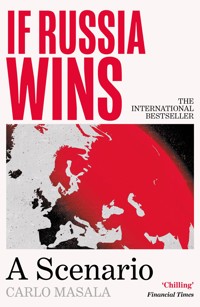
**THE INTERNATIONAL BESTSELLER** A New Statesman Book of the Year A Le Monde Best Book of 2025 'Amazing ... My book of the year' Alastair Campbell, The Rest Is Politics 'So compelling ... So plausible' New Statesman 'Chilling' Financial Times 'Blistering' Economist 'A cracking book ... Reads like a thriller' Matt Frei, LBC March 2028: Russian troops capture the small Estonian town of Narva and the island of Hiiumaa in the Baltic Sea. After victory in Ukraine, Putin's long-mooted encroachment into the Baltic states has begun. Europe's slow rearmament and its compromised military and intelligence capabilities is now clear for its enemies to exploit. Does Article 5 of NATO apply? What will the alliance decide? Will they risk nuclear war? In If Russia Wins, military expert and Professor of International Relations at the University of Munich, Carlo Masala explores these questions and underlines what is at stake in Ukraine in the starkest possible terms. For those of us who have only ever known peace, we are accustomed to everything turning out well in the end. But what if it doesn't? Translated from the German by Olena Ebel and Ruth Ahmedzai Kemp.
Sie lesen das E-Book in den Legimi-Apps auf:
Seitenzahl: 124
Veröffentlichungsjahr: 2025
Das E-Book (TTS) können Sie hören im Abo „Legimi Premium” in Legimi-Apps auf:
Ähnliche

















Carlo Masala is Professor of International Politics at the Bundeswehr University Munich. He previously worked as Deputy Director in the research department at the NATO Defence College in Rome. Since January 2024, Masala has been Director of the Centre for Intelligence and Security Studies at the University of the Federal Armed Forces in Munich. He received the Lichtenberg Medal in Gold from the Lower Saxony Academy of Sciences in Göttingen in 2023 for his academic work and science communication. If Russia Wins was an immediate #1 bestseller upon publication in Germany and has since become a bestseller in the Netherlands.
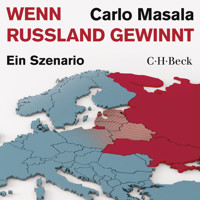
Originally published in Germany as Wenn Russland Gewinnt in 2025 by Verlag C. H. Beck, Munich.
First published in paperback in Great Britain in 2025 by Atlantic Books, an imprint of Atlantic Books Ltd.
Copyright © Carlo Masala, 2025
Translation copyright © Olena Ebel and Ruth Ahmedzai Kemp, 2025
The moral right of Carlo Masala to be identified as the author of this work has been asserted by him in accordance with the Copyright, Designs and Patents Act of 1988.
The moral right of Olena Ebel and Ruth Ahmedzai Kemp to be identified as the translators of this work has been asserted by them in accordance with the Copyright, Designs and Patents Act of 1988.
All rights reserved. No part of this publication may be reproduced, stored in a retrieval system, or transmitted in any form or by any means, electronic, mechanical, photocopying, recording, or otherwise, without the prior permission of both the copyright owner and the above publisher of this book.
No part of this book may be used in any manner in the learning, training or development of generative artificial intelligence technologies (including but not limited to machine learning models and large language models (LLMs)), whether by data scraping, data mining or use in any way to create or form a part of data sets or in any other way.
Every effort has been made to trace or contact all copyright holders. The publishers will be pleased to make good any omissions or rectify any mistakes brought to their attention at the earliest opportunity.
10 9 8 7 6 5 4 3 2 1
A CIP catalogue record for this book is available from the British Library.
Paperback ISBN: 978 1 80546 574 4
E-book ISBN: 978 1 80546 575 1
Printed in Great Britain
Atlantic Books
An imprint of Atlantic Books Ltd
Ormond House
26–27 Boswell Street
London
WC1N 3JZ
www.atlantic-books.co.uk
Product safety EU representative: Authorised Rep Compliance Ltd., Ground Floor,71 Lower Baggot Street, Dublin, D02 P593, Ireland. www.arccompliance.com
Contents
Introduction
Narva, Estonia: 27 March 2028
Palais des Nations, Geneva: Three years earlier
Europe and the United States: A wind of change
Russia: A thaw in Moscow?
Ukraine: A country in chaos
Brussels: Limited defence capabilities
Moscow: Strategy
Kidal, Mali: 2 February 2028: The game is on
Brussels: 5 February 2028: Europe takes the bait
South China Sea: 28 February 2028: Help from an ally
Seattle: 27 March 2028, 01:00 UTC
Berlin: 27 March 2028, 02:20 UTC
Berlin: 27 March 2028, 06:30 UTC
Moscow: 27 March 2028, 07:00 UTC
NATO Headquarters, Brussels: 27 March 2028, 12:00 UTC
The White House, Washington, DC: 27 March 2028, 12:15 UTC
80° 49′ 35.2″ N, 66° 27′ 12.5″ W: 28 March 2028, 10:27 UTC
NATO Headquarters, Brussels: 28 March 2028, 14:00 UTC
Rzhev, Russia: 29 March 2028, 07:00 UTC
Moscow and Beijing: 30 March 2028: A new centre
Afterword
Introduction
The heroine is under pressure. The villain has her in a stranglehold, her gun is out of reach, the plane full of explosives is heading straight for the White House. The audience holds its breath. The situation seems hopeless. But then comes the twist! She wriggles out of his grip, grabs the gun, steers the plane upwards – and after the close call comes the happy ending.
We are used to thinking that everything will be fine. That is how it works in every Hollywood film. That is how it was in 1945 and 1989. Not straight away – that would be boring. But eventually, everything turns out okay. Sure, our democracy, Ukraine and the West are under pressure. Populists are winning elections, Russian troops are advancing, Donald Trump is president. But in the end, it won’t be so bad. Russia won’t attack us, our democracy will survive, the West will remain strong.
But what if things don’t turn out that way? What if Russia wins?
To understand what is at stake and which decisions could have which consequences, we need to know what could happen. This is the strength of thinking through scenarios. In science, but also in political and military planning, scenario-based strategizing is a method of simulating future developments based on current trends and events. The aim is to identify the conditions and factors that might determine these developments and to extrapolate creatively from the present.
Scenarios expand the realm of possibilities in our minds. They serve to counteract intellectual complacency and short-term political horizons. What is at stake in Ukraine and in our time only really sinks in when we think about what could happen if things do not turn out well.
It is possible that Russia will win in Ukraine. Perhaps it will even have won by the time this book is published – who can say for sure? Although, it seems to me it’s already a Russian victory if they manage to keep the territory they have occupied. Now, some people may not care about Ukraine. And quite a few may think, ‘It will be good if the war finally ends. Then things can go back to normal. Just give Russia what it wants, then there will be peace.’ But is that so? Is it really just about Ukraine? What if this is only the beginning? What if European security and our entire liberal world order are at stake, and we are once again sticking our heads in the sand? The scenario I present in this book explores how all this could play out.
The future is always open. No one knows what it holds, and no one can foresee all the factors and interactions that will determine it. A scenario is therefore only one of many possible ways in which things might develop. It is important to keep this in mind when reading this book. My goal is not to prophesy. My goal is to encourage reflection, discussion and further thought. And I would also stress: we rehearse scenarios like this in order to avoid them happening in real life.
My scenario is based on data, academic research, and discussions I have had over the past two years with many colleagues – as well as experts within government and the armed forces whose job it is to consider the implications of a Russian victory in Ukraine on developing security policy. I have also incorporated insights from tabletop exercises where I was able to participate either actively or as an observer. However, this scenario, in the form presented here, has been developed by me alone. In security and defence policy circles, other scenarios have been played out and discussed, including a comprehensive military operation against a NATO member state. Mine is not presented in an academic or scholarly format, although it has been developed according to academic standards. In addition to a purely descriptive account of events, I’ve included imagined dialogues, allowing readers to feel like they are observing the action from up close. Finally, this scenario is highly condensed. In reality, the way things unfolded would be much more complex. Countless discussions and meetings would take place at the operational level, and there would certainly be hundreds of phone calls and video conferences between the parties involved. For the sake of readability, I have omitted much of this detail and focused on the major events.
I have had the opportunity to talk to many people in the course of writing this book, and I would like to extend my thanks to them all. I would especially like to thank Sebastian Ullrich at my German publisher C. H. Beck, who supported the creation of this book in his usual calm and professional manner from the very beginning, guiding the process to its conclusion as an intellectual sparring partner and brilliant editor. I would also like to thank my colleague Martin Schulze Wessel, to whom I’m grateful for the analogy of the remilitarization of the Rhineland.
Carlo Masala, August 2025
Narva, Estonia
27 March 2028
The city wakes up to explosions in the early hours of the morning. Two Russian brigades invade Narva from the north and the east. The masked attackers quickly overpower the Estonian border troops. The Russian soldiers also encounter little resistance in Narva itself, and what they do encounter they’re quick to shatter. They have support among parts of the local civil population, who have been supplied with small arms and machine guns in the previous weeks and months. Located in the border area with Russia, this is Estonia’s third-largest city, with a population of 57,000. It is conquered within a matter of hours. By sunrise, the Russian flag is flying from the tower of the historic city hall. Video clips of the hoisting of the flag are circulating across social media in near real time, with the hashtag #DayOfReturn.
The Russian invasion comes out of the blue. It’s true that Narva’s Russian-speaking population has been demonstrating for weeks, on the grounds they’re being prevented from using their language in the public sphere and from practising their culture. Spurred on by disinformation on social media, they also fear that the government in Tallinn could make them second-class citizens and deny them the right to vote. According to information spreading on Facebook and Telegram, this is because they are considered a security risk due to their closeness and ties to Russia. There have also been multiple skirmishes between these ‘Russians’ and the Estonian police. But all this has happened before, and the Estonian government assumed the situation would – as before – be brought under control. The massing of smaller Russian units on the border was noted but was not considered a serious threat. After all, there are NATO troops present in the country: 1,700 soldiers as part of the Enhanced Forward Presence (eFP), and 600 US infantry personnel in Võru. Policymakers have continually reassured themselves that this will provide sufficient deterrence.
Furthermore, in the days leading up to the attack, Estonia’s and NATO’s attention was focused on the southern part of the Estonia–Russia border, where a Russian army division has been rehearsing various manoeuvres as part of their Operation Motherland exercises. And that’s how the surprise attack succeeds. A response from the British-led NATO troops stationed some 145 kilometres from Narva is out of the question within such a short time frame.
The Narva attack isn’t the Russian army’s only operation that night. Russian soldiers disguised as tourists have been taking ferries to the island of Hiiumaa, off the coast of Estonia, for the past few days. Now, they spring into action. They are supported by two amphibious warships from Russia’s Baltic Fleet, which have made an unexpected change of course en route from St Petersburg to the international waters of the Baltic Sea, approaching Estonia’s second-largest (but sparsely populated) island from the north. It is still dark when they lower their landing boats into the water, and about 400 Russian marines land off the coast of Hiiumaa to support the troops already on the island. Here, too, resistance quickly collapses. By morning, the Russian flag flies in the town of Kärdla on Hiiumaa, a town with a population of 4,000.
In just one night, Russia has seized two Estonian cities and taken the whole of NATO by surprise. Both operations make strategic sense from a Russian perspective. With Narva, they have conquered a city whose population is 88 per cent Russian-speaking; Hiiumaa offers the Russian navy the ability to threaten and, if necessary, to implement a naval blockade of the Baltic states between the Russian ports of St Petersburg in the north and Kaliningrad in the south.
One more noteworthy event from this night: the president of Belarus, Lukashenko, announces that, in the coming days, he will be sending several brigades of his country’s armed forces to Astravyets, a small border town just 50 kilometres away from Vilnius, for exercises.
The attack on the Baltic states has begun.
Palais des Nations, Geneva
Three years earlier
The mood is frosty as the delegations from Ukraine and the Russian Federation meet in Geneva at the Palais des Nations. There are five representatives from each side, and they have been working on the text of the treaty for weeks, mediated by the US and China. These men and women have been at war since 2022, and it clearly shows in their faces and postures. They have all aged, even though some are barely older than thirty. The Ukrainians know what they need to do – what the US and China, but also Russia, expect from them. They have come to Geneva to sign their capitulation. It is not a formal capitulation, but the surrender of over 20 per cent of Ukrainian territory – land for which they have been fighting for years with considerable losses. But now they have neither the manpower or materiel nor the support from the West to continue the fight.
President Zelensky held a final meeting with his Western partners only the evening before. He pointed out the catastrophic consequences of a Russian victory for European security and asked for a substantial increase in aid in order to keep fighting. But the mood had shifted. It’s been far too long since there was any progress, argued the US president. What battles has Ukraine won? How much land have they recaptured recently? He can’t keep justifying to the American people why so much money is being spent on military support for Ukraine. If he bought Greenland for the same amount of money, the land-to-dollar ratio would be much better. ‘I don’t do bad deals…’
The British prime minister tried to intervene, ‘Mr President, Europe—’ But he didn’t get to finish. ‘Europe… has to pay for its own security,’ came the response. Russia has lost enough men and materiel to be easily deterred in the future. It is now time to end this war. ‘If Mr Zelensky wants to keep fighting, he’s welcome to. But at his own expense.’ There was an awkward silence in the room. ‘Zelensky must realize that it’s game over,’ a British newspaper quoted the French president as saying, the next morning.




