


15,59 €
Mehr erfahren.
- Herausgeber: Oldcastle Books
- Kategorie: Geisteswissenschaft
- Sprache: Englisch
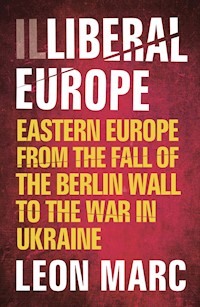
Eighteen years have passed since ten countries from Central & Eastern Europe joined the European Union and more than three decades since the Berlin Wall was torn down in 1989 - but ignorance about what is popularly still called Eastern Europe is as widespread as ever. Slovenia still gets mixed up with Slovakia, the Slavs remain a mystery in a Europe apparently dominated by Romanic and Germanic nations and a country like the Czech Republic is labelled as Eastern European, although one needs to travel west to get from Vienna to Prague. First published in 2009 under the title What's so eastern about Eastern Europe?, this book is much more than a revised and updated version of the first edition. Its presentation of the political and cultural history of Central, Eastern and South-Eastern Europe, written in an accessible language is now complemented with recent developments in the region. The new edition digs into the reasons behind the illiberal turn in Poland, Hungary and elsewhere, putting the alleged democratic backslide into the wider context of European populism. Leon Marc offers a new and fresh perspective in explaining the roots of populism and social conservatism in the region, which the book sees in a mixture of historical factors, economic conditions, the heavy burden of Communist legacy, as well as a reaction to contemporary social developments in the West. Drawing on a wide range of literature, the book calls for more sensibility to these underlying causes, critical examination of the true European values, and for a coalition of defenders of Humanism and Judeo-Christian tradition as key pillars of its identity, in order to save Europe and its liberal democracy. This updated and expanded edition contains a brand new chapter bringing this book up to date with recent events, including Covid-19 and the Ukrainian conflict.
Das E-Book können Sie in Legimi-Apps oder einer beliebigen App lesen, die das folgende Format unterstützen:
Veröffentlichungsjahr: 2023
Ähnliche




















Praise for Illiberal Europe
‘There is a rich tradition of diplomats being great historians and writers… With Illiberal Europe Leon Marc makes himself part of this tradition… A profound reflection of the contemporary history of Eastern Europe and the urgent lessons of that history to be learned for the whole of Europe’ – ROB RIEMEN, Nexus Instituut
‘Marc’s analysis is particularly valuable on the growing mutual incomprehension of “West” and “East” over what constitute European values’ – ENDA O’DOHERTY, Dublin Review of Books
‘The political scene and the moral and cultural climate of the post-communist world are changing dramatically… Leon Marc’s deep and well-researched analysis of these countries’ ancient and recent history offers a reliable key to understanding these processes’ – TOMÁŠ HALÍK, Charles University, Prague
‘A very timely book, adding an additional, well-informed and persuasively argued integral perspective on the contemporary “tragedy of Central Europe”’ – PROFESSOR MATEJ AVBELJ, Nova University, Ljubljana
‘Comprehensively and concisely, Leon Marc’s book presents readers with vital insights into the different dimensions of our common European history and culture’ – PROFESSOR DR JAAP W. DE ZWAAN, Director of the Netherlands Institute of International Relations, on What’s So Eastern About Eastern Europe
‘A critical reading of European history and an eye-witness report of pre-1989 citizen protests in the Eastern bloc highlight overlooked narratives and the undervalued potential of the region’ – VIENNA REVIEW, on What’s So Eastern About Eastern Europe
‘This spirited, erudite polemic against the ignorant stereotyping and arbitrary lumping together of the former communist-ruled countries in Europe under the label of “Eastern Europe” is most timely’ – ROYAL INSTITUTE OF INTERNATIONAL AFFAIRS JOURNAL, on What’s So Eastern About Eastern Europe
Prologue: The Three Classmates
In late July 2003, I stood in a funeral home near Cobham in Surrey, paying my last respects to a man called Karl Lavrenčič. As the coffin was quietly sliding into the mouth of the crematorium, I was overwhelmed by my emotions. In this English suburb the slightly insecure voices of an amateur male group, singing traditional Slovenian funeral hymns, were something from another world. Watching his family and friends, and the Slovenian Catholic priest from London who was conducting the service, the thought slipped through my mind that this man died in the wrong place. Despite all that Karl did for his native country, it was his dying in England – the country that had long ago become his new and (most probably) truest home – that really gave the impression that he had been finally and forever lost to his fatherland.
Karl Lavrenčič, dubbed ‘adventurous World Service broadcaster’,1 and his wife Dora were very good to me. I do not recall exactly how I first met him. It must have been on one of his trips to Slovenia. Formally retired, he continued his freelance work for the Economist Intelligence Unit, for the Slovenian Section of the BBC and for other organisations. His work meant everything to him.
Every morning, there were papers from all over the world waiting on the doorstep of his home in Oxshott. And despite his age – he was over 70 at the time – he still used to travel around the globe. Annual IMF and World Bank gatherings in Washington were his staple food, as were monthly trips to Slovenia. There, he walked into my office one day at one of the newly-emerged political parties, where I was in charge of international affairs. From then on, we kept in touch, and I was a welcome visitor to his and Dora’s home. During my studies at the University of London, I often spent weeks there preparing for the exams.
He and Dora lived a very comfortable life by the time they both retired. But it was not always like that. Karl came to the UK with little more than the clothes he stood up in. Dora, the daughter of a senior Slovenian politician from the years before World War II, did not fare much better. She came from a respected conservative family of Slovenian patriots; he was the son of a liberal father, a former Austrian imperial teacher, and an ethnic-German mother. He managed to survive World War II but he was unhappy about the kind of liberty that Yugoslav Communists were able to deliver and, after a brief spell in prison, he fled the country. With his gift for languages he made his way through the displaced persons’ camp in Austria to the UK. There he went through a number of jobs before he managed to settle at the BBC Slovenian service, finished a degree in economics (to add to the one in law he brought with him from home), and began what was to be a remarkable career in journalism. He toured the Communist world (described in Living with Communism, published in 1966 under the pseudonym of Anthony Silvester), but then he dedicated himself to Africa, which he knew inside out. Yet he never lost interest in Yugoslavia and Slovenia.
Karl was a law student, with a great interest in economics and international affairs, when World War II started. Two of his classmates at Ljubljana University at the time were men whose lives would continue to be intertwined with his in the future – Ljubo Sirc, the son of a wealthy businessman, and Aleksander Bajt, a former altar boy. Ljubo too ended up in the UK soon after the war, where he worked his way up to become a university professor in Glasgow. Another liberal but also a Yugoslav patriot, he was at first a firm believer in the idea of Tito’s resistance movement which he joined. Yet this did not spare his father a death sentence, following a notorious show trial soon after the Communists came to power, and he himself narrowly escaped the same fate. Years later, he established in London the Centre for Research into Communist Economies, an academic think-tank researching the Communist economic experiment at a time when many Western academics seriously thought that it had something to offer. Ljubo wanted to warn them that this was not true.
Aleksander Bajt followed a different path. He came from a deeply religious family. So Karl was enormously surprised when, one morning after the war, he bumped into Aleksander, wearing the partisan uniform with the red star on his hat, and speaking passionately about the new world order that was being established in the country. According to Karl’s later accounts, this meeting finally convinced Karl to leave the new Yugoslavia. Or, as he put it in his book, he left because he was ‘unable to enjoy life in a closely regimented society’.
But Aleksander’s story does not end there. He too had a great interest in economics. In fact, his red star helped him to make a career that he had probably never even dreamed about. He was even able to found and run a relatively autonomous economics institute in Ljubljana, the Slovenian capital. As the Yugoslav and, in particular, the Slovenian socialist economy was flirting with the logic of capitalist economy, his institute grew in fame.
But his most nonconformist act came much later: his book, Berman’s Dossier (written in Slovenian), was a bulky volume of a thousand-plus pages which few read in its entirety and it was completed almost literally on his deathbed. It shook many in Slovenia. By then, books critical of the Communist system were not that rare anymore. But it was shocking that Bajt, a respected scientist and a former partisan comrade himself, should present an utterly revisionist and devastatingly critical account of the partisan resistance and the Communist revolutionary movement.
Ljubo too got involved. With his eternal, almost naïve belief in the intrinsic good of mankind, he accepted after the democratic changes the challenge offered by a new political party (born out of the Socialist Youth Organisation that rebranded itself as the Liberal Democratic Party) and unsuccessfully ran for President of Slovenia, only to later feel that he had been used as a figurehead by men who did not exactly share his passionate and deep belief in liberal democracy. This word will feature prominently in the second part of this book.
Each of the three classmates could tell his own personal story about Eastern Europe as they knew it and each of these stories is so characteristic of Central and Eastern Europe to which this book is dedicated. Throughout it, the three terms (Central Europe, Eastern Europe and Central and Eastern Europe) will often be used interchangeably, as they often are in the English-speaking world, though I will also explain the distinctive nature of different parts of what is commonly known as Eastern Europe. This is also the main subject of the first part of the book.
Today, the Berlin Wall has been down for some time and the countries of the region safely in the European Union and NATO. Over the period of 30 years, knowledge about the region, including popular knowledge, has improved considerably. But the rise of Mr Kaczyński in Poland and Mr Orbán in Hungary and the region’s reaction to the migrant crisis in 2015 have once again raised questions about the meaning of what is called Eastern Europe. The war in Ukraine has further revived interest in this part of the Continent.
Much of what is contained in the following pages was published in 2009 under the title What’s So Eastern About Eastern Europe? The aim of the book then was to familiarise the reader with basic political and social history of the region. A lot of that has, as I said, now became a part of general knowledge and does not need to be repeated. But since then there have also been new developments that have puzzled Western audiences again and posed, albeit in a different way, the same question again: what is so different, after all, about Eastern Europe that, after successfully becoming a part of Europe again, it seems to have turned into what has become known as ‘Illiberal Europe’? This is, at least, how it looks. This question calls for a new, revised and updated edition that retains most of the historical account of the first edition, but omits some of the now less relevant facts, and rather focuses on those aspects that put the so-called illiberal drift or democratic backslide into contemporary perspective.
The book concludes with a final chapter (and an epilogue) explaining the nature of and reasons for this backlash, and putting it into the context of the crisis of liberal democracy, as experienced in the global West today. And it is in this crisis too that – while certainly possessing its own specific problems – Central Europe remains very much a part of Europe and the global West, including when it comes to the current culture wars in the West. In fact, while this book is essentially about Eastern Europe, its political and cultural history, before and after the fall of the Berlin Wall, it also shows that the current challenges to the liberal order in this part of Europe are to a great extent an offshoot of the same trends in the West – and of its insecurity about itself in a dangerous time. What we are witnessing is not only about the choice between liberal and illiberal, but also between different interpretations of a liberal order. In this analysis of illiberal Europe, as well as in the search for a genuine and noble Western liberalism and a true and distinct European identity, Eastern Europe is therefore only a convenient geographic point of departure. More than just a question of geography, illiberal Europe is a state of mind worthy of exploration.
1. https://www.independent.co.uk/news/obituaries/karl-lavrencic-36832.html (Retrieved on 23 June 2022.)
Introduction: Eastern Europeans Descend on the West
Ruairi seemed rather lonely. In the Superquinn supermarket, in a wealthy Dublin suburb on a Saturday morning in the spring of 2005, he was one of the few Irish staff at the checkout. The girl serving us was from Lithuania, and my wife and I were also from what is described as Eastern Europe. The night before, we had had dinner in a Lebanese restaurant with a Slovakian couple. The two waitresses were Polish and the belly dancer was German, presumably former East German.
Within a couple of years since May 2004, the day of the EU accession of eight new Central European (and two southern European) member states, several hundred thousands of workers from these countries came to seek work in Ireland. The decision of the Irish government to end the system of work-permits for workers from new member states was hailed by the opposition, business and trade unions alike as a way of securing much needed extra labour for what was then called the Celtic Tiger. That was, of course, before the global financial crisis of 2007.
Apart from Ireland, only the UK opened its labour market equally generously in 2004. In the period from May 2004 to March 2007, some 630,000 people from the eight accession states sought work in the UK.2 This may seem a lot but, in proportion to the population, the figures for Ireland were even more impressive. Furthermore, the UK has for some time been a desired destination for foreign job seekers, and has traditionally been (at least in the cities) a multicultural society, so a couple of hundred thousand Eastern Europeans should not have represented a major challenge. (At least this is what most people thought before Brexit.) Other EU countries’ job markets only followed after the so-called transition periods for the free movement of labour.
The Irish experience, however, has been quite different. Immigration there was a quite recent phenomenon and had come only a generation (or less) after Ireland began to recover from its own brain- and youth-drain. For centuries, Ireland used to be a country of emigration. ‘Nobody ever wanted to come here’, the Irish say. On the contrary, people just did not know how to get out quickly enough. The sight of so many now so eager to enter the country has been a source of both puzzlement and pride to the Irish – at least that was the case then. It was taking place in a society that was not really used to foreigners but also in one that – as I will try to show later on – shares some of the features with the societies of Eastern Europe.
It does not, therefore, come as a great surprise that Ireland (even before the 2008 recession hit the world) soon became perplexed about whether it was indeed a good idea to have workers from the new member states allowed in without work-permits. Initially, there was a general consensus that they had been a good thing for the Irish economy: they had mostly taken jobs as construction workers, grocery shop assistants, or waiters and maids – jobs that are usually not particularly attractive to the ‘natives’. But following some controversial cases, people began to wonder if workers from so-called Eastern Europe were indeed taking Irish jobs – despite the continued decline in unemployment.
It also soon became obvious that the lack of understanding of Eastern Europe and Eastern Europeans was becoming an issue. Even those – and they are the majority in Ireland – who do respect the dignity of immigrants have sometimes spoken about workers from Eastern Europe as if they were from an entirely different culture and required nothing less than an introduction to the ways of Europe. The rise of what today is seen as socially conservative policies and populism in Central and Eastern Europe has revived the need for such an introduction.
The issue of ‘Eastern Europeans’ in Ireland at the time had prompted me to start thinking about what it is that makes me feel European and why I – then a young diplomat in Ireland – am not comfortable with the label Eastern European, at least not when it is used, as it so often is, to imply a Lesser European. In fact, I had often felt like I woke up to a new world in 1990, when people in Western Europe started to call us by this uninspiring name – Eastern Europeans. As a famous Slovenian writer commented, Eastern Europe was created (again) with the European Enlargement Day of 2004. And the more we keep saying that this is not our name, the more it seems to be used.
Was I over-sensitive? A reviewer of the first edition of this book thought so and recommended that I should get over it, and accept the term Eastern Europe, then (as now) a common expression for the geopolitical region. Perhaps I should have done so, but questions over the character of the region and its roots remain.
Lack of knowledge of the Continent, and of Eastern Europe in particular, is not helpful when trying to understand Eastern Europeans on a temporary visit to Irish or English shores. Many of the older generation of Irish simply spoke of the whole of Eastern Europe as of ‘Russia’ – it was an alien, pagan and wrecked land. (On one occasion in 1958, when the Yugoslav regime put a Croatian Catholic bishop on trial, the bishop of Dublin warned the faithful against attending a scheduled football match against a team from Communist Yugoslavia – with little effect though.) The new generations do not always seem to have advanced in that respect all that much, since their ventures into the Continent are too often limited to sunny playa and cheap booze in one of the Eastern European capitals. The Irish, of course, are not alone in their attitudes. I have met many (too many) Italians who were not aware that their country has a common border with Slovenia, and low-cost airline stag-party trips of young Brits to Bratislava are not exactly signs of an enlightened search for the truth about Eastern Europe. Even closer to Eastern Europe, in Germany and Austria, the younger generation have lost all notion of the long-established links between the German-speaking world and the Slavs (an interaction to which I devote an entire chapter) that so much characterised the history of Europe. And in the Netherlands, another of my former postings, Eastern Europeans – including diplomats – continue to struggle hard to shake off all the negative stereotypes associated with the lands beyond the invisible new Berlin Wall. In the meantime, at least some Central European countries have, in the eyes of the Dutch, advanced to the category of vakantieland, an intriguing Dutch label hailing a country’s touristic qualities. And I have not even touched upon the experience with Romanian workers in the Iberian Peninsula.
In 2004, the year of the accession of the eight new member states to the European Union, I was hoping in vain for a book to be written about Eastern Europe that would mark this truly remarkable event. At least in the English-speaking world, to my knowledge, no such book appeared on the history shelves of bookshops. Tourist guidebooks, seemingly unmoved and unimpressed by the big-bang enlargement, continued to feature Greece, which lies at the continent’s south-easternmost edge, under the title of Western Europe and Slovenia, which lies west of Vienna, under the Eastern Europe section. So, I decided it was my turn to try to fill the gap.
Fast forward almost two decades, the ignorance has taken another, probably unexpected turn, and the gap between the two halves of Europe another character: that of perception of values. Or so it seems, calling for a fresh interpretation.
Indeed, the issue of the rule of law (to which I dedicate the final chapter), the attitudes to migration, views on the so-called ‘sexual democracy’ etc. have raised eyebrows in Brussels and in most of the Western capitals, especially with regards to Poland and Hungary. While some of these developments have more to do with an ordinary power-grab than ideology, it is essential to look at what is behind them – something that few if any analysts have dared to do. One of the key messages of this book is that these developments in the region have a lot to do with the political, social and cultural history of Central and Eastern Europe before World War II. This is, in short, what the first part of the book is about.
2. Accession Monitoring Report, A8 Countries, May 2004 – March 2007, Home Office, May 2007.
Part I: Setting the scene
St Ferghal and the Globalisation of the Middle Ages
In 1994, in the small village of Vrhpolje in western Slovenia, only a dozen miles from the Italian border, there was a rather unusual public event, attended even by a high-ranking national politician. On a rock just outside the village, the villagers erected a monument, remembering a battle that took place exactly 1,600 years earlier between the Roman (Byzantine) Emperor Theodosius and the western usurper Eugenius. Although probably unknown to the reader, the battle was of considerable significance for European history, and the encounter is regarded as an important milestone in late Antiquity.3
The high profile of the celebration shows how even remote historical events are sometimes used by people in so-called Eastern Europe to claim the early participation of their lands (not even of their people in this case, as the Slavs would have not entered modern-day Slovenia until at least the sixth century!) in the development of the idea of Europe. One may find such attempts rather desperate, especially if they involve a 1,600-year-old battle. But something else is also striking: how is it possible that villagers living in a place less than two hours’ drive away from Venice need so much to prove that they really belong to Europe? And what happened on the other side of the divide, in so-called Western Europe, to make territory only a few kilometres away seem so distant, so culturally different, that it deserves a special name – Eastern Europe?
Although the example of, say, the Czech Republic and Germany is very similar, the situation is particularly shocking when one looks at Slovenia and Italy. Except in the years immediately after World War II, there was never really an Iron Curtain between Italy and Slovenia. In 2004, on EU Enlargement Day, Western media, hungry for iconic images of the Iron Curtain, repeatedly used photo-shots of the rather unthreatening fence between Italian Gorizia/Gorica and Slovenian Nova Gorica, a kind of mini-Berlin Wall, but this was much to the amusement of the locals who were used to commuting daily through a nearby border post even in Communist times. (The purpose of that particular fence was more to mark the borderline than to prevent trespassing, and the most controversial event associated with it occurred in the 1950s, when a mob threw a high-ranking Slovenian clergyman over it into Italy, in an act masterminded by the Communist authorities.)
The truth was that, from the 1970s onwards, when Yugoslavia liberalised its border regime to allow for the development of its tourist industry and access to hard currency, Yugoslavs were free to travel anywhere they wished and as often as they wished. We were the privileged ones in the Communist world. Coming from a nearby town, I remember well how, in the years of my childhood, we used to go shopping in Italy almost every fortnight, bringing home items that were not available in Yugoslavia or were cheaper in Italy, like jeans, electronics, washing powder, fruits, coffee, etc.
I will return to the deeper significance of ‘washing-powder tourism’ later, but let me describe one more aspect of Cold War history at the border between Italy and Yugoslavia/Slovenia. Italians were also coming over to Slovenia in almost the same numbers to buy petrol and fresh meat or to indulge in Slovenian restaurants, casinos and good-value dental repairs. (In return, Yugoslav dinars, though not officially a convertible currency, were accepted in the shops of Trieste/Trst and Gorizia/Gorica.) However, those Italian shoppers, gamblers and patients seemed almost completely ignorant about the country (Slovenia) they were visiting. They seemed to know nothing of the centuries of shared history (except perhaps of esuli, the Italian refugees from Yugoslavia after World War II, and the foibe killing fields, to which I come later), as if Communist rule had simply erased them. In other words, during the Communist era it began to seem perfectly normal that Gorizia/Gorica or Trieste/Trst, with its Slovenian ethnic minority, should be labelled Western European, but that the immediate hinterland of Slovenia should be called an Eastern European land. And yet nobody was able to explain what exactly – other than Communism – made the Slovenian hinterland Eastern European and Trieste/Trst Western European.
In any account of European history, East and West first appear in connection with the Eastern and Western Roman Empire, i.e. the Byzantine Empire (called ‘Roman’ by Ottomans and Greeks and ‘Greek’ by the West) and the Latin Roman Empire (later referred to as the Frankish Empire). In 285 AD, the then Roman Emperor Diocletian moved the centre of the empire to the East and divided it in two, drawing the dividing line across the province of Illyricum (the name was later used also for Napoleon’s occupied territories in the region) roughly where Bosnia and Herzegovina is today. This delimitation, with slight changes, continued to mark political divisions – albeit by new and different polities – right up until World War I. It also features prominently in Samuel Huntington’s acclaimed work on the clash of civilisations.4
Diocletian’s aim was certainly not to create Eastern Europe – he did not think of East and West in those terms, nor, of course, did he think of Europe. He decided to divide the great empire to improve its management and above all its protection against various barbarians, mostly Germanic tribes and peoples – in other words (ironically) future Europeans. Yet his choice of the division line was not purely arbitrary: he drew it where Latin influence faded and gave way to predominantly Greek influence. (The delimitation line was a couple of hundred miles east of CastraadFluvium Frigidus, the Roman outpost near modern Vrhpolje, the Slovenian village mentioned above.) The division only concerned Mediterranean Europe; the vast areas north of it, where today lie other regions that are part of Eastern Europe, were not included in this mapping, as they were out of Roman military control. As we shall see, the Greek half would later play a very important role in the formation of Eastern Europe.
In the times with which we are concerned at this point, Europe as a political entity did not yet exist but the Roman and Greek worlds – as the spiritual foundations of Europe – did. In fact, with the demise of the Western Roman Empire, it was the Byzantine Empire which took over the role of ‘Europe’ of the time. With Constantine, the capital of the Roman Empire was formally moved to the East. From then on, it was Byzantium, which regarded itself as the true Rome, as the ‘world superpower’, as ‘Europe’, and, as such, it continued to intervene militarily not only in the Apennine Peninsula (one of the most splendid achievements of Byzantine art can be found in Ravenna, an Italian city just south of Venice) and the Mediterranean, but also as far as the Iberian peninsula. And the power of Byzantium began to gain additional momentum once the pagan West had been subdued by barbarians. The city, known also as Constantinople, was at the heart of a Christian empire and it continued to flourish.
There have been ongoing attempts to define what made – or makes – Europe and its peoples European. The answer to this question proves not only to be far from obvious but also, and at the same time, highly divisive. In 2005, the draft European Constitution sparked some bitter exchanges on the issue of the role of Christianity in the formation of Europe. According to one of his close collaborators, Pope John Paul II wanted himself to intervene with the President of the Convention, Valéry Giscard d’Estaing, to have the Judaeo-Christian roots mentioned in the document too, but was discouraged from doing so.5 In the end – and this appeared to be done under the strong influence of French views on the relationship between Church and State – only a vague reference to ‘religious inheritance’ remained in the preamble of a document that was later to be abandoned anyway. Indeed, it seemed that one of the biggest problems for those who framed the EU Constitution was to name the sources that inspired the listed European values (rights of the individual, freedom, democracy, equality and the rule of law, justice and solidarity, diversity, pride in national identity and history, etc). The preamble specifically mentioned only ‘cultural, religious and humanist inheritance’, but failed to say which religion(s) were referred to. It did, however, mention Humanism as a particular philosophical view. But, some asked, if Humanism is there, why not mention Christianity too? The usual explanation at the time was that mentioning one religion would discriminate against the others. The EU returned to this debate with the Lisbon Treaty, but Christianity fared no better and animosity to, or at least unease about its Christian roots, as we shall see later, has continued to haunt Europe to the present day. Worse, doubts began to emerge about Europe’s Humanistic roots too.
Some Eastern Europeans, notably the Poles, were particularly unhappy about this disregard for Christianity. The truth is that Humanism, which was mentioned, could only have taken root in an originally Christian environment. Moreover, it was mostly a Western and Central European phenomenon. In ‘Eastern Europe proper’ (i.e. Orthodox Eastern Europe), Humanism only made an appearance from the late eighteenth century, and was even then seen as a Western importation. For an important part of Eastern Europe then, it was Christianity (or Christendom) which provided the basic link with the rest of the Continent.6 At risk of some over-simplification, here too lies a good part of the underlying causes of the spat between Brussels on one hand, and Poland and Hungary on the other, as I shall elaborate in more detail in the second part of this book
Christianisation (or the creation of Christendom) was a cultural, political and also ‘technological’ and military process, a sort of globalisation of the early Middle Ages. The Western Roman Empire did not really care about it and disappeared; the Eastern Empire embraced it and survived much longer. The Roman (Western) legacy was taken over by the Franks, who did recognise the political value of Christianity, while the Eastern Empire took over some of the legacy of the ancient Greeks. Thus, in the early Middle Ages, the Frankish Empire and the Byzantine Empire each stood at its own end of the European continent, fighting to subdue – in a political and religious sense – the peoples in-between, above all the Slavs, who entered Europe about that time and who were to become central to what would be known as Eastern Europe.
What was at stake for these early ‘Eastern Europeans’ in this process? Of major political importance in the region at that time were two peoples: the Bulgars, i.e. the early Bulgarians (actually of non-Slav origin) and the Moravians (that is to say, the ancestors of the Czechs and the Slovaks), and both sought to manoeuvre between the two superpowers of the day, the Byzantine Empire and the Franks. Contrary to what geographical position might suggest, the Bulgars first sought Christian missionaries from the Franks, and the Moravians from Byzantium. The Bulgars’ approach to the Franks was not well received by the Byzantines and Constantinople reacted militarily. The final solution to what was, at first examination, a religious issue was reached at the ecumenical council in Constantinople where a majority of Eastern bishops decided that Bulgarians should fall under the religious rule of Constantinople rather than Rome. This left a profound mark on Bulgaria for the rest of its history: it acquired the Greek-influenced Cyrillic script and it remained in the realm of what later came to be known as Orthodox Christianity. The move also facilitated the Christianisation of Russians – the so-called Kiev Russians, i.e. the early ancestors of modern Russians and Ukrainians, who accepted Christianity in 987 AD. This lies at the roots of the preposterous Russian claims over Ukraine, which try to justify the recent aggression. In the now already infamous essay by Putin, On the Historical Unity of Russians and Ukrainians in July of 2021, seven months before the invasion, Putin claimed that Russians, Ukrainians and Belarus were one single people and that ‘true sovereignty of Ukraine is possible only in partnership with Russia’.7
In Moravia, the arrival of two Greek preachers, Cyril (also known as Constantine) and Methodius, challenged the plans of Frankish missionaries and politicians. Under some pressure, the disciples of these two brothers were expelled and Moravia, together with Carantania to the south (a principality of early Slovenians that covered roughly the same territory as the Austrian province of Carinthia today), came under Bavarian political influence. The Bavarians themselves had already been subdued by the Franks, converted about the same time as Slovenians. Christianisation was interrupted for a while by the arrival of the Avars (one of the ancestors of the Magyars) but Frankish help to the Slavs as they defended themselves against the new arrivals tightened the Bavarian/Frankish grip. After a brief but very important Irish mission (St Ferghal was bishop of Salzburg and he is still regarded as the Apostle of the Carantanians, i.e. the early Slovenians), Carantanians as well as other Slavs in Central Europe came under Germanic ecclesiastical control.
Further to the north, the early Bohemian rulers were looking westward too. Magdeburg became the centre for the Christianisation of western Slavs. In 964, Poles acquired Christianity from Bohemians through royal marriage. Later on, Poles and Czechs would be among the few Slavic nations able to establish their own church provinces directly reporting to Rome, which would enable them to maintain, at least for some time, a fair degree of political independence.
The Hungarians, one of the non-Slavic nations of Eastern Europe, initially came under Greek influence but German clergy prevailed after AD 980. Christianity was thus firmly established in the whole of Eastern Europe by the early years of the eleventh century. The exception was Lithuania, which only ceased to be formally pagan in 1385 when, again through marriage, its rulers accepted the Roman Catholic faith from Poles.




