


18,99 €
Mehr erfahren.
- Herausgeber: John Wiley & Sons
- Kategorie: Geisteswissenschaft
- Sprache: Englisch
While Bourdieu’s work on cultural production, the reproduction of inequality and the rise of the modern state is well known, his writings on the phenomena of internationalization and imperialism have received much less attention. Bourdieu’s analyses of the international circulation of ideas and the imperialisms of the universal – where two political powers, such as the United States and France, clash on matters of cultural legitimacy – generated multiple research programmes on topics ranging from translation and scientific exchange to global economic policy. The constitution of globalized domains where national problems like unemployment, ethnicity and poverty are subjected to international import-export processes serves to naturalize the dominant vision of dominant countries and impose it on national political contexts.
Freedom, democracy and human rights have been constituted as universal values and some countries claim to embody these values more than others. However, historical analysis shows that things are not so simple and that the actual content given to these values does not necessarily have the universality they claim. For example, the claim to universality of past colonial or imperial policies arouses suspicion in the eyes of some, to the point of calling into question the very idea of universality. But it is possible to move beyond the alternative between, on the one hand, a naïve belief in universality and, on the other, a disenchanted relativism that sees the universal as nothing more than a disingenuous way to legitimize particular interests. Bourdieu argues that the theory of fields enables us to move beyond this alternative by showing that the struggle for the universal can produce its own forms of universality that transcend particular interests.
This volume of Bourdieu’s writings on internationalization, imperialism and the struggle for the universal will be of interest to students and scholars in sociology, anthropology, politics and the social sciences and humanities generally.
Sie lesen das E-Book in den Legimi-Apps auf:
Seitenzahl: 384
Veröffentlichungsjahr: 2025
Ähnliche
















CONTENTS
Cover
Table of Contents
Title Page
Copyright
Editors’ Note
Publisher’s Note
Introduction
From Structural Comparatism to the Sociology of International Fields
Comparatism against ethnocentrism and evolutionism
For a structural comparison
The international circulation of ideas and cultural works
From imperialist reason to the international fields
Notes
1 Universalism and Domination
1.1 Two Imperialisms of the Universal: On the Strategies of Unification of the Cultural Field
Notes
1.2 The Cunning of Imperialist Reason (with Loïc Wacquant)
Notes
2 Texts without Contexts
2.1 The International Circulation of Ideas
Untranslatable
Notes
2.2 Programme for a Sociology of the International Circulation of Cultural Works
The method
Taking stock
The search for mechanisms (1): national field and international field
The search for mechanisms (2): the accumulation of national symbolic capital
The search for mechanisms (3): the agents of import/export
The search for mechanisms (4): the strategies in the international field
Nationalism and internationalism
Notes
Final Discussion
Notes
2.3 Does Belgian Literature Exist? The Limits of a Field and Political Frontiers
Notes
3 A Relational Comparatism
3.1 Passport to Duke
Note
3.2 Social Structures and Structures of Perception of the Social World
English happiness
The America of the immigrants as a hub of universal attraction
Notes
3.3 The Specifics of National Histories: Towards a Comparative History of the Relevant Differences between Nations
History and the explanation of the present
The Crisis Of Britishness
Notes
Final Discussion
Notes
Annex: Preparatory Notes
Historical reflexivity
Inventing a social system
Double historicization
Some models
Annotated bibliography
American exceptionalism
Notes
3.4 The Scholarly Unconscious
The Comparative Method
Notes
4 Sketch of Analyses of International Fields
4.1 The Olympics: An Agenda for Analysis
Notes
4.2 The Global Legal Field
Notes
4.3 The Internationalization of the Economic Field
The double meaning of “globalization”
The state of the global economic field
Notes
Guide: To a Flourishing Research Programme
Notes
Index
End User License Agreement
Guide
Cover
Table of Contents
Title Page
Copyright
Editors’ Note
Publisher’s Note
Introduction
Begin Reading
Guide: To a Flourishing Research Programme
Index
End User License Agreement
Pages
iii
iv
vii
viii
ix
x
1
3
4
5
6
7
8
9
10
11
12
13
14
15
16
17
18
19
20
21
22
23
24
25
27
28
29
30
31
32
33
34
35
36
37
38
39
40
41
42
43
44
45
46
47
49
50
51
52
53
54
55
56
57
58
59
60
61
62
63
64
65
66
67
68
69
70
71
72
73
74
75
76
77
78
79
81
82
83
84
85
86
87
88
89
90
91
92
93
94
95
96
97
98
99
100
101
102
103
104
105
106
107
108
109
110
111
112
113
114
115
116
117
118
119
120
121
122
123
124
125
126
127
128
129
131
133
134
135
136
137
138
139
140
141
142
143
144
145
146
147
148
149
150
151
152
184
185
186
187
188
189
190
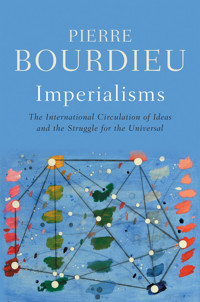
Imperialisms
The International Circulation of Ideas and the Struggle for the Universal
Pierre Bourdieu
Edited by Jérôme Bourdieu, Franck Poupeau and Gisèle Sapiro, with commentary by Franck Poupeau and Gisèle Sapiro
With translations by Peter Collier, Loïc Wacquant, Richard Shusterman and Priscilla Parkhurst Ferguson
polity
Originally published in French as Impérialismes. Circulation internationale des idées et luttes pour l’universel. Copyright © Éditions Raisons d’agir, 2023. Rights arranged through Editions du Seuil.
This English edition first published by Polity Press in 2025.
Except for the translations by Loïc Wacquant, Richard Shusterman and Priscilla Parkhurst Ferguson, this translation © Polity Press, 2025.
Excerpt from On Television copyright © 1998 by Pierre Bourdieu.Excerpt from Firing Back copyright © 2003 by Pierre Bourdieu.Both reprinted by permission of The New Press. www.thenewpress.com
Polity Press65 Bridge StreetCambridge CB2 1UR, UK
Polity Press111 River StreetHoboken, NJ 07030, USA
All rights reserved. Except for the quotation of short passages for the purpose of criticism and review, no part of this publication may be reproduced, stored in a retrieval system or transmitted, in any form or by any means, electronic, mechanical, photocopying, recording or otherwise, without the prior permission of the publisher.
ISBN-13: 978-1-5095-6234-3
A catalogue record for this book is available from the British Library.
The publisher has used its best endeavours to ensure that the URLs for external websites referred to in this book are correct and active at the time of going to press. However, the publisher has no responsibility for the websites and can make no guarantee that a site will remain live or that the content is or will remain appropriate.
Every effort has been made to trace all copyright holders, but if any have been overlooked the publisher will be pleased to include any necessary credits in any subsequent reprint or edition.
For further information on Polity, visit our website:politybooks.com
Editors’ Note
This book is a collection of texts, some unpublished or not easily accessible, in which Pierre Bourdieu questions the international or transnational dimension of the workings of the social world. This dimension was not part of the original project of Microcosmes, his book devoted to the theory of the field, published in the series bearing the same title. At first glance, Bourdieu’s main works deal with topics situated within national borders, whether the research concerns Algeria, the educational system or the artistic world. Although there is no doubt that the analytic framework advanced in each case aims to solicit a more general perspective, it is above all as a source of tentative suggestions to be tested in other contexts, and not because it contains any explicit analysis of the supranational dimension of the phenomena studied. It is no doubt for this reason that Bourdieu’s work has not been thought of as belonging to the global visions of Braudel (the ‘world economy’), Wallerstein (the ‘world system’) or Harvey (the ‘space of capital’).
This work proceeds, then, from an editorial project whose logic needs all the more explication since the texts collected here are of varied status and format: short analytic articles, lectures, contributions to collective works, often the result of colloquia, transcriptions of research seminars, or collaboration with French, Brazilian, Greek or Hungarian colleagues, among others. Its objective is to use texts written by Bourdieu in different contexts to show that his work does in fact comprise both a theoretical and an empirical project for the analysis of the logics of internationalization. What is more, the principle of construction that Bourdieu promotes, true to his habitual approach to research, remains reflexive: it is based on the conclusion that it is not sufficient to announce the international character of social phenomena, for we also need to take into account the manner in which the scientific categories of perception of these phenomena are constructed, categories which are themselves the product of national traditions embroiled in the specific logics of their international struggles.
Two sets of social mechanisms hold a central place in the analysis of the international dimension of social phenomena which Bourdieu proposes and which is highlighted in the texts that compose this volume. The first deals with a method of structural comparatism rooted in the idea of a social invariant in (national) relational spaces that may be at once distinct and connected. The second entails the international circulation of ideas and frames of perception of the social world. In both cases the idea of the field forms the common foundation needed to underpin these constructions. One difficulty specific to the social sciences, then, is that the categories which scholars use in order to construct the social are products of their national context, and the effects generated by the relations between these specific national contexts remain largely ignored by those who use them.
The aim of this volume is thus to collect in a freestanding work the original constructions of the international proposed by Bourdieu, sometimes without saying so, not in terms of an isolated issue, concerning only specific topics and resulting from a de facto separation of things national from things international, but rather in terms of a set of phenomena and mechanisms present in the national logics or situations that on the face of it seemed strictly local.
For this reason, our volume brings together in the first instance a set of texts concerning the relations of domination between nations and struggles over the universal that form the network of rival imperialisms at an international level. The analysis of ‘imperialist reason’ is nonetheless inscribed in broader processes of the import and export of symbolic goods between countries, whose mechanisms are the object of a vast programme of research, and whose principles are revealed in the second part of this work. The international circulation of ideas appears in fact as an objective phenomenon which must be taken into account in any analysis of the social world, even the most local, because the categories of analysis which it mobilizes are its own product. There is then a structural exercise – which is, it should be said, fairly innovative – in the comparatist approach, exposed in the third part, which is needed to understand the variations produced by these phenomena of international circulation, which constantly re-fertilize the different national categories of thought in the ‘educational unconscious’. The notion of the international field, whose analysis is sketched out in the fourth and last section, is then introduced as a conceptual necessity for understanding phenomena that emerge outside the unifying State categories.
The introduction by Franck Poupeau and Gisèle Sapiro provides a context for the texts by Bourdieu. They discuss all these perspectives of research in greater detail, and stress the coherence of the different approaches combined in this volume but also in Bourdieu’s works elsewhere, whether in analysing struggles for the universal, drafting programmes of research into the international circulation of ideas, or sketching an analysis of the internationalization of fields. They also point up the link between his critique of the phenomena of ‘globalization’ and his reflections on the international, which feed into each other, thus enabling us to see in a different light the way in which Bourdieu, throughout his career, attempted to construct collective and international networks: to understand even the most strictly national or local social problems, we need to bear in mind, on the one hand, that these are international problems which have not been recognized as such, and on the other hand, that they can only be tackled at the expense of a break with the national categories germane to each national tradition, which perceives itself as universal (in particular in the case of the American or French perspectives). Finally, the ‘guide’ that figures at the end of the volume shows that, although the articulations between these axes are only episodically made explicit by Bourdieu, many later works were inspired by the programme for research that he outlined.
Publisher’s Note
Translations of all texts are by Peter Collier unless otherwise indicated.
Chapter 2.1 was translated by Richard Shusterman.
Chapter 4.1 was translated by Priscilla Parkhurst Ferguson.
Chapters 1.2, 3.1 and 4.3 were translated by Loïc Wacquant.
Introduction
From Structural Comparatism to the Sociology of International Fields
Franck Poupeau and Gisèle Sapiro
It was initially comparatism and the methodological problems it raises that led Bourdieu to rethink the national analytical framework. But other problematics arose as his work progressed: studying the social conditions of the international circulation of ideas and symbolic goods; accounting for the forms that imperialism assumes (political, economic, legal or cultural), which led him to examine the issue of the struggles among nations for universalism; analysing the international or transnational dimension of fields. Although the articulations between these axes which inform this volume were only occasionally made explicit by Bourdieu, they have been developed in later studies inspired by the research programme that he mapped out (see the ‘Guide’ at the end of the volume). Just as the theory of fields is presented as an ‘exploratory model’ and a ‘tool for construction’ of scientific objects of study,1 so the analyses dealing with international problematics open up areas of research that the social sciences continue to explore.
Comparatism against ethnocentrism and evolutionism
Because of his philosophical training, Bourdieu’s universe of intellectual references was international from the start. We can mention, among others, the cultural anthropology from the United States used in Sociologie de l’Algérie (1958), Edmund Husserl’s phenomenology in the analysis of the sub-proletariat’s relation to time in Travail et travailleurs en Algérie (1963), Erwin Panofsky’s iconographic approach in the formulation of the notion of habitus (postface to Architecture gothique et pensée scolastique, 1967), or Ernst Cassirer’s philosophy of symbolic forms in elaborating the notion of symbolic power, and, of course, the sociology of Max Weber, which Bourdieu discovered at the end of the 1950s.2 These references helped him to position himself against the American sociology that became dominant in Europe after the war.
Beyond these references, Bourdieu’s experience of Algeria played a fundamental part in the construction of his sociology. Many of the concepts that he went on to develop later took shape in the empirical enquiries that he undertook in Kabylia. In Esquisse d’une théorie de la pratique (1972; translated as Outline of a Theory of Practice), he relates how this unfamiliar experience enabled him to look with alien eyes on a very familiar terrain, the Béarn of his childhood, where, despite the differences, he discovered comparable structural traits, which reflect the position of these ‘traditional societies’ (that he later called ‘precapitalist’) in relation to a rampant capitalism. The mental experience of comparing the Algerian and Béarnais terrains was a means of defusing the ethnography implicated in adopting the exotic gaze of the ‘other’, and of overcoming ethnology, torn at the time between its original vocation as a ‘colonial science’3 and its withdrawal into the study of rural society in a conjuncture of decolonization.4 This experience calls into question the territorial and methodological division between ethnology and sociology (he combined qualitative and quantitative approaches in both studies), while at the same time unlocking the objects of study that sociology had constituted as distinct specialisms: the rural world, the worlds of labour, the sociology of organizations, etc. And finally, in the line of Durkheim, Mauss and Lévi-Strauss, it breaks with the more or less explicit evolutionism of the social sciences of the period, which tended to assign the precapitalist societies to an earlier phase of the process of modernization. However, this approach must also take into account the differences between the cases compared and their specific characteristics, especially in the colonial dimension: the imposition of capitalism by force in Algeria had particular effects, following the displacement of the population into camps, and involving the relations between colonists and colonized, which are connected with the imperialist power relations between societies (see infra).5
Inspired by his readings of Durkheim and Weber, for whom comparison is the primordial tool of sociology, Bourdieu’s comparatist method is thus rooted in this twofold founding experience. In Le Métier de sociologue (1968; translated as The Craft of Sociology), he and his co-authors underline the fact that sociology has the specific property ‘that it can only constitute its object by the comparative approach’.6 It is analogical reasoning that enables Bourdieu to ‘escape from ideographic consideration of cases that do not contain their own reason’, by restoring them to a family of possible cases and a set of relations.7It also leads to denaturalizing the obviousness of the social world and desubstantializing its cultural signification, without lapsing into a homeostatic functionalism such as that promoted at the time by the proponents of Talcott Parsons’s structural-functionalism.
While in the years 1960–70 the sociological enquiries led by Bourdieu were focused on French society, the structural approach he elaborated aimed to make diachronic comparison between different states of the social structure and the fields, as well as a synchronic comparison between societies, possible. From this period, with Jean-Claude Passeron, he looked at educational systems to investigate the ‘conditions of comparability’ and the pertinence of the indicators used without preliminary consideration about the comparability of social institutions.8 This reflection, like that on the publics of European museums,9 takes its place in the framework of the European enquiries that involved the Centre for European Sociology (CSE) at the time, with Bourdieu as general secretary in 1962 and deputy director in 1964.10 At the seminar in 2000 during which he discussed the conditions of comparatism (Chapter 3.3), he explains that this enquiry ‘enabled us to learn a lot about the comparability and incompatibility of statistical information’ (p. 94 of this volume).
In 1971, with a team from the Centre for the Sociology of Education and Culture (CSEC), which he had founded in 1968 after leaving the CSE, Bourdieu participated in the congress at Varna of the International Association of Sociology, whose ‘Sociology of Education’ section he founded. He very soon shed this responsibility. He spent the following year at the Institute for Advanced Study at Princeton. These international experiences strengthened his critique of the domination exerted by American sociology, which, he explained, ‘through the Capitoline triad of Parsons, Merton and Lazarsfeld, subjected social science to a whole series of reductions and impoverishments, from which, it seemed [to him], it had to be freed, in particular by a return to the texts of Durkheim and Max Weber, both of whom had been annexed and distorted by Parsons’.11 Along with Victor Karady’s publication of the works of Durkheim and Mauss, Bourdieu’s importing of symbolic interactionism12 – with translations of the works of Erving Goffman in the series ‘Le sens commun’, which he edited at Minuit – played a part in the combat against what he qualified as ‘orthodoxy on a planetary scale’. In 1975 he published a critique of the ethnocentrism of sociology in the United States and of the ‘evolutionist model, which encourages us to see different societies as so many stages on the path leading to American society’ (p. 87). This short article, reproduced as Chapter 3.2 of the present volume, appeared in the second issue of the review Actes de la recherche en sciences sociales (ARSS), which he had just launched. Articles by Michael Pollak on the role of US philanthropic foundations in the ‘planning of the social sciences’ in Europe after the war, and on the role of Lazarsfeld as ‘founder of a scientific multinational’, continued this reflection on the forms and modalities adopted by American domination over the social sciences.13
Beyond his methodological reflection, Bourdieu also wanted to construct a transnational space of research in the social sciences outside of the hegemony of the United States (while still maintaining increasingly intense exchanges with American researchers, as we can see from his correspondence).14 The aim was twofold: on the one hand, to articulate empirical research with a theoretical reflection, nourished by international collaboration; on the other hand, to set up programmes of international research into modes of domination. Bourdieu later described this enterprise in these terms:
I wanted to launch an enterprise of ‘scientific liberation’ … first we had to destroy the opposition between theory and practice, we had to do theory empirically. Then we had to export it, not in a logic of imperialism, but a logic of composing a geopolitical force of resistance. To Hungary … to Algeria and North America, to Brazil and Latin America. It was a ‘war of intellectual liberation’. The whole publishing enterprise contributed to this: making the texts accessible, providing the means, helping people to publish.15
This ‘war of intellectual liberation’ was put into practice through the construction of networks linking the sociologists of the CSE, and then the CSEC, with international researchers and research teams. Situated in Europe and around the Mediterranean for the first part of the 1960s, these networks were not restricted to the regions dominant in the academic space (Western Europe and the United States) but reached out to the ‘periphery’ (Eastern Europe, North Africa, Latin America, and then Asia) of a global field of social science whose centre had moved to the United States. The internationalization of Bourdieu’s sociology thus involved the circulation of researchers, passing through academic selection circuits sponsored by institutional funding and exchange programmes. It was presented partly as a collective enterprise, articulated around editorial and institutional channels for research and publication. An international scientific network grew up around the many scholarly collectives directed or inspired by Bourdieu (research centres, publishers’ series, the review Actes). From the outset, Actes published researchers of different nationalities and disciplines, such as Gregory Bateson, Norbert Elias, Jack Goody, E. P. Thompson, Raymond Williams, Paul Willis, Moshe Lewin, Iván Szelényi, Carlo Ginzburg, Eric Hobsbawm, Francis Klingender, Michael Baxandall, Albert Boime, etc. The permanent dialogue with foreign authors was backed up by a policy of translating works in the series ‘Le sens commun’ (Erving Goffman, Richard Hoggart, Basil Bernstein, William Labov, Ernst Cassirer, Erwin Panofsky, etc.).16 Alongside participation in international conferences like that at Varna, the transnational networks were constructed through visits of foreign researchers or doctoral students. Thus, in the 1970s, while Bourdieu’s articles and books started to appear in German, Italian, Spanish, Portuguese, English, Romanian and Hungarian,17 foreign researchers and students like Sergio Miceli, writing a thesis on intellectuals in Brazil under the supervision of Bourdieu, helped to feed this comparative reflection.18 In 1975, Bourdieu himself published a study of Heidegger and the conservative revolution in Germany between the wars.19 Among the members of the CSE and then the CSEC, Abdelmalek Sayad, who had worked with Bourdieu on Algeria, undertook a study of Algerian immigration into France;20 Francine Muel-Dreyfus, in collaboration with Arakcy Martins Rodrigues, mounted an enquiry into a sect in Brazil;21 and, after his work on the history of French sociology, Victor Karady engaged in the 1980s in research on the Jews of Eastern Europe, and on Hungary.22
For a structural comparison
It remains the case that, apart from the work on Algeria and the conservative revolution in Germany, Bourdieu’s sociology was principally constructed on the basis of empirical enquiries into French society, in conformity with the ‘methodological nationalism’23 that was then prevalent in the discipline. It was, on the one hand, the theoretical dimension of Bourdieu’s sociology (in particular the concepts of cultural capital, habitus and field), and on the other hand its appropriation as research programme, that enabled its international reception. However, the question of what was specifically French very soon arose. More even than the indicators of cultural capital, discussed in the sociology of education, the cultural practices described by Bourdieu were questioned in the framework of the reception of the translations of La Distinction into German (in 1982) and English (in 1984).24 In the United States as in Germany, some researchers contested the possibility of generalizing a theory based essentially on what they considered to be national particularities.25 This rejection derived to a large extent from the positivist appropriation of the theory, which attempted to simply transpose the model rather than adapt it.
Increasingly translated and invited abroad, Bourdieu broached a reflection on the cultural specifics that necessitate an adjustment to theory. This concern surfaces in the preface to the English edition of Homo Academicus, published in 1988 by Polity Press. In it he describes two types of possible reading for someone alien to the culture being studied: either highlighting the differences from their own system (a reading in bad faith), or concentrating on the invariants of homo academicus. In order to encourage this second type of reading, Bourdieu argues (pp. xv–xvi) that we need to propose a series of transformative laws through which the passage from one system to the other would operate. This reflection was stimulated by exchanges with foreign researchers, in particular during his stays in the United States between 1986 and 1989, as we see in Invitation to a Reflexive Sociology, which he published with Loïc Wacquant in 1991.26 The year 1989 was a turning point: during the lectures he gave in Japan and East Berlin in October, Bourdieu questioned the conditions of the transposition of his theory to the societies accepting it. Thus these lectures were, as their subtitles indicate, introductions to a Japanese or German reading of La Distinction and, for Japan, of La Noblesse d’État.27
Introducing his first lecture at the University of Tokyo in Japan by mentioning the irritation you may feel when you hear researchers from other countries explaining to you what your culture is, Bourdieu reassures his audience: he will not speak to them of Japan but of the society that he knows best and that he has most studied, France. Nonetheless, he continues, the model of social and symbolic space that he has constructed for the French case is in no way specific to France, and so speaking of France is also speaking of Japan, or elsewhere of Germany or the United States. He therefore begs his audience to go beyond the localized reading of his work, seemingly invited by the fact that it is rooted in empirical studies and not presented in the garb of a ‘grand theory’, and attempt to transpose the framework of analysis to their own culture, in a comparative approach that sees empirical reality historically situated and dated as ‘a special case of what is possible’, according to Gaston Bachelard’s expression.28 This framework does in fact lay claim to a ‘universal validity’ in order to ‘register the real differences that separate both structures and dispositions (habitus), the principle of which must be sought … in the particularities of different collective histories’.29 The transposability across time and space of the model developed in Distinction depends on its relational character: the position of a cultural practice in social space does not result from properties that are inherent to it, but from its usage by social groups as a manner of distinguishing themselves or differentiating themselves from other practices. Thus the fact that in France tennis or golf are no longer exclusively associated with dominant positions does not invalidate the model of analysis but bears witness to the change of position of a practice whose use has become banal and which for this reason has become less distinctive. This is why, Bourdieu stresses, ‘comparison is possible only from system to system’.30 He therefore invites his Japanese audience and readers to make ‘a relational but also a generative reading’, to ‘apply the model in this other “particular case of the possible”, that is, Japanese society’.31
The second lecture delivered in Japan proposed a reading of La Noblesse d’État centred on the mechanisms of social reproduction and more particularly on family educational strategies. Comparing the action of the educational system to Maxwell’s demon, Bourdieu shows the work of formation of a ‘hereditary scholastic nobility … of leaders of industry, senior medics, higher civil servants and even political leaders’,32 a model that applies to Japan as well as France. And he suggests a comparison with the process
that led the samurai, one segment of whom had already in the course of the seventeenth century been transformed into a literate bureaucracy, to promote, in the second half of the nineteenth century, a modern state based on a body in whom noble origin and a strong scholastic culture were combined, a body anxious to affirm its independence in and through a cult of the national State and characterized by an aristocratic sense of superiority relative to industrialists and merchants, let alone politicians.33
But above all, replying to those who reproached his theory with not taking social change into account, Bourdieu calls for a comparative analysis of the impact on social transformation of the contradictions specific to the educational system, as analysed in the chapter of La Distinction (1979) entitled ‘Classes and Classification’, and of the impact on political mobilization, as illustrated by the study of the case of May 1968 at the end of Homo Academicus (1984). Other comparative approaches are suggested, like ‘the link between the new school delinquency, which is more widespread in Japan than in France, and the logic of furious competition which dominates the school institution, especially the effect of a final verdict or destiny that the educational system exerts over teenagers’,34 the hierarchization of the system that relegates technical education to the bottom of the scale, or, again, the tensions between the major and the minor State nobility, pregnant with future conflict:
Everything points to the supposition that, facing an ever more tenacious monopoly of all the highest positions of power – in banking, industry, politics – on the part of the old boys of the Grandes Écoles in France, or the great public universities in Japan, the holders of second-class titles, the lesser samurai of culture, will be led, in their struggle for an enlargement of the circles of power, to invoke new universalist justifications, much as the minor provincial nobles did in France from the sixteenth century to the beginnings of the French Revolution, or as did the excluded lesser samurai who, in the name of ‘liberty and civil rights’, led the revolt against the nineteenth-century Meiji reform.35
Similarly, in his lecture in East Berlin, Bourdieu starts out from the question of the validity of his analytical model beyond the special case of France, and its possible applications to the country that at the time was still the German Democratic Republic (GDR). In order to break with all substantialist temptation, he proposes to construct the social space as a ‘structure of differentiated positions, defined in each case by the place they occupy in the distribution of a particular kind of capital’. Which supposes bringing to light the principles of differentiation specific to the GDR – the main difference from the French case being the exclusion from consideration, at least officially, of economic capital defined as private ownership of the means of production, which has the effect of increasing the relative importance of cultural capital, highly esteemed in the German tradition as in the Japanese. But this principle does not suffice to explain the ‘opportunities for private appropriation of public goods and services’ in the communist regimes (which he prefers to call ‘Soviet’), nor in the Scandinavian countries where a social-democrat elite, installed in power over several generations, has appropriated the collective resources. Bourdieu proposes therefore to introduce another species of capital, which he calls ‘political capital’, to explain this. This type of capital, ‘which is acquired in the apparatuses of the trade unions and the Labour Party, is transmitted through networks of family relations, leading to the constitution of true political dynasties’,36 such as the Nomenklatura in the USSR. Bourdieu undertakes to construct the pertinent indicators to apprehend this political capital in the case of the USSR, in particular the position in the hierarchy of apparatuses, starting with the Communist Party, and the seniority of each agent and his line of descent in the political dynasties. We should also take into account, especially for Germany, the effects of the emigration that decimated the categories capable of providing alternative cultural models. In contrast to these holders of political capital, commanding the dominant positions, there are the holders of cultural capital, whether technocrats, researchers or intellectuals, who partly share the same origins, but who tend to resent the privileges that the holders of political capital have appropriated. While he does see in them the origins of the revolution that is already under way in the communist countries, at the end of his lecture Bourdieu questions the capacity of the intellectuals attached to ‘true socialism’ to enter into alliance with the dominated, the manual labourers in particular, and the lesser employees of the State bureaucracies, who cannot fail to be seduced by the mirages of the liberal economy. A prediction which, we might notice in passing, has since been confirmed, with the very active attraction of the intellectuals in many countries, like Romania, to a newly won liberalism.
Thus it is certainly a programme of comparative research that Bourdieu has to offer his Japanese and German colleagues, through this rereading of his own works. He continued to pursue this methodological reflection on the conditions of comparatism on the occasion of two surveys conducted between 1998 and 2001 in the framework of European contracts with the CSE.37 One, coordinated by Franz Schultheis, dealt with the insecurity of young people in Europe, the other, directed by René Lenoir, with European social and penal policies.38 One of the aims was to establish indicators to measure the ‘social pathologies’ linked to neoliberal policies. While these large-scale comparative surveys were made possible through funding by the European Commission, the seminar of 2000 published in this volume reflects the difficulties encountered by the comparative approach of the second project, pointing out the differences which depend not only on the legislative framework but also on the histories of these societies, and their historical unconscious (or national habitus):
In the first confrontations that we had with researchers from Greece, the Netherlands, Belgium and Germany, we noticed that a certain number of differences in practices which we observed, in forms of delinquency for example, could be linked to profound historical differences. On the one hand there were differences in legislation relatively easy to grasp since we were dealing with things that were declared, patent, codified and recorded in law. And on the other hand there were differences much more difficult to grasp, and which are linked for example to religious traditions, or the ‘aftermath’ of some historical trauma, transposed into dispositions. These might be the government of the colonels in Greece, or perhaps the Occupation and Resistance in France, long-lasting after-images of historical events or actions that we are obliged to consider still operative in order to understand certain differences. There is a third, even more unconscious level, the profound differences in ‘mentality’ (a very dubious concept), in the historical unconscious or the historical transcendental, in short, the habitus. How do we handle all this? The majority of the research financed by Europe is not concerned with these problems, and nobody is asking us to take them on. But if we don’t, our comparatism will be amateur, and we will be in danger of finding false differences and false similarities, of being dazzled by curiosa devoid of interest. (p. 94)
In order to ‘map the deep, hidden structural principles of differentiation’ (p. 95), Bourdieu proposes a critical recourse to the national statistical indicators (indicators of integration or anomie, of rates of unemployment, etc.). This ‘programme of structural description of the space of national and regional unconscious minds’ should produce ‘a research programme into the specifics of national history capable of explaining these differences’ (p. 95). Such a history should be written abandoning the ‘national point of view’, in order ‘to prevent the comparative analysis becoming trapped in a national ethnocentrism with its correlative censorship’ (pp. 95–6). It should also overcome the mechanical comparisons of national indicators, which are themselves the product of national categories: ‘looking for the system of pertinent differences means that we need to construct the space of the nations and the space of the differences that differentiate them’ (p. 96). Such operations intend to ‘defamiliarize’ these categories by redrafting the script of their own historical narrative, ‘unless you want to go in for a UNESCO-type sociology, based on mistranslation and misunderstanding’ (p. 97). Bourdieu also mentions problems of translation (‘middle class’ must be translated as bourgeoisie and not classe moyenne), reminding us that ‘the sociologist is not looking for equivalences’ but has comprehension as his aim, beyond the false familiarities that interfere with comprehension. To manage to ‘understand that we don’t understand’, he points out, ‘we need to make our own practices feel foreign to us by using our knowledge of foreign practices’ (p. 99). This precaution is valid not only for international comparatism, but also for the ‘disciplinary historical unconscious’, calling for ‘a double historicization, both of the knowing subject and of the object known’. Warning about what he calls the lexical fallacy, the sociologist sees the Begriffsgeschichte (conceptual history) as a safety net, giving as a model Émile Benveniste’s Dictionary of Indo-European Concepts and Society (1969). In a second phase, he needs to take into account the fact that national identities are constructed by marking out their distance from one another: ‘It is important to realize that comparison lies in the object, because we are going to compare people who are comparing one another and whose makeup is partly the product of these comparisons’ (p. 104). Here he cites Linda Colley’s Britons,39 which shows how the English have constructed themselves in contrast to the French, and also the analysis by Norbert Elias of the opposition between culture and civilization in Germany.40 ‘In the real life of Germany and England a host of things … have been introduced by the concern to be different from France, and vice versa’, he argues (p. 104). Nevertheless, Bourdieu reminds us that such a construction should not disguise the internal divisions among the inhabitants of these nations in their relation to France. To illustrate his argument, he continues with a discussion of E. P. Thompson’s article, ‘The Peculiarities of the English’,41 which criticizes the attempt by Perry Anderson and Tom Nairn to answer the question ‘Why was there not a revolution in England?’ He ends up with The Germans (1989) by Norbert Elias, which had just been translated into English, and which Bourdieu considered to be an exemplary attempt to grasp national specifics.42 In conclusion, he also refers to Durkheim’s L’Évolution pédagogique en France.
The reference to Durkheim echoes the reflections that he expressed in his article on ‘The Scholarly Unconscious’43 (reproduced here as Chapter 3.4), which dates from the same period and displays a similar preoccupation. This scholarly unconscious designates ‘the whole set of cognitive structures, in this historical transcendental, that are imputable to specifically scholarly experiences, and which are therefore largely common to all the pupils produced by the same – national – school system or, in a specified form, to all the members of the same discipline’ (p. 123). To objectify the subject of the objectification,44 Bourdieu suggests studying institutions such as the dialogue, the disputatio, the disputes of the Jesuit colleges, the ex cathedra lecture, the inaugural lecture, the seminar, the oral examination (including the viva of the doctoral thesis, he specifies), and the video conference, showing how they determine our cognitive structures. This programme, which echoes his first lectures at the Collège de France on classification,45 aims to ‘historicize our modes of thinking, not in order to relativize them, but, paradoxically, to tear them away from history’ (p. 127).
The international circulation of ideas and cultural works
In parallel with his work on comparatism, in 1989 Bourdieu started to reflect on the international circulation of ideas and symbolic goods. In the context of globalization and the construction of the European Union, which encouraged the intensification of international exchanges, this reflection found a practical application in the launch that year of the review Liber, at first subtitled Revue européenne des livres, then, from 1994, Revue internationale des livres. Drawing on a worldwide network of researchers, it was published in several languages, as a supplement to five major European newspapers (Le Monde, L’Indice, El Pays, the Frankfurter Allgemeine Zeitung and the Times Literary Supplement).46 If some of them, starting with Le Monde, soon abandoned an enterprise judged too uneconomical or directed at too narrow an audience, translations continued to appear – from time to time – in German, Bulgarian, Hungarian, Swedish, Italian, Czech, Romanian, Greek, Turkish, Norwegian and Spanish.
Reproduced as Chapter 2.1 in this volume, Bourdieu’s reflection on ‘The social conditions of the international circulation of ideas’ was presented as a lecture under this title at the Frankreich-Zentrum of the University of Freiburg in Germany.47 In it Bourdieu insists on the structuring role of the power relations between national fields, and the import/export mechanisms that these unequal relations imply, generating a certain number of ‘misunderstandings’. The fact that texts circulate without their context has the consequence that scientists’ national categories of perception have a palpable impact on the way the works imported will be perceived in the host culture. For in fact the transfer from one national field to another is mediated through a series of social selection operations which concern not only what is being translated, but more fundamentally the characteristics of those selecting and transmitting between the national fields (acting as gatekeepers). The operations of social marking or labelling implied by importing an author engage the publishing house, the series, the translator and the prefacer (who in presenting the work being translated appropriates it and annexes it to his own vision, or, in any case, to a problematic inscribed in the field of reception).48 This marking procures benefits of ownership all the more effective in a national field since they are bathed in an aura of internationalization. The power relations between countries explain the fact that the international struggles for domination in cultural matters and for the imposition of ‘a particular definition of the legitimate exercise of intellectual activity, for example, Germany’s valorization of ideas of Kultur, depth, philosophical content, etc., over what they saw as the French stress on Civilisation, clarity, literature, etc.’ (p. 59), are rooted in the struggles at the heart of each national field.
This article, which became a reference text, laid the basis for a programme of research into intellectual exchanges between countries, which Bourdieu established with Joseph Jurt during a colloquium organized in February 1991 at the Hugot Foundation of the Collège de France, under the auspices of the Frankreich-Zentrum. The lecture that Bourdieu gave here, entitled ‘Programme for a Sociology of the International Circulation of Cultural Works’, is published for the first time in the present volume (Chapter 2.2). Starting out from the observation that there has not been much reflection on ‘international problems’, it focuses mainly on the method that would allow circulation and comparison to intersect in order to apprehend ‘the field of international cultural relations’ (p. 62). The programme includes a section on the social issues at stake in translation.49 On a first level, Bourdieu suggests analysing the flows of works per country and per category (literature, social science). On a second level, he is interested in understanding the mechanisms that would explain these flows, and in ‘proceeding to compare non-national pantheons of authors’, for instance ‘the German authors most translated in Italy, or France, etc.’ Among the ‘other indicators’, he mentions the translators, their status, the conditions of exercise of their activity, then the critics of foreign works.
Bourdieu proposes to plot these mechanisms along four axes: the relations between national and international fields; the accumulated national symbolic capital; the agents importing and exporting; the strategies in the international field. He then asks under what conditions we may speak of ‘international fields’, which can only be grasped through the effects that they produce, and in particular their symbolic power relations (he attempts to do this on the subject of the Olympic Games, the law and the economy, as we see in the articles collected in the last section of this volume). He compares the high degree of internationalization of mathematics as opposed to law, situating sociology between the two. He also questions the relation between national and international fields, and the degree and type of autonomy of the first as compared with the second, distinguishing three factors: protectionist policies, inertia of the educational system, and linguistic isolationism. According to him, the linguistic areas furnish an experimental situation where we can see whether the effects of the State can ‘counteract’ the effects of the field. He gives the examples of Switzerland and Belgium (on which he wrote an article that we have placed here as Chapter 2.3). These are States divided linguistically and culturally, just like Quebec, which is ‘subject to an effect of double domination, with the United States on one side and France on the other, and able (or obliged) to use one domination to counteract the other’ (p. 64). The Spanish language area constitutes a supplementary case.
Varying according to its fields (literature, science, human science), the national symbolic capital must be subjected to objectification in terms of its volume and structure, using indicators such as Nobel Prizes, numbers of translations, etc. (he gives the example of those constructed for the survey of European museums50). Bourdieu suggests drawing up ‘a map of the main cultural pathways, for example the great traditional highroads of literature and sociology’, such as that travelled by Auguste Comte, and then by Fernand Braudel, Lévi-Strauss and René Bastide (pp. 64–5). And, making it clear that ‘these well-trodden routes are often the lasting result of linguistic and cultural colonization’, we should look into what it is that perpetuates them.
The third axis, the agents of import/export, must be the object of a specific study, distinguishing between these two circuits with a view to determining ‘who has an interest in the foreign




