


29,99 €
Mehr erfahren.
- Herausgeber: John Wiley & Sons
- Kategorie: Fachliteratur
- Sprache: Englisch
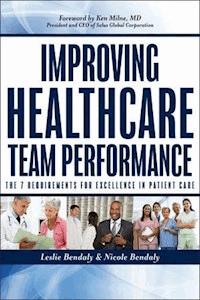
Practical, proven techniques for improving team performance in the health care world Teams and collaboration have become an expectation in most healthcare facilities and environments. It is accepted that high performance, patient focused teams are critical to quality patient care. However, there is often a wide gap between traditional practices and the new behaviours and practices required for teamwork and collaboration. Improving Health Care Team Performance goes beyond theory to provide the knowledge, tools, and techniques required to develop a single team, or to develop an organization wide team based culture, from which exceptional patient care emerges. Most uniquely it emphasizes that effective teamwork goes far beyond team dynamics and provides detailed description of additional requirements, such as shared learning and change compatibility, and how to fulfill them. A practical handbook for healthcare leaders striving to ensure a superior patient experience and high quality of care, Improving Healthcare Team Performance not only provides specifics on how to develop high functioning teams, whether multidisciplinary, interdisciplinary, or departmental but also offers those dealing with the common healthcare leadership challenges of low morale, poor communication, interpersonal conflict, and lack of knowledge sharing the tools to take immediate action to improve performance. Providing a proven approach to addressing and preventing everyday issues impacting patient care, Improving Health Care Team Performance contains everything needed to identify areas of greatest need within a team or department, take targeted action to address key gaps, and measure progress towards positive change. * Presents a clear depiction of what constitutes collaboration and a high-performing patient focused team. This includes the skills and practices required to improve team performance and ultimately the quality of patient care, how to develop new attitudes and behaviours within the team, as well as the leadership requirements for success in a patient focused, team based culture. * Provides a set of development tools accessible online to help the reader quickly and easily apply the knowledge gleaned. * Offers targeted solutions including tips/recommendations, a step-by-step approach for affecting necessary change at every level of the organization, and skills and team development activities. Designed for leaders working in any healthcare environment, Improving Health Care Team Performance is a practical approach to improving team performance and the quality of patient care.
Sie lesen das E-Book in den Legimi-Apps auf:
Seitenzahl: 336
Veröffentlichungsjahr: 2012
Ähnliche



















Contents
Cover
Title Page
Copyright
Dedication
Acknowledgements
Foreword by Dr. Ken Milne
Introduction
The 7 Elements of a High-Performance Healthcare Team
When Teamwork Is Lacking
How This Book Is Structured
Creating Change that Makes a Difference
Part I: The 7 Elements of a High-Performance Healthcare Team
Chapter 1: When Groups Become Teams
When a Group Becomes a Team
The Elements of High-Performance, Collaborative Teamwork
Chapter 2: Healthy Climate
Trust
Respect
Conflict: The Outcome of Disagreement in a Cold Climate
Making Assumptions: The Number One Cold Climate Culprit
Personal Responsibility and Growth in Building a Healthy Climate
Chapter 3: Cohesiveness
A Clear, Common Goal
Embracing the Goal
Clear and Respected Roles and Responsibilities
Living Common Values
Developing Values Agreements
Pride
Chapter 4: Open Communication
Pure Communication
Dialogue
Chapter 5: Change Compatibility
Change Responsiveness
Strengthening Change Compatibility
Chapter 6: Team Members’ Contribution
Bringing Out the Best in People
Develop the Team, Develop Its Members
Creating Increased Contribution through Passion
Chapter 7: Shared Leadership
Letting Go
Sharing Decision Making: The Basics
Chapter 8: Shared Learning
Shared-Learning Practices
Everyday Learning
Barriers to Shared Learning
Learning through Errors
Part II: Making It Happen: Achieving Improved Team Performance
Chapter 9: The Team Development Process
The Team Development Process
Measure the Team’s Effectiveness
Share and Discuss the Results
Agree on Development Priorities and Commit to Action
Take Action
Keeping Up the Momentum
Reassess
An Ongoing Process
A Team Development Quick Start: Clarifying Expectations
Chapter 10: The Leadership Balancing Act
The Increased Need for Balance
Balancing the Team's Task/Process Preference
Chapter 11: Facilitation
The Facilitator's Power Tools
Chapter 12: The Leader as Coach
Getting Started
The Coaching Process
Establish a Foundation of Trust
Forward Action and Accountability
Points to Remember for Making it Happen
Part III: The Tools to Make It Happen
Chapter 13: Team Development Exercises
How This Part Is Structured
Workouts
Workout 1: Clarifying Expectations
Workout 2: Maintaining Team Fitness
Workout 3: It's All about Respect
Workout 4: Jumping to Conclusions
Workout 5: Values Check
Workout 6: We’re All in This Together
Workout 7: The Principles of Effective Communication
Workout 8: Make Your Voice Count
Workout 9: It's Your Choice
Workout 10: Truths for Change
Workout 11: As Others See Us
Workout 12: We’re All Responsible
Workout 13: The Colour of Influence
Workout 14: Toward Increased Self-Direction
Workout 15: Never Waste a Mistake
Workout 16: Learning from Each Other
Energize Your Meetings with Brainteasers
Answers to Brainteasers
Endnotes
Introduction
Chapter 1
Chapter 2
Chapter 3
Chapter 4
Chapter 5
Chapter 8
Chapter 12
Bibliography
About the Authors
Index
Copyright © 2012 Leslie Bendaly and Nicole Bendaly
Published by John Wiley & Sons Canada, Ltd.
All rights reserved. No part of this publication may be reproduced, stored in a retrieval system, or transmitted in any form or by any means, electronic, mechanical, photocopying, recording, scanning, or otherwise, without either the prior written permission of the Publisher, or authorization through payment of the appropriate per-copy fee to the Canadian Copyright Licensing Agency (Access Copyright). For an Access Copyright license, visit www.accesscopyright.ca or call toll free 1-800-893-5777. Requests to the Publisher for permission should be addressed to the Permissions Department, John Wiley & Sons Canada, Ltd., 6045 Freemont Boulevard, Mississauga, Ontario, L5R 4J3, or online at www.wiley.com/go/permissions.
While the publisher and author have used their best efforts in preparing this book, they make no representations or warranties with the respect to the accuracy or completeness of the contents of this book and specifically disclaim any implied warranties of merchantability or fitness for a particular purpose. No warranty may be created or extended by sales representatives or written sales materials. The advice and strategies contained herein may not be suitable for your situation. You should consult with a professional where appropriate. Neither the publisher nor the author shall be liable for damages arising herefrom.
For general information about our other products and services, please contact our Customer Care Department within Canada at 1-800-567-4797, outside Canada at (416) 236-4433 or fax (416) 236-8743.
Wiley publishes in a variety of print and electronic formats and by print-on-demand. Some material included with standard print versions of this book may not be included in e-books or in print-on-demand. If this book refers to media such as a CD or DVD that is not included in the version you purchased, you may download this material at http://booksupport.wiley.com. For more information about Wiley products, visit www.wiley.com.
Library and Archives Canada Cataloguing in Publication Data:
Bendaly, Leslie
Improving healthcare team performance: the 7 requirements for excellence in patient care / Leslie Bendaly and Nicole Bendaly.
Includes index.
Issued also in electronic format.
ISBN 978-1-11819-952-7
1. Hospital care. 2. Patients—Safety measures. 3. Medical errors—Prevention. 4. Health services administration. I. Bendaly, Nicole II. Title.
RA971.B46 2012 362.1068 C2012-902737-5
ISBN 978-1-11819-952-7 (print); ISBN 978-1-11820-972-1 (ebk); ISBN 978-1-11820-965-3 (ebk); ISBN 978-1-11820-967-7 (ebk)
Production Credits
Managing Editor: Alison Maclean
Executive Editor: Don Loney
Production Editor: Pauline Ricablanca
Cover Design: Adrian So
Cover Photography: BananaStock and iStockphoto
Composition: Thomson Digital
To those who work tirelessly to provide quality healthcare and who every day demonstrate their dedication to their patients and colleagues.
Acknowledgements
We would like to express our sincere thanks to all who have contributed to this book. We have been fortunate to have met and worked with countless healthcare professionals who have inspired us with their commitment, candour, and desire to help others, and we are grateful to them for sharing their stories so that others can learn from them.
Thank you to Dr. Ken Milne for his passion and dedication to improving patient safety performance and for so generously giving his time and energy to writing our foreword.
We much appreciate Hugh MacLeod, Dr. Ivy Oandasan, Janet Davidson, Dr. Joshua Tepper, Stephanie Leblanc, David Pole, Sandra Ramelli, Michelle DiEmanuele, Patricia Lefebvre and Anne Harvey, who took the time to share their wisdom and experience in transforming healthcare culture so that collaboration and exceptional quality care become firmly woven into its fabric.
The Oncology Program at the Niagara Health System, the New Patient Referral Team at the Juravinski Cancer Centre, Hamilton Health Sciences, and the Toronto Central Community Care Access Centre each participated in the development of this book through focus groups and the sharing of best practices and experiences. What an important contribution they made to our project.
Many individuals contributed to making this a better book. Joanne McNicol provided great feedback on parts of the manuscript, Don Loney, our editor, made valuable suggestions, effectively restrained any verbosity, and polished our prose, and Pauline Ricablanca and her production team did a terrific job of both hunting down our errors and omissions and making the book attractive.
And finally, thank you to Jason and Elie who supported us by sharing the load at home while we focused on the research and writing of this book.
Foreword
This book is very timely. Twenty-first century healthcare—with its vastly expanded knowledge base and technologies to manage increasingly complex clinical presentations—has resulted in unprecedented patient expectations. This, coupled with the need to deliver high-quality patient-centred care in a cost-effective manner, cannot be shouldered by one healthcare provider at a time. We have, for some time now, reached the point where the quality of care that patients and families receive depends not only on the knowledge and skills of the individual care providers, but also on the ability of the entire healthcare team to communicate and work well together in order to coordinate the care that the patient/family needs.
Leslie Bendaly and Nicole Bendaly have leveraged their extensive experience and expertise in building effective high-performing functional teams in a variety of organizational structures and applied this to the healthcare environment. They have done this with clarity, mapping out the elements of high-performing teams and showing how each of these elements is independent and yet collectively linked. It is really like an anatomy dissection illustrating the linkage of all the individual parts.
The other important aspect of their book is devoted to providing the strategies, or, as some would call it, a “play book,” on the “how to” achieve high performance in healthcare teams. This, in my opinion, has been lacking in healthcare development. Much has been written about what defines a high-performing team and how to measure performance, but little attention has been paid on how to achieve this important construct in healthcare. The solutions the book offers are wide-ranging in scope, from team development processes, balancing behavioural tasks, and process tasks, to the importance of facilitating and nurturing the growth of teams.
The authors also emphasize the importance of leadership in successfully improving healthcare team performance. From my own personal observations and experience, this is fundamental to sustained success of high-performing teams and the impact this has on the provision of safer healthcare. As they so ably demonstrate, leadership in healthcare organizations, as in any other work environment, sets the values and shapes the attitudes that drive the behaviours that in turn drive the performance. Positive behaviours result in high-performing teams, which positively impact patient-care outcomes and cost efficiencies. With negative behaviours the opposite occurs.
Effective leadership walks the talk; leaders behave with integrity and are credible. The credibility is achieved because effective leaders consistently do what they say they are going to do. Great leaders display energy and they energize those around them. As well, great leaders are passionate about mentoring growth.
Leslie and Nicole have captured all of these important attributes of leadership and demonstrated how they are pivotal in building and sustaining high-performing teams. Their work also highlights that it is not just the “C” suite or senior administration team that is responsible for leadership in healthcare—it is, rather, a responsibility that must be shared by many throughout our healthcare structures. In truth, we can all lead from where we are. Leadership is about influence. Leadership is about leading change. If we were all to integrate the behaviours and attitudes that are the component parts of the seven elements required for excellence in healthcare team performance as described in this book, then our progress in providing quality, safe, and cost-effective healthcare would be dramatically expedited.
The book has been written with real narratives from patients and healthcare providers, making it human, relevant, and causing us all to reflect on why we must never give up on trying to improve team performance in healthcare. The use of quotes from notable leaders from many walks of life reinforce the need for all of us to carry and project a positive attitude every day in all aspects of our work. Reading this book will provide direction and guidance for anyone in healthcare, from the front-line workers to senior administration and boards, on how they can raise their participation bar in their own team performance or be more effective in providing leadership for team performance. In doing so, all patients and their families will benefit.
Ken MilneMD, FRCSC, FSOGC, FACOG
Introduction
This is a book written with purpose and hope. Much has been researched and published about teamwork and collaboration as the essential ingredients in the nurturing of committed, focused, and empowered staff who together provide exceptional patient care. It is theory headed in the right direction. Our purpose in writing this book is to go beyond theory and to provide the knowledge and tools with which one can develop truly collaborative and high-performance healthcare teams, rather than groups that simply carry the “team” name, and to do so with greater ease. Many healthcare leaders have made huge strides in their development of patient-focused teams. Our hope is that the knowledge we share will encourage, perhaps even inspire, leaders and their organizations to embrace teamwork with even greater commitment and vigour.
During our 25 years of working with leaders and their teams, we have found that the importance put on teamwork in healthcare has waxed and waned, sometimes due to the introduction of different approaches to quality care and sometimes due to budgetary constraints.
The intense and consistent focus that has been put on teamwork and interprofessional collaboration in healthcare over the last few years is an encouraging sign that the enormous benefits that are reaped by taking a deliberate and committed approach to developing a team-based culture have been recognized by those dedicated to the profession.
Research shows that nurses who believe that their team is well-functioning have higher levels of job satisfaction, are more likely to stay in their jobs, and demonstrate lower levels of stress and burnout. Another important finding is that higher levels of teamwork have been linked to higher quality care, improved patient outcomes, and an enhanced patient experience. In a study conducted by Donald C. Cole, et al., that investigated the understanding, collection, and use of Quality of Work Life (QWL) indicators in Canadian healthcare organizations, one of the participants articulated the importance of teamwork in maintaining a healthy work environment:
Lesen Sie weiter in der vollständigen Ausgabe!
Lesen Sie weiter in der vollständigen Ausgabe!
Lesen Sie weiter in der vollständigen Ausgabe!
Lesen Sie weiter in der vollständigen Ausgabe!
Lesen Sie weiter in der vollständigen Ausgabe!
Lesen Sie weiter in der vollständigen Ausgabe!
Lesen Sie weiter in der vollständigen Ausgabe!
Lesen Sie weiter in der vollständigen Ausgabe!
Lesen Sie weiter in der vollständigen Ausgabe!
Lesen Sie weiter in der vollständigen Ausgabe!
Lesen Sie weiter in der vollständigen Ausgabe!
Lesen Sie weiter in der vollständigen Ausgabe!
Lesen Sie weiter in der vollständigen Ausgabe!
Lesen Sie weiter in der vollständigen Ausgabe!
Lesen Sie weiter in der vollständigen Ausgabe!
Lesen Sie weiter in der vollständigen Ausgabe!
Lesen Sie weiter in der vollständigen Ausgabe!
Lesen Sie weiter in der vollständigen Ausgabe!
Lesen Sie weiter in der vollständigen Ausgabe!
Lesen Sie weiter in der vollständigen Ausgabe!




