


9,99 €
Mehr erfahren.
- Herausgeber: PRINP EDITORE
- Kategorie: Geisteswissenschaft
- Sprache: Englisch
A private art collection open to all: this is the ultimate aim of our Fondazione per l’Arte della Cassa di Risparmio di Torino. For ten years now, intense acquisition operations have made it possible to endow two important museums, Castello di Rivoli Museo d’Arte Contemporanea and GAM – Galleria Civica d’Arte Moderna e Contemporanea, with several top-quality works for their permanent collections. In order to give the public the opportunity to judge the outcome of our work, it has been decided to publish the works in our collection in this catalogue, edited and written by Marcella Beccaria and Elena Volpato, the curators of the two museums, and by all those who, in various ways over the years, have helped achieve this goal.
Das E-Book können Sie in Legimi-Apps oder einer beliebigen App lesen, die das folgende Format unterstützen:
Veröffentlichungsjahr: 2013
Ähnliche




















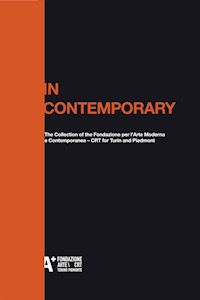
IN CONTEMPORARY
The Collection of the Fondazione per l’Arte Moderna e Contemporanea - CRT for Turin and Piedmont
Edited by Marcella Beccaria and Elena Volpato
PRINP EDITORE
Executive Board ofFondazione CRT
ChairmanAntonio Maria Marocco
Vice ChairmenFulvio Gianaria Anna Chiara Invernizzi
General SecretaryMassimo Lapucci
Managing DirectorsAlberto Bertone Fabio Corsico Maurizio Delfino Giovanni Desiderio Giandomenico Genta Cristina Giovando Renato Viale Matteo Viglietta
Strategic Planning CommiteeLuca Angelantoni Roberto Berutti Massimo Bianchi Caterina Bima Silvano Caccia Davide Canavesio Gilberto Canova Roberto Cena Maria Luisa Coppa Ugo Curtaz Anna Maria Di Mascio Anna Beatrice Ferrino Franco Garelli Marco Goria Enrico Grosso Maurizio Irrera Francesco Mattioli Antonello Monti Ettore Morezzi Silvana Neri Roberto Nizza Giuseppe Pichetto Pierluigi Poggiolini Giovanni Stornello
Board of Auditors ChairmanValter Cantino
AuditorsPiera Braja Fabio Margara
Deputy AuditorsLaura Fina Angelo Giuseppe Segreto
Executive BoardFondazione Arte Moderna e Contemporanea - CRT
ChairmanFulvio Gianaria
Vice ChairmanMatteo Viglietta
Managing DirectorFranco Amato
Board SecretaryMassimo Broccio
Board of AuditorsLuciano Cagnassone
Management Supporting OfficeIlaria Menolascina
Committee of the Fondazione per l’Arte Moderna e Contemporanea - CRT
Manuel J. Borja - Villel Director, Museo Nacional Centro de Arte Reina Sofia, Madrid
Rudi FuchsEx Director, Stedelijk Museum, Amsterdam
Sir Nicholas Serota Director, Tate, Gran Bretagna
Castello di Rivoli Museo d’Arte Contemporanea, Rivoli - Torino
PresidentGiovanni Minoli
DirectorBeatrice Merz
GAM – Galleria Civica d’Arte Moderna e Contemporanea, Torino
PresidentPatrizia Asproni
DirectorDanilo Eccher
IN CONTEMPORARYThe Collection of the Fondazione per l’Arte Moderna e Contemporanea – CRT for Turin and Piedmont
Curated byMarcella Beccaria and Elena Volpato
EditorsValentina Angeleri Federica Biasio Maria Crocco Harriet Graham
TranslationsPiero Pozzi Marguerite Shore
Cover designValentina Bonomonte
development e-book formatsLoretta Borrelli
ISBN978-88-97677-32-1
PRINP EDITORE [email protected] www.prinp.com
The editors would like to thank everyone who has contributed to the realization of the project
A special thanks to Roberto Cottellero and the photographic archives at Castello di Rivoli and GAM
© Edition: Prinp Editore 2013 © Texts: the authors © Images: the artists
© SIAE 2013: Marina Abramović, Carla Accardi, Afro (Basaldella), Aurelio Amendola, Franco Angeli, Karel Appel, Georg Baselitz, Alighiero Boetti, Christian Boltanski, Monica Bonvicini, Alberto Burri, Enrico Castellani, Giuseppe Capogrossi, Sandro Chia, Pietro Consagra, Gino De Dominicis, Thomas Demand, Jan Dibbets, Piero Dorazio, Tracey Emin, Jean Fautrier, Lucio Fontana, Hamish Fulton, Liam Gillick, Laurent Grasso, Giorgio Griffa, Renato Guttuso, Mona Hatoum, Carsten Höller, Pierre Huyghe, Asger Jorn, Ilya and Emilia Kabakov, Anselm Kiefer, Yves Klein, Joseph Kosuth, Jannis Kounellis, Ketty La Rocca, Jim Lambie, Anna Maria Maiolino, Luigi Mainolfi, Giuseppe Maraniello, Mario Merz, Marzia Migliora, Luigi Ontani, Hermann Nitsch, Mimmo Paladino, Giuseppe Penone, Achille Perilli, Diego Perrone, Thomas Ruff, Giuseppe Santomaso, Antonio Sanfilippo, Mario Schifano, Kateřina edá, Toti Scialoja, Sean Scully, Ettore Spalletti, Antoni Tàpies, Pascale Marthine Tayou, Giulio Turcato, Franco Vaccari, Lawrence Weiner, Gilberto Zorio
Preface
The Fondazione per l’Arte Moderna e Contemporanea CRT has been operating successfully for many years in promoting and valorising contemporary art in Turin, paying particular attention to innovation and social development. Constituted by the Fondazione CRT with the goal of guaranteeing specific interventions aimed at the sector, from 2000 to today it has ensured the expansion and strengthening of permanent collections in metropolitan museums and has assisted the City of Turin in initiatives and projects for the development, strengthening and efficiency of the overall system. The attention to art and culture is a consistent element in the activities carried out by the Fondazione CRT, which has always reserved for this area a high share of the resources at its disposal, aware of its fundamental role in the enriching, development and growth of society. From the early ‘90s, in close collaboration with the main institutions of the area, the Foundation has supported the best proposals in the artistic ambit, facilitated or strengthened important initiatives in the cultural field and set up innovative projects to valorise the material and immaterial heritage of Turin, Piedmont and the Valle d’Aosta.
Antonio Maria MaroccoChairman Fondazione CRT
Preface
A private art collection open to all: this is the ultimate aim of our Fondazione per l’Arte della Cassa di Risparmio di Torino. For ten years now, intense acquisition operations have made it possible to endow two important museums, Castello di Rivoli Museo d’Arte Contemporanea and GAM – Galleria Civica d’Arte Moderna e Contemporanea, with several top-quality works for their permanent collections. Commiting the Foundation’s resources for the benefit of the community is the prime task of a former banking foundation, and focusing this commitment on consolidating modern and contemporary art exhibition centers is a sign of our conviction that this policy can both strengthen the cultural wealth of the community while also upholding the level of excellence and appeal that the most significant institutions in the region have achieved. In order to give the public the opportunity to judge the outcome of our work, it has been decided to publish the works in our collection in this catalogue, edited and written by Marcella Beccaria and Elena Volpato, the curators of the two museums, and by all those who, in various ways over the years, have helped achieve this goal. As far as we are concerned, we can guarantee that, year by year, the project will proceed into the future as an essential part of an overall plan to bring art to the people and people to art. This is based on the conviction that art plays a fundamental role in society. And this is something that should not be forgotten at times like these.
Fulvio GianariaChairman Fondazione per l’Arte Moderna e Contemporanea – CRT
The Fondazione CRT Contemporary Art Project
A Political and Cultural Commitment Giovanni Ferrero
My work dealt with contemporary art as I think that, on a number of occasions, to be involved with creativity today and its stalwart personalities, was the best possible way to carry out projects of political and cultural value. My first opportunity to work with contemporary art was when I was the regional councilor for culture. This position involved a project at Castello di Rivoli, one of the royal Savoy residences – the one that the House of Savoy designated as its royal palace following the siege of Turin, making it the headquarters of a political power that was challenging France and other European nations.The idea was to invite living European artists to make an original and unique contribution to this residence – an unfinished building site that had been abandoned. The presence of Italian artists was considerable in the exhibition project that Rudi Fuchs organized, Ouverture, which was magnificent. Notwithstanding some isolated attempts, this project was unfortunately only started, and the collection that it had been hoped Ouverture would initiate never actually came together. This project was taken up again with strong determination and commitment by Ida Gianelli, who followed Rudi Fuchs as the director of the museum. I feel sure that the present directors at the Castello will be able to continue the task in these very different times. The second opportunity came when I was the municipal councilor for large-scale public works. In this case it was necessary to give due prominence to the largest construction site in the city, which was that of the crossrail system. I believed that the arrangement above ground required a unified artistic project that would be compatible with the characteristics of the infrastructure. Assisted by Cristina Mundici, and in close association with Ilario Signoretti, the head engineer for the City of Turin for the crossrail and metro systems, Rudi Fuchs put together an outstanding proposal for an art collection in the city’s imposing new urban artery. Nino Castagnoli, director of GAM, presented it in an exhibition in the museum, arousing great interest in artistic, urban planning, and cultural circles, and the city started working on realizing it. I do hope it will continue, in spite of the great financial challenges that municipalities are facing in this country, and certainly no less in the city of Turin. The third time was when I was a director of Fondazione CRT, which had been taking part in managing Castello di Rivoli since the time Prof. Filippi had been chairman of CRT Bank. On this occasion, Gruppo Artegiovane, a group of collectors and contemporary art lovers in Turin, suggested that the Foundation purchase part of the Christian Stein collection of works by Arte Povera artists, on the occasion of Stein’s gallery’s move from Milan to Turin. The Foundation asked Ida Gianelli and Nino Castagnoli, as directors of the city museums – along with Sir Nicholas Serota, director of Tate, David Ross, director of the Museum of Modern Art in San Francisco, and Rudi Fuchs, director of the Stedelijk Museum in Amsterdam – to suggest a corpus of works to be put on view in the two museums, Rivoli and GAM. Even though rather belatedly, this move would ensure the presence of internationally renowned Turin artists in the public collections of the city. The intention was also to start up a positive form of interaction and cooperation between the two metropolitan museums, strengthening their positions and making them the most important hub of contemporary art in Italy. The success of this operation was announced at a public conference at the Salone degli Svizzeri in Palazzo Reale in Turin. It was the intuition and the legal and organisational skills of Giovanni Ciarlo, then secretary general of Fondazione CRT, that led to the idea of setting up a foundation for modern and contemporary art. The aim was to promote cooperation between GAM and Rivoli by creating a collection that would integrate well with those of the museums, making the works available for their permanent displays and the temporary exhibitions organized by their directors in suitable premises, in Italy and around the world. This project, which made use of funds reserved for allocations, led to an innovative process of capitalization, helping in the creation of a strong public system that was able to set in motion independent market-driven mechanisms. This was also targeted to inspire other initiatives (Fondazione Sandretto Re Rebaudengo, Fondazione Merz, the Filatoio Rosso in Caraglio, and the Fondazione Pistoletto in Biella all come to mind) which were launched by other institutions that had been set up in the meantime. This showed how outstanding public collections that are set up organically on the basis of a cultural project can increase autonomous potential for production, reducing the need to acquire exhibitions by importing them from elsewhere. A center of cultural production has greater appeal for young artists and makes the region an ideal place for the creation of art and culture, which – much more than technology – are now at the heart of the most successful economic models. My personal commitment to contemporary art comes neither from a collector’s passion nor from particular professional expertise, but from the conviction that politics is the highest form of intellectual activity and that it has the task of introducing targeted actions with a multiplying effect that can bring out the full potential energy of society. Art has the very particular advantage of offering models and forms of inspiration that, in the more flexible domain of culture, can anticipate the development potential of an economy. Targeted actions provide a stimulus for good governance and administration, which are essential for managing the complex social systems we live in. They are also a yardstick and source of hope for individuals, for, at least in part, they ensure that administration is not simply based on an unproductive search for consent. The decision to oblige those in charge of cultural activities to create permanent collections – which in a sense record the activity of scouting and the continuous search for the precursors of the future – brings with it the highest moral principles, for it ensures that the use of increasingly scarce resources is subjected to the demanding judgement – and, it is hoped, the appreciation – of future generations. This concern for the long-term consequences of its own allocations is an essential part of the mission of former banking foundations and, by avoiding any temptation to act simply as an obliging cash dispenser, it justifies their existence.
Giovanni Ferrero The first president of the Fondazione per l’Arte Moderna e Contemporanea CRT. He is currently Vice President of the Fondazione Cassa di Risparmio di Torino and Vice President of the Fondazione Sviluppo e Crescita – CRT. In the public sector he was the Councilor for ICT and strategic projects for the City of Turin (1993-1997), councilor for cultural and educational policies for Regione Piemonte (1980-1985), and President of the 5th commission (culture, education, healthcare, etc.) of the regional council (1975-1980). A freelance journalist and expert on cultural heritage and entertainment issues, he has built up considerable experience in the management of complex projects, including the first museum of contemporary art in Italy at Castello di Rivoli, and the presidency of the Accademia Albertina in Turin.
A New Model for Patronage
Interview with David Ross Marcella Beccaria
Marcella Beccaria In the United States, where you worked as Director of major institutions such as the ICA – Institute of Contemporary Art in Boston, the Whitney Museum in New York, and the San Francisco Museum of Modern Art, there is a philanthropic tradition for the arts. Major private collectors, such as J. Pierpont Morgan, the Rockefellers, and Peggy Guggenheim contributed to the birth of museums and donated outstanding collections, in keeping with a practice that continues to this day. In Italy, even if there are important collectors committed to the community, this tendency does not seem to be found in our contemporary culture. In your opinion, what are the historical reasons for such a difference?
David Ross The patronage patterns that emerged in the United States during the 1960s have enabled American art museums to build their collections at unprecedented levels – both in terms of sheer quantity as well as the far more important measure of gifts of great quality. The idea behind tax incentives that allow collectors to deduct from their taxable income the appreciated value of work held for a reasonably long period of time. This benefited the museums (that received the gifts), the artists and dealers (who were able to make significantly more sales), prescient collectors (who in a sense were rewarded for their support of young and untested artists), and finally, the national patrimony (as the nation’s museums were continuously enriched). It fostered competition between collectors and museums (which is also good for all involved), and created a climate that encouraged many artists to imagine that they could actually make a decent living as working artists (this may be a mixed blessing). In Italy, I have always sensed that the rich feel the need to hide their wealth, both out of a tradition of modesty, as well as out of what I suppose was a legitimate fear of the Italian tax authorities. Since the Italian government did not create the incentive for giving – in fact, quite the opposite seems to have been the case — there was no financial incentive to give, and with a few spectacular exceptions, having a prominent collection was seen as an unnecessarily dangerous vanity. The ways in which Count Panza was able to work the system are as legendary as his eye and his appetite. The emergence of the remarkable Fondazione Sandretto Re Rebaudengo is a more recent exception to the rule. But in my years working with CRT and visiting collections in and around Italy, I know that there are many many great collections that are exceedingly private, and where the collectors have absolutely no intention of gifting their collections to public institutions. So, unless there is a cultural change brought about in part by a change in government tax policies, Italian public museums will only grow with the support of miracles like that brought about by our friends at the Fondazione CRT.
MB You were part of the CRT Steering Committee from 2000 until 2009. Do you think that the CRT cultural project – this idea of building a collection and making it available to two museums – could set a precedent in Italy and abroad?
DR The collaboration fostered by the generosity (and genuine visionary thinking) of the CRT stands as a unique event not only in Italy, but throughout the art world. Of course there are generous private and corporate foundations in Italy, and there are quasi-foundations like the Pinault-run exhibition spaces in Venice, but nowhere else has a foundation set out to create a collaborative collection to be built and used in the cultural and educational interests of a region. I can say that, as proud as we all were to play a role in the CRT plan, we were often secretly a bit envious. Frankly, collection sharing is the way of the future, and when an institution not only promotes that idea, but also funds its execution – well, that is a very special situation indeed. Many museums would like to engage in similar collaborations, and some do. For example, when I was at SFMOMA, we collaborated on acquisitions with the Walker Art Center in Minneapolis. Another example is that the Tate, MoMA, and SFMOMA all collaborate on a jointly managed video art collection.
MB To build a collection is an act of social responsibility. Which kind of public did the Committee have in mind, and for what audience was the collection started? As a museum curator, I often wonder how to balance local expectations vs. international ones, and whether it is correct to think about two different audiences or whether I should just think about one public.
DR The museum is a social instrument. That much is clear. It also serves as a site for the contest of values and ideas – as my friend Homi Bhabha put it so elegantly. We saw our job on the Committee Scientifico as supporters of the directors and curators of the two museums whose collecting was being supported by CRT. We recognized that both museums understood the challenges of building new relationships with existing audiences, while expanding the public for modern and contemporary art. And we also felt very good about supporting the idea that collections serve as a source of local, regional, and national pride, as this particular kind of pride (not unlike having a winning football team) builds a sense of community and commonality that at the end of the day, is good for everyone.
David A. Ross In 1971, David A. Ross was the world’s first curator of video art, a position he held at the Everson Museum of Art in Syracuse, New York. His museum career included curatorial and administrative positions at the Long Beach Museum of Art and the Berkeley Art Museum, and directorships of ICA Boston, the Whitney Museum of American Art, and SFMOMA. Ross now chairs the MFA program in Art Practice and teaches at the School of Visual Arts in New York City, works as an independent curator, and lectures at universities and museums around the world.
A Matter of Trust
Conversation with Carolyn Christov-Bakargiev Marcella Beccaria and Elena Volpato
Elena Volpato You were chief curator at Castello di Rivoli Museo d’Arte Contemporanea from 2002 to 2008. What impact did the project of Fondazione per l’Arte Moderna e Contemporanea – CRT have on your curatorial activities? Did you organize exhibitions that were inspired by newly acquired works, or did you secure new acquisitions for the collection while putting on shows? Generally speaking, when considering the identity of a contemporary-art museum, how important do you think it is to have a planning link between temporary exhibitions and the permanent collection?
Carolyn Christov-Bakargiev The link between planning exhibitions and the permanent collections is both important and necessary for the identity of a museum. In the case of my program for Castello di Rivoli, the acquisitions took their cue from the exhibitions – it was not the exhibitions that were inspired by the acquisitions. During the years when I was chief curator at Rivoli, the director Ida Gianelli followed the exhibitions very closely and I always enjoyed her full support. It really was a most wonderful relationship, and the acquisitions bear testimony to this. I think that two important acquisitions for the museum collections clearly illustrate this: William Kentridge’s 7 Fragments for Georges Méliès and Janet Cardiff and George Bures Miller’s Paradise Institute. Both of these works were included in the artists’ solo exhibitions at the Castello. In the case of Pierre Huyghe, the acquisition of A Journey that Wasn’t, was also part of a process that started out with a solo exhibition in Rivoli. This shows how behind these acquisitions there are also close ties between the curator and the artist. This makes it possible to enlarge the collection in the best possible way, as well as obtaining considerable economic advantages.
EV In the past you directed the Biennale of Sydney, and now you are the director of the next Documenta, which will open in 2012. In the first half of the last century, the Venice Biennale was one of the main sources for acquisitions by the Galleria d’Arte Moderna and for other leading modern art museums in Italy. And most of the works from the 1950s that were recently acquired by Fondazione CRT were originally presented on the occasion of Venice and São Paulo biennales. Do you think this link between institutional collections and large-scale international art events is something that should be revived? What is the situation like abroad? Are there still close ties between public collections and the biennales that are organized in particular countries?
CCB Each period has its own characteristics and we cannot go back in time. The period you are referring to was a time when there were far fewer exhibitions and festivals than we have today. I think that when museums work to the best of their potential, they may also be able to acquire works even before they go on show, since they know that the artist in question is preparing a certain work for a particular biennale. In many cases, it is also possible to talk with the artist before the work is completed. Otherwise, you need to act like a private collector who buys a work at an art fair, but that’s a different process.
EV Today it seems more usual to acquire works at art fairs and through awards, and foundations, than at great exhibitions. How do you interpret this change? As interim director of Castello di Rivoli in 2009, you yourself were able to acquire works at Artissima through the Fondazione per l’Arte Moderna e Contemporanea – CRT. What were the positive and negative aspects of selecting these works at an art fair?
CCB I wouldn’t say it’s more usual today to use art fairs and awards as channels for acquisitions. The MoMA and Tate collections come to mind here. On the contrary, I would say that purchases at art fairs are more the exception than the rule. Actually, synergies are at times formed between the institutions and the market in order to assist art fairs that are not self-sufficient – ARCO in Madrid and Artissima in Turin are examples of this. In 2009 Artissima provided an opportunity to acquire works by Mariana Castillo Deball, Goshka Macuga, Emily Jacir, and Susan Philipsz as part of the CRT works held at the Castello. These acquisitions were based on the fact that the radical nature of these artists relates to the works of feminist artists, such as Regina José Galindo, which were already in the Castello collections. And Philipsz’s The Internationale also has close ties with the exhibition history of the Castello, for it was shown at The Moderns an exhibition I curated in 2003. Even though it was on offer at the fair, Macuga’s The Nature of the Beast was not actually on show, so we needed to track it down. The acquisition was made possible by synergy between the generous financial assistance of CRT and the reputation of the Castello, which is where it is currently on display. As always, the cooperation of the artists was another fundamental aspect, as was the professionalism of the curators. Marcella Beccaria, the curator of the Castello, carried out research and worked in close contact with the artists, giving advice on a number of acquisitions, also in the years when Ida Gianelli was director. It is worth recalling that in 2009 as well, the Castello made some important acquisitions through its own exhibition activities, as is the case of the works of Gianni Colombo and Reinhard Mucha for the CRT Collection and, for that of the Castello, of Doris Salcedo’s Abyss, which was the most iconic work of the 1st Triennale di Torino.
Marcella Beccaria As the director of the next Documenta, you are well aware of the tension towards a global perspective, and your curatorial work involves a nomadic type of process which is subjected to constant verification. Can this sort of approach be applied to the museum? And if so, how? In particular, how do you deal with the Gordian knot concerning the collection? How can a collection on loan to a museum convey the cultural complexity of present-day art? I’m really asking about Rivoli, for ever since its founding in 1984, the museum has invested in an international program and collection. But what exactly does “international” mean today, and what might it mean in a few years’ time?
CCB A global vision is fundamental for a museum if it is to remain meaningful. As I was saying, I also think that the possibility of enlarging a collection demands an ability to maintain ties with the artists. The directors of Rivoli, from Rudi Fuchs to Ida Gianelli, as well as its entire staff, have always worked to achieve this. It is precisely because the present day world has lost its certainties that mutual trust between individuals – between the artists and those who work in the museums – is at the heart of everything. That’s the way it was at the time of Cosimo de’ Medici, and that’s the way it is today. Actually, in this post-Fordist world, I’d say that personal relationships and trust are possibly even more important than in the past. And trust is something that is built up over time and through hard work.
Carolyn Christov-Bakargiev A curator and a writer, Carolyn Christov-Bakargiev is the artistic director of Documenta 13, 2012. She was chief curator at the Castello di Rivoli Museum for Contemporary Art from 2002-2008, and was interim director in 2009. The author of publications including William Kentridge (Bruxelles, 1998) and Arte Povera (London, 1999), she was senior curator at P.S.1 Contemporary Art Center, New York, from 1999-2001. Her exhibitions include The Moderns, (Turin, 2003), Faces in the Crowd, (London and Turin, 2004), the first edition of the Triennale di Torino. and in 2007-2008 she was artistic director of the 16th Biennale of Sydney: Revolutions – Forms That Turn.
One Collection, Two Museums. On Aims and Process
PART ONE
A Conversation with Manuel J. Borja-Villel, Rudi Fuchs, Sir Nicholas Serota, Steering Committee of the Fondazione per l’Arte Moderna e Contemporanea – CRT Marcella Beccaria and Elena Volpato
Marcella Beccaria When choosing to act at the international level, the Foundation decided right from the outset to set up a Steering Committee to direct its activities. In 2000, the committee included Rudi Fuchs, David Ross, Nicholas Serota, Pier Giovanni Castagnoli and Ida Gianelli, thus combining different visions and symbolically bringing the experience of museums of the caliber of the Stedelijk, the San Francisco Museum of Modern Art, and Tate to GAM – Galleria Civica d’Arte Moderna e Contemporanea and Castello di Rivoli Museo d’Arte Contemporanea. What were the first considerations that influenced your work in the Committee?
Lesen Sie weiter in der vollständigen Ausgabe!
Lesen Sie weiter in der vollständigen Ausgabe!
Lesen Sie weiter in der vollständigen Ausgabe!
Lesen Sie weiter in der vollständigen Ausgabe!
Lesen Sie weiter in der vollständigen Ausgabe!
Lesen Sie weiter in der vollständigen Ausgabe!
Lesen Sie weiter in der vollständigen Ausgabe!
Lesen Sie weiter in der vollständigen Ausgabe!
Lesen Sie weiter in der vollständigen Ausgabe!
Lesen Sie weiter in der vollständigen Ausgabe!
Lesen Sie weiter in der vollständigen Ausgabe!
Lesen Sie weiter in der vollständigen Ausgabe!
Lesen Sie weiter in der vollständigen Ausgabe!
Lesen Sie weiter in der vollständigen Ausgabe!
Lesen Sie weiter in der vollständigen Ausgabe!
Lesen Sie weiter in der vollständigen Ausgabe!
Lesen Sie weiter in der vollständigen Ausgabe!
Lesen Sie weiter in der vollständigen Ausgabe!
Lesen Sie weiter in der vollständigen Ausgabe!
Lesen Sie weiter in der vollständigen Ausgabe!
Lesen Sie weiter in der vollständigen Ausgabe!
Lesen Sie weiter in der vollständigen Ausgabe!
Lesen Sie weiter in der vollständigen Ausgabe!
Lesen Sie weiter in der vollständigen Ausgabe!
Lesen Sie weiter in der vollständigen Ausgabe!
Lesen Sie weiter in der vollständigen Ausgabe!
Lesen Sie weiter in der vollständigen Ausgabe!
Lesen Sie weiter in der vollständigen Ausgabe!
Lesen Sie weiter in der vollständigen Ausgabe!
Lesen Sie weiter in der vollständigen Ausgabe!
Lesen Sie weiter in der vollständigen Ausgabe!
Lesen Sie weiter in der vollständigen Ausgabe!
Lesen Sie weiter in der vollständigen Ausgabe!
Lesen Sie weiter in der vollständigen Ausgabe!
Lesen Sie weiter in der vollständigen Ausgabe!
Lesen Sie weiter in der vollständigen Ausgabe!
Lesen Sie weiter in der vollständigen Ausgabe!
Lesen Sie weiter in der vollständigen Ausgabe!
Lesen Sie weiter in der vollständigen Ausgabe!
Lesen Sie weiter in der vollständigen Ausgabe!
Lesen Sie weiter in der vollständigen Ausgabe!
Lesen Sie weiter in der vollständigen Ausgabe!
Lesen Sie weiter in der vollständigen Ausgabe!
Lesen Sie weiter in der vollständigen Ausgabe!
Lesen Sie weiter in der vollständigen Ausgabe!
Lesen Sie weiter in der vollständigen Ausgabe!
Lesen Sie weiter in der vollständigen Ausgabe!
Lesen Sie weiter in der vollständigen Ausgabe!
Lesen Sie weiter in der vollständigen Ausgabe!
Lesen Sie weiter in der vollständigen Ausgabe!
Lesen Sie weiter in der vollständigen Ausgabe!
Lesen Sie weiter in der vollständigen Ausgabe!
Lesen Sie weiter in der vollständigen Ausgabe!
Lesen Sie weiter in der vollständigen Ausgabe!
Lesen Sie weiter in der vollständigen Ausgabe!
Lesen Sie weiter in der vollständigen Ausgabe!
Lesen Sie weiter in der vollständigen Ausgabe!
Lesen Sie weiter in der vollständigen Ausgabe!
Lesen Sie weiter in der vollständigen Ausgabe!
Lesen Sie weiter in der vollständigen Ausgabe!
Lesen Sie weiter in der vollständigen Ausgabe!
Lesen Sie weiter in der vollständigen Ausgabe!
Lesen Sie weiter in der vollständigen Ausgabe!
Lesen Sie weiter in der vollständigen Ausgabe!
Lesen Sie weiter in der vollständigen Ausgabe!
Lesen Sie weiter in der vollständigen Ausgabe!
Lesen Sie weiter in der vollständigen Ausgabe!
Lesen Sie weiter in der vollständigen Ausgabe!
Lesen Sie weiter in der vollständigen Ausgabe!
Lesen Sie weiter in der vollständigen Ausgabe!
Lesen Sie weiter in der vollständigen Ausgabe!
Lesen Sie weiter in der vollständigen Ausgabe!
Lesen Sie weiter in der vollständigen Ausgabe!
Lesen Sie weiter in der vollständigen Ausgabe!
Lesen Sie weiter in der vollständigen Ausgabe!
Lesen Sie weiter in der vollständigen Ausgabe!
Lesen Sie weiter in der vollständigen Ausgabe!
Lesen Sie weiter in der vollständigen Ausgabe!
Lesen Sie weiter in der vollständigen Ausgabe!
Lesen Sie weiter in der vollständigen Ausgabe!
Lesen Sie weiter in der vollständigen Ausgabe!
Lesen Sie weiter in der vollständigen Ausgabe!
Lesen Sie weiter in der vollständigen Ausgabe!
Lesen Sie weiter in der vollständigen Ausgabe!
Lesen Sie weiter in der vollständigen Ausgabe!
Lesen Sie weiter in der vollständigen Ausgabe!
Lesen Sie weiter in der vollständigen Ausgabe!
Lesen Sie weiter in der vollständigen Ausgabe!
Lesen Sie weiter in der vollständigen Ausgabe!
Lesen Sie weiter in der vollständigen Ausgabe!
Lesen Sie weiter in der vollständigen Ausgabe!
Lesen Sie weiter in der vollständigen Ausgabe!
Lesen Sie weiter in der vollständigen Ausgabe!
Lesen Sie weiter in der vollständigen Ausgabe!
Lesen Sie weiter in der vollständigen Ausgabe!
Lesen Sie weiter in der vollständigen Ausgabe!
Lesen Sie weiter in der vollständigen Ausgabe!
Lesen Sie weiter in der vollständigen Ausgabe!
Lesen Sie weiter in der vollständigen Ausgabe!
Lesen Sie weiter in der vollständigen Ausgabe!
Lesen Sie weiter in der vollständigen Ausgabe!
Lesen Sie weiter in der vollständigen Ausgabe!
Lesen Sie weiter in der vollständigen Ausgabe!
Lesen Sie weiter in der vollständigen Ausgabe!
Lesen Sie weiter in der vollständigen Ausgabe!
Lesen Sie weiter in der vollständigen Ausgabe!
Lesen Sie weiter in der vollständigen Ausgabe!
Lesen Sie weiter in der vollständigen Ausgabe!
Lesen Sie weiter in der vollständigen Ausgabe!
Lesen Sie weiter in der vollständigen Ausgabe!
Lesen Sie weiter in der vollständigen Ausgabe!
Lesen Sie weiter in der vollständigen Ausgabe!
Lesen Sie weiter in der vollständigen Ausgabe!
Lesen Sie weiter in der vollständigen Ausgabe!
Lesen Sie weiter in der vollständigen Ausgabe!
Lesen Sie weiter in der vollständigen Ausgabe!
Lesen Sie weiter in der vollständigen Ausgabe!
Lesen Sie weiter in der vollständigen Ausgabe!
Lesen Sie weiter in der vollständigen Ausgabe!
Lesen Sie weiter in der vollständigen Ausgabe!
Lesen Sie weiter in der vollständigen Ausgabe!
Lesen Sie weiter in der vollständigen Ausgabe!
Lesen Sie weiter in der vollständigen Ausgabe!
Lesen Sie weiter in der vollständigen Ausgabe!
Lesen Sie weiter in der vollständigen Ausgabe!
Lesen Sie weiter in der vollständigen Ausgabe!
Lesen Sie weiter in der vollständigen Ausgabe!
Lesen Sie weiter in der vollständigen Ausgabe!
Lesen Sie weiter in der vollständigen Ausgabe!
Lesen Sie weiter in der vollständigen Ausgabe!
Lesen Sie weiter in der vollständigen Ausgabe!
Lesen Sie weiter in der vollständigen Ausgabe!
Lesen Sie weiter in der vollständigen Ausgabe!
Lesen Sie weiter in der vollständigen Ausgabe!
Lesen Sie weiter in der vollständigen Ausgabe!
Lesen Sie weiter in der vollständigen Ausgabe!
Lesen Sie weiter in der vollständigen Ausgabe!
Lesen Sie weiter in der vollständigen Ausgabe!
Lesen Sie weiter in der vollständigen Ausgabe!
Lesen Sie weiter in der vollständigen Ausgabe!
Lesen Sie weiter in der vollständigen Ausgabe!
Lesen Sie weiter in der vollständigen Ausgabe!
Lesen Sie weiter in der vollständigen Ausgabe!
Lesen Sie weiter in der vollständigen Ausgabe!
Lesen Sie weiter in der vollständigen Ausgabe!
Lesen Sie weiter in der vollständigen Ausgabe!
Lesen Sie weiter in der vollständigen Ausgabe!
Lesen Sie weiter in der vollständigen Ausgabe!
Lesen Sie weiter in der vollständigen Ausgabe!
Lesen Sie weiter in der vollständigen Ausgabe!
Lesen Sie weiter in der vollständigen Ausgabe!
Lesen Sie weiter in der vollständigen Ausgabe!
Lesen Sie weiter in der vollständigen Ausgabe!
Lesen Sie weiter in der vollständigen Ausgabe!
Lesen Sie weiter in der vollständigen Ausgabe!
Lesen Sie weiter in der vollständigen Ausgabe!
Lesen Sie weiter in der vollständigen Ausgabe!
Lesen Sie weiter in der vollständigen Ausgabe!
Lesen Sie weiter in der vollständigen Ausgabe!
Lesen Sie weiter in der vollständigen Ausgabe!
Lesen Sie weiter in der vollständigen Ausgabe!
Lesen Sie weiter in der vollständigen Ausgabe!
Lesen Sie weiter in der vollständigen Ausgabe!
Lesen Sie weiter in der vollständigen Ausgabe!
Lesen Sie weiter in der vollständigen Ausgabe!
Lesen Sie weiter in der vollständigen Ausgabe!
Lesen Sie weiter in der vollständigen Ausgabe!
Lesen Sie weiter in der vollständigen Ausgabe!
Lesen Sie weiter in der vollständigen Ausgabe!
Lesen Sie weiter in der vollständigen Ausgabe!
Lesen Sie weiter in der vollständigen Ausgabe!
Lesen Sie weiter in der vollständigen Ausgabe!
Lesen Sie weiter in der vollständigen Ausgabe!
Lesen Sie weiter in der vollständigen Ausgabe!
Lesen Sie weiter in der vollständigen Ausgabe!
Lesen Sie weiter in der vollständigen Ausgabe!
Lesen Sie weiter in der vollständigen Ausgabe!
Lesen Sie weiter in der vollständigen Ausgabe!
Lesen Sie weiter in der vollständigen Ausgabe!
Lesen Sie weiter in der vollständigen Ausgabe!
Lesen Sie weiter in der vollständigen Ausgabe!
Lesen Sie weiter in der vollständigen Ausgabe!
Lesen Sie weiter in der vollständigen Ausgabe!
Lesen Sie weiter in der vollständigen Ausgabe!
Lesen Sie weiter in der vollständigen Ausgabe!
Lesen Sie weiter in der vollständigen Ausgabe!
Lesen Sie weiter in der vollständigen Ausgabe!
Lesen Sie weiter in der vollständigen Ausgabe!
Lesen Sie weiter in der vollständigen Ausgabe!
Lesen Sie weiter in der vollständigen Ausgabe!
Lesen Sie weiter in der vollständigen Ausgabe!
Lesen Sie weiter in der vollständigen Ausgabe!
Lesen Sie weiter in der vollständigen Ausgabe!
Lesen Sie weiter in der vollständigen Ausgabe!
Lesen Sie weiter in der vollständigen Ausgabe!
Lesen Sie weiter in der vollständigen Ausgabe!
Lesen Sie weiter in der vollständigen Ausgabe!
Lesen Sie weiter in der vollständigen Ausgabe!
Lesen Sie weiter in der vollständigen Ausgabe!
Lesen Sie weiter in der vollständigen Ausgabe!
Lesen Sie weiter in der vollständigen Ausgabe!
Lesen Sie weiter in der vollständigen Ausgabe!
Lesen Sie weiter in der vollständigen Ausgabe!
Lesen Sie weiter in der vollständigen Ausgabe!
Lesen Sie weiter in der vollständigen Ausgabe!
Lesen Sie weiter in der vollständigen Ausgabe!
Lesen Sie weiter in der vollständigen Ausgabe!
Lesen Sie weiter in der vollständigen Ausgabe!
Lesen Sie weiter in der vollständigen Ausgabe!
Lesen Sie weiter in der vollständigen Ausgabe!
Lesen Sie weiter in der vollständigen Ausgabe!
Lesen Sie weiter in der vollständigen Ausgabe!
Lesen Sie weiter in der vollständigen Ausgabe!
Lesen Sie weiter in der vollständigen Ausgabe!
Lesen Sie weiter in der vollständigen Ausgabe!
Lesen Sie weiter in der vollständigen Ausgabe!




