


20,49 €
Mehr erfahren.
- Herausgeber: D.K. Printworld
- Kategorie: Geisteswissenschaft
- Sprache: Englisch
Does Indian civilization have the capacity to change or has it been static? The impression of this civilization as an unchanging one has been revised today. Conflict-tension processes in a complex heterogeneous civilization like that of India are equally important and require in-depth studies along with investigating the continuity of tradition. It is in this context that protest, dissent and reform movements have also played a critical role and facilitated adjustments to changing social realities over the centuries. From time to time alternate systems to the accepted ideological or normative patterns have been suggested. Apparently many of these movements were religious in nature, but the socio-economic context which remains in the background does require further detailed examination. The present volume reflects some aspects of these movements. It is one in the series undertaken as part of the group project A Sourcebook of Indian and Asian Civilizations at the Indian Institute of Advanced Study. The essays in this volume by such scholars as Arun Bali, Savitri Chandra, Narendra Mohan, M.G.S. Narayanan and Veluthat Kesavan; Y.M. Pathan, M.S.A. Rao, Sachchidananda, G.B. Sardar and Pushpa Suri will stimulate discussion and generate new perspectives towards understanding Indian civilization.
Sie lesen das E-Book in den Legimi-Apps auf:
Seitenzahl: 547
Veröffentlichungsjahr: 2022
Ähnliche




















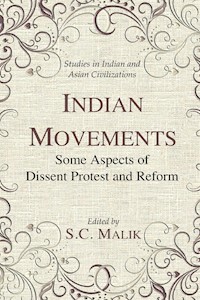
Indian Movements
By thesameauthor
• Stone Age Industries of the Bombay and Satara Districts
• Indian Civilization: The Formative Period – A Study of
Archaeology as Anthropology
• Understanding Indian Civilization: A Framework of Enquiry
Bookseditedbytheauthor
• Indian Civilization: The First Phase – Problems of a Sourcebook
• Management and Organization of Indian Universities
• Dissent Protest and Reform in Indian Civilization
• Criteria of Status Evaluation in India
StudiesinIndianandAsian Civilizations
Indian Movements
SomeAspects ofDissentProtestandReform
Edited and Introduced
by
S.C. Malik
Cataloging in Publication Data — DK
[Courtesy: D.K. Agencies (P) Ltd. <[email protected]>]
Indian movements : some aspects of dissent protest and
reform / edited and introduced by S.C. Malik.
– Second revised edition.
pages cm. – (Studies in Indian and Asian civilizations)
Includes bibliographical references and index.
ISBN 9788124610855 (hardback)
1. Social movements – India. 2. India – Religion.
3. Literature and society – India. 4. India – Civilization.
I. Malik, S. C. (Subhash Chandra), 1932- editor.
II. Series: Studies in Indian and Asian civilizations.
LCC HN683.5.I53 2021 | DDC 303.484 23
First published by:
Indian Institute of Advanced Study, Shimla in 1978
Second revised edition published in 2021
© Indian Institute of Advanced Study, Shimla
ISBN: 978-81-246-1085-5 (Hardbound)
ISBN: 978-81-246-1123-4 (E-Book)
All rights reserved. No part of this publication may be reproduced or transmitted in any form or by any means, electronic or mechanical, including photocopying, recording or any information storage or retrieval system, without prior written permission of both the copyright owner, indicated above, and the publisher.
Printed and published by:
D.K. Printworld (P) Ltd.
Regd. Office : “Vedaśrī”, F-395, Sudarshan Park
ESI Hospital Metro Station, New Delhi - 110015
Phones : (011) 2545 3975, 2546 6019
e-mail : [email protected]
Web : www.dkprintworld.com
Preface to the Second Edition
The idea of an unchanging tradition directed Indian society over the last 2,000 years is an inaccurate statement. It is clear that significant redefinitions of sociocultural objectives with instrumental action have taken place by groups and individuals, that various movements of dissent, protest and reform have made a significant contribution to India’s traditions and civilization. The absorbing of new ideas, values and technology, both indigenous and borrowed, has also been part of Indian tradition.
Thus, there has seldom been ever any explicit central organization, authority or singular dominating tradition. Then, it is also apparent that the harmonic view of Indian society is not true. Nowadays attempts are being made at all levels to impose such a view which is inherently dangerous as it amounts to a dictatorship, politically speaking. Historically, it has been shown that even centralized empires were short-lived compared to regional kingdoms. The conflict between centripetal and centrifugal forces has always been going on. It is well to remember that this diversity is essential considering that this South Asian region is as big as Europe. The essential feature of India is its diversity, its inclusiveness. Indian civilization has undergone disharmonic–disequilibrium states, due to conflicts within the system at various levels – ideological, sociocultural and politico-economic. In other words, there are several traditions of models of society which have coexisted. Therefore, in general, it is difficult to identify the values and norms of something typically singularly Indian.
It is in this context that one may learn how movements have often provided corrections and modifications in the existing sociocultural and economic realities.
Thus both these processes of consensus and harmony, and conflict are applicable at different times and during different situations, and all of these require in-depth studies. This is the context of movements examined in this volume, specific to different regions. We may identify both macro and micro movements. These range from empirical data obtained from literary, classical and oral traditions to artistic and intellectual spheres; socio-religous protests have also arisen.
Thus there are interacting traditions and several interpretations of the great and little traditions. Indian civilization has thus been in a continuous flux and intermingled at various levels by means of multichannel transmissions. Thus other models than those which provide dichotomies have to be evolved. There has been no blind acceptance of traditions, whenever there has been a big gap between the ideals enunciated and their existence at the functional level. For example, the so-called tribals were in fact kingdoms which have played important roles in mediating between different political kingdoms.
In short, whenever normative traditions and values fail to provide necessary meaning and stimulus, it is in this context that dissent, protest and reform movements have played an important role in reshaping and revitalizing Indian civilization.
Given the brief framework above, the papers in this volume assume great importance and need to be given adequate importance even today and require further studies.
The Indian Institute of Advanced Study in Simla under its research project “A Sourcebook of Indian Asian Civilizations”, of which I was the coordinator, initiated investigations into the theme of “Dissent, Protest and Reform Movements”, beginning in 1973, with a planning conference, and then a seminar in 1975, published in 1977. Subsequently scholars were commissioned to write essays on selected topics. This volume is a result of these studies.
In this edition, present-day diacritics have been used, spellings, abbreviations and italicizations following Oxford Dictionary for Writers and Editors, and bibliographic details have been updated. I am thankful to Susheel K. Mittal for undertaking this task.
11 March 2021
S.C. Malik
Preface to the First Edition
The present volume reflects one in the series on “Studies in Indian and the Asian Civilizations” undertaken by the Indian Institute of Advanced Study, Shimla under its group project programme of “A Sourcebook of Indian and Asian Civilizations”. During the Fourth Plan period four works were prepared and published: (i) Indian Civilization: The First Phase – Problems of a Sourcebook; (ii) Understanding Indian Civilization: A Framework of Enquiry; (iii)Brahmanic Ritual Traditions; and (iv) Transmission of the Mahabharata Tradition. During the Fifth Plan period it was decided to undertake two specific themes for investigation, (1) Dissent, Protest and Reform Movements, and (2) Determinants of Social Status in India. For the former a preliminary step was to hold a planning conference, which was followed by a week-long seminar, and then the assignment to various scholar-commissioned studies for an in-depth investigation of specific themes. Of the fifteen topics chosen, only eight were received, and these form the present volume.
It was not easy to find scholars who were free to take up this work or were at that moment interested in it. But, it was due to the persuasive capacity of the former Director, Professor S.C. Dube, that it was possible to put together these essays and find the scholars. Professor Dube was intimately associated with the planning and organization of the themes, seminars and so on, that were taken up for study during the Fifth Plan period. Dr B.N. Saraswati, a colleague on the scheme, has also contributed in a large measure to the work undertaken in this joint project. As coordinator of the scheme my thanks are due to them and to all the scholars associated with the scheme. Of course, the credit goes to the contributors of this volume who found time to write these essays, which we hope will initiate further work along these lines.
My thanks are due to Mrs Vijayalakshmi Rao and Shri Hiru Ram for typing several edited drafts, to Shri A.K. Sharma, of the Publication Section, for expediting the production of the book through various stages, and I am also obliged to Mr M.C. Gabriel for copy-editing the volume.
S.C. Malik
Contents
Preface to the Second Edition
Preface to the First Edition
Introduction
- S.C. Malik
1. Bhakti Movement in South India
- M.G.S. Narayanan
- Veluthat Kesavan
2. The Vīraśaiva Movements
- Arun P. Bali
3. Saint-Poets of Maharashtra
- G.B. Sardar
4. Dissent and Protest in Hindi Bhakti Poetry
- Savitri Chandra
5. The Bhagat movements in Chota Nagpur
- Sachchidananda
6. Arya Samaj Movement
- Pushpa Suri
7. Lokahitawadi: Pioneer of Rationalism in Maharashtra
- Y.M. Pathan
8. Backward Classes Movements
- M.S.A. Rao
9. Dissent and Protest in Modern Hindi Literature
- Narendra Mohan
Contributors
Index
Introduction
S.C. Malik
The Indian Institute of Advanced Study, Shimla under its group research project of “A Sourcebook of Indian and Asian Civilizations”, initiated investigations into the theme of “dissent, protest and reform movements” during the first half of the Fifth five-year plan period. The first step was to organize a two-day planning conference in September 1974 – its report being published in 1975 – with the objective of clearing up various issues and identifying topics which could be taken up under a programme of multidisciplinary research. The programme included organizing a one-week national seminar, the commissioning of a series of studies and the Institute’s scholars writing monographs. The seminar was held in September 1975 – its proceedings published in 1977 – and subsequently, scholars were commissioned to write essays on selected topics. This volume is a result of their studies. We may briefly recapitulate some of the issues discussed, both at the conference and at the seminar.
At the outset what caused a great controversy were semantic problems. In part these arose quite expectedly from the diversity of approaches expressed from the point of view of so many disciplines. Then, there was serious objection to the use of the words dissent, protest, reform, and non-conformism in the Indian context, basically because these originated in the context of the European and the Christian civilizations. Moreover, because the Indian situation is quite different, especially in the broad context of Hinduism, it was suggested that their validity was doubtful, i.e. the sociocultural processes involved in India were very different. But many others thought that if definitions are made very clear, then, they may be used in the Indian context, keeping in mind, of course, their historical background, i.e. we could begin with certain operational definitions and test them carefully against certain well-known paradigms. For instance, the character of a movement may be seen in terms of its objectives or goals: dissent may be defined as a negative orientation – generally of individuals – towards cultural ends and/or institutional means, indicating that such a movement reflects emotional resentment against the established order though there is little effort towards a programmed social action; in protest while there is, as in dissent, a similar attitude and emotional awareness, the degree of social action by groups is greater; and, in reform along with a negative orientation to cultural ends and institutional means, a major component is the high degree of social action, although recourse to concerted and continuing social interest is within the framework of established norms. This does not imply that there are sharp distinctions between these types of movements or that there is a unilinear progressive relationship between the three, though such a possibility cannot be ruled out.
Differently expressed, in dissent, individuals articulate their differences with the establishment over cultural ends; in protest these differences go beyond articulation to a high degree of social mobilization and action since group awareness of the new objectives against institutional means is strong; and, in reform the degree of social mobilization and action through legitimized means of achievement is very clear. This raises the problem: what are the objectives and actions which can be defined as legitimate, and what are not. Clearly, most reform movements, more or less, operate within the framework of the established sociocultural norms. This may not necessarily be true for dissent and protest, where the basic idea is generally not to conform and to formulate new norms that may not be considered legitimate (at that time at any rate); the negative attitude to the existing order is very apparent. However, a total rejection of existing norms, values, and institutions implies that the objectives are for deep structural changes. This in turn implies such far-reaching consequences that a movement of this kind may amount to what one calls a revolution. It was generally agreed that hardly any movement has ever aimed at, much less succeeded, in bringing about such a change in India.
The next issue to consider is highlighting in terms of a conceptual framework and the definitions mentioned, a paradigm by taking up concrete situations. Thus, one may ask: What is it that constitutes the Indian tradition? or, Are there traditions against which a movement works? That is, is there one model that is applicable for our understanding of India, or are there many models and traditions, although these may be bound by a common underlying set of core values that typify Indian civilization? Some scholars see Indian tradition mainly in terms of a unilinear model in which the tradition has continued unbroken since the Vedic times. For them these so-called movements are minor deviations from the basic tradition. The multilinear model proponents stress that several sources and traditions have gone into the making of India; there is not one that may be seen as conforming to a dominant central idea, not to speak of a specific institutional structure.
Whatever else, it was clear to all that the idea of an unchanging tradition-directed Indian society in which hardly any significant changes over the last 2,000 years have taken place, was an inaccurate assessment. Research in recent years has brought out clearly that from time to time there have been significant redefinitions of social objectives with instrumental action, whereby choices have been made by groups and individuals out of the many available traditions; that is why innovations, inventions, and even borrowings have been the case in the history of Indian civilization. With this known fact, the major problem is to identify the processes that underly these situations. In any case it is clear that various movements have made a significant contribution to India’s traditions, and as such, they merit our detailed attention. There was a general opinion that Indian culture and society have not been merely tradition-directed, although revivalism has been a significant aspect of these. But the absorbing of new ideas, values, and technology – both indigenous and borrowed – has also been a part of its tradition. Sometimes changes have taken place by slight modifications and at others, relatively speaking, at a considerably rapid rate.
If it becomes clear that there is no explicit central organization, authority, or singular dominating tradition, then it is also apparent that the harmonic view of the Indian society – an idea given by early orientalists – is not true. Indian civilization has undergone disharmonic–disequilibrium states, due to conflicts and antagonisms within the system at various levels – ideological, sociocultural and politico-economic. In other words, because there are several traditions and models of society which have coexisted, it is difficult to identify, in general terms, the values or norms against which a movement may be struggling. Consequently, for the purpose of understanding a movement, the specification of time–space dimensions is crucial. It is in this context that one may learn how they have often provided corrections and modifications in the existing social reality, helped in the continuity of the civilization, and also enabled it to absorb various new norms, including those of modernity. Again, this does not mean that only the model of conflict and disconsonance is applicable, the way consensus, harmony and equilibrium were once thought to apply. Therefore, both these processes of consensus and conflict are applicable at different times and during different situations; and all of them require an in-depth study.
Taking into account actual situations in history, one of the problems discussed was: how movements emerge, grow, reach their zenith and then decline? Assessing the nature of their emergence is especially problematic; they may begin at the individual level, with someone with a charismatic personality, who is actually aware of social imbalances and disharmonies, and one who takes over the leadership by channellizing various resentments that exist in the society. Again, when resentments gradually permeate, both the group and the individual, in terms of various thoughts, ideas, and actions, all of them coalesce or converge at a given point of time. We learn from various examples that this happens when members become increasingly aware of the contradictions, especially of social inequalities which are based on the perception of relativity and deprivation, prevalent in society, i.e. the yawning gap between precept and practice. In this way mass discontent makes way for such sociocultural and economic actions as allow for the rectification of prevalent injustices, and other denials. Very often, there is not just one cause but several factors which may initiate or trigger off a movement. It is, however, clear that basically leadership is often provided by individuals who do not necessarily belong to the deprived masses but arise from a relatively higher economic level and/or status social group.
Once the emergence of the movement is understood, the next problem is of how social mobilization, its mechanics, etc. are formulated and strategies of actions taken recourse to. Each movement, we learn, has in different ways – through various symbols, local or regional idioms and languages – tried to mobilize opinion and evolve a strategy of action for achieving its ends. The success or acceptance of new goals depends both on the strategy evolved and upon the individuals who have led these movements.
Finally, in the course of time when a movement reaches its zenith, the subsequent developments in terms of original goals require a careful examination. For instance, we learn that in the course of time when there is the acceptance by large sections of society of new ideas and norms, which are institutionalized, this codification – the organizational structure – leads to conflicts similar to those when the movement began. In other words, once the movement gets established, it loses its initial momentum and becomes a part of the established order against which other movements arise. But, very often, in India, movements soon become a part of the old order, or become another sect whose coexistence is quite acceptable. This is how, here in India there are various traditions and sects.
The various essays in this volume discuss specific movements within the framework discussed here and indicate many of the various definitions and processes briefly enumerated. It will be worthwhile illustrating these points by summarizing some of these studies.
The Bhakti Movements
M.G.S. Narayanan and V. Kesavan have written on the Bhakti movements in south India, especially in the Tamil region, which began in the middle of the sixth century ce and continued for three-and-a-half centuries. According to them, these represent a new wave of the Aryan or the Hindu influence which was basically a religious phenomenon albeit with a social content that reflects the elements of dissent, protest, and reform. In this way, there was the consolidation and extension of the classical Hindu society in the early medieval India. The two main currents of the Bhaktimovement wereŚaivism and Vaiṣṇavism, and their saints were known as Nayanārsand Āḷvārs respectively. What has so far been written about these movements has been largely from the viewpoint of religious, literary, and philosophical appreciation, apart from investigating chronological problems about the literature. This paper, beginning with a framework of definitions and concepts, analyses the apparent religious movement against its socio-political and economic background, also within the larger perspectives of the Indian civilization.
The mechanism for the spread of the movement and mobilization, in terms of temple building activities and Sanskritization, is traceable historically from such different source materials as songs, later compositions and chronicles, epigraphic records, sculptures, paintings and other works. The movement created cultural links by cutting across political boundaries, promoted a new Tamil consciousness and thereby, of course, contributed to Tamil heritage. By the ninth century it had covered the major kingdoms – the Coḷa, the Pāṇḍya and the Chera – and by the tenth century it had crossed its zenith to become a part of the established order and then began a natural decline in terms of its specific objectives. The phases of emergence, growth, and decline of the movement for three-and-a-half centuries were closely interrelated to socio-political and economic trends, and as a whole especially to the evolution of the Bhakti cult in north India. It coincided in time in the south with the rise of a new feudal monarchy. Initially, it had to tackle the already established orders of Jainism and Buddhism. But the growth of Śaivism was so rapid that the kings became its patrons and even went to the extent of persecuting the followers of the heretical sects. Thus, Brāhmanism returned with a vengeance, along with its institutional base in the temples that were supported by agrarian settlements. These emerged as a dynamic force whereby not only new agriculture areas were developed but also a communication system between the south and the north was established.
In the initial phases at least, because of its ideology, kings, brāhmaṇa priests, and the common people were brought together in a harmonious manner at religious gatherings, ceremonies and festivals, even though social inequalities continued because of the feudal system and the system of production and distribution was permitted. What we do learn is that in several stages different groups interacted with increasing frequency to accelerate the processes of “Aryanization” or the “socialization into Brāhmanical ideology”. The temple cult with the associated settlements and tenants played a significant role along with pilgrimage centres and other organizations of the movement that have had a major share in reforming the rigid hierarchical nature of Brāhmanism into an egalitarian popular Hindu religion later, with which we are familiar. The stronghold of its followers was not in the guilds of traders, merchants, and artisans (which continued to be the stronghold of Jainism and Buddhism) but in the rural agrarian settlements. This is why the rivalry between the heretical sects and the Bhakti movement reflects, at least implicitly, the conflict for socio-political dominance between the landowning classes and the trading classes.
Eventually, the movement overtook Jainism and Buddhism not only because of royal patronage, but more so because it adopted several media that evoked popular enthusiasm, such as song and dance, and also because it had an egalitarian and democratic approach that was different to the rigidity of the classical Brāhmanical discipline. Is this movement, therefore, to be considered revivalistic in nature? In any case, with the growth and establishment of the new order, the agrarian–feudal order also came into existence and was supported by a graded system of hierarchy in caste; these kinds of relationships and patterns are clearly seen in Bhakti literature, i.e. these hierarchic relationships exist at the “spiritual” level. The feudal pyramid was thus firmly established in south India.
Apparently, all these developments may not indicate explicitly any element of dissent and protest. But the fact is that the Bhaktimovement did deviate a great deal from the orthodox philosophy of Brāhmanical Hinduism, and provided an impetus to a great deal of intellectual activity at both the secular and spiritual levels. There was a rejection of abstract metaphysics as well as indifference to caste regulations. This is seen in the fact that untouchables and outcastes have also been recognized as saints. The Vedic ritualism was thus considerably changed and diluted by the addition of several other folk, local, and regional elements. In this way its popularity increased and every aspect of life was subordinated to bhakti. Nonetheless, no qualitative change took place in the socio-economic order though it did open the path of salvation to everyone. In this sense there was at least a liberation from the idea of caste rigidity because of the removal of the rigid code of rituals which created separate groups especially during times of devotion. This in itself was the promotion and spread of a new set of values, for example, if a king could mix with the commoners, apologize to the priest and humble himself before the deity, the image created led to a change in attitudes. It made the individual and groups aware of certain equal rights that they could claim at least at the cultural and religious levels. The same freedom was given to women who had been denied such a status until then.
At any rate, as in the case of other movements, since this one did not aim to bring about fundamental changes, and, partly because of the processes inherent in the growth of dissent and protest movements and with many of the objectives with a social context having gradually been achieved, by the tenth century, the orthodox elements came to dominate the movement. And since the heretical sects had also gradually lost their strength due to the Bhakti movement, the brāhmaṇas returned once again with strict ideas of ritual and temples became enormous landed property-owners and custodians of power and wealth and the maṭhas headed by the brāhmaṇa ācāryas became champions of the varṇāśrama-dharma and in the field of religion even the Tamil language was replaced by Sanskrit.
The Vīraśaiva movement
Arun Bali writes on this movement of Karnataka, associated with the name of Basaveśvara, which began to gain ascendancy in the twelfth and thirteenth centuries ce, and from the fourteenth to eighteenth century ce was not only the state religion of Kannaḍa rulers but also enjoyed royal patronage of the Vijayanagara kings. The protest was basically against brāhmaṇa domination, i.e. the ethos linked with Brāhmanic Hinduism. Inequalities and exploitation which were in existence for quite sometime before were sanctified by various rituals and practices. It was at this time that Basaveśvara provided a concrete shape and direction to the movement – in terms of philosophy and religion a “view” as well as a motivation for radical social action. It did not merely want to reform the established order but through competition and confrontation (often militantly involving varying degrees of violence) it wanted to change the basic structure of time-honoured traditions. The objectives and achievements of this movement were comparatively way ahead of other movements. Perhaps, the total domination by one community through a rigid system of rituals and beliefs, the growing awareness of relative deprivation, the unequal distribution of social privileges and economic benefits were the causes of widespread resentment and bitterness.
The strategy evolved for achieving its goals included providing alternative rituals, taboos, and other cultural and religious symbols which would not only reflect the ideology of equality but also provide alternatives to brāhmaṇa monopoly. The Vīraśaivas with their own beliefs, rituals, and rites, also provided a new content to their faith by establishing an institutional framework of canonical scriptures that covered the whole of society in terms of an egalitarian order. Beyond this framework it emphasized the dignity of labour underlining industry, selfless service, and devotion to work. This was how it put into practice its basic precepts, of spiritual and ethical ideas. It thus appointed its own class of priests, artists, and craftsmen who would not depend on the brāhmaṇas for their survival and would work irrespective of their status. Social mobilization was taken up with a missionary zeal and people recruited in blocs through the institution of maṭha. The impact of it all has been that the Liṅgāyats today form the single largest ethnic group in Karnataka.
As with many other movements, despite it being characterized by a high degree of social action and politicization of its value system for some centuries the routinization of institutional and organizational structure that was to provide a code of conduct to its members as the basis of the philosophy it stood for, rigidity and social hierarchy made their appearance. These are seen today, even in the wish that certain Vīraśaivas have claimed to be Vīraśaivite brāhmaṇas. The presence of these elements may also be regarded as a natural development of social processes in which movements are absorbed into the social order. Nevertheless, its basic fight against brāhmaṇa domination continues, and in other contexts this has helped the demand for equality in all spheres of life.
Consequently, a new orientation was given to the movement when other non-brāhmaṇa movements began in the 1920s in the old states of Madras, Mysore and Bombay. It was able to provide the core structure for the Backward Classes movement, because the experience of protest was already in existence. This and the various other associations fighting against the brāhmaṇas led to the creation of the All-India Virasaiva Mahasabha in 1904 with branches in most of the southern states. Social mobilization and social control, to bring about positive action and a collective caste consciousness for the benefit of the deprived classes, have been and were in the past used through concentrating on the system of education. If the maṭhas encouraged mass education in the early years through Sanskrit pāṭhaśālās, in the twentieth century it has been conscious of the changing social realities. The movement has encouraged the English education as well as changed emphasis from sacred to secular education including the encouragement given to science, engineering, and technology. This has been so because these are again as they once were dominated by the brāhmaṇas and have been important in the modernization process. In turn, the political control of power points, at least in Karnataka, had also to be made by the movement, which meant taking part in state-level politics and elections.
The movement may be said to be a significant one, for it formulated, developed, and put into action an entire new content and structure. This was in order to cripple the rigid traditions which had been imposed for centuries by the dominating brāhmaṇas. Of course, the ideals could not be implemented in full, but their impact on the social structure of the Kannaḍa-speaking area has been immense. However, a once egalitarian movement, which began in an effort to cause changes, was itself infected by those very characteristics which it had originally repudiated. Today, its impact on the twentieth-century Backward Classes movements may be noted. This has been discussed in detail by M.S.A. Rao.
The Saint-poets of Maharashtra
G.B. Sardar’s paper discusses the role of the saint-poets in the transformation of Maharashtrian society and culture, approximately from the thirteenth to the seventeenth century ce. Prior to this, society was already divided into what may be called two classes – the privileged few and the unprivileged many. The concern of the saint-poets is a humanistic one for socio-economic justice, so that the subhuman existence of the many which had resulted from the vested interests of the power groups could be relieved if not eliminated altogether. Social control was once again exerted through the medium of religion and culture. This is how the saint-poets were able to start to reform the system by following the path of devotion (bhakti). Knowledge, religion, or such other elements of change were not available to a majority because of socio-religious taboos. Hence, the emphasis of the saint-poets was on a universalistic and egalitarian religion which would open its doors of salvation to all, in terms of the Bhāgavat Dharma and the bhakti-mārga.
The mechanism for social reform was through religious and cultural symbols and acts, rather than through a direct confrontation and hostility with the power structure. Under the circumstances, these means were both expedient and appropriate as means of expressing dissent and protest. It is true that religion dominated all fields of learning and knowledge and as such played an important role. Moreover, by making available all knowledge, for everyone, through the medium of the local language, which is closely connected with devotional movements, these saints also made a significant contribution to the Maharashtrian culture.
Sardar specifically discusses in detail the role of the Warkarī saints. He gives the political and economic background of the time which extends from the Yadava rule to the emergence of Shivaji, a period of about four centuries, and, the saints discussed range from Sant Dnyaneshwar to Sant Tukārām. As in other areas, at that time religion was used to maintain a hold on the masses in terms of material benefits and services, especially through institutionalized beliefs, practices, and other ceremonies. The protest of these people was thus against dogmatic religion which made the role of a majority of the people to service a minority belonging to the upper groups (varṇas). The approach to social and religious change was given differently by the saints and the philosophies adopted were social oriented rather than based on any abstract metaphysics. This new orientation is reflected in the Marathi writings of those times. It is important to note the emphasis given to “congregation” (kīrtan)for the preaching of the Bhāgavat religion so that the restrictions of brāhmaṇa priests’ exclusiveness could be overcome. Many of these developments took place against the background of Muslim rule, both as a positive and negative reaction – negatively in terms of continuing or reviving the old traditions, and positively because it was influenced by the philosophy of the Sufi saints and, perhaps, the egalitarian values of the Islam too.
At any rate, the four major saints belonging to the Warkarī segment have in different ways affected the movement in terms of literary style, compositions and creativity. But all their contributions differ from those of the saints of other sects, particularly in terms of the social dimension given to their religious formulations. This is why they were very popular and seemed to satisfy the religious impulses of the people by modifying the old Vedic religion to suit their times. However, they did not believe in destroying the foundations of society, because they thought that ethically correct traditions could be reactivated within the contemporary framework. One of the main means was their use of spoken Marathi for the ordinary man and not the Marathi used by the Mahānubhāvas which corresponded to classical Sanskrit poetry. If the Bhagats were still considered supreme it was because they did not believe that the śāstrīs and paṇḍits had a monopoly over this ancient knowledge; in order to remove social discrimination, they believed in the supremacy of self-knowledge and devotion. All these efforts helped a great deal to lessen the contradictions in society, but in the long run did not bring about effective structural changes.
Dissent and Protest in Hindi Bhakti Poetry
Savitri Chandra’s paper is an attempt to underline the elements of protest and dissent in “medieval” literature (from the fifteenth century onwards) as seen in the Hindi bhakti poetry, with emphasis on political and social content, along with its cultural and ideological elements. This is an aspect that has not been emphasized by earlier writers who see the Bhakti movement mainly as a reaction of Hinduism against the Islamic challenge. But the movement has also been seen as a protest of the lower classes, especially artisans and craftsmen communities which as a consequence of the Turkish rule had grown considerably with the growth of city life. For some centuries prior to the coming of the Turks, social divisions between the privileged rich and the unprivileged rich had been very sharp, with brāhmaṇas dominating on the basis of the varṇāśrama-dharma. While the ideology of the Muslim rulers was based on equality, they tacitly accepted the caturvarṇasystem, and yet they were equally indifferent to these dissent movements.
Kabīr’s writings are the most prominent of them all. He laid stress on the fundamental equality of man as reflected in the earlier writings of the Siddhasand the Nātha-Panthīsand which continued to be seen in the later sixteenth- and seventeenth-century writings of Guru Nānak, Dādū Dayāl, and the other poets such as those of Bihar. Such social ideas, especially those of Kabīr, invited sharp reaction from both the Hindu and the Muslim orthodoxy because they were very radical for those times. Bhakti literature indicates the absence of abstract philosophical ideas; instead, ideas are propagated in a simple language which made a deep and direct appeal to the common man. Kabīr often expresses these ideas by making fun of the brāhmaṇa or ridiculing him and other authorities like him.
While Kabīr and Raidās believed in basic equality, especially in terms of access to religious literature, Sūrdās and Tulsīdās later on upheld the position of the brāhmaṇa. In other words, in the Bhakti literature there are two contradictory ideas, i.e. at the religious level there is no distinction of caste in the matter of one’s devotion to God but in secular society social distinctions need not be abolished. Of course, all of them state that the intrinsic qualities of the varṇas rather than the birth-status should be stressed upon. These ideas did have their impact on society because the exclusive rights of the brāhmaṇa were diluted, and after the sixteenth century the lower-caste saints were respected by all sections of society.
From the political and economic viewpoint, Bhakti poetry emphasized that wealth and power which were dominant in a feudal setting were not things which a Bhagat should feel proud of and be overjoyed about. However, these are only implicit ideas and nothing is explicitly stated about changing the social order. Even so, poverty was not approved for its own sake, and begging was disapproved by Kabīr who emphasized the virtues of working for oneself. If the poor man was superior it was because there was humility in him as against the arrogance one found in the rich. But, to most of the poets it was evident that the trader-cum-moneylender was exploiting the poor, whom they warned against these people and other officials including the dīwāns and the kings who perpetuated injustice and sufferings over the masses. There are vivid descriptions of families during these times, and examples of hardships and harrassments meted out to them. There is some general idea indicative in the qualities of a good ruler and his duties towards the underprivileged section of society, but which according to Tulsīdās is not possible in the age of Kali.
At the cultural level, the attack by the Bhakti poets on religious practices and beliefs was quite explicit, and was applicable to all religions because these reflected an irrational attitude that obscured the reality of God as one. They also did not approve of asceticism of those other sects which advocated renunciation of the world. For the Bhakti saints true devotion implied seeking God within oneself, in the routine of daily life, and their approach based on mysticism was fundamentally humanistic and individualistic. Hence, logically the rejection of a formal and organized religion based on authoritarianism was natural. However, such sacred books as the Vedas and the Quran were not entirely rejected though knowledge through experience was given preference. They stated quite clearly that various rituals and practices were evolved by the privileged in order to control the common man. This approach also perpetuated animosity between the Hindus and the Muslims. The various saints differ in their attitude towards the scriptures and the role of the priests. Unlike Kabīr, Tulsīdās and Sūrdās did not disapprove of the Vedas. Dādū who did not consider himself to be either a Hindu or a Muslim, as a dissenter he naturally invited hostility from both the sides. On the other hand, Kabīr, Raidās, Nānak, Dādū during the fourteenth, fifteenth and sixteenth century considered scriptural knowledge secondary to personal knowledge and devotion to God. The seventeenth- and eighteenth-century poets reflected the other trend.
Basically, what emerges is that through their preachings the saint-poets expressed disapproval of social distinctions by seeking to identify themselves with the suffering of the common man although they chose to express themselves in religious terms. The movement was thus ideologically against the prevailing socio-economic ideas and institutions which had sharpened the distinctions between the haves and have-nots. The Bhakti saints, therefore, revitalized Indian tradition although later it fell a prey to factions and divisions like so many other movements.
The Bhagat movements
Sachchidananda’s paper is on the Bhagat movements in Chota Nagpur, a tribal area, which during the last several centuries, has been affected by various processes. Some of the factors include the coming of Hindu and Muslim settlers with the invasion of their territory, and the increasing pace of industrialization and urbanization since Independence. The two predominant tribes of the area are Muṇḍās and Oraons, whose history and structure of agrarian society is a necessary background for the present study. Thus, organizational changes from simple level village organization began to take place from the sixteenth century when the region came into contact with the Mughal empire. Hindu priests, businessmen and other adventurers came to the area and the idea that a ruler who could collect taxes and extract revenue, something that was new for tribal society, came into existence; a process that was further strengthened with the coming of the British. Gradually, the tribals were reduced to tenants and by the end of the nineteenth century, they owned only 96.99 sq. miles out of 7,062 sq. miles of land which had sustained and united them to a kind of a spiritual bond in the name of their ancestors.
This upset the traditional relationship and the dispossession of land has been the cause of periodic resistance and hostile movements, that have often become violent because of the extremely oppressive attitude by officials, middlemen and others. No law or police ever supported them. For example, the tribals not only had to pay all kinds of taxes and revenue, including some for festive occasions, but also had to provide free labour and other services. Of the many revolts in the nineteenth century the violent Kol rebellions of 1821 and 1831 are significant because they triggered off various administrative and land reforms though none of them could satisfy the tribals. One such law was the passing of the Chota Nagpur Tenure Act in 1869. With its failure began the sardārī agitation, to be followed by the Birsa Muṇḍā one in 1895 and again in 1900. The movements at this point, had transformed their socio-economic objectives to a political one, for there was now a demand for local self-administration. These series of agitations brought about an endless repression and this was when their leaderBirsawas arrested, and he died. It was not until 1908 that attempts were made to mollify the Muṇḍā tribals and to restore their rights to land.
The Birsa Muṇḍā background affected the other early twentieth century movements in Chota Nagpur area, especially those of the Bhagats which reflect a great religious ferment. Birsa had become the Bhagavān of Chota Nagpur and following Tānā Bhagats, who are Muṇḍās, movements by other groups also assumed religious overtones. For instance, one leader wanted the entire tribe to believe in one God, which would neither be Hindu nor Christian. This was Jātrā Bhagat, who in 1914 had a vision and a revelation like Birsa. Of course, the predominant religious dimensions covered up the demands for socio-economic reforms. In any case, the Bhagatmovement spread far and wide into different parts of the Ranchi district. Other spiritual revelations took place among the Oraons also. By 1915, all these movements came to be known as the TānāBhagat movements and spread to some areas of Madhya Pradesh. Against many of these military force was used; the ferment was motivated by the faith that a Messiah would come.
Among the Oraons the term bhagat is applied to that section of the tribe which subscribes to the cult of bhakti. One view considers this as an attempt, through Sanskritization, to raise the status of its members within a broad Hindu framework such as by the inculcation of the Hindu beliefs and practices. There are different kinds of Bhagats, depending on what beliefs and practices, as well as what deities and priests, are followed and worshipped; what is common is their idea of ceremonial purity and impurity. In this context the TānāBhagats movement has been divided into two phases; one, which wanted to remove existing tribal beliefs especially in ghosts and spirits, and the second which sought by devising programmes to set up rules and regulations in conformity with the new doctrines and beliefs. Various mechanisms, strategies of action, were adopted by the people. In time, due to the opposition from the authorities, there was the formation of different sections of TānāBhagats. In all of them, several elements with both Hindu and Christian idioms have been absorbed. These are seen on various occasions, festivals and in their lifestyles and life-cycle processes.
From 1919 onwards, the religious overtones slackened. Since the redressal of agrarian grievances was not allowed, political, and economic overtones became powerful, and secular methods of protests were adopted. Once again, strong oppressive measures were taken against these agitations. But by now the Non-Cooperation movement, which Gandhiji had started in 1921 also provided additional impetus. The Bhagats joined the Congress and the Gandhian movement. In other words, Non-Cooperation and the TānāBhagat movements reinforced each other. In this way, the latter became an all-India movement, and even became a part of the Quit India Movement of 1942. Thus, between 1920 and 1942 the movement was transformed from a socio-religious movement into a political one. The subsequent events are of the post-Independence period during which time the demand for the restoration of land and other rights has continued and some improvement has taken place, although not to the extent the tribals had expected.
From the broad overall view, many scholars would consider these movements to be nativistic or revitalizational ones that have tried consciously to create a society in harmony with their culture. This is the case wherever we see that the old culture resurrects under the challenges of new factors, causes division and disorganization; for example, when two societies come into contact, one of which is by far the dominant partner, with both economic advantage and the power of prestige. This is why, in order to overcome their inferiority to the Hindu culture, tribals have tried either to borrow an ideology, or to return to the original puritanical society. Thus, Sachchidananda considers the TānāBhagat movements to be reformative because these have attempted to synthesize both, the native and the alien traditions including Christianity. Here, the role of technology and economics has been important, even if it has come in the garb of the Christian religion. At any rate, the Bhagat movements have been more than passing restive movements; they have been long-term mechanisms used for the transformation of tribal society. Some researchers even regard these tribal movements as having been mediators between the great and the small traditions.
The Arya Samaj Movement
Pushpa Suri writes on the Arya Samaj movement which began in the nineteenth century mainly amongst the middle classes, who wanted to improve their status through professional occupations. It was in response to the changing conditions in India especially the industrialization. Prior to this time these classes were primarily mercantile groups, clerks and writers who had worked under the Mughal and Sikh administration, and the well-to-do peasant classes. The partly revivalistic and partly reformative ideology of the Arya Samaj suited these people ideally. Swami Dayanand Saraswati, the founder of the movement, wanted to reform Hinduism by removing from it many undesirable customs, social injustices perpetuated by the semi-educated priestly class, the rigid caste system and consequent untouchability, the inferior status of women, child marriage, the taboo against widow remarriage, etc. Similar reformative moves were being made by the Christian missions. Swami Dayanand wanted to counteract the Christian movement, for he felt, the Hindu society should be able to reform itself. He did not think there was any need for its adherents to change their religion. While the Samajwanted to reform Hinduism by going back to the ancient scriptures and other texts, other similar movements such as the Brahmo Samajreflected a more direct impact of Westernization.
The history of the Arya Samaj’s origin and growth, and of its founder is well known. Also well known are the years of wandering and search, encouragement and learning from Swami Virjanand of Mathura and the determination to propagate the Vedas and the Śāstras in their original purity. One of the important landmarks in his life was the Kāśī debate that made him famous. Soon after in Bengal he realized the importance of Hindi as the language of the people and not Sanskrit, if he was to spread his ideas. Thus, it was that in 1875 he published his famous Hindi commentary on the Vedas entitled Satyārth Prakāśa.
Swami Dayanand was quick to realize that an efficient organization and institution was necessary in order to mobilize public opinion. The consequence was the establishment of the Arya Samaj in 1875, which gave special emphasis to congregational prayers, social service and reforms. The philosophical and ideological mainstay of the movement was the Satyārth Prakāśa,many of the ideas in which were revolutionary for that time. It presented a democratic and egalitarian outlook, requiring the removal of a dogmatic varṇa theory, social disparities and advocating the importance of status by merit. While all this was a help to the lower and depressed classes, it also made inroads into the brāhmaṇa monopoly. Naturally, therefore, the orthodoxy opposed these activities very strongly. Because of the general atmosphere of nationalism and reform movements, these ideas were taken up by the upper classes other than the brāhmaṇas. But the Arya Samaj remained confined mainly to the educated middle classes, not excluding a small number of brāhmaṇas,or to those who already had a status in the social system. There was also a counteraction from a section of the orthodoxy who called themselves the Sanātanīs. They also belonged to the upper and middle social groups, like the Arya Samaj. Therefore, in time their antagonisms were reduced, and resulted in a greater harmony between the two groups. The later personalities who gave a lead to the Arya Samaj movement included, Mahatma Hans Raj, Swami Shraddhanand, and Lala Lajpat Rai. Under the leadership of these teachers the Punjab became the centre of the movement.
The major objective of reconstructing society through a reorganization of the social system was not, of course, realized by the movement, since no alternatives to the fundamental philosophical basis of the Hinduism, especially the theory of karma,could be provided. Nevertheless, the stress was on changing social status through education (gurukulasand so on), by giving importance to guṇa,karma and svabhāva. Because of this, many among the orthodoxy excommunicated the Arya Samajists. Nevertheless, despite opposition, the zeal of various members of the Arya Samajcontinued unabated; they collected money and organized different institutions to mobilize the public opinion.
Of the many reformist ideas, one was that of śuddhi,i.e. a method whereby the Hindus converted to Christianity could re-enter the Hindu order. Ceremonies to purify persons for this purpose were simplified, often following the lines of Christian missionaries who were converting Hindus to Christianity. While in the beginning this was not opposed by the Muslims, the śuddhi movement took a turn when a reconversion of Muslims to Hinduism was also taken up. In time, this programme was confined largely to reconverting some of the recently Islamized communities which had, in fact, retained several of the customs and practices of Hinduism. Naturally, the Muslim missionaries tried to stop this kind of reconversion. Many of the then Congress and orthodox Hindu leaders thought that the śuddhi movement constituted a major danger to the unity and amicability between Hindus and Muslims. In fact, it led to serious antagonism between the two communities. As a counterattack the orthodox Muslims and maulvīs vehemently attacked the śuddhi movement, since it was considered to be a direct threat to Islam.
One of the major goals of Swami Dayanand was the propagation of knowledge through education especially the Vedic knowledge, science, and rationalism. This is why, after his death, Anglo-Vedic institutions which had been established during his lifetime became the main centres for the propagation of these ideas. Their building-up was carried out with great enthusiasm in the teeth of great odds and opposition. This was possible partly because of the level of political mobilization for the movement of nationalism had reached a fairly high level. Swami Shraddhanand took up the cause of the education of girls as well as the plight of widows while opposing child marriage. This endeavourcaused a great deal of opposition. But the British government was impressed, and legislation to raise marriageable age was brought about. Several institutions for the resettlement of widows were also started, though in the princely states the Act was circumvented.
In many ways the Arya Samajmovement in advocating these reforms was following the Christian missionaries. It was the only organization apart from the Christians which was to establish orphanages and famine relief organizations. This was specially because the Arya Samajists felt that orphans in Christian institutions were being converted. It is to the credit of the Arya Samaj that they managed to tackle so many problems, without any government funds or belp from mahārājās and jāgīrdārs.
In the twentieth century the movement, after a hundred-year history, has slackened, probably because other agencies at the political and social level were taking up the fight. The movement also was not revitalized through new programmes even though it was holding meetings to propagate the ideas of theArya Samaj. The old ideals in many ways seem to have become out of date. The movement, as an organizational body continues to exist, but its future programmes seem uncertain in terms of a movement of dissent, protest, and reform.
Lokahitawadi: The Rationalist Movement
Y.M. Pathan’s paper sketches the approach of a pioneer of nationalism, a social reformer, in the early nineteenth-century Maharashtra, Gopal Hari Deshmukh, popularly known as Lokahitawadi. The period was soon after the surrender of the Marāṭhās to the English under the leadership of Peshwa Baji Rao II. The work of Lokahitawadi is mainly known from his numerous writings on such various subjects as religion, sociology, history, political science and economics. His most popular book is The Hundred Letters in Marathi which also forms the main source for this paper.
One major objective of Lokahitawadiwas to reform Hinduism and free it especially of its various dogmatic beliefs and rituals. He advocated the reading of various English books and often referred to the English as Enlightened rulers. His emphasis was on a religion of humanism and the development and practice of ethical and moral values. He did not believe in the superiority of the Sanskrit to English, especially if one wanted to acquire knowledge of the sciences in order to keep pace with developments elsewhere in the world. He, therefore, criticized Sanskrit paṇḍits for being behind times and vehemently registered his protests against those Sanskrit granthsthat were holding back the Indian people. Of course, he did not imply that all the Sanskrit works should be condemned.
Lokahitawadi was a great supporter of equality and the liberation of women who, because of religion, were being persecuted in various ways for centuries. He quoted the early scriptures to show how the position of women was degraded, as for example, in the Manusmr̥ti and how the later priests had imposed, from motives of self-interest, rituals and customs that reduced women to an inferior position. He also opposed child marriage, advocated remarriage of widows, and opposed the practice of satī. These and other ideas of his of social reform were taken up actively later on in the century.
Lokahitawadi, himself a brāhmaṇa, as a rationalist, vigorously attacked the fourfold division (caturvarṇa)of society, and especially the monopolistic role of the brāhmaṇas who perpetuated rigid and dogmatic inequalities, which he believed, were responsible for the downfall of the Marāṭhās.
Lokahitawadi also wrote on economic conditions and poverty, and analysed the situation after Dadabhai Naoroji’s Poverty in India. He was a strong exponent of both industrial and agricultural development so that India may become a part of the developed nations. For this purpose it was necessary to encourage knowledge of economic sciences rather than becoming engrossed in religious rites and rituals. Indians were exploited by the Muslim and English invaders who, according to him, had discouraged local development and economic self-sufficiency. Of the several remedies suggested by him for getting rid of economic slavery, one was the need to develop village industry which had been replaced by flourishing foreign trade. Evidently, his economic outlook was interrelated to political events, especially nationalism. This emphasis on the primacy of local goods over foreign was made long before the Swadeshi movement.
At the political level while on the one hand he welcomed the British rule since the Peśvās could not save the Marāṭhā empire, he was also grieved to see that Indians had lost their freedom. Analysing in many of his letters this loss of freedom, he tried to find the reasons for it. These were a lack of knowledge, ignorance, the rigid and wasteful social system that followed the mandates of the Śāstras, and hence, fatalism, etc. truly believing that the British were here to educate the Indians and make them progressive, that “God had sent these gurus(the English) from a distant land to set them right”. Consequently, it was natural for him to have critics like Vishnushastri Chiplunkar who charged him with creating an inferiority complex amongst the Indians by welcoming the English rule. Despite this criticism, he firmly believed that it was only because of the British rule that education could be spread and with it, ideas of democracy (he even advocated the demand for a parliamentary type of democracy which he felt the British would accept in due course), various processes of knowledge and economic development. All this would make people politically conscious and in time lead to realization of freedom for India. Basically he was a nationalist who did not wish to sacrifice the liberty of the nation. He was quite confident that in due course freedom would come, even if it was 200 years later.
Some of these ideas seem ahead of his time. This may be attributed to his realistic, rational, and liberal approach.
Backward Classes Movements
M.S.A. Rao takes up the protest movements in the old states of Madras, Mysore and Bombay during the nineteenth and twentieth century, referring to the Backward Classes in terms of their emergence, ideology, organization and leadership. He gives the figures of the distribution of all economically and socially backward groups, castes and tribes, both of which are scheduled in the Constitution and other groups whose safety depends upon the policies of the state governments. The emergence of these movements is generally associated with the welfare and conversion programme of Christian missionaries amongst backward social groups, who also received official support from the British, as well as the Princely States. When the economic, as well as social status of these low-class converts improved considerably, it provided a sharp contrast to the state of the unconverted. This was especially so in Kerala among whose people an acute social awareness of relative deprivation was created. Similar was the case in north India, because of the impact of Brahmo and Arya Samaj. Awareness was also acute because these egalitarian ideas were taking shape within the wider political climate of the national movement (the role of Mahatma Gandhi in this is well known) and the introduction of democratic ideals. The British had also introduced various reform policies which gave the deprived sections a sense of political identity along with introducing the idea of secularization in employment opportunities, and so on. All this challenged the established authority of the orthodox upper groups.
The Backward Classes movement was basically a conflict between the brāhmaṇa and the non-brāhmaṇa groups. The background is the glaring contrast in socio-economic conditions, against which the movement’s mechanism and operational strategies adopted differed in different states. For example, in the old Bombay State, it was Jyotiba Phule who was to organize the Satyashodhak Samaj,and in Tamil Nadu it was the Justice Party which fought in various ways the dominance of the brāhmaṇas who were identified with the Aryans and the nonbrāhmaṇas with the Dravidians. This was not the case in Mysore where the lower classes took active part in the movement against the background of Vīraśaivism. In Kerala, the attack was basically, and initially, against especially non-Malayali Tamilian brāhmaṇas. The north Indian situation in contrast is quite different because there the division and conflict between brāhmaṇa and non-brāhmaṇa were not so sharp.
Very often, there was conflict of the non-brāhmaṇa and brāhmaṇa groups which was focused within the upper groups. But Rao deals with such movements among the lower classes which include both touchables and untouchables, who attacked the upper groups in general such as the Yadava movement, the Vanhikula-Kṣatriya movement, the Nadar movement, and the Self-Respect movement that led to the formation of the Dravida Munnetra Kazhagam (DMK). Thus, many of these movements were aiming to gain higher ritual status through proper myths of origin as well as by wanting a share in the economic and educational benefits which were a monopoly of the upper castes. There were also those upper non-brāhmaṇa




