


15,99 €
Mehr erfahren.
- Herausgeber: John Wiley & Sons
- Kategorie: Geisteswissenschaft
- Sprache: Englisch
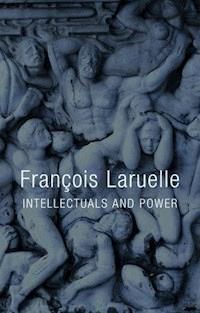
In this important new book, the leading philosopher François Laruelle examines the role of intellectuals in our societies today, specifically with regards to criminal justice. He argues that, rather than concerning themselves with abstract philosophical notions like justice, truth and violence, intellectuals should focus on the human victims. Drawing on his influential theory of ‘non-philosophy’, he shows how we can submit the theorizing of intellectuals to the scrutiny of the everyday suffering of the victims of crime.
In the course of a wide-ranging discussion with Philippe Petit, Laruelle suspends the presumed authority of intellectuals by challenging the image of the ‘dominant intellectual’ exemplified by philosophers such as Sartre, Foucault, Lyotard and Debray. In place of domination, he puts forward instead a theory of ‘determination’: the determined intellectual is one whose character is conditioned by his relationship to the victim, rather than one who attempts to dominate the victim’s experience through a process of theorizing. While philosophy consistently takes the voice away from victims of suffering, non-philosophy is able to construct a theory of violence and crime that gives voice to the victim.
This highly original book will be essential reading for all those interested in contemporary French philosophy and all those concerned with justice in the modern world.
Sie lesen das E-Book in den Legimi-Apps auf:
Seitenzahl: 232
Veröffentlichungsjahr: 2014
Ähnliche


















Contents
Cover
Title Page
Copyright
Translator’s preface
Interviewer’s preface
Prologue
The Name-of-Man or the Identity of the Real
Portrait of the Dominant Intellectual
The Victim and the Understanding of Crime
The Practice of the Determined Intellectual
Criminal History and the Demand for Justice
Index
End User License Agreement
Guide
Cover
Table of Contents
Begin Reading
Print Page Numbers
iii
iv
vii
viii
ix
x
xi
xii
xiii
xiv
xv
xvii
xviii
xix
xx
xxi
xxii
xxiii
xxiv
xxv
1
2
3
4
5
6
7
8
9
10
11
12
13
14
15
16
17
18
19
20
21
22
23
24
25
26
27
28
29
30
31
32
33
34
35
36
37
38
39
40
41
42
43
44
45
46
47
48
49
50
51
52
53
54
55
56
57
58
59
60
61
62
63
64
65
66
67
68
69
70
71
72
73
74
75
76
77
78
79
80
81
82
83
84
85
86
87
88
89
90
91
92
93
94
95
96
97
98
99
100
101
102
103
104
105
106
107
108
109
110
111
112
113
114
115
116
117
118
119
120
121
122
123
124
125
126
127
128
129
130
131
132
133
134
135
136
137
138
139
140
141
142
143
144
145
146
147
148
149
151
152
153
154
155
Intellectuals and Power
The Insurrection of the Victim
François Laruelle
in conversation with Philippe Petit
Translated by Anthony Paul Smith
polity
First published in French as L’ultime honneur des intellectuels © Éditions Textuel, 2003. 13 Quai de Conti-75006 Paris. www.editionstextuel.com
This English edition © Polity Press, 2015
Polity Press65 Bridge StreetCambridge CB2 1UR, UK
Polity Press350 Main StreetMalden, MA 02148, USA
All rights reserved. Except for the quotation of short passages for the purpose of criticism and review, no part of this publication may be reproduced, stored in a retrieval system, or transmitted, in any form or by any means, electronic, mechanical, photocopying, recording or otherwise, without the prior permission of the publisher.
ISBN-13: 978-0-7456-8191-7
A catalogue record for this book is available from the British Library.
The publisher has used its best endeavors to ensure that the URLs for external websites referred to in this book are correct and active at the time of going to press. However, the publisher has no responsibility for the websites and can make no guarantee that a site will remain live or that the content is or will remain appropriate.
Every effort has been made to trace all copyright holders, but if any have been inadvertently overlooked the publisher will be pleased to include any necessary credits in any subsequent reprint or edition.
For further information on Polity, visit our website: politybooks.com
Translator’s preface
This translation was completed a few weeks after the Boston Marathon bombing in April of 2013. Watching the predictable parade of the usual personalities who pass for intellectuals on the 24–hour news networks brought home and confirmed the basic thesis of Laruelle’s critique of intellectuals in this book: intellectuals, on both the right and left, do not concern themselves with victims, but only with transcendentals that are mediatized, turned into media-friendly concepts. These include classical philosophical transcendentals like justice, truth, the rights of man or human rights, fairness, justifiable violence, etc. In each case, viewers of either the American talking-head shows, whether on liberal MSNBC or conservative FOX, or British news shows like Newsnight will be familiar with the way intellectuals parade themselves before the cameras, spouting off in support of some stance based upon these transcendental abstractions. I am highlighting the transcendental nature of these abstractions precisely because Laruelle’s point is not to reject abstraction (though he prefers to speak of them as a singularity or “one abstract”), but to reject the transcendental illusion produced by these intellectuals before the cameras or on the op-ed pages of your daily newspaper. What Laruelle offers his readers here is a vision of intellectuals’ role in the light of the critical and constructive project of non-philosophy. One that seeks to escape from the inanities of the so-called “intellectuals” whose very subsistence is guaranteed by their taking some stand on any issue whatsoever – and taking that stand on deadline! – into a higher form of thinking, one that is ultimately human and thinks from the victim rather than according to these transcendental abstractions.
In this introduction I will not detail the various hypotheses − as Laruelle describes his reflections here − that he puts forward in the course of this conversation with Philippe Petit. Petit’s “Interviewer’s Preface” already sets up and offers a summary of the conversation that follows. This preface will be limited to introducing Petit and highlighting how this book, originally published in France in 2003, fits within the wider project of Laruelle’s non-philosophy.
Conducting the interview, as already mentioned, is Philippe Petit, who also is the general editor for the series Conversations pour demain [Conversations for Tomorrow] in which L’ultime honneur des intellectuels [translated here as Intellectuals and Power] originally appeared. This series of books consists of interviews with important public intellectuals in France including thinkers who may be familiar to Anglophone readers, like Paul Virilio and Julia Kristeva. Bringing philosophers into conversation is a certain passion of Petit as this interview with Laruelle sits among Petit’s other book-length interviews with Bernard Stiegler and Jean Baudrillard.1 In these interviews Petit brings his training as a journalist together with his training in philosophy, in which he holds the French equivalent of a doctorate. The reader will see this on display as Petit challenges Laruelle to clarify his own non-philosophical concepts in the light of other philosophers’ ideas, and as he challenges Laruelle to make those concepts speak in the light of current events.
Intellectuals and Power follows on from themes begun in Laruelle’s Ethique de l’Étranger (2000) and his Future Christ: A Lesson in Heresy (2002/2010). Both of these texts touch on major issues in philosophical ethics, namely the lived reality of victims of crimes against humanity, the historical instance of the Shoah, as well as the problems of memory inherent in these sorts of massively destructive events. However, it is here in Intellectuals and Power that the problematic of victims emerges for the first time in Laruelle’s work. This is given its most sustained treatment in his General Theory of Victims, forthcoming with Polity in a translation by Jessie Hock and Alex Dubilet (original French edition published in 2012). But it is here that the theme of victims emerges in explicit reference to those who claim to be able to speak for them − the intellectuals − and whose failure to truly think from the victim, rather than simply about her, is revealed by Laruelle.
Non-Philosophy has always been concerned with the ethical and the political, with Laruelle’s earliest works (all of which remain untranslated at the time of this publication) explicitly developing concepts related to the political thematics of revolution, power, and the status of minorities. However, there is a marked difference between Laruelle’s engagement with ethics and politics and those of his contemporary Alain Badiou, who is a constant reference point in this interview. That difference is simply that Laruelle refuses to separate ethics and politics as Badiou insists upon doing. Laruelle discusses this difference here, but it reaches its fullest expression in his Anti-Badiou (translated into English by Robin Mackey for Bloomsbury). What Laruelle objects to in this separation is the way it serves to underline the supremacy of philosophy over the human, of saying that, in some sense, one should subject oneself to the master of politics instead of the master of ethics. For Laruelle, neither ethics nor politics should master the human, but rather both are simply material or tools for the human to use in the construction of a truly human or humane utopia. Thus his concern with politics has always sought to avoid the usual form of politics, always determined by whether it fits into a media-friendly narrative or already-existing politics which are recognizably liberal, leftist, or right-wing. While Laruelle is clearly aligned on the Left of the political spectrum, as can be seen in his emphasis on Marxism and a recognition that human beings require to have their means of subsistence safeguarded regardless of anything else, he is not satisfied with the scripted dialog of politics.
However, breaking that scripted dialog by demanding that intellectuals, philosophers, and theorists of all kinds turn to the victim is not some fetishization of victims that would turn them into a transcendent term that stops all conversation. But it is a recognition that these intellectuals and philosophy almost always turn away from the victim. The victim-in-person, as Laruelle calls her to highlight her real character, her lived or flesh-and-blood character, does not inspire philosophers and intellectuals in the same way that heroes, or brave resisters, or those who turn the tide and heroically vanquish their enemies, do. So, the victim becomes the unthought of philosophy, a stumbling block to its standard practice. She must then become a presupposed for any attempt to think ethics and politics anew, in defense of the human.
There are a number of choices I have made in the course of translating this text that should be highlighted here so that the reader can keep them in mind. In general, there are inherent difficulties in translating Laruelle’s work that go to the heart of his theoretical practice. Laruelle has highlighted in many of his publications the importance of non-philosophical syntax in combating the standard syntax of philosophy. This means that the way he writes in French is often experimental, with a certain disregard for ease of reading. In order to capture this syntax, I always tend toward a more literal translation of his works. At times I have aimed for a freer translation, but in general I prefer the way in which a literal translation causes the reader to slow down in the same way a reader is suddenly slowed by Laruelle’s French prose.
Throughout his work Laruelle uses the past participle of verbs in a technical way. For example, vécu is the past participle of vivre, meaning to live, but is normally translated in philosophical texts as “lived experience.” As the meaning of Laruelle’s usage is to highlight the actual, radically immanent sense of some action, then translating it in this way, though in some sense more idiomatic, would cover over that technical meaning as it suggests a distance between what is lived and the experience of it. Distance for Laruelle is always the expression of some form of transcendence and so would be contrary to the intended meaning. In those cases where the usage struck me as important, I have translated vécu as “lived.”
Along the same lines of attempting to express something as radical immanence, Laruelle explicitly distinguishes between un présupposé, which could be translated as “presupposition” for a more idiomatic rendering, and présupposition philosophique or “philosophical presupposition.” I have rendered un présupposé as “a presupposed” / “one presupposed” to highlight this difference. The same follows when Laruelle distinguishes between “an abstract” / “one abstract” and an abstraction.
Laruelle often uses formulations such as the prefix “auto,” i.e. “auto-affection.” Often, these uses of “auto” could be translated as “self” as in “self-defense.” However, after a discussion with the author, I have rendered many of these using “auto” to highlight the particular character of radical immanence that Laruelle wants to emphasize and to avoid the potentially confusing philosophical baggage of the “self” implied in the usual formulations. In this way, I have followed the translators of Michel Henry’s work, which also serves to highlight the great influence Henry’s work has had on Laruelle.
Médiatique is another major adjectival term that recurs throughout the text but resists easy translation. In general the term is used in the text to refer to ideas or figures that we might call “camera-ready” or “media-friendly.” That is, they can fit into already-constructed media narratives or are suitable for easy consumption by being translated into sound bites. Sometimes in the text such a translation did not seem to fit and so I have sometimes rendered it with the neologism “mediatized” to suggest the rendering of the noun into something media-friendly or amenable to being expressed through media.
Laruelle uses terminology in the book that has been introduced in earlier works of his and so does not attempt to explain them for the reader. Chief among them is his use of “Man-in-person” or his strange use of brackets and hyphens. In general these formulations are not as mystifying as readers may first assume. For example, “Man-in-person” and variants of this phrase refer to the usual sense of “in person” we also have in English, where someone is there in all actuality. The sense Laruelle is putting across here is that there is no separation between the idea and the concrete reality, as there exists in abstractions concerning what a human being is − like “a political animal” and so on. I direct readers to the translators’ prefaces of Future Christ and Principles of Non-Philosophy for further explications of this vocabulary and syntax, as well as to A. P. Smith, Laruelle: A Stranger Thought (Polity, forthcoming).
Laruelle’s use of “Man” throughout the text always refers to the generic-being or species-being of human beings. Of course this opens up Laruelle to charges that his non-philosophy is, like that of the majority of philosophers, a male-oriented philosophy. In works that have followed Intellectuals and Power, Laruelle has attempted to correct this by referring to the “Humanin-person” precisely because he is trying to think the human in his or her radical immanence and so beyond sexual difference, but without slipping into the usual mistake of confusing a particular (a biological male human being) with the universal. In attempting to highlight this later attempt without overstepping my rights as a translator, I have availed myself of an opportunity coded into the gendered nature of French as a Romance language. As readers likely know, all nouns and their adjectives are either masculine or feminine. Thus, “intellectual” in French is masculine and “victim” is feminine. I have then referred to intellectuals with the general pronoun “he” (though this does not of course mean that there are no women intellectuals), and victims with the pronoun “she” (though this does not mean that there are no men who are victims). This aligning of women and victims is not meant to suggest a weakness on the part of women, especially since Laruelle’s point that philosophers have never really dealt with the victim in some ways parallels Irigaray when she says that philosophy has not truly thought from the perspective of a woman.2
Finally, Laruelle marks a difference between what he terms dominant intellectuals, who carry various adjectives like engaged, humanitarian, right-wing, left-wing, etc., and what he terms the determined intellectual. A reader going too quickly might confuse this with an intellectual who is particularly dedicated to some task, but the adjective expresses a theoretical point Laruelle is making. The determined intellectual is an intellectual whose character is determined in the sense of conditioned or driven by his or her relationship to the victim. Laruelle’s understanding of determination owes much to his study of Marx, who in turn was influenced in his thinking by Hegel, and so readers should bear in mind the Hegelian meaning of “determined” as found in the master–slave dialectic when coming across this term.
1
. Bernard Stiegler,
Economie de l’hypermatériel et psychopouvoir: Entretiens avec Philippe Petit et Vincent Bontems
(Paris: Mille et une nuits, 2008), and Jean Baudrillard,
Paroxysm
, trans. Chris Turner (London: Verso, 1998).
2
. Those interested in a discussion of how Laruelle’s non-philosophy may interact with gender theory and feminist philosophy should look to Katerina Kolozova’s
Cut of the Real: Subjectivity and Poststructuralist Philosophy
(New York: Columbia University Press, 2014), as well as the preface to Kolozova’s book written by Laruelle.
Interviewer’s preface
An inflexible rigor and a certain easing of the conditions of thought: the double injunction animating the work of François Laruelle will surprise more than one reader. Attracted by the title, Intellectuals and Power, intrigued by the back cover, the neophyte, in total innocence, will get to know the author of Une biographie de l’homme ordinaire (1985) and Future Christ: A Lesson in Heresy (2002 and 2010 in English translation). In doing so, the reader may be surprised by the theoretical audacity of someone who began his career right off the bat as a heretic nearly 20 years ago, composing little blue notebooks that were stapled together with care, overseeing their selling and distribution himself.
This reader will be surprised by the relentless dialogue − maybe puzzled, or even annoyed, by it − but he doesn’t know how lucky he is. Whether he resists agreeing to the author’s “spiritual” thought, to his “unlearned” (and untaught) knowing; whether he lets himself be taken by his affirmation of a radical humanity, one that is primitive as much as future; whether he adheres or not to his peacemaking intentions − either way he cannot escape Laruelle’s force of conviction or do anything but admire his uncompromising approach. The reader of this conversation may balk, finding the tone high and mighty, the responses unnerving, but he will have no choice, we believe, but to salute the performance of one of our greatest contemporary thinkers. The reader will undoubtedly be astonished by his audacity, by his fierce will to disrupt the most common uses of philosophy, but also the most authoritarian and sophisticated ones. He will be captivated, unwillingly, as we can be by a shameful secret, by an interior experience that is without remainder, mute, and inaudible to whatever transcendence there may be.
For once, and perhaps for the first time, if the reader has never heard “non-philosophy” discussed, he will not be on the road,1 enlisted amidst the noise and fury of current events, of History, of dominant discourses, be they the discourses of resistance to barbarism or hardship, those of grievance or the intolerable, or those of the hopes of little girls and the courage of heroes.2 He will not be required to stand before the gates of Hell or set off on the path to infinity. He will not be obliged to choose one philosophy from amongst others and to determine himself according to what is written or said in the marketplace of ideas. Whether the reader gives his consent to some philosophy or wonders about the way in which the subject is caused by the thought of the Other, these are, for Laruelle, equivalent motives as soon as we make them dependent upon the “Principle of Sufficient Philosophy” according to which everything would be philosophizable. The reader will thus have the pleasure of testing this principle of mastery and of then confronting it. He will have the opportunity to explore it practically through a case study: the role of the intellectuals. He will experience a new regime of thought, a change in paradigm concerning what the function of intellectuals is today in their relationship to victims and to current events generally. Facing philosophy which is always judge or plaintiff, which is always a self-including thought, facing what presses the intellectuals to act, what impels them to join the fray, or to retire to their backyard, the author of the Principe de minorité (1981) offers them an exit by going “higher up” [par le haut]. He means to liberate intellectuals from their reciprocal ascendency and resituate them within the fundamental philosophical presuppositions that drive them. But he does this so as to find a better way to escape the traps of philosophy and, by doing so, avoids simply reproducing the coercion of this situation. Laruelle means to care for History and even Time, breaking the circle of vengeance, transforming thought, and enabling it to present its potential aid to and according to the victims rather than redoubling their unhappiness by chaining them to their condition as victims. He no longer wants to lock them in a revolving door of crime and its reparation, living in a state of permanent self-defense. He refuses to fight misfortune in the name of abstract values, such as justice or truth, which treat their “real” content with disdain, that content of “Man-in-person” and here even “Victim-in-person.” He attempts to think the Victim as distinct and separate from the philosophical circle.
He describes what would be a new cause for man, a new destination for the intellectual, in a world submitted to the laws of the philosophically thinkable (world, history, and thought) …
The author, we shall see, does not pretend to contribute to the ongoing debates about the new reactionaries, the end of intellectuals, the silence of scholars, their engagement within society, or other considerations about the good fortunes and misfortunes of those men, for example, who took part in the Grand Refusal during the Dreyfus Affair. He does not try to substitute one belief for another, but to explain belief in the world as it is given. He seeks to explain why history is stuck, slips, repeats itself, and why humanist protest redoubles its excesses. He offers us a new face of dignity. A new way of entering into the future, of acting otherwise, of being determined by the Real and not wearing ourselves down trying to determine it. This is by far the most difficult operation to grasp in the thought of Laruelle; it is also the one most contested by philosophers, and yet it is the most essential one for understanding the author. Because, whether one is or is not a philosopher, it is hardly possible to escape philosophical belief − unless, that is, we seriously practice an anti-philosophy.
It is difficult, outside of psychoanalysis and the arts, or even science, to avoid being plunged into this metaphysical ocean, an ocean without shore or bearings, of which Kant spoke. We are all philosophers − mostly, for that matter, without realizing it − because we have to be fair to the creators of concepts and to courageous minds. But François Laruelle’s path is different. The courage that he comes to have no longer obeys the laws of transcendence. He does not espouse philosophy’s sufficiency, philosophy’s will to believe it is able to think the Real such as it is, “whereas philosophy thinks it only as it is, as such.” He breaks “the idea of the mirror, of reflection, of a double in the identical.” He renounces metaphysical hubris, all by embracing the treatment of philosophy’s declarations [énoncés] as materials open to being worked upon. He fashions clones from philosophical and analytic declarations. Through ascesis and collective action, he prepares the attack of the clones. Following the example of Kleist, he does not ask us to give him “air, air!” and does not despairingly search for possibilities, for lines of flight, for new bifurcations, for new adventures – there is capitalism and universal history for that – he fastens himself to a new cause, a new way of thinking the Victim, from the ground of immanence, so as to “do otherwise.” Of course, he works with the World, but without reproducing it, and without dramatizing it. He comes down from the heights of transcendence once and for all.
It is not at all surprising that an author who draws concurrently upon so many marginal people, formed in the school of Nietzsche, Heidegger, Derrida, and Deleuze, a lover of poetry and touched very early on by art, as seen in his first work on Félix Ravaisson (1971), has invented in solitude a new discipline with a prophetic name: non-philosophy. Laruelle has never really had a master, but he has crossed paths and debated with nearly all his contemporaries, including the debate with the former Minister of National Education, Luc Ferry, in a memorable edition of La Décision philosophique that appeared in 1989. He started with philosophy as a quasi-autodidact and practiced it up to the point of overdose, of suffocation. But not in order to raise up a new philosophy. Indeed, his ambition, from the mid-1980s, was to break − not without loss or drama − with this queen of the sciences and her appearances. The founder of non-philosophy followed his work with an unfailing perseverance. In solitude, at first, with his “Pourquoi pas la philosophie?” journals − no one knew at the time whether these were inspired by Péguy or by the Samizdat literature of the Eastern European dissidents. Then in collective recognition, since non-philosophy, as savage as it was, and despite the innumerable forms of institutional resistance, has since given rise to several collectives, to works and websites, to the Organisation non-philosophique internationale (ONPHI).3
And what perseverance in thinking according to the Real, in positing the Real as not determinable by thought! What a strange Real it is in which thought is given or determined according to its own mode, and not the Real according to the mode of thought! An unheard-of presupposition, which “clones” thought, and allows the author to settle into a strictly human future, like Bergson said about settling into duration, without which the future falls into the to-come that philosophy traces for itself. What a peculiar man Laruelle’s Man-inperson is, because he is not an absolute starting point, nor an enlarged cogito, but a radical starting point, a “given-without-givenness,” which evades phenomenology as much as it evades the philosophies of difference that Laruelle has analyzed and dismantled like no one else. This Man, who is ourselves, does not exist as we exist in the World; this Man is not representable on a background of appearance−disappearance, of absence− presence; this Man is not announced as some power of being within the chaos of multiplicities − but this Man consists, outside of all worldly consistency, as one who imposes himself on thought. “He is truly spiritual, quite possibly without spirit, who knows himself to be such in a totally different way (in an unlearned way), different from the way that consciousness knows of itself” writes Laruelle in one of his numerous lectures. This is not the place to describe this lived discipline of immanence, nor to summarize Laruelle’s transcendental method. Some young followers have already seen to that.4 But it is important to make the reader appreciate that Laruelle is an original and methodological spiritual type and not a “spiritualist!” It wasn’t on a sudden impulse that Laruelle decided to suspend the assumed legislative authority that philosophy proclaims over the Real. It was not just some appetite for destruction that led him to take up the task of non-philosophy. One does not destroy Parmenides, but only attacks the arrogance [suffisance




