


52,99 €
Mehr erfahren.
- Herausgeber: John Wiley & Sons
- Kategorie: Geisteswissenschaft
- Sprache: Englisch
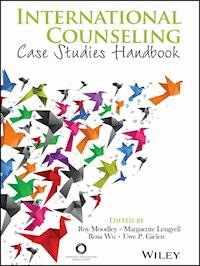
In this book, designed to increase mental health professionals' global literacy, authors from 33 countries demonstrate multicultural skills and competencies through case studies that illustrate approaches to counseling and psychotherapy in their countries. Following an introductory section on the use of case studies, chapters focus on a cross section of countries in Africa; Australia and Asia; Central, North, and South America; Europe; and the Middle East. Each case describes the client and his or her presenting concerns and includes a culture-sensitive assessment and treatment plan, an analysis and critical reflection of the case, and questions for discussion. The final chapter of the text presents a comparative analysis of the cases. *Requests for digital versions from ACA can be found on www.wiley.com. *To purchase print copies, please visit the ACA website. *Reproduction requests for material from books published by ACA should be directed to [email protected].
Sie lesen das E-Book in den Legimi-Apps auf:
Seitenzahl: 654
Veröffentlichungsjahr: 2015
Ähnliche




















CONTENTS
Cover
Title Page
Copyright
Preface
About the Editors and Contributors
Acknowledgments
Part One: Working With Case Studies
Chapter 1: How to Critically Use Globally Discerned Case Studies in Local Contexts
Part Two: Counseling and Psychotherapy in Africa
Chapter 2: Counseling and Psychotherapy in Egypt: Omar’s Story
Chapter 3: Counseling and Psychotherapy in West Africa: Mazabalo’s Story
Chapter 4: Counseling and Psychotherapy in Nigeria: Dayo’s Story
Chapter 5: Counseling and Psychotherapy in Morocco:T.M.’s Story
Chapter 6: Counseling and Psychotherapy in South Africa: Mr. Dlamini’s Story
Chapter 7: Counseling and Psychotherapy in Sub-Saharan Africa: Karimi’s Story
Part Three: Counseling and Psychotherapy in Australia and Asia
Chapter 8: Counseling and Psychotherapy in Australia: Cynthia’s Story
Chapter 9: Counseling and Psychotherapy in China: Yang’s Story
Chapter 10: Counseling and Psychotherapy in India: Radha’s Story
Chapter 11: Counseling and Psychotherapy in Japan: Masako’s Story
Chapter 12: Counseling and Psychotherapy in Malaysia: Aaron’s Story
Chapter 13: Counseling and Psychotherapy in Pakistan: Zohra’s Story
Chapter 14: Counseling and Psychotherapy in the Philippines: Jojo’s Story
Chapter 15: Counseling and Psychotherapy in South Korea: Misun’s Story
Part Four: Counseling and Psychotherapy in Central, North, and South America
Chapter 16: Counseling and Psychotherapy in Argentina: Michael’s Story
Chapter 17: Counseling and Psychotherapy in Brazil: Sr. K’s Story
Chapter 18: Counseling and Psychotherapy in Canada: Kamalpreet’s Story
Chapter 19: Counseling and Psychotherapy in the Caribbean (Trinidad and Tobago): Olivia’s Story
Chapter 20: Counseling and Psychotherapy in Mexico: Mrs. Fabiola’s Story
Chapter 21: Counseling and Psychotherapy in the United States: Rolando’s Story
Part Five: Counseling and Psychotherapy in Europe
Chapter 22: Counseling and Psychotherapy in Denmark: Marianne’s Story
Chapter 23: Counseling and Psychotherapy in France: Alice’s Story
Chapter 24: Counseling and Psychotherapy in Germany: David’s Story
Chapter 25: Counseling and Psychotherapy in Italy: Miriam’s Story
Chapter 26: Counseling and Psychotherapy in the Netherlands: Tom’s Story
Chapter 27: Counseling and Psychotherapy in Spain: Andres’s Story
Chapter 28: Counseling and Psychotherapy in Russia: Client A’s Story
Chapter 29: Counseling and Psychotherapy in the United Kingdom: Winston’s Story
Part Six: Counseling and Psychotherapy in the Middle East
Chapter 30: Counseling and Psychotherapy in Iran: Javad’s Story
Chapter 31: Counseling and Psychotherapy in Israel: Lee’s Story
Chapter 32: Counseling and Psychotherapy in Lebanon: Zeina’s Story
Chapter 33: Counseling and Psychotherapy in Palestine: Shaden’s Story
Chapter 34: Counseling and Psychotherapy in Turkey: Ceren’s Story
Conclusion
Chapter 35: Therapy Without Borders: Bridging Counseling and Psychotherapy Across Cultures
Index
Technical Support
End User License Agreement
Guide
Cover
Table of Contents
Begin Reading
Part 1
Chapter 1
Pages
i
ii
vii
viii
ix
ix
x
xi
xii
xiii
xiv
xv
xvi
xvii
xviii
xx
xxi
xxii
1
2
3
4
5
6
7
8
9
10
11
12
13
14
15
16
17
18
19
20
21
22
23
24
25
26
27
28
29
30
31
32
33
34
35
36
37
38
39
40
41
42
43
44
45
46
47
48
49
50
51
52
53
54
55
56
57
58
59
60
61
62
63
64
65
66
67
68
69
70
71
72
73
74
75
76
77
78
79
80
81
82
83
84
85
86
87
88
89
90
91
92
93
94
95
96
97
98
99
100
101
102
103
104
105
106
107
108
109
110
111
112
113
114
115
116
117
118
119
120
121
122
123
124
125
126
127
128
129
130
131
132
133
134
135
136
137
138
139
140
141
142
143
144
145
146
147
148
149
150
151
152
153
154
155
156
157
158
159
160
161
162
163
164
165
166
167
168
169
170
171
172
173
174
175
176
177
178
179
180
181
182
183
184
185
186
187
188
189
190
191
192
193
194
195
196
197
198
199
200
201
202
203
204
205
206
207
208
209
210
211
212
213
214
215
216
217
218
219
220
221
222
223
224
225
226
227
228
229
230
231
232
233
234
235
236
237
238
239
240
241
242
243
244
245
246
247
248
249
250
251
252
253
254
255
256
257
258
259
260
261
262
263
264
265
266
267
268
269
270
271
272
273
274
275
276
277
278
279
280
281
282
283
284
285
286
287
288
289
290
291
292
293
294
295
296
297
298
299
300
301
302
International Counseling
Case Studies Handbook
Edited by
Roy Moodley
Marguerite Lengyell
Rosa Wu
Uwe P. Gielen
American Counseling Association
6101 Stevenson Avenue, Suite 600 • Alexandria, VA 22304 www.counseling.org
Copyright © 2015 by the American Counseling Association. All rights reserved. Printed in the United States of America. Except as permitted under the United States Copyright Act of 1976, no part of this publication may be reproduced or distributed in any form or by any means, or stored in a database or retrieval system, without the written permission of the publisher.
10 9 8 7 6 5 4 3 2 1
American Counseling Association
6101 Stevenson Avenue, Suite 600 • Alexandria, VA 22304
Associate Publisher
Carolyn C. Baker
Digital and Print Development Editor
Nancy Driver
Production Manger
Bonny E. Gaston
Copy Editor
Kimberly W. Kinne
Cover and text design by Bonny E. Gaston.
Library of Congress Cataloging-in-Publication Data
International counseling case studies handbook/edited by Roy Moodley, Marguerite Lengyell, Rosa Wu, and Uwe P. Gielen.
pages cm
Includes bibliographical references and index.
ISBN 978-1-55620-335-0 (pbk.: alk. paper)
1. Counseling. 2. Psychotherapy. I. Moodley, Roy, editor. II. American Counseling Association.
BF636.6.I5795 2015
158.309—dc23
2014046605
Preface
In mental health care, internationalization and globalization have increased the need for countries to look beyond their borders in order to promote effective health and mental health care. Indeed, in the last decade we have seen numerous governmental and nongovernmental organizations that have evolved to promote and support developments worldwide. However, globalization has generally led to the domination of Western views of mental health as well as the policies and interventions associated with it. Integration of foreign values and ideas has been more apparent in non-Western countries than Eurocentric nations, in part because of the “well-established status and specialty of Western psychological theories as the standard approach to counseling and psychotherapy” (Moodley, Gielen, & Wu, 2013, p. 2). Clearly, as globalization and internationalization continue to intensify, “it is imperative for practitioners, clinicians, educators, and those in training to abandon their sense of self-sufficiency and actively increase their understanding of counseling and psychotherapy practices as they exist across cultures and nations” (Moodley et al., 2013, pp. 2–3).
The counseling profession began this process long ago. Theory, research, and counselor training have focused on issues of immigration, multiculturalism, cultural diversity, and all of the Group of Seven identity categories (race, gender, class, sexual orientation, disability, religion, and age), also known as the “Group of Seven” sociocultural identities (see Moodley, 2011, for discussion). These identities must be seen as fluid, shifting over time in accordance with contextual influences, such as sociopolitical realities, economic possibilities, developmental transitions, personality variables, and cultural histories. Moreover, a holistic approach to understanding one’s identities demands that we explore them at three levels: the individual level (uniqueness; like no other individual), the group level (shared values and belief systems with important reference groups), and the universal level (common features shared by all human beings; Sue, 2001). For instance, each case in this text contains features that no other cases share (e.g., a client’s developmental background), collective experiences that other cases of similar reference groups share (e.g., shared experiences among Muslim women), and universal characteristics that all cases share (e.g., experience of pain and suffering). At a most basic level, the counselor’s own awareness and perceptions of him- or herself as a complex, multidimensional being are critical in working across cultures. Cultural sensitivity, or “cultural empathy” (Ridley & Lingle, 1996), expressed by a counselor is a key ingredient in ensuring that the clinician is culturally competent (Dyche & Zayas, 2001).
As the current high rate of immigration is driving many demographic changes in the United States, Canada, and Europe, counselors and psychotherapists must acquire the ability to interact effectively with people of different cultures, ethnicities, sexual orientations, and religions. These new configurations inevitably bring about different worldviews, belief systems, values, customs, and lifestyles as well as different mental health representations, presentations, enactments of psychological disturbances, and help-seeking behaviors. In order to meet the multicultural and diverse needs of all these varied individual and groups, counselors will need to be much more sophisticated, astute, and complex in the way they formulate and conduct counseling to ensure a culturally responsive service. We believe that the study of an individual case can provide counselors with a breadth and depth of knowledge about groups and communities, because
Each individual is a component part of numerous groups, he is bound by ties of identification in many directions, and he has built up his ego ideal upon the most various models. Each individual therefore has a share in numerous group minds. Those of his race, of his class, of his creed, of his nationality, etc.,—and he can also raise himself above them to the extent of having a scrap of independence and originality. (Freud, 1921, p. 129)
The case studies in this book therefore illuminate the various ways in which counselors and psychotherapists across the globe work with clients in ways that enhance the practice of counseling and therapy. The many different ways in which counseling is understood and undertaken across the various countries represented in this book are described and illustrated through the case studies. Each case study is unique and distinctive, with each offering a rare opportunity for mental health practitioners to get a bird’s-eye view of what happens around the world. Therefore, the study of these cases individually and collectively will yield a wealth of information about the theory and practice of counseling and psychotherapy across the globe. Engaging the case study in this way will provide counselors with more than just a comparative analysis of practice; indeed, it will offer process and contextual insights into how current theories of counseling are formulated, modified, and reconstituted within different country contexts. Such an analysis will highlight the weaknesses and strengths of particular theories of counseling and psychotherapy.
As scholars and mental health practitioners bound by ethical standards for the practice of counseling, psychology, and psychotherapy, we are acutely aware of the key ethical issues that may arise when publishing a case studies text. Primarily, striking a balance between protecting a client’s anonymity and providing a rich, detailed account of the client’s clinical history to make it useful is a common ethical dilemma of case study publication. Furthermore, dual roles of this text’s contributors and their associated obligations (acting as both a scholar and a clinician) may result in conflicts, undue influences, and power imbalances that could affect the therapeutic relationship as well as decision-making procedures (e.g., consent of subjects). Although a universal code of ethics has not been formally recognized, it is the duty of our contributors to adhere to the standards and principles adopted by their respective nations to mitigate these risks (for more information about professional regulations in counseling and psychotherapy in various nations around the globe, refer to Moodley et al., 2013).
Why an International Case Study Handbook Is Needed in a Rapidly Globalizing World
During the last four decades, the field of psychology has rapidly expanded in many parts of the world. Stevens and Gielen (2007) estimated that more than one million psychologists are now active around the globe, with American psychologists probably making up less than one quarter of this impressive number. Very large numbers of psychologists can be found not only in European countries, such as England, Germany, Spain, and Russia, but also in Latin American nations, such as Argentina, Brazil, and Mexico (Stevens & Wedding, 2007). Whereas in Argentina, Brazil, and Uruguay psychoanalysis is especially popular among counselors, psychotherapists, and even the general public, in most other nations various forms of cognitive behavior, Rogerian, and interpersonal counseling and psychotherapy are practiced most frequently. It is also noteworthy that in the poorer as well as in many of the economically emerging countries, the more Westernized forms of counseling predominate above all in the big cities, where many of the counselors’ clients are educated and somewhat Westernized middle-class women and men. In contrast to this situation, the more traditionally oriented inhabitants of isolated villages and provincial towns are more likely to resort to traditional healers, whose treatment methods rely on explanations revolving around divination and supernatural forces, together with the administration of herbal remedies and other indigenous forms of practicing medicine. The Nigerian case study, for instance, introduces the reader to such a traditional healing approach. Indeed, in many African countries traditional healers tend to outnumber both doctors trained in allopathic (Western-style) medicine as well as psychological counselors and therapists. However, and unfortunately, most counselors (who have been exposed to modern psychological theories) and most traditional healers (who rely on invisible spirits and divine influences) tend to find it difficult to work together for the spiritual, psychological, and medical welfare of their clients. It seems that their ontological and epistemological frameworks diverge so widely from each other that they cannot find common ground for joint professional activities.
On the whole, then, the case studies described in this volume reflect a globalized world in which the field of counseling psychology represents a modern form of consciousness and theorizing about human nature and its potential strengths and weaknesses. At the same time, the studies certainly leave room for a broad variety of cultural influences on both counselor and client that manifest themselves in the form of different expectations in the counseling situation as well as varied family systems; divergent gender roles; culture-specific expectations about the roles of children, students, parents, employers and employees, friends, peers, and dating partners (if any); and so on. Indeed, we as editors like to claim that it is exactly by scrutinizing and meditating upon these highly varied case studies that the reader can learn in detail how general human nature, specific cultural expectations and norms, social institutions, a client’s individual character and psychological difficulties, and his or her counselor’s interpretations and treatment approach can come together in a series of fruitful encounters evolving over time. The case studies teach us in some detail how an international group of both Western and non-Western counselors conceive of and approach their task of helping a broad variety of clients to achieve less troubled and more fulfilling lives—and, at times, also why counseling can be such a difficult and demanding endeavor.
Besides demonstrating how mental health practitioners in various countries undertake counseling and psychotherapy, this text also attempts to connect ethnicity and counseling as well as the specific cultural practices that are part of healing in those countries. Dyche and Zayas (2001) argued that counselors and psychotherapists who have developed the ability to be culturally empathic are well prepared to practice counseling and psychotherapy with a diverse clientele. This ability entails embracing an attitude and/or skill that effectively
bridges the cultural gap between clinician and client, one that seeks to help clinicians integrate an attitude of openness, with the necessary knowledge and skill to work successfully across cultures. It involves a deepening of the human empathic response to permit a sense of mutuality and understanding across the great differences in value and expectation that cross-cultural interchange often involves. (Dyche & Zayas, 2001, p. 246)
The counselor of the future will be asked to interact with clients from an almost limitless range of cultural backgrounds. Already the schools of many of the world’s great cities, such as New York, Los Angeles, Chicago, Toronto, Vancouver, London, Berlin, and Paris, are filled with the children of immigrants. Take New York City as a striking example: In 2014, more than two thirds of all students in its public school system came from immigrant and minority backgrounds. Consequently, the school counselor in the average New York City public school has to be prepared to see in her office students whose families or parent(s) arrived in the city from some 40 nations spread around the globe. For such a counselor, reading a volume filled with international case studies is not an exotic task, but rather it constitutes an excellent preparation for helping her master her central task—a task that requires her to grasp what the world might look like from the vantage points of her student–clients as well as the students’ parents, grandparents, siblings, friends, and peers. International case studies not only tell us how cultural meaning systems work themselves out in detail and on the ground, so to speak, but also teach us how a variety of counseling theories can profitably be applied in a broad range of sociocultural situations that frequently are new to most of us.
How the Book Is Organized
The International Counseling Case Studies Handbook is divided into three sections.
Section 1
Section 1 opens with an introduction that outlines the history, philosophy, and process in counseling and psychotherapy around the globe. Chapter 1 discusses ways in which counselors and mental health practitioners can use and maximize the global cases in this text and situate it in their own local communities.
Section 2: Counseling and Psychotherapy Around the World
This section (Chapters 2–34) is divided into five parts representing six continents, or regions. Each region has chapters from some of the major countries where counseling and psychotherapy is undertaken. Countries were selected on the basis of (a) their population size, (b) how well they represent a given region in the world, (c) how well they represent global cultural variability, (d) how well developed their counseling and psychotherapy traditions are, and (e) whether we could find a good author(s) for a chapter on a given country. Regions are presented in alphabetical order, beginning with Africa; followed by Australia and Asia; Central, North, and South America; Europe; and the Middle East. Counseling and psychotherapy scholars and psychology researchers from these countries were invited to submit a case, which was written to the following specifications:
The Client/s
In this section, authors describe the client’s diversity in terms of the Group of Seven identities, that is, gender, ethnicity (race), disability, class, age, sexual orientation, and religion. In some cases this section includes a brief description of how the client has constructed his or her subjectivity in terms of the Group of Seven identities. Some authors also comment on the various combinations and intersections of these identities within particular contexts and situations that allow for particular identity performances.
Presenting Issues and Challenges
In this section, authors comment on the client’s reason for referral, psychological difficulty, subjective distress, and any clinical observations that they have made.
Case History and Developmental Background
This section requires authors to write about the familial, cultural, social, ethnic, and Group of Seven identities and their contributions to the personality development of the client. Authors of some chapters comment on the relationship between the evolution of multiple identities and the life history trajectories within the context of the respective country’s sociopolitical climate.
The Therapy
In this section authors discuss the therapeutic perspectives and the particular approach or modality that was used with the client. The process of counseling and therapy is described in some detail, including the following: interventions; assessment, goals, and therapy treatment; and outcomes. Authors were asked to include introspection and self-disclosure and to reflect on the Group of Seven identities in the clinical process, particularly the use of traditional healing, spirituality, and other alternative healing modalities that support resilience.
Discussion and Analysis of the Case
In this part the authors critically discuss their cases, using theory and ideas from the published scholarship and questioning the use of counseling and psychotherapy as the best modality for the client’s particular problems. Authors were encouraged to bring several elements together in their discussion: the Group of Seven identities, problem solving, consciousness raising, and alternative healing modalities. These elements were addressed in a reflective discussion of their work with the client.
Questions
In this section, five questions are posed about the case study. These open-ended questions are designed to stimulate deeper thought and discussion about the case study as well as how a counselor might handle similar issues with his or her own clients.
Section 3
The concluding chapter (Chapter 35) explores some of the main themes and ideas that can be found in the book. An overview of cultural, multicultural, and diversity contexts is discussed, and particular attention is paid to the concepts of individual culture versus the collective culture and the relationship of the self in navigating these spaces. The chapter also looks at the intersection between the body, mind, and spirit, which featured prominently in many cases. Finally, the chapter discusses some key recommendations for counselors and psychotherapists from the lessons learned from the cases in this book.
References
Dyche, L., & Zayas, L. H. (2001). Cross-cultural empathy and training the contemporary psychotherapists.
Clinical Social Work Journal, 29,
245–258.
Freud, S. (1921).
Group psychology and the analysis of the ego
(J. Strachey, Trans.). New York, NY: W. W. Norton.
Moodley, R. (2011).
Outside the sentence: Readings in critical multicultural counselling and psychotherapy
. Toronto, Ontario, Canada: CDCP.
Moodley, R., Gielen, U. P., & Wu, R. (Eds.). (2013).
Handbook of counseling and psychotherapy in an international context.
New York, NY: Routledge.
Ridley, C. R., & Lingle, D. (1996). Cultural empathy in multicultural counseling: A multidimensional process model. In P. B. Pedersen, J. G. Draguns, W. J. Loner, & J. E. Trimble (Eds.),
Counseling across cultures
(pp. 21–46). Thousand Oaks, CA: Sage.
Stevens, M. J., & Gielen, U. P. (Eds.). (2007).
Toward a global psychology: Theory, research, intervention, and pedagogy
. New York, NY: Psychology Press.
Stevens, M. J., & Wedding, D. (Eds.). (2007).
Handbook of international psychology
. New York, NY: Brunner-Routledge.
Sue, D. W. (2001). Multidimensional facets of cultural competence.
The Counseling Psychologist, 29,
790–821.
About the Editors and Contributors
About the Editors
Roy Moodley, PhD, is associate professor of counseling psychology at the University of Toronto, Ontario, Canada. He is the director for the Centre for Diversity in Counselling and Psychotherapy. His research interests include critical multicultural counseling and psychotherapy, race and culture in psychotherapy, traditional healing, culture and resilience, and gender and identity. He has authored or edited several journal articles, book chapters, and books.
Marguerite Lengyell, EdD (candidate), is in the Counselling and Psychotherapy Department at the University of Toronto and is currently a psychological associate conducting psychological assessments for children, adolescents, and adults in Toronto, Ontario, Canada. Her academic research interests have focused on ideologies of multiculturalism and their application in the therapeutic process. To be specific, she has had a long-standing interest in mixed race, interracial, and interethnic relationships and children of mixed race or ethnic heritage.
Rosa Wu, PhD, is a registered clinical counselor living and working in Vancouver, British Columbia, Canada. Originally from Taiwan, she has lived in Costa Rica, Panama, Spain, New York, and Toronto and is fluent in English, Spanish, and Mandarin Chinese. Rosa’s main research interests include interethnic couple relationships, multicultural counseling competencies, and traditional and alternative methods of healing. She currently teaches in a postsecondary institution and works part-time as a counselor in private practice.
Uwe P. Gielen, PhD, is professor emeritus and executive director of the Institute for International and Cross-Cultural Psychology at St. Francis College, New York. His work centers on cross-cultural and international psychology, Chinese American immigrant children, Tibetan studies, international family psychology, and moral development. He is the senior editor, coeditor, and coauthor of 21 volumes that have appeared in five languages. He has served as president of the Society for Cross-Cultural Research, the International Council of Psychologists, and the International Psychology Division of the American Psychology Association.
About the Contributors
Mona M. Amer, PhD, is associate professor of psychology at the American University in Cairo, Egypt. She earned her doctorate in clinical psychology from the University of Toledo and her postdoctoral specialization from Yale University. She is coeditor of the book Counseling Muslims: Handbook of Mental Health Issues and Interventions.
Lesen Sie weiter in der vollständigen Ausgabe!
Lesen Sie weiter in der vollständigen Ausgabe!
Lesen Sie weiter in der vollständigen Ausgabe!
Lesen Sie weiter in der vollständigen Ausgabe!
Lesen Sie weiter in der vollständigen Ausgabe!
Lesen Sie weiter in der vollständigen Ausgabe!
Lesen Sie weiter in der vollständigen Ausgabe!
Lesen Sie weiter in der vollständigen Ausgabe!
Lesen Sie weiter in der vollständigen Ausgabe!
Lesen Sie weiter in der vollständigen Ausgabe!
Lesen Sie weiter in der vollständigen Ausgabe!
Lesen Sie weiter in der vollständigen Ausgabe!
Lesen Sie weiter in der vollständigen Ausgabe!
Lesen Sie weiter in der vollständigen Ausgabe!
Lesen Sie weiter in der vollständigen Ausgabe!
Lesen Sie weiter in der vollständigen Ausgabe!
Lesen Sie weiter in der vollständigen Ausgabe!
Lesen Sie weiter in der vollständigen Ausgabe!
Lesen Sie weiter in der vollständigen Ausgabe!
Lesen Sie weiter in der vollständigen Ausgabe!
Lesen Sie weiter in der vollständigen Ausgabe!
Lesen Sie weiter in der vollständigen Ausgabe!
Lesen Sie weiter in der vollständigen Ausgabe!
Lesen Sie weiter in der vollständigen Ausgabe!
Lesen Sie weiter in der vollständigen Ausgabe!
Lesen Sie weiter in der vollständigen Ausgabe!
Lesen Sie weiter in der vollständigen Ausgabe!
Lesen Sie weiter in der vollständigen Ausgabe!
Lesen Sie weiter in der vollständigen Ausgabe!
Lesen Sie weiter in der vollständigen Ausgabe!
Lesen Sie weiter in der vollständigen Ausgabe!
Lesen Sie weiter in der vollständigen Ausgabe!
Lesen Sie weiter in der vollständigen Ausgabe!
Lesen Sie weiter in der vollständigen Ausgabe!
Lesen Sie weiter in der vollständigen Ausgabe!
Lesen Sie weiter in der vollständigen Ausgabe!
Lesen Sie weiter in der vollständigen Ausgabe!
Lesen Sie weiter in der vollständigen Ausgabe!
Lesen Sie weiter in der vollständigen Ausgabe!
Lesen Sie weiter in der vollständigen Ausgabe!
Lesen Sie weiter in der vollständigen Ausgabe!
Lesen Sie weiter in der vollständigen Ausgabe!
Lesen Sie weiter in der vollständigen Ausgabe!
Lesen Sie weiter in der vollständigen Ausgabe!
Lesen Sie weiter in der vollständigen Ausgabe!
Lesen Sie weiter in der vollständigen Ausgabe!




