


41,99 €
Mehr erfahren.
- Herausgeber: John Wiley & Sons
- Kategorie: Geisteswissenschaft
- Sprache: Englisch
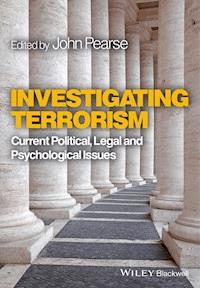
INVESTIGATING TERRORISM
‘How can we be more effective in bringing terrorists to justice in ways that uphold our legal traditions? This book provides crucial clues drawn from highly experienced prosecution and defence lawyers, detectives, security experts and forensic psychologists. I highly recommend it for all who want to understand and respond to the serious threat from jihadist terrorism over the years to come.’
Professor Sir David Omand, former UK Security and Intelligence Coordinator, Permanent Secretary of the Home Office and Director GCHQ
‘Edited and written by experts in their fields and with a plethora of experience, the authors know what they are talking about. This book is a must for those who need to know, those who are interested to know, and those who think they know it all already.’
Susan Young, Professor of Forensic Clinical Psychology, Broadmoor Hospital, West London Mental Health Trust
Investigating Terrorism takes a look behind the closed doors of terrorist cases, and at the entire judicial process of these cases from heated debates in both Houses of Parliament, through arrest, prosecution and imprisonment. In doing so, it confronts many of the crucial political, enforcement, legal and psychological issues currently influencing major decision-makers in this arena.
Specialist contributors discuss recently released research into the effectiveness of front-line counter-terrorism officers in their dealings with terrorist suspects, including the findings from a study commissioned by New Scotland Yard into the effectiveness of police interviews with terrorist suspects. Also included are strategic reviews of many of the major legislative changes and subsequent high-profile legal challenges that have repeatedly undermined government policy. Contributors provide a clear psychological understanding of aspects of terrorist behaviour, including insights into what drives individuals to become suicide bombers.
Contributions come from leading barristers, senior police officers and psychologists. Contributors Lord Carlile, the former HMG’s Independent Reviewer of Terrorist Legislation, and Peter Clarke, the recently retired head of the Anti-Terrorist Branch for the UK, combine academic credentials and understanding with substantial policy or practitioner experience. This combination of perspectives ensures a holistic and richly informed view of the subject and issues.
Sie lesen das E-Book in den Legimi-Apps auf:
Seitenzahl: 624
Veröffentlichungsjahr: 2015
Ähnliche




















Table of Contents
Praise for Investigating Terrorism: Current Political, Legal and Psychological Issues
Title Page
Copyright
Dedication
About the Editor
About the Contributors
Introduction
Part I: Political, Legal and Policing Context
Part II: The Criminal Justice Process
Part III: Individual and Group Perspectives
Part I: Political, Legal and Policing Context
Chapter 1: The Impact and Consequences of Terrorist Legislation in the United Kingdom Since 2001: A Review
The Changing Legal Landscape
Criminal Justice System: Prosecuting Terrorism
Civil Jurisdiction: Expansion of Executive Powers
Procedural Constraints
Conclusions
Notes
References
Legal Cases
Chapter 2: Investigating Terrorism in the First Decade of the Twenty-First Century: A Different Sort of Crime
Irish versus Islamist
A New Concept of Operations
Police and Security Service
Legislation
Counter-Terrorism versus Ordinary Decent Crime
The Politics of Counter-Terrorism
Conclusion
References
Part II: The Criminal Justice Process
Chapter 3: Challenge, Compromise and Collaboration: Part of the Skill Set Necessary for Interviewing a Failed Suicide Bomber
Counter-Terrorism Police Study
Failed Suicide Bomber: Interview Analysis
Conclusion
References
Legal Case
Chapter 4: Urgent Interviews and the Concept of Oppression in Terrorist Cases
Authorizing Urgent Interviews and Delaying Access to Legal Advice
Adverse Inferences in Practice Code H
Old-Style Caution
Public Policy Considerations
Oppression
Conclusion
Note
Legal Cases
Chapter 5: Defence Counsel in Terrorism Trials
Role of Defence Counsel
Legitimate Defence Tactics when Representing Someone Charged with Terrorism
Why Certain Lawyers Are Instructed and Potential Conflict of Interest
Dealing with Obstructive, Incompetent or Inexperienced Legal Representatives
Urgent Interviews (Public Safety Interviews)
Length of Detention and Interviews
The Risk of Oppression
What about Confessions Relied on for a Co-accused?
Between Charge and Trial
Trial
Problems in Defending
Notes
References
Legal Cases
Chapter 6: An Garda Síochána Model of Investigative Interviewing of Witnesses and Suspects
Legacy of the Conflict in Northern Ireland
Influence of Public Inquiries
Investigative Interviewing in Other Jurisdictions
Garda Síochána Interviewing Model
Interview Subject-Specific Considerations
Proposed Competency Model for Interviewer Certification
Conclusion
Acknowledgements
Notes
References
Legal Cases
Chapter 7: Risk Assessment of Terrorist Offenders: A Challenge Too Far?
Generic Risk Assessment and Management
Meta-analyses
The Pathway into Terrorism
Suicide Terrorists
Conceptual Issues
Terrorist Risk Assessment Tools
Further Current Tool Developments
Professional Issues
Clinical Experience
Multidisciplinary Working: Police, Probation and Security Services
Conclusions
Notes
References
Chapter 8: Hostage Negotiation and Communication Skills in a Terrorist Environment
Planning and Preparation: Creating the Right Environment
Stereotypes
Context: Planned or Unplanned
First Impressions and Thin Slicing
Listening Skills
Conclusion
References
Part III: Individual and Group Perspectives
Chapter 9: Understanding Suicide Terrorism: Insights from Psychology, Lessons from History
Conclusions
Notes
References
Chapter 10: Taking Anders Breivik Seriously as a Political Terrorist
Terrorist or Madman?
22 July 2011
Breivik as a Political Terrorist
Breivik and Kaczynski
Debating Breivik's Motivation: Commentators, Academics and Activists
Utøya Island and the World Trade Center
Extremist Nationalist Political Violence
Postscript: Breivik's Trial
Notes
References
Chapter 11: Social Psychology and the Investigation of Terrorism
Terrorist Psychology
Groups
Group Development
Using Tuckman's Model to Organize Intelligence and Predict Behaviour
Identity and Terrorism
Concluding Remarks
References
Chapter 12: Community Surveillance and Terrorism
Overview and Context of Community Surveillance within Counter-Terrorism Strategy
Project Champion
Dilemmas and Consequences
Conclusion
Acknowledgements
References
Legal Cases
Chapter 13: Thinking about Peace While Engaged in Counter-Terrorism: The Primacy of Intelligence
Introduction and Context
Northern Irish Peace Process: International Agreement and Domestic Legislation
Methodological Issues: Some Support from Other Public Inquiries
Legal Assessment of the Validity of the IMC Role and Methodology
Policing, Intelligence and Counter-Terrorism in Northern Ireland, 1969–1999
Three Models of Counter-Terrorism and a Hybrid Version
Two Models of Ending of Conflict
Thinking about Peace in a Period of Conflict
Leadership, Political and Paramilitary
Conclusions
Acknowledgements
Notes
References
Legal Case
Index
End User License Agreement
Pages
ix
x
xi
xii
xiii
xiv
1
2
3
4
5
6
7
11
12
13
14
15
16
17
18
19
20
21
22
23
24
25
26
27
28
29
30
31
32
33
34
35
36
37
38
39
40
41
45
46
47
48
49
50
51
52
53
54
55
56
57
58
59
60
61
62
63
64
65
66
67
68
69
70
71
72
73
74
75
76
77
78
79
80
81
82
83
84
85
86
87
88
89
90
91
92
93
94
95
96
97
98
99
100
101
102
103
104
105
106
107
108
109
110
111
112
113
114
115
116
117
118
119
120
121
122
123
124
125
126
127
128
129
130
131
132
133
134
135
136
137
138
139
140
141
142
143
144
145
146
147
148
149
150
151
152
153
154
155
156
157
158
159
160
161
162
163
164
165
166
169
170
171
172
173
174
175
176
177
178
179
180
181
182
183
184
185
186
187
188
189
190
191
192
193
194
195
196
197
198
199
200
201
202
203
204
205
206
207
208
209
210
211
212
213
214
215
216
217
218
219
220
221
222
223
224
225
226
227
228
229
230
231
232
233
234
235
236
237
238
239
240
241
242
243
244
245
246
247
248
249
250
251
252
253
254
255
256
257
259
260
261
262
263
264
265
266
267
268
269
270
271
Guide
Cover
Table of Contents
Introduction
Part I: Political, Legal and Policing Context
Begin Reading
List of Illustrations
Figure 6.1
Figure 6.2
Figure 6.3
Figure 11.1
List of Tables
Table 3.1
Table 3.2
Praise for Investigating Terrorism: Current Political, Legal and Psychological Issues
‘How can we be more effective in bringing terrorists to justice in ways that uphold our legal traditions? This book provides crucial clues drawn from highly experienced prosecution and defence lawyers, detectives, security experts and forensic psychologists. I highly recommend it for all who want to understand and respond to the serious threat from jihadist terrorism over the years to come.’
Professor Sir David Omand, former UK Security and Intelligence Coordinator, Permanent Secretary of the Home Office and Director GCHQ
‘The threat of terrorism is a dark shadow which affects all citizens throughout the world. In this well constructed book a group of eminent experts with extensive experience in the field provides valuable discussion of the causes and wider consequences of terrorism as well as its circumvention, investigation and prosecution. It comprises a substantial body of precious insight and guidance which will be of unquestionable value to policy and law makers, police investigators, judges and legal practitioners. Those who are active in this sphere would be well advised to familiarize themselves with its contents. I very strongly recommend it.’
Anthony Heaton-Armstrong, practising barrister at 9-12 Bell Yard
‘Edited and written by experts in their fields and with a plethora of experience, the authors know what they are talking about. This book is a must for those who need to know, those who are interested to know, and those who think they know it all already.’
Susan Young, Professor of Forensic Clinical Psychology, Broadmoor Hospital, West London Mental Health Trust
‘First-rank expertise on the detection, investigation and prosecution of terrorist crime accompanies insights into the motives of its perpetrators. The combination is unusual, welcome and thought-provoking.’
David Anderson, QC, Independent Reviewer of Terrorism Legislation
‘A collection of very informative papers from many of the experts in the front line of confronting, analyzing, detecting and dealing with terrorism and terrorist suspects. It confirms that we have no room for complacency, that we are still learning and there is still much to be done.’
Alastair Logan, OBE, LLB, solicitor and member of The Law Society's Human Rights Committee
Investigating Terrorism
Current Political, Legal and Psychological Issues
Edited by
John Pearse
This edition first published 2015
© 2015 John Wiley & Sons, Ltd.
Registered Office
John Wiley & Sons Ltd, The Atrium, Southern Gate, Chichester, West Sussex, PO19 8SQ, UK
Editorial Offices
350 Main Street, Malden, MA 02148-5020, USA
9600 Garsington Road, Oxford, OX4 2DQ, UK
The Atrium, Southern Gate, Chichester, West Sussex, PO19 8SQ, UK
For details of our global editorial offices, for customer services, and for information about how to apply for permission to reuse the copyright material in this book please see our website at www.wiley.com/wiley-blackwell.
The right of John Pearse to be identified as the author of the editorial material in this work has been asserted in accordance with the UK Copyright, Designs and Patents Act 1988.
All rights reserved. No part of this publication may be reproduced, stored in a retrieval system, or transmitted, in any form or by any means, electronic, mechanical, photocopying, recording or otherwise, except as permitted by the UK Copyright, Designs and Patents Act 1988, without the prior permission of the publisher.
Wiley also publishes its books in a variety of electronic formats. Some content that appears in print may not be available in electronic books.
Designations used by companies to distinguish their products are often claimed as trademarks. All brand names and product names used in this book are trade names, service marks, trademarks or registered trademarks of their respective owners. The publisher is not associated with any product or vendor mentioned in this book.
Limit of Liability/Disclaimer of Warranty: While the publisher and authors have used their best efforts in preparing this book, they make no representations or warranties with respect to the accuracy or completeness of the contents of this book and specifically disclaim any implied warranties of merchantability or fitness for a particular purpose. It is sold on the understanding that the publisher is not engaged in rendering professional services and neither the publisher nor the author shall be liable for damages arising herefrom. If professional advice or other expert assistance is required, the services of a competent professional should be sought.
Library of Congress Cataloging-in-Publication Data
Investigating terrorism : current political, legal, and psychological issues / edited by John Pearse.
pages cm
Includes bibliographical references and index.
ISBN 978-1-119-99415-2 (cloth)—ISBN 978-1-119-99416-9 (pbk.) 1. Terrorism—Law and legislation—Great Britain. 2. Terrorism—Prevention—Law and legislation—Great Britain. 3. Terrorism investigation—Great Britain. 4. Terrorism—Political aspects—Great Britain. 5. Terrorism—Great Britain—Psychological aspects. 6. Suicide bombers. 7. Domestic terrorism—Law and legislation. I. Pearse, John Joseph, 1954– editor.
KD8039.I58 2015
363.325—dc23
2014020564
A catalogue record for this book is available from the British Library.
Cover image: © Marco Prati / Shutterstock
Cover design by Design Deluxe
In memory of Tom, Andrew and John Mc– who achieved so much.
About the Editor
John Pearse, PhD, C. Psychol, AFBPsS, is Vice President of the Paul Ekman Group (paulekman.com) and Director of Forensic Navigation Services Ltd, an independent company that combines forensic consultancy and investigation with psychological training and empirical research. He has provided counter-terrorist advice and training around the world and has designed and delivered a number of acclaimed international multi-agency counter-terrorism seminars. John has undertaken a confidential national review of police interviewing with terrorist suspects in the UK and has designed and delivered a specialist national interview course for terrorist investigators combining essential interpersonal skills and cultural awareness with effective questioning techniques, strategic awareness and tactical measures. John has been researching and publishing on interviewing and interrogation and terrorist-related issues since 1991, and is a visiting lecturer at a number of colleges within the University of London.
About the Contributors
Lord Carlile of Berriew
, CBE, QC, was called to the Bar in 1970. He became a Queen's Counsel in 1984, is a Master of the Bench of Gray's Inn and sits as a deputy High Court judge. From 2001 to 2011 he was the UK Independent Reviewer of Terrorism Legislation. He now advises in a professional capacity on terrorism and compliance matters.
Peter Carter
, QC, was called to the bar in 1974, made Queen's Counsel in 1995 and is a Master of the Bench of Gray's Inn. From 2003 to 2005 he was chair of the Bar Human Rights Committee. He is ranked as a leading criminal silk by Chambers Guide to the Legal Profession, with an emphasis on fraud, terrorism, homicide and trafficking. He is an expert in international human rights law. He appears pro bono in appeals to the Privy Council. He has appeared in domestic and regional human rights courts outside the UK and participated in
amicus
briefs in overseas jurisdictions. He was one of the team instructed on behalf of both Houses of Parliament to present an
amicus
brief for the US Supreme Court in the Guantanamo Bay case of
Rasul v. Bush
which successfully challenged the US government's denial of constitutional and international human rights to the detainees.
Peter Clarke
, CVO, OBE, QPM, joined the Metropolitan Police in 1977 after graduating in Law from Bristol University. After attending the Royal College of Defence Studies, in May 2002 he became the head of the Anti-Terrorist Branch and for nearly six years led all terrorist investigations in the UK and against British interests overseas, including the London bombings (2005), the transatlantic airliners ‘liquid bomb’ plot (2006) and attacks in Bali, Saudi Arabia, Turkey, Qatar and elsewhere. He retired in 2008 and in 2009 he was appointed by the prime minister to the UK National Security Forum to advise government on the implementation of the UK National Security Strategy. From 2009 to 2013 he was a non-executive director of the Serious Organised Crime Agency in the United Kingdom. In 2014 he was appointed by the Secretary of State for Education to investigate allegations of Islamist infiltration into schools in the city.
John G. D. Grieve
, MPhil, CBE, QPM, served as a detective throughout London in roles that varied from undercover officer to intelligence policy chair. He was the first Director of Intelligence and led the Anti-Terrorist Squad as National Co-ordinator during the 1996–1998 bombing campaigns before becoming the first Director of the Racial and Violent Crime Task Force. He retired in 2002. He holds a number of academic posts including Senior Research Fellow at the University of Portsmouth; Professor Emeritus at London Metropolitan University; Honorary Fellow at Roehampton Institute, Surrey University; and Honorary Doctor at London Metropolitan University. In 2004 he was appointed as a Commissioner of the International Independent Monitoring Commission for the Peace Process in Northern Ireland, in which role he served until 2011. He is the independent chair of the Home Office/Ministry of Justice Independent Advisory Group on Hate Crime. He has published extensively on policing issues including investigation, counter-terrorism, intelligence, crisis management, community engagement, prevention and cultural changes.
Gisli H. Gudjonsson
is an Emeritus Professor of Forensic Psychology at the Institute of Psychiatry, King's College London, and an honorary consultant clinical and forensic psychologist at Broadmoor Hospital. Prior to his retirement from King's College on 1 January 2012, he was the head of Forensic Psychology Services for the Lambeth Forensic Services and Medium Secure Unit at the South London and Maudsley NHS Trust (SLaM). Professor Gudjonsson is a chartered psychologist and a Fellow of the British Psychological Society. A registered practitioner (clinical and forensic) with the Health & Care Professions Council (HCPC), he has been awarded two lifetime achievement awards and was appointed a Commander of the Order of the British Empire (CBE) in the Queen's Birthday 2011 Honours List for services to clinical psychology.
Max Hill
, QC, is Head of Red Lion Chambers in London, chair of the Kalisher Trust and a Bencher of Middle Temple. He is a former chairman of the Criminal Bar Association of England and Wales. He has unrivalled experience prosecuting terrorism trials, from
R v. Hulme and others
2003 (Real IRA), to
R v. Ibrahim and others
2007 (21 July 2005 London bombers) and
R v. Faraz
2011 (terrorist publications). He represented the Metropolitan Police Service at the Coroner's Inquests into the London bombings of 7 July 2005. He has a broad practice in general crime, spanning homicide to fraud and money laundering, as well as regulatory proceedings. He is also a Crown Court Recorder, authorized to sit at the Central Criminal Court.
Robert Lambert
divides his time between two part-time teaching posts at the Handa Centre for the Study of Terrorism and Political Violence, University of St Andrews, and at the John Grieve Policing Centre, London Metropolitan University. At both centres he teaches postgraduate and undergraduate modules based on his research and publications on terrorism, counter-terrorism, far right political violence and anti-Muslim hate crimes. In addition, he supervises and examines PhD research in the same arena. He is the author of
Countering al-Qaeda in London: Police and Muslims in Partnership
(Hurst, 2011).
Simon McKay
, LLB, LLM, is a solicitor advocate (all proceedings) and an honorary fellow of the School of Law, University of Leeds. He specializes in human rights and criminal law with a particular interest in state-based crimes (terrorism, Official Secrets Act, etc.), covert policing and surveillance issues. Until he resigned in 2012, he was the only solicitor advocate on the Attorney General's panel of special advocates in terrorist cases. He is the author of
Covert Policing Law and Practice
(Oxford University Press, 2011) and
Undercover Cop
(McKay Law, 2013).
Amy McKee
, BSc, MSc, DClinPsy, is a clinical psychologist based in the north west of England providing risk assessments, management advice, consultancy and treatment interventions with forensic populations. She has extensive experience of working with offenders who present with complex forensic and mental health needs and provides training to specialist investigation and interviewing courses with a focus on understanding the offender, particularly child offenders and female offenders. She has provided advice on media appeals, investigative interview strategies and downstream monitoring support to police forces throughout the United Kingdom on a number of major inquiries, and has worked closely for a number of years with the North West Counter Terrorism Unit, providing consultation services, risk and threat assessments, training and research. Currently she is working on Project Regulus examining pathways of lone actor terrorists by bringing together academic, practitioner and clinical perspectives to enhance counter-terrorism practice. This research is being carried out in collaboration with NWCTU, SO15 and University College London.
Geraldine Noone
is a sergeant in An Garda Síochána with over 30 years' service. She has considerable operational and training experience and specializes in investigative interviewing with An Garda Síochána and other European law enforcement agencies. She is a senior interview adviser and is responsible for the design and delivery of advanced interview and interview adviser courses. In addition, she is the business leader in the development of the Garda Síochána Interviewing Model (GSIM) and the
Manual of Guidance and Training
which supports this model. She is currently researching the psychological and background factors associated with ‘no comment’ interviews for a PhD at Liverpool University.
Carys Owen
was called to the Bar in 2002 following a short career in the British Army as an Intelligence Corps officer. Since 2009 she has specialized in terrorism cases, both civil and criminal. Her civil terrorism cases have included Guantanamo Bay litigation (involving a novel use of the Norwich Pharmacal disclosure regime:
Shaker Aamer v. Secretary of State for Foreign and Commonwealth Affairs
[2009] EWHC 3316 (Admin)), Abu Hamza (deprivation of British citizenship:
Abu Hamza v. Secretary of State for the Home Department
SC/23/2003), various exclusion, deportation, and terrorist asset freeze cases, as well as control order and TPIM cases involving suspected members of the transatlantic bomb plot, among others. Her criminal terrorism cases have involved bomb plotting in the UK as well as terrorist training abroad and possession of terrorism materials.
Karl Roberts
is a forensic psychologist and is Professor and Chair of Policing and Criminal Justice at the University of Western Sydney in Sydney, Australia. He is also an Adjunct Professor of Criminology and Criminal Justice at the University of Massachusetts. His areas of expertise are within the field of interpersonal violence and law enforcement investigation with a focus on the behavioural assessment of offenders, investigative interviewing by law enforcement, and risk assessment and risk management. He works closely with law enforcement and other agencies throughout the world, providing training and advice to investigations, and has advised over 400 major police investigations worldwide.
Andrew Silke
is Head of Criminology and Director for Terrorism Studies at the University of East London. He has a background in forensic psychology and criminology and has worked both in academia and for government. He has written extensively on terrorism and counter-terrorism and is frequently invited to speak at international conferences. Professor Silke serves by invitation on the UN Roster of Terrorism Experts and the European Commission's Network of Experts on Radicalisation. He is a member of the UK Cabinet Office National Risk Assessment Behavioural Science Expert Group. He has provided research advice to both the Royal Society in the UK and the National Academy of Sciences in the US and briefings to select committees of the House of Commons, and he was appointed in 2009 as a specialist adviser to the House of Commons Communities and Local Government Committee. In 2010 he gave invited oral testimony before the Canadian Special Senate Committee on Anti-Terrorism.
Clive Walker
is Professor of Criminal Justice Studies at the School of Law, University of Leeds, where he has served as the Director of the Centre for Criminal Justice Studies (1987–2000) and as Head of School (2000–2005, 2010). He has been a visiting professor at many universities, including George Washington and Stanford in the United States, and Melbourne and New South Wales in Australia. He has published extensively on terrorism issues. His most comprehensive work on terrorism is his book
Terrorism and the Law
(Oxford University Press, 2011). He is currently the special adviser to the Home Office's Independent Reviewer of Terrorism Legislation and has served as a special adviser to the parliamentary select committee which scrutinized what became the Civil Contingencies Act 2004. That experience resulted in another book,
The Civil Contingencies Act 2004: Risk, Resilience and the Law in the United Kingdom
(Oxford University Press, 2006).
Simon Wells
completed 30 years with the Metropolitan Police, and for 20 years he promoted the principles and practices of behavioural science for the benefit of law enforcement. Between 2003 and 2008 Simon was the course director of the National Negotiators Course and the operation head of the Hostage and Crisis Negotiation Unit. He was engaged in communicating and negotiating on behalf of the UK government, often with al-Qaeda, the Taliban and other ‘insurgent’ groups. He continues to interact with those involved in terrorism threatening national security, as well as training, coaching and mentoring support for the United Nations, and the US and UK governments. He is a co-director of Acacia 17, a company set up to provide expertise in communication skills, and has published on a wide range of issues, most recently on ‘Crisis Negotiation: From Suicide to Terrorism’, in
Handbook of Research in Negotiation
(Edward Elgar, 2013).
Adrian West
is a forensic clinical psychologist working in the National Health Service. During the past 20 years, he has also advised the police service on many serious crime investigations. His contribution to risk assessment in relation to the diverse forms of violent extremism is founded on a commitment to evidence-based practice, alongside the hope that future generations will find a way of living with each other that is more tolerant of difference.
Introduction
When this book was just a fledgling proposal it was sent to a number of anonymous reviewers to critique and one of the questions they were asked to address was:
To whom will this book be useful?
I am told that one of the responses was simply ‘al-Qaeda’. Under such circumstances I must start by outlining what this book is not about. It will not be revealing law enforcement or security service working practices and methodologies or any details of sensitive operational activity in the terrorist field. Rather, its purpose is to look at all of the very practical problems that those entrusted with investigating terrorism have been confronted with since the world order, and our perception of that world order, was drastically changed following the attacks on the Twin Towers and the Pentagon in the United States on September 11, 2001 – universally known as 9/11.
I am using the term ‘investigate’ in a very elastic fashion, given that I include in it not only law enforcement officers engaged in this field but also the lawyers tasked with prosecuting and defending terrorist suspects and the psychologists who have been challenged to explain and help us try to understand the motivation and belief systems that allow individuals to engage in such extreme behaviour: what drives a suicide bomber to carry out his or her mission, for example?
Prior to 9/11, the United Kingdom had endured three decades of terrorist conflict and unrest emanating principally from Northern Ireland, where one of the protagonists, the Provisional Irish Republican Army (PIRA), had repeatedly shown itself capable of detonating explosive devices throughout the British Isles. Such outrages led to the loss of many lives and many more people injured by such attacks, but over time the negative impact and press coverage they received, together with notable enforcement operations against them, led to a substantial change in strategy: advance warning with coded telephone messages replaced random attacks, allowing the police to evacuate the target areas and, while this ‘10 pence’ tactic resulted in considerable damage and disruption to services, there was a substantial reduction in the number of people killed or injured.
Lesen Sie weiter in der vollständigen Ausgabe!
Lesen Sie weiter in der vollständigen Ausgabe!
Lesen Sie weiter in der vollständigen Ausgabe!
Lesen Sie weiter in der vollständigen Ausgabe!
Lesen Sie weiter in der vollständigen Ausgabe!
Lesen Sie weiter in der vollständigen Ausgabe!
Lesen Sie weiter in der vollständigen Ausgabe!
Lesen Sie weiter in der vollständigen Ausgabe!
Lesen Sie weiter in der vollständigen Ausgabe!
Lesen Sie weiter in der vollständigen Ausgabe!
Lesen Sie weiter in der vollständigen Ausgabe!
Lesen Sie weiter in der vollständigen Ausgabe!
Lesen Sie weiter in der vollständigen Ausgabe!
Lesen Sie weiter in der vollständigen Ausgabe!
Lesen Sie weiter in der vollständigen Ausgabe!
Lesen Sie weiter in der vollständigen Ausgabe!
Lesen Sie weiter in der vollständigen Ausgabe!
Lesen Sie weiter in der vollständigen Ausgabe!




